Newsletter about nutrient stewardship - European Sustainable Phosphorus Platform (ESPP)
Please subscribe www.phosphorusplatform.eu/Subscribe
Link to www.phosphorusplatform.eu/eNews109
Download as PDF
Help ESPP continue sharing free information on phosphorus sustainability! DONATE NOW.
Events
6th European Sustainable Phosphorus Conference ESPC 6 24-25 November 2026, Benguerir, Morocco
Early career poster and pitch prizes at ESPC6
Phosphates+Potash 2027 – call for papers
Consultations and calls
EU consultation on proposed ‘Critical Raw Materials Centre’ to 29th July
EU consultation BioTech II – bio-fertilisers – second consultation to 5th August
EU CAP Network call for experts, brokerage event, deadlines 31st July, 14th August
German Phosphorus Platform (DPP) looks to recruit new manager, deadline 31st July
ESPP inputs to consultations
New ESPP member
Technophos
Policy
EU and USA suspend certain import tariffs on fertilisers
Sewage recognised as key stream for Critical Raw Material (CRM) recovery
European Parliamentary Question on phosphate recycling to animal feed
Fertilisers
Proposed definitions for “bio-based” and “recycled” fertilisers
Simplifications to EU Fertilising Products Regulation (FPR) agreed
Clarifications on recycling of various materials to EU fertilisers
Nutrient recycling from aquaculture sludge
European Commission and EFSA clarifications on fish sludge
Summary of UNEP webinar on aquaculture nutrient sustainability
Phosphorus and health
Obesity, phosphate and breast cancer
Blood phosphate levels not linked to mortality in people with normal kidney function
High phosphorus diet linked to risk to kidneys, hormone, immune and neural systems
ESPP Members
Stay informed
Events
6th European Sustainable Phosphorus Conference ESPC6, 24-25 November 2026, Benguerir, Morocco
 www.phosphorusplatform.eu/ESPC6
Programme and plenary speakers now online.
ESPC is the world’s leading sustainable phosphorus event, every 2-3 years. Don’t miss it! ESPC 6 will include an optional site visit to an OCP phosphate mine, rock beneficiation and processing (numbers limited, book now). ESPC6 is co-organised by OCP Group and ESPP, with support of UM6P (Université Mohammed VI Polytechnique). ESPC6 will take place at UM6P, in Benguerir, 1 hour shuttle from Marrakech.
Young Researchers’ Day: Monday 23rd November – register your interest now via the online conference booking site
ESPC6: Tuesday 24th – Wednesday 25th November
Site visits: Thursday 26th November, OCP phosphate rock mine near Benguerir, laboratory and agronomy research at UM6P, optional for conference registrants, limited number of places.
Possibilities for stands or sponsoring remain open. Members of ESPP and of national Nutrient Platforms are invited to present a short “success story” pitch in the conference plenary. Contact
Early career poster and pitch prizes at ESPC6
ESPP is offering prizes for the best Early Career conference posters and the Young Researchers’ Day contributions. Prizes will be 400€ - 200 € - 100 € and awarded work will be presented in the SCOPE Newsletter conference summary (> 110 000 circulation worldwide).
The ESPP prizes are open to Early Career candidates: persons in research or work who completed a full-time education qualification (e.g. Bachelor, Master, PhD) less than 8 years ago (time can be extended in case of official leave for maternity/paternity or health). Early Career parallel session presenters wishing to be considered for the poster prize should submit also a poster.
Late poster submissions can still be considered (contact
Phosphates+Potash 2027 – call for papers
16-18 March 2027, Rome. CRU’s Phosphates+Potash alongside Nitrogen+Syngas and Future of Fertilizers expo-conferences, with over 1 000 participants expected. Abstract submission is open to 21st August 2026. This is the world’s biggest phosphate industry event, covering markets and industry strategy, operations and digitalisation, phosphate rock mining and beneficiation, phosphoric acid, fertiliser and technical phosphates production, sustainability and circularity as well as potash production and processing.
CRU Phosphates+Potash expoconference, 16-18 March 2027, Rome. Abstract submission – deadline 21st August: https://app.oxfordabstracts.com/auth?redirect=/stages/82599/submissions/new
For panel proposals, sponsoring, exhibition, and abstract submission support:
Nitrogen+Syngas 2027 - https://nitrogenandsyngas.events.crugroup.com/
Phosphates+Potash 2027 - https://phosphates.events.crugroup.com/
Consultations and calls
EU consultation on proposed ‘Critical Raw Materials Centre’ to 29th July
EU public ‘call for evidence” on proposals to establish a CRM ‘Centre’, with appropriate regulatory tools, to support public and private investment in CRM projects, structure the market and supply chains, develop CRM intelligence.
ESPP will input to this consultation:
- Noting the current plethora of EU initiatives and EU-funded centres: Critical Chemicals Alliance, CRM Facility and Strategic Projects, CRM Alliance, SCRREEN, EIT Raw Materials, Fertilisers Action Plan, Raw materials Week ….
- The proposed ‘CRM Centre’ should ensure coordination, avoid duplication, and must enable plans and policies to move to concrete actions for funding and supply chains.
- Need to address not only technology industries, but also food security and agriculture. ‘Phosphate Rock’ is listed in the EU CRM Act 2024/1252 and is essential for farm economics and for EU agri-food resilience. Without mineral phosphate fertilisers we could feed maybe 1/5th of the current world population (adapted from Dawson et al., Food Policy 2011). Today, the EU imports 80-90% of our phosphate needs and is still importing 20-30% of our phosphate fertilisers from Russia.
- “Phosphorus” (P4) is essential for all Strategic industries, including electronics (chip graving, fire safety), photovoltaics, hydraulic fluids for aviation, electrolytes of all types of lithium-ion battery … Today, the EU is 100% import-dependent for P4 (no EU production), with imports coming >80% from one supplier in Kazakhstan. ESPP therefore considers that “Phosphorus” (P4) should be listed as “Strategic” in the CRM Act.
- The future Centre should support CRM recycling projects, and its market stabilisation, defragmentation and intelligence activities should actively address markets for recycled CRMs and secondary streams offering CRM recovery potential.
- The upcoming EU Circular Economy Act should anticipate the CRM Centre, in particular with regulatory facilitation of recycling projects and secondary material markets. The Circular Economy Act should also implement the regulatory actions announced in the EU Fertiliser Action Plan, both for nitrogen (given the current supply and price crisis) and for the CRM “Phosphate Rock”.
Proposed EU “Critical Raw Materials Centre”, EU public consultation open to 29th July 2026, https://ec.europa.eu/info/law/better-regulation/have-your-say/initiatives/14832-EU-Critical-Raw-Materials-Centre_en
EU consultation BioTech II – bio-fertilisers – second consultation to 5th August
BioTech Act II aims to develop competitive bio-based materials in Europe, including bio-based fertilisers. A second public consultation is open to 5th August.
A first public consultation ‘call for evidence’ closed on 10th June, see detail of consultation in ESPP eNews n°108. ESPP made input to this consultation underlining the relevance of including bio-based nutrients and recycled fertilisers, the need to ensure resilient nutrient supply needs to feed crops to input to bio-industries and to recycle nutrients from bio-economy residue streams, and the need to fix a clear definition of “bio-based” and “recycled” nutrients and fertilisers in order to enable implementation of support policies (see ESPP proposed definition here).
The second public consultation, now open to 5th August, enables further comments to be made. As far as ESPP can understand, this second consultation is an extension of the consultation on the draft text of the “BioTech I” Act, the Commission’s original proposal for a BioTech Act, dated 16/12/2025, which never progressed to adoption (see the Commission page on this proposed Act). This proposed regulatory “Biotech I” text does not mention fertilisers or nutrients. The accompanying Commission documents to this Biotech I proposal (Commission document dated 26/5/2026, five months after the regulatory text it “accompanies”, SWD(2026)450) does refer to fertilisers, but only in relation to genetically modified micro-organisms:
- “GMMs (genetically modified microorganisms) already on the market outside the EU or in development include novel biofertilisers …”
- “These global GMM-relevant markets are projected to grow significantly under the baseline: biofertilisers from EUR 1.18 billion (2024) to EUR 2.42 billion by 2030”
- “these estimates relate to microbial fertilisers in general and only a part will be attributable to GMMs. So far, commercial biofertiliser products are mostly not genetically modified, yet various GMMs are in a research and development phase”
- “microbial fertilisers … will have the potential to replace products potentially harmful for the environment”
- “The most advanced application of GMMs for environmental release are biofertilisers. A practical approach to reducing dependency on synthetic fertilisers is through biological nitrogen fixation (BNF) by genetically modifying nitrogen-fixing bacteria to enhance their ability to supply crops with sufficient nitrogen”
In that the initial Biotech Act text (Biotech I proposal), currently subject to consultation, does not mention fertilisers at all, and the (later) Commission accompanying documents seems to consider that all bio-fertilisers are genetically modified micro-organisms, ESPP will prepare further input to this now open second consultation.
Biotech Act II”, EU public consultation open to 5th August 2026, https://ec.europa.eu/info/law/better-regulation/have-your-say/initiatives/14627-Biotech-Act_en
NOTES:
- the link in ESPP eNews108 to the public consultation on BioTech II Act will NOT bring you to this consultation … because the current consultation is de facto on Biotech I not II,
- once you have reached the correct consultation page (link above), you must scroll down to arrive at the open consultation, the consultation which is visible at the top is the first Biotech I ‘call for evidence’ which is long closed.
ESPP input submitted www.phosphorusplatform.eu/regulatory
EU CAP Network call for experts, brokerage event, deadlines 31st July, 14th August
The EU CAP Network (EIP-Agri agriculture research and transfer) is calling for experts on innovative farm fertiliser strategies and for a brokerage event for researcher – stakeholder matchmaking for EU R&D projects.
The call for experts is for a Focus Group on “Innovative on-farm fertiliser strategies”, to look at how farmers can reduce fertiliser dependency and nutrient losses while maintaining crop productivity. EIP-Agri Focus Groups are temporary working groups of experts, working for around a year, which aim to identify best practices, key research results and further research needs, coordinated by the EU-funded CAP Network. This Group will start work in November 2026 and will analyse practical fertilisation strategies, innovative sources for bio-based and low-carbon fertilisers, circular nutrient systems, and propose needs for farm support, research and EIP-Agri “Operational Groups”.
The CAP Network brokerage event, 5-6 November 2026, Brussels, aims to enable matchmaking and networking among advisors, farmers, researchers, and other relevant stakeholders to support the preparation of proposals for upcoming Horizon Europe Cluster 6 Work Programme and Mission Soil 2027 R&D project calls.
“Call for three new EU CAP Network Focus Groups now open”, EU CAP Network / EIP Agri, candidate experts application deadline: 31st July 2026. Online announcement: https://eu-cap-network.ec.europa.eu/news/call-three-new-eu-cap-network-focus-groups-now-open_en and direct link to call https://eu-cap-network.ec.europa.eu/sites/default/files/2026-06/eu-cap-network-fg-expert-call-2026.pdf
“Call for expression of interest to participate in the EU CAP Network brokerage event ‘From practice to impact: building Horizon Europe collaborations for agriculture and rural areas’”, CAP Network. Application deadline 14th August 2026. https://eu-cap-network.ec.europa.eu/events/eu-cap-network-brokerage-event-practice-impact-building-horizon-europe_en
German Phosphorus Platform (DPP) looks to recruit new manager, deadline 31st July
DPP is looking for a new Managing Director, starting as soon as possible, part time (19 ½ hours/week) possibly expanding to full time in the future. Flexible hours, possibility of home working. The post involves ensuring day-to-day administration of the German Phosphorus Platform, developing the Platform’s membership and network, organisation of events, preparation of documents, communications, external representation of DPP, providing technical support for actions related to sustainable phosphorus management
Application deadline 31st July 2026, interviews in first half of August. Further information: https://www.deutsche-phosphor-plattform.de/wp-content/uploads/2026/06/DPP-Stellenausschreibung-Geschaeftsfuehrung-2026.pdf
ESPP inputs to consultations
In June, ESPP input to public consultations on the EU BioTech II Act, EU Food & Feed simplification, and on the recast of the UK Fertilisers Regulation.
All ESPP inputs to public consultations are here: www.phosphorusplatform.eu/regulatory
New ESPP member
Technophos
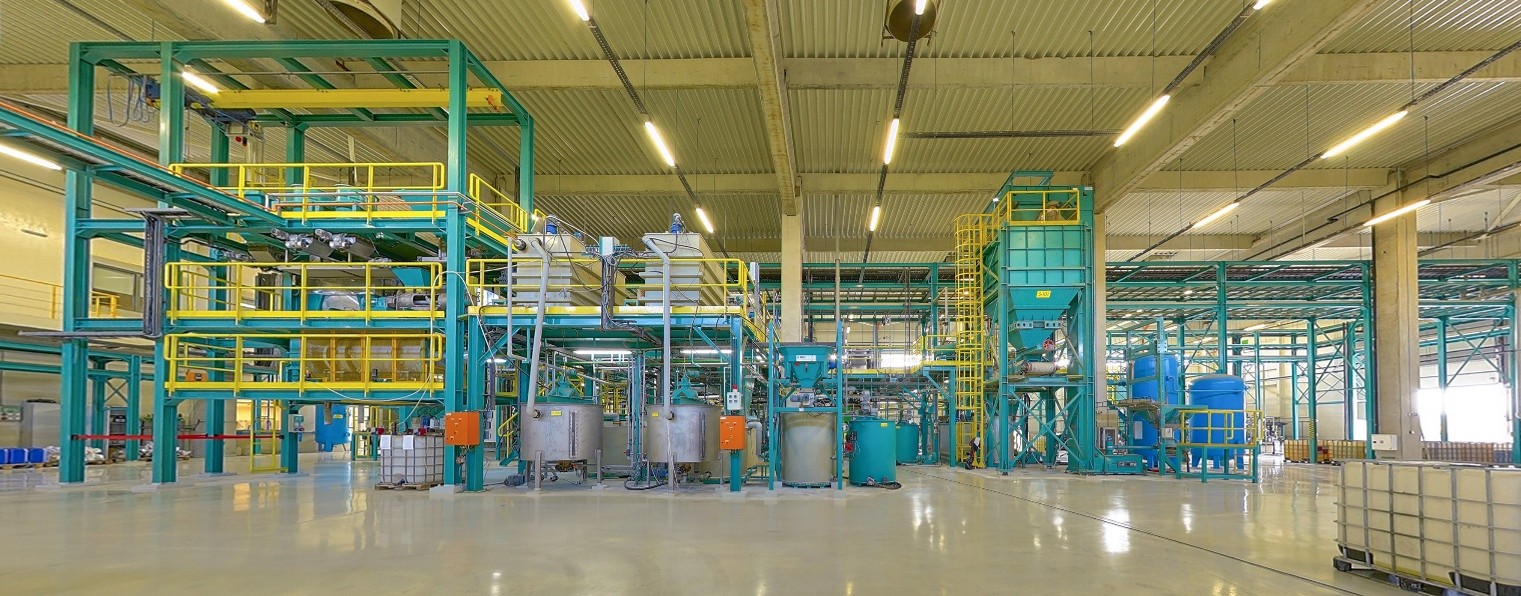
Technophos is an R&D and scale-up centre in Bulgaria, specialising in sustainable chemical engineering with deep expertise in phosphorus chemistry and phosphate-based materials. Technophos supports companies, technology developers, and research organisations in transforming innovative concepts into validated, scalable processes, bridging the critical gap from TRL 2–3 to TRL 6–7. Core value lies in accelerating the transition from laboratory results to industrially relevant solutions. Through integrated laboratory, pilot and semi-industrial infrastructure, Technophos designs, tests, optimises, and validates processes under real-world conditions, significantly reducing technical risk and time to market.
Technophos has extensive experience across the phosphorus value chain, including recovery, purification, and conversion of phosphorus streams from both primary and secondary sources. They work with complex raw materials such as ores, industrial residues, and recycled streams, supporting circularity and improved resource efficiency. To date, they have processed more than 40 raw materials, successfully delivered over 60 projects, and established collaborations with clients and partners across six continents.
Technophos joined the European Sustainable Phosphorus Platform (ESPP) to actively contribute to the development and deployment of sustainable phosphorus solutions in Europe, in particular phosphorus recovery and recycling, valorisation of secondary raw materials, and production of high-value phosphate products. “We are interested in collaboration with industrial partners, technology developers, and research groups seeking to validate and scale innovative processes. Through ESPP, we aim to build strong partnerships that accelerate the uptake of circular solutions and bring next-generation phosphorus technologies closer to market”.
Technophos is owned by Prayon (ESPP member) and UM6P Morocco. https://technophos.com/
Policy
EU and USA suspend certain import tariffs on fertilisers
The EU has suspended for some countries the common goods customs tariff (but not for Russia and Belarus). The USA has declared a fertiliser supply emergency and suspended certain tariffs on imports from Morocco.
The EU has suspended for one year and for some countries the common goods customs tariff of 5.5 – 6.5 % on imports of fertilisers. Imports from Russia and Belarus will continue to face tariffs progressively increasing to 100% by July 2028 (see ESPP eNews n°98). The suspension will only apply to countries with MFN (Most Favoured Nation) trade agreements with the EU and which do not already have a zero-tariff Trade Agreement with the EU, and then only up to a defined limit per country. Fertilisers from countries without MFN status will continue to pay the common customs tariff. The tariff suspension is indicated to result in loss of 60 million € customs revenue, with the intention of benefiting farmers, for whom fertiliser prices have increased substantially following Russia’s attack on Ukraine and now the US-Israel war against Iran in the Hormoz Straits. Amongst significant fertiliser exports, AI (not verified) suggests that tariffs will not be modified (already often zero tariffs, e.g. under Euro-Mediterranean Association agreement) for e.g. Algeria, Canada, Egypt, Israel, Jordan, Morocco, Tunisia, South Africa, Ukraine; but will be removed (subject to limits) for e.g. Australia, China, Kazakhstan, Saudi Arabia, USA. Fertilizers Europe states that this decision risks weakening Europe’s domestic fertiliser industry and is contrary to objectives or strategic autonomy, resilient supply chains and stronger domestic industrial capacity.
The USA has declared “an emergency regarding threats to the availability of sufficient supplies of fertilizers to meet America’s agricultural demand” stating that “global supply chains for phosphate fertilizer and fertilizer inputs have been recently disrupted due to events such as conflicts in fertilizer-producing regions and trade actions taken by major fertilizer-producing countries”. Consequently, the USA has temporarily suspended “certain duties on phosphate fertilizer imported from Morocco”.
“Council suspends customs tariffs on certain fertilisers for one year”, 22 May 2026 https://www.consilium.europa.eu/en/press/press-releases/2026/05/22/council-suspends-customs-tariffs-on-certain-fertilisers-for-one-year/
Fertilizers Europe statement, 27 May 2026 https://www.worldfertilizer.com/nitrogen/29052026/fertilizers-europe-releases-statement-on-mfn-tariff-suspension/
“Fact Sheet: President Donald J. Trump Declares an Emergency and Authorizes the Temporary Suspension of Certain Duties on Phosphate Fertilizer from Morocco”, 29 June 2026 https://www.whitehouse.gov/fact-sheets/2026/06/fact-sheet-president-donald-j-trump-declares-an-emergency-and-authorizes-the-temporary-suspension-of-certain-duties-on-phosphate-fertilizer-from-morocco/
Sewage recognised as key stream for Critical Raw Material (CRM) recovery
EU Implementing Regulation 2026/1116 identifying waste streams relevant for CRM recovery includes sewage sludge, ashes from incineration of sewage sludge and other wastes, digestate and compost from biowaste. More precisely, waste streams cited relevant to phosphate (‘Phosphate Rock’ is listed under the Critical Raw Materials Act 2024/1252) are:
- Digestate and compost from separately collected biowaste.
- Sludges and ashes, in particular:
- Sewage sludge from urban wastewater treatment
- Bottom and fly ashes resulting from the mono-incineration of sludges from the treatment of urban wastewater
- Bottom ashes from municipal solid waste incineration
- Bottom ashes from commercial or industrial waste incineration
- Batteries [relevant for LFP battery cathodes]
ESPP regrets that digestate and compost are limited to those from biowaste, whereas the biggest potential for nutrient recovery in digestates and composts is from manure, agri-food wastes and bio-economy process streams. Quantities of such digestate are expected to increase considerably with the EU RED II (Renewable Energy Directive) biomethane objectives (see Lucile Sever, EBA, in SCOPE Newsletter n°153). We also do not see why other treatments of biowaste should be excluded (e.g. pyrolysis, gasification).
ESPP’s submission to the public consultation preparatory to this Implementing Regulation suggested to also list:
- Animal manures and slurries, which contain in total a similar quantity of P to that used in mineral fertilisers,
- Agricultural run-off water (e.g. in tile or ditch drainage of fields), dredging muds and sediment,
- Streams from food industry, dairy processing, slaughterhouses, and from bio-fuels, bio-materials, biorefineries, etc.
- Spent ABC fire extinguisher powders, which contain significant tonnages of ammonium phosphates,
- Metal processing liquors and ‘spent’ industrial phosphoric acids,
- Algae and biomass grown in wastewater treatment systems or harvested, e.g. beach cleaning, biomass removal from canals …
Commission Implementing Regulation 2026/1116 “listing the products, components and waste streams considered as having a relevant critical raw materials recovery potential under Regulation (EU) 2024/1252”, 26th May 2026 https://eur-lex.europa.eu/legal-content/EN/TXT/?uri=OJ:L_202601116
European Parliamentary Question on phosphate recycling to animal feed
Question from Alice Teodorescu Måwe (MEP, Sweden, Christian Democrats) asks for action to enable P-recycling to animal feed, to include phosphorus in the Circular Economy Act and to end phosphate imports from Russia. The formal procedure question posed by the Member of the European Parliament asks the European Commission (who must reply in writing) whether it will review the blanket exclusion in the Animal Feed Regulation 767/2009 of recycling to animal feeds of materials from manure and sewage sludge, irrespective of processing, which today prevents recycling of purified phosphate salts from ashes. It further asks whether action to reduce EU reliance on imported phosphates will be address in the upcoming EU Circular Economy Act and whether the Commission intends to terminate imports of phosphates from Russia. Around 25% of EU phosphate fertiliser imports still come from Russia (see ESPP eNews n°96). Limited tariffs were put in place in 2025, becoming significant only mid 2028 (see ESPP eNews n°98).
European Parliament, Alice Teodorescu Måwe, 2nd June 2026 “Russian phosphorus imports and EU barriers to domestic phosphorus recycling” https://www.europarl.europa.eu/doceo/document/E-10-2026-002222_EN.html
Fertilisers
Proposed definitions for “bio-based” and “recycled” fertilisers
Such definitions are necessary to enable public policies or purchasing criteria for recycled nutrients. ESPP has developed, after wide stakeholder input, proposals for regulatory definitions of “bio-based” and “recycled” fertilising products and nutrients. ESPP initially developed proposals in a stakeholder workshop in January 2024 (SCOPE Newsletter n°150),and this has now been developed through to proposed regulatory texts, presented as a discussion document, with different options for wording where stakeholder positions vary. ESPP suggests that these definitions could be included into the Biotech Act, the Circular Economy Act and/or the Fertilising Products Regulation.
ESPP underlines that:
- definitions of “bio-based –“ and “recycled –“ should be defined concurrently and in the same place, to ensure regulatory coherence and market clarity. The term ‘recycled’ could be replaced by ‘circular’ or ‘secondary’
- definitions should be applicable to “fertilisers”, to “fertilising products” and to “nutrients”.
- there should be appropriate, official, structured consultation before adopting such definitions.
- definitions should not be applicable only to CE-Mark fertilising products, but should be transposable to National fertilisers, industrial recycling of nutrients …
- legally robust and implementable wording is necessary, but complex. Without a precise and detailed legal text, general definitions will not be sufficient to implement policies (such as CAP subsidy or tax differentials) or public or private purchasing criteria.
The general definitions proposed by ESPP are based on existing texts where possible (e.g. European Standard EN 16575 (August 2014) “Bio-based products: vocabulary”) but are widened to ensure that recycling routes and materials are not arbitrarily excluded (e.g. because classified as a “waste” in one Member State and as a “by-product” in another) and are detailed to enable application to both nutrients and organic carbon in fertilisers, other fertilising products and industrial applications of nutrients.
The general definitions proposed by ESPP are as follows:
- ‘recycled content’ means the part originating from recovery operations from any secondary material(s) or by-products and which substitute a primary material.
- ‘bio-based content’ means the part which is derived from biomass, that is material of biological origin excluding material embedded in geological formations and/or fossilised resources, and may have undergone physical, chemical, thermal or biological treatment”.
Points where stakeholders’ positions differ and which are proposed for discussion are in particular:
- Use of the word ‘recycled’, or ‘secondary’, or ‘circular’ ?
- Should recycling include from by-products or only from waste ?
- Should the definition include the substitution of primary material ?
- Should nutrients be only considered in ‘fertilisers’ or also in other fertilising products, where they may not be significant.
ESPP proposed definitions for “Bio-based” and “Recycled” fertilisers, fertilising products and nutrients. 8th July 2026. At www.phosphorusplatform.eu/regulatory
Simplifications to EU Fertilising Products Regulation (FPR) agreed
The provisional European Parliament – Council agreed text of changes to the FPR: removal (in most cases) of the REACH+ obligation, possible criteria-based CMC, acceleration of inclusion of (some) ABPs, digitalisation.
Trying to use words accessible to non-FPR experts, this means:
- The current FPR requires documentation and testing for components which, for those used in low volumes, go beyond standard EU chemicals regulation (REACH) obligations. This is currently an obstacle to use of components such as additives, processing aids. This ‘REACH+’ requirement is now only applicable to substances with specific hazards used above certain concentrations. This corresponds to a need identified by industry federations and ESPP in May 2025, although the text differs somewhat from the joint proposal.
- The Commission should propose, if possible, criteria and methodology for allowing “timely” new input materials (or categories of materials) for use under the FPR, by demonstrating their safety and agronomic value, possible as an additional “CMC” which specifies criteria rather than listing materials and processes. This corresponds to a joint request made by industry federations and ESPP in March 2026, see ESPP eNews 105, with the aim of enabling innovative, bio-based and recycled materials to enter the FPR. The Council-Parliament agreed wording is complex but industry and ESPP have already proposed to work with the European Commission to propose workable solutions. The text refers to safety and agronomic value of the added materials, but not (as in the current text of the FPR art. 42) to “potential … significant trade on the internal market”. This corresponds to a request by ESPP because many bio-economy and secondary nutrient streams are local and maybe destined for local recycling, but FPR recognition opens an EU market for the recycling process.
- The Commission should include rapidly animal by-products (ABPs), for which an “End Point” for use in fertilisers is defined, into the FPR, after safety implications of use as fertilisers. ESPP notes that although this is positive, all ABPs for which an End Point is defined are now near to being finally added into the FPR after significant delays and the text does not refer to accelerating this “End Point” process. The adoption of this text will however give a political signal to DG SANTE that European Parliament and Council want to see addressed regulatory obstacles to recycling of ABP nutrients.
This ‘omnibus’ regulation makes a number of modifications to the EU Fertilising Products Regulation (FPR), the chemicals Classification, Labelling and Packaging Regulation (CLP) and to the Cosmetics Regulation, with the aims of simplification and streamlining. This published “compromise” text is that agreed by the European Parliament and European Council negotiators, and validated by the Council. To be legally finalised, it must now be ratified by Parliament (does not normally result in further changes) and checked by Commission lawyers (may result in some rewording).
Compromise text of 16th June 2026, validated, validated by Council (Permanent Representatives Committee) 26th June 2026 for a Regulation “amending Regulations (EC) No 1272/2008, (EC) No 1223/2009 and (EU) 2019/1009 as regards simplification of certain requirements and procedures for chemical products”, Interinstitutional File 2025/0531 (COD) https://data.consilium.europa.eu/doc/document/ST-11042-2026-INIT/en/pdf
Clarifications on recycling of various materials to EU fertilisers
European Commission answer on status of wool, dairy products, animal by-products, aquaculture sludge, as possible inputs to CE-Mark fertilising products.
- Sterilised dairy residues from processing food-quality milk products (Cat.3 Animal By-Products) cannot be used as inputs to production of CE-Mark struvite (EU Fertilising Products Regulation (FPR) precipitated phosphate salts CMC12), nor indeed be used directly as such in CE-Mark fertilising products. This is despite being of food origin, sterilised as specified in annex X, chapter II, section 4 of the Animal By-Product health rules regulation 142/2011) as well as additional microfiltration. The Commission indicates that this is because Cat.3 ABPs are not included in 2023/1605 (except as inputs to compost, digestate, ash-based materials) and that this is because they are not considered to be “already widely used in the Union as organic fertilisers and soil improvers”. The Commission indicates however that these dairy residues can be used as input to production of CE-Mark struvite after composting or anaerobic digestion according to the conditions in the ABP Regulations (142/2011, as per 2023/1605).
ESPP notes that this is a typical example of a nutrient-rich, a priori safe recycling stream being excluded from the FPR because of the limitative lists of inputs which in effect limit to a few processing routes. This fails to respond to innovation, circularity and bio-economy, where different processing streams may be used locally or for some materials because of specific local resources and opportunities.
- Pyrolysis of biowaste (and other Cat.2-3 animal by-products). These materials cannot be used as inputs to production of CE-Mark biochars (FPR CMC14 pyrolysis and gasification). This is because no such ABP End Point is defined in 2023/1605. ESPP notes that, considering the case of the sterilised dairy residues above, it would make no difference if the biowaste was sterilised prior to pyrolysis.
These materials can however be input to CMC14 pyrolysis after composting or anaerobic digestion according to the conditions in the ABP Regulations (142/2011, as per 2023/1605) even if the composting or digestion process does not respect FPR CMC3 or CMC5.
On the other hand, these materials cannot be first pyrolysed (as per FPR CMC14) and then input to composting or anaerobic digestion (even if these processes respect both the ABP and the FPR processing criteria), because points 1(c) of CMC3 and CMC5 have a limitative list of upstream processes, which does not include pyrolysis.
The Commission suggests that stakeholders identify relevant processes, prepare data and (via a National Authority) request an EFSA Opinion, in order to enable new opportunities for valorisation of Animal By-Products within the FPR.
- Wool and hair. The relevance of these as inputs to fertilising products, when other uses are not possible, has been repeatedly noted by stakeholders (rich in nitrogen). The Commission replies that wool and hair were assessed in the EFSA Opinion on use of a number of Animal By Products in fertilisers (October 2021, see ESPP eNews n°61) and that this Opinion did not support authorising use of these materials in the FPR.
ESPP notes that this EFSA Opinion concluded that the currently prescribed treatment (pH > 12-12 x 5-60 minutes) could only eliminate considered pathogens with 1-50% certainty, but that EFSA indicated “Longer times would result in the reduction of
uncertainty on the efficacy of the process”. ESPP suggests that stakeholders should therefore propose more effective processing criteria and data to support that they ensure safety, then request (via a National Authority) an update of the EFSA Opinion, to then if positive justify inclusion into the FPR.
- Recycled additives. The Commission confirms that any material deliberately incorporated into a CE-Mark fertiliser must correspond to a CMC, even processing additives used at extremely low levels.
ESPP suggests that this effectively excludes recycled additives, because they do not fit into an existing CMC and face complex Conformity Assessment, and that it is disproportionate for non-hazardous additives used at very low doses. This is demonstrated by NMI’s negative proposed conclusion for recycled lubricants.
ESPP letters to the European Commission concerning various possible input materials for the EU Fertilising Products Regulation, dated 8th April 2026, 19th April 2026 and European Commission (DG GROW) reply of 29th June 2026.
ESPP letter to the European Commission concerning the EU Fertilising Products Regulation, dated 16th March 2026, following from the ESPP webinar of 25th February 2026, and European Commission (DG GROW) reply of 25th June 2026.
All on www.phosphorusplatform.eu/regulatory
Nutrient recycling from aquaculture sludge
European Commission and EFSA clarifications on fish sludge
The European Commission confirms fish sludge is a Cat.2 Animal By-Product and can today be used in EU fertilising products after appropriate composting, anaerobic digestion or combustion (ash-derived products).
EFSA confirms that an Opinion request can be submitted by stakeholders, but only via a Member State.
ESPP requested confirmation from the European Commission that “fish sludge” is an Animal By-Product Cat.2. The Commission reminds that the interpretation of EU legislation is the right of courts, but that a priori “fish sludge” is an Animal By-Product Cat 2 under 1069/2009 art. 9(h). The Commission considers that that the regulatory situation outlined by Matjaz Klemencic of DG SANTE at ESPP’s meeting on nutrients in Aquaculture (Bergen 2025) was “comprehensive and clear … and supported by the relevant legal references” and that the summary in ESPP’s SCOPE Newsletter n° 158 is in line. It is not “manure” but is covered by the Animal By-Products Regulations. Consequently, the Commission confirms that fish sludge can be used today in certain CMCs 3, 5 and 13 for CE-Mark fertilising products (under the EU Fertilising Products Regulation FPR): as an input material to composting (CMC3), anaerobic digestion (CMC5), ash-derived materials (CMC13). In all cases the defined processing conditions and other specifications of both the FPR and the Animal By-Products Regulations must be respected, in particular the processing conditions set out in the ABP daughter regulation 142/2011 and for combustion the Industrial Emissions Directive (IED).
The Commission notes that certain aquaculture stakeholders seem to wish for authorisation of use of fish sludge in the FPR under different or less demanding processing conditions and that they are open to explore this. They note that fish sludge seems to be variable and that different stakeholders seem to have different objectives. The Commission underline that to move forwards agreed stakeholder objectives should be clarified, and data is needed on the composition and variation of fish sludge, on intended uses and on intended processing technologies or routes. Stakeholders also need to work with National Animal By-Product authorities. The Commission also suggests that fertiliser operators may need to improve their familiarity with the Animal By-Products Regulations which offers pathways to include ABPs and Derived Products into FPR fertilising products.
ESPP asked EFSA (European Food Safety Agency) how could be obtained an EFSA Scientific Opinion on the safety of use of fish sludge in fertilising products, after different processing routes. EFSA confirms that it can issue Scientific Opinions, on request of the European Commission or of a Member State (including Norway). Companies or stakeholders wishing to obtain such an Opinion therefore need to obtain a Member State agreement to submit and prepare with the Member State a request using the standard format.
ESPP letter to the European Commission concerning regulatory status of fish sludge 18_6_2026 and reply 19_6_2026
ESPP letter to EFSA 18_6_2026 and EFSA reply (Biological Hazards & Animal Health and Welfare BIOHAW) 30_6_2026
Summary of UNEP webinar on aquaculture nutrient sustainability
200 participants joined the webinar organised by UNEP GPNM, NORCE, Aquaphoenix project. Fish sludge collection and valorisation is key to aquaculture sustainability and technologies are now operational to recover and recycle.
Manuel Barange, FAO, explained that aquaculture today has higher production of fish and other animals (102 Mt/y worldwide, around 2/3 from inland aquaculture) than wild harvest, plus 40 Mt/y of aquaculture algae production, with average growth of +5% per year since 2000. Several hundred species of fish are cultivated, orders of magnitude higher than for land livestock. Aquaculture offers much higher feed efficiency than land-based animals, but sustainability is an important challenge (see FAO “Guidelines for Sustainable Aquaculture”, presented in ESPP’s SCOPE Newsletter n°158). Continuing growth of aquaculture is needed to contribute to feeding the world’s population.
Vivi Fleming, Finnish Environment Institute SYKE, presented the continuing eutrophication problems of the Baltic. Despite phosphorus inputs having been stabilised more than a decade ago, eutrophication symptoms are not reducing (measured by algal growth by chlorophyl-a). This is because of remobilisation of phosphorus stored in sediments, exacerbated by climate change. Agriculture contributes more than 2/3 of phosphorus input to the Baltic, forested land a further 15%, but aquaculture can represent significant local inputs and needs to be addressed.
Hans Kleivdal, NORCE and Aquaphoenix project, indicated that Norway produces 1.5 Mt/year of salmon, but this is not growing, because of environmental challenges, in particular fish lice and nutrient release with fish sludge. Norway’s fish sludge contains over 220 kt/y of organic carbon, 60 kt/y nitrogen and 14 ktP/y phosphorus, whereas Norway imports nearly 2 000 t/y of fish food, over 90% of which is based on imported soy. Aquaphoenix aims to be a global demonstration of closing this open cycle, by collecting fish sludge, recovering and recycling nutrients, and valorising carbon as biogas or to soil. The project involves both technology development and working with stakeholders to develop a circularity value chain.
Kristine Dahlgren, Eide, presented the company’s Watermoon technology for closed in-sea salmon aquaculture, avoiding fish lice and recovery fish sludge for valorisation. Eide is a family aquaculture company, with over 50 years’ history and today around 200 staff. To address sustainability challenges, and unable to find a commercial technology, Eide developed Watermoon in-house with a 30 m3 volume pilot first operated in 2021. A first full scale installation 30 000 m3 was commissioned in 2024 and is currently in its third production season. The season showed production of nearly 200 000 salmon/year and the second nearly 400 000 salmon/year, average 4-5 kg. The system is a completely closed membrane bag. Water is captured at depth (>50m), injected from the sides of the bag, and flows out the base, ensuring water circulation and enabling collection of the fish sludge which accumulates in the base of the bag. The flexible bag structure renders the system resilient in the sea and the whole system can be submerged in operation down to 20m to avoid wave damage during storms. The use of deep water aims to avoid fish lice, and zero lice have been detected in the pilot installation and in 2+ years full-scale. Three further full-scale installations are now being built.
The webinar was chaired by Pär Larshans, Ragn-Sells, who underlined the company’s aim to rapidly develop recycling of phosphorus from fish sludge, combined with valorisation of carbon and other nutrients. He mentioned the challenge that EU legislation today does not define or recognise fish sludge, with the consequence that recycling of nutrients from fish sludge is largely excluded from the EU Fertilising Products Regulation and impeded by the Animal By-Products Regulations.
Wanjiru Edna, UNEP (United Nations Environment Programme), concluded the webinar, underlining that aquatic food systems play a vital role in global food security, nutrition and livelihoods, but they must also address the challenge of nutrient pollution, and must take into account climate change and biodiversity. Circularity must become a guiding principle for sustainable aquaculture, and nutrient-rich waste should no longer be seen as something to dispose of, but as a valuable resource that can be recovered, reused and reintegrated into productive systems.
UNEP GPNM - NORCE - AQUAPHOENIX Webinar “Turning Waste into Value: The Circular Aquaculture Solution That Can Boost Food Production”, 26th June 2026. Watch online here https://youtu.be/bkIf48qaST8
Phosphorus and health
Obesity, phosphate and breast cancer
UK Biobank study confirms BMI (body mass index) – breast cancer correlation, and suggests that this seems to be partly mitigated by higher blood phosphate levels. UK Biobank data was analysed for nearly 200 000 women aged 40-69 (median 57 years) without prior tumour diagnosis at date of enrolment or within two years. Blood serum phosphate and BMI were measured at enrolment. Breast cancer appearance within 10-14 years was assessed. Over half of the women were overweight or obese (39% overweight, 16% obesity class I, 6% obesity class II and 2 % obesity class III. This is somewhat higher than the European average reported by Stival et al. (2022) for 2017-2018: 43% overweight or obese. After correcting for lifestyle factors, BMI showed a positive correlation to breast cancer: OR (Odds Ratio) = 1.014 (1.4% increased cancer risk). This correlation was reduced by nearly half (to 1.008) when taking into account serum phosphate: higher serum phosphate showed a protective impact against breast cancer. The authors note that other studies suggest that elevated BMI when young does not increase breast cancer risk, whereas adult BMI is positively linked to postmenopausal breast cancer risk, especially oestrogen receptor positive cancers, and that this may be related to production of oestrogen or of cytotoxins by adipose tissue. Elevated BMI can be linked to decreased serum phosphate because BMI is linked to insulin resistance, which leads to release of FGF23 hormone by bone tissue, and this hormone increases renal phosphate elimination. On the other hand, studies have shown that elevated phosphate can inhibit breast cancer cell proliferation (mediated by ERK 1/2 and STAT3 pathways) (Spina et al. 2013). ESPP notes that evidence is today unclear as to whether increased phosphorus in diet leads to increased baseline (not after eating) serum phosphate levels in healthy humans (without kidney impairment).
“The Mediating Role of Serum Phosphate in the BMI–Breast Cancer Association: A Prospective Study from the UK Biobank”, W. Yang et al., Clinical Breast Cancer, Vol. 26, 52–61, 2026 https://doi.org/10.1016/j.clbc.2026.03.019
Blood phosphate levels not linked to mortality in people with normal kidney function
Epidemiological study of over 15 000 persons from US NHNES survey suggests that blood phosphate levels in normal range are not linked to mortality for persons with normal kidney function. The study used data from 15 848 individuals with initial blood (serum) phosphate 2.5 – 4.5 mgP/dl from the third US National Health and Nutrition Examination Survey, with median follow up of nearly 27 years. High-normal serum P was significantly correlated to all-cause mortality but not after adjusting for e.g. educational status, smoking … However, for individuals with reduced kidney function (glomerular filtration rate < 60 ml/min/1.73m2 serum P was significantly correlated to mortality. The authors note that other studies have shown that high blood phosphate levels are associated with increased mortality.
ESPP suggests that this study shows a non-significant link between blood phosphate levels and mortality risk, even in the normal blood phosphate level range, after correcting for other factors and for persons with normal kidney function. Other studies suggest that elevated blood phosphate in humans is linked to mortality, in particular heart disease, but without proving cause-effect (see ESPP eNews n°65). Possible mechanisms include precipitation of calcium phosphate leading to artery hardening and modification of hormone balances. There is experimental evidence suggesting that high P diet in mice leads to higher mortality risks, but no clear evidence for humans. It can be argued that high phosphorus in diet will be eliminated by kidneys (for persons with normal kidney function), however phosphorus intake will lead to increased blood phosphorus for up to 6 hours after a meal. Phosphorus regulation is an important problem for persons with CKD (chronic kidney disease), that is some 30 million people in Europe (see SCOPE Newsletter n°125).
“Association between serum phosphate levels within the normal range and all-cause mortality among US adults”, M. Yamamoto et al., Journal of the Endocrine Society, 2026, 10, bvag021, https://doi.org/10.1210/jendso/bvag021
High phosphorus diet linked to risk to kidneys, hormone, immune and neural systems
Mice fed phosphorus levels equivalent to five times higher than US average human dietary intake showed effects on kidney, spleen, thymus, the immune system and on factors related to neural function. The trial used 40 female 6-8 year old young adult BALB/c mice (highly inbred strain, high genetic similarity, high Th2 immune bias and antibody production). They were fed diets with 100, 200 or 400 mg/k phosphorus (as STPP sodium tri poly phosphate, an authorised human food additive) for 15 days (c. 1/40th of female mouse life expectancy) with or without daily intraperitoneal injection of LPS (lipopolysaccharide) to simulate inflammation. These diet P levels are considered equivalent to dietary P intake for adult humans of 1.67, 2.6 and 4.5 gP/day (compared to 0average US adult intake of 1.6 gP/day and the Tolerable Upper Intake Level of 4 gP/day set by the US National Academy of Sciences, Engineering & Medicine). A range of organ parameters, immunoglobulins (slgA, IgA, IgE, IgM, indicators of immune reaction), interferon-α (IFN-α) and interleukin-1β (IL-1β) were analysed. Conclusions suggest that the high P diet may affect immune and neural system functions through tumour related signalling and damage kidney, spleen and thymus.
“Effects of High Inorganic Phosphorus Diet on Intestinal Mucosal Injury and Immune Disfunction in Mice”, Z. Sun et al., Toxicology Journal, pre-print (not yet peer- reviewed 6/2026) https://doi.org/10.20944/preprints202603.2278.v1
ESPP Members
Stay informed
SCOPE Newsletter: www.phosphorusplatform.eu/SCOPEnewsletter eNews newsletter: www.phosphorusplatform.eu/eNewshome
If you do not already receive ESPP’s SCOPE Newsletter and eNews (same emailing list), subscribe at www.phosphorusplatform.eu/subscribe
LinkedIn: https://www.linkedin.com/company/phosphorusplatform
Slideshare presentations: https://www.slideshare.net/phosphorusplatform