Newsletter about nutrient stewardship - European Sustainable Phosphorus Platform (ESPP)
Please subscribe www.phosphorusplatform.eu/Subscribe
Link to www.phosphorusplatform.eu/eNews102
Download as PDF
Help ESPP continue sharing free information on phosphorus sustainability! DONATE NOW
Open calls and consultations
Tender for labs for standards ring tests for nutrient polymers
EU ‘Critical Chemicals Alliance’ (CCA) launched, open to join
EU consultation: Taxonomy
EU consultation: market surveillance and product compliance
EU consultation: public procurement rules
EU consultation: Advanced Materials Act
EU consultation: New Legislative Framework (Digital Product Passport, circularity)
Policy
European Commission Workplan for 2026
Updated EU BioEconomy Strategy published
EU fixes -10% / -30% food waste reduction targets
UK draft Standard for principles of ‘nutrient markets’
Phosphate and potash added to US Critical Minerals List
ESPP participates in EESC debate on ‘Permanent Materials and Phosphorus Circularity”
EU Soil Health Monitoring Directive adopted
Events
18th CRU Phosphates & Potash 2026, Paris, 13-15 April 2026
25th ICPC Phosphorus Chemistry conference, Montpellier, 5-8 July 2026
Nutrient recycling
ESPP new member: Shit2Power
SusPhos – SNB P-recovery project obtains NL Government subsidy
Germany inaugurates first industrial-scale AshDec® plant for phosphorus recovery
NPHarvest pilot P and N recovery unit at biogas plant, Aslan, Ankara, Turkey
EU Fertilising Products Regulation (FPR)
Tracegrow fertilisers from recycled batteries and battery industrial sidestreams
EasyMining webinar on recovered calcium phosphate
ESPP Members
Stay informed
Open calls and consultations
Tender for labs for standards ring tests for nutrient polymers
Deadline 24th December 2025. CEN/CENELEC tender for laboratories to carry out ring testing for standards development of ‘Determination of the final degradation products in nutrient polymers’, for CEN/TC 260/WG7 (Inorganic fertilisers and inhibitors). The standard is under development following the European Commission standardisation request M/564 to support the EU Fertilising Products Regulation.
“Open Call for Tender for laboratories participating in an inter-laboratory study for nutrient polymers in CEN/TC 260/WG 7 'Inorganic fertilizers and inhibitors', CEN/CENELEC, published 19th November 2025.
Applications must be sent by 24th December 2025 to
Call documents and information: https://www.cencenelec.eu/news-events/news/2025/call-for-tender/2025-11-19-ils_laboratories/
EU ‘Critical Chemicals Alliance’ (CCA) launched, open to join
Led by the European Commission (DG GROW), the Critical Chemicals Alliance, with Member States, aims to identify critical chemical molecules and production sites, map critical molecules and facilitate relevant investments. This follows the Commission’s ‘Chemicals Action Plan’ announced in July 2025 (ESPP eNews n°99). The Alliance will develop criteria to identify chemicals and chemical production sites which are critical for EU strategic objectives, based on importance for downstream strategic sectors, production and value chain resilience, dependency on third countries or suppliers. The Alliance aims to facilitate investment in critical chemicals and sites, and also in alternative carbon sources including biomass, recycled waste and carbon capture and utilisation (CCU).
Any organisation with “relevant activities in the chemicals industry”, including companies, associations, investors, research and civil society, can apply to join the Alliance.
ESPP has applied to join the Alliance and will support recognition of P4 (white phosphorus) as a ‘Critical Chemical’, because of EU supply dependency on Vietnam and Kazakhstan, and because P4 is essential to the industry sectors defined as “strategic” in the EU Critical Materials Act 2024/1252: renewable energies, electronics, aerospace. ESPP will also support recognition of phosphates and of fertilisers as ‘Critical Chemicals’ and as critical production sites.
The European Commission also launched (2nd July) an “Energy and Raw Materials Platform”. For materials, this concerns only “Strategic” Raw Materials (P4 and Phosphate Rock are not classed ‘Strategic’ in the Critical Raw Materials Act). For ‘Strategic’ raw materials, this Platform will facilitate joint purchasing, access to supply and stockpiling.
“Commission announces launch of Critical Chemicals Alliance to strengthen Europe's chemical sector” 28th October 2025 https://single-market-economy.ec.europa.eu/news/commission-announces-launch-critical-chemicals-alliance-strengthen-europes-chemical-sector-2025-10-28_en
EU Critical Chemicals Alliance (CCA) website https://single-market-economy.ec.europa.eu/sectors/chemicals/critical-chemicals-alliance_en
Critical Chemicals Alliance membership application: https://ec.europa.eu/eusurvey/runner/CCA_apply
EU consultation: Taxonomy
Two public consultations open to 5th December to simplify and update the ‘Taxonomy’ (green finance) criteria for environment and climate activities, including P-recovery from wastewater, anaerobic digestion and digestates. The consultation aims only to simplify the criteria for ‘green’ funding of (1) environmental activities (2023/2486) and (2) climate change mitigation/adaptation (2021/2139), so does not invite to propose widening of criteria or inclusion of new activities. The current criteria include phosphorus recovery from waste water, requiring recovery of 15% of waste water treatment plant inflow phosphorus or 80% of phosphorus in sewage sludge incineration ash, and recovery of phosphorus as a recognised fertiliser or industrial phosphate product. The current criteria also cover anaerobic digestion for biogas production and of bio-waste, stating that the resulting digestate should be used as a fertiliser. ESPP will propose to the public consultations changes to improve coherence with other regulations, so facilitating operator and investor implementation: include P-recovery from digestates for non-fertiliser use of the P, P-recovery from waste streams other than sewage (coherence with FPR CMCs 12 and 13), alignment of the currently ambiguous Taxonomy specifications that the recovered P must be a fertilising product with the more precise wording of the EU Fertilising Products Regulation (including phosphorus crop availability requirement FPR Annex III ‘Labelling’, part II, 4(b)).
Two EU public consultations open to 5th December 2025, in both cases input = 4000 characters text plus optional attached document:
“Sustainable investment – review of the EU taxonomy environmental delegated act” (concerns P-recovery from urban waste water treatment Annex II $2.1) https://ec.europa.eu/info/law/better-regulation/have-your-say/initiatives/14874-Sustainable-investment-review-of-the-EU-taxonomy-environmental-delegated-act_en
“Sustainable investment – review of the EU taxonomy climate delegated act (concerns biogas production - anaerobic digestion and digestates) https://ec.europa.eu/info/law/better-regulation/have-your-say/initiatives/14875-Sustainable-investment-review-of-the-EU-taxonomy-climate-delegated-act_en
EU consultation: market surveillance and product compliance
Public consultation open to 4th February 2026. Aim is to identify issues with market surveillance and product regulatory compliance which pose risks to consumers, workers or the environment, including looking at inconsistencies in enforcement in different Member States, enforcement for imports and e-commerce, improving coordination and expertise between national authorities, EU governance of enforcement. Unless we receive comments from members, ESPP does not intend to input to this consultation.
EU public consultation open to 4th February 2026, “Market surveillance and compliance of products –evaluation and possible revision of Regulation (EU)2019/1020” https://ec.europa.eu/info/law/better-regulation/have-your-say/initiatives/14807-Market-surveillance-and-compliance-of-products-evaluation-and-possible-revision-of-Regulation-EU-2019-1020_en
EU consultation: public procurement rules
Public consultation open to 26th January 2026. Aim is to improve clarity and effectiveness of the EU Public Procurement (PP) framework and to better use PP to support sustainability and resilience. ESPP input into a previous EU consultation on Public Procurement (7th March 2025, one-page document online here) suggesting that PP should move from prioritising the lowest price option towards price-quality ratio, taking into account environmental and circularity aspects.
EU public consultation open to 26th January 2026, “EU public procurement rules – revision” https://ec.europa.eu/info/law/better-regulation/have-your-say/initiatives/15492-EU-public-procurement-rules-revision_en
EU consultation: Advanced Materials Act
Public consultation open to 13th January 2026. This proposed Regulation aims to support research and investment, including circularity, in “Advanced Materials” and to simplify regulatory burdens (e.g. permitting, approvals). An OECD ‘working definition’ of Advanced materials is cited: “materials that are rationally designed through the precise control of their composition and/or internal and/or external structure in order to fulfil the functional requirements of a certain application”. The EU consultation document suggests as examples: bio-based materials with enhanced properties or circularity benefits, sodium-ion batteries (to reduce dependency on the CRM lithium), bio-based replacements of PFAS. “Advanced Materials” are thus distinct from “Critical Raw Materials “(CRMs). Unless we receive comments from members, ESPP does not intend to input to this consultation.
EU public consultation open to 26th January 2026, “EU public procurement rules – revision” https://ec.europa.eu/info/law/better-regulation/have-your-say/initiatives/15492-EU-public-procurement-rules-revision_en
EU consultation: New Legislative Framework (Digital Product Passport, circularity)
Public consultation open to 4th February 2026. Aims include to improve digital integration with a mandatory Digital Product Passport (DPP), so improving market surveillance and facilitating the Circular Economy. The present consultation is a public questionnaire covering aspects of product life cycle which could be included in DPP, compliance and conformity costs, functioning of Notified Bodies, type of data carrier (QR code, barcode …), DPP and e-commerce, DPP and CE-Mark, facilitating circularity by digital information on refurbishment and spare parts. Some fertilisers companies have expressed concern that the fertilising products industries are not ready for Digital Product Passport obligations, given the wide range of different products supplied to farmers, difficulties of combining physical labelling obligations with digital information provision and challenges of implementing already labelling obligations of the EU Fertilising Products Regulation. The European Commission has also launched work to define specific rules for digital labelling of CE-Mark fertilising products (as specified in Regulation 2024/2516 on digital labelling of fertilising products). This current public consultation follows a previous call for evidence consultation which closed on 2nd September 2025 (to which ESPP did not input). Unless we receive comments from members, ESPP does not intend to input to this second consultation.
EU public consultation open to 4th February 2026, “Product legislation – ensuring futureproof rules (revision of the New Legislative Framework - NLF)” https://ec.europa.eu/info/law/better-regulation/have-your-say/initiatives/14715-Product-legislation-ensuring-futureproof-rules-revision-of-the-New-Legislative-Framework-NLF-_en
Policy
European Commission Workplan for 2026
The environment is largely absent from the Workplan 2026 which is centred on competitivity and defence. Circular Economy Act, Livestock Strategy, Oceans, Climate and renewable energy updates, and Critical Materials are featured. The Green Deal and biodiversity are not mentioned, and no specific actions are announced for the environment other than the Circular Economy Act. 2026 should see the publication of the EU Livestock Strategy and of a Vision for Fisheries and Aquaculture and a Buy European Food campaign. Climate goals will be maintained with updates to the legal frameworks for climate and renewable energies. With the aims of competitiveness and support to industry, a ‘Critical Raw Materials Centre’ will be proposed to jointly purchase and stockpile Critical Raw Materials, and an Advanced Materials Act is planned.
“Commission work programme 2026. Europe’s Independence Moment” COM(2025)870 https://eur-lex.europa.eu/legal-content/EN/TXT/?uri=celex:52025DC0870
Updated EU BioEconomy Strategy published
Revised BioEconomy Strategy cites fertilisers as a sector with high potential. Actions announced include a Bioeconomy Investment Deployment Group, a Bio-Based Europe Alliance and a Regulators and Innovators Forum to address regulatory barriers and complexity, develop bioeconomy hubs, support bio-based value chains through CAP investment support and other tools, create markets through Green Public Procurement. It is noted that “Closing the nutrient cycle is essential for environmental and economic resilience”. This Strategy is a Commission document, not voted by Parliament and Council. It estimates that the bioeconomy grew by around one third (added value) 2013-2023 reaching around 5% of GDP. The Strategy’s objectives are to scale innovation, develop investments, build lead markets for bio-based materials and technologies, ensure sustainable biomass supply and harness global opportunities.
Bio-based fertilisers (including recycled nutrients, microorganisms and bio-based compounds that improve soil fertility) are repeatedly cited as one ten bio-economy sectors identified as having high potential for economic growth and environmental benefits (alongside plastics, fibres, textiles, chemicals, plant protection products, construction materials, biorefineries, advanced fermentation and biogenic carbon storage. Policies cited for bio-based fertilisers include the EU Fertilising Products Regulation, RENURE (Nitrates Directive), regulatory simplification for biostimulant microorganisms and knowledge exchange on nutrient recycling and on local use of Animal By-Products through the CAP Network, analysis to support increased nitrogen use efficiency in bioeconomy systems, as well as (planned for 2026) developing support for better use of digestate and bio-waste. The Commission summary of consultations notes extensive stakeholder reference to the need to better valorise biological residues and wastes, including to fertilisers.
“Commission presents new Bioeconomy Strategy to drive green growth, competitiveness and resilience across Europe”, European Commission press release 27th November 2025 https://ec.europa.eu/commission/presscorner/detail/en/ip_25_2819BioEconomy
Bioeconomy Strategy “A Strategic Framework for a Competitive and Sustainable EU Bioeconomy” COM(2025) 960 final 27th November 2025 https://environment.ec.europa.eu/publications/bioeconomy-strategy_en
EU fixes -10% / -30% food waste reduction targets
The revised Waste Framework Directive, now published, fixes mandatory targets by 2030 of -10% food waste from industry and -30% from households and catering/hospitality. These are significantly lower than the -50% by 2030 United Nations Sustainable Development Goal 12.3 signed by the EU in 2015. However, the new Directive’s targets are mandatory, with Member States obliged to transpose by 2027, to implement certain actions (defined in the modified Directive art. 9a) and to monitor compliance with the targets. The targets are -10% of food waste from processing and manufacturing and -30% per capita from households or from retail, distribution, restaurants and food services. Targets are by 2030, compared to the 2021-2023 average. They will be reviewed by 2027. The Directive is also modified to specify that Member States must ensure that the “necessary infrastructure is in place for the separate collection of waste”. The revised Directive also introduces Extended Producer Responsibility for textile and footwear wastes and detailed requirements for textile waste management and for a register of textile and footwear producers (including online sales). The aim is to ensure that producers cover costs of textile waste collection, sorting, recycling or reuse, with contribution modulation based on producers’ practices, product ecodesign and lifespan, aiming to penalise ‘fast fashion’.
Directive 2025/1892, 10th September 2025, amending the EU Waste Framework Directive 2008/98/EC https://eur-lex.europa.eu/legal-content/EN/TXT/PDF/?uri=OJ:L_202501892 and see the Consolidated version of the latter https://eur-lex.europa.eu/eli/dir/2008/98/oj/eng
UK draft Standard for principles of ‘nutrient markets’
BSI Flex 704 (project open to comment to 31st December) outlines how nature-based nutrient mitigation solutions can be monetised through ‘nutrient markets’. The aim is to contribute to reducing environmental damage of nutrient losses and improve nutrient use efficiencies. Market mechanisms can respond to mandatory nutrient emission obligations, to business social responsibility or nutrient neutrality objectives by compensating nutrient emissions by mitigation measures. Currently, developers of new housing or overnight accommodation in the UK, if there is a potential for adverse impacts of increased nutrient emissions (sewage), are advised to ensure “nutrient neutrality” (see ESPP eNews n°59 and n°78). This proposed Nutrient Markets Standard refers to the existing UK Nature Markets Standard (BSI Flex 701). It includes definitions (e.g. ‘nutrient credit’, ‘nutrient neutrality’, ‘precautionary buffer’ …) and outlines principles for governance of nutrient markets, transparency and communication, additionality of nutrient credits, validation of credits, duration of measures.
BSI Flex 704 (draft) “Nature markets – Supply of nature-based nutrient benefits – Specification”, project v1 May 2025, open for public comment to 31st December https://www.bsigroup.com/en-GB/insights-and-media/insights/brochures/bsi-flex-704-supply-of-nature-based-nutrient-benefits/
Phosphate and potash added to US Critical Minerals List
Updated US Critical Minerals List, published by the Department of the Interior, includes 60 minerals, with phosphate and potash amongst ten minerals added (also added: boron, copper, lead, metallurgical coal, rhenium, silicon, silver, uranium). The new 2025 list is the 3rd US Critical Minerals List, updating the 2nd (2022) and 1st (2018) lists. The 2018 list had only 35 minerals, including potash (removed in 2022 and then restored in 2025), but not phosphate The List is proposed by the US Geological Survey (USGS), after public consultation, based on an assessment of risks posed by possible supply chain disruption to the US economy and national security, in particular possible impacts of foreign trade disruption and whether the supply chain relies on a single supplier or possible point of failure. 84 minerals were assessed under 1200 disruption scenarios for impacts on over 400 US industry sectors and on the economy as a whole.
“Interior Department releases final 2025 List of Critical Minerals”, US Government press release, 7th November 2025 https://www.doi.gov/pressreleases/interior-department-releases-final-2025-list-critical-minerals
Publication in the US Federal Register, 7th November 2025 https://www.federalregister.gov/documents/2025/11/07/2025-19813/final-2025-list-of-critical-minerals
ESPP participates in EESC debate on ‘Permanent Materials and Phosphorus Circularity”
ESPP President, Robert Van Spingelen, contributed to the European Economic and Social Committee (EESC) Consultative Commission on Industrial Change (CCMI) workshop, 25th November 2025, alongside ESPP Member Ragn-Sells, the European Commission, members of the EESC and a number of industry and materials experts The aim is to strengthen Europe's circular economy and raw materials resilience, aligning with the Clean Industrial Deal and preparing for the forthcoming Circular Economy Act. Phosphorus (the element in any form) is considered a “Permanent Material’ alongside industrial materials such as steel or glass, but is also identified as a Critical Raw Material by EU Regulation 2024/1252 (CRM Act). The workshop recognised the vital role of phosphorus for agriculture, fire safety, semiconductors, renewable energies, aerospace, … Participants discussed geopolitical risks, including continuing significant imports from Russia. like China's 2020 export halt and rising Russian imports (see ESPP eNews n°96). The importance of nutrient recycling was emphasised, to reduce impacts of nutrient losses to surface waters (eutrophication) and address food security and agriculture resilience. Proposals from participants included supporting farmers for using recycled fertilisers, harmonising standards, defining EU and national nutrient recycling targets in waste strategies and addressing regulatory obstacles to valorisation of secondary raw materials.
European Economic and Social Committee (EESC) Consultative Commission on Industrial Change (CCMI) https://www.eesc.europa.eu/en/sections-other-bodies/sections-commission/consultative-commission-industrial-change-ccmi
EU Soil Health Monitoring Directive adopted
Parliament and Council have validated the finalised text of the new EU Monitoring Law, allowing Member States to define their own Maximum Value for phosphorus and making this applicable to unmanaged natural soils only (extractable phosphorus). The Commission’s initial text (see ESPP eNews n°80 and n° 77) specified that the maximum P level must be fixed by all Member States in the range 30 - 50 mgP/kg-soil and that it would apply to all soils (including agriculture, forests, urban …). The amended text also specifies that methods other than Olsen-P can be used to assess extractable P. The amended text retains total soil nitrogen as a Soil Descriptor without criteria and adds also the soil organic carbon / nitrogen ratio.
Amendments to the original text include:
- Maximum soil P levels no longer a soil health target, except for unmanaged natural land. Maximum soil P levels (for natural land) to be fixed freely by Member States (soil descriptor with criteria for healthy soil condition) (Annex I – part B).
- Soil organic carbon/ total nitrogen ratio added as soil descriptor for monitoring (without criteria) (in addition to soil total nitrogen) (Annex I – part C).
- PFAS added as soil health descriptor for monitoring (without criteria) (Annex I – part C).
- Concept of ‘land take’ largely replaced by ‘soil sealing and soil removal’ (‘land take’ is the conversion of nature or agricultural land to urbanisation, whereas within urbanisation only part of the area is soil-sealed or soil-removed) (art. 6, 7). Monitoring of land take (total artificial land) replaced by monitoring of sealed and removed soils and of settlement area (Annex I – part C).
- importance of soil bacteria and organic matter (recital 19), importance of soil for nutritional food quality (recital 22),
- common EU legislation can stimulate innovation, know-how and technologies – despite soil always being ‘local’ (recital 12).
- definitions of “soil resilience’, ‘soil sealing’ (art. 3).
NGOs have welcomed that the adoption of this text, nearly five years after it was announced in the Commission’s “EU Soil Strategy for 2030” (17/11/2021), will oblige Member States to monitor soil health.
However, they regret that there are no binding objectives: art. 1 now states that “the objective of the Directive is to put in place a solid and coherent soil monitoring framework for all soils across the Union, to continuously improve soil health in the Union, maintain soils in healthy condition and prevent and tackle all aspects of soil degradation, with the view to achieve healthy soils by 2050”.
NGO’s also regret that reducing land take (now soil sealing and removal) from an obligation (initially “Member States shall ensure that the following principles are respected …”) to discretionary “consider the following actions”.
“Directive of the European Parliament and of the Council on Soil Monitoring and Resilience (Soil Monitoring Law)”, final text validated by Council (29 September 2025) and European Parliament (23 October 2025), version with amendments highlighted https://data.consilium.europa.eu/doc/document/ST-9266-2025-INIT/en/pdf
The Directive is now pending publication in the EU Official Journal to become law.
Events
18th CRU Phosphates & Potash 2026, Paris, 13-15 April 2026
 This is “the” annual world P and K industry & technology meeting place, covering the whole industry value chain: mining and resources, beneficiation, fertilisers – feed and industrial applications, environmental aspects of production management, sustainability.
For ESPP, Robert van Spingelen, ESPP President, and Willem Shipper, Willem Schipper Consulting, will present on "Elemental Phosphorus (P4) Markets: End-Uses, Supply Bottlenecks, and European Project Pathways".
18th CRU Phosphates & Potash 2026, Paris (Paris Marriott Rive Gauche Hotel), 13-15 April 2026 http://events.crugroup.com/phosphates/home
Conference discount code available on request from ESPP for ESPP members.
25th ICPC Phosphorus Chemistry conference, Montpellier, 5-8 July 2026
 ICPC (International Conference on Phosphorus Chemistry), every three years, is the main world phosphorus chemistry event, for 60 years now. ICPC looks at all aspects of phosphorus chemistry today, at the meeting point of biology, health and nutrient, medicine, materials sciences and applied industrial chemistry. Sessions cover new developments and in phosphorus chemistry, applications of phosphorus-based catalysts, health sciences and biochemistry of phosphorus, new phosphorus-based materials and applications.
Next year, July 2026, ESPP will co-organise a session on “Progress and obstacles to producing industrial organo-P chemicals without P4”, within the conference Topic 4 Phosphorus Material Chemistry & Applied Science. This session will bring together research into routes to reach some essential organophosphorus chemicals without the P4 furnace route, e.g. for battery electrolytes, water treatment, pharmaceuticals, catalysts, photovoltaics, fire safety of electrical and electronic systems. What fundamental research is ongoing and what is the progress? Which organophosphorus chemicals can be produced? How feasible is scale-up of reactions tested in the lab? What is the energy balance?
Call for abstracts is open to 3rd April 2026. 25th ICPC Phosphorus Chemistry conference, Montpellier (at ENSCM Ecole Nationale Supérieure de Chimie de Montpellier), 5-8 July 2026. Conference website: https://icpc25.sciencesconf.org/?lang=en
Nutrient recycling
ESPP new member: Shit2Power
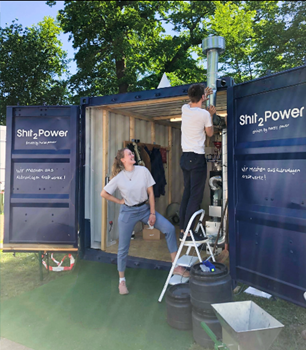 Shit2Power is a startup from Germany, founded in 2023, rethinking the disposal of wet biomass and aiming to turn what is today an expensive waste into a source of renewable energy and nutrients through decentralised gasification. For example, sewage sludge gasification aims to generate energy (electricity and low-grade heat) and phosphorus-containing ash.
Shit2Power has tested a TRL6 pilot installation processing c. 300 kg/hour of sewage sludge at 25% dry matter, tested for over 120 hours of continuous operation. Through a SPRIND-funded project, Shit2Power is looking at possible use of the ash as a fertiliser.
S2P’s membership with ESPP aims to obtain a better understanding of current stakeholders committed to promoting sustainable phosphorus management, building up their network, and advancing knowledge on regulatory compliance in that regard.
SusPhos – SNB P-recovery project obtains NL Government subsidy
ESPP members SNB (Slibverwerking Noord-Brabant) and SusPhos have obtained a subsidy for the design phase of their joint project to recover phosphoric acid or phosphate chemicals from sewage sludge incineration ash. The project is taken forward by a joint venture (S&S Feniks) established between SNB and SusPhos and is planned for construction by 2027 at SNB’s sewage sludge incineration centre, Moerdijk, The Netherlands (90 000 t/y DM sludge burned). See ESPP eNews n°84. The awarded Netherlands Government RVO DEI+ (Demonstration Energy Innovation) represents up to one third of the estimated design cost (possible amount of subsidy not disclosed) for the P-recovery process. This subsidy follows 75 000 € EU R&D funding (Horizon) in 2022-2023. SNB will input 25 – 35 million € in equity and loan guarantees. The SusPhos process reacts sulphuric acid with ash (similar to existing industry Single Super Phosphate type processes) then uses a proprietary solvent to extract phosphoric acid. Purified phosphoric acid can then be stripped out of the solvent, or reacted to phosphate chemicals which can be separated from the solvent. The solvent is then recycled back to the process. The SusPhos solvent extraction leaves a residual mineral stream, containing gypsum (calcium sulphate from the sulphuric acid reaction), sand from silicates in ash, aluminium and iron and 95% of the heavy metals from the ash. Susphos intends that this mineral stream can be valorised in e.g. building materials.
“Big milestone for SusPhos and SNB!” 8th September 2025 https://www.linkedin.com/posts/susphos_susphos-circulareconomy-sustainability-activity-7370724008050462720-FSrq
Germany inaugurates first industrial-scale AshDec® plant for phosphorus recovery
The full scale phosphate recycling plant in Altenstadt (Upper Bavaria), input 50 000 t/y of dried municipal sewage sludge, was inaugurated on 16 October 2025 as part of the R-Rhenania project (consortium led by BAM – the German Federal Institute for Materials Research and Testing) This is one of seven demonstration initiatives in the German Federal Ministry of Education and RePhoR research programme (ESPP eNews n°47). The Altenstadt plant is operated by Emter GmbH and is the first industrial-scale application of the thermochemical AshDec® process for phosphorus recovery from sewage sludge ash (see ESPP Technology Catalogue). Around 200 guests were present at the Altenstadt plant inauguration, from politics, science and industry attended the event, including Bavarian Science Minister Markus Blume.
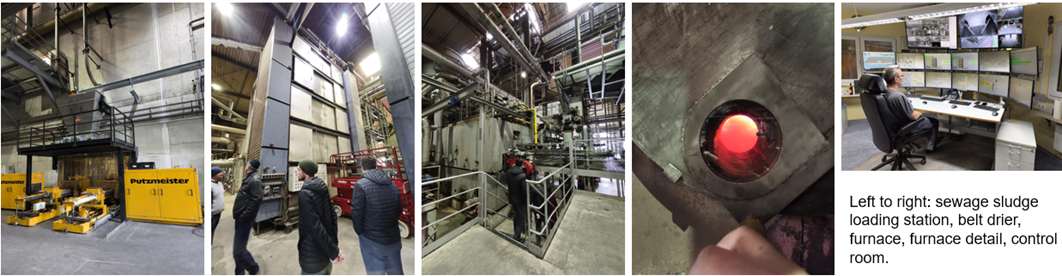
The full-scale plant is designed for input of 50 000 t/y of dried municipal sewage sludge, generating an output of around 15 000 t/y of recycled phosphate fertiliser (equivalent to 1 500 tonnes of recovered phosphorus), Sodium carbonate is added before incineration, converting poorly-soluble iron and aluminium phosphates into plant-available calcium sodium phosphates. At the same time, volatile heavy metals such as arsenic, cadmium, lead and mercury are removed and safely captured via the flue-gas cleaning system. The result is a solid mineral fertiliser marketed as “R-Rhenania Phosphate.” The product meets the requirements of the German Sewage Sludge Ordinance (AbfKlärV) and of the EU Fertilising Products Regulation: phosphorus content and contaminant limits for inorganic macronutrient fertilisers (PFC1) and phosphorus crop availability requirements for a phosphate fertiliser (Annex III, part II, 4(b): 75% solubility in neutral ammonium citrate NAC). The consortium is preparing applications for CE-marking, REACH registration and approval for organic farming.
BAM says that the Altenstadt plant is Germany’s most advanced phosphorus recovery facility. It demonstrates how thermochemical treatment can be integrated into mono-incineration plants, turning waste into a regional fertiliser resource. The project marks a milestone for the RePhoR programme and a step towards a circular, resource-independent phosphorus economy in Germany.
Germany's largest phosphorus recycling plant begins operations, https://www.tagesschau.de/wissen/technologie/phosphor-recycling-anlage-100.html
NPHarvest pilot P and N recovery unit at biogas plant, Aslan, Ankara, Turkey
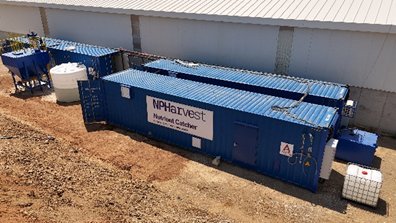 The process separates ammonia from biogas digestate liquor using hydrophobic membranes, then reacts with sulphuric acid to produce ammonium sulphate solution. Phosphate is recovered as calcium phosphate by precipitation. See SCOPE Newsletter n°147. NP Harvest, is a spinoff from Aalto University Finland. The transportable pilot reactor (3 containers) is 6 000 litres volume (up to c. 20 t/day input) and can potentially recover c. 100 tonnes/year of 30% ammonium sulphate solution (6.3 %N / wet-weight) and over 70 tonnes of solid calcium phosphate containing soil improver. Based on previous, smaller scale trials and depending on input material, the recovered solid is expected to contain c. 50% DM (dry matter) and approximately 2-4% P/DM, 8% Ca/DM and 10% Ctotal/DM), so a slow-release phosphorus and calcium soil improver, rather than an inorganic fertiliser. The technology has been previously tested for one month at Viikinmäki sewage works, Finland (300 litre reactor, 24-48 l/h, see SCOPE Newsletter n°147). Based on previous pilot trials, the company expects the recovered ammonium sulphate solution to respect the criteria of the European Fertilising Products Regulation CMC15 and the calcium phosphate CMC12 and the phosphate fertiliser criteria (Annex III, part II, 4(b): 75% solubility in neutral ammonium citrate NAC).
“NPHarvest launches industrial-scale wastewater nutrient recovery demo at biogas plant in Ankara”, 8th August 2025 https://www.npharvest.fi/2025/08/08/npharvest-launches-industrial-scale-wastewater-nutrient-recovery-demo-at-biogas-plant-in-ankara/
EU Fertilising Products Regulation (FPR)
Tracegrow fertilisers from recycled batteries and battery industrial sidestreams
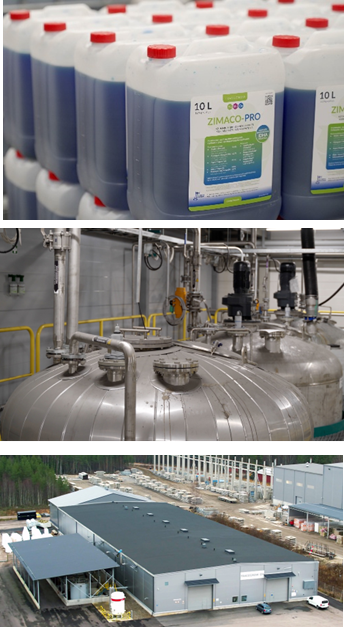
Liquid micronutrient fertilisers produced from industry waste certified CE-Mark under the EU Fertilising Products Regulation (FPR).
- M-TRACE™ is produced from zinc production industry sidestreams (zinc industry anode sludge) and contains 10.9% manganese (w/w), providing a concentrated, fully soluble source of recycled manganese in liquid form. M-TRACE is PFC 1(C)(II)(a) Micronutrient Solution Fertiliser under the EU Fertilising Products Regulation.
- ZM-GROW contains 4.9% manganese and 4.4% zinc (w/w), with over 90% of these metals recovered from end-of-life alkaline batteries supplied by licensed EU recyclers. ZM-GROW is PFC 1(C)(II)(b) Mineral Micronutrient Fertiliser in Solution under the EU Fertilising Products Regulation
The two fertilisers are manufactured in Kärsämäki, Finland, with a combined annual production capacity of up to 10 million litres.
Both have been CE-Mark Certified under the EU Fertilising Products Regulation, by a Notified Body, under CMC15 (point 2a). However, it now seems that for the second of these products (ZM-GROW) this CE-Mark Certification was an error of interpretation and will not be renewed. The first product retains its CE-Mark.
This is because M-TRACE fits the definition of “recovered from waste generated from a production process” under the current wording of CMC 15 (point 2a) interpretation, whereas ZM-GROW, which is recovered from battery black mass from end-of-life alkaline batteries, does not fit this interpretation.
ESPP underlines that the non-renewal of the CE-Mark for the second product results solely from interpretation of the wording of the FPR CMC15 point 2a (origin of materials). The purity and contaminant levels of the product correspond to FPR specifications (confirmed by accredited analyses and the Notified Body’s assessment) and both products have been used on farms for several years without any reported issues. The products have Finland national End-of-Waste status, Finland national fertiliser authorisation and are listed for Organic Farming in Germany or The Netherlands.
In ESPP’s opinion, this case illustrates:
- The complexity of the current FPR CMCs, incomprehensible to both operators and in this case (apparently) even to a Notified Body. This complexity and resulting uncertainty of FPR CE-mark certifications is, in ESPP’s opinion, a significant barrier to uptake of the FPR CE-mark for recycled nutrients, and so to roll-out of nutrient circularity.
- The inadequacy of the current FPR CMC approach to secondary materials, based on specific and complex descriptions of a limitative list of input materials and process chains. This results in exclusion of any new or innovative nutrient recycling process, and indeed of many existing recycling routes (nobody thought to include this one in the list …). This is contradictory to enabling development of the Circular and Biobased economies, which use a wide variation of secondary inputs, with processes often locally variable to reflect different conditions, with rapid innovation and new processes or use of different inputs or new secondary streams from recycling or bio-based production processes.
The exclusion of these recycled micronutrient products from the FPR CE-mark is regrettable given the considerable potential of nutrient recycling from batteries (rapid expansion of battery uses, changes in battery technologies, obligations of the EU Battery Recycling Regulations 2023/1542 and 2025/606).
Tracegrow’s proprietary RETRACER™ technology produces no wastewater or off-gas emissions, and operations is certified to ISO 9001 and ISO 14001. The company has received the Finnish Environment Institute Circwaste Award for its circular economy innovation.
Tracegrow ZM-GROW™ https://www.tracegrow.com/zm-grow
Tracegrow M-TRACE™ https://www.tracegrow.com/m-trace
EasyMining webinar on recovered calcium phosphate
The recovered phosphate respects EU Fertilising Products Regulations specifications and is authorised for use in Certified Organic Farming. This webinar presented independent studies updated on implementation. ESPP member EasyMining’s first full-scale P-recovery plant will by 2027 be producing 12 000 t/y of purified recovered calcium phosphate (RevoCaP) from sewage sludge incineration ash in Germany (Schkopau plant under construction, see ESPP eNews n°100). Sara Symanczik, FiBL (Organic Farming research and consultancy) explained that Certified Organic Farming in Europe faces soil phosphorus depletion (see ESPP SCOPE Newsletter n°149), limiting productivity, because authorised inputs (Organic farm manure, compost) are often not available for Organic crop-growing farms. Recovered calcium phosphate is authorised for use in EU Certified Organic Farming (ESPP eNews n°98). It has the benefit of low water solubility, so slow release according to crop needs, reducing risk of phosphorus losses. Jenny Faxå, Grobuket Sweden (agronomic product development and testing), presented pot trials of RevoCap with a range of soils and crops representative of farm conditions across Europe. The recovered calcium phosphate shows better fertilising results in low pH soils and in soils with significant organic carbon, achieving 80% of the effectiveness of triple super phosphate in soils of pH5. It is 80% NAC-soluble, so respecting the EU Fertilising Products Regulation minimum for phosphate fertilisers (75%, Annex III, part II, 4(b)). Pär Larshens, Philipp Theuring, Thérèse Aström and Asko Kinnunen of EasyMining explained that the company plans to ramp up production over coming years, to achieve the phosphorus recycling objectives of German, Austrian, Swiss and EU legislation. The company is also working on improving the fertiliser performance of the calcium phosphate, including controlled granulation and combination with additives and organics.
EasyMining webinar “Pioneering recycled phosphorus for sustainable organic farming”, one hour, watch here: www.easymining.com/revocapwebinar
https://www.youtube.com/watch?v=ooH9lxOjMJc
ESPP Members
Stay informed
SCOPE Newsletter: www.phosphorusplatform.eu/SCOPEnewsletter eNews newsletter: www.phosphorusplatform.eu/eNewshome
If you do not already receive ESPP’s SCOPE Newsletter and eNews (same emailing list), subscribe at www.phosphorusplatform.eu/subscribe
LinkedIn: https://www.linkedin.com/company/phosphorusplatform
Slideshare presentations: https://www.slideshare.net/phosphorusplatform
YouTube https://www.youtube.com/user/phosphorusplatform