Newsletter about nutrient stewardship - European Sustainable Phosphorus Platform (ESPP)
Please subscribe www.phosphorusplatform.eu/Subscribe
Link to www.phosphorusplatform.eu/eNews111
Download as PDF
Help ESPP continue sharing free information on phosphorus sustainability! DONATE NOW.
Events
Connecting green and blue food systems: two public webinars
6th European Sustainable Phosphorus Conference ESPC 6 24-25 November 2026, Benguerir, Morocco
Consultations, calls, prizes, opportunities, surveys
Call for laboratories to participate in inter-laboratory testing of inorganic fertilisers
Commission proposal for regulatory updates for public procurement
Early career poster prizes at ESPC6
Manure processing awards
EU JRC job offer: Science for Policy researcher for soil nutrients
German RePhoR P-recovery research survey
Regulatory
EU proposal to exempt raw manure digestate centrate from Nitrate Directive limits
Proposed ETS update may fund circular and biobased fertilisers
EU ‘greenwashing’ rules enter into force … but without rules details
Updated EU rules for livestock farms
German Phosphorus Platform (DPP)
DPP new manager: Annika Anders
ESPP Circular Economy Workshop summary
ESPP workshop on nutrients & organics in EU Circular Economy Act (CEA)
Aquaculture
Proposed joint stakeholder position on fish sludge valorisation
Danish Veterinary Consortium risk assessment of agricultural use of fish sludge
Science review of anaerobic digestion of aquaculture residues
LCA benefits of some organic fertilisers from aquaculture wastes
Critical Raw Materials
EU Critical Chemicals Alliance (CCA) reports
ESPP New Member
Haskoning
Research
Calcium phosphates for drug delivery
Magnesium phosphate cements (MPCs)
European Commission R&D “Results Pack” on recycled fertilisers
P2GreenN regulatory analysis for human faeces and urine valorisation
UKWIR: development of water industry circularity indicators
UKWIR: the recast Urban Waste Water Treatment Directive (rUWWTD) and the UK
Life Cycle Assessment comparison of growing media components
Policy analysis: why uptake of bio-based fertilisers so low ?
ESPP Members
Stay informed
Events
Connecting green and blue food systems: two public webinars
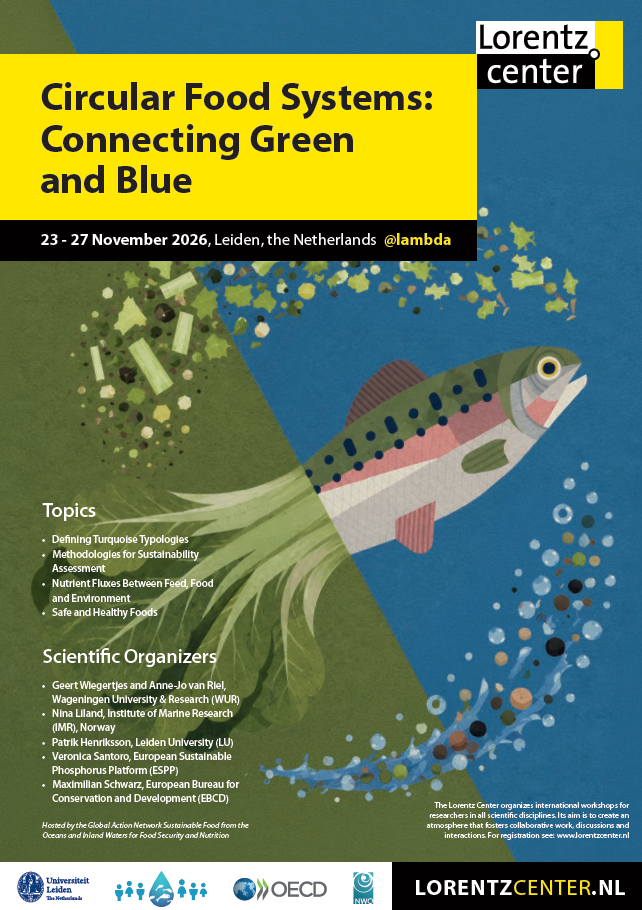 Hybrid workshop invites input on connecting agriculture and aquaculture through nutrient cycling, resource reuse and food safety. The workshop “Circular Food Systems: Connecting Green and Blue”, co-organised with ESPP, will take place at the Lorentz Center in Leiden, the Netherlands, on 23–27 November 2026, with online sessions 23 November, 14:00–16:00 CET and 26 November, 13:30–14:30 CET.
It will explore how terrestrial (“green”) and aquatic (“blue”) food production can be better connected into “turquoise” circular food systems, including opportunities for by-products from one sector to become resources for another. Four working groups will address food system typologies, sustainability assessment methods, nutrient flows between feed, food and the environment, and food safety. Discussions will identify opportunities, barriers and priorities for further collaboration across sectors.
The workshop will bring together an established group of participants, with two public webinars enabling the wider community to contribute:
23 November, 14:00–16:00 CET – Increasing Blue-Green Interactions in Food Systems: presentation of the four working groups’ aims and key questions, with discussion and input to help refine their priorities and guide their work.
26 November, 13:30–14:30 CET – From Discussion to Action: Building Turquoise Food Systems: presentation of emerging conclusions and key discussions, inviting feedback on the work developed during the week and suggestions for next steps.
Researchers, industry, NGOs, policymakers and other stakeholders working on terrestrial or aquatic food systems are invited to contribute online.
Workshop information and webinar details: Lorentz Center.
Workshop organised by Wageningen University & Research, Norway’s Institute of Marine Research, Leiden University, ESPP and the European Bureau for Conservation and Development (EBCD), with support from the OECD Co-operative Research Programme “Sustainable Agricultural and Food Systems”.
6th European Sustainable Phosphorus Conference ESPC 6
24-25 November 2026, Benguerir, Morocco
www.phosphorusplatform.eu/ESPC6
 Programme with all speakers (plenaries and parallels) and details of Young Researchers’ Day and site visits is now online.
ESPC is the world’s leading sustainable phosphorus event, every 2-3 years. Don’t miss it! ESPC 6 will include an optional site visit to an OCP phosphate mine, rock beneficiation and processing (numbers limited, book now). The 6th European Sustainable Phosphorus Conference (ESPC6) will bring together industry, policymakers, researchers and innovators working on sustainable phosphorus and nutrient management.
ESPC6 is co-organised by OCP Group and ESPP, with support of UM6P (Université Mohammed VI Polytechnique). ESPC6 will take place at UM6P, in Benguerir, 1 hour shuttle from Marrakech.
Young Researchers’ Day: Monday 23rd November – register your interest now via the online conference booking site
ESPC6: Tuesday 24th – Wednesday 25th November
Site visits: Thursday 26th November, OCP phosphate rock mine near Benguerir, laboratory and agronomy research at UM6P, optional for conference registrants, limited number of places remaining, first registered first served.
Possibilities for posters, stands or sponsoring remain open. Members of ESPP and of national Nutrient Platforms are invited to present a short “success story” pitch in the conference plenary. Contact
Consultations, calls, prizes, opportunities, surveys
Call for laboratories to participate in inter-laboratory testing of inorganic fertilisers
CEN/TC260 is looking for laboratories to participate in inter-laboratory studies (ILS) on sanitary quality of inorganic fertilisers: detection of Salmonella spp., enumeration of Escherichia coli, enumeration of enterococci. This inter-laboratory testing is necessary to develop and validate European test standards.
Interested laboratories are kindly requested to contact
Commission proposal for regulatory updates for public procurement
Open to 6th December. If adopted by Parliament and Council, this will clarify the legal basis for environment, climate and circularity criteria in public procurement, including recycled content and resource efficiency. The Commission’s proposed Regulation would replace three existing Directives on Concessions 2014/23, on Public Procurement, 201/24 and on Utilities 2014/25 by one Directive and aims to “allow use of sustainability, resilience and 'Made in Europe' criteria in public procurement for strategic sectors”. ESPP input to the January 2026 consultation suggesting to replace the “lowest cost option” wherever feasible by consideration of environment, circularity and local supply chain. The Commission proposal includes (in Chapter 1 “Green public procurement”) specific articles on environmental and climate considerations in public procurement (art. 50) and on circularity and resource efficiency (art. 51 – including recycled content, the use of secondary raw materials, waste prevention), but these remain voluntary not obligatory (“Public buyers MAY establish specifications …”). Energy efficiency (art. 52) on the other hand must be taken into account (“Public buyers shall, when purchasing goods, services or works purchase only products, services and works with a high energy efficiency performance, unless this is not technically feasible”). Environmental criteria are however obligatory in public procurement of products subject to certain EU legislation (art. 54, Annex VII: products with Ecodesign criteria, construction products, batteries, tyres, vehicles – but not fertilisers).
Public consultation open to 6th December 2026 (you need to scroll down past the initial consultation, now closed) https://ec.europa.eu/info/law/better-regulation/have-your-say/initiatives/15492-EU-public-procurement-rules-revision_en
ESPP input to January 2026 EU consultation on the revision of EU Rules on Public Procurement www.phosphorusplatform.eu/regulatory
Early career poster prizes at ESPC6
ESPP is offering prizes for the best Early Career conference posters at the European Sustainable Phosphorus Conference, Benguerir, Morocco, 24-25 November.
Prizes will be 400€ - 200 € - 100 € and awarded work will be presented in the SCOPE Newsletter conference summary (> 110 000 circulation worldwide).
The ESPP prizes are open to Early Career candidates: persons in research or work who completed a full-time education qualification (e.g. Bachelor, Master, PhD) less than 8 years ago (time can be extended in case of official leave for maternity/paternity or health). Early Career parallel session presenters wishing to be considered for the poster prize should submit also a poster.
Poster submissions can still be considered (contact
Manure processing awards
The Flanders Centre for Manure Processing (VCM) 7th Ivan Tolpe prize offers 2000 € for innovative techniques in manure processing, plus a student thesis award of 500 €. Open to 12th March 2027. The Ivan Tolpe prize invites proposals from companies, researchers or other organisations with market-ready, innovative solutions for sustainable and cost-efficient manure processing. Candidates from outside Belgium are welcome if the process is applicable in the Flemish context. The Ivan Tolpe student award targets bachelor’s or master’s thesis submitted in the past two academic years.
Ivan Tolpe award information, application forms, etc – deadline 12th March 2027
https://www.vcm-mestverwerking.be/en/manureprocessing/19301/ivan-tolpe-prijs-manure-processing-innovation-award
EU JRC job offer: Science for Policy researcher for soil nutrients
To work on development of an EU soil monitoring system, soil nutrients indicators, the HORIZON Mission “A Soil Deal for Europe”, methodologies, standards and results from LUCAS Soil Module. Deadline 9th November. Research will focus on novel approaches to develop soil nutrients indicators and to combine them in dashboards and tools for policy support, such as the EU Soil Strategy for 2030, the Soil Monitoring Law, and the Nitrates Directive.
Deadline: 9th November 2026. Link for applications: https://recruitment.jrc.ec.europa.eu/vacancy/3290 and further details here.
German RePhoR P-recovery research survey
German Federal Research Ministry project RePhoR survey, open to 6th November, asks whether the project developed useful knowledge, are results transferable to wastewater utilities, are there contacts for P-recovery implementation? RePhoR supported seven demonstration scale P-recovery R&D projects with around 32 million €, from 2020 to 2026. These projects included:
· the first full-scale AshDec® P-recovery plant in Altenstadt (Emter, R-Rhenania, see ESPP eNews n°102)
· P-Net – PECO (TU Braunschweig) – biological solubilisation of P in sewage sludge for enhanced P-recovery, operated full scale for over a year. Summary in ESPP SCOPE Newsletter 161 (to be published shortly)
· Amphore (Parforce, Phosrec) – 9 experimental runs to date with 1000 t-ash/year pilot (link).
· DreiSATS (Veolia, Pontes Pabuli) – no update since 2023 (website), Pontes Pabuli are looking to industrialise the process.
· KlimaPhoNds (Parforce, Cutec) – website now closed
· RePhorM (Phos4green) – pilot tested until 2025 (link)
· Satellite (Parforce) – no news since 2022 (link)
ESPP is currently contacting the latter five projects to obtain updated information, in that little or no information is publicly available.
“RePhoR ends: FiW surveys stakeholders on results and transfer”, public survey open to 6th November https://bmbf-rephor.de/en/rephor-ends-fiw-surveys-stakeholders-on-results-and-transfer/
Details of the seven RePhoR-funded projects are in ESPP eNews n°48 and in the ESPP Nutrient Recovery and Removal Technology Catalogue
Regulatory
EU proposal to exempt raw manure digestate centrate from Nitrate Directive limits
Proposed 2nd ‘Renure’ amendment would exempt liquid digestate after solid/liquid separation by “decanter centrifuge”, without further treatment. The proposal would also introduce phosphorus application limits for all Renure materials.
Public consultation open to 13th November 2026.
The EU Nitrates Directive limits application of manure “even in a processed form”, in Nitrate Vulnerable Zones, to 170 kgN/ha/year of total nitrogen, in order to limit risks of nitrate pollution of ground and surface water. This limit can also have the effect of limiting livestock concentration. The 1st ‘Renure’ amendment 2026/288 (Feb. 2026, see ESPP eNews n°106) exempts some manure-derived materials from this application limit, allowing Member States to authorise an additional 80 kgN/ha/year (up to 250 kgN/ha/year), under specified restrictive conditions and requirements.
ESPP supports the objectives of ‘Renure’ to exempt recycled fertiliser products from the Nitrates Directive manure spreading limits, to ensure a level playing field between recycled and primary mineral fertilisers, but considers that this should only be applicable to recycled products with quality characteristics comparable to commercial mineral fertilisers. ESPP considers that the 1st Renure amendment fails to respect this objective by allowing materials with significant organic content or which are very dilute and do not have sufficient economic value to justify transport costs (will not incite to transport manure nutrients outside livestock hotspot regions) and that the definitions of the three materials are not clear and may result in varying Member States interpretations whereas the clear and consensus criteria of the EU Fertilising Products Regulation could have been used (CMC12 for struvite, CMC15 for recovered ammonia salts, PFC1(C)(I)(b) “Liquid Inorganic Macronutrient Fertiliser” for mineral concentrates). ESPP regrets this incoherence between EU regulation texts which will result in in obstacles to investment and legal uncertainty.
This proposed 2nd Renure amendment would enable exemption from the Nitrates Directive manure limits for liquid digestate which is solid/liquid separated by “decanter centrifuge”, with no further processing requirements, and no specifications of quality (nutrient content, mineral to organic nitrogen ratio, contents of other nutrients …). It is scientifically supported by the EU JRC report on the use of digestates as fertilisers, published 15th October 2026 (one day before publication of the proposed Renure II amendment text).
Concerning the text now proposed for public consultation (to 13 November 2026):
· ESPP welcomes the obligation, which would be applicable for all ‘Renure’ exempted materials if use > 170 kgN/ha/year is authorised, that Member States “establish rules on the land application of phosphorus on farms … to ensure a balance between the fertilisation requirements of the crops and the supply from fertilisation and the soil”,
· Welcomes the requirement (Annex point 2 – viii) that application of such liquid digestates must “always” be with precautions to limit ammonia losses. Ammonia losses are an important known issue with digestate use, and can and should be mitigated by techniques such as injection rather than surface application.
· Regrets that manure digestate centrate would be authorised without quality requirements, so not comparable to commercial mineral fertilisers. This suggests that this amendment aims to facilitate livestock concentration rather than to develop nutrient recycling.
à This is a missed opportunity to develop digestate processing to transportable and marketable fertiliser products.
à Unprocessed digestate centrate may not offer predictable and reliable nutrient availability to crops comparable to mineral fertilisers, and may consequently pose risks of nitrate leaching (see e.g. RELACS recommendations https://relacs-project.eu/wp-content/uploads/2021/06/RELACS_PA_08_digestates_UniHohenheim_final.pdf).
· Suggests that the limitation to “decanter centrifuge” fails to respect the technology neutrality of the EU’s ‘Better Regulation’ principles (see here: ‘technology neutral’ directly cited). Why exclude other existing or future solid/liquid separation technologies able to achieve the same or better results? This regulatory failure the direct consequence of the absence of quality criteria for the liquid digestate material, as such criteria would be necessary for a technology neutral approach.
· Regrets that the proposed exemption covers digestate centrates from manure, optionally with agricultural or agri-food residues or separately collected biowastes, but does not clearly allow co-digestion with animal by-products.
· Notes that the draft regulatory text refers to “biobased fertilisers”, but that there does not exist today a clear definition of this, nor of “recycled nutrient” (see ESPP proposals for definitions here).
· Suggests that the amendment proposed seems to result in raw manure digestate centrate being covered, but not processed materials from this centrate (including not the Renure I materials if recovered after anaerobic digestion). The proposed wording seems to prioritise raw digestate centrate over processed fertiliser products. In the consolidated Nitrates Directive (here), Annex III point 2(c) should be modified to clarify that it concerns not only “from livestock manure” but also from manure digestate or from manure processing. In particular the words “out of livestock manure” should be deleted for 2(c)3 (struvite).
“Nitrates – extending the rules on recovered nitrogen from manure”, public consultation open to 13th November 2026 https://ec.europa.eu/info/law/better-regulation/have-your-say/initiatives/19475-Nitrates-extending-the-rules-on-recovered-nitrogen-from-manure_en
Nitrates Directive consolidated at 2nd march 2026, that is already including the first Renure amendments (Annex III, page 11) https://eur-lex.europa.eu/legal-content/EN/TXT/PDF/?uri=CELEX:01991L0676-20260302
See ESPP input to the May 2024 public consultation on this proposed text and ESPP eNews n°99 and n°100.
“Commission Directive (EU) 2026/288 of 9 February 2026 amending Council Directive 91/676/EEC as regards the use of certain fertilising materials from livestock manure”, published in the EU Official Journal 10th February 2026 https://eur-lex.europa.eu/eli/dir/2026/288/oj/eng
EU Joint Research Centre (JRC) “Overview of key considerations for the safe application of agricultural digestates as fertilising materials under various conditions”, G. Tóth, F. Adani, et al., ISBN 978-92-68-42484-1, https://dx.doi.org/10.2760/5455650
Proposed ETS update may fund circular and biobased fertilisers
The proposed update of ETS (Emissions Trading Systems) includes bio-based fertilisers in sectors eligible for obligatory ETS revenue funding, and fertiliser use efficiency and organic fertilisers in optional funding list. The European Commission’s published legislative proposal specifically refers to “lead markets for bio-based fertilisers” (page 75, point (i), sectors eligible for the earmarked 50% of national ETS auction revenues). Recycled fertilisers are not cited here, but could be covered under “circularity measures to reduce emissions from ETS sectors” (point (h)). Under the optional remaining 50% of national ETS revenues, are cited (point (d) page 76) investments to reduce emissions by more efficient use of fertilisers or support to users for “the uptake of bio-based, organic and circular fertilisers, in line with the Fertiliser Action Plan”. These changes on pages 75 and 76 of the Commission proposal concern national ETS auction revenues, under art. 10(3) of the EU Emissions Trading Directive 2003/87/EC. The Commission also proposes to modify the priority investments for the EU Modernisation Fund Directive to include the production of bio-based fertilisers (under art. 10d(2) of the ETS Directive, page 92, point (h)). The Commission’s legislative proposal now goes to European Parliament and Council. ESPP regrets the wording limitation to “bio-based” fertilisers and will suggest that the text be amended to refer also to recycled fertilisers. ESPP notes that there are today no legal definitions will suggest that this Directive update includes a mandate to the European Commission to develop and adopt, in consultation with stakeholders, definitions of “bio-based” and “recycled” for fertilisers, fertilising products and nutrients.
European Commission proposal for a Directive “amending Directive 2003/87/EC and Decision (EU) 2015/1814 as regards driving competitiveness and cost-effective decarbonisation”, 17th July 2026, COM(2026)616 – COD 2026/0212 https://eur-lex.europa.eu/legal-content/EN/TXT/?uri=CELEX:52026PC0616
EU ‘greenwashing’ rules enter into force … but without rules details
The Empowering Consumer Protection Directive 2024/825, applicable from 27/9/2026, says environmental claims must be supported by evidence, but the proposed Green Claims Directive is withdrawn. This further Directive, approved by the previous European Parliament and by Council in 2024, would have introduced further requirements, including rules for third-party verification of claims and for national approvals for green labelling schemes. The withdrawal of this additional Directive was announced by the Commission in June 2025. The Empowering Consumer Protection Directive requires that generic environmental claims are supported by relevant evidence and cannot be based on only one aspect of environmental performance, sustainability labels must have independent certification, climate neutrality claims cannot be based on carbon offsetting, future claims (e.g. “by 2030”) must be supported by implementation plans.
Updated EU rules for livestock farms
“Uniform Conditions” (UCOL) for pig and poultry farms tighten phosphorus and nitrogen excretion limits, update ammonia mitigation and manure management requirements. The new “Uniform Conditions for Operating Rules” for livestock rearing (UCOL) replace the 2017 BAT BREF, both under IED (Industrial and Livestock Rearing Emissions Directive). UCOL covers more pig and poultry farms than previously (covering smaller farms), a consequence of the update IED in 2024 (2024/1785) see ESPP eNews n°69, but there are still today no rules for cattle farms in the EU. As before under the BAT BREF, the new UCOL limit nutrients in livestock excretions but not directly in animal diets. UCOL tighten these limits by -0% to -20% (for different animals and systems), for both P and N, and require calculation of a feed nutrient balance. UCOL introduce a possible allowance of +20% higher nutrient excretion where co-products are used in feed as part of a resource-efficient diet. As in the previous BAT BREF, UCOL provide detailed lists of “Emerging Techniques”, including for ammonia emissions mitigation in animal housing, nutrient balance calculation, manure processing and management, etc. These include Techniques to reduce ammonia emissions during spreading, including manure acidification and use of additives such as micro-organisms or ion-exchangers.
Commission Implementing Decision 2026/2260, 8 October 2026, “as regards uniform conditions for operating rules for rearing of poultry and pigs” https://eur-lex.europa.eu/eli/dec_impl/2026/2260/oj
German Phosphorus Platform (DPP)
DPP new manager: Annika Anders
Annika Anders is the new Manager of the German Phosphorus Platform (DPP) from October 2026. She comes to DPP from the Technical University of Hesse, where she has worked since her doctorate on phosphorus recycling. Her research has included both laboratory studies and pilot testing in municipal sewage works. Her thesis was awarded the DPP research prize in 2025. Annika takes over from Tabea Knickel, who successfully developed DPP over the last seven years, in particular dialogue with industry and regulators on implementation of Germany’s phosphorus recovery law.
German Phosphorus Platform (DPP)
ESPP Circular Economy Workshop summary
ESPP workshop on nutrients & organics in EU Circular Economy Act (CEA)
1st July online. 90 participants. This workshop confirmed the need for clear actions on nutrient recycling, to support the supply resilience aims of the Fertiliser Action Plan. At present, however, EU policies seem confused on recycling potential (manure and digestates already today mostly return to fields), objectives (how to ensure that recycled nutrients are useful products) and on scope / vocabulary (bio-based does not mean recycled).
Workshop participants underlined that actions should target nutrient recycling to processed fertilising products, to enable nutrient use efficiency, or to quality-grade industrial applications (e.g. animal feed). Already today, nutrients in manures, digestates and other some organic streams are mostly returned to land, but when these are not processed this may not result in efficient use of nutrients. Recycled nutrients can be used efficiently, so reducing reliance on mineral fertilisers, if processed to a form which enables transport and storage, precision application, plant availability of nutrients (4R’s: right place, right time, right amount, right form).
Chris Thornton, ESPP, summarised EU initiatives underway: proposed BioTech I and II Acts (public consultation processes underway), announced Circular Economy Act (regulatory proposal expected Autumn 2026) and a number of initiatives around Critical Raw Materials and Critical Chemicals. ESPP has coordinated joint stakeholder input to the European Commission concerning nutrients in the Circular Economy Act and welcomes further input: see www.phosphorusplatform.eu/regulatory.
The EU Fertiliser Action Plan (21st May 2026, see ESPP eNews n°108) announced the following actions:
· Facilitate the use of digestates as fertilisers by widening the RENURE Nitrates Directive exemptions. Today this only covers struvite, ammonia scrubbing salts and reverse osmosis concentrates from manure, under complex conditions [Action 2]
· Amend the Fertilising Products Regulation (FPR) and review ‘Mutual Recognition’ to create integrated markets [Actions 10]
· Possibly extend to N the Urban Waste Water Treatment Directive “reuse and recycling rate” for P from sewage [Action 13]
· Review regulatory bottlenecks in the Waste Framework Directive, the Fertilising Products Regulation, the Animal By-Products Regulation [Action 11]
· Promote nutrient use efficiency and bio-based fertilisers in carbon farming certification [Action 18]
· Promote transfer of nutrients from regions with surpluses to regions with needs, via the EU Livestock Strategy [Action 20]
· Define bio-based (organic) fertilisers and low-carbon mineral fertilisers [Action 11].
In response to the last announced action, ESPP has developed with stakeholders a detailed proposal document on definitions for “bio-based” and “recycled” fertilisers / fertilising products / nutrients. See www.phosphorusplatform.eu/regulatory. This has been submitted to the European Commission, underlining the need for structured consultation of relevant industry and stakeholders before adoption. ESPP underlines that a precise, workable and official definition, with a specified measurement methodology, are necessary before policies can be implemented, for example incentives for recycled fertiliser use or requirements for recycled fertilisers in purchasing criteria.
Industry positions
Jessica Fitch and Aoife Bracken, ECOFI, further discussed EU initiatives underway towards recycling of organic waste streams to fertilisers, noting that the Fertiliser Action Plan is supposed to bring these together. Initiatives underway include the Chemicals Omnibus (currently pending finalisation by Parliament and Council), which is expected to address certain blockages in the EU Fertilising Products Regulation (REACH+, Criteria-based CMC). The Biotech II Act is expected to include a regulatory definition of “bio-based” fertilisers and concrete proposals to develop lead markets.
ECOFI considers that the priority is now to translate political recognition of organic-based fertilisers and nutrient recycling into effective action. This requires a coherent and predictable regulatory framework that enables investment and provides workable routes to market for safe, effective products, alongside support measures, including under the Common Agricultural Policy (CAP), that promote efficient nutrient management. The objective should be to transform Europe’s secondary nutrient resources into high-quality fertilising products that meet farmers’ needs, strengthen fertiliser supply resilience and reduce dependence on imported nutrients.
Leon Fock, Eurofema, considers that industry is ready to deliver recycled nutrients in quality organic fertilisers to farmers. At present, industry is however overwhelmed by numerous political announcements and consultations, which are not yet bringing new market openings. Manure is already today largely returned to fields but other streams offer significant nutrient recycling potential, including sewage sludges, bioindustry residues, and Cat.1 animal by-products most of which are expected to be reclassed as Cat.2 (see ESPP eNews n°108)
Support for new markets should target quality products recycling nutrients within the EU and avoid opening the door for imports. Incentives to farmers should develop demand for recycled and organic fertilisers, to shift the market balance from supply to demand driven. Incentives could include via the CAP or carbon credits for organic fertilisers in ETS. Other tools should be also considered, such as the French proposal to ban use of mineral fertilisers for non-food crops and non-agricultural applications.
The continuing blockage of many animal by-products in the EU Fertilising Products Regulation (CMC10 still pending) is an important obstacle.
Pär Larshans, Ragn Sells, updated on high level political contacts concerning inclusion of nutrients in the future Circular Economy Act. European Environment and Circular Economy Commissioner, Jessika Roswall, has indicated the intention to specifically include phosphorus in the EU Circular Economy Act. Ragn Sells considers that support for nutrient recycling should centre on the quality of the recycled product and decontamination (removing pollutants from the food chain). The Circular Economy Act should forward the risk assessment by EFSA of nutrient recycling routes which are currently blocked by EU regulations, such as recovery of purified mineral phosphates for animal feeds from organic streams and nutrient recycling from aquaculture sludge.
Lucile Sever, European Biogas Association, underlined that anaerobic digestion can deliver both renewable biogas energy and nutrient recycling via digestates. EU policies, including the CAP, should support biogas production from sequential crops, manures, biowastes and other streams. Both the EU Fertilising Products Regulation (FPR) and the Nitrates Directive (RENURE) should be modified to facilitate nutrient recycling in digestates, to enable relevant inputs (animal by-products, manure) and to validate uses and processing which enable effective nutrient recycling (Nutrient Use Efficiency). It is unclear whether the future Circular Economy Act will modify other legislation as necessary to achieve this (e.g. FPR, CAP, Animal By-Products regulations …) and whether it will address key organic recycling streams (manure, bioeconomy residues … or will it cover only biowaste = separately collective household organics)?
Henning Lyngso Foged, Organe Denmark, presented policy proposals for nutrient recycling from the Interreg Baltic Sea Region research project Cinurgi (see summary below in this eNews), underlining the need for clear regulatory definitions of “nutrient recycling” and related terms to support policies and research. In particular, the CAP should define principles for support to farmers for nutrient recycling and for use of recycled fertilisers. Variations in socio-economic benefits of nutrient recycling should be taken into account. Cinurgi suggests that the future Circular Economy Act should amend art. 2 of the Waste Framework Directive to establish a new waste category of low-risk, nutrient-rich waste types. Danish regulations, for example, allow low-risk organic wastes to be co-digested with livestock manures in biogas plants under certain conditions.
Aude Brion, Veolia, underlined the need to enable faster and more flexible authorisation of secondary nutrient materials as inputs under the EU Fertilising Products Regulation, with a stable and responsive regulatory framework. The Chemical Omnibus amendment on a criteria-based approach will hopefully address this. Also, REACH needs to be adapted to make economically feasible the fertiliser use of regionally specific, low-risk recycled nutrient materials and authorisation of safe animal by-products should be ensured. Incentives to farmers are needed, for example in the CAP, both for use of recycled fertilisers and for investment in nutrient recycling installations.
The priority should be to return organic carbon and nutrients, together, to soils. Policies should support the transformation of digestates to reliable fertilisers, e.g. by limiting a future RENURE for digestates to use of raw digestate on certain crops only and to processed digestates.
Case studies
Industry operators presented examples of secondary nutrient streams which are currently excluded from recycling by regulatory obstacles:
· Xavier Rúbies, WeRfoods, Catalunya, produce compost from stabilised sludges from slaughterhouse wastewater treatment. Under Spanish legislation, this is a waste. The material could possibly be CE-marked under the EU Fertilising Products Regulation (if Cat.2 – Cat.3 ABP) but only if the composting process respects the FPR CMC3 criteria (which includes ABP Regulation sanitisation conditions) and other FPR obligations. If CE-Certified under the FPR, the compost would cease to be waste (including in Spain).
· Aude Brion, Veolia, cited a number of secondary nutrient streams currently excluded from the EU Fertilising Products Regulation: recovered ammonium sulphate from manure digestate (not achieving the FPR CMC15 requirement of 95% purity), calcium carbonate from pulp and paper industry waste processing, feather meal (not covered by proposed CMC10 list, (see ESPP eNews n°107)
Aquaculture
Proposed joint stakeholder position on fish sludge valorisation
Sludge from fish farming contains significant potentials of phosphorus, nitrogen and organic carbon, but is mostly not recovered or recycled, because of regulatory obstacles and sludge recovery and processing challenges. After exchanges with stakeholders, ESPP is today proposing a Joint Stakeholder Position, with the aim of presenting to EU policy makers agreed proposals to address regulatory barriers and facilitate fish sludge valorisation, including anaerobic digestion to produce biogas and recycling of nutrients in organic or mineral forms. This stems from a working group on aquaculture nutrients set up by ESPP in early 2026 involving companies, industry federations and researcher centres. The proposed Position recognises that fish sludge collection is not necessary in all situations, but is today already implemented in onland aquaculture (to protect surface waters) and can be required to enable ongoing operation and expansion of offshore aquaculture, which may otherwise be limited because of fish disease or eutrophication concerns. The Position proposes to fix a legal definition of “fish sludge” (not today clearly defined), to request safety assessments of valorisation routes by EFSA (European Food Safety Agency) and to address regulatory obstacles (Animal By-Products Regulation, Fertilising Products Regulation, Animal Feed Regulation, Renewable Energy Directive).
If your organisation is interested to join the discussion on this draft Joint Stakeholder Position on valorisation of fish sludge, contact
Danish Veterinary Consortium risk assessment of agricultural use of fish sludge
Study for Danish authorities* concludes that risk of spread of fish disease by agricultural use of untreated fish sludge is “minimal” (5-10%) and by use of treated fish sludge is “insignificant” (<5%). Treated means sterilisation, controlled composting or stabilisation, the latter covering anaerobic digestion, drying, liming and mineralisation. The assessment considers that there is a “moderate” probability that fish disease can survive storage and soil spreading of untreated sludge, “low” probability that fish disease can survive stabilisation and “insignificant” probability of survival of sterilisation or controlled composting. The assessment considers application as fertiliser in agriculture in Denmark or fish sludge from on-land aquaculture in Denmark or Norway, looking only at risk of spread of fish disease to fish farms or to fish in lakes/rivers. Risks of possible contaminants in fish sludge (fish pharmaceuticals, heavy metals, etc), salinity or risks to human health or to the environment (other than fish disease) are not assessed.
* FVST: Danish Veterinary and Food Authority
“Besvarelse vedr. Risikovurdering for anvendelse af ubehandlet slam fra danske og norske dambrug på dansk landbrugsjord” (Reply regarding risk assessment for the use of untreated sludge from Danish and Norwegian fish farms on Danish agricultural land), Dansk Veterinaer Konsortium (Copenhagen University, Statens Serum Institute), FVST 2023-28-201-00328, 14th December 2023.
Ragn-Sells press release 15th September 2026 https://newsroom.ragnsells.com/posts/pressreleases/danish-study-challenges-eu-ban-on-recycled-ph
Science review of anaerobic digestion of aquaculture residues
Of some 160 publications, 2/3 were from 2019 – 2025, most were laboratory, batch studies. Authors conclude that biogas from aquaculture residues offers potential but science is too fragmented to support industrial implementation. The review identified published studies on anaerobic digestion of fish offal, fish processing residues and silages, recirculating aquaculture sludges, and aquaculture wastewaters. The identified studies are listed in the review, specifying input materials and anaerobic digestion process. Reported methane yields varied widely depending on inputs and operating conditions, ranging from 50 to 1200 ml of methane per gramme of volatile solids, with limitations being ammonia, volatile fatty acid and long chain fatty acids. The authors note that the studies were mainly from high-income countries, largely not corresponding to significant aquaculture production countries. They suggest progress towards industrial implementation of aquaculture waste biogas production requires input-specific studies in continuous pilot or industrial-scale installations, with measurement of methane and hydrogen production, as well as studies on digestate qualities and safety.
“Valorization of FishWaste via Anaerobic Digestion: A Systematic Literature Review and Future Research Agenda”, S. Gosławski & S. Borowski, Energies 2026, 19, 4077 https://doi.org/10.3390/en19174077
LCA benefits of some organic fertilisers from aquaculture wastes
Organic fertilisers produced by drying fish sludge or fish heads and bones show positive LCA, whereas a complex acid autolysis and membrane process leads to a negative LCA (compared to ammonium nitrate). The organic fertiliser from fish sludge was produced at TRL9 in Norway by drying, grinding and pelletising fish sludge. The other two organic fertilisers were R&D pilots: one a solid produced be freezing, extruding, oil extraction, and drying fish heads and bones; one by grinding fish guts oil extraction, acid autolysis, membrane filtration and blending with mineral fertilisers. The LCA was compared to ammonium nitrate mineral fertiliser, per kg N in the fertilisers, and per kg broccoli produced using the fertilisers in a field trial in Estonia. The broccoli yields with the organic recycled fertilisers were 15 – 30 % lower than with ammonium nitrate for the same nitrogen application rate (this resulted in phosphorus application 1 ½ to 2 ½ times higher than the mineral fertiliser scenario, so risks of phosphorus runoff). The LCA and global warming benefits of per kg broccoli were small (1 – 13 %) for the simply processed recycled organic fertilisers, whereas the LCA and global warming of the highly processed recycled fertiliser were considerably worse than the conventional ammonium nitrate.
“Biobased fertilisers from fishery side-streams: an environmentally friendly alternative to mineral fertilisers?”, J. Landert et al., J. Cleaner Production 573 (2026) 148949 https://doi.org/10.1016/j.jclepro.2026.148949
Critical Raw Materials
EU Critical Chemicals Alliance (CCA) reports
EU initiative proposes criteria to identify “critical” chemical molecules and sites and proposes actions to ensure security of EU supply and of EU production. P4* is initially identified as a “critical molecule)., because of EU supply vulnerability (import dependency, logistics, exposure to energy and CO2 costs), and importance of the molecule for the whole chemical industry (value chain centricity) and for strategic industry sectors (electronics, defence and aeronautics, energy transition). ESPP, represented by Vincent van der Meijden (Filo Chemicals) has closely engaged with the Critical Chemicals Alliance (Working Group 1) and submitted P4 (elemental phosphorus) and Purified Phosphoric Acid (PPA) to the assessment methodology testing, with input from our network of industry experts. The CCA WG1 final report identifies P4 (termed Red Phosphorus) in a “non-exhaustive” draft list of 49 possible Critical Molecules”. Ammonia and potassium hydroxide and potassium chloride are also included in the list.
Critical Chemical Sites are identified as those producing a Critical Molecule, or those with specific vulnerability (last of a kind) or importance for strategic industry sectors.
To our understanding, Phosphate Rock cannot be a “Critical chemical molecule” because it is primary raw material. Both P4 (“Phosphorus”) and Phosphate Rock are EU Critical Materials. This is independent of this Critical Chemicals Alliance (CCA) process.
The CCA WG1 proposes that Critical Molecules should be supported by:
· EU monitoring
· Prioritise Critical Molecules for Trade Defence Instruments, including for derivates of Critical Molecules, and strengthen these instruments
· authorisation of State Aid to producers of Critical Molecules
· competitiveness protection by energy cost relief and ETS adjustments, providing long-term visibility on energy costs
· simplified permitting for Critical Chemical Sites
· Capex and Opex support for Critical Sites.
ESPP responded to these proposals by welcoming the quality achieved by the Alliance in a short time, under the very active leadership of the French Ministry for Economy. ESPP welcomes proposals to protect high embedded energy chemicals by e.g. CBAM (Carbon Border Adjustment Mechanism) to avoid undercutting by imports from countries with subsidised or cheap energy (and so offshoring of greenhouse emissions). ESPP also makes a number technical comments and proposals.
The CCA Working Groups 2, 3 and 4 have also published final reports, with policy recommendations for (WG2) improving EU trade defence, (WG3) investments and (WG4) developing lead markets. The WG4 proposals for lead markets centred on Product Carbon Footprint and the proposal to fix “minimum sustainable carbon content requirements” in end-markets, with tradable certificates, as well as possibly tariff modulation of EPR (Extended Producer Responsibility) levies on end-products.
Environmental organisations (ChemSec, EEB – European Environment Bureau) have criticised the CCA as being an industry platform, and the outcomes as defending energy-intensive chemicals. Chemsec and EEB also criticise that the CCA’s dfarft list of 49 possible “Critical Molecules” includes PVC (a halogenated polymer) and PTFE (a PFAS chemical) and a number of other hazardous chemicals.
Downstream users of chemicals (several federations joint statement here) have also criticised the CCA outcomes, in particular proposed mandatory content, carbon levies and similar, which would increase costs downstream, and impact both manufacturing and commerce in Europe and consumers.
The European Commission (Commissioner Séjourné) has announced that it will now work with JRC to identify by end 2026 a significantly smaller number of critical chemicals (than the CCA’s draft list of 49), in particular targeting defence, healthcare, clean technologies, and basic building block chemicals underpinning multiple industry value chains. The Commission promised action to protect critical chemical industries from unfair international trade, to develop “lead markets” and to define with JRC criteria for low carbon and sustainable chemicals.
The European Chemicals Industry (Cefic) has expressed full support for the CCA’s conclusions, asking that the European Commission implement the CCA recommendations rapidly through the Biotech Act II, Circular Economy Act, Industrial Accelerator Act and the ETS reform
* P4 is termed “Phosphorus” (as in the EU Critical Raw Materials Act (2024/1252), meaning white/yellow/red elemental phosphorus, the specific form of phosphorus today produced in dedicated furnaces, with no production in Europe, and the EU nearly entirely dependent on Kazakhstan and Vietnam. P4 is essential for a wide range of chemical processes, from doping silicon for PV panels to production of most organophosphorus chemicals (needed for all lithium battery electrolytes, fire safety, catalysts, pharmaceuticals …).
EU Critical Chemical Alliance Working Group deliverables (final reports, WGs 1-4) published on CircaBC : https://circabc.europa.eu/ui/group/cbc2bb9c-a86b-4d95-a1e6-9b03a6efe69f/library/4e31be6c-266b-429a-ae3b-0c8e97620419?p=1&n=-1&sort=name_ASC)
ESPP New Member
Haskoning
Haskoning is a global consulting and engineering company and technology provider. One of the solutions delivered by Haskoning is ViviMag®, an innovative technology recovers vivianite (iron phosphate) from sewage sludge by magnetic separation. By recovering phosphorus and iron from wastewater treatment processes. The ViviMag® technology is currently progressing towards demonstration-scale implementation at the Nieuwveer wastewater treatment plant (400,000 p.e.) in the Netherlands. Designed for water utilities and wastewater treatment operators, ViviMag® helps organisations recover valuable resources while supporting sustainable sludge management. Through our ESPP membership, we aim to exchange knowledge, collaborate with stakeholders across the phosphorus value chain, and contribute to advancing sustainable phosphorus recovery and recycling solutions in Europe.
Haskoning: Driven by our purpose, Enhancing Society Together, we work with clients and partners to deliver sustainable solutions in the natural and built environment. www.haskoning.com
Contact: Martijn van Leusden
Research
Calcium phosphates for drug delivery
Calcium phosphate nanoparticles show promise for safe and targeted delivery of heart drugs, by non-invasive inhalation of dry powders. CaP nanoparticles offer high biocompatibility, in particular if engineered to mimic bone calcium phosphates, complete degradability, non-toxicity and excellent physico-chemical stability. Drugs such as pharmaceuticals or micro-RNAs can either be included into the calcium phosphate during precipitation or added by surface adsorption. Administration and handling can be facilitated by embedding the CaP nanoparticles into microparticles of a water-soluble carrier. Evidence shows that intake via the lungs provides an efficient pathway for delivery to the heart. This paper reviews theory, modelling studies and in vitro animal studies showing the potential of calcium phosphate nanoparticles for drug delivery.
“Targeted delivery of therapeutics to the heart with calcium phosphate nanoparticles”, C. Fusacchiaa et al., Expert Opinion on Drug Delivery, 2026, vol. 23, n°. 4, 611–619, https://doi.org/10.1080/17425247.2025.2599851
Magnesium phosphate cements (MPCs)
MPCs are phosphate based ceramics, used as specialist cements with high strength, water resistance, good adhesion and compatibility with cellulose based materials. MCPs are industrially produced by reacting periclase1 with phosphate salts. If ammonium phosphates are used, a struvite2 (with shertelite3 and dittmarite4) based MCP is produced, but which tends to release ammonia so are limited to outdoor uses. Industrially, potassium phosphates are used and a K-struvite5 based cement is formed. The production of MCPs is highly dependent on the characteristics of the periclase (MgO) used, which depend on the calcination temperature and time used to produce periclase from mined magnesite6.
Several research papers have looked at producing MCPs from secondary raw materials.
Viani & Gualtieri (2014) tested MCP production from waste asbestos materials, combined with virgin magnesite and potassium phosphates. The aim was to use a single thermal process to destroy the asbestos fibres and to calcine the magnesite whilst also using the magnesium content of the asbestos to substitute virgin magnesite. The most common form of asbestos is based on the chrysotile7, a magnesium silicate, and similar minerals. This paper tested two forms of asbestos waste (fibrocement roofing tile, asbestos insulation material) and showed that magnesite and asbestos wastes calcined (annealed) together at 900°C for 30 minutes plus 1100°C or 1300°C for 40 minutes both eliminated the dangerous asbestos fibres and generated a periclase-containing material which was effective for MCP production, with the silicates from the asbestos waste forming non-reactive magnesium silicates which act as fillers in the cement.
Gu et al. (2022) tested MCP production from phosphate rock flotation tailings calcined at 700°C, spent acid from ‘wet acid’ production of phosphoric acid from phosphate rock, Light-Burn Magnesia (LBM) and industrial grade magnesium sulphate. The tailings are the materials separated from beneficiated phosphate rock in the industrial flotation process which separates out higher grade rock, they tend to have significant magnesium content (in this case: 26% MgO, 55% CaO, 7% SiO2. The acid is left over from attack of phosphate rock with sulphuric acid and contains significant levels of phosphate and fluorine, so posing significant environmental issues for treatment or discharge. LBM is calcined at relatively low temperatures (700-800°C) and is 90% magnesium oxide, of which around 60% is ‘active’. The study showed that 60% of LBM could be replaced by calcined phosphate tailings, resulting in 517-phase 5.Mg(OH)2⋅MgSO4⋅7H2O and in a magnesium oxysulphate cement with high resistance to water and to acids, with phosphorus and fluoride in the phosphate tailings and the acid water immobilised into the cement. The cement produced using phosphate tailings to replace LBM results however in some reduction in compressive strength and increased shrinkage on setting.
1: periclase = MgO
2: struvite = MgNH4PO4·6H2O
3: shertelite = (NH4)2MgH2(PO4)·4H2O)
4: dittmarite = MgNH4PO4·H2O
5: K-struvite = MgKPO4.6H2O
6: magnesite = MgCO3
7: chrysotile = Mg3(OH)4Si2O5
“Preparation of magnesium phosphate cement by recycling the product of thermal transformation of asbestos containing wastes”, A. Viani & A. Gualtieri, Cement and Concrete Research 58 (2014) 56–66, http://dx.doi.org/10.1016/j.cemconres.2013.11.016
“Recycling of phosphate tailings and acid wastewater from phosphorus chemical industrial chain to prepare a high value-added magnesium oxysulfate cement”, K. Gu et al., Journal of Cleaner Production 369 (2022) 133343, https://doi.org/10.1016/j.jclepro.2022.133343
European Commission R&D “Results Pack” on recycled fertilisers
Commission document promotes 11 EU-funded R&D projects into recycled fertilisers and farm nutrient management, covering production of mineral and organic fertilisers from a range of waste streams including aquaculture sludge, sewage sludge, ashes, domestic organic wastes (biowaste), agricultural and food industry wastes. The Commission text presents the projects positively, but not entirely objectively. For one project, it is stated that the recycled fertilisers “performed equally well as conventional fertilisers” whereas the project concluded that performance was equivalent over time but lower for rapid nutrient availability (Barquero et al. 2024 https://doi.org/10.3390/agronomy14050916). The Commission texts also include negative and questionable statements about conventional mineral fertilisers (referring to “chemical over-application” and to “toxic nutrient runoff”) and about current valorisation of secondary nutrient flows (“applied to soil with no added value”). The Commission concludes that recycling of nutrients from wastes, as developed by the cited projects, will reduce EU dependency on imported nutrients, but provides no estimates as to what % of imported fertilisers could be replaced, whereas a significant proportion of most secondary organic nutrients is already today returned to soil (most manures, around half of EU sewage sludge, composts and digestates of agri-food wastes …).
CORDIS Results Pack on bio-based fertilisers “Eco-friendly alternatives to traditional mineral and fossil-based fertilisers”, June 2026 R&D projects summarised: Fertimanure, LElex4Bio, NNovafert, NNutriBudget, NNutricheck-Net, RRustica, SSea2Land, tTrans4num, Walnut, PP2GreeN, FB-Ferst
P2GreenN regulatory analysis for human faeces and urine valorisation
Legal research analysis underlines the issues of differing waste status in different EU Member States and the inaccessibility of EU End-of-Waste status (only 6-8 categories covered or underway today). Human excreta (urine and faeces) has significant potential as a recycled fertiliser (see e.g. Esculier in ESPP eNews n°110). The 50-page regulatory analysis by the P2GreeN Horizon Europe R&D project (ESPP member, see https://p2green.eu/) identifies general failures of EU regulation to facilitate nutrient and organics recycling, and specific challenges for human excreta. The latter include unclear status of human excreta under waste water regulations (waste or not ? municipal waste water or not ?) and lack of coherence with regulations covering animal excreta (manures). P2Green proposals include:
· Clarify that human excreta is “waste”,
· But consider it as “not waste when valorised to agriculture (i.e. as fertiliser),
· Same legal status for toilet paper collected with human faeces,
· Ensure that nutrient valorisation from human excreta upstream of sewage works (e.g. separate collection) is considered under nutrient reuse and recycling targets under the revised EU Urban Waste Water Treatment Directive,
· Authorise use of human urine and faeces as inputs with specific new CMCs (Annex II) under the EU Fertilising Products Regulation (FPR),
· Improve coherence in approach, vocabulary and materials authorised between the EU FPR and other EU regulations,
· Accelerate procedures for updating the EU FPR and for including new secondary input materials,
· Delete cross-border trade as a criteria for authorising new materials under the EU FPR, because this excludes local recycling routes,
· Harmonise fertiliser regulations between EU Member States and with the EU FPR.
“Enabling Circular Nutrients: Legislative and Regulatory Landscape for Fertilising Products and the Inclusion of Human Excreta-Derived Materials under the EU Fertilising Products Regulation (FPR)”, P2Green Horizon R&D project report, 2026 https://p2green.eu/legislative-and-regulatory-landscape-for-fertilising-products-and-the-inclusion-of-human-excreta-derived-materials-under-the-eu-fertilising-products-regulation-fpr/
UKWIR: development of water industry circularity indicators
Report proposes measurement framework and metrics for water industry circularity. Phosphorus and nitrogen recovery are amongst 33 proposed indicators, alongside water, energy, carbon, chemicals, catchment restoration … The UKWIR takes as starting point existing circularity metrics, in particular ISO Circular Economy standards*, EU Taxonomy and EU Corporate Sustainability Reporting Directive, as well as other frameworks (Circulytics Ellen Macarthur Foundation, Doughnut Economics Raworth, Planetary Boundaries). ISO ISO 59004 includes nutrient recycling (see ESPP eNews 88). The report is based on literature, including industry approaches, and multidisciplinary input from process engineers, circular economy professionals, experts on catchment management, natural capital and social value. The 33 proposed metrics cover Rethink - Refuse (catchments and nature-based solutions, biodiversity, partnerships, social impacts, capital and infrastructure), Reduce (water use, chemicals inputs, nutrient loadings, pollution impacts, energy use), Reuse - Recover (phosphorus, nitrogen, water, other materials from sewage sludge, equipment and infrastructure, carbon, heat), Cascade (soil health impacts of sewage sludge biosolids to land) and Sustainable Sourcing (see detailed list in Report pp. 32-33). The 33 proposed metrics are intended as a starting point which the water sector can refine, develop and test. The report underlines the need for metrics which deliver a holistic approach, requiring multi-disciplinary teams for reporting.
UKWIR (UK Water Industry Research) is the UK water industry joint research cooperation organisation.
* ISO 59004:2024 Circular economy – Vocabulary, principles and guidance for implementation. ISO 59010:2024 Circular economy – Guidance on the transition of business models and value networks. ISO 59020:2024 Circular economy – Measuring and assessing circularity performance.
“Development of a water industry circular economy measurement framework with supporting metrics”, UKWIR Report 26/SL/12/07, 2026 https://ukwir.org/water-industry-research-reports
UKWIR: the recast Urban Waste Water Treatment Directive (rUWWTD) and the UK
Report analyses implications of possibly implementing obligations of the rUWWTD in the UK, concluding that new total nitrogen removal and micropollutant removal obligations would be particularly costly and complex. Tightened phosphorus removal requirements are considered generally not problematic as many UK waste water treatment works (wwtps) are already achieving these, but significant investment would be required in wwtps discharging into estuaries or the sea and currently not currently required to remove phosphorus. New and tightened rUWWTD total nitrogen removal requirements would require significant investment in many wwtps, as the UK has to date concentrated only on ammonia-N removal. The report suggests that assessment of the environmental benefits of total N removal is needed. The rUWWTD obligation of quaternary treatment (micropollutant removal) is identified as problematic, because requiring considerable investment and operating costs, whereas the UK (except Ireland) does not have the legal framework to implement the EPR (Extended Producer Responsibility) intended in the rUWWTD to ensure that these costs are born by industry (pharmaceuticals) not be water users and because an EPR system for pharmaceuticals is considered complex to implement. Also, cost could be increased by excluding technologies susceptible to pose obstacles to sewage biosolids use to land (ozonation may generate undesirable organic breakdown molecules, use of PAC powdered organic carbon transfers pharmaceuticals and other contaminants into sewage sludge which is undesirable for sludge land use). Tighter sewage collection and treatment requirements for smaller agglomerations are considered to require overall limited costs. UKWIR underline that this report aims to provide an initial high-level analysis, and that detailed assessment of environmental benefits should be carried out for the different rUWWTD requirements, for comparison with relevant costs, and that granular assessment of possible implications at the catchment level should be carried out be each water company, before any decision is taken to transpose all or part of the rUWWTD into UK legislation.
“Potential implications of the recast Urban Wastewater Treatment Directive”, UKWIR report 26/RG/07/40, 2026 https://ukwir.org/water-industry-research-reports
Life Cycle Assessment comparison of growing media components
A baseline LCA dataset for 12 components of growing media, and 30 mixes, shows significant uncertainties, different rankings for climate change and other impacts, overall (comparatively) negative scores of composts and peats. The LCA considered extraction, processing, transport and direct emissions in use for black and white sphagnum bog peats (black peat is strongly and white poorly humified, with white being most commonly used), green waste compost, bark compost, aged bark, wood fibres, coconut fibre materials (coirs), mineral wool, expanded perlite and clay. Possible indirect impacts in the use phase such as increased crop production or reduced fertiliser use were not considered. For peats, impacts of changed land use or drainage following peat extraction were taken into account, but with provisos. White and black peat and green and bark compost showed the highest climate emissions, mainly due to carbon loss as the peats are decomposed when used for growing plants and greenhouse emissions during compositing processes. Considerable uncertainties concerning emissions from composting and impacts of land use change after peat extraction are noted. When other environmental impacts are considered, green compost and black peat again show the most negative impacts. Climate emissions from coirs are mostly from processing (35 – 55 %) and from transport from tropical coconut growing regions to Europe (c. 25%). The industry federation Growing Media Europe, who funded the work, conclude that comparative rankings of components can be different for climate change and other environmental impacts, that the results for the mixes shows that simply replacing one component by another does not automatically influence impacts as expected, high levels of uncertainty and that lower LCA of components may be outweighed by reduced crop growth or higher water or fertiliser requirements if growing media compositions are changed.
“Life cycle assessment of growing media: a baseline dataset for European horticulture”, E. Migoni Alejandre, A. Sentinella, N. Ameloot,, G. Schmilewski, J. Werstrate, J. Cleaner Production 575 (2026) 149269, https://doi.org/10.1016/j.jclepro.2026.149269
Policy analysis: why uptake of bio-based fertilisers so low ?
London School of Economics MSc report says bio-based fertilisers could potentially substitute 30% of EU mineral N fertilisers, but uptake is hindered by regulatory cost of placing on market, supply chain structure, farmer reluctance. EU nitrogen mineral fertiliser prices have undergone peaks of 2 – 3 times 2019 prices following ammonia and natural gas supply disruptions resulting from Russia’s attack on Ukraine, and are again today around twice 2019 levels with Middle East wars. This analysis suggests that uptake of bio-based fertilisers, to substitute part of mineral fertiliser use, is hindered by obstacles in the EU Fertilising Products Regulation (exclusion of various bio-sourced wastes as input materials, cost of conformity assessment), sanitisation requirements required by the EU Animal By-Products Regulation which are not aligned with industrial practices, Nitrates Directive restrictions on manure-derived recycled fertilisers, a fragmented regulatory landscape, and the absence of a coherent EU policy framework to reduce nutrient losses and promote nutrient recycling. These regulatory obstacles are parallel to price and supply chain challenges: bio-based fertilisers are only cheaper than mineral nitrogen fertilisers during price peaks and face logistic constraints, because organic fertilisers are bulkier, resulting in higher transport and storage costs. Investment in nutrient recycling is also an obstacle. Farmer are sceptical of bio-based fertilisers, regarding risks of contaminants and reliability of nutrient content and nutrient release when needed by crops, although price remains the key driver for farmers.
“Increasing the production and uptake of nitrogen biobased fertilisers in the EU”, Policy Report, A. Hahn, London School of Economics (MSc), 19th August 2026
ESPP Members
Stay informed
SCOPE Newsletter: www.phosphorusplatform.eu/SCOPEnewsletter eNews newsletter: www.phosphorusplatform.eu/eNewshome
If you do not already receive ESPP’s SCOPE Newsletter and eNews (same emailing list), subscribe at www.phosphorusplatform.eu/subscribe
LinkedIn: https://www.linkedin.com/company/phosphorusplatform
Slideshare presentations: https://www.slideshare.net/phosphorusplatform