
Newsletter about nutrient stewardship - European Sustainable Phosphorus Platform (ESPP)
Please subscribe www.phosphorusplatform.eu/Subscribe
Link to www.phosphorusplatform.eu/eNews107
Download as PDF
Help ESPP continue sharing free information on phosphorus sustainability! DONATE NOW.
Events
Implementation of EU UWWTD art. 20 P reuse and recycling rates, Madrid 8-9 June
6th European Sustainable Phosphorus Conference ESPC6 24-26 November 2026, Benguerir, Morocco
Regulatory
EU consultation on Animal By-Products amendment to Fertilising Products Regulation
Consultations open on EU standard test methods for fertilising products
Significant volumes of biological by-products could safely be recycled in animal feeds
ESPP input to EU Livestock Strategy
Future EU Circular Economy Act
Ellen MacArthur proposals for EU Circular Economy Act
ESPP proposes to facilitate uptake of secondary nutrient materials
Fertilisers regulations
ESPP requests clarification on various biorefinery / biowaste materials under FPR
Research
Modelling suggests EU farming could reduce P use by 21% without production loss
Review paper on elevated phosphate and kidney damage
50% reduction in EU nutrient inputs needed to achieve safe planetary boundaries
US nutrient surpluses stabilised since 1980’s despite increasing agricultural productivity
Decarbonisation, geopolitics, fertilisers markets and agri-food economics
Overestimating Planetary Boundaries for nutrients: flows versus stocks
Reader Contribution: suggestions on Planetary Boundaries for Phosphorus
ESPP Members
Stay informed
Events
Implementation of EU UWWTD art. 20 P reuse and recycling rates, Madrid 8-9 June
ESPP workshop to input to the development of proposals for phosphorus “reuse and recycling rates” from sewage, update on P-recovery, with participation of the European Commission Joint Research Centre (JRC).
This workshop will enable direct dialogue between phosphorus recycling technology suppliers, wastewater operators, fertiliser companies and regulators working on defining the implementing criteria for the Urban Waste Water Treatment Directive nutrient removal and (art. 20) phosphorus “reuse and recycling rates”:
- EU policy context and UWWTD art. 20 implementation work ongoing: European Commission JRC
- Spain policy context: Spanish Ministry for Ecological Transition and Demographic Challenge
- Are “Quotas” an appropriate policy tool ? (recycled phosphorus content obligations for fertilisers)
- Sewage sludge incineration and alternative thermal processes: costs, logistics, energy recovery, phosphorus recovery
- Sewage biosolids valorisation to agriculture
- Digestion processes to release soluble P from sewage for higher recovery rates
To present an update on your recycling technology or to speak at this workshop, contact
Workshop on phosphorus reuse and recycling from urban wastewater, Madrid, Monday 8th June 14h00 – Tuesday 9th June 12h30. Site visits Tuesday 9th afternoon. https://www.phosphorusplatform.eu/WorkshopMadridArt20
6th European Sustainable Phosphorus Conference ESPC6, 24-26 November 2026, Benguerir, Morocco
www.phosphorusplatform.eu/ESPC6
ESPC is the world’s leading sustainable phosphorus event, every 2-3 years. Don’t miss it! ESPC6 will include a site visit to an OCP phosphate mine, rock beneficiation and processing.
ESPC6 is co-organised by OCP Group and ESPP, with support of UM6P (Université Mohammed VI Polytechnique).
ESPC6 will take place at UM6P Université Mohammed VI Polytechnique, in Benguerir (one hour shuttle from Marrakech), with accommodation in Benguerir or Marrakech.
ESPC6 will address:
- Fertilisers, P-stewardship and their role in supporting sustainable food systems and food security
- Interactions between climate change and phosphorus, including impacts on P dynamics, carbon sequestration, soil fertility, crop productivity, and nutrient requirements
- P-recovery and recycling
- P-removal
- Sustainability in P mining and processing
- Other aspects of P chemistry, P management, and P different uses.
In addition to site visit, side events may include a Young Nutrient Researchers Day.
Deadline for abstracts 30th April 2026. Proposals for side events are welcome to
Regulatory
EU consultation on Animal By-Products amendment to Fertilising Products Regulation
Public consultation, open to 11th May 2026, on draft Delegated Regulation to include certain Animal By-Products (ABPs / “derived products”) into the EU Products Regulation under CMC 10. If adopted, this will authorise use in CE-Mark fertilisers of the following ABPs, as such, under CMC10, subject to definitions, limitations and conditions:
- “processed” manure and insect frass (processed as per ABP regulations). Processed manure was already authorised by 2024/1682. Insect frass is added
- Glycerines
- Processed Animal Protein (PAP)
- Meat and Bone Meal
- Blood, horn and hooves products
- Hydrolysed protein (including from leather or textile industries) *
- DCP and TCP
* A chromium limit of 400 mg/kgDM TOTAL chromium applies to these and will limit the use of leather and textile processing by-products.
Use of these specified ABPs will be subject to definitions and conditions specified in this proposed amendment to the FPR and to those specified in the ABP Regulations amendment 2023/1605.
For memory, ABPs are already authorised for use in FPR composts, digestates and ash-derived products, by 2026/1605 and FPR CMCs 3, 5, 13.
Public consultation, open to 11th May 2026, “Products derived from animal by-products as component materials in EU fertilising products” https://ec.europa.eu/info/law/better-regulation/have-your-say/initiatives/16132-Products-derived-from-animal-by-products-as-component-materials-in-EU-fertilising-products_en
Consultations open on EU standard test methods for fertilising products
CEN (European Committee for Standardisation) consultations on 20 draft standards for test methods for the determination of characteristics of materials, as required by EU Fertilising Products Regulation criteria. Deadlines vary from 30th April to 11th June. The draft standards, under CEN/TC 260 “Fertilisers and liming materials”, cover measurement of arsenic, potassium, chloride, organic carbon, copper and other micronutrients, other elements and contaminants, measurement of particle size and of other properties, in different types of fertilisers, phosphonate content
At this stage, technical content and editorial comments are invited. Comments can only be submitted via national standardisation bodies, and stakeholders should contact their national standardisation body to consult the draft standards and to comment.
Significant volumes of biological by-products could safely be recycled in animal feeds
Bellona Foundation report concludes that current regulatory barriers restrict the use of biological by-products, limiting circular feed opportunities. It refers to the EU Feed Circularity Catalogue by FEFAC, ESPP and 6 industry federations (see ESPP eNews n°97). The report underlines the importance of the bioresources valorisation cascade pyramid, with pharmaceuticals and biochemicals as priority, then human food, animal feed, biomaterials, fertilisers, before bioenergy and regrets that this hierarchy is not fixed by regulation in the EU. Aquatic bioresources are emphasised, in particular fish and shellfish processing residues and aquaculture sludge from fish farming. The report estimates tonnages of different types of aquatic and terrestrial animal by-products, food wastes, biorefinery and agricultural residues, and discusses potential for valorisation and challenges, including regulatory barriers. Processing methods to reduce sanitary risks are outlined. Examples are given of other countries in the world where such biological by-products are recycled in animal feed. Political framing is outlined, including bioeconomy objectives, biomass supply constraints, global food and feed supply risk, resilience, climate and circularity. A number of case studies are presented. The report concludes that Europe has substantial and readily available volumes of biological resources which are currently underutilised or down-cycled, whereas they offer potential for animal feed production if their use were authorised under appropriate safety conditions. Regulatory actions recommended include:
- Clarifying classification between feed materials and waste
- Harmonising Member State interpretations
- Guidance on safe use for biological by-products
- Allowing safe use as insect food to produce animal feed
- Reassess and remove where unjustified specific restrictions on certain streams, including updating the TSE Regulations
“Regulatory barriers to the use of biological by-products in European feed production”, Bellona Report 2026, 45 pages https://eu.bellona.org/publication/regulatory-barriers-to-the-use-of-biological-by-products-in-european-feed-production/
ESPP input to EU Livestock Strategy
ESPP input to the public consultation on an EU ‘Livestock Strategy’ underlining the importance of manure management and nutrient recycling for environmentally and economically sustainable livestock farming in Europe. ESPP noted that science suggests that a dietary animal : plant protein ratio lower than around 40:60 would result in more land being needed for food production, because livestock use biomass efficiently that humans do not want or cannot eat (grazing of grass, recycled materials) and generate manure, which is used as fertiliser. Extensive livestock are also crucial for biodiversity in many areas, by maintaining open countryside and pasture ecosystems (see SCOPE Newsletter n°155). ESPP noted that phosphorus (EU Critical Raw Material “Phosphate Rock”) is conserved in livestock: that is, all phosphorus in animal feed and fodder either goes to manure (which can be recycled as fertiliser, if efficiently applied when and where it is needed by crops or grass) or to the animal carcass, milk or eggs. The amount of phosphorus in livestock manure is of the same order of magnitude as that used in mineral fertilisers in Europe. Improving the effective recycling of nutrients in manure (nitrogen, phosphorus) is thus a vital element of the Livestock Strategy: to reduce EU dependency on imported natural gas (for nitrogen fertilisers) and on the CRM Phosphate Rock, and also to reduce water pollution (eutrophication) and achieve water policy quality objectives. Effective recycling of manure nutrients requires application of manure when and where it is needed, according to crop or grass requirements, including where appropriate processing of manure or digestate to enable storage and transport, facilitate application and improve plant use-efficiency. This may require addressing regional imbalances between livestock concentration and crop fertiliser needs by adjusting livestock numbers and regional distribution.
ESPP submitted the conclusions of the stakeholder workshop on phosphorus sustainability in livestock, organised in Saint Malo, Brittany, France, 5-7 March 2025, by ESPP with TIMAC AGRO (Roullier Group), Cooperl, BETA (Vic Spain), CEH UK, as part of the United Nations UNEP GEF uPcycle project. In particular, the 25 key messages of this workshop constitute a one-page contribution, included in the workshop summary (page 17 of SCOPE Newsletter n°155, 2025).
EU Call for Evidence “Livestock Strategy” https://ec.europa.eu/info/law/better-regulation/have-your-say/initiatives/16832-EU-livestock-strategy_en - ESPP input, 10th April 2026 www.phosphorusplatform.eu/regulatory
Future EU Circular Economy Act
Ellen MacArthur proposals for EU Circular Economy Act
The Foundation proposes three aims for the upcoming EU Circular Economy Act: enabling an open EU market for circularity and waste, fiscal and demand levers for recycling and supporting industrial collaboration and value chains. The Ellen MacArthur Foundation underlines the importance of circularity to EU competitiveness, decarbonisation and economic resilience. The Foundation emphasises the problems posed by differing Member State rules on waste, where a material can be a valuable secondary resource in one MS but a ‘waste’ in another, “creating red tape that hinders the growth of circular business models”. Priorities identified include:
- defining EU End-of-Waste (EoW) for additional material streams;
- facilitate EoW for minimally processed products, e.g. biobased materials;
- waste shipment rules should allow transport of waste and of materials for recycling, with simplified risk-based procedures;
- establish a common EU glossary for circular economy terms (reuse, recovery, recycling, refurbishment, remanufacturing …), reflected in the EU Taxonomy;
- define custom codes for secondary materials and recyclates;
- fix EU standards, harmonise, digitalise and simplify EPR (Extended Producer Responsibility) schemes, including through the EU Digital Product Passport (DPP);
- use EPR funding for separate collection, extraction of recyclable materials from mixed waste;
- despite the limited EU powers on fiscality, move towards reduced VAT for recycling, coherence between VAT and EPR;
- introduce mandatory circularity requirements into public procurement;
- support EU industrial alliances for circular economy, trans-regional circularity hubs;
- align skills and employment initiatives;
- include circularity into EU trade policies and international initiatives.
“The EU Circular Economy Act: a critical opportunity”, Ellen MacArthur Foundation report, 20 pages, 23 March 2026 https://www.ellenmacarthurfoundation.org/eu-circular-economy-act
ESPP proposes to facilitate uptake of secondary nutrient materials
ESPP has requested a meeting with the European Commission to discuss how transport and use of secondary materials can be facilitated in the upcoming EU Circular Economy Act.
ESPP suggests to consider:
- a new legal status ‘secondary nutrients for recycling’, which would enable EU market access, transport and site permitting, but would retain (digital) traceability, producer cradle-to-grave responsibility, and application plan and declaration. This could enable to escape from the present impasse where EU End-of-Waste status is made inaccessible because of safety and origin concerns (hence the exclusion of many materials from the EU Fertilising Products Regulation FPR) and national End-of-Waste status is not recognised across country borders;
- address obstacles to Industrial Emissions Directive site operating permit obstacles which can hinder changing from ‘virgin’ inputs to secondary materials;
- Green Listing of nutrient waste materials intended for recycling, e.g. for (intended) EU FPR CMC materials, a ‘waste’ in one Member State which is an authorised fertiliser in another, ‘clean’ biorefinery residues and similar (from processing of plants, food and feedstuffs, etc. without dangerous chemicals).
ESPP letter to European Commission preparing the Circular Economy Act, 19th April 2026 www.phosphorusplatform.eu/regulatory
Fertilisers regulations
ESPP requests clarification on various biorefinery / biowaste materials under FPR
ESPP has requested that the European Commission clarify whether or not, or under what conditions, various nutrient materials can be used as input materials to CE-Mark fertilisers under the EU Fertilising Products Regulation (FPR). This follows questions from operators wishing to process into fertilisers (and so recycle) organics and nutrients from secondary materials (wastes or by-products) from the food industry, biorefineries or separately collected household waste (“biowaste”, which is classified as an Animal By-Product (ABP) as it can contain discarded meat or dairy materials). Materials concerned are: sterilised dairy processing residue streams; biochars from compost/digestate of biowaste (where the composting / anaerobic digestion process can ensure ABP sterilisation); input of pyrolysed animal by-products to FPR composts/digestates. If these nutrient recycling routes are in fact not authorised under the current ABP regulations and FPR wordings, then ESPP requests that the relevant regulations be modified to remove wording contradictions that are blocking recycling, and to allow recycling to fertilisers of nutrients which have been ABP-sterilised and so are safe.
ESPP letters to European Commission concerning the EU Fertilising Products Regulation, 8th April 2026 and 19th April 2026 www.phosphorusplatform.eu/regulatory
Research
Modelling suggests EU farming could reduce P use by 21% without production loss
The JRC study calculations are based on 1 km grid modelling of soil phosphorus levels and P offtake in crops compared to soil P levels, considered to be optimum, of 20 – 40 mg POlsen/kg. This level of soil phosphorus is applied in the study without differentiation between soil and crop types, and is in line with EU Member States threshold levels for optimal soil P levels based on Olsen extraction. The study is based on modelled soil P levels for a 1 km grid of Europe from Panagos et al. 2022 (ESPP eNews n°73) and Ballabio et al. 2019 (ESPP eNews n°40), and P offtake by crops from Muntwyler et al. 2024. It concludes that around one third of EU agricultural land has soil P higher than optimal levels, around half optimal and less than one fifth below the optimal range. The study modelling suggests that total P use in EU farming should be reduced by 5% to prevent P accumulation in soils which already have optimal or above optimal soil Olsen P. This would be a reduction of c. 100 kgtP/y (for comparison, this is around 50% of the total P in EU sewage sludge * ). The study notes that in some regions of Europe, soil P is below optimal and is being “mined” (offtake > inputs), in particular in Southern France, Greece, Czech Republic and Hungary. Overall, the study modelling concludes that total agricultural P use in Europe could be reduced by 21% in order to reach optimal levels of soil P below 40 mg/kg by 2050, so without compromising crop production, with reductions in P use in particular in Northern France, Flanders, The Netherlands, Germany, Denmark, Poland and Ireland. This new study adds to results of previous JRC modelling published which suggested that EU farmland soils accumulated around 190 ktP/y on average from 20101-2019 (0.11 kgP/ha/y average across all agricultural soils) (Muntwyler at al. 2024 in ESPP eNews n°83).
* 219 ktP/y in EU-27 sewage sludge in 2022, JRC draft report on the “combined minimum recycling rate for phosphorus” under the Urban Waste Water Treatment Directive, not publicly published, December 2025, derived from Van Dijk et al. 2016
“Opportunities for optimizing phosphorus inputs in EU agricultural soils”, E. Van Eynde (EU JRC) et al. Environmental Science and Policy 171 (2025) 104168 https://doi.org/10.1016/j.envsci.2025.104168
Review paper on elevated phosphate and kidney damage
Review of 400 studies discusses how kidney disease leads to risks of phosphate crystals in kidneys and questions whether elevated diet phosphorus intake could possibly contribute to kidney damage risk in healthy individuals. In cases of kidney disease resulting in decreased kidney phosphate resorption or reduction in the number of functional nephrons, the concentration of phosphorus increases in nephrons in the kidney (in excreted urine: hyperphosphaturia), and can result in phosphate microcrystals forming in the nephron (damaging the kidney) or deposits in the renal collectors (kidney stones). However, the review shows that different studies reach different conclusions concerning the possible impacts of high dietary phosphorus intake on kidneys in healthy individuals (without CKD: chronic kidney disease). Six cited studies suggest that high phosphorus diets in healthy mice or rats induce kidney damage, whereas eight cited studies showed no kidney damage. Three epidemiological studies on humans show correlations between increased blood phosphate levels and kidney damage, but these do not show that diet phosphorus causes kidney damage. However, several animal and human studies do suggest that acute phosphorus intake (short term, extremely high) can cause kidney damage, but these are not representative of dietary phosphorus.
“The effects of elevated phosphate on the kidney - damaging the gatekeeper”, T. Mitchell et al., Pflügers Archiv - European Journal of Physiology (2026) 478:34, https://doi.org/10.1007/s00424-026-03160-5
50% reduction in EU nutrient inputs needed to achieve safe planetary boundaries
European Environment Agency (EEA) “Zero Pollution” outlook says 0.3 MtP/y are lost to surface waters in Europe, compared to 1 MtP/y inputs from mineral fertilisers. The EEA document shows that phosphate and nitrate levels in surface waters have been significantly reduced in Europe from the 1990’s through to around 2010 – 2015, but have since then stagnated or slightly increased. EEA notes that EU policies (revised Urban Waste Water Treatment Directive, Common Agricultural Policy Strategic Plans) will reduce phosphorus losses, but that intensive livestock production and imports of animal feeds will continue to generate phosphorus pollution in Europe and overseas. EEA consider that to achieve EU “Zero Pollution Action Plan” targets for nutrient losses and to remain within planetary boundaries, a 50% reduction of system nutrient inputs is needed. Eutrophication remains a significant cause of Quality Status objective failure of EU surface waters, and less than 40% of Europe’s waters were in Good or High Quality status in 2021.
The European Commission’s mid-term review of the Zero Pollution Action Plan identifies nutrients as one of four areas where pollution has not been reduced and which remain a challenge (nutrients, noise, microplastics, waste) and notes that “The actions aimed at helping farmers to adopt less polluting nutrients management practices, have been delayed due to the postponement of the Integrated Nutrient Management Action Plan” (INMAP, see ESPP eNews n°76 and n°69). The Commission notes that the lack of regular data flows to assess nutrient losses is a knowledge gap. The Commission indicates that actions to reduce nutrient pollution will come with the revision of the Nitrates Directive, implementation of the CAP national strategic plans, the Strategic Guidelines on EU Aquaculture and the future Livestock Strategy.
“Zero pollution monitoring and outlook 2025”, EEAJRC Report 13/2024, published March 2025 https://www.eea.europa.eu/en/analysis/publications/zero-pollution-monitoring-and-outlook-report
“Mid-term review of the Zero Pollution Action Plan ‘Delivering clean air, ocean, freshwaters and soil’, European Commission report, 29 January 2026, COM(2026)42, https://eur-lex.europa.eu/legal-content/EN/TXT/?uri=celex:52026DC0042
US nutrient surpluses stabilised since 1980’s despite increasing agricultural productivity
US EPA data 1987-2017 shows a 20% reduction in nitrogen surplus and near stable phosphorus surplus, despite increasing population and agricultural production, with +25% use efficiency improvements for N and P in agriculture. The US Environmental Protection Agency (EPA) National Nutrient Inventory (NNI) provides estimates for agricultural, urban, atmospheric and natural nitrogen and phosphorus flows at the country and HUC12 scale (watershed hydrological unit) since 1987 (since 1950 for agriculture). Agriculture accounts for 66% of N inputs and 91% of P inputs (2007-2017), with around half of P inputs from manure and around half from fertiliser (total P inputs approx. 4 000 MtP/y). Around half of both N and P agricultural inputs is removed in crops, the remainder of P accumulates in soil or is lost to surface water. From 1997 to 2017, crop P offtake increased more than inputs (390 MtP/y vs. 260 MtP/y). Regional analysis suggests that, contrary to the national trend, P surplus increased in the Great Plains and other agriculturally intensive regions, with P surplus hotspots occurring in areas with intensive livestock production, such as southeast North Carolina and northwest Iowa. Despite +40% population increase since 1987, sewage works emissions were reduced by -9% for N and -19% for P, by improved wastewater treatment (combined with P-free detergents for P). This study does not estimate what part of P surplus accumulates in soils and what part is lost to surface waters, but other studies cited show reducing nutrient loads carried by major US river systems to the sea (Gulf of Mexico, Chesapeake Bay).
“The US EPA’s National Nutrient Inventory: Critical Shifts in US Nutrient Pollution Sources from 1987 to 2017”, M. Brehob et al., Environ. Sci. Technol. 2025, 59, 27836−27852, https://doi.org/10.1021/acs.est.5c08196
Decarbonisation, geopolitics, fertilisers markets and agri-food economics
Articles in Fertilizer Focus emphasise the strong impacts of trade policy politics on fertiliser supply and prices, strategic importance of ammonia decarbonisation and implications for the food industry and for agricultural resilience. Russia and China have become the world’s leading global fertiliser suppliers and are using this to advance geopolitical objectives through supply and price policies. China has strongly developed nitrogen fertiliser production, and because it has little gas resources, largely uses coal to produce ammonia, wiith high greenhouse emissions. Nitrogen fertiliser production is indicated to contribute over 2% of total greenhouse emissions, and decarbonisation for fertiliser importers such as the EU can offer synergy with escaping import dependence. Analysis shows that changes in fertiliser prices, which are very volatile, are related strongly to changes in trade policies: sanctions, export tariffs or use subsidies in different countries in the world, more than to energy price or shipping supply. Fertiliser price peaks, in importing countries, are passed through to food prices, resulting in an increase in food industry turnover (increased prices, whereas volumes are inelastic). Increased food prices contribute to inflation and recessionary impacts on the overall economy. Higher fertiliser prices also impact agriculture, leading to changes in crops, reduced fertiliser application, and so reduced yields, resulting in overall lower agricultural productivity. Current trade obstacles for fertilisers, including US import tariffs, China export restrictions, sanctions on Russia and Belorus (and now also gas and fertiliser transport disruptions) are impeding production investment, and will lead to future price and supply constraints.
Ferilizer Focus, November/December 2025, Features: Fertilizer supply chains, markets, global trade “How geopolitics and decarbonization are disrupting fertilizer supply chains”, R. Quitzow, M. Balmaceda, A. Goldthau,” When fertilizer markets freeze. The hidden costs of supply disruptions”, H. Morão, “Fertilizers under pressure as U.S. tariffs reshape global input trade”, V. Piñeiro, J. Glauber Joseph, J-P. Gianatiempo.
Overestimating Planetary Boundaries for nutrients: flows versus stocks
Planetary boundaries for N and P are currently based on annual flows, whereas those for climate change are based on stocks (atmospheric CO2), leading to non-comparable representations and over- assessments for nutrients. For coherence, the authors propose to calculate climate change Planetary Boundary based on annual flows (CO2 only) not atmospheric stocks (could be extended to other climate gases). Estimating Planetary Boundary stocks for nitrogen or phosphorus is considered not feasible because of seasonal variations, movements between different forms and stocks, and highly variable local impacts depending on whether the stock is in freshwater, coastal water or deep sea, in soil or in biological materials. Annual flow boundaries for CO2 can be defined by assuming an objective of net-zero and so fixing the annual Flow Boundary as the estimated global CO2 sink, or by taking the GIEC estimated total carbon emissions budget and dividing by 30 years. In both approaches, Planetary Flow Boundaries suggest that CO2 climate emissions currently exceed the safe boundary around 2x more than do nitrogen and phosphorus inputs, whereas current Planetary Boundary models show nitrogen and phosphorus with around 2x higher exceedance than climate change. The paper does not address whether other factors considered in Planetary Boundary studies could be analysed by flows rather than stocks, such as biosphere integrity, biodiversity, land system change and ocean acidification.
“Perspective. Ensuring consistency between biogeochemical planetary boundaries”, P. Wolfram et al., Nature Sustainability 2026 https://doi.org/10.1038/s41893-026-01770-6
See overview of studies on nutrient Planetary Boundaries in ESPP eNews n°104 www.phosphorusplatform.eu/News104
Reader Contribution: suggestions on Planetary Boundaries for Phosphorus
This text is submitted by Aleksandra Drizo, Tunghai University, Taiwan. It is not ESPP editorial content. We thank Professor Drizo for this input and welcome other short contributions (200 words maximum) on this or other themes.
Planetary boundary (PB) assessments for phosphorus (P) have primarily focused on ecological endpoints such as freshwater eutrophication, coastal hypoxia, and risks of ocean anoxia [Rockström et al. 2009, Carpenter & Bennett 2011]. These approaches have clarified threshold risks at global and basin scales. In parallel, complementary analytical tools have evolved, including flow-based indicators such as Net Anthropogenic Phosphorus Inputs (NAPI), soil P balances and legacy P accounting, P use efficiency (PUE), and regional nutrient budgeting frameworks [Bennett et al. 2001, de Vries et al. 2013]. Continued discussion has emphasised freshwater versus marine control variables and the importance of regionalised thresholds aligned with water quality objectives [[Rockström et al. 2009, Liu et al. 2025].
While these elements are well developed, their integration into a boundary-oriented, multi-indicator governance framework remains limited. I suggest a structured three-tier approach combining (i) ecological impact endpoints (freshwater and marine), (ii) regional P imbalance and equity mapping, and (iii) an Anthropogenic Excretion Surplus Indicator (AESI). AESI estimates the minimum metabolic P surplus from humans and livestock that requires capture or redistribution, explicitly separating unavoidable P production from management capacity. By incorporating wastewater removal efficiency, manure management performance, and safe agronomic assimilation capacity, AESI connects ecological thresholds with practical nutrient governance and food security considerations. This approach is consistent with the Global Biodiversity Framework and UNEP’s target to reduce nutrient losses by at least 50% by 2030 [United Nations Environment Programme UNEP, 2021], providing a quantitative tool to identify where recovery and redistribution efforts are most urgently needed. AESI thus represents the minimum metabolic P surplus that must be prevented from reaching freshwaters or coastal systems to remain within regional ecological limits. Due to the 200-word limit, conceptual mathematical formulations are provided in a separate attached document here.
ESPP Members
Stay informed
SCOPE Newsletter: www.phosphorusplatform.eu/SCOPEnewsletter eNews newsletter: www.phosphorusplatform.eu/eNewshome
If you do not already receive ESPP’s SCOPE Newsletter and eNews (same emailing list), subscribe at www.phosphorusplatform.eu/subscribe
LinkedIn:https://www.linkedin.com/company/phosphorusplatform
Slideshare presentations:https://www.slideshare.net/phosphorusplatform
YouTube:https://www.youtube.com/user/phosphorusplatform
Newsletter about nutrient stewardship - European Sustainable Phosphorus Platform (ESPP)
Please subscribe www.phosphorusplatform.eu/Subscribe
Link to www.phosphorusplatform.eu/eNews106
Download as PDF
Help ESPP continue sharing free information on phosphorus sustainability! DONATE NOW.
Events
ESNI-NERM 2026: the flagship event on nutrient research, Brussels, 28-29 April 2026
Implementation of EU UWWTD art. 20 P reuse and recycling rates, Madrid 8-9 June
6th European Sustainable Phosphorus Conference ESPC6 24-26 November 2026, Benguerir, Morocco
SCOPE Newsletter n°159 published
Summary ESPP Critical & Strategic Raw Materials workshops
Consultations and calls
JRC – Basel joint PhD position on soil erosion – phosphorus loads - eutrophication
EU consultation on Common Agricultural Policy (CAP) evaluation
EU consultation on Livestock Strategy
EU consultation on Water Framework Directive
EU consultation on Taxonomy simplification
EU consultation on environmental regulation simplification
UK Government consultation on directions for new UK fertilisers regulations
ESPP new member
Gilbert RegTech: regulatory support for recycled nutrients
Policy
Recycling manure & the Nitrates Directive: RENURE amendment published
Proposed EU “Industrial Accelerator Act”
ESPP calls on the EU for action on four materials currently excluded from the FPR
EU abandons Sustainable Food System initiative
Discussion paper by Ramboll on creating a market for recycled phosphates
Nutrient Platforms members’ webinar
Roland de Bruijne, Knoell: How to place recovered nutrients on the market?
Nutrient recycling and fertilisers
STOWA report on trials of BIOPhree® end-of-pipe P-removal and P-recovery
Enhanced Efficiency Fertilisers (EEF) respond to EU green regulatory pressures
Research
Study misleadingly claims to show links between food additives and obesity
Phosphorus fertiliser supply in the media
The environmental importance of ABP valorisation
ESPP Members
Stay informed
Events
18th CRU Phosphates & Potash 2026, Paris, 13-15 April 2026
 The annual world P and K industry & technology meeting place, covering the whole industry value chain: mining and resources, beneficiation, fertilisers – feed and industrial applications, environmental aspects of production management, sustainability.
18th CRU Phosphates & Potash 2026, Paris (Paris Marriott Rive Gauche Hotel), 13-15 April 2026 http://events.crugroup.com/phosphates/home
Conference discount code available on request from ESPP for ESPP members.
16th April 16h00-17h30 CET (online): climate emissions from phosphate fertiliser use
How does the use of P fertilisers in the field impact climate emissions, e.g. via eutrophication effects or mitigation, crop carbon, soil carbon cycling. Online workshop will input to the Low Carbon Roadmap for the phosphate industry
Online workshop, 16th April 16h00 - 17h30 CET. Programme and registration https://www.phosphorusplatform.eu/scope-in-print/news/2755-climate-emissions-from-phosphate-fertiliser-use
ESNI-NERM 2026: the flagship event on nutrient research, Brussels, 28-29 April 2026
 ESNI-NERM is the joint European conference on nutrient research, organised by the Biorefine Cluster and ESPP, addressing the scientific issues, developments and challenges of nutrient management and nutrient recycling.
NERM-ESNI Tue. 28th April 2026 12h00 – Wed. 29th April 16h30 https://www.biorefine.eu/esni-nerm-2026/
Implementation of EU UWWTD art. 20 P reuse and recycling rates, Madrid 8-9 June
 ESPP workshop to input to the development of proposals for phosphorus “reuse and recycling rates” from sewage, update on P-recovery, with participation of the European Commission Joint Research Centre (JRC).
This workshop will enable direct dialogue between phosphorus recycling technology suppliers, wastewater operators, fertiliser companies and regulators working on defining the implementing criteria for the Urban Waste Water Treatment Directive nutrient removal and (art. 20) phosphorus “reuse and recycling rates”:
- EU policy context and UWWTD art. 20 implementation work ongoing: European Commission JRC
- Spain policy context: Spanish Ministry for Ecological Transition and Demographic Challenge
- Are “Quotas” an appropriate policy tool? (recycled phosphorus content obligations for fertilisers)
- Sewage sludge incineration and alternative thermal processes: costs, logistics, energy recovery, phosphorus recovery
- Sewage biosolids valorisation to agriculture
- Digestion processes to release soluble P from sewage for higher recovery rates
To present an update on your recycling technology or to speak at this workshop, contact
Workshop on phosphorus reuse and recycling from urban wastewater, Madrid, Monday 8th June 14h00 – Tuesday 9th June 12h30 plus site visits Tuesday 9th afternoon. https://www.phosphorusplatform.eu/WorkshopMadridArt20
6th European Sustainable Phosphorus Conference ESPC6 - 24-26 November 2026, Benguerir, Morocco
 www.phosphorusplatform.eu/ESPC6
ESPC is the world’s leading sustainable phosphorus event, every 2-3 years. Don’t miss it! ESPC6 will include a site visit to an OCP phosphate mine, rock beneficiation and processing.
ESPC6 is co-organised by OCP Group and ESPP, with the support of UM6P (Université Mohammed VI Polytechnique).
ESPC6 will take place at UM6P Université Mohammed VI Polytechnique, in Benguerir, 1 hour shuttle from Marrakech, with accommodation in Benguerir or Marrakech.
ESPC6 will address:
- Fertilisers, P-stewardship and their role in supporting sustainable food systems and food security
- Interactions between climate change and phosphorus, including impacts on P dynamics, carbon sequestration, soil fertility, crop productivity, and nutrient requirements
- P-recovery and recycling
- P-removal
- Sustainability in P mining and processing
- Other aspects of P chemistry, P management, and P different uses.
In addition to the site visit, side events may include a Young Nutrient Researchers Day.
Deadline for abstracts 30th April 2026. Please send abstracts and proposals
SCOPE Newsletter n°159 published
Summary ESPP Critical & Strategic Raw Materials workshops
Now published: ESPP SCOPE Newsletter n°159 summarises the ESPP workshops on Phosphate Rock and on White Phosphorus (P4), as Critical Raw Materials, Brussels and online, 19th-20th November 2025, held during the EU Raw Materials Week (18th - 20th November 2025). These workshops examined the increasing criticality of phosphates and P4 for the EU, from agricultural uses to strategic industrial applications, gathering industry experts, stakeholders, researchers and policy makers.
www.phosphorusplatform.eu/Scope159
Consultations and calls
JRC – Basel joint PhD position on soil erosion – phosphorus loads - eutrophication
Application deadline 6th April 2026. PhD will develop integrated, reproducible modelling approaches to quantify soil- and sediment-driven nutrient pollution and eutrophication in European catchments, will propose and EU turbidity and sediment monitoring framework and will integrate findings into the EU water policy framework. Salary whilst at JRC Ispra, Italy, salary will be 45 000 €/y gross, and will be Basel University salary and benefits when there.
Information: https://duw.unibas.ch/fileadmin/user_upload/duw/UGW/Team/VACANCY_1_JRCBasel_Eutrophication_FINAL.pdf
Application: https://jobs.unibas.ch/offene-stellen/quantifying-the-of-role-soil-erosion-on-phosphorus-loads-and-eutrophication-in-european-freshwaters/ea31a802-761c-4c70-8770-a9cad2f7eaed
EU consultation on Common Agricultural Policy (CAP) evaluation
Public consultation open to 6th April 2026 on proposed objectives and organisation of the evaluation of the current CAP. The Commission proposes that the evaluation particularly address the impacts of the 2024 CAP simplification (administrative burdens of compliance, reporting, penalties), added value of the CAP at the EU level (versus national agricultural policy), relevance of the CAP to address current needs and challenges (are cited as examples: farm incomes, food security, environment and climate, market shocks, rural areas).
EU public consultation open to 6th April 2026, “2023-2027 common agricultural policy – mid-term evaluation”, Call for Evidence, input = 4000 characters plus optional document https://ec.europa.eu/info/law/better-regulation/have-your-say/initiatives/16032-2023-2027-common-agricultural-policy-mid-term-evaluation_en
EU consultation on Livestock Strategy
Public consultation open to 10th April 2026 on defining an EU Strategy for the livestock sector to address sustainability, animal welfare, competitiveness and territorial diversity. The Commission states that the Strategy should support the Common Agricultural Policy (CAP), ensure effective markets and promote environmental protection and animal welfare. Cited challenges to the sector include economic viability, environment and climate footprint and opportunities cited include improving feed efficiency, nutrient management and manure valorisation, integration with crop systems and maintenance of grasslands.
EU public consultation open to 10th April 2026, EU Call for Evidence, input = 4000 characters plus optional document, “Livestock Strategy” https://ec.europa.eu/info/law/better-regulation/have-your-say/initiatives/16832-EU-livestock-strategy_en
EU consultation on Water Framework Directive
EU public consultation open to 14th April 2026. Call for evidence on proposal to possibly revise the Water Framework Directive to facilitate projects for extraction, processing and recycling of Critical Raw Materials. This was anticipated in the ResourceEU Action Plan published in December 2025. The Consultation Call for Evidence document states that mining and metal processing industries claim that the Directive’s provision preventing deterioration of water bodies is an obstacle to permitting for Critical Raw Materials projects. It says information is sought on examples of bottlenecks resulting from the Directive, environmental impact of CRM projects, costs of mitigation and proposals for permitting simplification. ESPP considers that phosphorus recycling or other phosphorus-related projects should not deteriorate water quality, and that sustainable phosphorus stewardship and societal acceptance require synergy between phosphorus recycling and eutrophication mitigation.
EU public consultation open to 14th April 2026 “EU water policy – targeted revision of the Water Framework Directive”, Call for Evidence, input = 4000 characters plus optional document https://ec.europa.eu/info/law/better-regulation/have-your-say/initiatives/17034-EU-water-policy-targeted-revision-of-the-Water-Framework-Directive_en
EU consultation on Taxonomy simplification
EU public consultation open to 14th April 2026. The European Commission has published for consultation a proposed amendment to EU green finance criteria (Taxonomy). The nearly 300-page proposal is very complex to read. The main aims are to simplify reporting and verification, in order to improve useability and uptake of the Taxonomy criteria.
ESPP had requested widening of “phosphorus recovery” to cover P-recovery from digestates, not only from sewage as at present, and clarification of the wording concerning P-recovery from sewage (see ESPP eNews n° 102). These proposals are not taken into account.
To ESPP’s understanding, the only change in the proposed amendment relevant to nutrient recovery is to clarify slightly the existing requirement that composts and digestates of biowastes should be conform to the EU Fertilising Products Regulation or to national fertiliser regulations.
The proposed amendment Recital 26 states that “The activities of anaerobic digestion of sewage sludge, composting and anaerobic digestion of bio-waste should be revised to allow for the production of products or chemicals other than fertilisers and soil improvers or biogas”. To ESPP’s understanding, this is not in fact implemented in the proposed amendment texts. And in any case, the current Taxonomy criteria for P-recovery from sewage already specify “The phosphorus extracted … is used either as a component material in a fertilising product compliant with [the EU FPR] or national fertiliser legislation where it is more stringent, or in another field of application, where the recovered phosphorus fulfils specified functions, in accordance with the respective regulations.”
EU public consultation open to 14th April 2026 “Sustainable investment – review of the EU taxonomy climate delegated act”, draft Delegated Act, input = 4000 characters plus optional document https://ec.europa.eu/info/law/better-regulation/have-your-say/initiatives/14875-Sustainable-investment-review-of-the-EU-taxonomy-climate-delegated-act_en
EU consultation on environmental regulation simplification
Public consultation open to 7th May 2026 on Commission outline plans to simplify environmental reporting obligations and various other environmental regulatory requirements (see also ESPP eNews n°99). The measures are titled “Simplifying for sustainable competitiveness” and are outlined in a Commission Communication (10 pages) with further detail in an accompanying Staff Working Document (30 pages), both open for public comment. The Commission’s proposals include:
- under the Industrial & Livestock Emissions Directive
- simplification of the Environmental Management System and some other reporting obligations
- exclude Organic poultry farms
- exemption from reporting on water, energy and materials used for livestock and aquaculture - simplification of Extended Producer Responsibility: reducing data reporting, digitalisation, harmonisation of producer registration
- site permitting procedures
- streamline and accelerate for installations related to Critical Raw Materials, electricity supply and grid, clean energy projects
- accelerate environmental assessments for permitting - possible future “targeted revision” of the EU chemicals regulation REACH
- aim to “create a single market for waste and recycled materials” under the future Circular Economy Act
- simplification and harmonisation of data and reporting
- “green listing” of certain wastes (see ESPP eNews n°101) - simplification of certain points of the EU Water Framework Directive and of the Marine Strategy Framework Directive
- nature protection legislation
- support Member States and regions in preparing National nature restoration plans
- reassessment of certain aspects of the Birds and Habitats Directives - Nitrates Directive: continue evaluation of how to facilitate manure valorisation, including with the (now published, see below) ‘Renure’ regulatory changes for some manure recycled nutrient materials (see ESPP eNews n°100)
- support implementation of the Packaging and Packaging Waste Regulation
- assessments of Single Use Plastics, Ecodesign, Environmental Management EMAS, Noise legislations.
EU public consultation open to 7th May 2026 “Simplification of administrative burdens in environmental legislation”, draft amendments to Regulations, input = 4000 characters plus optional document https://ec.europa.eu/info/law/better-regulation/have-your-say/initiatives/14794-Simplification-of-administrative-burdens-in-environmental-legislation-_en
European Commission, 10th February 2026 “Simplifying for sustainable competitiveness”, Communication COM(2025)990 (10 pages) and Staff Working Document COM(2025)980 final (30 pages).
UK Government consultation on directions for new UK fertilisers regulations
UK consultation open to 13th May 2026 on a proposed outline for new UK fertilisers regulations, but covering only inorganic fertilisers and liming materials (etc) based on virgin chemicals.
The consultation states that the future UK FPR would be based on “Conformity Assessment” rather than (as is the EU FPR) on exhaustive lists of materials, stating this to be “an outdated approach to product regulations”. However, the proposed structure seems to be that of the EU FPR, with a limited list of input materials (CMCs). Also, materials “which have not achieved end of waste status” would not be allowed in UK FPR products with the proposal limiting to virgin chemical inputs only. This seems to contradict the announced objective which is to move to a UK FPR responsive to innovation in new input materials, new fertiliser technologies and recycling. Another stated objective is to ensure verification of product claims such as “low-carbon” or “low-emission”.
The proposal would replace the 1991 UK Fertilisers Regulations, and is joint initiative between the four nations, with the aim of a single UK FPR across England, Wales, Scotland and Northern Ireland. The consultation seeks view on technical requirements and parameters to be included in the Conformity Assessment, not at this stage on the values to be specified, and on how a UK FPR Conformity Assessment could function (self-declaration, accreditation bodies, standards).
It is unclear whether products will be able to be sold in the UK under either the EU FPR or the future UK FPR, but the aim seems to be to set a similar framework. However, the current UK FPR proposal covers only a limited part of the product types (PFCs) and input materials (CMCs) covered by the EU FPR:
- PFCs covered: inorganic fertilisers, liming materials, inhibitors and blends (NOT organic or organo-mineral fertilisers, biostimulants, soil improvers, growing media, polymers),
- CMCs covered: virgin chemicals only (CMC1)
- The consultation includes a specific and separate questionnaire on biostimulants.
The consultation questionnaire asks stakeholders whether they consider that CE-Mark EU fertilising products should be recognised in the UK for products corresponding to other FPR PFCs or containing input materials corresponding to other CMCs.
In ESPP’s view, by limiting to only inorganic products and to ‘virgin’ inputs, the proposal would fail to contribute to nutrient recycling, and would open no possibilities for innovation beyond those already opened by the EU FPR. ESPP also does not see any value in establishing a distinct UK route for inorganic, virgin fertilising products (distinct from the EU FPR route), given that the EU FPR requires only self-certification for such materials.
ESPP will submit a letter to the open consultation expressing this position.
UK public consultation open to 13th May 2026, “ UK fertilisers: regulatory reform” https://consult.defra.gov.uk/fertilisers-team/uk-fertilisers-regulatory-reform/
ESPP new member
Gilbert RegTech: regulatory support for recycled nutrients
Gilbert is joining the European Sustainable Phosphorus Platform to contribute to systems and workflows that help phosphorus sustainability move from ambition into practice across Europe. The rollout of many recovered and recycled nutrient products is delayed, not because the technology is lacking, but because the route to market is slowed by fragmented compliance evidence, inconsistent documentation and a lack of coordination between manufacturers, consultants and conformity assessment partners. Gilbert was built to reduce exactly that friction. The platform helps companies manage EU fertiliser compliance under Regulation 2019/1009 through structured workflows for product, ingredient and evidence data, multilingual labels and Declarations of Conformity, Technical Dossier generation, PFC 7 blend management, and Module D.1 documentation.
This is where Gilbert connects strongly with ESPP’s mission. Phosphorus sustainability needs more than innovation at the product level; it also needs practical systems that make sustainable products easier to validate, document and place on the European market. Gilbert provides that enabling layer through automation: it brings data together in one controlled environment, generates consistent dossier outputs, supports traceability, and flags regulatory or documentation issues before they create delay. This work is grounded in direct regulatory practice, with one founder active in the Notified Body environment and the other supporting manufacturers on Module D.1 projects. Through ESPP, Gilbert wants to contribute practical tools, regulatory insight and implementation experience, to help sustainable phosphorus products reach the market with less rework and more confidence.
Policy
Recycling manure & the Nitrates Directive: RENURE amendment published
Nitrates Directive modification for fertiliser use of manure-recovered nitrogen is now published, facilitating recycling of struvite, ammonia scrubbing salts and reverse osmosis concentrates from manure, under restrictive conditions. This “RENURE” (recycled nutrients from manure) amendment allows these three manure-derived materials (only) to be partially exonerated from the Nitrates Directive limits on manure spreading in Nitrate Vulnerable Zones (they remain subject to the total N limits in such Zones). This exoneration is subject to restrictive conditions:
- Material production quality control standards, to be set by Member States
- Copper, zinc and pathogen limits,
- Accompanying documentation specifying N and P contents
- To benefit from the amendment, Member States must
- ensure that livestock numbers do not increase at the national or local level (depending on manure production)
- tighten limitations on N fertiliser application to compensate any increased risks of N losses to water and air
- ensure cover crops or similar on land where the concerned materials are used
- ensure application techniques to reduce ammonia losses
- define storage conditions to avoid possible emissions
- ensure that use of these materials does not compromise attainment of objectives of EU water and air policies
(e.g. Water Framework Directive, Habitats Directive, Drinking Water Directive …)
- report data to the European Commission on production of such materials, livestock numbers, manure production …
These conditions probably mean that ‘RENURE’ materials, validated for one Member State / Nitrate Vulnerable Zone, cannot be sold or transported without retaining a “manure origin” traceability, and may remain subject to manure-N spreading restrictions in another Member State or a different Nitrate Vulnerable Zone.
ESPP has already expressed that:
- The text will allow materials with significant organic content or which are very dilute and do not have sufficient economic value to justify transport costs (dilute ‘mineral concentrates’ or scrubbing solutions, struvite containing nearly 6% organic carbon). This will not incite to transport manure nutrients outside livestock hotspot regions.
- The definitions of the three materials are not clear, so may result in varying Member States interpretations and in obstacles to investment (legal uncertainty), whereas the clear and consensus criteria of the EU Fertilising Products Regulation could have been referred (CMC12 for struvite, CMC15 for recovered ammonia salts, PFC1(C)(I)(b) “Liquid Inorganic Macronutrient Fertiliser” for mineral concentrates)
See ESPP input to the May 2024 public consultation on this proposed text and ESPP eNews n°99 and n°100.
“Commission Directive (EU) 2026/288 of 9 February 2026 amending Council Directive 91/676/EEC as regards the use of certain fertilising materials from livestock manure”, published in the EU Official Journal 10th February 2026 https://eur-lex.europa.eu/eli/dir/2026/288/oj/eng
Proposed EU “Industrial Accelerator Act”
The European Commission has submitted to Parliament and Council a proposed Industrial Accelerator Act, aiming to boost EU raw materials, chemicals, automotive component and net-zero technology industries. The Act will incite public procurement and incentives (“Made in EU”), set conditions for large foreign investments in batteries / green energy and critical raw materials, facilitate / digitalise site permitting and create “Industrial Acceleration Areas”. The Act adds to existing tools such as the EU Critical Chemicals Alliance (ESPP eNews n°104), European Chemicals Industry Action Plan (COM(2025)530) and the Critical Raw Materials Act (ESPP eNews n°92),Net-zero technologies are those defined in Regulation 2024/1735, and include “sustainable biogas and biomethane technologies”, hydrogen – ammonia conversion
European Commission proposal for a Regulation “Industrial Accelerator Act”, 4th March 2026 https://single-market-economy.ec.europa.eu/publications/industrial-accelerator-act_en
ESPP calls on the EU for action on four materials currently excluded from the FPR
Following the ESPP & Nutrient Platforms members webinar (see below), ESPP has called on the European Commission to move forward on allowing wool, aquaculture sludge, animal by-products and recovered additives in EU fertilisers. As underlined by Platform members during this webinar, these materials are today still not authorised as input materials under the EU Fertilising Products Regulation (FPR), despite requests from stakeholders, significant recycling value potential, and for wool and animal by-products (ABPs) explicit reference by the European Parliament and Council in the FPR text adopted in 2019.
ESPP letter to the European Commission (DG GROW), 16th March 2026 www.phosphorusplatform.eu/regulatory
EU abandons Sustainable Food System initiative
The European Commission has announced (26th March 2026) the abandonment of the Sustainable EU Food System Initiative. This was a commitment of the EU Farm-to-Fork policy which The Farm-to-Fork policy announced a legislative proposal for a framework for a sustainable food system, including definitions, elements for sustainability analysis, general minimum sustainability standards, sustainability labelling, minimum mandatory sustainability criteria for public purchasing, governance, actions to mitigate negative impacts. An EU public consultation in 2022 (see ESPP eNews n°66) which particularly indicated food sustainability information and labelling, public procurement of food for schools and public institutions, certain aspects of dietary choice (sugars, salt, saturated fats, red meat …), food advertising and marketing.
“Sustainable EU food system – new initiative” https://ec.europa.eu/info/law/better-regulation/have-your-say/initiatives/13174-Sustainable-EU-food-system-new-initiative_en
Discussion paper by Ramboll on creating a market for recycled phosphates
Twelve policy recommendations include maintaining German P-recycling deadlines, requiring P-recycling to ensure contaminant removal, legalising recycled P in animal feeds, requiring recycled P quotas in fertilisers, as well as promoting recycled fertilisers in public purchasing and in the EU’s Common Agricultural Policy (CAP).
The paper underlines that phosphorus is essential for food production and that Germany is 100% import dependent, with phosphate fertilisers supplied by a small number of highly vertically-integrated global companies, with only one phosphate fertiliser production site in Germany. The paper estimates that P-recovery from Germany’s sewage could generate 50 ktP/y, compared to c. 90 ktP/y mineral P fertiliser use.
The paper suggests that the objective fixed by the German Wastewater Treatment Ordinance (AbfKlärV) to reduce pollutant inputs to soil can only be achieved if P-recycling routes remove contaminants and do not transfer them to recycled fertilisers, and that therefore processes where the P remains in the sludge ash matrix (modified to become part of the recycled fertiliser) should not be developed (“matrix retention” processes, as opposed to “matrix decoupling” processes, where the P is extracted from the sludge or ash matrix to a purified product).
The German Fertiliser Ordinance (DüMV) sets pollutant limits. Most sewage sludge ashes only comply with these limits after processing to reduce contaminants and some stakeholders are calling for the DüMV to be modified to allow higher pollutant levels. The Ramboll paper argues against this, considering that ash-based fertilisers without contaminant removal reintroduce back into the environment pollutants which were removed in sewage treatment. Ramboll suggest that a mass-balance approach should be used to show that contaminant limits are not achieved by dilution or mixing. The paper considers that German national legislation should not allow fertilisers with higher contaminant levels than set by the EU Fertilising Products Regulation.
The paper therefore recommends moving to mono-incineration of all German sewage sludge, whereas over one third of German sewage sludge currently goes to co-incineration (cement kilns, energy or electricity production). This would require construction of over 20 P-recovery from ash plants (of capacity 30 000 t/y sewage sludge), beyond the two currently under start-up (Remondis Hamburg) or construction (EasyMining / Gelsenwasser, Schkopau – ESPP eNews n°100) [ESPP note: now three, with Emter / R-Rhenania, Altenstadt, see ESPP eNews n°102]. In that maybe seven years are needed between decision and start-up for such plants, it is estimated that only 20% of the necessary capacity will be in place by the German legal deadline of 2029. The paper nonetheless recommends maintaining this deadline, in order to provide certainty for investment, but to levy operators not achieving the deadline.
The paper recommends “recyclates utilisation quotas” applicable to companies distributing “phosphorus fertiliser” in the EU (manufacturers and importers, with possible quota trading). It is considered that this would result in guaranteed purchase from P-recycling, so sharing costs across “all market participants”. An initial level of 5% blending rate is proposed (c. 10% of the P in German sewage sludge), progressively rising. The Ramboll paper considers a quota applicable to mineral P fertilisers only.
ESPP suggests that a number of questions need to be addressed concerning practical implementation of a possible quota system for recycled P in fertilisers: What about organic and organo-mineral fertilisers ? How to ensure that the quota obligation does not result in the fertilisers industry being obligate to intake low-quality materials not corresponding to industry or farmer needs ? How could farmers pass on increased fertiliser costs ? See the Eunomia study commissioned by ESPP which identifies over 40 questions which policymakers should take into account if considering possible quotas for recycled phosphorus in fertilisers (minimum recycled content) – see ESPP eNews n°104.
“Phosphorus as a strategic resource. Recommendations for action by the water industry to establish a market for secondary phosphorus”, Discussion paper by Ramboll Management Consulting / civity, 2026 https://www.bdew.de/media/documents/Phosphorus_as_a_strategic_resource_Ramboll_EN.pdf
Nutrient Platforms members’ webinar
Roland de Bruijne, Knoell: How to place recovered nutrients on the market?
Summary of Nutrient Platforms members’ webinar 25th February 2026: 105 participants joined this webinar, which was reserved for members of ESPP and the national nutrient platforms (Catalunya, Germany, Italy, Netherlands, Sweden).
Workshop slides are available for platforms’ members only, on request from
Knoell regulatory services
Knoell offers substance and product registration services according to national, EU and worldwide applicable legal frameworks including fertilising products, chemicals, agrochemicals, biocides, feed and foods. Services include proposals of possible routes for placing on the market after analysis of input materials, product composition and production processes; data gap analysis and study coordination, dossier preparation and registration application, LCA and carbon foot printing.
To be or not to be … waste ?
When preparing to place a fertilising product on the European market that consists of, or is derived from, a residue, the operator must determine whether the material should be classified as waste or non‑waste.
The definition of waste and the relevant exclusions under the EU Waste Framework Directive 2008/98/EC (WFD) were outlined. In practice, this means that most residue‑based materials fall under the classification of waste, and consequently are treated as such by regulators and customers.
Fertilising products can be placed on the market with “waste” status, or End-of-Waste status can be obtained.
|
Should I place on the market as waste? |
|
|
Advantages |
Difficulties |
|
· No need to obtain End-of-Waste: dossier preparation costs, administration, time, Certification costs · REACH is not required for waste and waste may escape specific product regulations, CLP (Classification Labelling and Packaging). · Some sectors or companies have this in place voluntarily |
· National End-of-Waste ‘falls’ if a material is transported across a border, unless Mutual Recognition has been obtained, which is often not possible. Only EU Fertilising Products Regulation Certification provide a general accepted EU End-of-Waste status. · Obligatory traceability, producer “cradle-to-grave” responsibility, application under waste management plan · Complex documentation for transport. · Cross-border transport very difficult. · User may require Permit to take waste. · Customer image – lower (or negative) price? |
The process for obtaining End-of-Waste status, at EU or at national level was explained. It is underlined that in some countries, national Fertilisers Regulation Certification may not give national End-of-Waste (the material can be used as a fertiliser for its agronomic value, in the relevant Member State, but remains a “waste”). Examples of national End-of-Waste and fertilising product regulations were presented for several different countries.
Although the WFD defines (art. 6) how national End-of-Waste should be defined, interpretation by different Member States (or in some cases Regions within Member States) are variable. Not only is the administrative process very different, but also data and evidence required vary widely. For example (e.g. to demonstrate the absence of environmental/health impacts as required by the WFD art. 6). This is one reason why Mutual Recognition is very difficult, because of acceptance for import by a Member State of a national fertiliser and End-of-Waste status given by another Member State. Another reason is that countries generally have little ‘political’ motivation to recognise and import national fertilising products from suppliers in another country. CE-Marking of fertilisers under the EU Fertilising Products Regulation (EU) 2019/1009 is designed to overcome such legal and cross-border movement constraints.
Participants’ questions discussed included the challenges to cross-border shipment of “waste”, the “normal recycling authorisation”, the possibility though doubtful effectiveness of taking national End-of-Waste refusals to the European Court of Justice (see e.g. Sappi etc. ECJ C620/19).
Participants noted the regulatory obstacle that the “normal recycling authorisation” only applies to “waste” so excluding processing additives.
- ESPP requested communication examples of specific companies / products / processing, which can support a request to the European Commission to address this obstacle (additives and ‘normal recycling’ privilege).
REACH and CLP
Knoell emphasised that if a material obtains end-of-waste status (national or EU), it ceases to be a waste and enters a commercial product status under applicable legislation, and then it will become subject to REACH registration and CLP (Classification Labelling and Packaging) regulation obligations, unless it benefits from a specific exclusion. These obligations can be complex and expensive.
Materials exempted from REACH include:
- Natural materials, such as plant or animal parts. However, if processed then they are NOT excluded. For example, yeast is not subject to REACH, but yeast extract requires REACH registration; plant materials are not subject to REACH, but after fermentation or pyrolysis/biochar the resulting materials do require REACH registration.
- Composts and digestates are excluded from REACH, but again may not be if processed.
- Natural minerals, such as phosphate rock or water, are excluded.
If in doubt about whether a recovered material requires REACH registration, operators should seek professional advice or contact their national Helpdesk (list here). If a “similar” material has not already been registered by another company, the REACH dossier may be prohibitively expensive. If it has already been registered, then you will need to purchase “access” to the dossier and/or carry out studies to prove “sameness” of your material (depending on whether art. 2(7)d of REACH for “recovered substances” is applicable). Knoell provides regulatory support for this type of REACH inquiry and prepares the dossier.
Fertilising Products Regulation (EU) 2019/1009 (FPR)
Knoell also outlined the structure and application of the FPR, including the different PFCs (Product Function Categories) and CMCs (component material categories). A CE Mark confirms that the materials used in the fertilising product meet all the requirements from the FPR and consequently obtain the commercial product status and cease to be a waste. Thus CMC-conform input materials intended for use in an EU fertiliser do not obtain end-of-waste status until the final product is produced, labelled (FPR Annex III), has undergone Conformity Assessment by a Notified Body (FPR Annex IV) and is certified. Knoell noted that the FPR has undergone numerous updates and changes since its initial adoption in 2019 and stakeholders should ensure that they always refer to the most recent Consolidated Text here plus CMC11 (for legal reasons, CMC11 is not included in the Consolidated Text). Knoell summarised work currently underway to possibly allow input materials which are currently excluded (additional ABPs, other materials being studied in the NMI report).
On request of participants, it was clarified that sewage / sewage sludge is today authorised as an input material under the FPR only for CMC12 (precipitated phosphates) and CMC13 (ash products). Possible future inclusion of sewage-derived vivianite and sewage sludge biochars is currently under discussion (NMI report, see above).
Participants raised questions concerning additives used in EU FPR fertilising products. Knoell clarified that there are two cases:
- Additives incorporated into the final product, e.g. adhesives for granulation, lubricants to prevent agglomeration, pH adjusters, preservatives …
As for any material deliberately incorporated into the final fertilising product, all additives are CMCs in the product, irrespective of the % dosing. They must therefore be declared and conformity assessed as CMCs. If the additives are virgin chemicals (CMC1), then they are subject to the REACH registration requirements specified in CMC1 (this may in the future be simplified under the current Chemicals Omnibus Regulation proposal).
Participants noted that this can pose problems if recycled materials are used as additives. For example, recycled oils are currently not authorised as lubricants. Biochars can only be authorised as additives if conformity is assessed as CMC14. - Additives added into the production process to produce a CMC, e.g. additives used in composting or digestion.
The FPR criteria here are different and specific to each CMC, and can include maximum additive levels (as % of input materials), see e.g. specific criteria for processing additives in CMCs 3 and 5.
The FPR is not mandatory. Operators can place fertilising products on the market under national fertiliser regulations, without going through the FPR. However, in this case, the authorisation is only valid in the Member State in which the material is certified, unless other Member States (on a one-by-one basis) accord ‘Mutual Recognition’ (see above). This is difficult to obtain, so that in many cases, a new and different application dossier is required for each Member State. If you intend to sell or produce in more than one EU Member State, FPR Certification can thus be the best and least expensive route (if your material is FPR-eligible).
Animal By-Products (ABP)
Knoell, presented the complexities which result when a secondary material is an ABP (Animal By-Product, or Derived Product). He noted that separately collected household or catering organic wastes (“biowaste”) is classified as ABP because it (may) contain discarded meat materials.
Similar to waste regulation, ABPs can benefit from national or EU “End-Points” under the ABP Regulation 1069/2009 and its daughter regulations. These “End-Points” are separate from “End-of-Waste” (a material can cease to be ABP but remain waste, or vice-versa). The EU FPR grants both EU ABP End-Point and End-of-Waste to certain ABPs, when incorporated into Certified CE-Mark EU fertilising products.
The Animal By-Products which are today authorised in the FPR are: manure, biowastes and most Cat. 2 and 3 materials as inputs to composts (CMC3), digestates (CMC5) and ash-based fertilisers (CMC13), in all cases under specified processing conditions, and “Processed Manure” under specified conditions in CMC10 (see ESPP eNews n°89). Other ABPs are still pending, following the conclusion of the QLab report May 2025, which proposed conditions for inclusion of around ten different ABPs into CMC10.
Participants pointed to two ABP materials which are today not authorised in the FPR:
- “fish sludge” from aquaculture. This contains significant quantities of phosphorus, as well as organics and methane production potential. This has been confirmed by the European Commission DG SANTE to be an ABP, but because of regulatory loopholes (fish excreta is “not manure” according to the ABP Regulation), it is not currently taken into the EU FPR. There are safety questions to address. See information in ESPP SCOPE Newsletter n°158.
- ESPP intends to launch a working group on ‘fish sludge’ with industry, research and stakeholders: if interested, please contact
- Wool, raw and treated. This is rich in nitrogen and is authorised as a fertilising product in some countries (e.g. Netherlands). Wool was specifically included in the materials listed by Parliament and Council which the Commission should have acted to include into the FPR by January 2020 (art. 46.4 of the FPR).
It was noted that a number of aquaculture residue streams other than ‘fish sludge’ are allowed as inputs to the FPR. Clean shellfish shells are not ABPs (excluded from 1069/2009 by art. 2.2(f)), but are waste. Fish processing residues (e.g. from seafood processing factories) are Cat 2 ABPs, and so authorised for input to FPR composts, digestates and ash products. Fish meal is covered by the ABP definition of processed animal protein or hydrolysed protein (see the EU FPR FAQ, Q8.42), which may in the future be included into FPR CMC10 (NMI report underway, see above).
Nutrient recycling and fertilisers
STOWA report on trials of BIOPhree® end-of-pipe P-removal and P-recovery
BIOPhree uses iron oxide granules to treat final sewage works effluent after tertiary filtration, achieving down to 0.1 mgP/l, with the possibility to recover a 2 – 3 gP/l phosphate solution using NaOH for regeneration. BIOPhree is developed by Haskoning and Aquacare, see SCOPE Newsletters 158, 156, 138, 132. The STOWA (Netherlands Applied Water Research Foundation) report presents results of 14 months testing of a 3 m3/h continuous-operation pilot at Dronten wwtp (Zuiderzeeland water board). BIOPhree is designed to operate downstream of tertiary fines filtration, and for this test at Dronton the wwtp effluent passed through a multi-media filter (backwashed several times per day) before entering the BIOPhree columns. Regeneration of the iron oxide granules was tested during part of the pilot trial, with 6 regenerations using 5 bed volumes of 1 molar sodium hydroxide, followed by soft-water rinsing. The regeneration liquor was then passed through a nanomembrane filter to separate sodium hydroxide which could be reused for regeneration from phosphate, with the final concentrate being 2,000 – 3,000 mgP/l. At lab scale, precipitation of calcium phosphate from the regeneration liquor was tested by adding calcium chloride, showing the possibility of phosphate recovery. Under appropriate conditions of stable inflow, phosphorus concentrations and effective bed regeneration, the trial results show that P-removal from input of 0.9 mgP/l to below 0.1 mgP/l can be achieved. The iron oxide granules showed initial phosphorus adsorption capacity of c. 8 gP/kg, dropping and stabilising at 5-6 gP/kg after 3 regeneration cycles. Regeneration was necessary after around 6 000 bed volumes throughflow, depending on inflow phosphorus concentrations. The regeneration solution contained c. 220 mgDOC/l, of which 80% was humic acids, which could possibly have an economic value if recovered. Based on these pilot results, STOWA make a cost estimation of 890 €/kgP-removed, or 0,53 €/m3 for a 100% of effluent of a hypothetical 100,000 P.E. wwtp, for BIOPhree treatment to reduce 0.7 mgP/l down to 0.1 mgP/l. In a scenario with an effluent goal of a yearly average P-concentration of 0.3 mg/lP, 1.2x the dry weather flow is treated, during which the effluent quality is under 0.1 mgP/l. During higher flows, the BIOPhree unit is partially by-passed, resulting in a yearly average of 0.3 mgP/l. Cost estimations for this scenario are 443 €/kgP removed or 0.18 €/m3 (based on the total capacity of the wwtp).
“Pilotonderzoek vergaande fosfaatverwijdering uit RWZI-effluent met de BIOPhree? technologie”, STOWA report 28-2025, ISBN 978.94.6479.078.8, in Dutch, 50 pages https://www.stowa.nl/publicaties/pilotonderzoek-vergaande-fosfaatverwijdering-uit-rwzi-effluent-met-de-biophreer-technologie
Enhanced Efficiency Fertilisers (EEF) respond to EU green regulatory pressures
In Fertilizer Focus, ICL explain how controlled release and stabilised nitrogen fertilisers can enable farmers to maintain yield, respect nutrient input reduction obligations and obtain carbon footprint benefits. ICL’s controlled release fertilisers today enclose nutrients in a hair-thickness double coating, releasing sulphur and enabling osmotic pressure controlled nitrogen release according to crop needs, so reducing losses. The coating is biodegradable and EU FPR certified. Stabilised nitrogen fertilisers use urease inhibitors to reduce volatilisation and ammonia loss to air, and nitrification inhibitors reduce conversion to nitrate and loss to water. This can improve nitrogen use efficiency, which is currently only 40 – 60% on average in Europe. Improving nitrogen use efficiency can save farmers money (fertiliser purchase costs) and maintain yields, whilst reducing nitrogen inputs to land, as is increasingly required as EU Green Deal objectives (-50% nutrient losses and -20% fertiliser use) are transposed into Member States obligations for farmers. Enhanced Efficiency Fertilisers have been demonstrated to considerably reduce CO2 emissions (per tonne crop), a benefit which can increasingly be monetised by farmers.
“Enhanced Efficiency Fertilizers: a solution for European agriculture”, Roland Clemens and Tanguy Martignon, ICL, in Fertilizer Focus January / February 2026 https://view.argusmedia.com/Fertilizer-Focus.html
Research
Study misleadingly claims to show links between food additives and obesity
Data from c. 900 Israeli adults shows statistical correlations between dietary intake of processed foods and of (only two) food additives to high BMI (Body Mass Index), despite energy intake being similar. One third of respondents were identified as overweight (BMI > 25). Dietary intake of different processed foods was estimated by a Food Frequency Questionnaire and food additive contents were estimated based on legal authorised maximums. Although overweight individuals consumed more processed foods, and such diets were estimated to result in higher intakes of a number of considered food additives (including polyphosphates), correlations persisted only for nitrites and artificial sweeteners (not for polyphosphates) after factoring for dietary energy intake and lifestyle factors (exercise …). Other factors in processed foods are not taken into consideration, so it seems unclear whether any correlation even to these two food additives would remain if such factors were considered, e.g. saturated fats, trans-fats and cholesterol (all significantly higher for the overweight cohort), fibre content, macro- and micro-nutrients …
Previous studies have confirmed links between consumption of UPF (Ultra Processed Foods) and weight gain and other negative health impacts. For example, a review for Nord Nutrition Recommendations (Juul et al. 2023) analysed 12 systematic review and 44 original research studies and concluded that evidence linking UPFs to weight gain, cardiovascular disease, type 2 diabetes and overall mortality was sufficient to support dietary recommendations to limit their consumption, noting that because of the very diverse range of UPFs further studies are needed to understand mechanisms. A second comprehensive meta-analysis (Lane et al. 2024) also concludes that UPF consumption is associated with health issues, including mortality, cancer, and mental, cardiovascular, respiratory, gastrointestinal, and metabolic conditions. These studies note that UPFs pose a wide range of dietary issues including high salt, sugar, fat, energy content, lower fibre, micronutrients and vitamins, food additives and possible contaminants from packaging and processing.
“The associations of dietary exposure to selected food additives with dietary patterns and overweight”, I. Atary-Sheetryt et al., PLoS One 21(2): e0341825, https://doi.org/10.1371/journal.pone.0341825
“Ultra-processed foods – a scoping review for Nordic Nutrition Recommendations 2023”, F. Juul et al., Citation: Food & Nutrition Research 2024, 68: 10616 - http://dx.doi.org/10.29219/fnr.v68.10616
“Ultra-processed food exposure and adverse health outcomes: umbrella review of epidemiological meta-analyses”, M. Lane et al., BMJ 2024;384:e077310, https://doi.org/10.1136/bmj-2023-077310
Phosphorus fertiliser supply in the media
Analysis of c. 160 European media articles over 18 months 2022-2023, shows concerns raised on fertiliser import dependency in the context of the gas supply crisis impacting N fertilisers, following Russia’s invasion of Ukraine. A search for media articles mentioning phosphorus/phosphate alongside issues such as food or trade found 162 relevant articles from February to August 2022 (83 in English, 79 in Swedish). The search covered only English or Swedish language editorial articles, and not social media. Themes addressed differed between Swedish and English articles, with sanctions and trade more prevalent in the English articles, whereas local production of fertilisers (e.g. green ammonia, recycled phosphorus) was more prevalent in Swedish. Import dependency (e.g. of energy, phosphorus) and prices (of fertilisers in general = N, P and K, or general prices of food, energy) were widely covered, demonstrating that phosphorus as an issue was not separate from other resource inputs. No other themes were cited in more than 20% of articles. Although the paper foregrounds “phosphorus geopolitical scarcity” in its title, its analysis shows that such aspects were not the centre of media coverage. In both Swedish and English articles which mentioned phosphorus, over half referred to nitrogen, and similarly for energy, while the global concentration of phosphate rock reserves was mentioned in around 15 articles (a little less than 20%) in each language. Extending the search through to late 2025 found “very little coverage” suggesting that media attention to phosphorus declined rapidly after the initial gas, energy and fertiliser supply and price shocks of 2022.
“Phosphorus geopolitical scarcity: Representation of 2020-2023 market shocks in the media”, G. Metson et al., Elem Sci Anth, 14: 1. DOI: https://doi.org/10.1525/elementa.2024.00035
The environmental importance of ABP valorisation
A study shows significant impact differences between different routes for valorising chicken by-products (around 30% of chicken mass at slaughterhouse), but also variable results depending on LCA parameter choice. In all cases, the priority should be human consumption of co-products such as offal, giblets and chicken feet. LCA was used to compare valorising all such co-products in pet food, rendering (to animal feed and energy), anaerobic (methane production) or by incineration with energy recovery. Currently, around 2/3 of chicken co-products go to pet food and one third to rendering in the UK. The LCA takes into account transport, energy in processing (grinding, sterilisation), energy produced, and substituted materials for the first two scenarios (soy, fish meal, palm oil, biodiesel, as well as chicken production subject to allocation of environmental burdens between chicken meat and co-products. The LCA was carried out using different allocation methods: no burdens allocated to co-products (chicken production is considered to be operated for meat production), allocation by production price (2420 UK£/t for chicken meat vs. 34 £/t for co-products), by sale price (3911 v£/t vs 2820 £/t) or allocation by mass. Based on production price or zero burden, the co-products have positive LCA (appear as environmentally ‘beneficial’) whereas based on sale price they appear as environmentally negative, or even more so based on mass allocation. This shows that LCA results depend strongly on allocation choices. The LCA results further vary depending on the choice of substituted materials. The LCA results show that the best environmental option of the four studied is to convert all co-products to pet food, and the worst is incineration (even with energy recovery). The authors note that the best option is to increase human consumption of co-products and that research should be centred on keeping the co-products in the human food supply. Although this paper does not specifically address nutrients, ESPP suggests that the conclusions can be transposed to phosphorus flows in animal by-products.
“Mitigating environmental impacts of chicken production – The role of co-product valorisation”, Y. Sui et al., J. Cleaner Production 528 (2025) 146750, https://doi.org/10.1016/j.jclepro.2025.146750
ESPP Members
Stay informed
SCOPE Newsletter: www.phosphorusplatform.eu/SCOPEnewsletter eNews newsletter: www.phosphorusplatform.eu/eNewshome
If you do not already receive ESPP’s SCOPE Newsletter and eNews (same emailing list), subscribe at www.phosphorusplatform.eu/subscribe
LinkedIn:https://www.linkedin.com/company/phosphorusplatform
Slideshare presentations:https://www.slideshare.net/phosphorusplatform
YouTube:https://www.youtube.com/user/phosphorusplatform
Newsletter about nutrient stewardship - European Sustainable Phosphorus Platform (ESPP)
Please subscribe www.phosphorusplatform.eu/Subscribe
Link to www.phosphorusplatform.eu/eNews105
Download as PDF
Help ESPP continue sharing free information on phosphorus sustainability! DONATE NOW.
Events
18th CRU Phosphates & Potash 2026, Paris, 13-15 April 2026
16th April 16h00-17h30 CET (online): climate emissions from phosphate fertiliser use
ESNI-NERM 2026: the flagship event on nutrient research, Brussels, 28-29 April 2026
Implementation of EU UWWTD art. 20 P reuse and recycling rates, Madrid 8-9 June
6th European Sustainable Phosphorus Conference ESPC6 24-26 November 2026, Benguerir, Morocco
ESPP new member
Pazul integrated real-time nutrient monitoring solutions for wastewater and industry
Bringing nutrient management into R&D projects
ESPP and National Nutrient Platforms can bring value to R&D projects
Policy
Joint industry call for the EU FPR to enable innovation, circularity, bioeconomy
US Presidential order on strategic supply of Elemental Phosphorus
Very slow progress towards maybe authorising some additional materials under the FPR
Nutrient recycling and nutrient management
German Minister confirms that P-recovery deadline dates will not be extended
First Belgian EU FPR Certification for Organic Fertilisers
DPP visit to Seraplant ash processing plant, Haldensleben
Implications of the revised UWWTD for sewage treatment infrastructure in Poland
Fertilisers, soil, eutrophication and climate
Long-term use of mineral fertiliser results in higher soil organic carbon
Sub-basin scale phosphorus planetary boundaries in China
Global phosphorus losses to oceans continue to increase
Chesapeake nutrient management could bring US$ 6 million/year GHG benefits
Methane from waters and wetlands are > 1/3 of global emissions, and rising
ESPP Members
Stay informed
Events
18th CRU Phosphates & Potash 2026, Paris, 13-15 April 2026
The annual world P and K industry & technology meeting place, covering the whole industry value chain: mining and resources, beneficiation, fertilisers – feed and industrial applications, environmental aspects of production management, sustainability.
18th CRU Phosphates & Potash 2026, Paris (Paris Marriott Rive Gauche Hotel), 13-15 April 2026 http://events.crugroup.com/phosphates/home
Conference discount code available on request from ESPP for ESPP members.
16th April 16h00-17h30 CET (online): climate emissions from phosphate fertiliser use
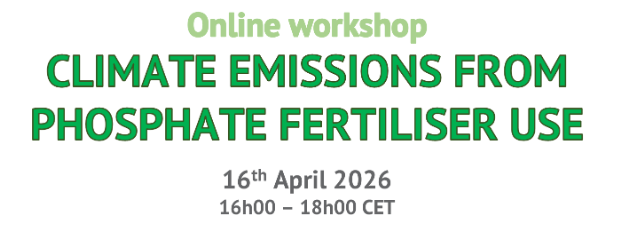 How does use of P fertilisers in the field impact climate emissions, e.g. via eutrophication effects or mitigation, crop carbon and soil carbon cycling. Online workshop will input to the Low Carbon Roadmap for the phosphate industry
Online workshop, 16th April 16h00 - 17h30 CET. Programme and registration here.
ESNI-NERM 2026: the flagship event on nutrient research, Brussels, 28-29 April 2026
ESNI-NERM is the joint European conference on nutrient research, organised by the Biorefine Cluster and ESPP, addressing the scientific issues, developments and challenges of nutrient management and nutrient recycling.
Registration now open. NERM-ESNI Tue. 28th April 2026 12h00 – Wed. 29th April 16h30 https://www.biorefine.eu/esni-nerm-2026/
Implementation of EU UWWTD art. 20 P reuse and recycling rates, Madrid 8-9 June
 ESPP workshop to input to the development of proposals for phosphorus “reuse and recycling rates” from sewage, update on P-recover, with participation of the European Commission Joint Research Centre (JRC).
This workshop will enable direct dialogue between phosphorus recycling technology suppliers, wastewater operators, fertiliser companies and regulators working on defining the implementing criteria for the Urban Waste Water Treatment Directive nutrient removal and (art. 20) phosphorus “reuse and recycling rates”:
- EU policy context and UWWTD art. 20 implementation work ongoing: European Commission JRC
- Spain policy context: Spanish Ministry for Ecological Transition and the Demographic
- Challenge
- Are “Quotas” an appropriate policy tool ? (recycled phosphorus content obligations for fertilisers)
- Sewage sludge incineration and alternative thermal processes: costs, logistics, energy recovery, phosphorus recovery
- Sewage biosolids valorisation to agriculture
- Digestion processes to release soluble P from sewage for higher recovery rates
To present an update on your recycling technology or to speak at this workshop, contact
Workshop on phosphorus reuse and recycling from urban wastewater, Madrid, Monday 8th June 14h00 – Tuesday 9th June 12h30. More information here.
6th European Sustainable Phosphorus Conference ESPC6: 24-26 November 2026, Benguerir, Morocco
www.phosphorusplatform.eu/ESPC6
 ESPC is the world’s leading sustainable phosphorus event, every 2-3 years. Don’t miss it! ESPC6 will include a site visit to an OCP phosphate mine, rock beneficiation and processing.
ESPC6 is co-organised by OCP Group and ESPP, with support of UM6P (Université Mohammed VI Polytechnique).
The event will take place UM6P Université Mohammed VI Polytechnique, in Benguerir, 1 hour shuttle from Marrakech, with accommodation in Ben Guerir or Marakkech.
ESPC6 will address:
- Fertilisers, P-stewardship and their role in supporting sustainable food systems and food security
- Interactions between climate change and phosphorus, including impacts on P dynamics, carbon sequestration, soil fertility, crop productivity, and nutrient requirements
- P-recovery and recycling
- P-removal
- Sustainability in P mining and processing
- Other aspects of P chemistry, P management, and P different uses.
In addition to site visit, side events may include a Young Nutrient Researchers Day.
Deadline for abstracts to main sessions 30th April 2026. Proposals for side events are welcome to
ESPP new member
Pazul integrated real-time nutrient monitoring solutions for wastewater and industry
 Pazul Ltd is a Cranfield University, UK, spin-out developing real-time monitoring solutions with proprietary sensor technology and integrated data tools, for wastewater management and complex aquatic pollution problems. Pazul technology helps utilities and industry measure water quality in real time and act on the results. Our first product focus is phosphate: an electrochemical sensor platform based on molecularly imprinted polymers (MIPs) that delivers rapid, low-maintenance measurements in minutes, without wet-chemistry reagents or sample preparation. We are developing this platform for municipal and industrial wastewater treatment plants to support day-to-day process optimisation: improving control of phosphorus removal and enabling more efficient operation and, where relevant, phosphorus recovery. Continuous phosphate intelligence can reduce chemical use, emissions and operational costs while maintaining stable treatment performance and protecting receiving waters. Alongside the hardware, we are building data tools for natural and engineered systems to turn continuous monitoring into actionable insights. We are joining ESPP to connect with the wider phosphorus management and circular-economy community, share practical learning from treatment environments, and collaborate on solutions that improve overall nutrient management and improve water quality.
Website: https://pazul.co.uk/
Bringing nutrient management into R&D projects
ESPP and National Nutrient Platforms can bring value to R&D projects
ESPP and the national Nutrient Platforms can connect your research project to the entire European agriculture and industry value chain, providing the global reach and stakeholder access necessary for success. Through our extensive network, we enable projects to establish direct contact with companies, regulators, R&D institutions, and agricultural and environmental stakeholders. The European Sustainable Phosphorus Platform (ESPP) serves as the umbrella for this initiative, collaborating with the Dutch, German, Swedish, Italian, and Catalan Nutrient Platforms. Together we bring strategic value for your project:
- Communication & Dissemination: Our platforms can lead or support your project’s outreach strategy. Through our established channels, newsletters, and international events, we provide a pre-existing audience for immediate dissemination and exploitation of results. This includes ESPP’s global 116 000 targeted emailing list, eNews and SCOPE Newsletter.
- Coordinated Multi-Actor Approach: We bridge the gap between research and practice. By involving our regional Platforms, your project gains direct access to industry across Europe, including fertiliser producers, chemicals, waste management, water treatment, technology providers.
- Translation to Policy & Market: Through ten years of close contacts with regulators and participation in policy and regulatory advisory structures, we can help bring research and technical innovation into evidence-based policy briefs and market-ready insights, ensuring that your project outcomes resonate with European and national decision-makers.
Our Platforms can bring expertise to R&D project consortia on:
- Nutrient flows
- Nutrients and the bioeconomy: feeding biomass production, recycling from bioeconomy processes
- Standards development to support nutrient recycling and bio-based products
- Boi-based innovation
- Nutrient governance, knowledge sharing and networking
- Agriculture and eutrophication, Best Agriculture Environmental Practice for nutrient management
We are looking to join consortia for calls in Horizon Europe Cluster 6, the EU Soil Mission, Circular Bio-based Europe (CBE), Interreg, LIFE or other EU or national projects.
To bring the Nutrient Platforms into your project consortium, or to engage our input, support and dissemination tools for your project, contact
Policy
Joint industry call for the EU FPR to enable innovation, circularity, bioeconomy
ESPP and eight fertilising product federations’ joint statement to the Evaluation of the EU Fertilising Products Regulation (FPR) calls for a criteria-based approach to enable inclusion of new materials into the Regulation. The organisations consider that the current exclusion of widely and safely used materials and the absence of a mechanism to allow timely updating of the list of eligible materials (CMCs) is resulting in very low uptake of the FPR CE-Mark: <5% of Organic and Organo-Mineral Fertilisers and <1% of Growing Media on the EU market today. The FPR is not responsive to innovation and to developments in recycling and in the bioeconomy, so is not delivering its objectives of Circular Economy and harmonisation of EU market access. This is detrimental to the bioeconomy, recycling, EU industry and to farmers. ESPP and the industry federations call for the current official Evaluation to recognise this structural problem in the FPR and to be followed by a legislative proposal to address this. Together, we suggest the inclusion into Annex II (CMCs) of evidence-based criteria to determine the eligibility of new materials and processes, in order to enable transparent, efficient, robust and timely assessment.
The industry federations concerned representing the fertilisers value chain, with ESPP, have launched a Joint Task Force to continue to proactively and constructively push to adapt the EU Fertilising Products Regulation to innovation, circularity and the bioeconomy.
“Addressing structural barriers to innovation, circularity, and market access in the EU Fertilising Products Regulation (EU) 2019/1009”, Joint Statement, 10th February 2026, European Consortium of the Organic-Based Fertilizer Industry (ECOFI), European Biostimulants Industry Council (EBIC), European Compost Network (ECN), European Sustainable Phosphorus Platform (ESPP), EUROFEMA, Growing Media Europe, Fertilizers Europe, European Potash Producers Association (APEP), European Biogas Association (EBA). www.phosphorusplatform.eu/regulatory
EU fertilising products industry Joint Task Force https://ecofi.info/addressing-structural-barries-to-innovation-circularity-and-market-access-in-the-eu-fertilising-products-regulation/
US Presidential order on strategic supply of Elemental Phosphorus
Order published 18th February says ‘Elemental Phosphorus’ is “critical to national defense and security”, for military applications, electronics and batteries, and calls for federal action to ensure adequate domestic supply. The Order correctly identifies elemental phosphorus (presumably meaning P4) as a key input for military smoke, illumination and incendiary devices, for defence technologies such as radar, solar cells, sensors and optoelectronics, and for batteries and semiconductors. The Presidential Order also states that elemental phosphorus (that is, P4) is a necessary precursor for the herbicide glyphosate, which it states is critical for US farmers to produce food and animal feed “efficiently and cost-effectively”.
The Order correctly states that there is today only one producer of P4 in the US and that the US imports 6 kt/y of P4 but confusingly refers to “elemental phosphorus mining”.
ESPP notes:
P4 does not occur in nature and cannot be mined. P4 is manufactured from mined phosphate rock in dedicated furnaces and there are today only four countries worldwide with significant P4 production: China, Vietnam, Kazakhstan, USA. The EU has no P4 production and is today totally dependent on imports.
The 6 ktP/y US P4 imports stated in the Order is <1% of world P4 production and maybe around 10% of US P4 use. Because the EU has no P4 production, EU imports are 10 – 20 times this tonnage.
Only around 4% of mined phosphate rock worldwide goes to P4, whereas over 90% of mined phosphate rock is used for food production via fertilisers or animal feed phosphates (not via P4). Phosphate rock (not P4) is on the EU Critical Raw Materials List because it is essential for agriculture and food security.
ESPP also notes that this Order does not cite a number of other strategic applications where P4 derived chemicals are essential: fire safety (of cables, electronics, transport, wood …), hydraulic control liquids for machines and aviation, catalysts, crude oil drilling and extraction, pharmaceuticals …
“Promoting the national defense by ensuring an adequate supply of elemental phosphorus and glyphosate-based herbicides”, US Presidential Executive Order, 18th February 2026 https://www.whitehouse.gov/presidential-actions/2026/02/promoting-the-national-defense-by-ensuring-an-adequate-supply-of-elemental-phosphorus-and-glyphosate-based-herbicides/
Very slow progress towards maybe authorising some additional materials under the FPR
Some progress seems to be made towards authorising 13 additional input materials into FPR CMCs, but as many others are rejected, mainly for “inadequate data”. And most Animal By-Products are still not integrated into CMC10.
Three and a half years after the European Commission survey identifying materials currently excluded from the FPR, the draft second report from NMI (commissioned by the Commission) begins to outline possible criteria for inclusion of a few materials (paper industry lime, recovered Mn and Zn from battery recycling, certain food and feed industry residues, certain wood and plant derived materials, wider definition of combustion for ashes). But a significant number of other proposed materials, including various nutrient recycling products, are evaluated negatively, often because of “inadequate data”. This includes materials for which there have been several or many EU-funded R&D projects. ESPP asks: why spend taxpayers’ money if these projects do not produce the needed data ? Materials currently proposed for rejection include ammonium and phosphate salts from end-of-life fire extinguishers (see ESPP eNews n°97), vivianite from sewage, sewage sludge biochars, source-separated human urine products, plant or algae biomass grown in sewage treatment. Biorefinery residues as inputs to digestates are still not evaluated despite being submitted in 2022. ESPP has made detailed input on the 160-page NMI report, including information collated from a number of competent stakeholder organisations and experts, lists of studies submitted to NMI which seem not to have been taken into account, and precise proposals for CMC wordings for a number of materials.
The fact that, to date, none of the materials submitted by stakeholders to the Commission’s 2022 survey have yet been validated for inclusion into the FPR, shows that the process is broken. There are today no criteria as to what data is needed, no transparency of evaluation, no timeline, and the result is considerable industry and stakeholder frustration, with rejection of innovative nutrient recycling routes, and with market-ready companies having no choice but country-by-country national fertilisers rules.
See summary of NMI’s first report in ESPP eNews n°100.
Concerning Animal By-Products in the FPR, these are today authorised as inputs to composts and digestates and ash-based fertilisers (under specified conditions), and “Processed Manure” is authorised under CMC10 (see ESPP eNews n°89). However, other ABPs are still pending, despite conclusion of the QLab report May 2025, which proposed conditions for inclusion of around ten different ABPs into CMC10. This delay seems to be partly due to disagreements about limits for chromium and arsenic in ABPs from leather processing (see ESPP eNews n°89).
Nutrient recycling and nutrient management
German Minister confirms that P-recovery deadline dates will not be extended
Germany’s Federal Environment Minister has sent a written reply to stakeholders, including DPP, stating that the deadlines for implementing phosphorus recovery from sewage will not be postponed. The German Association for Water, Wastewater and Waste (DWA) wrote formally to the Minister in December 2025 requesting to push back the 2029 deadline for implementation of P-recovery in many German sewage works (see detail in ESPP eNews n°104). ESPP, the German Phosphorus Platform (DPP) and other stakeholders, wrote to the Minister indicating that several full-scale P-recovery plants are already operational in Germany or under construction and will be operational by the 2029 deadline, that postponing deadlines will result in postponement of investment decisions and of roll-out of these or other technologies, and that recovered phosphorus products already today have a market when of appropriate quality. The German Federal Minister underlines that Phosphate Rock is an EU Critical Raw Material and that P-recovery from sewage can make a significant contribution to sustainability and to reducing EU dependency on imports. The Ministry states that postponing the legal deadline for P-recovery implementation fixed by German legislation would exacerbate obstacles and deprive the industry of planning certainty and incentives for technological development and investment decisions. The Minister confirms that a ‘fund mechanism’ will be developed whereby water operators not achieving P-recovery by the Regulation deadline would pay into a fund to finance P-recovery investments by operators moving ahead. The Ministry expresses thanks for the German Phosphorus Platform (DPP) support and constructive participation.
DPP (German Phosphorus Platform) position, 20th January 2026, “No deadline extension – create a transitional solution”: https://www.deutsche-phosphor-plattform.de/dpp-fordert-umsetzung-der-phosphorrueckgewinnungspflicht-ab-2029-keine-fristverschiebung/
ESPP letter to the German Environment Minister www.phosphorusplatform.eu/regulatory
First Belgian EU FPR Certification for Organic Fertilisers
DCM obtains EU Fertilising Products Regulation Certification for solid and liquid organic and organo-mineral fertilisers containing recycled nutrients (Module D1 CE-Mark FPR Certification). De Ceuster Meststoffen NV (DCM) is the first company in Belgium to obtain FPR Certification for a recycled nutrient product. The Certification means that the products can be freely transported to and sold in any EU country. The CE-Mark, obtained after audit of production at DCM’s Grobbendonk site, is a guarantee of quality and safety. DCM states that the Certification is part of the company’s commitment to sustainable, innovative and high-quality plant nutrition solutions for agriculture, professional horticulture and home gardening.
“DCM, first Belgian producer with European D1 certification for organic fertilisers”, DCM, 30th January 2026 https://www.linkedin.com/posts/de-ceuster-meststoffen_dcm-dcmorganic-moduled1-activity-7422950804824838144-YfQo
DPP visit to Seraplant ash processing plant, Haldensleben
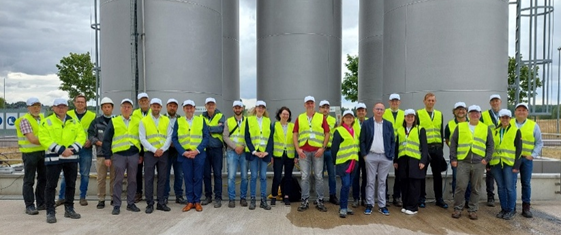 Relaunched after bankruptcy, the Seraplant site has capacity to process 26 000 t/y of sewage sludge incineration ash by reaction with phosphoric acid then granulation. Developed with Glatt Ingenieurtechnik, the plant is currently taking 10-12 different sewage sludge incineration ashes from mono-incinerators within a 50 km distance. The ash is combined with phosphoric acid (2:1 ratio, dry weight) and/or industrial waste acids, then dried by spray granulation at around 90°C, with dust collected and recycled. This results in a fertiliser product containing 17% P* where the phosphorus is c. 90% NAC-soluble. NAC (neutral ammonium citrate) is the measure of crop P availability used in the EU Fertilising Products Regulation FPR, which requires 75% NAC P-solubility for a material to be considered a phosphate fertiliser. At present heavy metals in the sewage sludge incineration ash remain in the output product, but the company indicates that it is working on a process to remove these upstream in the process. The output product contains c. 3% aluminium (Al) and c. 2.6% iron (Fe). Seraplant indicate that the output material is EU Fertilising Products Regulation compliant but that the CE-Mark certification is “very complex, opaque and expensive”.
* ESPP comment: this calculation seems to be based on taking the “dry weight” of phosphoric acid and a P-content of 10% in sewage sludge ash. If taking the wet weight of 85% phosphoric acid and ash with 8.5% P content, then nearly 2.3x more phosphoric acid would be needed to achieve 17%P in the product (input 1 : 2.27 ash dry weight : wet acid).
Photo: German Phosphorus Platform (DPP) visit to Seraplant 9th July 2025.
“Aus der Reihe „DPP vor Ort“: Bericht zur Besichtigung der Seraplant Phosphorrecyclinganlage in Haldensleben am 09.07.2025”, German Phosphorus Platform (DPP) https://www.deutsche-phosphor-plattform.de/aus-der-reihe-dpp-vor-ort-bericht-zur-besichtigung-der-seraplant-phosphorrecyclinganlage-in-haldensleben/
“Phosphorrückgewinnung: Seraplant setzt Prozess- und Verfahrensoptimierung fort”, EUWID 13th November 2025 https://www.euwid-recycling.de/news/wirtschaft/phosphorrueckgewinnung-seraplant-setzt-prozess-und-verfahrensoptimierung-fort-131125
Implications of the revised UWWTD for sewage treatment infrastructure in Poland
The revised Urban Waste Water Treatment Directive (UWWTD) will require upgrading to improve P-removal for half the urban waste water treatment plants > 10 000 p.e. in the Masovian Voivodship (which has 1/10th of Poland’s uwwtps). The administrative region, which includes Warsaw, covers 11% of Poland’s area and nearly 15% of its population, with over 320 wwtps. 30% of the wwtps > 10 000 p.e. will require upgrading to improve N-removal. This study collated published information on wwtp flows and quality of raw and treated wastewater, then assessed changes expected to result from implementation of the revised UWWTD. Based on literature data, the study estimated that most nitrogen in sewage comes from human excrements (7 – 8 gN/person/day in Thailand, Schouwa et al. 2002, 12 – 14 gN/person/day in Sweden, Tumlin & Mattsson 2013). Phosphorus in sewage is estimated to be around 1.7 gP/person/day (same sources – but see also ESPP SCOPE Newsletters n°s 71 and 103). The current estimated discharge from the Voivodship’s wwtps to the Vistula River (and so to the Baltic) is 170 tP/y and 2460 tN/y. Implementation of the revised UWWTD will require upgrading of P-removal for 49% and of N-removal for 31% of the Voivodship’s 326 wwtps > 10 000 p.e. and is estimated to reduce these discharges by -22% for P and -5% for N. Also, 8 larger wwtps will require additional micropollutant removal. The revised UWWTD will thus require considerable investment in wwtp infrastructure.
“Adapting wastewater infrastructure to the new EU directive: Modernization challenges and environmental benefits – Masovian Voivodship case study”, A. Karczmarczyk et al., Desalination and Water Treatment 323 - 101286, 2025 https://doi.org/10.1016/j.dwt.2025.101286
Fertilisers, soil, eutrophication and climate
Long-term use of mineral fertiliser results in higher soil organic carbon
Rothamsted UK soil samples show +10%, +22% or +28% soil organic carbon after 180 years of mineral P, N or N+P fertiliser application (compared to control – no N or P fertiliser). Rothamsted Broadbank (Hertfordshire, UK) is unique worldwide in having continuing consistent experimental field trials since 1843, with mineral fertiliser application on winter wheat compared to no fertiliser. The experiment only has one plot per treatment, because duplicates were only introduced into experimental methods in the early nineteenth century. 20 soil samples (0 -23 cm, plough depth) x 4 sub-plots were taken for each treatment in May 2022 (320 samples). Compared to no fertiliser, P-only fertilisation soil showed considerably higher microbial biomass and respiration (+20%, +37%), limiting organic carbon accumulation. N+P mineral fertilisation for 180 years showed +28% soil organic carbon (compared to no fertiliser). This paper provides no indication as to whether soil organic carbon is continuing to slowly accumulate with fertiliser application, nor as to whether reducing or stopping fertilisation would cause soil organic carbon to be lost.
“Soil carbon sequestration enhanced by long-term nitrogen and phosphorus fertilization”, S. Tang et al., Nature Geoscience, 18, pages1005–1013, 2025 https://doi.org/10.1038/s41561-025-01789-y
Sub-basin scale phosphorus planetary boundaries in China
Study suggests that livestock is currently responsible for exceeding safe P boundaries by 17 – 68 % and water quality thresholds by 31 – 75 % in 25 sub-basins. Total synthetic fertiliser inputs in China are estimated to have increased from 1.2 to 5.3 MtP/y 1980 – 2017, whereas P inputs to livestock systems increased even more, over 6 x, from 1.1 to 7.1 MtP/y. The main reason is identified as the tripling of livestock numbers, combined with over-fertilisation of crops. The external P inputs to the livestock system (synthetic fertilisers used to grow fodder, mineral animal feed additives and P in imported fodder e.g. soy) represented nearly half of inputs, the remainder coming from recycling, e.g. manure fertilising fodder production. Total P losses from China’s crop + livestock system showed a different trend, with total P losses peaking at 2.6 MtP/y in 2010 then decreasing to1 MtP/y by 2017, largely because of regulation ending direct discharge of manure to water or landfill. From 1980 to 2017, the number of studied sub-basins exceeding ‘loose’ and ‘strict’ Phosphorus Planetary Boundaries of based on global limits of 200 MtP/y and 6 200 MtP/y (to protect surface and coastal waters, see ESPP eNews n°104) increased from 0 and 7 (out of 25) in 1980 to all in both cases in 2017. If Phosphorus Planetary Boundaries were estimated for the sub-basins based on China’s water quality standards Class III (0.2 mgP/l) and Class II (0.1 mgP/), then the number of sub-basins in exceedance increased from 10 and 15 in 1980 to 19 and 23 in 2017. The authors note that these P loss estimates may be underestimated as they do not include significant losses from phosphate rock mining and fertiliser production (over 1 000 MtP/y in China).
“An optimized crop–livestock system can achieve a safe and just planetary boundary for phosphorus at the sub-basin level in China”, L Liu, et al., Nature Food, 5(6), 499-512, 2024 https://doi.org/10.1038/s43016-024-00977-0
Global phosphorus losses to oceans continue to increase
Analysis and modelling of river data suggests that total discharge of phosphorus to seas worldwide has increased by over 6% since 2020 (+3.2% / 10 years), with decreasing flows in the Northern hemisphere and increasing in the South. 420 rivers worldwide with catchments > 20 000 km2 each were modelled, covering a total population over 5 billion. Machine learning was applied to estimated river P discharge to seas from 280 000 in situ total P measurements from 1980 to 2019. Estimated P discharge per river varied from < 30 tP/y to 0.64 million tP/y (Amazon). 57 rivers with flows > 7 000 tP/y together account for 83% of total estimated global P flows to seas. Three rivers together contribute nearly half of P flows to seas in Europe: the Lean, Ob and Volga rivers. The total global P discharge continues to increase (+ 3.2% per decade) but with strong differences between regions. River discharge in Northern parts of the world have fallen by -3.1% per decade since 1980, whereas in Southern parts it has increased by around 1.5% per decade. P flows reductions in the North are attributed to the development of dams in rivers (which trap P in sediments behind the dam) and in Europe to improved agricultural practice, driven by environmental regulations. Land use change, in particular deforestation and palm oil production, is suggested to lead to increased P river losses in the South. Climate change is also suggested to accentuate phosphorus losses, e.g. loss of permafrost (S-M. Zhang et al. 2021). River P discharge tends to correlate with chlorophyll-a (eutrophication) and with high inputs of mineral phosphate fertilisers.
“Human alterations to global riverine phosphorus fluxes to the ocean”, G. Liu et al., Sci. Adv. 11, eady5884 (2025), https://doi.org/10.1126/sciadv.ady5884
Chesapeake nutrient management could bring US$ 6 million/year GHG benefits
Nutrient reductions to achieve TMDLs in Chesapeake Bay watershed is modelled to result in greenhouse gas reductions (CO2, methane, N2O) bringing a monetarised social benefit of US$ 300 million total over 50 years. Chesapeake Bay is America’s largest estuary with a catchment of 166 000 km2. The nutrient input reductions are the TMDL (Total Maximum Daily Loads) defined by the US Environmental Protection Agency in 2010 to achieve water quality standards: 25% and 24% reductions in nitrogen and phosphorus inputs from 2009 levels. GHG impacts of these reductions are compared to the baseline scenario. Reductions in GHG emissions resulting from nutrient input reductions are estimated based on Delsontro et al. 2018 Table 1 (see SCOPE Newsletter n°135) which estimates GHG emissions from lakes worldwide based on literature data, covering emissions of CO2, methane, N2O. The social costs of these GHG emissions are based on US EPA 2023 (data for regulatory impact analysis). The authors, all from the US EPA, thus estimate the social benefit value of the GHG reductions (net present value) at 253 M US$ for methane, 74 M US$ for CO2 and 7 M US$ for nitrous oxide (N2O). They note significant differences in estimated GHG reductions for the North and South parts of Chesapeake, because of differences in ici cover.
ESPP notes that, as far as we understand this paper, nutrient input - GHG emission links for the Chesapeake catchment, including rivers and estuary, seem to be based on estimates applicable for lakes (Delsontro 2018). ESPP also questions the conclusion that, over a whole catchment, nutrient inputs can increase CO2 emissions. Nutrient emissions cause aquatic algae and plant growth, so CO2 uptake during growth periods. The algae and plants then die and the organic material may either sink to sediment (so storing CO2 = negative GHG emissions) or are decomposed, releasing either the CO2 initially stored (and/or methane). Nutrient inputs can only increase net CO2 emissions if system boundaries are incomplete (e.g. nutrient emissions into rivers cause algal CO2 uptake in the river, but then the algae are carried into a lake where they decompose – so net CO2 emission in the lake) or if eutrophication is changing sediment oxygen status, causing release of historically stored CO2 in organics in the sediments. In that freshwater systems, in particular lakes, do have considerable organic matter stored in sediments, and because higher nutrient concentrations increase the rate of metabolic cycling, eutrophication can result in significant CO2 release from sediments, as well as increased methane release (which has a higher climate impact).
ESPP also notes that other authors consider that nutrient inputs to lakes result in increased net carbon burial (Andersen et al. 2020 in SCOPE Newsletter n°137). Heathcote et al. 2012, showing the conversion of land to agriculture over 150 years led to increased carbon burial in seven lakes, suggest that rapid CO2 uptake by phytoplankton and slow dissociation of carbonic acid prevent diffusion of free CO2 in water to the atmosphere and result in its inclusion in organic carbon particulates which sink to sediment.
“The climate benefits of improving water quality”, J. Beaulieu et al., US EPA, J. Environ. Qual. 2025;54:1759–1772, https://doi.org/10.1002/jeq2.70068
Methane from waters and wetlands are > 1/3 of global emissions, and rising
“Global methane budget” estimates emissions from inland waters (c. 110 MtCH4/y) alone are around 1/6th of total global anthropogenic and natural emissions, and around twice the total annual contribution to atmospheric methane ("imbalance", see Table 3 in the paper). These inland waters emissions are estimated to be slowly increasing (increase of <10% since o over the last twenty years) and to be quantitatively similar to global methane emissions from livestock (gastric fermentation, manure management), four times emissions from rice fields, and somewhat lower than emissions from other wetlands. Methane emissions from coastal waters are estimated to be low. Around half of the emissions from inland waters are considered to be of indirect anthropogenic origin, based on the assumption that all emissions from artificial waterbodies (reservoirs, man-made ponds …) are anthropogenic, and that 1/3 of emissions from other lakes and rivers result from anthropogenic causes. Overall, around 30 MtCH4/y, that is around half of the anthropogenic-caused emissions from water bodies are thus estimated to be caused by nutrients (eutrophication), noting that other anthropogenic factors may also contribute (physical modifications to water bodies leading to increased water temperatures, inputs of organic matter from discharges or soil erosion …). Other significant sources of methane emissions are fossil fuels, waste and landfills and natural releases. The c. 30 MtCH4/y nutrient and eutrophication caused emissions from water bodies is of the same order as the annual atmospheric accumulation (23 – 52 MtCH4/y). This 2025 update takes into account somewhat reduced estimates of methane emissions from lakes (S. Johnson et al., 2020)
“Global Methane Budget 2000–2020”, M. Saunois et al (70 authors), Earth Syst. Sci. Data, 17, 1873–1958, 2025, https://doi.org/10.5194/essd-17-1873-2025
ESPP Members
Stay informed
SCOPE Newsletter: www.phosphorusplatform.eu/SCOPEnewsletter eNews newsletter: www.phosphorusplatform.eu/eNewshome
If you do not already receive ESPP’s SCOPE Newsletter and eNews (same emailing list), subscribe at www.phosphorusplatform.eu/subscribe
LinkedIn: https://www.linkedin.com/company/phosphorusplatform
Slideshare presentations: https://www.slideshare.net/phosphorusplatform
Newsletter about nutrient stewardship - European Sustainable Phosphorus Platform (ESPP)
Please subscribe www.phosphorusplatform.eu/Subscribe
Link to www.phosphorusplatform.eu/eNews104
Download as PDF
Help ESPP continue sharing free information on phosphorus sustainability! DONATE NOW
Events
Members webinar: regulatory aspects of recycled fertilisers, 25th February 10h00 CET
18th CRU Phosphates & Potash 2026, Paris, 13-15 April 2026
16th April 16h00-18h00 CET (online): climate emissions from phosphate fertiliser use
ESNI-NERM 2026: the flagship event on nutrient research, Brussels, 28-29 April 2026
Implementation of EU UWWTD art. 20 P reuse and recycling rates, Madrid 8-9 June
Chemistry of industrial organophosphorus products and P4
Policy and regulation
ESPP work underway
Questions on possible phosphorus ‘quotas’ for fertilisers
Public consultation on draft standards for fertilising products
Questionnaire for companies for Evaluation of EU Fertilising Products Regulation (FPR)
EU ‘Critical Chemicals Alliance’ (CCA) launched, open to join
German water organisation calls to postpone implementation of P-recovery Regulation
Nutrient stewardship
Phosphorus needs of Organic Farming in Europe
STOWA report on TTBS Rubiphos trials
Planetary boundaries
What Planetary Boundaries indicators for nutrients ?
Evolution of how planetary boundaries for phosphorus are defined
Outstanding questions
Invitation for contributions
ESPP Members
Stay informed
Events
Members webinar: regulatory aspects of recycled fertilisers, 25th February 10h00 CET
Webinar for ESPP and national nutrient Platform members. Wednesday 25th February 10h00 CET. With Roland De Bruijne, Global Regulatory Affairs Manager Crop Protection, Crop Nutrition, Knoell and ESPP.
This webinar will provide an overview of the different regulations applicable when placing a recycled nutrient fertiliser on the market in the EU and will allow questions and discussion: national and EU fertilisers regulations, waste regulations and End-of-Waste, REACH, Animal By Products, site authorisations, transport, Health & Safety.
Wednesday 25th February 10h00 CET. To obtain the participation link, staff or members of ESPP and of National Nutrient Platforms wishing to participate must register here https://us02web.zoom.us/meeting/register/U6jXtK0JQuimrGUNQgXV3w
18th CRU Phosphates & Potash 2026, Paris, 13-15 April 2026
This is “the” annual world P and K industry & technology meeting place, covering the whole industry value chain: mining and resources, beneficiation, fertilisers – feed and industrial applications, environmental aspects of production management, sustainability.
For ESPP, Robert van Spingelen, ESPP President, and Willem Schipper, Willem Schipper Consulting, will present on "Elemental Phosphorus (P4) Markets: End-Uses, Supply Bottlenecks, and European Project Pathways".
18th CRU Phosphates & Potash 2026, Paris (Paris Marriott Rive Gauche Hotel), 13-15 April 2026 http://events.crugroup.com/phosphates/home
Conference discount code available on request from ESPP for ESPP members.
16th April 16h00-18h00 CET (online): climate emissions from phosphate fertiliser use
How does use of P fertilisers in the field impact climate emissions, e.g. via eutrophication effects or mitigation, crop carbon and soil carbon cycling. Online workshop will input to the Low Carbon Roadmap for the phosphate industry (see ESPP eNews n°103). Nitrogen fertilisers’ climate emissions impacts are widely investigated, but do phosphate fertilisers have significant ‘Scope3’ greenhouse impacts? Are these positive (increased carbon fixation by crops or in soil, or in surface waters due to runoff …) or negative (methane emissions related to eutrophication)? Discussion and conclusions will input into the Low Carbon Roadmap for phosphate fertilisers, under development by ERM consultants, supported by Systemiq consultants, for EBRD (European Bank for Reconstruction and Development) and IFA (International Fertilizer industry Association), to be presented at the IFA Cultivating Tomorrow Conference (June 2026).
Online workshop, 16th April 16h00-18h00 CET. Registration on Eventbrite.
If you wish to present, please contact
ESNI-NERM 2026: the flagship event on nutrient research, Brussels, 28-29 April 2026
ESNI-NERM is the joint European conference on nutrient research, organised by the Biorefine Cluster and ESPP, addressing the scientific issues, developments and challenges of nutrient management and nutrient recycling.
NERM-ESNI Tue. 28th April 2026 12h00 – Wed. 29th April 16h30 https://www.biorefine.eu/esni-nerm-2026/
Implementation of EU UWWTD art. 20 P reuse and recycling rates, Madrid 8-9 June
ESPP workshop to input to the development of proposals for phosphorus “reuse and recycling rates” from sewage, update on P-recover, with participation of the European Commission Joint Research Centre (JRC). This workshop follows JRC’s first draft report on current sludge processing and destinations, and on phosphorus recycling technologies. It will include presentation and discussion of the Eunomia study on questions for policymakers for possible ‘quotas’ for recycled P in fertilisers (see below). Site visits to P-recovery and P-removal operations and research.
Workshop on phosphorus reuse and recycling from urban wastewater, Madrid, Monday 8th June 14h00 – Tuesday 9th June 12h30. Site visits 9th afternoon. https://www.phosphorusplatform.eu/WorkshopMadridArt20
Chemistry of industrial organophosphorus products and P4
Call for abstracts for ESPP joint session on organophosphorus and P4 chemicals at 25th ICPC International Conference on Phosphorus Chemistry conference, Montpellier, 5-8 July 2026. ICPC is the world’s phosphorus chemistry event for now 60 years, covering all aspects of phosphorus chemistry: biology, health and nutrition, medicine, materials sciences and applied industrial chemistry.
The ESPP joint session will look at chemical routes to key industrial chemicals: fire safety, silicon doping for PV and electronics, battery electrolytes catalysts, phosphonates … Are there industrially feasible routes to some organophosphorus chemicals without thermal P4? What perspectives and opportunities for industrial phosphorus chemistry?
If you would be interested in sponsoring or presenting at this P4 session, please contact ESPP rapidly so that we can define with the organisers the content and organisation and timing.
25th ICPC Phosphorus Chemistry Conference, Montpellier (at ENSCM Ecole Nationale Supérieure de Chimie de Montpellier), 5-8 July 2026. Conference website: https://icpc25.sciencesconf.org/?lang=en
Policy and regulation
ESPP work underway
Over the last several weeks, ESPP has prepared input to a number of regulatory dossiers relevant to nutrient recycling:
- Detailed comments (19 pages) submitted to the draft European Commission JRC report to support implementation of the revised EU Urban Waste Water Treatment Directive 2024/3019 (UWWTD), art. 20 (definition of combined minimum phosphorus reuse and recycling rates). This draft is not public and comments could only be made by members of the UWWTD Expert Group (includes ESPP) The draft for comment concerned routes for sewage sludge management at present in Europe, and catalogues and assesses existing and potential phosphorus recovery techniques. Further parts of the report will concern risks from substances in sewage sludge applied to agricultural land, market viability of recovered phosphates and the waste hierarchy. The report will input to the definition of EU phosphorus reuse and recovery rate requirements. On this, see ESPP workshop in Madrid 8-9 June, above https://www.phosphorusplatform.eu/WorkshopMadridArt20
- Continuing input to the EU Fertilising Products Regulation. Preparation of a joint industry position calling to resolve the current slow, complex and ineffective process for considering new input materials (CMCs), to take account of innovation, recycled and bioeconomy materials. Preparation of the next EU Fertilising Products Expert Group, in particular the NMI report assessing some candidate materials or processes for new CMCs, Animal By-Products. Input to European Parliament concerning proposed amendments to the Chemicals Omnibus to facilitate consideration of new materials as CMCs.
- Detailed input to the SCRREEN3 draft Factsheets, which will provide a basis for updating of the EU Critical and Strategic Raw Materials lists. The documents are not publicly available (only SCRREEN3 registered experts, including ESPP). This concerns both ‘Phosphorus’ (P4) and ‘Phosphate Rock’. ESPP and other experts in our members and network will participate at the SCRREEN3 workshop in February.
- Input to EU public consultations: Battery Labelling. The proposed Regulation update confirms the obligation to declare Critical Raw Materials present at > 0.1% w/w (so includes the element P). Revision of EU rules on Public Procurement. ESPP suggests that consideration of environmental aspects be no longer an option subject to difficult conditions, but be required wherever feasible.
- Input on final proposals for new materials/processes in the EU Fertilising Products Regulation (FPR). Work underway. This is the second 180-page NMI report on work which started in 2022. Current proposals are to continue to exclude from the FPR: vivianite, algae grown in wastewaters, ammonium salts from fire extinguisher recycling, pyrolysis (biochar) from sewage sludge, and others, mainly because of “inadequate data”. This is despite EU funding of successful pilot projects, full scale operation or authorisation under national regulations in some cases. A few materials or CMC changes are recommended for implementation, including some processes using source-separated urine. ESPP considers that this very slow process, resulting mostly in rejections for “inadequate data”, illustrates the need for a more responsive, criteria-based system to enable the FPR to adapt to innovation in circularity and the bioeconomy.
- R&D offer. The several national Nutrient Platforms, with ESPP, are preparing a short summary presentation document on how we can together contribute to Research and Innovation projects, to bring competence on nutrients either to directly targeted projects or to wider projects (circular economy, bioeconomy).
Questions on possible phosphorus ‘quotas’ for fertilisers
Eunomia study, for ESPP, proposes 40+ questions which policymakers should take into account if considering possible ‘quotas’ for recycled phosphorus in fertilisers (minimum recycled content). The 10-page study, intended as a briefing tool for policy makers, has been developed through research and an engagement process undertaken by Eunomia on behalf of ESPP; it is not an ESPP position. The document summarises Eunomia’s review of literature and stakeholder consultation with experts and practitioners, including fertiliser producers, the water and waste industries, recycling technology companies, research. The questions are intended to provide practical perspectives on the potential effectiveness, fairness, feasibility and possible co-benefits or unintended consequences of a possible a quota system for recycled phosphorus in fertilisers. The identified questions show the complexity of defining a workable system: which types of fertiliser? Phosphorus from sewage only or also from e.g. manure ? How to ensure quality of recycled phosphorus materials if their uptake is ‘obligatory’ ? At what point in the fertiliser production – distribution – use chain could quotas be applied ? Geographical scope (how to take into account regional phosphorus surpluses, how to deal with imports and exports …) ? Would quotas be tradeable ? What would be the administrative and cost burdens ? Eunomia conclude that “Some of these questions could be difficult, if not impossible, to answer. Nonetheless, mapping out the key uncertainties and trade-offs is important for identifying practical pathways and avoiding unintended consequences.”
“Questions on Possible Phosphorus Quotas for Fertilisers”, Eunomia, January 2026, commissioned by ESPP.
Public consultation on draft standards for fertilising products
The European standardisation Organisation CEN has opened for comment 35 draft standards for testing methods to support the EU Fertilising Products Regulation (Standardization Request M/564 and its amendments). An list of the 35 standards can be found here. At the current stage, both technical and editorial comments can be accepted by CEN. However, at the future Formal Vote stage, only editorial comments can be accepted. As with all European standards processes, the consultation is not publicly accessible. The draft standards cannot be found on the CEN website but status information can be found under CEN/TC 223 ‘Soil improvers and growing media’ and CEN/TC 260 ‘Fertilizers and liming materials’. You might also find some of the draft standards elsewhere on the web (at a price). The CEN Technical Committees (TC) invite interested stakeholders to contact their national standardisation bodies to be able to review the draft standards and to submit comments by the deadlines set at national levels. Comments can only be submitted via the national standardisation bodies. If a stakeholder is unsure whom to contact to consult the standards and to submit comments, they may reach out to for the standards under CEN/TC 223 and for the standards under CEN/TC 260.
CEN: https://www.cencenelec.eu/
List of standards open for comment: https://circabc.europa.eu/ui/group/36ec94c7-575b-44dc-a6e9-4ace02907f2f/library/1e048e21-77b1-4929-b66a-784653cef888
Questionnaire for companies for Evaluation of EU Fertilising Products Regulation (FPR)
Based on operating experience applying the FPR, fertiliser companies, distributers, material suppliers and farmers are asked if they consider that the FPR is supporting circularity and innovation and what are challenges to its application. Deadline Friday 13th February. This survey is organised by consultants CSES as part of the official European Commission Evaluation of the FPR. Questions concern points such as FPR criteria, product safety, contaminants, compliance and test method standards, production and distribution, relevance to end-users, economic- innovation- and competitiveness impacts, market access for fertilising products, trade, impacts on company activities and on the supply chain, product reformulations, interactions with National Fertiliser Regulations. Challenges with the conformity assessment modules, CE Certification processes and Notified Bodies are particularly addressed, as are compliance and implementation costs and administrative burdens for companies. Companies are asked to compare FPR compliance costs to those of National Fertilisers Regulations. Proposals for simplification of the FPR and of its implementation are requested.
“Targeted consultation - Evaluation of the EU Fertilising Products Regulation (Regulation (EU) 2019/1009)”, CSES for the European Commission – open to 13th February 2026 https://eu.mar.medallia.com/?e=100005097&d=e&h=EDB26B998FC4339&l=en
See also ESPP’s input (19_9_25) to the previous public consultation for the FPR Evaluation www.phosphorusplatform.eu/regulatory
EU ‘Critical Chemicals Alliance’ (CCA) launched, open to join
ESPP was represented by Vincent van der Meijden, Filo Chemical, at the launch meeting of the EU Critical Chemicals Alliance 13th January 2026. The Alliance brings together industry and experts to define which chemicals and which production sites are essential foundations for the EU chemicals industry, and for manufacturing industries dependent on chemicals. The Alliance has set up four working groups: Critical Chemicals and Critical Sites, Trade, Chemical production Modernisation and Investments in Europe, Lead Markets (meaning low-carbon and sustainability). The aims of the WG ‘Critical Chemicals and Critical Sites’ are to define methodologies for identifying critical chemical molecules and chemical sites (“around 10 EU-wide criteria”), to propose a matrix of critical molecules x sites and recommendations for how to support these molecules and sites, all by June 2026. This will draw on existing frameworks, including the EU Critical Raw Materials Act 2024/1252 (CRM Act), recognising that the challenge is not resource scarcity but production competitivity. As in the CRM Act, a subset of the ‘Critical’ molecules and sites will be identified as ‘Strategic’, that is key to the green and digital transitions and to defence. The WG ‘Trade’ aims to develop early warning systems on trade distortions and propose improvements to trade defence instruments, including looking at raw material access and EU chemicals industry opportunities.
Application to joint this EU Alliance remains open for any organisation with activities in the chemicals industry, including companies, associations, investors, research and civil society. https://ec.europa.eu/eusurvey/runner/CCA_apply
EU Critical Chemicals Alliance (CCA) website https://single-market-economy.ec.europa.eu/sectors/chemicals/critical-chemicals-alliance_en
German water organisation calls to postpone implementation of P-recovery Regulation
ESPP, DPP (German Phosphorus Platform) and stakeholders suggest that the German P-recovery deadline should not be postponed. This would be contrary to the EU objective of rolling out phosphorus recovery and reuse.
The German Association for Water, Wastewater and Waste (DWA) has written to the German Federal Environment Minister on 19th December 2025. DWA opens by underlining their support for the objectives of the German P-recycling Regulation* because phosphorus is a Critical Raw Material and P-recovery will make an “essential contribution to resource security”. The Federation estimates that P-recovery installations will be operational in 2029 for only one third of German sewage sludge mono-incineration ash (SSIA), and that significant investment is also needed to install mono-incinerators where sewage sludge currently goes to other destinations. DWA says that despite considerable technological progress in P-recovery and numerous successful pilot installations, scale up to full-scale operation remains a challenge, and that lack of experience of operational full-scale P-recovery means a lack of information to support water industry investment decisions. DWA also suggests concerns about the market for recycled phosphates because of a lack of legal classification or quality requirements. DWA strongly rejects the option of temporarily storing SSIA in separate landfill for later retrieval for P-recovery (when capacity is available) as costly, legally uncertain and non-feasible in the timeline (difficulties to find a landfill site, permitting). DWA also opposes the proposal for a ‘Fund’ mechanism whereby water operators not achieving P-recovery by the Regulation deadline would pay into a fund to finance P-recovery investments, because this would not resolve the issues of technological scale-up, market uptake or legal uncertainties. DWA calls to legally clarify that water operators can recoup all preparation, investment and operating costs for P-recovery through user water fees (see UBA report in ESPP eNews n°100).
* The German national P-recycling Regulation (AbfKlärV, 27/9/2017) requires (simplified summary) that from 2029 large sewage treatment plants, where the sewage sludge phosphorus content is higher than 20 g P/kg dry matter, must carry out phosphorus recovery (2029 for wwtps > 100 000 p.e., 2032 for wwtps > 50 000 p.e.). There are three options for P-recovery: recover 50% of P from sludge, recover P from sludge sufficiently to reduce below 20 gP/kgDM, or mono-incinerate sludge. For all wwtps where sludge is incinerated, 80% of P must be recovered from the ash. From 2029 the Regulation requires ALL wwtps with sludge >20 gP/kgDM to either recover P or use sludge in agriculture. Because very few wwtps > 50 000 p.e. do send to agriculture they will have to recover P from 2029, as will smaller wwtps not sending to agriculture.
DPP (the German Phosphorus Platform) has published a detailed argument as to why postponing the German Regulation deadlines is not necessary and counter-productive to the objective of rapidly implementing P-recovery, rolling out P-recycling technologies and developing a market for recycled phosphates.
ESPP has written to the German Minister emphasising that Phosphate Rock is an EU Critical Raw Material, phosphate fertilisers are non-replaceable and essential to ensure food production and farmer incomes, and the EU is 90% dependent on imports. This dependency means that the EU continues today to import fertilisers from Russia, directly contributing to fund the war of aggression against Ukraine. Phosphate recycling from sewage could replace imports of Russian phosphates. ESPP underlines that several full-scale P-recovery plants are already operational in Germany or under construction and will be operational by the 2029 deadline (e.g. AshDec R-Rhenania, Altenstadt, operational, 50 000 t/y dried sewage sludge ESPP eNews n°102 ; EasyMining Ash2Phos, Schkopau,, under construction, 30 000 t/y SSIA by 2027 ESPP eNews n°100 - and others) and that postponing deadlines will result in postponement of investment decisions and of roll-out or full-scale operation implementation of other technologies. ESPP notes that recovered phosphorus products already today have a market when of appropriate quality, either for use as fertiliser (struvite and phosphorus from thermal oxidation processes are already authorised as EU-fertilisers: FPR CMCs 12 and 13) or in industry. ESPP supports DWA’s call to ensure legal clarification that full costs of P-recycling can be recouped by operators in water fees.
DWA letter to the German Federal Ministry, 19th December 2025, public documents register SG2601200011,”Zu Regelungsvorhaben:Rahmenbedingungen Phosphorrückgewinnungskapazitäten bis 2029 gem. Verpflichtungen der Klärschlamm” https://www.lobbyregister.bundestag.de/inhalte-der-interessenvertretung/stellungnahmengutachtensuche/SG2601200011
DPP (German Phosphorus Platform) position, 20th January 2026, “No deadline extension – create a transitional solution”: https://www.deutsche-phosphor-plattform.de/dpp-fordert-umsetzung-der-phosphorrueckgewinnungspflicht-ab-2029-keine-fristverschiebung/
Nutrient stewardship
Phosphorus needs of Organic Farming in Europe
Data analysis suggests that Certified Organic Farming offtakes an average 5.6 kgP/ha in crops, less than half that in crops on conventional farms. Around 2.1 kgP/ha is input to Organic Farming from mineral fertiliser (ground phosphate rock is authorised for use in Organic Farming in some countries, but crop availability of P is low, except in acidic soils*). The analysis uses FADN (Farm Accountancy Data Network) data analysed by NUTS2 regions. Organic Farming crop P offtake varies considerably between NUTS2 regions (from near zero to >35 kgP/ha). This analysis does not take into account P losses (soil erosion, runoff) nor offtake in crop residues, but considers that 90% of P offtake in Organic Farming is in crops, as soil P losses are low and residues are generally recycled. The analysis concludes that around 20% of P offtake in crops is in fodder crops, whereas this P is probably being fed to Organic Livestock, and then recycled back to Organic Farming in manure. Organic Farms use a range of other P inputs (in addition to phosphate rock), including e.g. manure from non-Organic farming (manure from “factory farming” cannot be used), composts from food wastes. Previous studies indicate that EU Organic Farming often has a P deficit or to avoid this uses a range of external P inputs such as composted municipal solid waste, municipal biogas digestate, commercial fertilisers derived from organic wastes, non-Organic livestock manures (see Reiner et al. 2023, Barbieri et al. 2021, in SCOPE Newsletter n°149).
* This paper wrongly states “phosphate rock efficiency is limited to soils with pH > 6” referring to a reference to Cooper 2018 (the link given is incorrect: DOI link is https://doi.org/10.1007/s10705-017-9894-2 ). As is well known, P availability decreases with increasing pH, and the Cooper paper cited states “Phosphate rocks can be very inefficient P sources in soils with a pH > 6.0”. ESPP also notes bad practice in that this Cooper paper is a secondary reference – Cooper 2018 provides no data and simply refers to original data in Fardeau 1998.
“Phosphorus removal and use in organic crop farming in the EU”, S. Magaya et al., Nutr Cycl Agroecosyst (2025) 130:91–110 https://doi.org/10.1007/s10705-024-10379-0
STOWA report on TTBS Rubiphos trials
Report of 12.5 kg/h ash input testing of the TTBS Rubiphos process to recovery phosphorus by sulphuric acid leaching of sewage sludge incineration ash by sulphuric acid followed by membrane and nanofilter purification. The 65-page report is published by STOWA, the Netherlands water industry joint research organisation. The test unit at HVC’s site in Dordrecht, The Netherlands, was operated during working hours for several days with the membrane units operating continuously, for several runs on 2024, treating a total of around 2 tonnes of input ash. Up to 97% of the phosphorus was extracted from the ash to the phosphoric acid by leaching with 96% concentrated sulphuric acid. The resulting phosphoric acid purified using nanofiltration and Diffusion Dialysis membranes, resulting in a dilute purified acid (2-3 % P2O5) and a waste acid stream. Production of phosphate fertiliser from the purified acid was model simulated not tested, as this is well-known, market-available technology. Treatment of this waste acid stream, which contains most of the heavy metals from the ash, is not addressed in this report. Because of water input to the process, 1 tonne of ash generates around 2 tonnes of leached ash filter cake (“Rubicas”) with dry weight 0.7 – 0.8 tonnes. Around 60% of iron from the ash remains in this cake and around 35% of aluminium, the remainder going to the output (purified phosphoric acid or phosphate fertiliser). Around 50% of zinc and less that 10% of copper from the ash end up in the purified phosphoric acid / phosphate fertiliser. Lead levels in the “Rubicas” cake were too high for its use as fertiliser. The report also summarises other technologies currently available for P-recovery from ashes: EasyMining, Remondis, Susphos, Spodophos, ICL.
“Pilotonderzoek fosfaatterugwinning uit as van zuiveringsslib met het Rubiphos process” (pilot research phosphate recovery sewage sludge incineration ash by the Rubiphos process), STOWA report n° 2025-30, 19th November 2025, 65 pages, in Dutch (without English summary) https://www.stowa.nl/publicaties/pilotonderzoek-fosfaatterugwinning-uit-van-zuiveringsslib-met-het-rubiphos-proces
Planetary boundaries
What Planetary Boundaries indicators for nutrients ?
Update paper on ‘Planetary Boundaries’ suggests increasing ecological overshoot for P and N. But this is based only on fertiliser use, not environmental risks, contradicting messages on food security. In their 2025 analysis, Fanning & Raworth present the “Doughnut” concept, combining 35 ecological indicators of planetary overshoot with indicators of social deprivation. Their results point to improvements in some human welfare indicators, such as a decline in global undernourishment from 13% in 2000 to 10% in 2021, but a simultaneous increase in food insecurity, from 23% to 29% of the world population. Nearly all ecological indicators show deterioration over the past two decades, including nutrient pollution. For phosphorus and nitrogen, the paper indicates that between 2000 and 2022, phosphorus overshoot rose from +123% to +273% (over 2x planetary capacity), while nitrogen overshoot rose from +116% to +273% (nearly 3x planetary capacity). These values are based on planetary boundaries of 6.2 MtP/y and 62 MtN/y (Richardson, Rockström et al., 2023, see below). The overshoot calculation, however, is based solely on fertiliser applied to land. For phosphorus, the 23 MtP/y used in the calculation corresponds roughly to total global phosphate rock extraction (the 23 MtP/y indicated as phosphorus fertiliser application to land for 2022 is approximately the total P extracted from phosphate rock, see ESPP Phosphorus Fact Sheet).
This reliance on fertiliser tonnage leads to two main issues:
- Firstly, it produces contradictory messages concerning food security. In regions such as Africa, current fertiliser use is far below agronomic needs, contributing to depleted soils, low crop productivity, declining soil carbon and persistent rural poverty (see e.g. Lomé Declaration on Fertilizers and Soil Health in West Africa and the Sahel, African Union, 2023).
- Secondly, it conflicts with scientific analyses indicating that the primary environmental limit for phosphorus is loss to freshwater and marine environments, not fertiliser use or phosphate rock mining. Eutrophication results from phosphorus losses linked to soil erosion and management practices, not from total quantities applied. This perspective is consistent with the UN Biodiversity Convention and the EU Green Deal goal to reduce nutrient losses by 50% (ESPP eNews n°74).
These are not new questions, and discussion on how to define planetary boundaries for phosphorus and nitrogen is ongoing since Rockström et al. 2019 first launched the concept. We summarise below how the definition and estimation of planetary boundaries for P and N have evolved over time and questions outstanding today.
Evolution of how planetary boundaries for phosphorus are defined
The definition of planetary boundaries for nutrients has changed considerably since the concept was introduced. Rockström et al. 2009 initially proposed a phosphorus boundary based on avoiding large-scale anoxia in the oceans, setting the limit at 11 MtP/y, calculated as 10x estimated natural background P-release from soil weathering, indicating that P emissions were still 15-25% below this boundary at the time. Concerns were also raised about the long-term loss of non-renewable phosphate rock. This 2009 paper also proposed a boundary of 35 MtN/y human-induced nitrogen fixation. Schlesinger 2009 criticised this figure as too generous and suggested that boundaries should be defined according to the need to prevent eutrophication in coastal waters.
Carpenter & Bennett 2011 reframed the boundary in terms of eutrophication risks in freshwater and marine systems. They noted that although freshwater eutrophication is a local problem, with locally specific causes and effects, it is widespread globally. Their proposal focused on phosphorus applied to erodible agricultural soils and identified 6.2 MtP/y as the global limit compatible with avoiding widespread eutrophication. They estimated that global P flows to oceans are three times higher than pre-industrial flows (from Carpenter 2001) and underlined “contrast between large amounts of P needed for food production and the high sensitivity of freshwaters to pollution by P runoff”. This is based on Bennet et al. 2001 which explained that phosphorus losses and so eutrophication risks are mainly related to particulate P losses linked to soil erosion, and so increase with phosphorus accumulation in agricultural soils and with land management and agricultural practices which accentuate eutrophication. On these premises, they proposed a planetary boundary of 6.2 MtP/y of phosphorus added to erodible agricultural soils (suggesting that this means fertilised arable cropland soils prone to P-losses to freshwaters, so presumably not including permanent pastures or managed forests: NOTE: Sattari, Bouwman et al. 2016 estimate global fertiliser use on grasslands as significantly < 1 MtP/y). They concluded that P flows to freshwaters exceed planetary boundaries by 3 – 20 x (with target freshwater P concentrations of 160 -24 µgP/l) and exceed the boundary for flows to oceans by around +50%.
Subsequent studies reinforced this assessment. Kahiluoto et al. 2014 (see SCOPE Newsletter n°103) concluded that global phosphorus use exceeds sustainable levels by roughly eightfold, while nitrogen use exceeds limits by around twofold. Steffen et al. 2015 (DOI) also adopted the 6.2 MtP/y threshold, to also avoid widespread freshwater eutrophication resulting from mineral P fertiliser application to erodible soils. They discuss regional differences in P application and eutrophication consequences, stating that “addition of P to regional watersheds is almost entirely from fertilizers” (ESPP comment: this is arguably incorrect, in that many high P-loss regions are manure hotspots) and suggest that a redistribution of P from intensive P-use regions to regions with low soil P could both increase global food production and reduce ecological boundary transgression.
Richardson, Rockström et al. 2023 maintained this boundary in their update, estimating that global flows of phosphorus from rivers to the oceans amount to 22 MtP/y (ESPP note: this number is nearly the same as the estimate of total mined P used in Fanning & Raworth 2025 above), compared to a boundary of 11 MtP/y, and that phosphorus applied to cropland exceeds the sustainable limit by almost 200%.
Li et al. 2019 propose a different approach termed “Phosphorus Exceedance Footprint” (PEF), which incorporates trade flows by calculating exceedance above a sustainable application rate (4.1–7.5 kg P/ha/y) and allocating part of the impact to imported or exported products. Their results suggest that all countries exceed sustainable phosphorus use levels and that around 30% of global exceedance is embodied in traded goods from New Zealand, China and Brazil.
The planetary boundaries for P and N are further discussed, with graphs showing development of planetary overshoot over the last hundred years, in Sandström, Kahiluoto et al. 2023.
Nitrogen boundaries have followed a similar trajectory. Rockström et al. (2009) originally proposed a boundary of 35 MtN/y, estimated as 25% of calculated total anthropogenic N fixation at the time. De Vries et al. 2013 revised this upward to 62 MtN/y, a value considered to avoid major environmental risks. This number is maintained in the 2023 update, which concludes that nitrogen fixation now exceeds the boundary more than threefold.
Peñuelas & Sardans et al. 2022 showed the need to address the increasing global imbalance in the nitrogen to phosphorus (N:P) ratio driven by anthropogenic activities because of its implications for ecosystem health, food security, and social equity. They suggest that the N:P balance warrants inclusion as a distinct planetary boundary.
Outstanding questions
ESPP notes that the question of how to define planetary boundaries for nutrients remains unresolved. The main challenge is that phosphorus impacts are highly local and depend strongly on soil conditions, land use and hydrology. Phosphorus inputs on depleted soils may pose almost no environmental risk and are essential for maintaining soil fertility, whereas the same level of application in a phosphorus-saturated watershed may cause significant eutrophication. Scientific publications repeatedly point to the need for multi-indicator approaches that consider freshwater and marine impacts, soil erosion, agricultural management and regional nutrient balances.
Also, impacts of changes in diet (higher animal protein consumption) are often flagged. But this does not generally impact the planetary boundary calculation model, because P in manure is taken to be recycled back to soil, in an agricultural internal loop without changing the quantitative flow from phosphate mine to oceans. The P in livestock manure originally came (nearly all) from mined P-rock. However, higher livestock numbers may increase the rate of loss of P from agriculture to surface waters, for example if intensive fodder crop production replaces uncultivated land or extensive pasture. This may or may not be accentuated if livestock are regionally concentrated (manure hotspots) but only if this leads to increased overall P losses to surface water, that is overall net loss from the system leading to increased demand for phosphate rock mine extraction.
Different methods for calculating “phosphorus use” further complicate matters, whether based on mineral P fertiliser use, phosphate rock extraction or more detailed assessments of fertiliser applied to erodible soils – but in fact this makes little difference, as non-fertiliser uses of phosphate rock and fertiliser application to ‘non-erodible’ soils (permanent pastures, forests …) probably represent only 20% of global P use, so not significant compared to overall ‘planetary boundary’ estimates. Despite these differences, the global threshold of 6.2 MtP/y has remained largely unchallenged since 2011.
Some proposals could however be made:
- Exclude from the ‘use’ calculation fertiliser application in regions where P-fertiliser application is inadequate. In that such regions use low quantities of P-fertiliser, this might not significantly modify outcomes, but it would clearly show that planetary boundary objectives are not contradictory to food security,
- Add a ‘multiplying factor’ to reflect unsustainable concentrations of P in regional nutrient hotspots, combining high P use (often via livestock) and eutrophication. This could contribute to taking into account impacts of changing diet / increased livestock numbers, see above.
- Develop regional nutrient “boundaries”, as a tool to identify overall policy distance from environmental objectives (including the UNEP -50% nutrient loss reduction target). Such regional boundaries can contribute to phosphorus management, awareness and governance and enable identification of import dependency. For example, Liu et al. 2024 defined differentiated thresholds for the safe and just regional phosphorus boundaries for China’s river basins considering Chinese water quality standards and P fertilizer use.
- Interactions between different planetary boundary factors. Analysis in Lade et al. 2019 showed that interactions between factors tends to further shrink the estimated safe operating space, compared to analysis of each factor separately, because of cascade and feedback. We would suggest that in particular interactions between phosphorus and nitrogen and with climate change should be considered (see SCOPE Newsletter n°137 – science summary of phosphorus – climate change interactions).
Invitation for contributions
ESPP would welcome short expert perspectives or comments on how planetary boundaries for nutrients should be interpreted or improved. Please send, by end of March 2026, text of up to 200 words, including references, for possible publication in a future ESPP eNews (115 000 email circulation worldwide) to .
“Doughnut of social and planetary boundaries monitors a world out of balance”, A. Fanning, K. Raworth, Nature, vol. 646, 2025 https://doi.org/10.1038/s41586-025-09385-1
“An optimized crop–livestock system can achieve a safe and just planetary boundary for phosphorus at the sub-basin level in China”, L Liu, et al., Nature Food, 5(6), 499-512, 2024 https://doi.org/10.1038/s43016-024-00977-0
“Earth beyond six of nine planetary boundaries”, K. Richardson, J Rockström, Sci. Adv. 9, eadh2458, 13, 2023 https://doi.org/10.1126/sciadv.adh2458
“Disparate history of transgressing planetary boundaries for nutrients”, V. Sandström, H. Kahiluoto et al., Global Environmental Change 78, 102628, 2023 https://doi.org/10.1016/j.gloenvcha.2022.102628
"The global nitrogen-phosphorus imbalance", J Peñuelas, J Sardans, Science, 375(6578), 266-267, 2022 https://doi.org/10.1126/science.abl4827
“Towards meaningful consumption-based planetary boundary indicators: The phosphorus exceedance footprint”, M. Li, T. Wiedmann, M. Hadjikakou, Global Environmental Change 542019, 227–238, 2019 https://doi.org/10.1016/j.gloenvcha.2018.12.005
“Human impacts on planetary boundaries amplified by Earth system interactions”, S. Lade et al., Nature Sustainability, 3, pages 119–128, 2020, https://doi.org/10.1038/s41893-019-0454-4
“Negative global phosphorus budgets challenge sustainable intensification of grasslands”, S. Sattari, A. Bouwman et al., Nature Communications vol. 7, 10696, 2016 https://doi.org/10.1038/ncomms10696
“Planetary boundaries: Guiding human development on a changing plane”, W. Steffen et al., Science 347, 1259855, 2015 http://dx.doi.org/10.1126/science.1259855
“Assessing planetary and regional nitrogen boundaries related to food security and adverse environmental impacts”, W. de Vries et al., Curr. Opinion Environ. Sust. 5, 392–402, 2013 http://dx.doi.org/10.1016/j.cosust.2013.07.004
“Reconsideration of the planetary boundary for phosphorus”, S. Carpenter and E. Bennett, Res. Lett. 6, 014009, 2011 http://dx.doi.org/10.1088/1748-9326/6/1/014009
“Planetary boundaries: Thresholds risk prolonged degradation”, W. Schlesinger, Nature Climate Change, vol.1, pp. 112–113, 2009 https://www.nature.com/articles/climate.2009.93
“Planetary Boundaries: Exploring the Safe Operating Space for Humanity”, J. Rockström et al., Ecology and Society 14(2): 32, 2009 http://www.ecologyandsociety.org/vol14/iss2/art32/
“Human Impact on Erodable Phosphorus and Eutrophication: A Global Perspective”, E. Bennett et al., BioScience, Vol. 51, No. 3, 2001, https://doi.org/10.1641/0006-3568(2001)051[0227:HIOEPA]2.0.CO;2
ESPP Members
Stay informed
SCOPE Newsletter: www.phosphorusplatform.eu/SCOPEnewsletter eNews newsletter: www.phosphorusplatform.eu/eNewshome
If you do not already receive ESPP’s SCOPE Newsletter and eNews (same emailing list), subscribe at www.phosphorusplatform.eu/subscribe
LinkedIn: https://www.linkedin.com/company/phosphorusplatform
Slideshare presentations: https://www.slideshare.net/phosphorusplatform
Newsletter about nutrient stewardship - European Sustainable Phosphorus Platform (ESPP)
Please subscribe www.phosphorusplatform.eu/Subscribe
Link to www.phosphorusplatform.eu/eNews103
Download as PDF
Help ESPP continue sharing free information on phosphorus sustainability! DONATE NOW
Events
ESNI-NERM 2026 – the flagship event on nutrient research, Brussels, 28-29 April 2026
18th CRU Phosphates & Potash 2026, Paris, 13-15 April 2026
25th ICPC Phosphorus Chemistry conference, Montpellier, 5-8 July 2026
Open calls and consultations
EU consultation: public procurement rules
EU consultation: battery labelling rules
EU stakeholder survey: research to support agriculture
Policy and regulation
EU Commission proposal on food and feed fails to address P recycling
European Commission RESourceEU Action Plan includes phosphorus
Fertilising Products Regulation (FPR) audit frequency modification
Health
Very high phosphate diet causes kidney problems in mice
Nutrient stewardship
Low carbon roadmap for the international P and K fertilisers industry
Looking for partners: phosphate fertiliser from landfill leachate
Recycling potassium from ashes
Recycling fishery wastes to fertilisers
ESPP Members
Stay informed
Events
ESNI-NERM 2026 – the flagship event on nutrient research, Brussels, 28-29 April 2026
The European Sustainable Nutrient Initiative (ESNI) Conference and the Nutrients in Europe Research Meeting (NERM) are merging to bring together all the community working on research and innovation focused on nutrient management. ESNI-NERM is the flagship event on nutrient management. It provides an overview of the scientific issues, developments and challenges of nutrient management and nutrient recycling, with plenary and parallel sessions and poster sessions.
Call for abstracts is open until 30th January 2026
NERM-ESNI Tue. 28th April 2026 12h00 – Wed. 29th April 16h30 https://www.biorefine.eu/esni-nerm-2026/
18th CRU Phosphates & Potash 2026, Paris, 13-15 April 2026
This is “the” annual world P and K industry & technology meeting place, covering the whole industry value chain: mining and resources, beneficiation, fertilisers – feed and industrial applications, environmental aspects of production management, sustainability.
For ESPP, Robert van Spingelen, ESPP President, and Willem Shipper, Willem Schipper Consulting, will present on "Elemental Phosphorus (P4) Markets: End-Uses, Supply Bottlenecks, and European Project Pathways".
18th CRU Phosphates & Potash 2026, Paris (Paris Marriott Rive Gauche Hotel), 13-15 April 2026 http://events.crugroup.com/phosphates/home
Conference discount code available on request from ESPP for ESPP members.
25th ICPC Phosphorus Chemistry conference, Montpellier, 5-8 July 2026
 ICPC (International Conference on Phosphorus Chemistry), every three years, is the main world phosphorus chemistry event, for 60 years now. ICPC looks at all aspects of phosphorus chemistry today, at the meeting point of biology, health and nutrient, medicine, materials sciences and applied industrial chemistry. Sessions cover new developments in phosphorus chemistry, applications of phosphorus-based catalysts, health sciences and biochemistry of phosphorus, new phosphorus-based materials and applications.
During ICPC July 2026, ESPP supports a session on “Progress and obstacles to producing industrial organo-P chemicals without P4”, within the conference Topic 4 Phosphorus Material Chemistry & Applied Science. This session will bring together research into routes to reach some essential organophosphorus chemicals without the P4 furnace route, e.g. for battery electrolytes, water treatment, pharmaceuticals, catalysts, photovoltaics, fire safety of electrical and electronic systems. What fundamental research is ongoing and what is the progress? Which organophosphorus chemicals can be produced? How feasible is scale-up of reactions tested in the lab? What is the energy balance?
Call for abstracts is open to 3rd April 2026.
25th ICPC Phosphorus Chemistry Conference, Montpellier (at ENSCM Ecole Nationale Supérieure de Chimie de Montpellier), 5-8 July 2026. Conference website: https://icpc25.sciencesconf.org/?lang=en
Open calls and consultations
EU consultation: public procurement rules
Public consultation open to 26th January 2026. Aim is to improve clarity and effectiveness of the EU Public Procurement (PP) framework and to better use PP to support sustainability and resilience. ESPP will input welcoming the announced objective to promote sustainability and resilience and calling that the public procurement be aligned with the future EU Circular Economy Act and with the EU Critical Raw Materials Act. ESPP suggests to replace the current prioritisation of the “lowest cost option” wherever feasible by consideration of environment, circularity and local supply chain.
EU public consultation open to 26th January 2026, “EU public procurement rules – revision”, “Call for Evidence”: input = 4000 characters text plus optional attached document https://ec.europa.eu/info/law/better-regulation/have-your-say/initiatives/15492-EU-public-procurement-rules-revision_en
See also previous EU consultation on public procurement 7th March 2025 ESPP eNews n°94. and ESPP input submitted (1 page): www.phosphorusplatform.eu/regulatory
EU consultation: battery labelling rules
Public consultation open to 26th January 2026. Update to annexes of EU Batteries and Waste Batteries Regulation 2023/1254. The requirement to indicate Critical Raw Materials (applicable to phosphorus) remains in place.
EU public consultation open to 26th January 2026, “Batteries – labelling (new rules)” https://ec.europa.eu/info/law/better-regulation/have-your-say/initiatives/14456-Batteries-labelling-new-rules-_en
EU stakeholder survey: research to support agriculture
Public survey open to 25th January 2026. Stakeholder input is requested to define research and innovation priorities support the EU farming, with aims of “long-term competitiveness and sustainability” in the context the European Commission’s Vision for Agriculture and Food (see ESPP eNews 95). Some 12 questions cover future-readiness and overall strategic aims, specific research objectives, valorisation of R&I results, investment and innovation uptake, cooperation and thematic priorities for agricultural R&I. One of the proposed R&I priority themes is “Sustainable management of land, soil, water and nutrients”. Circularity is not mentioned. The survey is explicitly anonymous, so ESPP will not respond as an organisation, eNews readers are welcome to respond as individuals.
EU public stakeholder survey, open to 25th January 2026 – input is anonymous – 12 questions plus possibility to upload a document, “Future-proofing EU Agri-Food through research and innovation” https://ec.europa.eu/eusurvey/runner/Future-proofing_EUAgri-Food_through-RI
Policy and regulation
EU Commission proposal on food and feed fails to address P recycling
‘Omnibus’ simplification proposals do not consider obstacles to phosphorus recycling in the Animal Feed Regulation 767/2009, moves towards change of status of most materials currently classed as Cat.1 Animal By-Products (ABP).
ESPP regrets that despite input from Sweden (ESPP eNews n°100), from eight European organisations led by FEFAC (joint industry proposals, eNews n°97) and from ESPP (eNews n°101), the proposal does not address the annex of 767/2009 which currently excludes from use in animal feed any product extracted from sewage or manure, so excluding processes which generate safe, purified mineral phosphates from incineration ashes.
The proposed regulation changes make the first steps towards declassifying most current Cat.1 ABP materials, so removing the current requirement to separate and incinerate these materials. This is justified because current BSE risk limitation measures in 999/2001 are considered today outdated given the near-zero occurrence rates in the EU today (BSE = mad cow disease = bovine spongiform encephalopathy - prion transmission). The proposed regulation removes the current ban on production of collagen and gelatine from ruminant bones and would also allow the Commission to modify annexes of 999/2001 to declassify Cat.1 materials. To what extent the Commission will do this will probably depend on the outcomes of the requested EFSA Opinions on Cat.1 materials (see eNews n°100). If this declassification process is implemented, then the brain, eyes and spinal cords of healthy cattle from abattoirs would no longer be classified Cat.1 and Cat.1 ash (currently estimated by ESPP to contain c. 30 000 tP/y of phosphorus) will largely cease to exist. This will enable recycling of this phosphorus into Meat and Bone Meal (MBM) going to animal feed or to fertilisers, but not via chemical P-recovery from ash.
“Simpler food and feed safety rules while upholding high health standards and boosting competitiveness of EU producers”, European Commission press release, 16th December 2025 https://ec.europa.eu/commission/presscorner/detail/en/ip_25_3081
“Proposal for a Regulation … amending Regulations (EC) No 999/2001, (EC) No 1829/2003 …” SWD(2025) 1030,, 2025/0410 (COD), and “Proposal for a Directive … amending Council Directive 98/58/EC and Directive 2009/128/EC …”, 2025/0409 (COD), 16th December 2025 https://food.ec.europa.eu/horizontal-topics/simplification-legislation_en
European Commission RESourceEU Action Plan includes phosphorus
Plan will structure investment and market support and accelerate recycling and supply diversification for Critical Raw Materials (which includes both “Phosphate Rock” and “Phosphorus”, meaning P4). The RESourceEU Action Plan aims to ensure EU industry, defence and energy transition resilience and (specifically cited page 1) food security. Action will particularly target rare earths, permanent magnets, materials for batteries (which includes both Purified Phosphoric Acid and P4) and defence. Actions announced include the launch of a European Critical Raw Materials Centre to steer value chain actions (including joint purchasing agreements, raw materials stockpiling), financing, project monitoring and international supply activities. Support totalling around 3 billion EU funds, augmented by private investment, should be mobilised for Critical Raw Material value chains within the coming year. Announced actions include:
- “an action plan to ensure the availability and affordability of domestic fertilisers, including actions to enable recycled nutrients and other alternatives to fertilisers” (to be proposed by mid-2026),
- promotion of “enhanced cooperation with our Neighbourhood countries, in particular in North-Africa, on access to phosphate rock and potash resources, and in the Gulf”,
- partnerships with CRM supply countries, including several with phosphate rock resources and notably Kazakhstan (one of the EU’s two suppliers of P4) (page16),
- guidance to and revision of the EU Water Framework Directive (by mid-2026), targeting environmental permitting for mining and CRM processing,
- possible facilitation of mining, CRM processing and recycling activities in chemicals regulations inc. REACH,
- targeted amendments to the EU Critical Raw Materials Act2024/1252 concerning Strategic Projects, large companies using Strategic Materials, permanent magnets.
“Commission adopts RESourceEU to secure raw materials, reduce dependencies and boost competitiveness*”, 3rd December 2025 https://ec.europa.eu/commission/presscorner/detail/en/ip_25_2891
“RESourceEU Action Plan. Accelerating our critical raw materials strategy to adapt to a new reality”, European Commission Communication COM(2025)945, 3rd December 2025 https://eur-lex.europa.eu/legal-content/EN/TXT/?uri=CELEX%3A52025DC0945
Fertilising Products Regulation (FPR) audit frequency modification
Two adjustments requested by industry to FPR Conformity Assessment are published: rationalisation of audit frequency for Module D (without reducing sampling frequency), clarifications regarding laboratories accredited to carry out nitrate fertiliser detonation resistance tests.
Commission Delegated Regulation 2025/1421 of 17th July 2025 (published in the Official Journal of 10th December 2025) “amending Regulation (EU) 2019/1009 … as regards the conformity assessment procedures for EU fertilising products” https://eur-lex.europa.eu/eli/reg_del/2025/1421/oj/eng
Health
Very high phosphate diet causes kidney problems in mice
Normal mice on very high phosphate diet (2.5 x normal) show kidney changes (tubule damage and fibrosis) after only two months, continuing to accentuate up to 6 months through to kidney TLS (tertiary lymphoid structures). The “high P diet” contained 2% phosphorus, compared to “normal diet” 0.8% P. Mice experimental results may not translate to humans, but for comparison, mice live maybe 18 months, so 2 months would be maybe ten years for humans, and the recommended daily intake (RDA) of phosphorus in humans is 0.7g P/day for adults (or 1.25 gP/day for adolescents) so the high P diet used here would be < 2 mgP/day, quite possible for a diet heavy in meat and processed food. This study showed that the high P diet in mice caused fairly consistent increased blood (serum) phosphorus (up by nearly +50%) and also increased blood levels of the hormone FGF23 (fibroblast growth factor). This hormone affects mineral metabolism, in particular downregulating kidney phosphate resorption, so increasing phosphate excretion in urine, however in excess it is also associated with vascular calcification, kidney disease and other problems. This increase in blood P and FGF23 with high P diet in mice confirms previous studies (see e.g. Kim et al, ESPP eNews 98, Hsu et al. ESPP eNews 95, Richter et al. 2022 and others) but may not do so in humans. In this new study, genetically modified mice producing high levels of FGF23 did not show kidney damage with normal P diet but did so with high P diet, enabling the authors to conclude that the kidney damage was caused directly by the high phosphate in diet, not by indirect effect by increased FGF23.
”High Phosphate Load Induces De Novo Formation of Tertiary Lymphoid Structures in the Kidney” [in mice], N. Weingärtner et al., FASEB, 2025; 39:e71279 1 of 19, https://doi.org/10.1096/fj.202500968R
Nutrient stewardship
Low carbon roadmap for the international P and K fertilisers industry
Work underway with industry, experts and stakeholders, aims to identify best available solutions to decarbonise the phosphorus and potassium fertiliser industries, from mine through processing to fertiliser use. While decarbonisation efforts have focused on ammonia-based fertilisers, no equivalent framework exists for phosphate and potash fertilisers. The EBRD (European Bank for Reconstruction and Development) and IFA (International Fertilizer Association) wish to develop a low-carbon roadmap to net zero for the phosphate and potash fertiliser industry and has commissioned ERM, with support from Systemiq, to develop this. The aim of the project is to identify the policy and technology pathways needed to reduce the industry’s climate impact while continuing to support global food security. The aim is to the launch the P and K fertilisers low-carbon roadmap at the IFA Cultivating Tomorrow Conference (June 2026). Initial online workshops on phosphorus and potassium fertilisers took place late 2025 and will be followed by in-person workshops in Morocco (P), hosted by OCP, and Canada (K) in March 2026. These workshops are free and open-to-all experts/companies - reach out to the ERM team (email below) to learn more.
At the 2025 decarbonisation workshops, expert presentations were given by several industry stakeholders and the focus was to brainstorm and review opportunities for the industry to reach net zero. For N fertilisers, maybe 2/3 of greenhouse emissions are related to downstream end-use of the fertiliser, because of nitrogen compound emissions to air in the field. For P and K fertilisers, downstream end-use emissions are lower but there are still significant raw material emissions from combination with N fertilisers due to ammonia. Another significant greenhouse impact is from CO2 released from carbonate in (sedimentary) phosphate rock during acid attack as well as from process heat because of requirements for drying, calcination and reactor heating. Multiple solutions were proposed by different stakeholders for the different greenhouse impacts, including electrification, leaching of phosphate rock and energy efficiency measures. ESPP commented on the need to assess emissions related to phosphorus use: possible eutrophication impacts (algal growth fixing CO2 or algal decay releasing methane), CO2 benefits of eutrophication prevention measures (such as buffer strips or water retention in ditches) and CO2 fixing resulting from increased crop growth. These emissions sources are currently poorly captured in corporate emissions accounting frameworks relevant for P producers, such as the GHG-Protocol, which hinders their potential inclusion in this global roadmap.
“ERM to support EBRD and IFA on development of low-carbon roadmap for the potash and phosphate fertilizer industry” ERM 5th September 2025 https://www.erm.com/about/news/erm-to-support-ebrd-and-ifa-on-development-of-low-carbon-roadmap-for-the-potash-and-phosphate-fertilizer-industry/
If you can contribute knowledge or information to this Low Carbon Roadmap for P and K fertilisers, contact: 'Daniel Saxton'
Looking for partners: phosphate fertiliser from landfill leachate
 A technology developer in Croatia is looking for partners to take forward recovery of fertiliser from waste phosphogypsum stack discharge water, following successful lab-scale trials with the stack owner DE-FOS d.o.o. Phosphate fertiliser is recovered by dosing of the acidic phosphogypsum leachate with lime, sodium hydroxide and calcium hydroxide with controlled pH adjustment at temperatures of 40°C or lower. The acidic leachate from the Kutina phosphogypsum stacks, Croatia (8 million tonnes of phosphogypsum), contains around 9% P, 18% F, 27% Ca. The recovered fertiliser material contains c. 13% P (31 % P2O5), <2% F and 3 mg/kg cadmium. The fluorine can be recovered from the liquor as CaF2 or NaF. The recovered phosphate fertiliser, and a combination with potassium sulphate, have been validated by Zagreb University as conform to EU Fertilising Products Regulation PFC 1(B)1 criteria (but to date, precipitated phosphates from landfill leachate are not authorised under CMC12). The project is now looking for technology or investment partners to take forward process development, pilot testing, scale-up.
Photo : Zdenko Ceraj, birds’ nests in phosphogypsum at Kutina (probably sand martins)
Recycling potassium from ashes
EasyMining (ESPP member) is coordinating projects to develop recovery of fertiliser grade potassium and phosphate from a range of ashes from combustion of poultry litter, biomass for energy and of bioindustry wastes.
EasyMining’s process ensures the absence of organic contaminants or pathogens, because of the combustion stage, and enables production of fertilisers with low levels of heavy metals, copper and zinc. EasyMining (Ragn-Sells group) already operates a full-scale plant recovering industrial grade potassium salts from municipal waste incineration ash (see ESPP nutrient technology Catalogue).
A current project is funded by the BioInnovation programme (Vinnova, Sweden’s Innovation Agency, and the Swedish Energy Agency). Input ashes being tested include poultry litter incineration ash (rich in P and K, and already widely commercialised as a fertiliser after reformulation/granulation, see e.g. BMC Moerdijk), ashes from pulp and paper production and other bioindustry ashes. The work in this project, which will conclude in April 2026, includes screening and characterising of input biomaterials, optimising the recovery technology at lab and pilot scale, validating the recovered fertiliser products in pot trials, assessing the commercial viability and implementation of the process, and a Life Cycle Assessment. Two peer-reviewed papers connected with this work have published by authors from EasyMining and from the Swedish University of Agricultural Sciences: see below.
EasyMining has recently announced further funding by the Formas Biosociety Program to investigate the applicability and industrialisation of this technology on two waste streams common in Nordic countries: straw bioenergy ash and ash from combustion of wastes from production of fish feed ingredients by fermentation. In collaboration with partners across the value chain (Ragn-Sells, Bio3, Vilokan, Swedish Agricultural University), recycled fertilisers will be produced pilot scale and their properties and performance will be tested in agricultural filed tests. A feasibility study for full-scale implementation will be made, including a market analysis, engineering (plant design, equipment choice …), locations for implementation, life cycle assessment.
The first published paper presents analysis of ashes from incineration of organic wastes in different types of combustion unit: poultry litter, fish waste, Kraft cellulose fibre industry waste. Results show 6 – 24 %K and 3 – 9 %P in different poultry litter ash fractions, 0.2 -8 %K and 0 – 1.6 %P in Kraft waste ash, and 0.6 – 6%K and 2 – 6 %P in fish waste ash. Other nutrients (magnesium, calcium), metals (iron, aluminium, copper, zinc …) and heavy metals were also measured. Copper was always lower than 0.7%, zinc always lower than 0.6% and most heavy metals generally low in the fish and poultry manure ashes (e.g. cadmium always < 4 mg/kg). Cadmium levels were higher in the Kraft waste ash (up to 21 mg/kg) and barium levels were also higher in the Kraft waste ash (up to 5 300 mg/kg). Strontium and titanium were generally higher than 150 mg/kg in all tested ashes.
The second paper presents lab-scale tests (100 g ash batches) of water leaching of poultry litter ash, followed by evaporation to crystallise potassium salts, leaving a phosphate-rich residue. Fly-ash from fluidised bed incineration of poultry litter with 20% plant residues was used. This ash contained 24% K and 3% P. Water leaching for 30 minutes at 70°C dissolved >90% of the potassium and > 99% of sulphate from the ash (leachate P concentration 0.0002%). Around one quarter of the potassium in the leachate was crystallised by simply cooling the leachate and further recovery was possible by evaporation. Using selective evaporation, recovered potassium sulphate with < 0.5% chloride content could be achieved. Most of the phosphate was not water leached and remained in the leaching residue, which showed c. 11%P, c. 23% Ca, significant levels (>1%) of Mg, Na, Si, Fe, Zn.
“Circular potassium project receives funding from Formas”, EasyMining, 17th December 2025 https://newsroom.easymining.com/posts/pressreleases/circular-potassium-project-receives-funding-f
EasyMining Sustainable potassium , https://www.easymining.com/projects/product-development/sustainable-potassium/
“Recovery of potassium and phosphorus from biomass-derived ash”, E. Moslehi et al., Cleaner Waste Systems 12 (2025) 100428 https://doi.org/10.1016/j.clwas.2025.100428
“Selective leaching and crystallization methods to produce potassium and phosphate fertilizers from poultry litter fly ash”, E. Moslehi et al., Separation and Purification Technology 385 (2026) https://doi.org/10.1016/j.seppur.2025.136276
Recycling fishery wastes to fertilisers
EU funded R&D (Sea2Land, Horizon 2020) tests four lab produced fertilisers from fish processing waste or aquaculture sludge in field trials, showing nitrogen fertiliser effectiveness lower than mineral fertiliser. Three of the four tested products were from research lab-scale (c. 300 g/hour) treatments of fish processing wastes: fermentation with leaves and fuel-oil combustion ash; enzyme hydrolysis; formic acid autolysis followed by membrane separation. The fourth product was dried fish sludge (manure, uneaten food) from a commercial aquaculture company in Norway. Field testing was on broccoli, comparing to a control (no fertiliser) and an ammonium fertiliser (nitrogen application for all products 120 kgN/ha. The fermentation material showed significantly lower yield and nitrogen uptake / nitrogen use efficiency than the mineral fertiliser. The other three materials showed yield 10 – 20 % lower than the mineral fertiliser, but not statistically significant (also not statistically significantly better than control for 3 of the 4 materials). Soil carbon and biology, including soil fauna, were assessed, concluding that responses were variable and most indicators returned to baseline after harvest. Despite the field trial results, the authors nonetheless conclude that certain of the tested fish waste derived materials can effectively replace mineral fertilisers while enhancing soil health.
“Recycling fishery waste into biobased fertilizers: Agronomic performance and soil health impacts”, J. Zhang et al., Soil & Tillage Research 253 (2025) 106686 https://doi.org/10.1016/j.still.2025.106686
ESPP Members
Stay informed
SCOPE Newsletter: www.phosphorusplatform.eu/SCOPEnewsletter eNews newsletter: www.phosphorusplatform.eu/eNewshome
If you do not already receive ESPP’s SCOPE Newsletter and eNews (same emailing list), subscribe at www.phosphorusplatform.eu/subscribe
LinkedIn: https://www.linkedin.com/company/phosphorusplatform
Slideshare presentations: https://www.slideshare.net/phosphorusplatform
Newsletter about nutrient stewardship - European Sustainable Phosphorus Platform (ESPP)
Please subscribe www.phosphorusplatform.eu/Subscribe
Link to www.phosphorusplatform.eu/eNews102
Download as PDF
Help ESPP continue sharing free information on phosphorus sustainability! DONATE NOW
Open calls and consultations
Tender for labs for standards ring tests for nutrient polymers
EU ‘Critical Chemicals Alliance’ (CCA) launched, open to join
EU consultation: Taxonomy
EU consultation: market surveillance and product compliance
EU consultation: public procurement rules
EU consultation: Advanced Materials Act
EU consultation: New Legislative Framework (Digital Product Passport, circularity)
Policy
European Commission Workplan for 2026
Updated EU BioEconomy Strategy published
EU fixes -10% / -30% food waste reduction targets
UK draft Standard for principles of ‘nutrient markets’
Phosphate and potash added to US Critical Minerals List
ESPP participates in EESC debate on ‘Permanent Materials and Phosphorus Circularity”
EU Soil Health Monitoring Directive adopted
Events
18th CRU Phosphates & Potash 2026, Paris, 13-15 April 2026
25th ICPC Phosphorus Chemistry conference, Montpellier, 5-8 July 2026
Nutrient recycling
ESPP new member: Shit2Power
SusPhos – SNB P-recovery project obtains NL Government subsidy
Germany inaugurates first industrial-scale AshDec® plant for phosphorus recovery
NPHarvest pilot P and N recovery unit at biogas plant, Aslan, Ankara, Turkey
EU Fertilising Products Regulation (FPR)
Tracegrow fertilisers from recycled batteries and battery industrial sidestreams
EasyMining webinar on recovered calcium phosphate
ESPP Members
Stay informed
Open calls and consultations
Tender for labs for standards ring tests for nutrient polymers
Deadline 24th December 2025. CEN/CENELEC tender for laboratories to carry out ring testing for standards development of ‘Determination of the final degradation products in nutrient polymers’, for CEN/TC 260/WG7 (Inorganic fertilisers and inhibitors). The standard is under development following the European Commission standardisation request M/564 to support the EU Fertilising Products Regulation.
“Open Call for Tender for laboratories participating in an inter-laboratory study for nutrient polymers in CEN/TC 260/WG 7 'Inorganic fertilizers and inhibitors', CEN/CENELEC, published 19th November 2025.
Applications must be sent by 24th December 2025 to
Call documents and information: https://www.cencenelec.eu/news-events/news/2025/call-for-tender/2025-11-19-ils_laboratories/
EU ‘Critical Chemicals Alliance’ (CCA) launched, open to join
Led by the European Commission (DG GROW), the Critical Chemicals Alliance, with Member States, aims to identify critical chemical molecules and production sites, map critical molecules and facilitate relevant investments. This follows the Commission’s ‘Chemicals Action Plan’ announced in July 2025 (ESPP eNews n°99). The Alliance will develop criteria to identify chemicals and chemical production sites which are critical for EU strategic objectives, based on importance for downstream strategic sectors, production and value chain resilience, dependency on third countries or suppliers. The Alliance aims to facilitate investment in critical chemicals and sites, and also in alternative carbon sources including biomass, recycled waste and carbon capture and utilisation (CCU).
Any organisation with “relevant activities in the chemicals industry”, including companies, associations, investors, research and civil society, can apply to join the Alliance.
ESPP has applied to join the Alliance and will support recognition of P4 (white phosphorus) as a ‘Critical Chemical’, because of EU supply dependency on Vietnam and Kazakhstan, and because P4 is essential to the industry sectors defined as “strategic” in the EU Critical Materials Act 2024/1252: renewable energies, electronics, aerospace. ESPP will also support recognition of phosphates and of fertilisers as ‘Critical Chemicals’ and as critical production sites.
The European Commission also launched (2nd July) an “Energy and Raw Materials Platform”. For materials, this concerns only “Strategic” Raw Materials (P4 and Phosphate Rock are not classed ‘Strategic’ in the Critical Raw Materials Act). For ‘Strategic’ raw materials, this Platform will facilitate joint purchasing, access to supply and stockpiling.
“Commission announces launch of Critical Chemicals Alliance to strengthen Europe's chemical sector” 28th October 2025 https://single-market-economy.ec.europa.eu/news/commission-announces-launch-critical-chemicals-alliance-strengthen-europes-chemical-sector-2025-10-28_en
EU Critical Chemicals Alliance (CCA) website https://single-market-economy.ec.europa.eu/sectors/chemicals/critical-chemicals-alliance_en
Critical Chemicals Alliance membership application: https://ec.europa.eu/eusurvey/runner/CCA_apply
EU consultation: Taxonomy
Two public consultations open to 5th December to simplify and update the ‘Taxonomy’ (green finance) criteria for environment and climate activities, including P-recovery from wastewater, anaerobic digestion and digestates. The consultation aims only to simplify the criteria for ‘green’ funding of (1) environmental activities (2023/2486) and (2) climate change mitigation/adaptation (2021/2139), so does not invite to propose widening of criteria or inclusion of new activities. The current criteria include phosphorus recovery from waste water, requiring recovery of 15% of waste water treatment plant inflow phosphorus or 80% of phosphorus in sewage sludge incineration ash, and recovery of phosphorus as a recognised fertiliser or industrial phosphate product. The current criteria also cover anaerobic digestion for biogas production and of bio-waste, stating that the resulting digestate should be used as a fertiliser. ESPP will propose to the public consultations changes to improve coherence with other regulations, so facilitating operator and investor implementation: include P-recovery from digestates for non-fertiliser use of the P, P-recovery from waste streams other than sewage (coherence with FPR CMCs 12 and 13), alignment of the currently ambiguous Taxonomy specifications that the recovered P must be a fertilising product with the more precise wording of the EU Fertilising Products Regulation (including phosphorus crop availability requirement FPR Annex III ‘Labelling’, part II, 4(b)).
Two EU public consultations open to 5th December 2025, in both cases input = 4000 characters text plus optional attached document:
“Sustainable investment – review of the EU taxonomy environmental delegated act” (concerns P-recovery from urban waste water treatment Annex II $2.1) https://ec.europa.eu/info/law/better-regulation/have-your-say/initiatives/14874-Sustainable-investment-review-of-the-EU-taxonomy-environmental-delegated-act_en
“Sustainable investment – review of the EU taxonomy climate delegated act (concerns biogas production - anaerobic digestion and digestates) https://ec.europa.eu/info/law/better-regulation/have-your-say/initiatives/14875-Sustainable-investment-review-of-the-EU-taxonomy-climate-delegated-act_en
EU consultation: market surveillance and product compliance
Public consultation open to 4th February 2026. Aim is to identify issues with market surveillance and product regulatory compliance which pose risks to consumers, workers or the environment, including looking at inconsistencies in enforcement in different Member States, enforcement for imports and e-commerce, improving coordination and expertise between national authorities, EU governance of enforcement. Unless we receive comments from members, ESPP does not intend to input to this consultation.
EU public consultation open to 4th February 2026, “Market surveillance and compliance of products –evaluation and possible revision of Regulation (EU)2019/1020” https://ec.europa.eu/info/law/better-regulation/have-your-say/initiatives/14807-Market-surveillance-and-compliance-of-products-evaluation-and-possible-revision-of-Regulation-EU-2019-1020_en
EU consultation: public procurement rules
Public consultation open to 26th January 2026. Aim is to improve clarity and effectiveness of the EU Public Procurement (PP) framework and to better use PP to support sustainability and resilience. ESPP input into a previous EU consultation on Public Procurement (7th March 2025, one-page document online here) suggesting that PP should move from prioritising the lowest price option towards price-quality ratio, taking into account environmental and circularity aspects.
EU public consultation open to 26th January 2026, “EU public procurement rules – revision” https://ec.europa.eu/info/law/better-regulation/have-your-say/initiatives/15492-EU-public-procurement-rules-revision_en
EU consultation: Advanced Materials Act
Public consultation open to 13th January 2026. This proposed Regulation aims to support research and investment, including circularity, in “Advanced Materials” and to simplify regulatory burdens (e.g. permitting, approvals). An OECD ‘working definition’ of Advanced materials is cited: “materials that are rationally designed through the precise control of their composition and/or internal and/or external structure in order to fulfil the functional requirements of a certain application”. The EU consultation document suggests as examples: bio-based materials with enhanced properties or circularity benefits, sodium-ion batteries (to reduce dependency on the CRM lithium), bio-based replacements of PFAS. “Advanced Materials” are thus distinct from “Critical Raw Materials “(CRMs). Unless we receive comments from members, ESPP does not intend to input to this consultation.
EU public consultation open to 26th January 2026, “EU public procurement rules – revision” https://ec.europa.eu/info/law/better-regulation/have-your-say/initiatives/15492-EU-public-procurement-rules-revision_en
EU consultation: New Legislative Framework (Digital Product Passport, circularity)
Public consultation open to 4th February 2026. Aims include to improve digital integration with a mandatory Digital Product Passport (DPP), so improving market surveillance and facilitating the Circular Economy. The present consultation is a public questionnaire covering aspects of product life cycle which could be included in DPP, compliance and conformity costs, functioning of Notified Bodies, type of data carrier (QR code, barcode …), DPP and e-commerce, DPP and CE-Mark, facilitating circularity by digital information on refurbishment and spare parts. Some fertilisers companies have expressed concern that the fertilising products industries are not ready for Digital Product Passport obligations, given the wide range of different products supplied to farmers, difficulties of combining physical labelling obligations with digital information provision and challenges of implementing already labelling obligations of the EU Fertilising Products Regulation. The European Commission has also launched work to define specific rules for digital labelling of CE-Mark fertilising products (as specified in Regulation 2024/2516 on digital labelling of fertilising products). This current public consultation follows a previous call for evidence consultation which closed on 2nd September 2025 (to which ESPP did not input). Unless we receive comments from members, ESPP does not intend to input to this second consultation.
EU public consultation open to 4th February 2026, “Product legislation – ensuring futureproof rules (revision of the New Legislative Framework - NLF)” https://ec.europa.eu/info/law/better-regulation/have-your-say/initiatives/14715-Product-legislation-ensuring-futureproof-rules-revision-of-the-New-Legislative-Framework-NLF-_en
Policy
European Commission Workplan for 2026
The environment is largely absent from the Workplan 2026 which is centred on competitivity and defence. Circular Economy Act, Livestock Strategy, Oceans, Climate and renewable energy updates, and Critical Materials are featured. The Green Deal and biodiversity are not mentioned, and no specific actions are announced for the environment other than the Circular Economy Act. 2026 should see the publication of the EU Livestock Strategy and of a Vision for Fisheries and Aquaculture and a Buy European Food campaign. Climate goals will be maintained with updates to the legal frameworks for climate and renewable energies. With the aims of competitiveness and support to industry, a ‘Critical Raw Materials Centre’ will be proposed to jointly purchase and stockpile Critical Raw Materials, and an Advanced Materials Act is planned.
“Commission work programme 2026. Europe’s Independence Moment” COM(2025)870 https://eur-lex.europa.eu/legal-content/EN/TXT/?uri=celex:52025DC0870
Updated EU BioEconomy Strategy published
Revised BioEconomy Strategy cites fertilisers as a sector with high potential. Actions announced include a Bioeconomy Investment Deployment Group, a Bio-Based Europe Alliance and a Regulators and Innovators Forum to address regulatory barriers and complexity, develop bioeconomy hubs, support bio-based value chains through CAP investment support and other tools, create markets through Green Public Procurement. It is noted that “Closing the nutrient cycle is essential for environmental and economic resilience”. This Strategy is a Commission document, not voted by Parliament and Council. It estimates that the bioeconomy grew by around one third (added value) 2013-2023 reaching around 5% of GDP. The Strategy’s objectives are to scale innovation, develop investments, build lead markets for bio-based materials and technologies, ensure sustainable biomass supply and harness global opportunities.
Bio-based fertilisers (including recycled nutrients, microorganisms and bio-based compounds that improve soil fertility) are repeatedly cited as one ten bio-economy sectors identified as having high potential for economic growth and environmental benefits (alongside plastics, fibres, textiles, chemicals, plant protection products, construction materials, biorefineries, advanced fermentation and biogenic carbon storage. Policies cited for bio-based fertilisers include the EU Fertilising Products Regulation, RENURE (Nitrates Directive), regulatory simplification for biostimulant microorganisms and knowledge exchange on nutrient recycling and on local use of Animal By-Products through the CAP Network, analysis to support increased nitrogen use efficiency in bioeconomy systems, as well as (planned for 2026) developing support for better use of digestate and bio-waste. The Commission summary of consultations notes extensive stakeholder reference to the need to better valorise biological residues and wastes, including to fertilisers.
“Commission presents new Bioeconomy Strategy to drive green growth, competitiveness and resilience across Europe”, European Commission press release 27th November 2025 https://ec.europa.eu/commission/presscorner/detail/en/ip_25_2819BioEconomy
Bioeconomy Strategy “A Strategic Framework for a Competitive and Sustainable EU Bioeconomy” COM(2025) 960 final 27th November 2025 https://environment.ec.europa.eu/publications/bioeconomy-strategy_en
EU fixes -10% / -30% food waste reduction targets
The revised Waste Framework Directive, now published, fixes mandatory targets by 2030 of -10% food waste from industry and -30% from households and catering/hospitality. These are significantly lower than the -50% by 2030 United Nations Sustainable Development Goal 12.3 signed by the EU in 2015. However, the new Directive’s targets are mandatory, with Member States obliged to transpose by 2027, to implement certain actions (defined in the modified Directive art. 9a) and to monitor compliance with the targets. The targets are -10% of food waste from processing and manufacturing and -30% per capita from households or from retail, distribution, restaurants and food services. Targets are by 2030, compared to the 2021-2023 average. They will be reviewed by 2027. The Directive is also modified to specify that Member States must ensure that the “necessary infrastructure is in place for the separate collection of waste”. The revised Directive also introduces Extended Producer Responsibility for textile and footwear wastes and detailed requirements for textile waste management and for a register of textile and footwear producers (including online sales). The aim is to ensure that producers cover costs of textile waste collection, sorting, recycling or reuse, with contribution modulation based on producers’ practices, product ecodesign and lifespan, aiming to penalise ‘fast fashion’.
Directive 2025/1892, 10th September 2025, amending the EU Waste Framework Directive 2008/98/EC https://eur-lex.europa.eu/legal-content/EN/TXT/PDF/?uri=OJ:L_202501892 and see the Consolidated version of the latter https://eur-lex.europa.eu/eli/dir/2008/98/oj/eng
UK draft Standard for principles of ‘nutrient markets’
BSI Flex 704 (project open to comment to 31st December) outlines how nature-based nutrient mitigation solutions can be monetised through ‘nutrient markets’. The aim is to contribute to reducing environmental damage of nutrient losses and improve nutrient use efficiencies. Market mechanisms can respond to mandatory nutrient emission obligations, to business social responsibility or nutrient neutrality objectives by compensating nutrient emissions by mitigation measures. Currently, developers of new housing or overnight accommodation in the UK, if there is a potential for adverse impacts of increased nutrient emissions (sewage), are advised to ensure “nutrient neutrality” (see ESPP eNews n°59 and n°78). This proposed Nutrient Markets Standard refers to the existing UK Nature Markets Standard (BSI Flex 701). It includes definitions (e.g. ‘nutrient credit’, ‘nutrient neutrality’, ‘precautionary buffer’ …) and outlines principles for governance of nutrient markets, transparency and communication, additionality of nutrient credits, validation of credits, duration of measures.
BSI Flex 704 (draft) “Nature markets – Supply of nature-based nutrient benefits – Specification”, project v1 May 2025, open for public comment to 31st December https://www.bsigroup.com/en-GB/insights-and-media/insights/brochures/bsi-flex-704-supply-of-nature-based-nutrient-benefits/
Phosphate and potash added to US Critical Minerals List
Updated US Critical Minerals List, published by the Department of the Interior, includes 60 minerals, with phosphate and potash amongst ten minerals added (also added: boron, copper, lead, metallurgical coal, rhenium, silicon, silver, uranium). The new 2025 list is the 3rd US Critical Minerals List, updating the 2nd (2022) and 1st (2018) lists. The 2018 list had only 35 minerals, including potash (removed in 2022 and then restored in 2025), but not phosphate The List is proposed by the US Geological Survey (USGS), after public consultation, based on an assessment of risks posed by possible supply chain disruption to the US economy and national security, in particular possible impacts of foreign trade disruption and whether the supply chain relies on a single supplier or possible point of failure. 84 minerals were assessed under 1200 disruption scenarios for impacts on over 400 US industry sectors and on the economy as a whole.
“Interior Department releases final 2025 List of Critical Minerals”, US Government press release, 7th November 2025 https://www.doi.gov/pressreleases/interior-department-releases-final-2025-list-critical-minerals
Publication in the US Federal Register, 7th November 2025 https://www.federalregister.gov/documents/2025/11/07/2025-19813/final-2025-list-of-critical-minerals
ESPP participates in EESC debate on ‘Permanent Materials and Phosphorus Circularity”
ESPP President, Robert Van Spingelen, contributed to the European Economic and Social Committee (EESC) Consultative Commission on Industrial Change (CCMI) workshop, 25th November 2025, alongside ESPP Member Ragn-Sells, the European Commission, members of the EESC and a number of industry and materials experts The aim is to strengthen Europe's circular economy and raw materials resilience, aligning with the Clean Industrial Deal and preparing for the forthcoming Circular Economy Act. Phosphorus (the element in any form) is considered a “Permanent Material’ alongside industrial materials such as steel or glass, but is also identified as a Critical Raw Material by EU Regulation 2024/1252 (CRM Act). The workshop recognised the vital role of phosphorus for agriculture, fire safety, semiconductors, renewable energies, aerospace, … Participants discussed geopolitical risks, including continuing significant imports from Russia. like China's 2020 export halt and rising Russian imports (see ESPP eNews n°96). The importance of nutrient recycling was emphasised, to reduce impacts of nutrient losses to surface waters (eutrophication) and address food security and agriculture resilience. Proposals from participants included supporting farmers for using recycled fertilisers, harmonising standards, defining EU and national nutrient recycling targets in waste strategies and addressing regulatory obstacles to valorisation of secondary raw materials.
European Economic and Social Committee (EESC) Consultative Commission on Industrial Change (CCMI) https://www.eesc.europa.eu/en/sections-other-bodies/sections-commission/consultative-commission-industrial-change-ccmi
EU Soil Health Monitoring Directive adopted
Parliament and Council have validated the finalised text of the new EU Monitoring Law, allowing Member States to define their own Maximum Value for phosphorus and making this applicable to unmanaged natural soils only (extractable phosphorus). The Commission’s initial text (see ESPP eNews n°80 and n° 77) specified that the maximum P level must be fixed by all Member States in the range 30 - 50 mgP/kg-soil and that it would apply to all soils (including agriculture, forests, urban …). The amended text also specifies that methods other than Olsen-P can be used to assess extractable P. The amended text retains total soil nitrogen as a Soil Descriptor without criteria and adds also the soil organic carbon / nitrogen ratio.
Amendments to the original text include:
- Maximum soil P levels no longer a soil health target, except for unmanaged natural land. Maximum soil P levels (for natural land) to be fixed freely by Member States (soil descriptor with criteria for healthy soil condition) (Annex I – part B).
- Soil organic carbon/ total nitrogen ratio added as soil descriptor for monitoring (without criteria) (in addition to soil total nitrogen) (Annex I – part C).
- PFAS added as soil health descriptor for monitoring (without criteria) (Annex I – part C).
- Concept of ‘land take’ largely replaced by ‘soil sealing and soil removal’ (‘land take’ is the conversion of nature or agricultural land to urbanisation, whereas within urbanisation only part of the area is soil-sealed or soil-removed) (art. 6, 7). Monitoring of land take (total artificial land) replaced by monitoring of sealed and removed soils and of settlement area (Annex I – part C).
- importance of soil bacteria and organic matter (recital 19), importance of soil for nutritional food quality (recital 22),
- common EU legislation can stimulate innovation, know-how and technologies – despite soil always being ‘local’ (recital 12).
- definitions of “soil resilience’, ‘soil sealing’ (art. 3).
NGOs have welcomed that the adoption of this text, nearly five years after it was announced in the Commission’s “EU Soil Strategy for 2030” (17/11/2021), will oblige Member States to monitor soil health.
However, they regret that there are no binding objectives: art. 1 now states that “the objective of the Directive is to put in place a solid and coherent soil monitoring framework for all soils across the Union, to continuously improve soil health in the Union, maintain soils in healthy condition and prevent and tackle all aspects of soil degradation, with the view to achieve healthy soils by 2050”.
NGO’s also regret that reducing land take (now soil sealing and removal) from an obligation (initially “Member States shall ensure that the following principles are respected …”) to discretionary “consider the following actions”.
“Directive of the European Parliament and of the Council on Soil Monitoring and Resilience (Soil Monitoring Law)”, final text validated by Council (29 September 2025) and European Parliament (23 October 2025), version with amendments highlighted https://data.consilium.europa.eu/doc/document/ST-9266-2025-INIT/en/pdf
The Directive is now pending publication in the EU Official Journal to become law.
Events
18th CRU Phosphates & Potash 2026, Paris, 13-15 April 2026
This is “the” annual world P and K industry & technology meeting place, covering the whole industry value chain: mining and resources, beneficiation, fertilisers – feed and industrial applications, environmental aspects of production management, sustainability.
For ESPP, Robert van Spingelen, ESPP President, and Willem Shipper, Willem Schipper Consulting, will present on "Elemental Phosphorus (P4) Markets: End-Uses, Supply Bottlenecks, and European Project Pathways".
18th CRU Phosphates & Potash 2026, Paris (Paris Marriott Rive Gauche Hotel), 13-15 April 2026 http://events.crugroup.com/phosphates/home
Conference discount code available on request from ESPP for ESPP members.
25th ICPC Phosphorus Chemistry conference, Montpellier, 5-8 July 2026
ICPC (International Conference on Phosphorus Chemistry), every three years, is the main world phosphorus chemistry event, for 60 years now. ICPC looks at all aspects of phosphorus chemistry today, at the meeting point of biology, health and nutrient, medicine, materials sciences and applied industrial chemistry. Sessions cover new developments and in phosphorus chemistry, applications of phosphorus-based catalysts, health sciences and biochemistry of phosphorus, new phosphorus-based materials and applications.
Next year, July 2026, ESPP will co-organise a session on “Progress and obstacles to producing industrial organo-P chemicals without P4”, within the conference Topic 4 Phosphorus Material Chemistry & Applied Science. This session will bring together research into routes to reach some essential organophosphorus chemicals without the P4 furnace route, e.g. for battery electrolytes, water treatment, pharmaceuticals, catalysts, photovoltaics, fire safety of electrical and electronic systems. What fundamental research is ongoing and what is the progress? Which organophosphorus chemicals can be produced? How feasible is scale-up of reactions tested in the lab? What is the energy balance?
Call for abstracts is open to 3rd April 2026. 25th ICPC Phosphorus Chemistry conference, Montpellier (at ENSCM Ecole Nationale Supérieure de Chimie de Montpellier), 5-8 July 2026. Conference website: https://icpc25.sciencesconf.org/?lang=en
Nutrient recycling
ESPP new member: Shit2Power
 Shit2Power is a startup from Germany, founded in 2023, rethinking the disposal of wet biomass and aiming to turn what is today an expensive waste into a source of renewable energy and nutrients through decentralised gasification. For example, sewage sludge gasification aims to generate energy (electricity and low-grade heat) and phosphorus-containing ash.
Shit2Power has tested a TRL6 pilot installation processing c. 300 kg/hour of sewage sludge at 25% dry matter, tested for over 120 hours of continuous operation. Through a SPRIND-funded project, Shit2Power is looking at possible use of the ash as a fertiliser.
S2P’s membership with ESPP aims to obtain a better understanding of current stakeholders committed to promoting sustainable phosphorus management, building up their network, and advancing knowledge on regulatory compliance in that regard.
SusPhos – SNB P-recovery project obtains NL Government subsidy
ESPP members SNB (Slibverwerking Noord-Brabant) and SusPhos have obtained a subsidy for the design phase of their joint project to recover phosphoric acid or phosphate chemicals from sewage sludge incineration ash. The project is taken forward by a joint venture (S&S Feniks) established between SNB and SusPhos and is planned for construction by 2027 at SNB’s sewage sludge incineration centre, Moerdijk, The Netherlands (90 000 t/y DM sludge burned). See ESPP eNews n°84. The awarded Netherlands Government RVO DEI+ (Demonstration Energy Innovation) represents up to one third of the estimated design cost (possible amount of subsidy not disclosed) for the P-recovery process. This subsidy follows 75 000 € EU R&D funding (Horizon) in 2022-2023. SNB will input 25 – 35 million € in equity and loan guarantees. The SusPhos process reacts sulphuric acid with ash (similar to existing industry Single Super Phosphate type processes) then uses a proprietary solvent to extract phosphoric acid. Purified phosphoric acid can then be stripped out of the solvent, or reacted to phosphate chemicals which can be separated from the solvent. The solvent is then recycled back to the process. The SusPhos solvent extraction leaves a residual mineral stream, containing gypsum (calcium sulphate from the sulphuric acid reaction), sand from silicates in ash, aluminium and iron and 95% of the heavy metals from the ash. Susphos intends that this mineral stream can be valorised in e.g. building materials.
“Big milestone for SusPhos and SNB!” 8th September 2025 https://www.linkedin.com/posts/susphos_susphos-circulareconomy-sustainability-activity-7370724008050462720-FSrq
Germany inaugurates first industrial-scale AshDec® plant for phosphorus recovery
The full scale phosphate recycling plant in Altenstadt (Upper Bavaria), input 50 000 t/y of dried municipal sewage sludge, was inaugurated on 16 October 2025 as part of the R-Rhenania project (consortium led by BAM – the German Federal Institute for Materials Research and Testing) This is one of seven demonstration initiatives in the German Federal Ministry of Education and RePhoR research programme (ESPP eNews n°47). The Altenstadt plant is operated by Emter GmbH and is the first industrial-scale application of the thermochemical AshDec® process for phosphorus recovery from sewage sludge ash (see ESPP Technology Catalogue). Around 200 guests were present at the Altenstadt plant inauguration, from politics, science and industry attended the event, including Bavarian Science Minister Markus Blume.
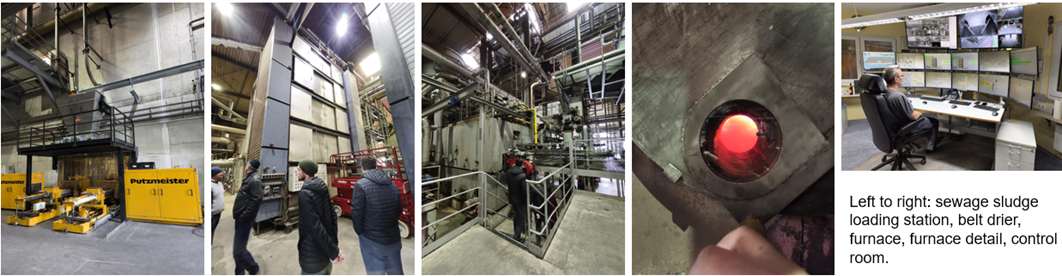
The full-scale plant is designed for input of 50 000 t/y of dried municipal sewage sludge, generating an output of around 15 000 t/y of recycled phosphate fertiliser (equivalent to 1 500 tonnes of recovered phosphorus), Sodium carbonate is added before incineration, converting poorly-soluble iron and aluminium phosphates into plant-available calcium sodium phosphates. At the same time, volatile heavy metals such as arsenic, cadmium, lead and mercury are removed and safely captured via the flue-gas cleaning system. The result is a solid mineral fertiliser marketed as “R-Rhenania Phosphate.” The product meets the requirements of the German Sewage Sludge Ordinance (AbfKlärV) and of the EU Fertilising Products Regulation: phosphorus content and contaminant limits for inorganic macronutrient fertilisers (PFC1) and phosphorus crop availability requirements for a phosphate fertiliser (Annex III, part II, 4(b): 75% solubility in neutral ammonium citrate NAC). The consortium is preparing applications for CE-marking, REACH registration and approval for organic farming.
BAM says that the Altenstadt plant is Germany’s most advanced phosphorus recovery facility. It demonstrates how thermochemical treatment can be integrated into mono-incineration plants, turning waste into a regional fertiliser resource. The project marks a milestone for the RePhoR programme and a step towards a circular, resource-independent phosphorus economy in Germany.
Germany's largest phosphorus recycling plant begins operations, https://www.tagesschau.de/wissen/technologie/phosphor-recycling-anlage-100.html
NPHarvest pilot P and N recovery unit at biogas plant, Aslan, Ankara, Turkey
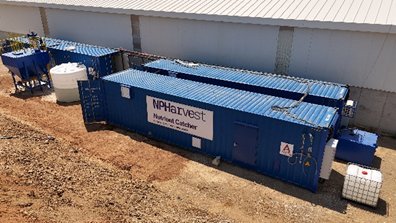 The process separates ammonia from biogas digestate liquor using hydrophobic membranes, then reacts with sulphuric acid to produce ammonium sulphate solution. Phosphate is recovered as calcium phosphate by precipitation. See SCOPE Newsletter n°147. NP Harvest, is a spinoff from Aalto University Finland. The transportable pilot reactor (3 containers) is 6 000 litres volume (up to c. 20 t/day input) and can potentially recover c. 100 tonnes/year of 30% ammonium sulphate solution (6.3 %N / wet-weight) and over 70 tonnes of solid calcium phosphate containing soil improver. Based on previous, smaller scale trials and depending on input material, the recovered solid is expected to contain c. 50% DM (dry matter) and approximately 2-4% P/DM, 8% Ca/DM and 10% Ctotal/DM), so a slow-release phosphorus and calcium soil improver, rather than an inorganic fertiliser. The technology has been previously tested for one month at Viikinmäki sewage works, Finland (300 litre reactor, 24-48 l/h, see SCOPE Newsletter n°147). Based on previous pilot trials, the company expects the recovered ammonium sulphate solution to respect the criteria of the European Fertilising Products Regulation CMC15 and the calcium phosphate CMC12 and the phosphate fertiliser criteria (Annex III, part II, 4(b): 75% solubility in neutral ammonium citrate NAC).
“NPHarvest launches industrial-scale wastewater nutrient recovery demo at biogas plant in Ankara”, 8th August 2025 https://www.npharvest.fi/2025/08/08/npharvest-launches-industrial-scale-wastewater-nutrient-recovery-demo-at-biogas-plant-in-ankara/
EU Fertilising Products Regulation (FPR)
Tracegrow fertilisers from recycled batteries and battery industrial sidestreams
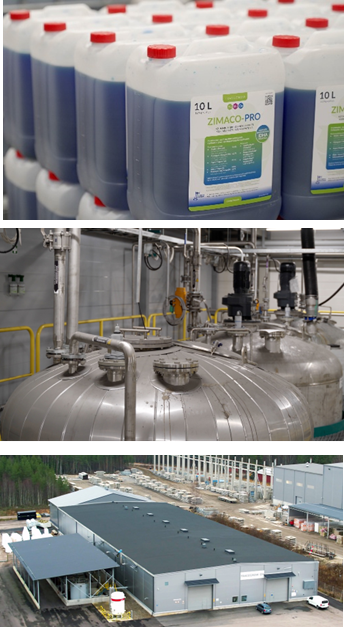
Liquid micronutrient fertilisers produced from industry waste certified CE-Mark under the EU Fertilising Products Regulation (FPR).
- M-TRACE™ is produced from zinc production industry sidestreams (zinc industry anode sludge) and contains 10.9% manganese (w/w), providing a concentrated, fully soluble source of recycled manganese in liquid form. M-TRACE is PFC 1(C)(II)(a) Micronutrient Solution Fertiliser under the EU Fertilising Products Regulation.
- ZM-GROW contains 4.9% manganese and 4.4% zinc (w/w), with over 90% of these metals recovered from end-of-life alkaline batteries supplied by licensed EU recyclers. ZM-GROW is PFC 1(C)(II)(b) Mineral Micronutrient Fertiliser in Solution under the EU Fertilising Products Regulation
The two fertilisers are manufactured in Kärsämäki, Finland, with a combined annual production capacity of up to 10 million litres.
Both have been CE-Mark Certified under the EU Fertilising Products Regulation, by a Notified Body, under CMC15 (point 2a). However, it now seems that for the second of these products (ZM-GROW) this CE-Mark Certification was an error of interpretation and will not be renewed. The first product retains its CE-Mark.
This is because M-TRACE fits the definition of “recovered from waste generated from a production process” under the current wording of CMC 15 (point 2a) interpretation, whereas ZM-GROW, which is recovered from battery black mass from end-of-life alkaline batteries, does not fit this interpretation.
ESPP underlines that the non-renewal of the CE-Mark for the second product results solely from interpretation of the wording of the FPR CMC15 point 2a (origin of materials). The purity and contaminant levels of the product correspond to FPR specifications (confirmed by accredited analyses and the Notified Body’s assessment) and both products have been used on farms for several years without any reported issues. The products have Finland national End-of-Waste status, Finland national fertiliser authorisation and are listed for Organic Farming in Germany or The Netherlands.
In ESPP’s opinion, this case illustrates:
- The complexity of the current FPR CMCs, incomprehensible to both operators and in this case (apparently) even to a Notified Body. This complexity and resulting uncertainty of FPR CE-mark certifications is, in ESPP’s opinion, a significant barrier to uptake of the FPR CE-mark for recycled nutrients, and so to roll-out of nutrient circularity.
- The inadequacy of the current FPR CMC approach to secondary materials, based on specific and complex descriptions of a limitative list of input materials and process chains. This results in exclusion of any new or innovative nutrient recycling process, and indeed of many existing recycling routes (nobody thought to include this one in the list …). This is contradictory to enabling development of the Circular and Biobased economies, which use a wide variation of secondary inputs, with processes often locally variable to reflect different conditions, with rapid innovation and new processes or use of different inputs or new secondary streams from recycling or bio-based production processes.
The exclusion of these recycled micronutrient products from the FPR CE-mark is regrettable given the considerable potential of nutrient recycling from batteries (rapid expansion of battery uses, changes in battery technologies, obligations of the EU Battery Recycling Regulations 2023/1542 and 2025/606).
Tracegrow’s proprietary RETRACER™ technology produces no wastewater or off-gas emissions, and operations is certified to ISO 9001 and ISO 14001. The company has received the Finnish Environment Institute Circwaste Award for its circular economy innovation.
Tracegrow ZM-GROW™ https://www.tracegrow.com/zm-grow
Tracegrow M-TRACE™ https://www.tracegrow.com/m-trace
EasyMining webinar on recovered calcium phosphate
The recovered phosphate respects EU Fertilising Products Regulations specifications and is authorised for use in Certified Organic Farming. This webinar presented independent studies updated on implementation. ESPP member EasyMining’s first full-scale P-recovery plant will by 2027 be producing 12 000 t/y of purified recovered calcium phosphate (RevoCaP) from sewage sludge incineration ash in Germany (Schkopau plant under construction, see ESPP eNews n°100). Sara Symanczik, FiBL (Organic Farming research and consultancy) explained that Certified Organic Farming in Europe faces soil phosphorus depletion (see ESPP SCOPE Newsletter n°149), limiting productivity, because authorised inputs (Organic farm manure, compost) are often not available for Organic crop-growing farms. Recovered calcium phosphate is authorised for use in EU Certified Organic Farming (ESPP eNews n°98). It has the benefit of low water solubility, so slow release according to crop needs, reducing risk of phosphorus losses. Jenny Faxå, Grobuket Sweden (agronomic product development and testing), presented pot trials of RevoCap with a range of soils and crops representative of farm conditions across Europe. The recovered calcium phosphate shows better fertilising results in low pH soils and in soils with significant organic carbon, achieving 80% of the effectiveness of triple super phosphate in soils of pH5. It is 80% NAC-soluble, so respecting the EU Fertilising Products Regulation minimum for phosphate fertilisers (75%, Annex III, part II, 4(b)). Pär Larshens, Philipp Theuring, Thérèse Aström and Asko Kinnunen of EasyMining explained that the company plans to ramp up production over coming years, to achieve the phosphorus recycling objectives of German, Austrian, Swiss and EU legislation. The company is also working on improving the fertiliser performance of the calcium phosphate, including controlled granulation and combination with additives and organics.
EasyMining webinar “Pioneering recycled phosphorus for sustainable organic farming”, one hour, watch here: www.easymining.com/revocapwebinar
https://www.youtube.com/watch?v=ooH9lxOjMJc
ESPP Members
Stay informed
SCOPE Newsletter: www.phosphorusplatform.eu/SCOPEnewsletter eNews newsletter: www.phosphorusplatform.eu/eNewshome
If you do not already receive ESPP’s SCOPE Newsletter and eNews (same emailing list), subscribe at www.phosphorusplatform.eu/subscribe
LinkedIn: https://www.linkedin.com/company/phosphorusplatform
Slideshare presentations: https://www.slideshare.net/phosphorusplatform
YouTube https://www.youtube.com/user/phosphorusplatform
Newsletter about nutrient stewardship - European Sustainable Phosphorus Platform (ESPP)
Please subscribe www.phosphorusplatform.eu/Subscribe
Link to www.phosphorusplatform.eu/eNews101
Download as PDF
Help ESPP continue sharing free information on phosphorus sustainability! DONATE NOW
ESPP workshops
Phosphate as a Critical Raw Material for food security
P4 (White Phosphorus) in ‘Strategic’ industries
EU public consultations
Consultation for Circular Economy Act: deadline Thursday 6th November
Public consultation: standards for FPR soil improvers and growing media
ESPP input to EU consultation on food and feed regulations
ESPP input to EU consultation on “Green Listing” of wastes
EU Fertilising Products Regulation (FPR)
European Commission webinar on Fertilising Products Regulation (FPR) ‘Evaluation’
DCM CE-Mark organo-mineral fertiliser
Suez obtains FPR CE-Mark for digestates
ESPP Members
10th Anniversary of the German Phosphorus Platform (DPP)
CiNURGi
Policies for nutrient management
Deloitte study: “demand-side mandates” to support EU industry, including fertilisers
US: legal actions on PFAS pose questions for sewage sludge valorisation to farmland
Report to UN Environment Assembly (UNEA) proposes actions on nutrient pollution
Research
UK Water Industry Research pre-study on sewage sludge pyrolysis & HTC
Italian survey of aquaculture operators on circular economy
Why do farmers overapply phosphate fertiliser ?
ESPP members
Stay informed
ESPP workshops
Phosphate as a Critical Raw Material for food security
Wed. 19th November 2025 afternoon, Brussels & online
Phosphates and sustainable agricultural resilience. Phosphate rock supply for Europe. Challenges for the P fertiliser industry in Europe. How can P-recycling reduce EU phosphate insecurity?
P4 (White Phosphorus) in ‘Strategic’ industries
Thur. 20th November 2025 morning, Brussels & online
Is P4 (white phosphorus) a ‘Strategic’ Raw Material for Europe? Where are P4-based chemicals used in ‘Strategic’ technologies: renewable energies (PV, batteries), electronics, aeronautics? Why P4-derived chemicals should be in the new EU ‘Critical Chemicals Alliance’. P4 supply projects in Europe.
Programme: https://phosphorusplatform.eu/CriticalRawMaterialsWorkshops
Pre-registration here (places in Brussels limited)
Proposals for presentations or posters are welcome at
During the EU Raw Materials Week.
Wed. 19th November 10h30 – 12h: ESPP General Assembly (Brussels & online, members only)
EU public consultations
Consultation for Circular Economy Act: deadline Thursday 6th November.
The first stage in preparing the future EU Circular Economy Act, announced for end 2026.
Your organisation can still sign the joint call to be submitted to this consultation. This calls for the Circular Economy Act to be ambitious for nutrient recycling, to forward sustainability, EU job creation, competitivity, and food system resilience. The Joint Call proposes 16 actions and policy changes for the Circular Economy Act.
See details in ESPP eNews n°99 www.phosphorusplatform.eu/eNews099
EU public consultation on the Circular Economy Act https://ec.europa.eu/info/law/better-regulation/have-your-say/initiatives/14812-Circular-Economy-Act_en
ESPP detailed input to the consultation www.phosphorusplatform.eu/regulatory
Joint Call for nutrients in the EU Circular Economy Act” www.phosphorusplatform.eu/regulatory
Sign now! Companies and organisations wishing to sign this Call please contact ESPP
Public consultation: standards for FPR soil improvers and growing media
CEN has opened public consultation on 21 new or updated EU Standards relevant for FPR soil improvers and growing media, including methods for determination of pH, moisture, organic content, nutrients … The draft standards are not freely available (as usual with CEN) – stakeholders should contact their national Standards Organisation. The list of Standards currently Under Enquiry is published by Technical Committee CEN/TC 223 Soil improvers and growing media. Deadlines range from late December 2025 to January 2026
CEN/TC 223 https://standards.cencenelec.eu/dyn/www/f?p=205:22:0
ESPP input to EU consultation on food and feed regulations
ESPP input to EU consultation preparatory to ‘omnibus’ (simplification) on Food and Animal Fees regulations regrets absence of consideration of circularity and calls for review to enable nutrient recycling whilst ensuring safety. The ESPP input suggests that the EU Animal By-Product Regulations, TSE Regulation and animal Feed Regulation should be reviewed to facilitate recycling, in particular by simplifying and harmonising ‘End-Points’ between different regulations (ABP, Waste …), reducing complexity, rationalising the EFSA (European Food Safety Agency) evaluation process, remove the exclusion of mineral nutrient salts recovered from certain wastes of the Animal Feed Regulation (where quality and safety are ensured).
ESPP input to EU public consultation on “Food and feed safety – simplification omnibus”, 14th October 2025 www.phosphorusplatform.eu/regulatory
ESPP input to EU consultation on “Green Listing” of wastes
ESPP proposes that secondary nutrient wastes (Ashes, Secondary Fertilisers, Bio-Based Streams, Nutrient-Rich Process Streams) should be exempted from waste transport declarations and/or be eligible for harmonised criteria (see details in ESPP eNews 99). ESPP noted that transboundary shipment of secondary nutrient materials can be complex or prohibitive. These materials are often classified as “waste” in some Member States (often not consistently between different Member States). Because they are bio-based, these secondary materials are variable, maybe seasonal, often in small and locally disperse quantities, all of which can make documentation complex and disproportionately expensive. Operators, often in agriculture or wastewater sectors, may not be equipped to deal with international waste declarations. Secondary nutrient materials are often ‘organic’ (containing organic matter) so bulky and susceptible to decompose, so that transport cannot wait until documentation proceeds. For these reasons, ESPP suggests that ‘Green Listing’ of the following wastes would be important to facilitate nutrient recycling and the bioeconomy, on condition that they are destined for nutrient / mineral recovery:
- Ashes: Sewage sludge incineration ash, Biomass combustion ash, Municipal solid waste incineration ash destined for minerals recovery, Cat.1 Animal By-Product incineration ash;
- Secondary Fertiliser Materials: EU Fertilising Product Component Materials, Materials which are authorised for use as ‘National’ fertilisers in the recipient Member State;
- Bio-Based Streams: Materials from processing of plant materials (from production of human foods or animal feeds, bio-fuels, bio-materials, biochemicals, biofibres and from biorefineries), Aquaculture sludges;
- Nutrient-Rich Process Streams: Fire extinguishers and wastes resulting from their refilling, Phosphorus-containing metal processing liquors and ‘spent’ phosphoric acids, Batteries and battery processing wastes including black mass, Nitrogen salts and solutions recovered from gas-stripping.
ESPP estimates, for each proposed stream, the European potential for nutrient recovery (P, K, N)
ESPP input submitted to the consultation www.phosphorusplatform.eu/regulatory
EU public consultation (closed 31st October 2025) “Green-listing certain waste for the purposes of shipments to recovery between Member States” https://ec.europa.eu/info/law/better-regulation/have-your-say/initiatives/14712-Green-listing-certain-waste-for-the-purposes-of-shipments-to-recovery-between-Member-States_en
EU Fertilising Products Regulation (FPR)
European Commission webinar on Fertilising Products Regulation (FPR) ‘Evaluation’
Wide stakeholder participation to webinar organised to input to the FPR official Evaluation shows stakeholder frustration with cost, complexity and excluded secondary input materials and low uptake of FPR for recycling. Over 300 stakeholders joined this webinar organised by the consultants leading the Evaluation for the European Commission. This follows over 100 inputs received to the EU public consultation - see ESPP eNews n°100. The consultants estimate that fertilising products represent c. 0.17% of EU GDP and that the market for organic fertilisers is around 1.1 billion €. However, based on numerous interviews with stakeholders, the consultants estimate that for both organic and organo-mineral fertilisers, as well as for growing media, less than 5% of products today placed on the market in Europe are FPR CE-Mark: nearly all continue to use Member State national regulations. Reasons identified for this low uptake of the FPR include its complexity, the cost of CE-Mark certification (in particular if companies have already paid for national fertiliser or waste regulation certification) and the fact that many Animal By-Products are still excluded from the FPR (“processed manure” was included into CMC10 in 2024, see ESPP eNews n°88). Some stakeholders noted that the FPR can be long-term cost-advantageous, because one FPR CE-Mark certification is cheaper than several national certifications, and because the CE-Mark is now recognised by customers both in Europe and for export outside the EU. ESPP underlined that the FPR opens the European market for nutrient recycling processes, by defining recognised product criteria, and suggested that the Evaluation should lead to reorientate FPR input specifications for secondary materials (CMCs) towards ensuring quality and safety (rather than being based on material origin), and that CMCs should be widened and more flexible to allow all non-contaminated materials for biorefineries, to reflect the rapid innovations in the bioeconomy and in nutrient recycling, and that secondary material streams are often locally specific, evolve over time, relatively small and diffuse flows.
European Commission, EU Fertilising Products Regulation ‘Evaluation’ https://ec.europa.eu/info/law/better-regulation/have-your-say/initiatives/14365-Fertilising-Products-Regulation-evaluation_en
ESPP input to the FPR Evaluation www.phosphorusplatform.eu/regulatory
DCM CE-Mark organo-mineral fertiliser
Belgian fertiliser company De Ceuster Meststoffen nv (DCM) launches DCM ECOR®6, an EU FPR Certified (CE-Mark) fertiliser, authorised for use in Certified Organic Farming, based on plant materials and natural mineral materials. The fertiliser is micro-granulated NPK 5-2-4.5 plus calcium, magnesium and sulphur. It does not contain animal by-products nor manure-derived materials. The nutrients come from a combination of plant-derived materials and ground phosphate rock. The fertiliser is CE-Mark Certified under Module B as PFC1(B)(I) Solid Organo-Mineral Fertiliser NPK (a coformulation of an inorganic fertiliser and materials containing both organic carbon and nutrients of biological origin), and contains CMC1, CMC2 and CMC6 as component material categories (CMCs). It is authorised for use in Certified Organic Farming in the EU (2018/848, certified by FiBL Germany, Dutch Input List, Easy-Cert Austria and Control Union). The organo-mineral fertiliser claims to deliver progressive nutrient release and to stimulate soil microbial activity by providing organic carbon, so improving plant nutrient uptake. The FPR CE-Mark is presented as streamlining administrative requirements for distributors across Europe and enabling use in CE-Mark Blends (PFC7), such as potting soils.
“DCM ECOR® 6: CE certified fertiliser for easier access the EU”, DCM https://dcm-info.com/innovations/ecor-6-ce-certified-fertiliser-for-easier-access-across-the-eu
DCM ECOR®6 product technical information and Fact Sheet https://dcm-info.com/products/fertilisers/dcm-ecor-6
Suez obtains FPR CE-Mark for digestates
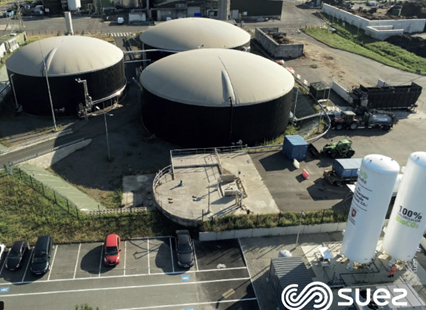 Suez (ESPP member) Terres d’Aquitaine (Saint-Selve, France) solid digestate from around 50 000 t/y biowaste and agricultural crop wastes is now FPR CE-Mark Certified by Eurofins as an Organic Soil Improver PFC3(A). The site produces methane (injected into natural gas network) and also ammonium sulphate solution (liquid nitrogen fertiliser certified under French fertiliser regulations), recovered industrial-grade water, and captures the CO2 from the digesters for use in agricultural and industrial applications. The biowastes treated include organic and food wastes from restaurants and household separate collection. Around 9 000 t/y of centrifuged solid-fraction digestate (20 – 25% DM) are being CE-Mark certified annually and sold to farmers in the region. The biowaste is classified as an Animal By-Product (households and restaurants discard meat wastes in food wastes) and has full traceability from the producer to the digester, where ABP Regulation sanitisation is ensured as per EU 142/2011 (as required for use in an EU fertilising product). Suez notes that benefits of the CE-Mark certification include ensuring End-of-Waste Status more clearly than under French fertilisers regulations and administrative and commercial recognition. In an interview for EBA (European Biogas Association), Suez indicates that the cost of the CE-Mark certification is expected to be economically justified.
“Terres d’Aquitaine. SUEZ repousse les limites de la valorisation des déchets organiques et produit de nouvelles ressources pour les territoires”, Suez press dossier June 2025 https://www.suez.com/-/media/suez-global/files/press-release/pdf-francais/suez-tda_dossierpresse-06-2025_v6vdef.pdf
“Digestate Certification with SUEZ!”, EBA Newsletter, September 2025 https://www.europeanbiogas.eu/digestate-certification-with-suez
ESPP Members
10th Anniversary of the German Phosphorus Platform (DPP)
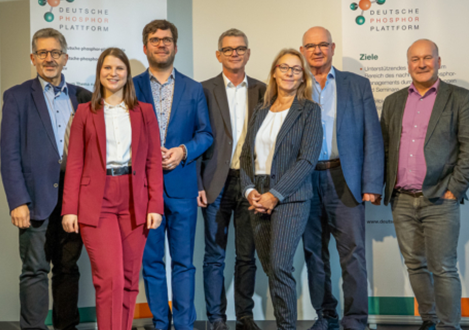 A decade of commitment to phosphorus recovery and sustainable nutrient management. DPP’s annual Forum, saw Federal and Land governments confirm the need to implement Germany’s legal 2029 sewage P-recovery obligation.
110 participants, 8th – 9th October 2025, Frankfurt, discussed status of the German P-recovery legislation, developments in P-recovery technologies and future strategies for sustainable nutrient management. The German Federal Ministry for the Environment (BMUKN) and the responsible LAGA working group underscored that there is no alternative to achieving the legal phosphorus recovery requirement by 2029. P-recovery costs can be passed on by water companies/authorities in water fees (see UBA report in ESPP eNews n°100). This can significantly reduce the financial burden on wastewater treatment plant operators, who might otherwise bear the full cost of recovery processes.
DPP presented the winner of its 2025 €1,000 Sponsorship Award for Annika Anders’ dissertation on “Phosphorus Release and Recycling from Activated Sludge in Large Wastewater Treatment Plants.”
The DPP Forum included a site visit to the UPhO GmbH installation in Michelstadt, Hesse, where up to 20 000 t/y of dried sewage sludge will be thermochemically treated in a rotary kiln, with the aim of generating a fertilising product (further details to be published soon).
After thanking Simone Apitz who has chaired DPP for the last six years, DPP elected its new Board: Daniel Frank, independent communications consultant, Chairman, Herbert Hochgürtel, Wirtschaftsbetrieb Mainz AöR, Diedrich Steffens, University of Gießen, Simone Apitz, Hessian Ministry of Agriculture and Environment, Rudolf Turek, MSE, Dieter Leimkötter, sePura.
Photo: DPP’s new Board, October 2025. DPP German Phosphorus Platform https://www.deutsche-phosphor-plattform.de/
CiNURGi
 The CiNURGi EU-funded Intereg project aims to recycle nutrient-rich biomass from agricultural, municipal, and industrial sources into safe fertilisers, and provide authorities with roadmaps to facilitate reducing nutrient losses.
The 3-year project, ending in October 2026 is funded by Interreg BSR (Baltic Sea Region) and lead by RISE. The consortium consists of 24 partners in Sweden, Denmark, Estonia, Finland, Germany, Lithuania, Latvia and Poland. CiNURGi will promote the use of recycled nutrient fertilisers, with the intention of being able to replace the use of mineral nutrient fertilizers with recycled nutrients. To achieve this, we will draft safety and quality standards for recycled nutrients and develop strategies for using nutrient recycling to address regional nutrient imbalances in the Baltic Sea Region. We will also promote the development of markets, to increase the production of recycled nutrients. Finally, CiNURGi will contribute to HELCOM Baltic Sea Action Plan and the planning and implementation of nutrient recycling measures. By joining ESPP we hope to join a community curious about nutrient recycling, especially phosphorus, interested in taking part of our project results.
Read more about the project: CiNURGi - Interreg Baltic Sea Region https://interreg-baltic.eu/project/cinurgi/
Policies for nutrient management
Deloitte study: “demand-side mandates” to support EU industry, including fertilisers
Deloitte report assesses the potential role of “demand-side mandates” – for example, quotas requiring an increasing share of sustainable materials in certain products – to strengthen EU industry and support strategic autonomy, The report “Mobilizing consumer demand for sustainable investments” (September 2025), examines how EU policies could help energy-intensive industries (such as fertilisers, chemicals, steel and refining) invest in low-emission technologies.
According to the report, current energy costs and carbon policies have not led to large-scale adoption of low-emission production in Europe. Instead, they have contributed to plant closures and the relocation of production – and associated carbon emissions – outside the EU. In the past three years, around 30 industrial plants have closed in Europe, including five fertiliser facilities. Nitrogen fertiliser production costs are estimated to be up to 2.5 times higher in Europe than in Russia, mainly due to higher gas prices and Emissions Trading Scheme (ETS) costs. The report also notes potential challenges in the Carbon Border Adjustment Mechanism (CBAM), such as possible “emissions shuffling,” its limited coverage of finished goods (e.g., cars made from imported steel), and the lack of compensation for EU exporters.
Transitioning to low-carbon technologies across the four sectors studied would require about €150 billion per year – a scale unlikely to be met by industry margins or public subsidies alone. For fertilisers, sustainable production could cost up to 3.5 times more than conventional methods. At the same time, if these costs were passed on to end products, such as food (for fertilisers), the impact would be much less significant: between 0.3% and 1.8% of consumer prices in the examples analysed.
Developed with input from over 60 stakeholders – including energy and chemical producers, industry associations, regulators, and downstream users – the study reflects broad concern about industrial competitiveness and carbon leakage. Stakeholders point to the need for a comprehensive policy mix, combining supply-side measures, improvements to the CBAM with targeted demand-side mechanisms that would create lead markets for sustainable products and give producers the certainty needed to invest.
For the fertiliser sector, the report discusses how mandates could potentially be linked to downstream markets such as dairy, meat, eggs, and grain-based products, which together account for roughly two thirds of fertiliser use. Possible approaches could involve applying quotas, for example to food retailers, or dairy companies.
Finally, the study proposes a framework to guide further work on demand-side mandates – covering areas such as target markets, design principles, metrics, compliance, and governance – and calls for structured stakeholder engagement and policy coordination at the EU level.
Importantly, the report does not propose adding new layers of bureaucracy. Rather, it notes that well-designed demand-side instruments could replace or streamline existing mechanisms, potentially simplifying reporting and compliance for participating industries.
The report was commissioned by the Netherlands Government Investment Agency, the Dutch chemicals and fertiliser federations, and several energy companies and institutes.
“Mobilizing consumer demand for sustainable investments: Potential role of demand-side policies to stimulate investments in more sustainable products and strengthen European heavy industry”. Deloitte, September 2025 https://www.nvde.nl/wp-content/uploads/2025/09/EU-Demand-Creation-Deloitte-Report.pdf
US: legal actions on PFAS pose questions for sewage sludge valorisation to farmland
In the USA, political action is blocking EPA work on PFAS in “biosolids” (sewage sludge), the threat of legal actions by NGOs and farmers poses challenges for ongoing use as an agricultural fertilising product. Media indicate that a Republican proposed amendment to the 2026 budget would block any use of EPA (US Environmental Protection Agency) funds for work on PFAS, thus preventing the EPA from finalising the draft impact assessment of PFAS and PFOA in sewage sludge published early 2025 (see ESPP eNews n°95) and from taking any consequent regulatory action. Also, it is reported that a judge has blocked a legal case brought by farmers on PFAS in biosolids in Texas, without consideration of the case substance. This case, brought by NGOs and farmers’ organisations, accused the EPA of failing its duty to prevent toxic chemicals in biosolids based fertilisers. A lawsuit brought by five Texas farmers against a waste and water management company (Synagro) is pending. The farmers claim that biosolids fertilisers containing PFAS have contaminated their land and downstream water. Synagro claim that PFAS levels found are similar to natural levels except for one short-chain compound (perfluoropropanoic acid PFPrA) and that there is no evidence to link PFAS found to those in the biosolids or their breakdown products. Some US States have enacted measures on PFAS: Maine and Connecticut have banned land application of biosolids and a ban is also being debated in Massachusetts, Michigan has implemented PFAS limits for biosolids applied to land and other States require PFAS testing in sewage sludge.
A recent study (Oviedo-Vargas et al. 2025) comparing PFAS in soils for ten US farms, comparing fields with a history of biosolids application as fertilisers compared to fields on the same farms which had not received biosolids. The study found detectable levels of the 14 individual PFAS compounds sampled in samples for the biosolids-receiving fields compared to only one from non-biosolids fields, and generally higher levels of total-PFAS in biosolids receiving fields. Results varied with biosolids supplier and with physicochemical properties of soils (e.g., organic matter and pH). On two farms with streams adjacent to biosolids receiving fields, PFAS were also found in the stream water. Soil concentrations of total-PFAS-PFOA found in the study were below 25 ng/g.
US EPA (Environmental Protection Agency) “Draft Sewage Sludge Risk Assessment for Perfluorooctanoic Acid (PFOA) and Perfluorooctane Sulfonic Acid (PFOS)”, ESPP eNews n°95
Update on EU PFAS Restriction process ESPP eNews n°100
“Quantification of PFAS in soils treated with biosolids in ten northeastern US farms”, D. Oviedo-Vargas et al., Nature Scientific Reports, 15:5582, 2025 https://doi.org/10.1038/s41598-025-90184-z
Report to UN Environment Assembly (UNEA) proposes actions on nutrient pollution
The UNEP Executive Director’s preparatory report for UNEA 7, Nairobi, December 2025, proposes ‘Tackling nutrient pollution’ as one of five priority areas for action. UNEA Resolutions are proposed by member States and this report aims to inform these. This report examines emerging and urgent environmental issues that could be pertinent as Member States evaluate resolutions for potential adoption. The proposed priorities are water, nutrients, critical minerals (for renewable energies and digital technologies), the ozone layer and the stratosphere, and AI applications to environment. On nutrients, the report indicates that there is scientific consensus on the detrimental effects of nutrient pollution, but no global assessments of nitrogen or phosphorus in the environment, and no consensus on their impacts. It suggests that the UN could promote a coherent, system-wide approach to nutrient management – which is currently fragmented, integrating existing initiatives, including nutrient recycling and water treatment, with food system, soil health and climate benefits. This could build on the UNEP Working Group on Nitrogen, established following Resolutions at UNEA 4 and UNEA 5 (see ESPP eNews n° 67) The report suggests to widen this work to cover phosphorus and to establish a UN collaborative platform for knowledge exchange and joint actions on nutrient pollution and for sustainable nutrient and wastewater management.
“Priorities for advancing sustainable solutions for a resilient planet. Report of the Executive Director”, United Nations Environment Programme (UNEP), 6th May 2025 https://wedocs.unep.org/bitstream/handle/20.500.11822/47435/EDReport.pdf
Seventh session of the United Nations Environment Assembly (UNEA-7), 8 to 12 December 2025, Nairobi, website https://www.unep.org/environmentassembly/unea7
Research
UK Water Industry Research pre-study on sewage sludge pyrolysis & HTC
UKWIR desk study concludes that ATC (Advanced Thermal Combustion) processes show promise for organic contaminant elimination but data is inadequate and inconsistent. An experimental assessment procedure is proposed. The desk study considers dry and wet ATC processes including pyrolysis, gasification, hydrothermal carbonisation, super critical water oxidation. Literature data analysis concludes that data on fate of PFAS and microplastics in such processes is limited. Higher temperatures show increased depolymerisation or fragmentation of microplastics. Most studies do not provide useable information about fate of PFAS because of possible breakdown to non-assayed PFAS compounds, lack of gas-phase PFAS analysis (methods only developed recently) and absence of fluorine mass balances. No ATC technology is considered to give uniformly positive or negative results for studied contaminants, nor to show sufficient evidence to not warrant further trials. For pyrolysis (biochar processes), optimal temperatures for breakdown of microplastics is estimated to be 450°C and for PFAS to be 700°C. The report also notes questions concerning requirements for offgas emissions abatement for different ATC technologies (ESPP note: this concerns whether or not Industrial Emissions Directive offgas treatment would be required, implying significant investment and operating costs and energy and chemicals consumption) and indicates clarification of this regulatory question as priority for assessing the LCA of the processes. Given the lack of consistent data and the limited options for testing in full-scale installations, the report recommends further laboratory and bench scale testing of the different ATC processes, to analyse breakdown and fate of microplastics and PFAS.
“CIP4 Microplastics and Advanced Thermal Conversion (ATC) Phase 1”, UKWIR (UK Water Industry Research, the UK water industry’s collaborative joint research organisation, an ESPP member), Report Ref. No. 25/EQ/01/36, 39 pages, 2025 https://ukwir.org/project-reports?object=402479
Italian survey of aquaculture operators on circular economy
Operators are aware of circular economy principles but relate this to environment and not economic savings, considering waste management costs not significant. Smaller operators see regulatory and technical barriers.
The survey was sent to the 220 members of the Italy Aquaculture Association, covering marine and freshwater fish and shellfish farmers and related professionals (e.g. veterinarians) and resulted in over 100 responses (47%). Trout are the most important product (30% of respondents), followed by sea bass and mussels (both < 10%). Of different circular economy practices, only the reduction of conventional feeds is widely practiced (53%), with 18% implementing water recycling (mainly in freshwater farms) and 12% recycling wastewaters as biofertilisers. Overall respondents tend to see circularity as necessary for the development of agriculture with some potential for increasing the sector’s performance, but show little knowledge of possibilities or technologies for waste valorisation and see regulation and bureaucracy as important barriers.
“Circular economy in aquaculture: An Italian survey to understand perceptions, challenges and options for transition”, M. Cozzolino et al., Marine Policy 176 (2025) 106660 https://doi.org/10.1016/j.marpol.2025.106660
Why do farmers overapply phosphate fertiliser ?
Survey of North Carolina farmers shows most respondent farmers are consistently applying phosphate fertiliser above recommended rates and are applying P when soil test results indicate that it is not needed. (Kile et al. 2025) 122 farmers, mainly from large farms in the coastal plain, growing maize, soy and wheat responded to a questionnaire (total 19 questions) circulated by growers’ associations. This is not due to knowledge gaps nor lack of interest, as 99% of respondents carry out soil P testing. Although manures have contributed to accumulation of high soil P levels in North Carolina, manure and other organic fertilisers played a minor role on the farms responding to this questionnaire. A majority of the farmers responding indicated that they apply fertilisers at rates different from soil test report recommendations, with the variation often based on their “own experience”. Nearly 2/3 of farmers apply some P fertiliser when the soil test results indicate that none is needed. These results are consistent with previous findings of certain of the authors (Osmond et al. 2015, also in North Carolina). Nearly 40% of respondents stated that they had seen crop P deficiency symptoms when P fertiliser was not applied. The authors note that over-application compared to recommendations is of particular concern as the official recommendations already include a margin of over-estimation, to avoid risk of under-fertilisation. Most of the respondent farmers indicated that they did not modify their P application rate with the 2021-2022 P-fertiliser price spike. Possible reasons for the consistent over-application of P fertiliser include farmers considering that higher application may result in higher yields, especially if weather and soil conditions are positive (see also Sheriff 2005), use of “starter P” fertiliser as a standard (despite this is not needed), and use of identical P application rate across all fields for reasons of time saving and equipment set-up (irrespective of different soil test results). The authors conclude that most surveyed farmers are consistently over-applying phosphate fertiliser for reasons of risk-aversion, adding an additional ‘buffer’ dose on top of official recommended rates which already include a ‘buffer’, and that this is not due to lack of information or soil data.
Survey of Michigan maize farmers shows 29% of respondent farmers overapplying phosphate fertiliser. These farmers showed above average crop yield, and expressed higher concern about profits, productivity and P-losses. (Sarkar et al. 2025). This survey collected responses from 1650 Michigan corn farmers (30% response rate), so (as above) responses may represent how farmers wish to present themselves rather than reality. 88% of respondents regularly soil test. The farmers over-applying P fertiliser indicated (statistically significant) higher levels of concern about yield risk and soil productivity, less importance given to information from their family and (counterintuitively) higher concern about phosphorus losses. Only one third of over-applying farmers had received recent (< 5 years) information on crop P response (2/3 for non over-applying farmers), and over-applying farmers expressed interest in agricultural practices to reduce nutrient loss, suggesting that in this case information via fertiliser distributors, consultants and extension services could reduce over-application.
Targeted survey of 900 selected farmers around Qingdao, China, showed that ‘social capital’ (information networks) significantly contributed to P-fertiliser use reduction for all farms, and technology knowledge also for larger farms. (Zheng S. et al. 2022). The study methods are based on a literature search on farmers behaviour and chemical fertiliser application reduction and a theoretical framework. The study then defined a representative sample of 900 farmers across 35 representative villages around Quingdao, a region which has a green agriculture and fertiliser adjustment policy since 2020. 889 questionnaires were retrieved from the 900 selected farmers. Conclusions are that ‘social capital’, covering information sources such as family, farmers’ cooperatives, agricultural associations, has the strongest impact and statistically significant correlation to fertiliser use reduction for all farmers, small and large. Technology knowledge shows correlation with ‘part time’ farmers and larger farms, confirming results of Ma W. & Zheng H. 2022 which showed that technology uptake (such as mobile phone) reduced fertiliser application.
“Why Does Overapplication of Phosphorus Fertilizers Occur: Insights from North Carolina Farmers”, L. Kile et al., Agriculture 2025, 15, 606, DOI.
“Phosphorus application rates and farmers’ perceptions of environmental concerns”, S. Sarkar et al., Agric Environ Lett. 2025; 10:e70014, DOI.
“Factors influencing the farmer's chemical fertilizer reduction behavior from the perspective of farmer differentiation”, S. Zheng, K. Yin, L. Yu, Heliyon 8, e11918, 2022, DOI.
“Heterogeneous impacts of information technology adoption on pesticide and fertiliser expenditures: Evidence from wheat farmers in China”, W. Ma &H. Zheng, Australian Journal of Agricultural and Resource Economics, vol. 66, Issue 1, 2022 DOI
ESPP members
Stay informed
SCOPE Newsletter: www.phosphorusplatform.eu/SCOPEnewsletter eNews newsletter: www.phosphorusplatform.eu/eNewshome
If you do not already receive ESPP’s SCOPE Newsletter and eNews (same emailing list), subscribe at www.phosphorusplatform.eu/subscribe
LinkedIn: https://www.linkedin.com/company/phosphorusplatform
Slideshare presentations: https://www.slideshare.net/phosphorusplatform
Newsletter about nutrient stewardship - European Sustainable Phosphorus Platform (ESPP)
Please subscribe www.phosphorusplatform.eu/Subscribe
Link to www.phosphorusplatform.eu/eNews100
Download as PDF
Help ESPP continue sharing free information on phosphorus sustainability! DONATE NOW
ESPP workshops
Phosphate as a Critical Raw Material for food security
P4 (White Phosphorus) in ‘Strategic’ industries
EU public consultations
Consultation for Circular Economy Act: sign the joint stakeholder call now!
EU consultation on facilitating transport of wastes for recycling
Fertilisers industry REACH+ survey
Standards consultation on proposed EU Standard for composts
EU consultation on Feed & Food regulations simplification
ESPP Members
ESPP new Member: Filo Chemical Group
ESPP new Member: UK Centre for Ecology & Hydrology
EasyMining Ash2Phos plant construction launched
Energy benefits of coagulants used for chemical P-removal
EU Fertilising Products Regulation (FPR)
NMI report on possible additional materials as FPR inputs
Evaluation of the EU Fertilising Products Regulation (FPR)
Policies impacting nutrient recycling
EFSA mandates may lead to no longer separate Cat.1 ABP (BSE-risk) materials
Commission ‘Renure’ Nitrates Directive proposal moves towards adoption
Sweden calls to allow nutrients recovered from wastewater in animal feeds
German UBA report on legality of including P-recovery costs in water fees
Proposed ban on PFAS (inc. TPFE) filtration membranes
US Sustainable manure management webinar
Newtrient manure processing technology operational evaluation catalogue
Manure P flows research
Phosphorus and health
Misleading online information on food phosphates
Phosphorus and bone health
Revised kidney patient guidance on P and K targets food additives
ESPP members
Stay informed
ESPP workshops
Phosphate as a Critical Raw Material for food security
Wed. 19th November 2025 afternoon, Brussels & online
Phosphates and sustainable agricultural resilience. Phosphate rock supply for Europe. Challenges for the P fertiliser industry in Europe. How can P-recycling reduce EU phosphate insecurity?
P4 (White Phosphorus) in ‘Strategic’ industries
Thur. 20th November 2025 morning, Brussels & online
Is P4 (white phosphorus) a ‘Strategic’ Raw Material for Europe? Where are P4-based chemicals used in ‘Strategic’ technologies: renewable energies (PV, batteries), electronics, aeronautics? Why P4-derived chemicals should be in the new EU ‘Critical Chemicals Alliance’. P4 supply projects in Europe.
Programme: https://phosphorusplatform.eu/CriticalRawMaterialsWorkshops
Registration here (places in Brussels limited)
Proposals for presentations or posters are welcome at
During the EU Raw Materials Week.
Wed. 19th November 10h30 – 12h: ESPP General Assembly (members only)
EU public consultations
Consultation for Circular Economy Act: sign the joint stakeholder call now!
Open to 6th November 2025: the first stage in preparing the future EU Circular Economy Act, announced for end 2026.
Sign the joint call for the Circular Economy Act to be ambitious for nutrient recycling, to forward sustainability, EU job creation, competitivity, and food system resilience. The Joint Call proposes 16 actions and policy changes for the Circular Economy Act.
See details in ESPP eNews n°99 www.phosphorusplatform.eu/eNews099
EU public consultation on the Circular Economy Act https://ec.europa.eu/info/law/better-regulation/have-your-say/initiatives/14812-Circular-Economy-Act_en
ESPP draft response, for comment www.phosphorusplatform.eu/regulatory
Joint call for nutrients in the EU Circular Economy Act” www.phosphorusplatform.eu/regulatory
Sign now! Companies and organisations wishing to sign this Call please contact ESPP
EU consultation on facilitating transport of wastes for recycling
Open to 31st October, public consultation addresses which wastes should be “green listed” for transport between EU Member States to facilitate recovery and recycling.
See details in ESPP eNews n°99 www.phosphorusplatform.eu/eNews099
ESPP draft input for comment www.phosphorusplatform.eu/regulatory
Public consultation “Green-listing certain waste for the purposes of shipments to recovery between Member States” https://ec.europa.eu/info/law/better-regulation/have-your-say/initiatives/14712-Green-listing-certain-waste-for-the-purposes-of-shipments-to-recovery-between-Member-States_en
Fertilisers industry REACH+ survey
Survey open to fertilisers manufacturers: to collect data from on whether the current REACH+ requirement of the EU Fertilising Products Regulation is preventing CE-marking of fertilisers. This will enable input to the Council and Parliament debate later this year on the simplification omnibus legislation which includes removing this FPR REACH+ requirement.
See details in ESPP eNews n°99 www.phosphorusplatform.eu/eNews099
Survey open to fertilisers manufacturers: https://www.surveymonkey.com/r/ESPP-FPR-REACH
Standards consultation on proposed EU Standard for composts
Draft EU Standard “Compost and digestate – Determination of the content of macroscopic impurities and stones’ is open for public comment. This Standard has been developed by CEN to support implementation of the EU Fertilising Products Regulation, under mandate M/564 from the European Commission DG GROW. Comments can only be submitted via national standardisation bodies. At the current Enquiry stage, both technical and editorial comments can be accepted. However, at the future Formal Vote stage, only editorial comments can be accepted.
Draft EU Standard prEN 16202 ‘Compost and digestate – Determination of the content of macroscopic impurities and stones’ (WI 00223112), developed by CEN/TC 223 ‘Soil improvers and growing media’.
Read the draft Standard here (free after creating a free account) https://komport.evs.ee/Default.aspx?s=standardCommenting&doc=19496
EU consultation on Feed & Food regulations simplification
Open to 14th October, public consultation asks for input on how to simplify various aspects of human food and animal feed regulations, whilst maintaining safety. The ‘Call for Evidence’ asks for input on how to reduce administrative burdens and improve legal clarity on animal feed additives (of relevance for recovered phosphorus), BSE safety (see EFSA mandates article below), hygiene and ‘Control’ rules, animal welfare, plant protection products, biocidal products. maximum residue rules, genetically modified microorganisms for fermentation products. The Commission’s aim is probably to simplify how regulations and standards are implemented, rather than to recast the core regulations, and will not propose modifications concerning material authorisations without prior EFSA Opinion. Nonetheless, ESPP will input to ask for an overall review of the Animal By-Product Regulations, Animal Feed Regulation and TSE Regulation to facilitate recycling whilst ensuring health and environment safety.
“Food and feed safety – simplification omnibus”, EU public consultation open to 14th October 2025 https://ec.europa.eu/info/law/better-regulation/have-your-say/initiatives/14824-Food-and-feed-safety-simplification-omnibus_en
ESPP Members
ESPP new Member: Filo Chemical Group 
The Filo Chemical Group is a specialised distribution and trading company for phosphorus based and specialty chemicals, including P4, P2O5, PPA (polyphosphoric acid), phosphates and others. In a brief introduction FILO states: "Over more than 20 years, we have established strategic partnerships and exclusive representation with a range of manufacturers in Asia, Europe and North Africa. Our experienced business team has built close customer relations in Europe, Asia and North America with sales offices in The Netherlands, Italy, Japan, Sweden and the USA. We bring chemicals industry competence and in-depth knowledge of phosphorus chemicals markets, product knowledge and experience in different markets such as Food, Pharma, Detergence and Additives." Through becoming a Member of ESPP, Filo Chemical intends to share knowledge and support ways to move to more sustainable phosphorus derivates supply in Europe.
Vincent van der Meijden, General Manager Filo Chemical Group https://filochemical.eu/
ESPP new Member: UK Centre for Ecology & Hydrology 
The UK Centre for Ecology & Hydrology (UKCEH) is an independent, not-for-profit research institute delivering science to understand and address environmental challenges, including nutrient sustainability. UKCEH’s statement: “Our work includes research on the global nitrogen and phosphorus cycles, providing evidence to support sustainable resource management and policy. UKCEH led the Our Phosphorus Future report, a NERC/UNEP supported global assessment of phosphorus use, challenges, and solutions across food, water, and waste systems. We also coordinate the GEF/UNEP-funded uPcycle project, which develops pathways for phosphorus recovery and reuse, and led the global International Nitrogen Management System (INMS) project, shaping policy and practice for sustainable nitrogen management. Our research underpins national to international policy, from informing EU strategies and regulatory frameworks to contributing to UN Environment Assembly resolutions on sustainable nitrogen and phosphorus management. We work closely with governments, global agencies, and stakeholders to ensure that science is translated into effective action. We are joining ESPP to strengthen collaboration across sectors, contribute science-based insights on phosphorus governance, and support collective action towards nutrient sustainability."
UK Centre for Ecology & Hydrology (UKCEH) https://www.ceh.ac.uk/
uPcycle project https://www.upcyclelakes.org/
8th Global Sustainable Phosphorus Summit (SPS8) - 30 September - 3 October 2025, Accra (Ghana) https://www.upcyclelakes.org/sps8africa - ESPP slides: A decade of EU policy progress for phosphorusA decade of EU policy progress for phosphorus
EasyMining Ash2Phos plant construction launched
The first full-scale Ash2Phos plant at Schkopau, near Leipzig, Germany, is expected to be processing 30 000 t/y of sewage sludge incineration ash by 2027, recovering feed-grade quality calcium phosphate. The plant is being built by a joint-venture company established in 2021 between EasyMining, developers and owners of the Ash2Phos technology, and Gelsenwasser, a major German utility and infrastructure company. Construction work was officially launched May 2025 with participation of the Minister for Science and Technology of the Saxony-Anhalt Region of Germany. The Ash2Phos process dissolves ash in hydrochloric acid and the non-dissolved residue can be valorised in construction materials. Phosphorus, iron and aluminium compounds dissolved from the ash are separated by specific precipitation – dissolution steps, resulting in a purified (animal feed grade) calcium phosphate, iron chloride and an aluminium salt which can be recycled for use in wastewater P-removal, and a cake in which heavy metals are concentrated for disposal. Around 90% of phosphorus in the ash is recovered. EasyMining regret that current EU regulations prevent the recycling of the recovered calcium phosphates to animal feed, and that EU regulations today focus too much on the origin of input materials not the quality of the recovered products.
“Phosphorus recovery tech emerging at scale”, Fertilizer International 527, July-August 2025
EasyMining Ash2Phos technology – ESPP nutrient recycling technology catalogue https://www.phosphorusplatform.eu/techcatalogue
Energy benefits of coagulants used for chemical P-removal
Carbon footprint study by IVL* Sweden for INCOPA** (ESPP Member) shows that chemical P-removal has lower electricity consumption and higher biogas yield than biological P-removal. Tighter effluent P limits (down to 0.3 mgP/l, as will be largely required by the revised Urban Waste Water Treatment Directive 2024/3019) increase climate impacts as they require a final polishing step (usually filter systems). The study considers use of iron salts (ferric chloride, ferric sulphate) or aluminium salts (aluminium sulphate and polyaluminium chloride)***, although the choice of coagulant has a relatively small impact on the total carbon footprint of wastewater treatment. The main differences in carbon footprint are from electricity consumption (higher for biological P-removal) and replacement of natural gas by methane production from anaerobic digestion of sewage sludge (higher with coagulants, because they trap organics as well as phosphorus). Nitrous oxide emissions are a significant greenhouse impact but are assumed to be the same for biological and chemical P-removal.
The conclusions of this IVL study confirm those of a previous study by authors from several Swedish universities (no industry funding), Högstrand et al. 2024. This study concluded significant differences in greenhouse gas emissions between biological and chemical P-removal, due to considerably higher methane emissions from the bio-P treatment process, as well as higher energy demand and lower biogas production.
* IVL = Swedish Environmental Research Institute
** INCOPA is the European Inorganic Coagulants Producers Association, a Sector Group of Cefic, the European Chemical Industry Federation www.incopa.org
*** carbon footprints of iron and aluminium salt coagulants are taken from IVL report U6780 (Johansson K, 2003 “Carbon footprints of inorganic coagulants”) – not publicly available – summary published by INCOPA here https://www.incopa.org/wp-content/uploads/2024/10/INCOPA-ExecutiveSummary_A4-Booklet-30102023.pdf
“Carbon footprint assessment of chemical and biological phosphorus removal. Effluent limits of phosphorus according to the updated Urban Wastewater Treatment Directive”, 26 pages, IVL, March 2025 https://www.incopa.org/wp-content/uploads/2025/04/U6957-Carbon-footprint-assessment-of-chemical-and-biological-phosphorus-removal.pdf
“Dynamic process simulation for life cycle inventory data acquisition – Environmental assessment of biological and chemical phosphorus removal”, S. Högstrand et al., J. Cleaner Production 479 (2024) 144047 https://doi.org/10.1016/j.jclepro.2024.144047
See also ESPP SCOPE Newsletter n°138 page 3 and SCOPE Newsletter n°156 page 3.
EU Fertilising Products Regulation (FPR)
NMI report on possible additional materials as FPR inputs
Report to the EU Commission assesses 20+ secondary materials for possible authorisation as inputs to EU FPR CE-Mark fertilising products: 14 are proposed to take forward to evaluate, but 8 are rejected for inadequate data. The report assesses materials or processes for possible inclusion in FPR Annex II (CMCs = Component Material Categories). Materials proposed to take forward for evaluation include:
- Pulp & paper limes
- Vivianite from waste water treatment
- Source-separated human urine
- Feed and food industry streams (as inputs to compost, digestate)
- Potassium chloride salts from municipal household solid waste incineration
- Buffered coir
- Oil seed residues after solvent extraction
- Salts from the food industry
- Wood fiberisation residues
- Bark humous
- Alternative composting process (tunnel composting)
- Ashes from 2-stage combustion
- Sewage sludge as inputs for pyrolysis (biochars)
Materials rejected, in most cases because of inadequate data include:
- Ammonium salts from fire-extinguisher refilling
- Micro-nutrients from battery recycling
- Paper industry sludges
- Recovered mineral oils (used for anti-dusting of fertilisers)
- Plant biomass and algae grown in wastewaters
- Iron hydroxide from drinking water treatment
- Residues after acid or alkaline extraction from seaweed
- Plasma treatment of digestate
- Ammonia recovery from wastewaters via ion-exchange
- Lime-treated biomass
ESPP response noted that materials are considered to have ‘inadequate data’ even when significant EU funds have been spent on development of recycling processes and testing of recovered nutrients (LIFE, Interreg, Horizon), for example for fire extinguisher ammonia salts or algae grown in wastewaters. If the European Commission validates this report, then it seems that a recycled nutrient product cannot hope to be ‘evaluated’ for (possible!) inclusion into the FPR unless it is already widely produced and placed on the market. So presumably is already widely authorised under National fertilisers regulations. In which case, companies may not wish to “pay twice” to then apply for EU FPR Conformity Assessment.
Also, the materials currently being evaluated for possible assessment, are selected from those put forward by operators in the 2022 EU survey, and even if included for assessment, and then positively assessed, will not be included in possible FPR amendments until 2027 to be optimistic. That is five years. New materials appearing since 2022, resulting from innovation in the Bio-Economy or other sectors, will have to wait for a possible future second EU survey, before restarting the whole assessment process, so maybe a decade before possible inclusion into the FPR.
ESPP suggests such a ten-year delay means that the FPR is structurally failing to respond to innovation, to the needs of SMEs and to the development of the Bio-Economy.
ESPP hopes that this structural failure of the FPR to respond to Circular Economy innovation will be addressed in the current ‘Evaluation’ of the Regulation (see below). In the short term, ESPP requests that the following be addressed:
- ESPP submissions to the 2022 survey not considered in the report: biorefinery residue streams as inputs to digestates, both macro- and micro-nutrients from battery recycling, leaching of phosphates from biochars, pre-processing of input materials for CMCs.
- High-purity nutrient salts recovered from wastes under CMC15 (which currently excludes wastes as inputs): this would address developing recycling routes such as batteries, fire extinguishers, nitrogen or potassium recovery, without narrowly limiting to certain specific processes, whilst ensuring quality and safety criteria.
- Include a general authorisation for pre- and post-processing, to resolve current exclusions of materials simply because they have been pasteurised to ensure safety in transport, or because processes have been modified or have several stages.
- Authorise all residue streams from biorefineries (producing from plant materials: biofuels, biochemicals, biofibres, feed, food & beverage, etc), subject to criteria to ensure safety (no contact with or use of biocides, chemicals Classified for health or environment risks) – both as inputs to composts, digestates, biochars, etc, but also directly as CMCs (widening of CMC2). This would enable the FPR to respond to rapid development, innovation and local specificities of the Bio-Economy.
NMI report for the European Commission (DG GROW) “Technical study on new materials and processes under the FPR. First Interim report; Assessment of market perspective”. https://circabc.europa.eu/ui/group/36ec94c7-575b-44dc-a6e9-4ace02907f2f/library/13adf8bb-4b43-493a-84bf-cf7ee62a592d/details
An online workshop for companies and organisations who contributed to the Commission’s 2022 Survey is organised, to discuss this NMI report: 1st October 14h-16h (Brussels time) https://www.eventbrite.nl/e/workshop-new-materials-and-processes-under-the-fpr-market-perspective-tickets-1734017315469
Evaluation of the EU Fertilising Products Regulation (FPR)
The official Evaluation of the FPR is ongoing, led by public policy consultants CSES. An online workshop will be organised by the European Commission 15th October (details will be published here).
ESPP input to the public consultation welcomed the cited aim of the FPR to enable large-scale production of circular fertilisers, but underlined that today the FPR is failing to achieve this: few recycled fertilisers are CE-Mark. Establishing why, and how to resolve this, should be the Evaluation priorities.
The FPR does however provide EU-recognised criteria for recycled fertiliser products, so enabling the roll-out across Europe of nutrient recycling technologies generating such products.
ESPP underlined that the cost and complexity of FPR Conformity Assessment are an important obstacle to uptake of the CE-Mark, and so also to recycled fertilisers in certified Organic Farming. Because secondary material flows are often small and fragmented, localised, variable, Conformity Assessment is burdensome and disproportionately expensive. There is no level playing field with virgin fertilisers which benefit from a regime of industry responsibility rather than third-party audit (REACH) and self-declaration (FPR Module A).
ESPP also suggests that the FPR is failing to respond to innovation and SME needs in the fast-developing Bio-Economy, because narrowly defined lists of input materials do not cover new or evolving secondary material flows from biofuels, bioplastics, biofibres … Input materials should be controlled principally by quality and safety criteria, not by definitions of input origins, which cannot keep up with innovation and new processes (Bio-Economy, battery recycling, circular economy …).
ESPP underlined that the FPR may need to reconsider its structural approach, to fast-track EU recognition of National fertilisers, subject to overall EU safety and quality specifications (PFC criteria), possibly without End-of-Waste in order to retain traceability and producer responsibility, and so farmer and food-chain confidence. The FPR continues to exclude secondary material streams and fertiliser products which have demonstrated their agronomic value and safety under National authorisations. Companies are today registering products under National fertilisers regulations not the FPR, because they do not consider the FPR accessible for their products, and are unlikely to want to pay twice for both National and EU certification.
Public consultations (closed 19th September 2025): https://ec.europa.eu/info/law/better-regulation/have-your-say/initiatives/14365-Fertilising-Products-Regulation-evaluation_en ESPP input is online here: www.phosphorusplatform.eu/regulatory
An online workshop will be organised 15th October: details will be published here www.phosphorusplatform.eu/events
Policies impacting nutrient recycling
EFSA mandates may lead to no longer separate Cat.1 ABP (BSE-risk) materials
European Commission mandates ask EFSA to assess whether it is risk-justified to continue separating and incinerating (most) Category 1 ABP materials. The answer could lead to Cat.1 ash largely ceasing to exist.
EFSA does not take decisions on legal obligations for management of Cat.1 material, but provides scientific advice to the European Commission, who may then take decisions after consultation (comitology, Member States). In this case, if EFSA conclude that BSE risks (mad cow disease = bovine spongiform encephalopathy - prion transmission) are low, considering current occurrence rates in the EU, then the Commission may move to end the legal obligation to separate and incinerate (most) materials currently classified as Cat.1 Animal By-Products. Cat.1 ash would then no longer be generated in significant tonnages. ESPP notes that EFSA may conclude that BSE risk remains significant, or the Commission may not follow EFSA’s opinion with such a decision. The article below is a simplified summary: for more precise information, please refer to the texts of the two EFSA mandates and of relevant EU regulations.
The mandates to EFSA (European Food Safety Agency) from the European Commission, both issued and accepted by EFSA on 1st July 2025, specify delivery by 31/3/2026 (monitoring) and 31/12/2026 (SRM) respectively. Both mandates may not be readily understandable to non ABP (Animal By-Product) specialists and refer to alignment of EU Regulations with the current version of the WOAH (World Organisation for Animal Health) Terrestrial Animal Health Code (here). One mandate concerns the definition of SRM = Specific Risk Materials. These materials are those which current EU Regulations* specify as potential risks for BSE prion transmission. This risk-based specification is based on EFSA opinions and the BSE risk status of the European Member State. This specification of SRM and other BSE prevention measures have been stepwise relaxed over time as BSE occurrence has diminished and nearly disappeared (only five atypical cattle BSE cases in Europe in 2023). SRM is currently specified in annex V of the TSE-Regulation, in particular the brain, eyes and spinal cords of all cattle in Europe, despite nearly the whole of Europe** being classed today as “negligible BSE risk”. The WOAH Code does not require this in countries with “negligible” BSE risk.
In the Animal By-Product-Regulation 1069/2009, SRMs are defined to be Category 1 ABPs by art. 8(b)(i) and so have to be disposed of by incineration or similar (e.g. cement kilns).
The other mandate concerns monitoring requirements. The WOAH Code requires monitoring only of cattle showing clinical BSE symptoms, whereas the EU currently requires testing for those dying on farm of unknown causes or over a certain age and of those normally slaughtered > 2 ½ years of age.
EFSA are asked to assess whether the current EU requirements, stricter than WOAH, bring “added value in terms of risk mitigation”, BSE detection, BSE occurrence in cattle and vCJD (BSE-variant Creutzfeldt-Jakob Disease) in humans. If EFSA conclude that the stricter EU requirements do not bring proportionate benefits, and if the European Commission, then decides to lighten EU regulatory requirements, most of the material currently classified as Cat.1 from meat processing and from fallen stock on farms could cease to be Cat.1. In case of fallen stock, the material instead will probably be rendered with Cat.2 material to cat 2 MBM allowed to be used as fertiliser. In slaughterhouses the material will become either food grade material or Cat.3 material which is then rendered into PAP (processed animal protein). Today PAP is valorised in pet food, animal feed and fertilisers (feeding of animal proteins to bovines will still be forbidden under art. 7 (1) of the TSE Regulation*). Cat.1 material will then only come from disposal of pets, zoo animals and (pet) horses, and will result in small amounts of MBM. The quantity of Cat.1 ash (currently estimated by ESPP to contain c. 30 000 tP/y of phosphorus) will largely cease to exist.
* TSE Regulation 999/2001 “laying down rules for the prevention, control and eradication of certain transmissible spongiform encephalopathies”
** all EU countries are today classed as “negligible” BSE risk, except Greece (“controlled”). For Greece, this may possibly be resolved soon.
Article prepared with support from Martin Alm, EFPRA, to whom duly many thanks for his competence and patience.
EFSA mandates 1/7/2025:
“Request for a scientific opinion on the potential BSE risk of aligning the EU requirements for Specified Risk Material (SRM) removal with the revised WOAH Code Chapter 11.4“ https://open.efsa.europa.eu/questions/EFSA-Q-2025-00442
“Request for a scientific opinion on the possible alignment of the BSE monitoring and surveillance requirements laid down in Regulation (EC) No 999/2001 with the revised Terrestrial Code Chapter 11.4. of the World Organisation for Animal Health (WOAH)” https://open.efsa.europa.eu/questions/EFSA-Q-2025-00443
Commission ‘Renure’ Nitrates Directive proposal moves towards adoption
The EU Nitrates Committee has now approved the Commission’s proposals on so-called RENURE materials. This follows over a year of discussion, with one Member State voting against and one abstaining. The proposal will now undergo a three-month scrutiny period in the European Parliament and Council. If no objections are raised, it can then be formally adopted by the Commission.
The Commission’s stated objectives are to strengthen economic resilience and EU strategic autonomy by reducing dependence on volatile mineral fertiliser markets, while maintaining farm productivity and food security. The proposal would allow certain processed manure-derived fertilisers to be partially excluded from the Nitrates Directive limits on manure spreading in Nitrate Vulnerable Zones. The separate additional limit of nitrogen per hectare per year approved by Member States is 80 kg vs. 100 kg in the Commission’s proposal.
The proposal specifies three processing routes to qualify as RENURE:
- Ammonia stripping to produce ammonium salts
- Reverse osmosis to produce mineral concentrates
- Struvite precipitation
At the same time, possible additional environmental risks—particularly autumn applications on arable land—will need to be addressed through national action programmes.
ESPP considers that the Commission’s proposed ‘Renure’ criteria fail on quality, clarity, pollution. They will not facilitate transport of excess nutrients away from livestock hotspots because they are imprecise and allow materials with significant organic content or which are very dilute and do not have sufficient economic value to justify transport costs (dilute ‘mineral concentrates’ or scrubbing solutions, struvite containing nearly 6% organic carbon). Also, the proposal does not include clear definitions so will result in varying Member States interpretations and in obstacles to investment (legal uncertainty), whereas it could have referred to the clear definitions and criteria of the EU Fertilising Products Regulation: CMC12 for struvite, CMC15 for recovered ammonia salts, PFC1(C)(I)(b) “Liquid Inorganic Macronutrient Fertiliser” for mineral concentrates. See ESPP eNews n°99.
“Commission welcomes Renure agreement in Nitrates Committee”, European Commission, 19th September 2025 https://environment.ec.europa.eu/news/commission-welcomes-renure-agreement-nitrates-committee-2025-09-19_en
102nd meeting of the Nitrates Committee https://ec.europa.eu/transparency/comitology-register/screen/meetings/CMTD%282025%291514/consult?lang=en
Sweden calls to allow nutrients recovered from wastewater in animal feeds
Sweden’s State proposals for simplification of EU legislation (July 2025) include allowing mineral recycled nutrients from wastewaters in animal feed, subject to a prior EFSA safety assessment (European Food Safety Agency). The proposal is to modify the Animal Feed Regulation (EC) No 767/2009, Annex III, points 1 and 5, which effectively prohibit the use in animal feed of nutrients recovered from sewage or manure “irrespective of any form of treatment” or any processing. ESPP understands that Sweden’s proposal, which refers to “recycled minerals” targets nutrients recovered from wastewater incineration ashes. A risk assessment by the Swedish National Veterinary Authority (SVA) concludes that pathogen risk is negligible in calcium phosphates recovered from sewage sludge incineration ash by the EasyMining Ash2Phos process (ESPP member): see ESPP eNews n°84.
“Simplification proposals. A list of simplification proposals for EU legislation from the Swedish government”, Swedish Government, July 2025 https://www.regeringen.se/contentassets/04cfa7f8cfe844d0bd855f232cbf9ebb/forenklingsatgarder/
German UBA report on legality of including P-recovery costs in water fees
100 page legal report from the German Federal Environment Agency (UBA) concludes that costs for P-recovery, as required by German law, can be charged by municipalities to wastewater fees. The German sewage sludge ordinance (AbfKlärV updated 27th September 2017) makes P-recovery from sewage or sewage sludge incineration ash obligatory from 2029 for sewage works of > 100 000 (2032 for wwtps > 50 000 p.e.), but also requires to recover phosphorus, before these deadlines, as far as technically feasible and economically reasonable. For sewage works < 50 000 p.e. after the deadline, the alternative of valorisation on agricultural land remains possible but with stringent limitations. For details see ESPP SCOPE Newsletter n° 129. The UBA report looks at the state of development and implementation of P-recovery processes, concluding that a number of processes are market-ready but that there is still today very limited full-scale operating experience. The legality of charging P-recovery costs to water users, in wastewater fees, is analysed in detail, looking at municipal, water and waste laws and at case law across German Regions (Länder). The report is an ‘opinion’ and not legally binding. It concludes that costs incurred by municipalities can generally be transferred to public utility fees where they concern fulfilment of a relevant legal obligation (as is here the case) and also under some conditions where they concern achieving this with lower environmental or societal impact (as is here the case). The report concludes that P-recovery costs can generally be considered to be chargeable to wastewater fees for costs incurred after the deadline, but also for most costs incurred before that date (e.g. development, planning, preparation, testing for P-recovery after the deadline, but also possible P-recovery implementation and operation before these deadlines). German legislation also offers the option to store sewage sludge incineration ash (separate landfill), for retrieval and later P-recovery. The report suggests that there may be legal problems in passing on costs for such storage in wastewater fees (it could be considered an unnecessary cost), and that the costs of later retrieval and P-recovery cannot be passed on to “future” water users (so would need to be somehow estimated, capitalised and charged on wastewater fees today).
“Gutachten zur Auslegung von mit der Phosphorrückgewinnung in der Klärschlammverordnung in Verbindung stehenden gebührenrechtlichen Festlegungen”, German Federal Environment Agency (Umwel Bundesamt UBA), Texte 120/2025, Projektnummer 186179 FB001875, prepared by Rechtsanwälte GKMP Pencereci Partnerschaftsgesellschaft mbB and Aqua & Waste International GmbH, Augst 2025, 103 pages, in German with 2-page ‘Abstract’ in English https://www.umweltbundesamt.de/publikationen/gutachten-zur-auslegung-von-der-phosphor
Proposed ban on PFAS (inc. TPFE) filtration membranes
ECHA will finalise EU restrictions on PFAS by end 2026. The proposal would effectively ban use of fluoropolymers (e.g. TPFE) in membranes and filters, with some application exemptions including for 6.5 years in water treatment. The ECHA (European Chemicals Agency) evaluation of PFAS was launched in March 2023. A public consultation in 2023 led to over 5 600 responses. Analysis of these responses has led to consider 8 further use sectors, in addition to the 14 initially identified. This is taken into account in the updated ‘Background Document’ which will provide the basis for the RAC and REAC Scientific Committee opinions. This document conclusion starts by stating:
“All PFASs … are either very persistent themselves or degrade into very persistent PFASs in the environment. As a consequence, if releases are not minimised, humans and other organisms will be exposed to progressively increasing amounts of PFASs until such levels are reached where effects are increasingly likely.”
The current restriction proposal would prevent manufacturing, use or placing on the market, as such or included in articles or mixtures, of all PFAS as defined by OECD*, with exemptions for some applications considered essential and where alternatives are not considered to be available (in some cases for a limited time only = horizon date).
The restriction and horizon dates for PFAS membranes in gas separation and water treatment would mean that would mean that TPFE and other PFAS membranes would need to be replaced by other materials in e.g. nutrient separation, reverse osmosis nutrient recovery, nitrogen recovery or other nutrient recovery processes.
* The restriction proposal states: “Any substance that contains at least one fully fluorinated methyl (CF3-) or methylene (-CF2-) carbon atom (without any H/Cl/Br/I attached to it).OECD definition of PFAS”, with some exceptions, conform to the OECD definition https://www.oecd.org/content/dam/oecd/en/publications/reports/2021/07/reconciling-terminology-of-the-universe-of-per-and-polyfluoroalkyl-substances_a7fbcba8/e458e796-en.pdf
“ECHA update on the per- and polyfluoroalkyl substances (PFAS) restriction process”, 27 August 2025 https://echa.europa.eu/-/echa-announces-timeline-for-pfas-restriction-evaluation
ECHA ‘Background Document’ for proposed PFAS restriction, update 24 June 2025 https://echa.europa.eu/hot-topics/perfluoroalkyl-chemicals-pfas
US Sustainable manure management webinar
Nearly 100 participants for Sustainable Phosphorus Alliance webinar on phosphorus in manure, including update on the Newtrient evaluation of 500+ dairy manure management technologies, based on operational farm experience, and research into manure phosphorus flows data and improving use of secondary materials in animal feed.
“Sustainable Phosphorus and Manure Management”, US Sustainable Phosphorus Alliance webinar. 12th August 2025. Watch past SPA webinars, register for future webinars: https://phosphorusalliance.org/resources/webinars-and-videos/
Newtrient manure processing technology operational evaluation catalogue
Jeff Porter, Newtrient www.newtrient.com (which brings together dairy farmers’ cooperatives and industries across the USA), summarised takeaways from the company’s catalogue of over 500 dairy manure processing technologies, evaluated by independent experts based on farmers’ experience of on-farm operation, according to criteria of commercial viability, industry value, transparency, customer service,.
He underlined the importance of solid-liquid separation (phosphorus tends to be in the solid fraction), including dealing with fine solids. Separation can be achieved upstream by in-stable systems (such as slatted floors, pre-separation belts), by use of centrifuges (with achieve 4-5x better separation than screen or screw filters) and membranes as a second stage. Better separation tends to come with higher costs.
Other interesting technologies include anaerobic digestion; chemical P-precipitation (followed by filter system for P-removal); combustion, gasification or pyrolysis.
All technologies imply costs, but may be necessary to deal with local excess manure in intensive livestock production regions, and can reduce manure transport costs or bring some revenues from recycled nutrients. However, no one technology fits all, and appropriate solutions always depend on the specific farm and local context and objectives.
Manure P flows research
Mahmoud Sharara, North Carolina State University, and Becca Muenich, University of Arkansas, discussed the challenges of developing coherent data bases for manure phosphorus flows and manure management routes. Manure represents more than half of the total phosphorus going to land in the USA (fertilisers, other secondary sources). They presented research findings and work underway to consolidate data from farm surveys, livestock unit permitting and other sources and to develop remote sensing to identify which fields are receiving manure. Aims include to detect local P misbalances between application and crop needs, and so P loss risks, at the catchment scale. A case study was presented to highlight opportunities for low-input technologies to facilitate manure P redistribution.
Jerry Shurson, University of Minnesota, indicated that suboptimal management of livestock manure in high animal density production regions is a major concern for phosphorus pollution in surface waters in the USA. He noted that >40% of food-system phosphorus losses soil and water in the USA are from livestock (citing Suh & Yee 2011, fig. 3, see SCOPE Newsletter n°83). The dietary phosphorus requirements for livestock and poultry are well-defined, and diets can be precisely formulated to meet the phosphorus requirements and avoid overfeeding – and so minimise the phosphorus content in manure. However, unlike dairy and beef cattle, swine and poultry are unable to utilize the indigestible portion of phosphorus (phytate) that is naturally present in varying amounts in all grain- and oilseed-based ingredients without the addition of commercially available phytase enzymes to their diets. For example, the three most common ingredients used in U.S. swine diets are corn (34% digestible P), soybean meal (48% digestible P), and corn dried distiller's grains with solubles DDGS (65% digestible P) (NRC 2012). Nutritionists formulate swine and poultry diets on a digestible phosphorus basis rather than a total phosphorus basis to meet phosphorus requirements and use phytase enzyme to improve P uptake.
In contrast, feeding high amounts of DDGS to finishing beef cattle can result in feeding much more phosphorus than the animal requires. This occurs in many beef feedlots across the U.S. because DDGS is an economical and high energy ingredient and the goal is to maximize energy intake, resulting in high manure phosphorus excretion. A similar problem is emerging due to excess use of soybean meal in swine diets relative to the amount needed to meet amino acid and phosphorus requirements, and is causing increased phosphorus excretion in swine manure. This results from incentives to produce more soybeans to provide oil for the renewable diesel industry, driving soybean meal costs lower and encouraging higher dietary inclusion rates.
Dietary phosphorus use efficiency can be improved, and manure P losses can be reduced, by formulating animal feeds to avoid overfeeding phosphorus relative to the phosphorus requirement, and by using multi-phase feeding programs to get the right amount of digestible phosphorus fed to the right animals at the right time while minimising feed wastage.
Phosphorus and health
Misleading online information on food phosphates
A spate of food influencer posts on e.g. Facebook, Instagram, … suggest that the inorganic phosphate salt STP used as a food additive is toxic, and indeed that all phosphorus in diet is toxic … For STP (sodium tri polyphosphate), the ‘argument’ is that it is used in industrial cleaning products and can then be labelled as “harmful”. This is like saying table salt is toxic because it is used for desalting roads, or phosphoric acid used in fizzy drinks is toxic because at high concentrations it is corrosive and dangerous. A chemical, such as table salt, can be dangerous if swallowed or inhaled in large quantities (inhalation often because of particles not toxicity) but harmless at lower levels in food. TSP is an authorised (GRAS Generally Recognised as Safe) food additive, used to prolong shelf life of a range of processed foods, so reducing food waste. It made up 20 – 40% by volume of domestic laundry and dishwasher detergents for decades with no identified health impacts, until it was removed in the 1990’s to reduce phosphorus loads to sewage works or surface waters. The online videos not only say that “phosphate is toxic to your body” whereas the recommended daily requirement for health is 1 gP/day. It is true that in modern diets in much of the world daily phosphorus intake is significantly higher than this level (1.3 – 2.7 gP/day in Europe, of which c. 0.15 gP/day from phosphate food additives – most come from meat and vegetables). The European Food Safety Agency (EFSA 2013) concluded that there is evidence that increased blood phosphate levels may be linked to health impacts (CVD cardiovascular disease) but that there is no evidence current population high diet P levels lead to increased blood phosphate (excess P is excreted by the kidneys, except in people with kidney deficiencies).
EFSA Opinion on “Health risks associated with phosphate additives” 2013, see ESPP’s SCOPE Newsletter n°99
“Health influencers mislead on cereal ingredient”, ATPFactCheckers 27th August 2025 https://factcheck.afp.com/doc.afp.com.722Y2KF
Phosphorus and bone health
Statistical analysis of US population monitoring data suggests that high blood phosphorus levels in women is correlated to poor bone health (risk of osteoporosis). The correlation was not found in men, non-white populations. Increased blood P levels (serum P) in healthy individuals, without kidney problems, as phosphorus is permanently excreted by the kidneys (see Trautvetter et al. 2018 in SCOPE Newsletter n°129, Fulgoni et al. in ESPP eNews n°70). The study is based on analysis of data from nearly 5 600 persons in the US NHANES (National Health and Nutrition Examination Surveys 2015-2018) after adjusting for confounding variables. Pelvic BMD (bone mineral density), an indicator of bone health, showed a positive correlation to serum up to around 1 – 1.5 mmolP/l, but a negative correlation (significant for women, not for men) above this (median serum P was around 1.8 mmolP/l). The authors note that phosphorus is a key constituent of bone structure (which is based on calcium phosphate), but that high serum P levels may indicate calcium / phosphate misbalance or issues with P homeostasis hormones (PTH, vitamin D, …) which can cause release of P from bones.
“Association between serum phosphorus levels and pelvic bone mineral density in U.S. adults aged 18–59 years”, T. Jiang et al., Musculoskeletal Disorders (2025) 26:665 https://doi.org/10.1186/s12891-025-08838-y
Revised kidney patient guidance on P and K targets food additives
Updated patient guidance from the American Society of Nephrology (ASN) highlights the “significant” dietary contribution of P and K food additives, because their bioavailability is higher than natural food P and K content. Careful control of dietary phosphorus and potassium uptake are essential for kidney disease patients, because their kidneys cannot eliminate excess of these ions as in healthy individuals. Phosphorus food additives are used to prolong shelf life and improve texture of processed meats and fish, as a baking powder, in processed cheeses. Potassium and phosphorus food additives have tended to replace sodium additives in order to reduce general population sodium intake (“salt”, related to blood pressure risks). The updated guidance is based on work by a convened group of experts to review published literature and expert opinions. ASN underline that although presence of P and K food additives is indicated on food products, there is rarely information as to the actual content of K or P. For phosphorus, ASN notes that US national diet survey data (NAHNES) indicate that P food additives represent c 0.15 gP/person/day but ASN then suggests that this may be an underestimation and refers to two 2012-2013 studies which suggest 0.6 – 0.7 gP/person*. The revised guidance for both P and K emphasises strongly to avoid processed foods (pre-prepared meals, snack foods, store-bought bakery products (cakes, biscuits), prepared meats, processed dairy products, etc.), to avoid cola fizzy drinks (contain phosphoric acid), avoid herbal and nutritional supplements containing P or K and to look at food labels to identify presence of P or K food additives. ASN also continues to push for mandatory accurate labelling of P and K food additives on food products and for studies of the bioavailability of P and K food additives and on the actual P and K content of foods containing food additives (to improve the accuracy of dietary tables).
* ESPP note: the 0.15 gP/person/day from food additives corresponds to estimates in the UK based on 1980’s data, see SCOPE Newsletter n°103, whereas the higher number seems incompatible with EFSA (European Food Safety Agency) estimate of 1.4 gP/day total P intake in diet (EFSA 2019, see ESPP eNews n°34)
“ASN Kidney Health Guidance on Potassium and Phosphorus Food Additives”, A. Biruete et al., Journal of the American Society of Nephrology (JASN) September 2025 DOI.
ESPP members
Stay informed
SCOPE Newsletter: www.phosphorusplatform.eu/SCOPEnewsletter eNews newsletter: www.phosphorusplatform.eu/eNewshome
If you do not already receive ESPP’s SCOPE Newsletter and eNews (same emailing list), subscribe at www.phosphorusplatform.eu/subscribe
LinkedIn: https://www.linkedin.com/company/phosphorusplatform
Slideshare presentations: https://www.slideshare.net/phosphorusplatform
Newsletter about nutrient stewardship - European Sustainable Phosphorus Platform (ESPP)
Please subscribe www.phosphorusplatform.eu/Subscribe
Link to www.phosphorusplatform.eu/eNews099
Download as PDF
Help ESPP continue sharing free information on phosphorus sustainability! DONATE NOW
ESPP workshops
Phosphate as a Critical Raw Material for food security - P4 in ‘Strategic’ industries
EU public consultations
Two EU consultations on Fertilising Products Regulation
EU public consultation to prepare the Circular Economy Act
Sign the joint stakeholder call for nutrients in the EU Circular Economy Act
EU consultation on facilitating transport of wastes for recycling
EU ‘omnibus’ simplification proposals: fertilisers, PFAS, Critical Chemicals
Proposed removal of EU Fertilising Products Regulation “REACH+” requirement
Fertilisers industry REACH+ survey
EU consultation on simplification of environmental reporting
Input to EU consultation: flows with significant potential for phosphorus recovery
ESPP members news
OCP moves to low cadmium fertilisers
SNB, Lanxess, GMB BioEnergie and Aquafin invest in Spodofos P4 process development
Nutrient policy and recycling
Proposed ‘RENURE’ manure recycling criteria fail on quality, clarity, pollution
NIBIO assessment of sales quota for recycled phosphorus in Norway
Vision for Agriculture and Food Conference
CAP after 2027 and EU long-term budget (2028–2034)
UK Water Industry Roadmap to Resource Circularity
UK Parliament report on nitrogen pollution reduction and N-recycling
ISO standard officialises mineral recycling rate of sewage sludge in cement kilns
Ontario funds Purified Phosphoric Acid plant under Critical Raw Materials policy
Research and innovation
Cemvita to produce “biofertilisers” from biofuel production by-products
Impacts of sewage sludge characteristics and incineration conditions on ash P-recovery
ESPP members
Stay informed
ESPP workshops
Phosphate as a Critical Raw Material for food security - P4 in ‘Strategic’ industries
Brussels – Wednesday 19th and Thursday 20th November 2025, Brussels, in the EU Critical Raw Materials Week:
Wednesday 19th November:
- 10h30 – 12h: ESPP General Assembly (members only)
- 14h -17h30: Phosphate – an EU Critical Raw Material, key to food security and agriculture resilience
- 17h30: networking drinks – 20h informal dinner
Thursday 20th November:
- 9h – 12h30: P4 (white phosphorus) a ‘Strategic’ Raw Material for Europe?
P4 and ‘Strategic’ technologies – P4 supply projects in Europe.
Draft programme: www.phosphorusplatform.eu/events Proposals for presentations or posters are welcome.
EU public consultations
Two EU consultations on Fertilising Products Regulation
Open to 19th September 2025. Two public consultations to evaluate functioning of the EU Fertilising Products Regulation (FPR). See details in ESPP eNews n°98 www.phosphorusplatform.eu/eNews098
1) “Call for Evidence”: input = 4000 characters text plus optional attached document,
2) Public questionnaire.
Both consultations are here: https://ec.europa.eu/info/law/better-regulation/have-your-say/initiatives/14365-Fertilising-Products-Regulation-evaluation_en
Draft ESPP input is online and open for your comments and input: www.phosphorusplatform.eu/regulatory
EU public consultation to prepare the Circular Economy Act
Open to 6th November 2025: public ‘Call for evidence’ consultation, , is the first formal stage in preparing the future Circular Economy Act, announced for end 2026. The consultation document underlines that the circular economy is necessary to reduce environmental pressures, improve EU competitiveness and reduce import dependency on imported materials, in particular Critical Raw Materials (phosphate rock is listed by the EU as a Critical Raw Material). The Commission notes that environmental externalities of the linear economy are not internalised, that the price of recycled materials is often higher and they cannot compete with primary raw materials without targeted economic incentives, as well as a conducive legal framework and strong verification and compliance. The Circular Economy Act aims in particular to improve the economics of recycling by reducing fragmentation of the EU market for secondary raw materials and waste, addressing varying interpretation of EU rules by Member States, improving consumer and user information and ensuring that prices of secondary raw materials reflect their lower environmental impacts. Possible actions to encourage the market for and use of secondary raw materials and wastes include to reform waste criteria, widen Extended Producer Responsibility, mandate criteria for public procurement.
ESPP will input to this consultation supporting the announced aims of the Circular Economy Act, noting the actions for circularity proposed in the Commissions Clean Industrial Deal (ESPP eNews n°96) and referring to the Joint Call for nutrients in the Circular Economy Act signed by a range of stakeholders (open for signatures, see below) and ESPP’s detailed proposals (at www.phosphorusplatform.eu/regulatory).
EU public Call for Evidence consultation on the Circular Economy Act, open to 6th November 2025: https://ec.europa.eu/info/law/better-regulation/have-your-say/initiatives/14812-Circular-Economy-Act_en Individuals, companies and organisations can input a free text (max. 4000 character) and/or submit documents.
ESPP draft response, for comment www.phosphorusplatform.eu/regulatory
Sign the joint stakeholder call for nutrients in the EU Circular Economy Act
Joint call, open for signatures of companies and organisations; calls for a Circular Economy Act ambitious for nutrients, to forward sustainability, EU job creation and competitivity, and food system resilience. The Joint Call proposes 16 actions and policy changes for the Circular Economy Act. Companies and organisations wishing to sign this Call, please contact ESPP ,
ESPP has also prepared detailed technical input, addressing nutrient circularity in a wide range of regulations and policies www.phosphorusplatform.eu/regulatory
Joint call for nutrients in the EU Circular Economy Act”. Sign now! www.phosphorusplatform.eu/regulatory
EU consultation on facilitating transport of wastes for recycling
Open to 31st October, public consultation addresses which wastes should be “green listed” for transport between EU Member States to facilitate recovery and recycling. This consultation follows adoption of EU Regulation 2024/1157 on shipments of waste and prepares a possible extension of the “green list” of wastes (Annex III of 2024/1157) which are non-hazardous and which do NOT require prior consent of national authorities for transport. Green-listed wastes remain subject to information and documentation requirements for transport. The current ‘green list’ in Annex III of 2024/1157 covers various plastic wastes, scrap metals and electrical equipment, waste glass, ceramic wastes, coal combustion ashes, tanning and leather wastes (see Regulation for detail). The consultation consists of a public questionnaire considering possible (non-hazardous) waste streams to add to this Annex. Electronics wastes, other metal wastes, textiles, footwear and mattresses are suggested. The questionnaire invites to propose further waste types for addition to the ’green list’ Annex III, requesting that respondents specify relevant Waste Codes, provide evidence as required in art. 79(3) or 79(4) of 2024/1157 “demonstrated that the waste in question will be managed in an environmentally sound manner within the Union”, and submit data on economic benefits and potential quantities. The questionnaire further asks for which waste types EU harmonised criteria should be developed (e.g. criteria such as contamination limits), as per art. 29(6) of 2024/1157, again if possible, with waste codes, potential economic benefits and quantities. In addition to the short questionnaire, the consultation invites to submit supporting documents or files.
ESPP draft input to this consultation (proposed waste streams to add to ‘green list’ or for harmonised criteria) is here for consultation and comment www.phosphorusplatform.eu/regulatory
EU public consultation to 31st October 2025 “Green-listing certain waste for the purposes of shipments to recovery between Member States” https://ec.europa.eu/info/law/better-regulation/have-your-say/initiatives/14712-Green-listing-certain-waste-for-the-purposes-of-shipments-to-recovery-between-Member-States_en
EU ‘omnibus’ simplification proposals: fertilisers, PFAS, Critical Chemicals
Chemical Regulation Simplification and Chemicals Action Plan aim to support the circular economy, simplify Fertilising Products Regulation (FPR) requirements, establish a “Critical Chemicals Alliance”, support decarbonisation and access to affordable energy for the chemicals sector (ammonia production is specifically cited - critical for nitrogen fertiliser production), improve chemicals labelling, consolidate ECHA (European Chemicals Agency). The European Commission’s proposed regulatory texts (including the Fertilising Products Regulation modifications: simplification of REACH+ and methodology for authorisation of microbial biostimulants) will now go to European Parliament and Council, so may be deleted or modified. Circularity actions target mainly plastics recycling and refer to the future EU Circular Economy Act. The Commission estimates that these proposed simplifications will enable over 360 million €/year economies for the chemicals industry.
The announced Chemicals Action Plan includes announcement of a ‘Critical Chemicals Alliance’ aiming to identify essential production sites needing policy support (in particular Europe’s existing 150 chemical parks), map critical base chemical molecules, tackle trade issues such as supply chain dependencies and distortions. Ammonia production is again specifically cited ($2.1). The Alliance will coordinate EU and national projects, including Important Projects of Common European Interest (IPCEI) and support EU critical chemicals production sites. The Alliance will develop criteria for identifying chemical sites and molecules that are critical for the EU’s strategic objectives, reflecting importance for downstream strategic sectors and EU import dependencies. Such molecules will have enhanced Customs Surveillance monitoring and possibly specific legislative proposals. ESPP notes that P4 (White Phosphorus) corresponds clearly to these criteria. P4 is an EU listed Critical Raw Material so is also addressed by the Raw Materials Information Systems RMIS https://rmis.jrc.ec.europa.eu/ The Commission also intends to apply trade defence measures to ensure fair competition and expand chemical import monitoring through the existing Import Surveillance Task Force.
The Chemicals Action Plan also confirms the Commission’s commitment to restrict PFAS “as soon as possible after receiving ECHA’s opinion”, probably early 2026. The Plan indicates consideration of bans on consumer uses of PFAS stating that “continued use of PFAS in industrial applications may be allowed for critical applications … under strict conditions until acceptable substitutes are found”. ESPP considers that strict limitation of PFAS emissions at source is important to strongly reduce levels in secondary materials which are today an obstacle to nutrients and organics recycling and reuse.
“Commission strengthens Europe's chemical industry”, European Commission press release, 8th July 2025: https://ec.europa.eu/commission/presscorner/detail/en/ip_25_1755
Chemicals simplification omnibus proposal “Simplification of certain requirements and procedures for chemical products”, COM(2025)531, SWD(2025)531, COM(2025)526, 8th July 2025 https://single-market-economy.ec.europa.eu/publications/simplification-certain-requirements-and-procedures-chemical-products_en
“European Chemicals Industry Action Plan”, COM(2025)530, 8th July 2025 https://single-market-economy.ec.europa.eu/publications/european-chemicals-industry-action-plan_en
Proposed removal of EU Fertilising Products Regulation “REACH+” requirement
Concerning the EU Fertilising Products Regulation (FPR), the chemicals simplification omnibus proposal above (if adopted as proposed) will:
- Remove the current ‘REACH+’ requirements of the FPR: chemicals used in fertilisers at low volumes would no longer be subject to REACH requirements applicable to high-volume chemicals,
- Facilitate modification of CMCs (component material categories) by allowing Commission Delegated Acts to simultaneously modify several CMCs (allow a new material or method in different CMCs) whereas the current text requires a separate Act for each CMC concerned,
- Delay digital labelling obligations of the FPR and render digital labelling more flexible.
The simplification of the “REACH+” requirement has been repeatedly requested by industry because it adds supplementary data and administrative requirements for chemicals used in fertilisers, whereas these requirements are not demanded for use in other applications (e.g. detergents, paints …). The current REACH+ requirement is identified as a significant obstacle by industry federations because some additives, used at low doses but essential for fertiliser formulation, are today REACH registered only at low tonnage bands. A joint position paper (May 2025) co-signed by ESPP, proposed to exonerate from this REACH+ requirement any additive used at <0.1% in fertilising products which is not Classified for health/environment risks (see detail in position paper). ESPP considers that this proposal would ensure health and environmental safety whilst removing a significant obstacle to uptake of the EU Fertilising Products Regulation by companies.
Chemicals Regulation Simplification Omnibus proposed legal texts: https://single-market-economy.ec.europa.eu/publications/simplification-certain-requirements-and-procedures-chemical-products_en
Fertilisers industry REACH+ survey
Survey open to fertilisers manufacturers: aim is to collect data from fertiliser manufacturers on whether the current REACH+ requirement of the EU Fertilising Products Regulation is preventing CE-marking of fertilisers. This short survey is organised by EBIC with other partners, including ESPP. Questions ask whether the REACH+ requirement has posed difficulties to obtaining CE-mark Certification, whether it has prevented CE-mark certification of products or led to their being sold under national rather than EU fertilisers regulations, whether it has led to product reformulation. The survey results will input to discussions in the European Parliament and Council on the removal of the FPR REACH+ obligation (within the Chemicals Regulation Simplification omnibus, see above).
Survey open to fertilisers manufacturers: https://www.surveymonkey.com/r/ESPP-FPR-REACH
EU consultation on simplification of environmental reporting
Open to 10th September 2025: the aim is to identify environmental reporting obligations which can be simplified without undermining environmental objectives, as part of the Commission’s agenda for regulatory simplification and implementation agenda (Competitiveness Compass for the EU). Possible measures indicated include discontinuation of SCIP (substances of concern in products database) under the Waste Framework Directive, harmonisation of Extended Producer Responsibility mechanisms between Member States, streamlining and digitalising reporting for waste management, circular economy and industrial emissions and addressing environmental permitting challenges.
“Simplification of administrative burdens in environmental legislation”, EU public ‘Call for Evidence’ consultation open to 10th September 2025 https://ec.europa.eu/info/law/better-regulation/have-your-say/initiatives/14794-Simplification-of-administrative-burdens-in-environmental-legislation-_en
Input to EU consultation: flows with significant potential for phosphorus recovery
Following the EU public consultation to identify waste streams and materials with potential to recover Critical Raw Materials, ESPP is collating data to support a submitted list of streams for phosphorus recovery. ESPP now needs to collate data and evidence to support these proposals: clarify definition of these streams, potential quantities, feasibility of phosphorus (and other CRM) recovery, quality and safety, publications and other support references: your input is welcome by mid-September. This consultation process aims to finalise the list of materials referred to in art. 26(7) of the EU Critical Raw Materials Act 2024/1252 and so will identify “products, components and waste streams that are considered as having a relevant critical raw materials recovery potential”. Some significant streams of secondary phosphorus are already included in the draft list proposed in the EU consultation, including sewage sludge and sewage sludge incineration ash, biowaste, municipal solid refuse incineration ash*, batteries, electronics wastes, catalysts, cables from buildings (e.g. P from flame retardants), PV panels, fuel cells. ESPP suggested some wording changes for some of these included streams and proposed to add the following streams:
- Animal manures and slurry,
- Agricultural run-off water, e.g. in tile or ditch drainage of fields,
- Food industry, dairy processing, slaughterhouse streams,
- Cat1 Animal By-Product incineration ash,
- Spent fire extinguisher powders,
- Metal processing liquors and ‘spent’ phosphoric acids,
- Dredging muds and sediments,
- Streams from processing of bio-fuels, bio-materials, biorefineries, etc.,
- Algae and biomass grown in wastewater treatment systems or collected as waste.
* Municipal solid waste incineration ash: ESPP comment: low relevance for phosphorus, relevant for other Critical Raw Materials and also for potassium.
ESPP preliminary input to EU consultation on streams with potential to recover phosphorus: www.phosphorusplatform.eu/regulatory under “EU Critical Raw Materials (CRM)”.
ESPP will submit additional information to the EU (details of proposed streams, quantification of potential phosphorus recovery, quality and logistic aspects). Your input is welcome by mid-September to
EU public consultation “Critical raw materials – products, components and waste streams with a high potential to recover critical raw materials” (closed 25 July 2025) https://ec.europa.eu/info/law/better-regulation/have-your-say/initiatives/14677-Critical-raw-materials-products-components-and-waste-streams-with-a-high-potential-to-recover-critical-raw-materials_en
ESPP members news
OCP moves to low cadmium fertilisers
OCP Group, a global phosphate industry leader and custodian in Morocco of over 2/3 of the world’s phosphate rock reserves, supplies only ‘low cadmium’ phosphate fertilisers to Europe since February 2025. By the end of 2025, all fertiliser products supplied globally by OCP Group will meet the same standard. ‘Low cadmium’ labelling is authorised in Annex I of the EU Fertilising Products Regulation for inorganic macronutrient and organo-mineral fertilisers with <20 mgCd/kgP2O5, one third of the authorised maximum cadmium permitted for fertilisers in Europe. To achieve this, OCP Group has developed advanced technologies to safely reduce the naturally occurring cadmium in its fertiliser products. OCP Group actively supports farmers in optimising fertiliser use to improve crop productivity whilst protecting the environment. This work includes promoting the ‘4Rs’ principles of responsible nutrient stewardship – right source, right rate, right time, right place – ensuring balanced nutrient and micronutrient supply tailored to crop needs, and encouraging conservation agriculture practices such as cover cropping, organic soil improvers and reduced tillage.
For more information on responsible fertiliser use and cadmium awareness, visit OCP Nutricrops: https://www.ocpnutricrops-fertilizer-use.com/
SNB, Lanxess, GMB BioEnergie and Aquafin invest in Spodofos P4 process development
The Spodofos process uses energy embedded in scrap aluminium to reduce phosphates to elemental phosphorus (P4), avoiding use of coke and reducing energy consumption compared to a conventional P4 furnace (see ESPP SCOPE Newsletter n°136). The Spodofos process is developed by ThermusP (a new ESPP member), a Netherlands 2020 technology startup, led by Frans Horstink with the aim of bringing Spodofos to full scale industrial implementation. The aim is to produce P4 in Europe from sewage sludge and other phosphorus-rich incineration ashes. P4 is an EU Critical Raw Material, separately and additionally to ‘Phosphate Rock’. It is essential for a wide range of chemicals and industrial processes, including fire safety of (in e.g. plastics, composites …), battery electrolytes, photovoltaics, specialty chemicals …
Following successful small-scale testing (c. 10 gramme batches of sewage sludge incineration ash, plus lab scale investigation of mixing and reactor operation conditions), the process is currently being scaled up to TRL6 in a pilot under construction (2 t/day ash input). This pilot project is supported by SNB, Lanxess, GMB BioEnergie, Aquafin and STOWA. SNB, an ESPP member, was established by the Dutch water companies over 30 years ago, incinerates around 30% of The Netherlands sewage sludge (approx. 400 000 t/y dewatered sludge).
STOWA, the Netherlands water companies joint research organisation, published a first report on the Spodofos process in 2021, updated by a second report in March 2025. These reports evaluate the process technical, economic and LCA aspects, including in particular inputs (energy, availability of aluminium scrap), outputs (P4, slag, ferrophosphorus) and economic estimates.
The STOWA 2021 report suggested that the process could be economic with a payback time of <10 years but underlined that the price of aluminium scrap is the most economically critical aspect of the project (relative price of aluminium scrap versus P4), with profitability also sensitive to content of phosphorus in incoming ash and the % “lost” in ferrophosphorus (where the P content has no significant commercial value), to the gate fee charged for ash intake and to the fate of the slag resulting from the process.
The STOWA 2025 report, based on TRL5 tests (1 kg batch tests) and output material application tests, indicates that the Spodofos process should operate at very high temperature (> 1 600 °C) to ensure that the resulting slag is liquid in the reactor, enabling continuous operation. This higher temperature should reduce the P content of ferrophosphorus (so increasing the proportion of input phosphorus converted to P4). ESPP notes that this is important as sewage sludge incineration ash contains around 10% iron (see table 1 in STOWA 2021 report). STOWA (2025) suggest that the Spodofos ferrophosphorus, because of its specific characteristics which are comparable to those of ferrosilicon, could find a market to replace ferrosilicon in Dense Medium Separation processes at an estimated sale price of €500/t ferrophosphorus. This improves the business case because the iron alloy was assigned a zero value in the 2021 report.
The 2025 report suggests, based on the lab tests to date, that the slag could be sold to the cement industry, depending on its physical properties, which depend on how it is cooled. This slag is rich in alumina (aluminium oxide), as well as containing the silica and calcium from the process input ash. If cooled rapidly in water, the slag develops an expanded amorphous structure which, after grinding, offers cementing properties. The 2025 report estimates a sales price of €40/t for the slag. The fate of the slag (sale price or landfill costs, processing costs, energy recovery in cooling) significantly impacts the business case because of the large quantities produced.
As does P4, ferrosilicon and cement require high energy input for their production, so valorisation of the ferrophosphorus and the process slag to replace these significantly improve both the LCA/energy balance and the business case for Spodofos.
STOWA 2025 second report on Spodofos process, report n° 2025-06 (in English) https://www.stowa.nl/publicaties/spodofos-witte-fosforproductie-uit-slibverbrandingsassen-english-version-spodofos-white-phosphorus
STOWA 2021 first report on Spodofos process, report n° 2021-57 (in Dutch) https://www.stowa.nl/publicaties/spodofos-witte-fosforproductie-uit-slibverbrandingsassen-eerste-evaluatie-van-de
Nutrient policy and recycling
Proposed ‘RENURE’ manure recycling criteria fail on quality, clarity, pollution
ESPP has written to the European Commission clarifying proposals to ensure that ‘RENURE’ criteria for recycled manure nutrients under the Nitrates Directive respect recycling and environmental objectives. ESPP considers that the criteria currently proposed (April 2024) fail to ensure that eligible recycled nutrients from manure “truly are close to chemical fertilisers” (the aim stated by the European Commission), fail to deliver products corresponding to market and farmer requirements, and will not facilitate transport of excess nutrients away from livestock hotspots. This is because the proposed criteria would allow materials with significant organic content or which are very dilute. Also, the proposal does not include clear definitions and uses wording which is not coherent with other regulations, so would result in obstacles to investment (legal uncertainty) and to implementation difficulties for Member States. ESPP notes that the term ‘Chemical Fertiliser’ used in the 1991 Nitrates Directive is not defined and proposes instead to refer to the clearly defined and appropriate EU Fertilising Products Regulation (FPR) terminology of ‘Mineral Fertiliser’ (defined as <1% organic carbon) and to relevant FPR specifications for the three proposed RENURE materials: CMC12 for precipitated phosphates, CMC15 for recovered ammonium salts and PFC1(C)(I)(b) “Liquid Inorganic Macronutrient Fertiliser” for mineral concentrates. This would avoid legal ambiguities, ensure product quality, avoid allowing materials with high organic content and ensure concentration and value of nutrients compatible with transport away from livestock hotspots to crop-growing regions needing fertiliser inputs.
Draft RENURE criteria proposed by the European Commission, April 2024 https://eur-lex.europa.eu/legal-content/EN/TXT/HTML/?uri=PI_COM:Ares(2024)2885619
ESPP ongoing exchange of letters with the European Commission services www.phosphorusplatform.eu/regulatory
NIBIO assessment of sales quota for recycled phosphorus in Norway
A sales quota for recycled phosphorus may support market growth, but poses challenges in implementation, fairness, and effectiveness, with possible limited impact on national surpluses.
Commissioned by the Norwegian Ministry of Agriculture, NIBIO (the Norwegian Institute of Bioeconomy Research) has assessed the potential of introducing a “sales requirement” (quota) for recycled phosphorus in fertilisers. The proposed measure studied would intend to stimulate a market for recycled phosphorus, reduce national surpluses and pollution, and support more sustainable phosphorus use. NIBIO was asked to assess a “sales requirement” (quota) formulated as a share of all fertiliser phosphorus sold by distributors, that is: a certain % of total phosphorus sold by each distributor company or cooperative would have to be “recycled”. A quota would apply to the total phosphorus in inorganic, organic and organo-mineral fertilisers sold. However, to begin with it is likely that the quota would mainly be met with organic fertilisers due to technical challenges with replacing phosphorus in mineral fertilisers.
Norway increasingly faces a situation where more phosphorus is available than is required by agriculture, after the new Norwegian fertiliser regulation implemented phosphorus limits per hectare in February 2025. Surpluses are primarily from livestock manure, followed by sewage sludge, food waste, and fish waste, in addition to mineral fertiliser. This trend is expected to continue due to stricter P-removal requirements for sewage, and collection requirements for food waste and fish sludge, as well as growth in aquaculture.
While stakeholders (fertiliser producers, distributors, farmers, agricultural advisory services, public authorities, technology providers) generally support greater use of recycled phosphorus, they express concern about whether a sales quota for recycled phosphorus is the right tool to achieve this.
According to NIBIO’s analysis, the feasibility of such a measure depends on the availability of suitable fertiliser products with recycled phosphorus, which is currently limited due to immature technologies in Norway and uneven access to raw materials. If domestic supply cannot meet the quota, distributors might turn to cheaper imported recycled products, thereby missing the main objective of reducing Norway’s own phosphorus surplus. There is also a risk that the measure could unintentionally favour fertiliser production from regions without a phosphorus surplus, depending on logistics and cost.
From a market perspective, recycled fertilisers are often less competitive than mineral ones, due to higher production costs, and have variable nutrient availability and bulkier application requirements for organic recycled fertilisers. Distributors would likely have to sell such products at a loss or raise the price of mineral fertilisers to compensate. In practice, this would shift the financial burden from “surplus producers” to farmers who do not contribute to the phosphorus surplus, contradicting the “polluter pays” principle.
To be viable, NIBIO recommends that to be considered in the “recycled P quota”, fertilisers must conform to the EU Fertilising Product Regulation (FPR), to ensure safety and quality. NIBIO questions whether quotas should be defined nationally or regionally, and whether quotas should be calculated per retail outlet or across companies. Any quota should start at a realistic level and increase only when recycled products are available and competitive.
NIBIO concludes that while a quota could help stimulate a market for recycled phosphorus, it is not a necessary condition for improved phosphorus management in Norway. Existing and planned regulations, such as limits on phosphorus application and the landfill ban on organic waste, are already likely to drive increased recycling and better resource use. A sales quota for recycled phosphorus risks unintended consequences, such as encouraging livestock intensification or fertiliser imports, and may not align with Norway’s broader sustainability and agricultural policy goals.
Anne Falk Øgaard, Valborg Kvakkestad, Kristian Bjerke, Eva Brod, Erin Byers, Astrid Solvåg Nesse, Michal Sposób, Nhat Strøm-Andersen, Simen Wilsher-Lohre, “Vurdering av et omsetningskrav for resirkulert fosfor”, https://nibio.brage.unit.no/nibio-xmlui/bitstream/handle/11250/3156387/NIBIO_RAPPORT_2024_10_104.pdf?sequence=1
Vision for Agriculture and Food Conference
The Vision for Agriculture and Food Conference gathered EU leaders, Member States, and key stakeholders to discuss the future of European agriculture, with a session dedicated to the livestock sector and its sustainability.
Ursula von der Leyen, European Commission President, opened the event by reaffirming the central role of farmers, stressing the need to guarantee a fair standard of living, especially for smallholders. She introduced the new “Vision for Agriculture and Food” (see ESPP eNews 95), which aims to make the Common Agricultural Policy (CAP) simpler and more accessible (see ESPP eNews 97), with fewer administrative burdens and restoring trust in farmers. The Vision also highlights the need for support for young people entering the profession, and for adapting agriculture to evolving challenges such as sustainability, competitiveness, and climate resilience.
Christophe Hansen, European Commissioner for Agriculture and Food, underlined the urgency of simplifying access to funding, increasing digitalisation, and creating favorable conditions for young farmers for new generations of farmers, through improved access to land, credit, and rural infrastructure. He emphasized that the CAP remains an essential tool for resilience and sustainability. He reiterated that the CAP remains a fundamental tool for strengthening the resilience and sustainability of the sector, and referred to the upcoming EU Water Resilience Initiative (see ESPP eNews 98), which aims to reduce water waste and pollution.
These priorities were echoed by ministers, EU institutions, and financial actors throughout the event, who stressed the importance of
- strengthening income security for farmers and ensuring generational renewal;
- providing targeted financial tools, including through the European Investment Bank, to support innovation, digitalisation, and sustainable practices;
- decentralising CAP implementation to reflect regional conditions and needs;
- supporting young and small-scale farmers through training, social protection, and access to capital;
- foster a more attractive agricultural sector through regenerative, climate-resilient approaches.
A core focus of the Vision is the livestock sector. On 8th May, Commissioner Hansen officially launched the Livestock Workstream, a multi-stakeholder platform tasked with developing long-term policy pathways for a sustainable EU livestock sector. The initiative aims to ensure that livestock farming is economically viable and environmentally responsible, while recognising the diversity of systems across Europe. It also seeks to reinforce the sector’s contribution to high-quality food production, biodiversity, and vibrant rural areas, whilst reducing climate and nutrient pressures.
In the dedicated livestock session, experts acknowledged the ongoing decline in livestock numbers across the EU and called for measures to increase resilience, competitiveness, and adaptation to climate change. Key interventions stressed the need to:
- reduce nitrogen and phosphorus surpluses in high-density farming regions;
- promote nutrient circularity, particularly through improved feed efficiency and manure management (see also ESPP Scope Newsletter 155);
- support a shift towards more extensive livestock systems that are better integrated with landscape and biodiversity objectives;
- align production models with dietary transitions and emerging market conditions.
Stakeholders also called for a holistic approach to nutrient stewardship, alongside stronger action on animal welfare, disease management, and climate mitigation, to ensure the sector's long-term environmental and social sustainability.
Conference on the Vision for Agriculture and Food, 8th May 2025 in Brussels: https://agriculture.ec.europa.eu/media/events/shaping-future-farming-and-agri-food-sector-2025-05-08_en EU Livestock Workstream: https://agriculture.ec.europa.eu/common-agricultural-policy/cap-overview/committees-and-expert-groups/livestock-workstream_en Commission launches new Livestock Workstream as Part of the Vision for Agriculture and Food: https://agriculture.ec.europa.eu/media/news/commission-launches-new-livestock-workstream-part-vision-agriculture-and-food-2025-05-27_en
CAP after 2027 and EU long-term budget (2028–2034)
Commission proposes €2 trillion EU budget (MFF 2028–34), with €300 billion for farm income support, a larger crisis reserve, and a simplified CAP delivered via National and Regional Partnership Plans.
Building on the “Vision for Agriculture and Food” (see above), the European Commission has tabled proposals for the Common Agricultural Policy (CAP) after 2027 and for the EU’s next long-term budget (Multiannual Financial Framework, MFF) covering 2028–2034. In her statement of 16 July 2025, President von der Leyen presented a c. 2 trillion € MFF (c. 1.26% of EU Gross National Income), designed to be more flexible and simpler, with funding implemented via National and Regional Partnership Plans bringing cohesion and agriculture “under one roof”. Funding for agriculture and rural areas will be:
- 300 billion € for farmers’ income support* and 2 billion € for fisheries (within the 865 billion € allocated to National and Regional Partnership Plans);
- A Unity Safety Net of 900 million €/year (total 6.3 billion €) to support farmers in case of market disturbances, doubling the current CAP crisis reserve;
- Additional support to competitiveness and research through a new European Competitiveness Fund (410 billion €) and through doubled investment in Horizon Europe;
- Around 700 billion € will be dedicated to clean tech, bioeconomy and decarbonisation, alongside the 35% climate-spending target for the overall MFF.
It is proposed to maintain the CAP toolbox, but with simplified delivery, merging the two current pillars into a single fund. Income support would cover area-based payments, agro-environmental actions, and on-farm investments (e.g. modernisation, diversification, adoption of new practices and technologies). Other CAP measures, such as rural development projects, would be financed via the Partnership Plans, while the Competitiveness Fund would provide additional financing for agri-food research and innovation. Support would focus on farmers “actively contributing to food security”, plus young farmers, small and mixed farms, and farms in areas with natural constraints. Payments for large farms would be capped at 100 000 €, to ensure fairer distribution. Member States would have greater responsibility and accountability for delivering policy objectives, while the Commission would safeguard a level playing field through a common set of objectives and rules, complemented by CAP national recommendations. The crisis reserve would be doubled (see above). Environmentally, “Farm Stewardship” would replace today’s conditionality with an incentive-based, locally adaptable approach, while maintaining EU-level objectives such as protecting watercourses, soils, wetlands and peatlands, in line with the Vision’s call for nutrient stewardship and water resilience.
ESPP notes that Farm Stewardship objectives (e.g. protecting rivers) would open opportunities for Member States to embed nitrogen and phosphorus loss-reduction targets in their CAP Plans. Support could possibly cover manure management, feed efficiency and circular fertilisers, consistent with the Vision’s emphasis on nutrient circularity and water resilience. With agriculture integrated into Partnership Plans, investments in nutrient-smart infrastructure (biogas, composting, slurry processing), advisory services, and digital nutrient accounting tools could possibly be funded alongside rural investments in transport, water and skills. Finally, the Competitiveness Fund and EU research programme are expected to accelerate agri-innovation towards climate-resilient, regenerative farming models.
* This represents the minimum guaranteed allocation, while additional resources for agriculture may come from the wider 865 billion € National and Regional Partnership Plans or other EU programmes (e.g. Horizon Europe, part of the Competitiveness Fund)
"The next chapter for the CAP": https://agriculture.ec.europa.eu/media/news/next-chapter-cap-2025-07-17_en
Statement by President von der Leyen on the next long-term EU budget: https://ec.europa.eu/commission/presscorner/detail/en/statement_25_1851
Proposal for a Regulation of the european parliament and of the council establishing the conditions for the implementation of the Union support to the Common Agriculture Policy for the period from 2028 to 2034: https://eur-lex.europa.eu/legal-content/EN/TXT/?uri=celex:52025PC0560
UK Water Industry Roadmap to Resource Circularity
Roadmap sees recycling as an important opportunity, but says more collaboration is needed with regulators and with the market supply chain for recovered products. Priorities include phosphorus, nitrogen, cellulose and CO2. The Roadmap to Resource Recovery is the outcome of two years exchange in the UK Resource Recovery Working Group, led by Thames Water and bringing together key stakeholders from the water sector, regulators, government, and the fertiliser market. The roadmap suggests resource recovery will not be rolled out in the water sector until the focus of innovation shifts from testing technologies onto enabling financially and environmentally sustainable resource recycling. It proposes:
- Embedding resource recovery as a core tenet of water sector operations alongside the protection of public and environmental health.
- Learning from international best practice to shape what is implemented in the UK.
- Creating an open database of recovery opportunities to show key stakeholders the scale of opportunity.
- Advocacy for supportive legislation and regulation e.g. GB fertiliser regulations.
- Investment in business models that allow environmentally and economically sustainable resource recovery and recycling.
- Cross sector collaboration on resource recycling to increase the scale of supply and make supply chain logistics more economically viable.
- Develop sustainability metrics for recycling to verify the environmental credentials of recycled products in the market.
- Align resource recovery and recycling with the Net Zero commitments.
Resource recovery priorities are proposed:
- Short term: focus on eliminating resources which are currently being wasted/landfilled, e.g. grit, screenings, fats, oils, and greases, drinking water sludges, and construction residues.
- Medium term: focus on resources where there is a clear social and economic case for recovery, e.g. irrigation water, phosphorus, nitrogen, carbon dioxide, cellulose,
- Long term: Recover resources with significant potential value but that would require fundamental changes to existing infrastructure, e.g. drinking water, hydrogen, graphene, algae, heat.
“Roadmap to Resource Recovery”, UK and Ireland Resource Recovery Working Group, R. Naylor & F. Firth, 15 pages, June 2025, contact:
UK Parliament report on nitrogen pollution reduction and N-recycling
Parliament Committee report underlines negative impacts of nitrogen emissions on water, air and climate, possibility for recycling and reuse, need to quantify flows, losses and recycling potential. The report by the UK Parliament House of Lords Environment and Climate Change Committee is based on 14 expert audition sessions and over 60 inputs of written evidence. It emphasises the current lack of a coherent, cross-department approach to nitrogen management and the need to develop a ‘Nitrogen Strategy’, including quantifying major flows, sources and sinks, and to clarify regulations and toughen enforcement, in for agriculture, wastewater, transport and industry. A circular approach to nitrogen should include reducing inputs, maximising use efficiency (e.g. soil testing, agricultural best practices) and developing nutrient recovery technologies. Low hanging fruits are identified for farming as covering manure slurry storage and implementing low-emission spreading techniques, and for wastewater treatment as catchment management and nature-based solutions. The report’s 27 conclusions and recommendations include:
- Develop and annually update an overview of nitrogen flows, sources and sinks (nitrogen balance sheet),
- Improve farm regulatory compliance by reinforcing guidance, inspections, enforcement and penalties,
- Develop recycled fertilisers from manures and slurries,
- Establish a ‘roadmap’ of when and where nutrient recovery technologies are expected to be commercially available,
- Ensure clear policy direction and financial incentives for investment in nutrient recovery technologies,
- Include funding for N-recycling in wastewater treatment funding (OFWAT),
- Legally require by 2027 coverage of all manure and slurry storage and implementation of low emission spreading techniques,
- Extend environmental permitting (equivalent of the EU IED Regulation) to large cattle farms and consult on extension to smaller pig and poultry farms,
- Revise the UK fertilisers regulations, within 2 years, to facilitate access to market of quality products from organic materials,
- For wastewater treatment: develop and fund catchment-based approaches (including collaboration with agriculture), implement N discharge limits, improve monitoring of emissions to water and to air, including from stormwater overflows.
“Nitrogen: time to reduce, recycle, reuse”, UK Parliament House of Lords report, Session 25, 24 July 2025 https://committees.parliament.uk/committee/515/environment-and-climate-change-committee/news/208583/time-to-reduce-recycle-and-reuse-nitrogen-says-lords-committee/
ESPP input to this report, March 2025: www.phosphorusplatform.eu/regulatory
ISO standard officialises mineral recycling rate of sewage sludge in cement kilns
Some 460.000 tonnes/y of dried sewage sludge are currently used as fuel and mineral recycling in cement kilns in Europe*. The new ISO 4349 officialises the recycling rate of certain minerals (not phosphorus) in this valorisation. The new EN ISO Standard 4349 defines the recycling index of minerals in solid recovered fuels (SRF) valorised in cement kilns. It notes that SRFs “contain various chemical components that are crucial raw materials for cement manufacturers, fulfil specific tasks in cement clinker production or represent clinker phases giving the clinker its specific properties”, citing in particular aluminium, calcium, iron, silicon and also magnesium, titanium, potassium, sodium and sulphur. The Standard defines ($3.1) the “Recycling index” as the share of the fuel “that can be considered as recycled on a material level, expressed as a mass fraction in per cent of the dry matter”. The calculation of this share is defined (7.5.2 “Calculation of R-index for co-processing”) with two indexes: Ri4 and Ri9 both based the ash content of the fuel multiplied, respectively, by the total content of (aluminium, calcium, iron and silicon) or the total content of the nine elements cited above. ESPP comment: phosphorus content is not taken into account in the recycling indexes, presumably because it does not bring property benefits (in fact it can inhibit cement setting) and so presence of phosphorus in the ash will arithmetically reduce slightly the recycling index. The cement industry aims to develop processes to recover phosphorus in the sewage works process or from sewage sludge, so as to both continue to valorise the energy and minerals content of sewage sludges and to recycle phosphorus.
* Source CEMBUREAU: brochure 1, brochure 2.
EN ISO Standard 4349 “Solid recovered fuels - Determination of the Recycling Index for co-processing”, 2024 available for 24.80€ from Estonian Standards https://www.evs.ee/en/evs-en-iso-4349-2024 (or nearly five times that price from ISO !).
Ontario funds Purified Phosphoric Acid plant under Critical Raw Materials policy
Fox River Resources Corp, Canada, has secured 135 K€ Ontario State funding to develop phosphoric acid purification for use in Lithium Iron Phosphate (LFP) battery cathodes at the company’s Martison phosphate rock mine project site. LFP battery cathodes are based on lithium iron phosphate (LiFePO4) produced from Purified Phosphoric Acid (PPA), for which a high level of purity is required. This is distinct from the need for P4 (White Phosphorus) derivative chemicals in LFP batteries (for lithium hexafluorophosphate LiPF6 in electrolytes, phosphorus flame retardants). ESPP and stakeholders consider that both P4 and Purified Phosphoric Acid should be identified as Critical and Strategic Raw Materials by the EU (see Joint Position). The Fox River project aims to valorise igneous phosphate rock from a new mine at the Martison site to produce merchant grade phosphoric acid (MGA) purify this to battery-grade Purified Phosphoric Acid (PPA). The project is in the same geological formation as the now-closed Agrium mine at Kapuskasing.
“Ontario funding awarded to Fox River for phosphate fertilizers”, 12th August 2025 https://www.worldfertilizer.com/phosphates/12082025/ontario-funding-awarded-to-fox-river-for-phosphate-fertilizers/
Research and innovation
Cemvita to produce “biofertilisers” from biofuel production by-products
Planned site in Brazil will use engineered microorganisms to convert glycerol from biodiesel production and CO2 into sustainable aviation fuel (SAF) and FermNPKTM “biofertilizer”. The transesterification process of biodiesel production generates around 1 t of crude glycerol per 10 t of biofuel. The crude glycerol is a mixture of glycerol, methanol, other organic compounds and inorganic salts. Cemvita’s synthetic biology process will use proprietary microorganisms to convert this, along with CO2, to oil for use in SAF aviation fuels and to fertiliser.
ESPP notes that such an innovative, bio-sourced, carbon-negative and recycled fertiliser would be excluded from the EU Fertilising Products Regulation (FPR) because it does not correspond to any of the current limitative list of CMC materials. ESPP proposes to address this by authorising under the FPR any plant-derived material, waste or by-product of biorefineries or food- feed or pet food production, where there has been no contact with chemicals Classified for risks for health or the environment.
“Cemvita signs agreement for Brazillian industrialbiofertilizer plant”, 4th August 2025 https://www.worldfertilizer.com/environment/04082025/cemvita-signs-agreement-for-brazillian-industrial-biofertilizer-plant/
Impacts of sewage sludge characteristics and incineration conditions on ash P-recovery
Phoster project (EU Era-Min) shows important influence of sewage sludge incineration conditions and of sludge calcium content on P-recovery from ash by acid leaching (using sulphuric and/or hydrochloric acid) The project aims to recover the phosphorus as struvite by precipitation from the acid leachate using secondary magnesium sources (for example, from magnesite calcination offgas cleaning, provided by Magnesitas Navarras) or as calcium phosphates (using lime CaOH for P precipitation). Adjustment of the sewage sludge incineration temperature enabled to ensure the EU Industrial Emissions Directive obligation of <3% organic carbon in ash and reduce inorganic contaminants by volatisation. Results show that high levels of calcium in ash, with related alkalinity, result in high acid demand to recover phosphate, and so uneconomic conditions. It is not clear however how calcium levels in sewage sludge and so ash can be reduced in practice and they are may depend on whether drinking water is hard or soft (calcium carbonite content).
Phoster (“Phosphorus and magnesium recovery from waste streams for production of high-value renewable fertilizers) project Work Package updates https://phoster-project.eu/results
ESPP members
Stay informed
SCOPE Newsletter: www.phosphorusplatform.eu/SCOPEnewsletter eNews newsletter: www.phosphorusplatform.eu/eNewshome
If you do not already receive ESPP’s SCOPE Newsletter and eNews (same emailing list), subscribe at www.phosphorusplatform.eu/subscribe
LinkedIn: https://www.linkedin.com/company/phosphorusplatform
Slideshare presentations: https://www.slideshare.net/phosphorusplatform
YouTube https://www.youtube.com/user/phosphorusplatform
Newsletter about nutrient stewardship - European Sustainable Phosphorus Platform (ESPP)
Please subscribe www.phosphorusplatform.eu/Subscribe
Link to www.phosphorusplatform.eu/eNews098
Download as PDF
Help ESPP continue sharing free information on phosphorus sustainability! DONATE NOW
Consultations, calls, events
2 EU consultations on Fertilising Products Regulation
EU consultation on CAP simplification (Common Agricultural Policy)
EGTOP EU Organic Farming call for experts
Sign the joint stakeholder call for nutrients in the EU Circular Economy Act
DPP P-recycling German thesis prize
Call for engineering services for P removal structures in Ohio (USA)
Norway call for to collate knowledge for aquaculture and feed circularity
Sustainable Phosphorus Alliance and STEPS Phosphorus Forum
Removing barriers to innovation in WWTPs
Italy launches National Phosphorus Database
ESPP new member
Norge Mining – P4 Project
Policy
Ash-recovered calcium phosphates authorised in Organic Farming
EU implements limited tariffs on fertilisers from Russia and Belarus
European Water Resilience Strategy published
Clean Industrial Dialogue shows orientations for EU Circular Economy (CE) Act
ESPP input to EU bioeconomy consultation
Water industry
Cefic flags Kemira coagulants as exemplary recycling
Research
Obstacles to commercial development of algae in Europe
High phosphorus in diets may cause hypertension via brain hormone changes
ESPP members
Stay informed
Consultations, calls, events
2 EU consultations on Fertilising Products Regulation
Open to 11th September 2025. Two public consultations to evaluate functioning of the EU Fertilising Products Regulation (FPR), 2009/1009, in force since July 2022: call for evidence and public questionnaire.
The FPR requires (art. 49) that by July 2026 the European Commission report to Parliament and Council on the application and impacts of the FPR, in particular: impacts on SMEs, impacts on markets and trade, review on cadmium limits, review on other contaminants. The published consultation documents state that the evaluation will specifically look at: effectiveness of the FPR, coherence, EU added value. The consultation questionnaire asks for example whether the DPR has improved safety of fertilisers, facilitated innovation in recycling, increased market availability of recycled and bio-based fertilisers, improved environmental protection and reduced contaminants to soil (specifically: cadmium, uranium), improved communication to users, reduced dependence on imports, impacted fertiliser price and availability …
ESPP previously input to a first stakeholder survey on this question in January 2024 noting:
- Need to simplify the FPR
- Confusion about “post processing” of CMC materials
- Complexity of Conformity Assessment
- Obstacles to use in EU fertilising products of Animal By-Products
- Lack of coherence with other regulations (ABPs, Nitrates, REACH, Ecolabelling …)
- Need to facilitate EU-recognition of existing nationally authorised fertilisers
Today, it seems that the FPR is not working for recycled and organic fertilisers. There is no list of products having obtained FPR CE-certification, and it seems that very few recycled products have done so (most CE-mark products are ‘self-certified’ mineral fertilisers, which were already covered by the previous regulation 2006/2006). At a recent meeting convened by ESPP to consider establishing such a list, to promote recycled CE-mark fertilisers, industry federations said they did not want such a list as most of their members consider that the FPR excludes or is not relevant for their products.
The FPR, now in force for three years, has today a 70 page “FAQ” guidance document published by the European Commission to help industry and Member States authorities understand it (with a further 10-15 pages still under discussion). ESPP recognises and is very grateful for the considerable efforts and commitment of the Commission staff DG GROW) to help operators through this document, but suggests that so much explanation maybe signifies a structural problem of complexity of the FPR itself.
ESPP considers that an important problem of the FPR is that the list of CMCs (Component Material Categories) is strictly limited, so that any new residue stream or processing method is de facto not covered, so requires a long and complex administrative process, and considerable scientific and market data, to be possibly included. This does not correspond to reality, as many organic residue streams suitable for nutrient recycling to fertilisers are site-specific and variable, and innovation in circularity and in the agri-food and bio-materials sectors is constantly resulting in new residue streams. ESPP therefore proposes to input to the current evaluation consultations underlining the need to considerably simplify the “CMC” process, to facilitate FPR validation for secondary materials.
Based on the above, over the next two months, ESPP will consult our members and stakeholder network to define ESPP’s input to these FPR evaluation consultations. If you wish to participate in this discussion, please contact
Two EU public consultations, open to 11th September 2025”:
1) “Call for Evidence” (input = 4000 characters text plus optional attached document)
2) Questionnaire “Public consultation for the evaluation of the Fertilising Products Regulation (Regulation (EU) 2019/1009)”
Both here: https://ec.europa.eu/info/law/better-regulation/have-your-say/initiatives/14365-Fertilising-Products-Regulation-evaluation_en
Consolidated EU Fertilising Products Regulation (FPR) 2002/1009 https://eur-lex.europa.eu/eli/reg/2019/1009 Note that CMC11 “By-Products” is not consolidated and must be read separately https://eur-lex.europa.eu/eli/reg_del/2022/973
EU consultation on CAP simplification (Common Agricultural Policy)
Open to 1st August 2025. See ESPP eNews n°97. https://ec.europa.eu/info/law/better-regulation/have-your-say/initiatives/14704-Simplification-of-the-implementation-of-CAP-Strategic-Plans_en
EGTOP EU Organic Farming call for experts
Call open to 25th July 2025 for candidates as experts for the EU official advisory group on certified Organic Farming EGTOP (expert group for technical advice on organic production). The call for candidates aims to renew entirely the EGTOP committee and create a reserve list of experts as replacements and to participate in sub-groups. Experts are selected for four years. Criteria include ten years of technical, scientific and/or professional experience relevant to Organic Farming, relevant university education.
Call for candidates for the EU Expert Group for Technical Advice on Organic Production (E03794), deadline for application 25th July 2025. Call: https://ec.europa.eu/transparency/expert-groups-register/screen/calls-application?lang=en and information on EGTOP https://ec.europa.eu/transparency/expert-groups-register/screen/expert-groups/consult?lang=en&groupID=3794
Sign the joint stakeholder call for nutrients in the EU Circular Economy Act
Joint call still open for signatures to mid-July.
To sign contact ESPP , specifying your organisation name, signatory contact, logo.
ESPP has also prepared detailed technical input, addressing nutrient circularity in a wide range of regulations and policies www.phosphorusplatform.eu/regulatory
Joint call for nutrients in the EU Circular Economy Act”. Sign now! www.phosphorusplatform.eu/regulatory
DPP P-recycling German thesis prize
DPP, the German Phosphorus Platform, is for the third year offering a 1000 € prize for a German bachelors or masters thesis on phosphorus recycling. The degree must have been obtained in Germany. The prize will be attributed at DPP’s annual meeting (DPP Forum), Frankfurt-am-Main, 8th October 2025. The first (2023) DPP thesis prize was awarded to Jannik Mühlbauer (TU Dresden) for his thesis on thermochemical sewage sludge treatment. The second (2024) DPP thesis prize was awarded to Marcia Beste of Braunschweig Technical University for her thesis on phosphorus recovery by struvite precipitation after biological phosphorus remobilisation.
Application (letter of motivation max. 1 page, CV, diploma, supervisor’s report, in one pdf file) plus the final thesis (separate file), must be sent by 1st September 2025 to
DPP Forum, 8th October 2025 https://www.deutsche-phosphor-plattform.de/aktuelles-forum/
Call for engineering services for P removal structures in Ohio (USA)
The Ohio Department of Agriculture has published a request for proposals for an engineering services provider to support the implementation of phosphorus removal structures on agricultural land. Deadline: 1st August 2025.
This action is part of Ohio’s H2Ohio initiative, which aims to reduce phosphorus losses from cropland and improve water quality, particularly in fields with high soil P. Selected provider will work with ODA to identify eligible sites, design and oversee the installation of P removal structures, and carry out post-installation inspections to ensure functionality.
Phosphorus Removal Structures Program - Professional Engineering Services solicitation, deadline for application 1st August 2025: https://ohiobuys.ohio.gov/page.aspx/en/bpm/process_manage_extranet/43274
Norway call for to collate knowledge for aquaculture and feed circularity
Norway Research Council call to summarise knowledge and identify data gaps relevant for regulation of sustainable aquaculture and feed for livestock or for fish farming. This may include: fish sludge, manure or kitchen/food waste as substrate for production of insects to be used in animal or fish feeds; various raw materials as substrates for cultivation/fermentation of unicellular organisms; risks of transmission of infection between species and fate of pharmaceuticals and algal toxins in integrated multitrophic aquaculture. The budget is planned for one project of up to 3 million NOK. Only approved Norwegian Institutes can apply, but non-Norway organisations can be project partners.
Call deadline: 13h on 24th September 2025https://www.forskningsradet.no/utlysninger/2025/kunnskapsgrunnlag-regelverksutvikling-barekraftig-for-husdyr/
Sustainable Phosphorus Alliance and STEPS Phosphorus Forum
The 7th Annual Phosphorus Forum, organised by the Sustainable Phosphorus Alliance and the STEPS Center, will take place in Raleigh, North Carolina (USA), 17-18 September 2025. The conference will address key challenges and innovations in sustainable phosphorus management, including emerging contaminants in the circular bioeconomy, valorisation of food waste for renewable phosphorus, strategies to manage legacy phosphorus in agriculture, the evaluation of novel plant nutrition products, and improving resilience in enhanced biological phosphorus removal systems.
The Phosphorus Forum 2025 will be held in person only in Raleigh, NC, on September 17-18, 2025:https://specialevents.asu.edu/website/78672/
Removing barriers to innovation in WWTPs
The ReLEAF and UPSTREAM projects are gathering input on key messages to support the transition of wastewater treatment plants (WWTPs) into circular economy hubs for resource recovery. Short-term public procurement contracts, rigid legislation, and limited public awareness continue to hinder the adoption of innovative technologies in wastewater treatment plants. Even when solutions are technically mature, their implementation is delayed by a lack of long-term planning and insufficient collaboration between research and industry. Both projects highlight the need to extend contract durations, allow for real-world pilot testing, and foster greater public engagement as critical steps toward a more sustainable and circular water sector.
UPSTREAM x ReLEAF joint event messages. Any contribution welcome: https://forms.office.com/pages/responsepage.aspx?id=i1dNWi-Rf0WojXzZgSLXLEAdbg0jpPlGoGr2PrttynFUOVVJRTVWM1dMMVU3TVNKNkhETTNTRkpUMC4u&route=shorturl
Italy launches National Phosphorus Database
The Italian Phosphorus Platform has launched the National Phosphorus Database to support more sustainable phosphorus use and recovery across the country. The database is developed and managed by ENEA (the Italian National Agency for New Technologies, Energy and Sustainable Economic Development), with funding of the Italian Ministry of Environment and Energy Security (MASE). The database maps phosphorus flows across the supply chain, including users, waste producers, and treatment plants. It currently includes data from over 150 companies, 50 treatment facilities, and 500 phosphorus-containing resources. Searches can be filtered by region, province, and ATECO code (the Italian classification of economic activities, comparable to NACE in the EU), enabling targeted analysis of phosphorus availability and demand. The database is open for contributions from companies, public entities, and other stakeholders wishing to share relevant data and support more coordinated phosphorus management at national level.
Database Nazionale Fosforo:https://database.piattaformaitalianafosforo.it/
ESPP new member
Norge Mining – P4 Project
 Norge Mining is an Anglo-Norwegian critical raw materials company with a diversified portfolio of activities, planning to supply low-emissions, ESG*-compliant EU Strategic and Critical Raw Materials including phosphates and P4. The company owns extraction rights over 4.6 billion tonnes of JORC*-complaint resources of igneous rock containing phosphate and other EU Critical Raw Materials in Eigersund, Norway. Norge Mining has plans to develop a greenfield white phosphorus (P4) plant in the EU, thus creating the only production plant of this critical raw material in Europe. Since the last P4 production facility in Europe closed in 2012, the EU is 100% import-dependent for this Critical Raw Material, largely from Kazakhstan and Vietnam. P4 is supplied to Europe via long and complicated supply routes, and produced under unclear ESG* standards (including contaminated by-products and CO2 emissions). The planned production of P4 by Norge Mining in the EU will therefore help Europe secure this critical component for important industries including chemicals, plastics and composites, fire safety, food and pharma, electronics and batteries. The plant will adhere to the highest ESG* standards by using igneous phosphate rock as the key input (low in toxic contaminants and heavy metals, such as cadmium), and adopting CO2-neutral production technologies (using green electricity and CCUS* for emissions).
* ESG = Environmental, Social, and Governance. JORC = Australasian Code for Reporting of Exploration Results, Mineral Resources and Ore Reserves. CCUS = Carbon Capture, Utilization and Storage.
Norge Mining https://www.norgemineraler.com/en/company/nm-limited/ and its Norge Mineraler project https://www.norgemineraler.com/en/project/our-assets-minerals/
Policy
Ash-recovered calcium phosphates authorised in Organic Farming
“Calcium phosphate … derived from sewage sludge ash” have been added to the list of authorised fertilisers for EU certified Organic Farming, subject to being registered as EU Fertilising Products (under 2009/1009). ESPP welcomes this authorisation, which will support certified Organic Farming’s circularity principles and help improve Organic productivity (many Organic farms suffer from a phosphorus deficit, see ESPP SCOPE Newsletter n°149) and will contribute to stewardship of the EU Critical Raw Material “Phosphate Rock” and to EU Circular Economy objectives.
Precipitated phosphate salts, including struvite, recovered from sewage, are already authorised in EU certified Organic Farming since 2023 (ESPP eNews n°73).
ESPP notes that the wording “calcium phosphate” is generally considered to mean any inorganic compound consisting of calcium, phosphorus, hydrogen and oxygen, e.g. monocalcium phosphate, dicalcium phosphate, octacalcium phosphate, amorphous calcium phosphates, hydroxyapatite, single super phosphate, triple super phosphate. Some of these compounds are highly water soluble. This however contradicts the EGTOP Opinion (Expert Group on Organic Farming) of March 2024 (ESPP eNews n°87), cited in the Implementing Regulation Recital (8) which was largely based on the EasyMining (Ragn Sells) Ash2Phos process, and emphasises the importance of low water solubility.
ESPP regrets that “calcined phosphates” from ash are still not yet authorised in EU certified Organic Farming, despite a positive opinion from EGTOP in 2016.
“Commission Implementing Regulation (EU) 2025/973 of 23 May 2025 amending and correcting Implementing Regulation (EU) 2021/1165 authorising certain products and substances for use in organic production and establishing their lists” https://eur-lex.europa.eu/legal-content/EN/TXT/PDF/?uri=OJ:L_202500973https://eur-lex.europa.eu/legal-content/EN/TXT/PDF/?uri=OJ:L_202500973
“EU approves recycled phosphorus for use in organic farming”, Ragn Sells press release, 9th June 2025 https://newsroom.ragnsells.com/posts/pressreleases/eu-approves-recycled-phosphorus-for-use-in-or
EU implements limited tariffs on fertilisers from Russia and Belarus
The EU has adopted a c. 13% tariff on some fertiliser imports directly or indirectly from Russia and Belarus, increasing to c. 100% by July 2028 and extended tariffs on some other agricultural products (see detail in ESPP eNews n°94). The text, largely as proposed by the Commission in January this year, has been validated by the European Parliament and Council and published in the Official Journal. These tariffs are on top of the existing 6.5% on all fertiliser imports.
ESPP notes that the proposed tariffs on fertilisers are relatively low and will have a limited impact until June 2028. This means that significant financial flows - potentially exceeding a billion euros - may continue towards Russia for fertiliser purchases, including through taxpayer-funded CAP support for farmers.
ESPP also regrets that straight phosphate fertilisers are not covered by the tariffs (NP and NPK fertilisers are covered). Currently, around 25% of EU phosphates fertiliser imports and 30% of phosphate rock imports still come from Russia (see expertise by Alberto Persona, Fertecon – S&P Global for ESPP detail in ESPP eNews n°96).
EU Regulation 2025/1227 of 17th June 2025 “on the modification of customs duties applicable to imports of certain goods originating in or exported from the Russian Federation and the Republic of Belarus” https://eur-lex.europa.eu/legal-content/EN/TXT/?uri=OJ:L_202501227
European Water Resilience Strategy published
The Commission adopted its new Strategy to restore and protect the water cycle, which includes references to nutrient management and pollution, acknowledging their role in achieving water quality and circularity objectives. The Strategy, adopted on 4 June 2025, also aims at promoting the EU’s water industry and secure clean and affordable water and sanitation. ESPP contributed to the consultation in March 2025, highlighting links between water resilience and nutrient management, in particular the role of fertiliser use in the context of climate change. ESPP underlined the potential of the water sector to embrace circular economy approaches, such as fertigation and water reuse, which are closely tied to achieving the EU’s objectives on nutrient circularity. We also emphasised that pollution prevention at source, as for the case of PFAS, is essential for enabling water reuse, nutrient recovery, and the safe circularity of other materials recovered from wastewater.
Several of ESPP’s key points are addressed in the published Strategy:
- It recognises the need to tackle pollutants (including PFAS and microplastics) that threaten vital drinking water sources and marine environments. It emphasises the necessity of cleaning up sites heavily polluted by persistent, bio-accumulative, and toxic substances, applying the polluter pays principle. The text highlights the potential of research and innovation, including novel bio-based technologies promoted in the Bioeconomy Strategy, to reduce de-polluting costs.
- It states that limiting nutrient pollution in aquatic ecosystems is central to restoring water quality. Nutrients from agriculture, urban areas, and other sources threaten human health and biodiversity, causing algal blooms and oxygen depletion. The economic cost of nitrogen pollution alone is estimated at €75–485 billion per year. The Commission calls for urgent action “from source to sea,” including improved implementation of the Nitrates Directive.
- It promotes integrated nutrient management through existing platforms, funding for manure storage, and nutrient circularity to reduce reliance on synthetic fertilisers. These efforts align with the EU’s “Vision for Agriculture and Food” and support more sustainable and extensive livestock production in nutrient hotspots. It also highlights the role of the Common Agricultural Policy (CAP) and national Strategic Plans in supporting water-efficient and circular agricultural practices, such as precision farming, water reuse, improved soil and nutrient management, and organic farming. The Commission stresses that Member States should fully use these tools to promote water-resilient farming and confirms that these priorities will continue in the next programming period.
- The Commission will support Member States in defining tailored nutrient reduction targets, using improved modelling, interactive mapping, and best practice exchange, and will launch an “Assistance Toolbox” to help Member States reduce nutrient pollution, supported by technical tools and knowledge sharing.
European Water Resilience Strategy, 4.6.2025 https://ec.europa.eu/info/law/better-regulation/have-your-say/initiatives/14491-European-Water-Resilience-Strategy_en
Commission Recommendation of 4.6.2025 on guiding principles of water efficiency first, https://ec.europa.eu/info/law/better-regulation/have-your-say/initiatives/14490-Water-Efficiency-First-guiding-principles_en
ESPP input to EU call for evidence on Water Resilience Initiative 4_3_25
Clean Industrial Dialogue shows orientations for EU Circular Economy (CE) Act
European Commission indicates possible measures including on End-of-Waste, Extended Producer Responsibility, public procurement, recycled and bio-based product content of products, P recycling from sewage, VAT and taxes. The preparatory documents for the ‘Clean Industrial Dialogue on Circularity’, as part of the Clean Industrial Deal emphasis on the circular economy (see ESPP eNews n°96), state that the aim is adoption of the Circularity Act in 2026 to facilitate the market for secondary raw materials and waste, including demand and supply measures and simplification of administrative burdens. Possible actions (relevant to nutrient recycling) indicated include: reforming and improving harmonization across the EU of End-of-Waste criteria, expanding Extended Producer Responsibility (ESPP note: to collect fees to cover recycling costs), criteria for circularity in public procurement, recycled and bio-based content in certain products (ESPP comment: presumably means recycled/bio-based content obligations or “quotas”), improved bio-waste collection and use, phosphorus valorisation from sewage sludge (ESPP comment: this is already addressed in the revised Urban Waste Water Treatment Directive, see ESPP SCOPE Newsletter n°156), reducing incineration and landfill, actions on taxes in particular for VAT on product recycled content.
ESPP input to EU bioeconomy consultation
ESPP input on revision of the EU Bioeconomy Strategy, nutrient stewardship for biomass production, to reduce nutrient losses, develop recycling, and reduce EU import dependence of the Critical Raw Material phosphorus. ESPP’s detailed input calls to:
- Recognise nutrient recycling as a strategic priority,
- Support targeted R&D for reactive nitrogen recovery as economically viable products, including investigating production of compressed ammonia gas,
- Develop harmonised CEN standards for defining and assessing bio-based nutrient content;
- Encourage traceability and producer responsibility schemes for bio-based materials and recycled nutrients,
- Support research into prion safety for phosphorus recovery from Category 1 ABP incineration ash,
- Support research and pilot testing of innovative processes to prepare inclusion into IED BAT BREFs,
- Support scale-up to full-scale for “first innovator” industrial plants and regional flagship demonstration sites,
- Update the Animal By-Products Regulation to facilitate safe circularity,
- Strengthen data and knowledge tools on nutrient flows and recycling potentials,
- Undertake a strategic assessment of nutrient supply risks for EU food sovereignty,
- Develop data for phosphorus required by the Critical Raw Materials Act,
- Ensure long-term support for bioeconomy coordination platforms,
- Promote training and capacity-building,
- Support markets by public procurement policies,
- Improve market conditions for recycled products. See proposals for ‘market pull’ policies here,
- Support a risk-based approach for contaminants in nutrient-rich materials,
- Promote regulatory coherence across EU frameworks.
EU ‘Have your Say’ consultation website “Towards a circular, regenerative and competitive bioeconomy”, consultation closed 23 June 2025 https://ec.europa.eu/info/law/better-regulation/have-your-say/initiatives/14555-Towards-a-circular-regenerative-and-competitive-bioeconomy_en
ESPP input www.phosphorusplatform.eu/regulatory (under “ESPP input to thematic consultations”).
Water industry
Cefic flags Kemira coagulants as exemplary recycling
In its report on chemicals industry circularity, the European Chemical Industry Council (Cefic) showcases Kemira (ESPP member): 44% of Kemira’s wastewater coagulants used for P-removal are from wastes or by-products. Secondary sources of iron used by Kemira for its coagulants include spent acids and ‘pickle’ liquor from metal treatment, steel and chemical industries and secondary ferrous sulphate. Kemira has identified, tested and has now started mining landfill accumulated over thirty years from unused side-streams of a titanium dioxide plant, with potential to recover millions of tonnes of ferrous sulphate. Kemira also uses secondary sources of aluminium for its P-removal coagulants, including by-products from aluminium production, chemicals, spent catalysts, metal finishing, silica processing and pharmaceuticals production.
“Accelerating the circular transformation: insights, challenges and pathways for the chemical industry and beyond”, Cefic (European Chemical Industry Council) and UNITY, 17th June 2025, 34 pages, https://www.unity-consulting.com/en/news/circularity-study-accelerating-the-circular-transformation/ - see Example Box 2, page 16.
Kemira coagulants for water treatment Inorganic coagulants for water treatment - Kemira
Research
Obstacles to commercial development of algae in Europe
25-page report from EU R&D project EU4Algae identifies extensive and wide-ranging obstacles to roll-out of algae production including contamination, inefficient technologies, labour and costs, market uptake and regulations. The report covers all types of algae, from microalgae in photobioreactors to harvested seaweeds. Demand is indicated to be often driven by sustainability objectives but can also be economic (e.g. algal production of omega 3 lipids for human or animal feed). Light energy and nutrient inputs are noted as key factors for efficient algae production. The potential of using algae for waste water treatment (and so nutrient recovery and recycling) or bioremediation is noted. Obstacles preventing commercial development of algae production are identified as: skills and labour costs (especially in Europe) because processes are small-scale and labour intensive, logistics and related costs (small-scale, scale-up issues, need for rapid on-site processing), inefficient technologies, regulatory authorisation dossier costs, producers’ lack of understanding of markets, user awareness and regulatory obstacles or complexity. The report notes the absence of a ‘vertical regulatory framework’ for algae and recommends streamlining of algae-based product authorisation procedures, development of standards for algae-based products and algae production.
“Bottlenecks limiting the development of the algae sector”, EU4Algae, January 2025, DOI
High phosphorus in diets may cause hypertension via brain hormone changes
Rats fed high phosphate diet (2x normal) showed increased FGF23 hormone, crossing from blood to brain, and increased blood pressure linked to muscle activation (exercise). Rats were fed either 0.6% P (normal) or 1.2% P (high) diet for 12 weeks. The rats on high P diet showed increased blood serum and brain levels of FGF23, a hormone linked to blood phosphorus homeostasis, and also increased brain calcineurin. The high P diet rats also showed higher increases in arterial blood pressure and renal sympathetic nerve activity in response to hind leg muscle stimulation (compared to normal P diet rats). Injection of FGF23 receptor inhibitors suggests that this hypertension was partly related to FGF23 levels. Other rats on normal diet were used to demonstrate transport of FGF23 hormone transfer from blood serum to the brain, using injected radiolabelled FGF23, showing transfer to the choroid plexus and medulla oblongata. The authors hypothesise that high P diets in rats lead to hormonal changes in the brain, in particular for FGF23 and calcineurin levels, which lead to increased blood pressure. The authors underline that these results in rats many not transpose to humans.
“High Dietary Phosphate Intake Induces Hypertension and Sympathetic Overactivation Through Central Fibroblast Growth Factor Receptor Signaling”, H-K. Kim et al., Circulation. 2025;152, DOI
ESPP members
Stay informed
SCOPE Newsletter: www.phosphorusplatform.eu/SCOPEnewsletter eNews newsletter: www.phosphorusplatform.eu/eNewshome
If you do not already receive ESPP’s SCOPE Newsletter and eNews (same emailing list), subscribe at www.phosphorusplatform.eu/subscribe
LinkedIn: https://www.linkedin.com/company/phosphorusplatform
Slideshare presentations: https://www.slideshare.net/phosphorusplatform
YouTube https://www.youtube.com/user/phosphorusplatform
Help ESPP continue sharing free information on phosphorus sustainability! DONATE NOW
Newsletter about nutrient stewardship - European Sustainable Phosphorus Platform (ESPP)
Please subscribe www.phosphorusplatform.eu/Subscribe
Link to www.phosphorusplatform.eu/eNews097
Download as PDF
Events
10-12 June 2025, Bergen, Norway: nutrients in aquaculture
IChemE webinar on P sustainability implementation in wastewater treatment
ESPP new members
QLAB
Policy
EU consultation on BioEconomy Strategy
EU consultation on CAP simplification (Common Agricultural Policy)
EFSA concludes that ABP Cat.1 ash is not 100% safe
Joint industry proposals for animal feed circularity
CEN standards for Life Cycle Assessments (LCAs) of bio-based products
ESPP calls for public access to R&D project outcomes
Calls
Sign the joint stakeholder call for nutrients in the EU Circular Economy Act
UK government looking to recruit Senior Environmental Analyst - Nutrients
DPP P-recycling German thesis prize
Phosphorus supply chain
Phosphate and rare earths recovery from iron ores designated EU ‘Strategic Project’
Environmental Product Declaration (EPD) Product Category Rules (PCR) for fertilisers
Fire extinguisher powder recycling
Spent fire extinguisher powder a safe and effective fertiliser after composting
Spent fire extinguisher powder a safe and effective fertiliser when applied directly
EU-funded PHOSave project shows safe recycling from fire extinguishers to fertilisers
Research
Coagulant-free P removal bio-struvite process wins funding
ESPP members
Stay informed
Events
10-12 June 2025, Bergen, Norway: nutrients in aquaculture
ESPP workshop, with partners in Norway and UNEP uPcycle, on nutrient management in aquaculture: fish feed, seafood processing and fish sludge valorisation, Norway & online, 10-12 June 2025, covering nutrient flows, environmental best practice, phosphorus recycling, regulatory challenges. The workshop will contribute to the United Nations (UNEP) project uPcycle, leading to a UNEP white paper on phosphorus sustainability in aquaculture. Site visits to in-sea fish farm with sludge recovery, research installations, fish sludge processing.
Still open for registration online and for last few places left for workshop and fish farm sea boat site visit.
Programme, registration https://phosphorusplatform.eu/AquacultureFisheries
IChemE webinar on P sustainability implementation in wastewater treatment
100 participants joined the IChemE Water Special Interest Group Planetary Boundaries series webinar on phosphorus, targeting practical information for waste water professionals, 14th May 2025.
Amanda Lake, Jacobs, conference coordinator, outlined the Planetary Boundaries concept, showing that both phosphorus and nitrogen massively exceed sustainable limits. ESPP presented EU policy on phosphorus management and requirements for wastewater treatment of the recast Urban Waste Water Treatment Directive 2024/3019 (UWWTD).
ESPP underlined that without phosphate-rock based fertilisers we could feed maybe only one fifth of the world’s population, but that phosphorus is the first (non-morphological) cause of water quality status failure under the EU Water Framework Directive 2000/60. The EU Green Deal Farm-to-Fork and Biodiversity Strategies require to reduce nutrient losses by -50%, and this target was also adopted at the global level in the United Nations Kunming-Montreal biodiversity convention. Phosphorus “reuse and recycling” from urban wastewater will be required across the EU to targets to be defined by the European Commission by end 2027, under art. 20 of the recast UWWTD.
Paul Roeleveld, Haskoning, gave the view of a water treatment technology supplier: around half of EU sewage sludge currently goes to agriculture, but maybe up to 80% of phosphorus in sewage sludge is not crop-available, and the inevitable presence of PFAS, microplastics and other contaminants in sewage sludge could limit or prevent this agricultural use. He suggested that to be viable, phosphorus recovery processes must generate a product with the form and quality users (farmers and others) want, should enable wastewater treatment plant operating savings and compatibility with existing infrastructure and should ensure that co-products are valorised (not generate significant new waste streams). Ultimately, he stated that successful P-recovery demands strategic foresight, cross-sector collaboration, and the courage to prioritize resource recovery from the outset—not as a retrofit, but as a design principle.
Webinar discussions concluded that phosphorus recovery technologies are today operational but that roll-out is limited, although developing, and that some recovered products (precipitated phosphates, ash-derived phosphates) are today authorised under the EU Fertilising Products Regulation. Discussions noted that the UWWTD phosphorus “reuse and recycling” requirement will accelerate implementation of phosphorus recycling.
IchemE (Institute of Chemical Engineers) https://www.icheme.org/ and IWA (International Water Association) Climate Smart Utilities http://iwa-network.org/projects/climate-smart-utilities/ Webinar organised by iChemE Water Special Interest Group with support from IWA Climate Smart Utilities initiative.
ESPP new members
QLAB
QLAB is an analytical and consulting laboratory. Since 2012, we support farmers, agri-cooperatives, and public bodies through reliable soil, plant, water, and wastewater analyses, as well as developing research and consultancy. QLAB’s laboratory, based near Thessaloniki, Greece, is ISO 17025-accredited. Their work focuses on promoting sustainable farming practices by delivering scientifically sound advice on fertilisation and irrigation, particularly in Organic and integrated crop management systems. In relation to phosphorus, they provide detailed assessments of soil phosphorus levels, potential runoff risks, and nutrient-use efficiency. These analyses underpin customised fertilisation recommendations that support yield goals while mitigating eutrophication risks. Their team also engages in research and pilot projects on soil health and nutrient cycling, exploring innovative materials such as zeolites for phosphorus retention and recovery. By joining ESPP, they aim to share our expertise and learn from a diverse network of practitioners, researchers, and policymakers working toward phosphorus sustainability. They believe that harmonising field-level practices with European-level strategies is essential to addressing nutrient-related environmental challenges.
Photos: Agilent ICP-MS 7850, Cellink BIO X6 3d-bioprinter
https://www.q-lab.gr/en/
Policy
EU consultation on BioEconomy Strategy
EU Public consultation to accelerate innovation, sustainability, and competitiveness in the bio-based sectors. Open to 23rd June 2025. The strategy will address barriers to scale-up, promote circularity, and support rural economies while ensuring environmental protection. ESPP is preparing a contribution highlighting the need to address nutrient recovery, regulatory barriers to recycling (e.g. ABPs), strategic supply risks for phosphorus, and the role of nutrients in supporting a resilient, circular bioeconomy.
Towards a circular, regenerative and competitive bioeconomy, open to 23rd June 2025, https://ec.europa.eu/info/law/better-regulation/have-your-say/initiatives/14555-Towards-a-circular-regenerative-and-competitive-bioeconomy_en
EU consultation on CAP simplification (Common Agricultural Policy)
The EU Commission is collecting feedback on proposed adjustments to the CAP legal framework, to reduce administrative burdens and improve the effectiveness of CAP implementation by Member States. Open to 1st August 2025. Modifications focus on simplifying and streamlining CAP requirements to make them more practical and accessible for farmers, including: on-farm simplification of rules; simplified support for smaller and medium-sized farms; easier rules on financial tools and support schemes; more flexibility for Member States in managing and amending CAP Strategic Plans. Environmental NGOs and think tanks (EEB, IEEP, ARC2020) have warned that the proposal risks weakening environmental safeguards and climate ambition, while the organic sector has welcomed the recognition of the green benefits of organic farming. Nutrient management is not directly addressed in the proposal, except in the context of exempting organic farmers from certain GAEC standards—such as GAEC 1, 3, 4, 5, 6, and 7—on the grounds that organic practices inherently protect against soil degradation, water pollution, and other environmental risks.
Simplification of the implementation of CAP Strategic Plans, feedback on Commission adoption open to 1st August 2025, https://ec.europa.eu/info/law/better-regulation/have-your-say/initiatives/14704-Simplification-of-the-implementation-of-CAP-Strategic-Plans_en
EFSA concludes that ABP Cat.1 ash is not 100% safe
EFSA Opinion on Category 1 animal by-products incineration ash says that it is impossible to conclude (99% certainty) that there is zero TSE infectivity (no prions).
ESPP notes that the question put to EFSA (European Food Safety Agency) by the European Commission (DG SANTE) is conservative: a high level of certainty of no residual TSE/BSE hazard (transmissible spongiform encephalopathy / mad cow disease) after incineration. ESPP supports this conservative approach: recycled nutrient materials entering the food chain should be guaranteed safe, to avoid risks and for farmer and consumer confidence.
EFSA note that this conservative question is not the same as the threshold applied for “alternative processing methods” for Cat.1 ABPs (10-6 reduction in TSE agents) and that DG SANTE specifically requested this distinction.
EFSA conclude that TSE agents are difficult to inactivate completely, with considerable variation in heat resistance between different strains. They note that there is very little experimental data on TSE inactivation in incineration, with only four studies identified, none of which used the conditions required by the EU IED Industrial Emissions Directive (850°C for 2s or 1100°C for 0.2s). Because of this lack of data, EFSA consider that it is not possible to exclude, with 99% certainty, the presence of TSE hazards in Cat.1 ash after incineration under IED conditions.
ESPP notes that this means that this ash cannot be considered “safe” and should therefore be handled as a TSE bio-hazardous waste and disposed to monitored landfill for hazardous material, or to further processing to ensure its safety. To our understanding, this is generally today not the case.
EFSA does not deliver an opinion on the TSE bio-safety of co-combustion of Cat.1 ash in cement kilns, considering that because this does not produce ash it is not covered by the Commission’s request. ESPP notes however that temperatures are considerably higher in cement kilns.
The EFSA Opinion addresses Cat.1 ash as such (in particular, use of such ash directly as a phosphate fertiliser) and does not cover chemical processing of the ash to e.g. phosphoric acid or inorganic phosphates. ESPP questions whether the same question “99% certainty of zero prions” might lead to the same conclusion, unless there was experimental data showing complete elimination of different strains of prions in the chemical processing.
The EFSA Opinion cites several times the various inputs submitted by ESPP (publications retrieved from various sources, SAFOSO “risk appraisal report” commissioned by ESPP – see ESPP eNews 90) but this input has not resulted in positive conclusions, perhaps unsurprisingly given the formulation of the question “99% certainly of zero prions”.
EFSA recommends that experimental data be developed on prion inactivation in Cat.1 material, in particular experimental tests at IED incineration conditions, using meat and bone meal spiked with different prion strains (including C-BSE) and bioassay or PCMA (Protein misfolding cyclic amplification) to quantify prion infectivity reduction and look for residual prion infectivity if any.
ESPP notes that this negative conclusion is likely to prevent authorisation of Cat.1 ash as an input material for fertilisers under the EU Fertilising Products Regulation (Cat. 2 and 3 ashes are today authorised, under appropriate conditions, but Cat.1 ash is excluded), be it for ash used as such or after chemical processing. This despite 70 000 t/y of Cat.1 ash having been used on farms as fertiliser in the UK from over a decade, with Cat.1 ash also being used as a forest fertiliser in Portugal, with no suggestion of BSE concerns
ESPP ask the European Commission requesting act on the conclusions of this EFSA Opinion: if Cat.1 ash is not certainly safe (no TSE risk) then it should be handled and disposed of as a bio-hazardous material. This could significantly increase Cat.1 material incineration costs, so pushing the rendering industry to invest in the experimental studies requested by EFSA to prove that the ash is in fact safe. ESPP will also request that the European Commission put in place a Horizon Europe R&D call for such studies.
ESPP notes that Cat.1 rendered MBM contains around 30 000 t/y of phosphorus* and estimates that this is worth over 60 M€/y for fertiliser use**, compared to the cost of developing the experimental data requested of maybe 500 000 € ***.
* EFPRA, the EU rendering industry, indicated 10 – 30 000 tP/y for Cat.1 MBM currently going to incineration only, that is not including Cat.1 MBM currently going to cement kilns (Martin Alm in ESPP eNews n°91). ** taking an estimated price for P in bulk mineral phosphate fertilisers of 2 200 €/t. *** a very approximate expert guess, compared to lab prices for complex in vivo toxicity trials.
EFSA (European Food Safety Agency) Scientific Opinion “Effect of incineration, co-incineration and combustion on TSE hazards in category 1 animal by-products”, EFSA Journal 2025;23, e9435, DOI.
See also:
“Risk appraisal of use of Category 1 animal by-products ash as fertiliser”, SAFOSO for ESPP, September 2024 www.phosphorusplatform.eu/regulatory
“Assessment of Alternative Phosphorus Fertilizers for Organic Farming: Meat and Bone Meal”, K. Möller et al., ImproveP – FiBL, 2015 https://www.fibl.org/en/shop-en/1693-meat-and-bone-meal
Joint industry proposals for animal feed circularity
Industry and stakeholders propose joint ‘Catalogue of Measures to Enhance Animal Feed Circularity’ in Europe, with 17 case studies of which 2 from ESPP: purified minerals from incineration ashes, algae grown in wastes. Eight European organisations, led by FEFAC (European Feed Manufacturers' Federation) and including ESPP, have worked together to propose measures aimed at creating a supportive legislative environment that stimulates and increases feed circularity whilst maintaining safety, traceability and farmer and consumer confidence. This has the potential to increase the use of secondary nutrient streams in animal feed, reduce competition for land use with food production, reduce imports of feed materials and reduce livestock system net greenhouse gas emissions. This would support the Nutrient Circular Economy, contributing to food sovereignty, competitiveness and farm system resilience. The organisations call for the development of an EU Feed Circularity Roadmap.
The Catalogue proposes nine principles for a legislative framework to support feed circularity, including:
- ensure animal feed and food chain safety by traceability, producer responsibility and emergency procedures,
- respect the waste and food waste hierarchies,
- base regulatory decisions on science,
- improve coherence between different EU regulations, circularity and Member State implementation,
- facilitate and harmonise End-of-Waste,
- develop methodology to measure sustainable animal feed circularity.
The 17 case studies illustrate regulatory restrictions which currently limit use of secondary materials in animal feeds and which should be re-examined. Of these, two were proposed by ESPP:
- Use in feeds of purified mineral nutrients from incineration ashes (n°12), requiring amendments of the Feed Regulation (767/2009 Annex II) and of the Animal By-Products Regulation (1069/2009, arts. 9 and 10).
- Biomass grown in or fertilised by wastes (n°14), for which clarification of legal status is needed and possibly amendment of the Feed Regulation (767/2009 Annex II) and development of End-of-Waste criteria.
Other case studies proposed include facilitating safe animal feed use of fish meal, PAP (processed animal protein), dicalcium phosphate produced from bones and other animal by-products.
The Catalogue has been submitted to the European Commission and the eight author European organisations call for consideration of the proposed measures in the EU Critical Raw Materials Act.
“EU Feed Circularity Catalogue”, version 1.0, 23rd May 2025, 8 EU industry federations and stakeholder organisations, initiative led by FEFAC (European Feed Manufacturers' Federation), with ESPP, CEFIC (European Chemical Industry Council), FFOP (European Fishmeal and Fish oil Producers), EFFPA (European Former Foodstuff Processors Association), EFPRA (European Fat Processors and Renderers Association), FEDIAF (European Pet Food Association) https://fefac.eu/newsroom/news/eu-feed-circularity-catalogue-outlines-barriers-and-solutions-for-advancing-circular-animal-feed/
CEN standards for Life Cycle Assessments (LCAs) of bio-based products
New EU standard defines how to make LCAs comparing bio-based products to fossil-based equivalents. Existing CEN standards EN 16760 and EN / ISO 225626-1 to 22526-4 describe specific methodology for LCAs of bio-based products, completing EN ISO 14040 and 14067 for all types of products. This new standard defines general principles for LCAs comparing bio-based to fossil-based products, relevant definitions, approach to biogenic and fossil carbon flows, requirements for interpretation and reporting.
European Standard, EN 18027, April 2025 “Bio-based products - Life cycle assessment – Additional requirements and guidelines for comparing the life cycles of bio-based products with their fossil-based equivalents’, CEN/TC 411 “Bio-based products”. Available from the Estonian Standards Organisation for 32€ https://www.evs.ee/en
ESPP calls for public access to R&D project outcomes
ESPP has written to the European Commission suggesting that all EU-funded project (non-confidential) reports and deliverables should be made permanently available on the Commission’s CORDIS website. At present, project outcomes are published on project websites which are set up for the duration of the project but then disappear when project funding stops at the end of the project, meaning that the information is effectively lost and no longer accessible. ESPP suggests that the European Commission should systematically publish and archive all project outcomes on a single, shared, permanent EU website (non-confidential deliverable reports, papers, slide sets, project Newsletters), covering Horizon, InterReg, LIFE and Agri-Research projects. The EU should include in R&D funding contracts an obligation that the project partners should themselves put these documents online onto this website. ESPP understands that the European Commission is aware of and is looking to address this problem, and for more recent Horizon projects some outcomes are on Cordis. However, this seems to be not systematic and to not concern all EU-funded projects (only Horizon).
Calls
Sign the joint stakeholder call for nutrients in the EU Circular Economy Act
Joint call text now finalised. To sign contact ESPP, specifying your organisation name, signatory contact, logo.
The EU Circular Economy Act is currently under preparation. This will be the first EU legal Act (Parliament and Council) for circularity and recycling, replacing the Commission’s Circular Economy Action Plans 1 and 2, and is has been announced as part of the new Commission’s Clean Industrial Deal (see below).
Now is the time to input to this proposed Act, which is expected to include changes to Waste legislation, Public Purchasing, producer responsibility, and aims to boosting consumer demand for recycled materials.
ESPP has also prepared detailed technical input, addressing nutrient circularity in a wide range of regulations and policies www.phosphorusplatform.eu/regulatory
All organisations are invited to co-sign the 1-page “joint call for nutrients in the EU Circular Economy Act” www.phosphorusplatform.eu/regulatory
UK government looking to recruit Senior Environmental Analyst - Nutrients
Civil service short term contract with possibility of extension. UK Office for Environmental Protection, working on nutrients in England and Northern Ireland.
Application deadline 12th June, 11h55 UK time. Application information and submission: LINK.
DPP P-recycling German thesis prize
DPP, the German Phosphorus Platform, is for the third year offering a 1000 € prize for a German bachelor or master thesis on phosphorus recycling. The degree must have been obtained in Germany. The prize will be attributed at DPP’s annual meeting (DPP Forum), Frankfurt-am-Main, 8th October 2025. The first (2023) DPP thesis prize was awarded to Jannik Mühlbauer (TU Dresden) for his thesis on thermochemical sewage sludge treatment. The second (2024) DPP thesis prize was awarded to Marcia Beste of Braunschweig Technical University for her thesis on phosphorus recovery by struvite precipitation after biological phosphorus remobilisation.
Application (letter of motivation max. 1 page, CV, diploma, supervisor’s report, in one pdf file) plus the final thesis (separate file), must be sent by 1st September to
DPP Forum, 8th October 2025 https://www.deutsche-phosphor-plattform.de/aktuelles-forum/
Phosphorus supply chain
Phosphate and rare earths recovery from iron ores designated EU ‘Strategic Project’
LKAB Sweden’s initiatives to extract phosphate and rare earths from iron mine tailings is one of 47 projects listed as EU ‘Strategic Projects’. LKAB has announced plans to invest 75 million € in a pilot plant (capacity not specified) in Luleå, Sweden, to test recovery of phosphates (for phosphate fertilisers) and rare earth elements from iron ores and iron mine tailings. The pilot aims to be operational by 2026. The overall project includes recovery of phosphates and rare earth metals from iron ore tailings at the established Gällivare iron ore mine, opening of a new phosphate rock mine in Kiruna (apatite with high rare earths content) and development of the recovery process at the Luleå industrial park. The overall project aims to produce around 6% of the EU’s current demand for phosphates in agriculture.
NOTE: several rare earth metals are recognised as “Strategic” under the EU Critical Raw Materials (CRM) Act 2024/1252. Phosphate rock and white phosphorus (P4) are on the EU CRM Act list of ‘Critical’ raw materials but are not recognised as ‘Strategic’ in this Act (‘Strategic’ in this Act means for electronics, aerospace, renewable energies).
“LKAB’s future initiatives designated as Strategic Projects by the EU”, LKAB press release, 25th march 2025 https://lkab.com/en/press/lkabs-future-initiatives-designated-as-strategic-projects-by-the-eu/
European Commission decision C(2025) 1904 final “recognising certain critical raw material projects as Strategic Projects under Regulation (EU) 2024/1252” (the EU Critical Raw Materials Act) and European Commission press release, 25th March 2025 “Commission selects 47 Strategic Projects to secure and diversify access to raw materials in the EU” https://ec.europa.eu/commission/presscorner/detail/en/ip_25_864
Environmental Product Declaration (EPD) Product Category Rules (PCR) for fertilisers
Updated PCR for fertilisers published by International EPD System covers inorganic and organic N, P, K and other fertilisers, considering production and distribution emissions, but also agronomic efficiency and nutrient uptake. This fourth version published 25/4/25 replaces the 2010, 2015 and 2020 versions. It aims to support generation of consistent and comparable Environmental Product Declaration data for fertilisers, based on ISO 14025 and 14040/14044. The PCR provides rules for LCA methods, including system boundaries (raw materials, transport, fertiliser production, transport, direct and indirect emissions related to use). Specific PCR rules define for example default emissions factors (if specific product or regional emissions factors are not available) for NH3, NO, N2O, nitrate and phosphorus losses to waters, for different mineral fertilisers. The EPD PCR rules support calculation of Scope 3 emissions for fertiliser producers and grants a marketing label if implemented.
A validated EPD for six mineral and one organo-mineral fertiliser formulations produced at Ripalta Arpina, Italy, is published 24/3/2020 by Timac Agro Italia SpA, including agronomic efficiency and uptake indexes for N and for P, data for use of resources, waste production, climate change and other environmental impacts
“Product Category Rules (PCR). Fertilisers. Product category classification: UN 3461, 3462, 3463 & 3465. Publication dates 2025-04-05”, International EPD System (Environmental Product Declaration), and “Environmental Product Declaration In accordance with ISO 14025 for: Mineral Fertilisers from TIMAC AGRO Italia S.p.A.”, EPD Registration n° S-P-01960, Publication date: 2020-03-24. https://environdec.com/library and search for “fertiliser”
Fire extinguisher powder recycling
Tens of thousands of tonnes of end-of-life fire extinguisher powder are generated annually in Europe, consisting mainly of ammonium phosphates and ammonium sulphates, and are today treated as waste (see SCOPE Newsletter n°123). This is because fire extinguishers must be emptied and refilled every three years to ensure that they function effectively when needed. The following recent studies suggest the end-of-life powder can be safety recycled to fertilisers, so significantly contributing to nutrient circularity and waste prevention.
Spent fire extinguisher powder a safe and effective fertiliser after composting
Pot trials in Italy show that co-composted fire extinguisher powder delivers nutrients, increases plant growth and is not phytotoxic. Livestock and crop wastes were composted for three months with or without 5% addition of commercial ABC fire extinguisher powder (not pre-treated). Lettuce was grown for 28 days from 4-week seedlings, in pot trials using a 1:1 soil:sand mixture at 1, 2 or 3 t/ha of compost (typical rate to maintain Mediterranean soil carbon). The powder was 95% ammonium phosphate and ammonium sulphate and the composts containing the powder showed heavy metals well below Italy national fertiliser limits. The powder increased soil N, P and S (as expected) but also soil Ca, Mg and Na. The compost provided K, ensuring appropriate K/Na balance). The compost with fire extinguisher powder showed no phytotoxicity to lettuce, and increased photosynthesis and shoot biomass, so showing to be an effective fertiliser.
“Exhausted fire-extinguishing powders: A potential source of mineral nutrients for reuse and valorisation in compost enrichment for soilless cultivation”, A. Gelsomino et al., Science of the Total Environment 906 (2024) 167633, https://doi.org/10.1016/j.scitotenv.2023.167633
Spent fire extinguisher powder a safe and effective fertiliser when applied directly
In pot trials in Greece, with lettuce and spinach. Fire extinguisher powder mixed directly into acid and alkaline soils shows no toxicity and is an effective fertiliser. End-of-life extinguisher powder was analysed as 47% ammonium sulphate, 40% mono ammonium phosphate, 10% mica (silicates) and 1.5% methyl polysiloxane. The powder was tested at 0, 1 or 2 % in two different soils (slightly acidic, slightly alkaline) in pot trials of 48 days (spinach) and 35 days (lettuce). At 2% dose, lettuce and spinach foliage growth both increased by around +50% compared to control (no fertiliser). Root length, chlorophyll, leaf and root phosphorus and nitrogen and total antioxidant capacity also increased. No phytotoxicity was observed for either plant
“Investigating the Potential Use of End-of-Life Fire Extinguisher Powder as a Soil Amendment in Different Soil Types: A New Approach Following a Circular Economy Model”, I. Tsigka et al., Sustainability 2024, 16, 8913. https://doi.org/10.3390/su16208913
EU-funded PHOSave project shows safe recycling from fire extinguishers to fertilisers
The Horizon2020 PHOSave project demonstrated (5 000 t/y scale) purification and granulation of end-of-life fire extinguisher materials to fertilisers. Published data shows absence of phytotoxicity of the recycled nutrients. The project is presented in EU SCOPE Newsletters n°127 and 123. The process cleans, removes silicones and processes the contents removed from fire extinguishers (ammonium phosphate and ammonium sulphate) to fertilisers. The published reports (here) include a presentation of the pilot processing plant and a first agronomy report, which covers phytotoxicity only. This agronomy report presents tests of phytotoxicity of the recovered nutrient material on maize, rice, melon and tomato, from seed germination to plant development, showing no phytotoxicity in any case. Contaminant levels in the material are presented, showing heavy metals levels below or well below EU and Italian fertiliser regulation limits. This first agronomic report indicates that field trials with maize, melon and tomato were underway to assess agronomic fertiliser value, and that results will be published on the project website – but this site no longer exists and the EU does not archive project outcomes.
“PHOSave Deliverable D6.2 Chemical, phytotoxicity, phytotron and greenhouse tests report”, Ref. Ares(2018)2788214 - 30/05/2018 https://www.fabiodisconzi.com/open-h2020/projects/204572/deliverables.html
PHOSave on EU CORDIS website: https://cordis.europa.eu/project/id/724586/fr
Research
Coagulant-free P removal bio-struvite process wins funding
Project by Cranfield University, UK, and US biotech company Microvi, develops bio-mineral P removal (BMPR) technology to use microorganisms to remove phosphorus as bio-mineral struvite. The use of Microvi biocatalysts enables microorganisms to be effective in mixed-culture real wastewater systems. The process has to date been tested in continuous small pilot-scale reactor of 4L, operated for 5 months in real wastewater. The project aims to scale up testing to an 80L pilot scale, treating up to 350 L/day of centrate from a Severn Trent wastewater treatment plant. The small pilot-scale tests fed with real centrate showed that the combined microorganism - reduce phosphorus by 96% to below 2 mg P/L. The bio-mineral process concentrates nutrients, producing struvite crystals that are released to the wastewater and grow to 0.2-0.5 mm size. These are separated from the wastewater by sedimentation and filtration. The struvite shows high purity and trace levels of contaminants. The project has been awarded 500 000 UK£ as one of ten winners of the OFWAT Innovation Fund (OFWAT: Water Services Regulation Authority) “Water Discovery Challenge”.
“Innovative coagulant free phosphorus removal technology”, OFWAT Innovation Fund, 20th February 2024.
“Biomineralisation for resource recovery”, Cranfield University, LINK.
See also separate work on bio-mineral struvite: “Nutrient Removal and Recovery from Urine Using Bio-Mineral Formation Processes”, R. Colston et al., ACS Sustainable Resour. Manage. 2024, 1, 1906−1918, DOI
ESPP members
Stay informed
SCOPE Newsletter: www.phosphorusplatform.eu/SCOPEnewsletter eNews newsletter: www.phosphorusplatform.eu/eNewshome
If you do not already receive ESPP’s SCOPE Newsletter and eNews (same emailing list), subscribe at www.phosphorusplatform.eu/subscribe
LinkedIn: https://www.linkedin.com/company/phosphorusplatform
Slideshare presentations: https://www.slideshare.net/phosphorusplatform
Newsletter about nutrient stewardship - European Sustainable Phosphorus Platform (ESPP)
Please subscribe www.phosphorusplatform.eu/Subscribe
Link to www.phosphorusplatform.eu/eNews096
Download as PDF
Events
10-12 June 2025, Bergen, Norway: nutrients in aquaculture and fisheries workshop
Nutrient sustainability in livestock
Workshop outlines key messages for UNEP white paper
Calls
ESPP call for consultant: feasibility of recycled P ‘quotas’ in fertilisers
Help ESPP continue sharing free information on phosphorus sustainability
Sign the joint stakeholder call for nutrients in the EU Circular Economy Act
Public consultations open
Open: EU consultations on simplification of sustainability reporting
Open: EU consultation on next EU budget framework
New ESPP member
LIFE Phos4EU – demonstration of vivianite recovery
Policy
EU Battery Recycling Regulation to require phosphorus to be accounted
EU phosphate supply: can Europe find enough P without Russian imports ?
EU Clean Industrial Deal (CID): decarbonisation, circularity
EU Green Deal progress assessment
Circular Economy Act
EURIC (recycling industry) priorities
Italians call for ambitious Circular Economy Act
Netherlands associations proposals for Circular Economy and End-of-Waste
Nutrient recycling
CleanTeQ Water delivering first PHOSPHIX® ion-exchange P-recovery plant
Stercore manure pyrolysis project validated
EasyMining confirms funding for first Ash2Phos plant
Research
Food phosphate additives widespread in US foods
Stay informed
ESPP members
Events
10-12 June 2025, Bergen, Norway: nutrients in aquaculture and fisheries workshop
ESPP workshop, with partners in Norway and UNEP uPcycle, on nutrient management in aquaculture: fish feed, seafood processing and fish sludge valorisation, Norway & online, 10-12 June 2025, covering nutrient flows, environmental best practice, phosphorus recycling, regulatory challenges. The workshop will contribute to the United Nations (UNEP) project uPcycle, leading to a UNEP white paper on phosphorus sustainability in aquaculture. Site visits to in-sea fish farm with sludge recovery, research installations, fish sludge processing.
One or two slots are still available for presentations of fish and aquaculture industry nutrient sustainability actions, fish feed industry, fish sludge nutrient recycling. Programme, registration https://phosphorusplatform.eu/AquacultureFisheries
Nutrient sustainability in livestock
Workshop outlines key messages for UNEP white paper
ESPP - UNEP uPcycle project workshop outlines draft principles (one page) for sustainable nutrient management in livestock - open for comment. Full workshop summary including presentations by the European Commission, UNEP, FAO, industry and research. Over one hundred participants took part at this workshop, organised in Saint Malo, Brittany, and online, with TIMAC AGRO (the leading activity of the Groupe Roullier), Cooperl (the Brittany pig farmers’ cooperative), ESPP, BETA Tech Center (Vic University, Spain) and CEH UK, in Saint Malo, Brittany, France, 5-7 March 2025, as part of the United Nations UNEP GEF uPcycle project. The workshop summary includes proposed Key Messages for the UNEP white paper on nutrients in livestock (one page).
ESPP SCOPE Newsletter n° 155 (18 pages), April 2025 “Phosphorus sustainability in livestock” www.phosphorusplatform.eu/Scope155
Comments are welcome on these proposed Key Messages.
Calls
ESPP call for consultant: feasibility of recycled P ‘quotas’ in fertilisers
ESPP is looking for an industry consultant or economics and market expert to outline and assess the feasibility and possible mechanisms for ‘quotas’ for recycled phosphorus in fertilisers (minimum recycled nutrient content requirements). The aim is to produce of a 5-page brief, outlining potential approaches to defining and implementing recycled P quotas and identifying associated opportunities, challenges and possible unintended consequences. This should consider different fertiliser product categories (including both mineral and organic fertilisers, both commercial and ‘on-farm’), national or EU-level targets, company overall or per-product … The work will include: collating relevant literature (including published analysis of ‘quotas’ in other sectors), first draft paper, refinement of this draft via 2-3 online or stakeholder meetings, finalisation of briefing paper with references. The paper aims to contribute to EU policy developments on nutrient circularity (see ESPP’s stakeholder proposals for market pull policies to support nutrient recycling and for nutrients in the EU Circular Economy Act). Objective is to finalise the paper by end September 2025
Work will be funded and published by ESPP. Expressions of interest to ESPP by 9th May to
Help ESPP continue sharing free information on phosphorus sustainability
We have launched a crowdfunding campaign to sustain free access to our information and resources, in particular this eNews and SCOPE Newsletter. Your support is essential to keep knowledge on phosphorus sustainability open to all.
ESPP is committed to sharing open, up-to-date and (as far as feasible) objectively validated information on phosphorus sustainability, recycling, and innovation — essential for environmental protection, food security, and the circular economy. Through our website, eNews, SCOPE Newsletter, and social media, ESPP provides free, open-access information on the latest technologies, scientific research, and policies related to phosphorus. We connect stakeholders across industries, encourage innovation, and share best practices to advance sustainable phosphorus management.
ESPP operates without public subsidies, relying solely on membership fees. This funding model, while preserving our independence, limits our capacity to expand activities and to continue providing high-quality information, by making the full content of the eNews, SCOPE Newsletter and our website freely accessible. Your support can help us to continue the free distribution of up-to-date information on phosphorus sustainability, promote recycling innovation and facilitate cross-sector dialogue and collaboration. If you believe in open access and a more sustainable future, please consider making a donation. Every contribution helps keep knowledge flowing!
Donate here: https://gofund.me/e25dfa8c
Sign the joint stakeholder call for nutrients in the EU Circular Economy Act
To sign this joint call, contact ESPP, specifying your organisation name, signatory contact, logo.
The EU Circular Economy Act is currently under preparation. This will be the first EU legal Act (Parliament and Council) for circularity and recycling, replacing the Commission’s Circular Economy Action Plans 1 and 2, and is has been announced as part of the new Commission’s Clean Industrial Deal (see below).
Now is the time to input to this proposed Act, which is expected to include changes to Waste legislation, Public Purchasing, producer responsibility, and aims to boosting consumer demand for recycled materials.
ESPP has prepared detailed technical input, addressing nutrient circularity in a wide range of regulations and policies www.phosphorusplatform.eu/regulatory
All organisations are invited to co-sign the 1-page “joint call for nutrients in the EU Circular Economy Act” www.phosphorusplatform.eu/regulatory
Public consultations open
Open: EU consultations on simplification of sustainability reporting
Public consultations on modifications to EU Sustainability Reporting Standards, as part of the Commission’s ‘Omnibus’ simplification package. See ESPP eNews n°95.
European Commission ‘Omnibus Package’ announcement 26th February 2025 “Commission simplifies rules on sustainability and EU Investments” https://ec.europa.eu/commission/presscorner/detail/en/ip_25_614?link_id=a2a47574-5401-4cc8-95c7-0c429f73aeed
EFRAG public consultation (under mandate from the European Commission) on simplification of the European Sustainability Reporting Standards (ESRS) open to 6th May 2025 https://survey.alchemer.eu/s3/90824354/ESRS-Set-1-revision-Questionnaire-for-public-feedback
Open: EU consultation on next EU budget framework
EU public consultation on post-2027 Multiannual Financial Framework (MFF), to inform the architecture of the EU budget for the next 5-10 years. See ESPP eNews n°95.
“EU’s next long-term budget (MFF) – performance of the EU budget”, public consultation, open to 6th May 2025 https://ec.europa.eu/info/law/better-regulation/have-your-say/initiatives/14526-EUs-next-long-term-budget-MFF-performance-of-the-EU-budget_en
New ESPP member
LIFE Phos4EU – demonstration of vivianite recovery
The Phos4EU project focuses on scaling up the ViviMag process for extracting vivianite (hydrated iron(II) phosphate) from municipal wastewater treatment works. The ViviMag technology uses magnetic separation to extract vivianite from sewage liquors (see ESPP Technology Catalogue). The LIFE project will scale up from the existing pilot plant (automated 1 m3/h pilot) to representative scale 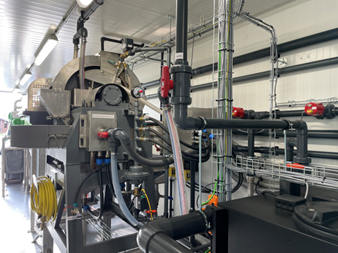 (half full scale, 9 m³/h digested sludge inflow) and test at waste water treatment plants (Roermond Netherlands and Burgos Spain). The project aims to recover at least 60% of the phosphorus in the input sludge and produce significant quantities of vivianite (c. 600 tonnes). This will be used for trials and market chain evaluation of possible uses of vivianite including in fertilisers, in fire safety, as a pigment, and as an input material for phosphorus recovery process tests (separation of phosphorus and iron to produce useable products, such as phosphoric acid or P4, iron chloride). CO2 emissions reductions will be calculated. The project partners are Limburg Water Board, Brabantse Delta Water Board, Acciona, Aquaminerals and STOWA, in cooperation with Kemira (ViviMag patent owner), Wetsus, Delft University, ICL, Rijn en IJssel Waterboard and Haskoning.
Phos4EU LIFE project (LIFE22-ENV-NL-LIFE Phos4EU – 101113877) 2025 – 2027, EU LIFE website project summary LINK.
Photo: 1 m3/h pilot ViviMag unit, 2023.
Policy
EU Battery Recycling Regulation to require phosphorus to be accounted
From 1st January 2030, phosphorus must be taken into account in calculating battery material recycling efficiency. ESPP suggests to go further and add phosphorus to the list of five elements with specific recycling targets. The final version of the Amending Regulation (adopted by the European Commission, pending publication) defining calculation methods for the battery recycling (fixing annexes to the EU Battery Recycling Regulation 2023/1542) specifies that the battery material recycling rate must take into account carbon and iron from cells and phosphorus. ESPP requested that this be modified from the draft submitted to public consultation in October 2024 (see ESPP eNews n°93) which left consideration of phosphorus voluntary (along with chlorine and sulphur). ESPP notes that the EU Battery Recycling Regulation 2023/1542 includes in Annex VI the obligation that labelling must indicate all EU Critical Raw Materials (CRMs) present at > 0.1% by weight. Phosphorus is an EU Critical Raw Material, with EU imports from Russia today a significant issue, and Lithium Iron Phosphate is today the dominant battery technology. ESPP therefore suggests that a delegated Regulation be considered to add phosphorus to the list of five elements with specific recycling targets (in Annex XII-C of 2023/1542).
Adopted Delegated Regulation “supplementing Regulation (EU) 2023/1542 … by establishing the methodology for calculation and verification of rates for recycling efficiency and recovery of materials from waste batteries, and the format for the documentation”, https://ec.europa.eu/info/law/better-regulation/have-your-say/initiatives/14265-Calculation-and-verification-methodology-of-rates-for-recycling-efficiency-and-recovery-of-materials-of-waste-batteries_en
EU Battery Recycling Regulation 2023/1542 https://eur-lex.europa.eu/eli/reg/2023/1542/oj/eng
ESPP letter to the European Commission on Battery Recycling Directive 31st December 2024 www.phosphorusplatform.eu/regulatory
EU phosphate supply: can Europe find enough P without Russian imports ?
Expert analysis by Alberto Persona (Fertecon - S&P Global) shows EU P supply risks and dependency on imports from Russia, need to find and invest in new supply sources, joint projects in phosphate rock mining countries, recycling. The seven page analysis, following a suggestion by ESPP, is published here and fills information gaps as to date analysis has mainly concentrated on nitrogen fertiliser and potash supply and the EU nitrogen fertiliser industry crisis (caused by natural gas prices). The analysis notes the complexity of the phosphorus supply and use chains, including phosphate rock, phosphoric acid, P4 and derivatives (used in renewable energy and strategic industry sectors), fertilisers, animal feed phosphates, industrial phosphate uses, as well as P in animal feed and food products, manure and other organic wastes. International supply of phosphate rock, the raw material of all phosphorus value chains, is highly concentrated with five countries accounting for close to 80% of international trade: Jordan, Syria, Peru, Egypt. For phosphate fertilisers, the situation is similar, with again 5 countries accounting for about 80% of international trade: Morocco, Russia, the United States, Saudi Arabia, and China. EU phosphate imports overall decreased hugely 2021 – 2023, with the supply disruption and price increases following Russia’s invasion of Ukraine. Today around 25% of fertilizer imports and 30% of phosphate rock imports still come from Russia. Possible answers to the EU’s current high dependency on a small number of supply countries, including significantly Russia include: direct European investment in phosphate rock production and processing in other countries and development of new supply sources such as possible new mine projects in Europe and phosphorus recycling.
“The EU’s phosphate conundrum” (7 pages), April 2025, Alberto Persona, Associate Director of Fertilizer Analytics, Fertecon - S&P Global Commodity Insights here https://www.phosphorusplatform.eu/downloads
EU Clean Industrial Deal (CID): decarbonisation, circularity
Commission flags fertilisers as a showcase for low-carbon and recycled nutrients reducing import dependencies, emissions and prices for farmers. CID may open door for actions on P-recycling, P4, bioeconomy, investments.
The fertilisers industry is flagged as an illustration of the potential of the CID, with low-carbon and recycled nutrient fertilisers (page 16).
The European Commission’s Clean Industrial Deal (CID) aims to make decarbonisation a driver for economic growth, quality jobs and business resilience, by removing dependency on energy prices and imported resources, and in parallel circularity, to maximise resource use and reduce import dependencies, making the EU more competitive and resilient. Sectorial plans will be developed for automotive, steel and metals, chemicals (adoption late 2025), transport and the bioeconomy. Significant funds will be mobilised for investments in clean transition, decarbonisation and circularity.
Specific policies announced include:
- Introducing sustainability, resilience and ‘made in Europe’ criteria in Public Procurement (see also: “ESPP input submitted: Evaluation of public procurement directives” in ESPP eNews n°95),
- Trans-Regional Circularity Hubs
- Possible company joint purchasing for Critical Raw Materials (phosphates, P4), in an EU Critical Raw Materials Centre,
- Incentivise diversion from landfill to recycling and more effective separative collection,
- Work with Member States to green tax systems,
- Facilitate trade and investment partnerships (ESPP comment: could be relevant for phosphate and phosphorus chemicals?),
- Support investments in green energies, electricity grid and storage
The CID includes (page 14) indications concerning the Circular Economy Act planned for 2026. This will aim to:
- “enable the free movement of circular products, secondary raw materials and waste, foster a higher supply of high quality recyclates and stimulate demand for secondary materials and circular products while bringing down feedstock costs”,
- “harmonise “end of waste” criteria to facilitate the transition from waste to valuable secondary raw materials”,
- “simplify, digitalise and expand in a targeted manner extended producer responsibility”
- “boost demand through criteria for public procurement”
- “mandate the use of new raw material sources like recycled and bio-based materials to substitute, for example, virgin fossil materials in plastics”.
European Commission “Clean Industrial Deal. A plan for EU competitiveness and decarbonisation”, 26th February 2025 https://commission.europa.eu/topics/eu-competitiveness/clean-industrial-deal_en
EU Green Deal progress assessment
European Commission 2025 analysis of Green Deal underlines challenges to deliver the -50% nutrient loss reduction target. The 150 page document by the Commission’s Joint Research Centre (JRC) analyses progress towards achieving Green Deal targets and relevant policies by seven thematic areas, including ‘Circular Economy’ and ‘Greening the CAP / Farm-to-Fork’ and covers a total 154 targets (from 44 policy documents), some binding, others non-binding. Progress is considered on-track for nearly two thirds of targets, whereas around one third will require accelerated effort and 10% are in reverse or stagnation. Nutrient loss reduction is considered as ‘requiring acceleration’ despite the 2005-2020 trend being “rather stagnant” (indicator: nitrates in groundwater, page 87). The Key Messages for the CAP thematic area state: “Meeting reduction targets for … nutrient losses remains challenging and requires acceleration. The consumption footprint of food showed an increasing trend, primarily driven by animal-based products …The EU food system contributed to the transgression of some planetary boundaries.” Nutrient recovery and more efficient fertiliser application are also cited under the thematic area ‘Zero Pollution Ambition’, with nutrient loss reductions are identified as posing challenges to soil health strategy targets, and nutrient losses to water are again flagged in the Key Messages for this thematic area.
“Delivering the Green Deal. Progress towards targets”, European Commission (JRC) 2025, 150 pages, ISBN 978-92-68-23180-7, https://dx.doi.org/10.2760/3105205
Circular Economy Act
EURIC (recycling industry) priorities
The confederation calls to integrate climate and circularity policies. Proposals include facilitating End-of-Waste, distinguishing between raw waste and processed secondary raw materials, recycled target contents for products. Although EURIC is little concerned by the nutrient circular economy and organics recycling, EURIC’s priorities roadmap 2024-2029 includes a number of proposals relevant to nutrients in the future EU Circular Economy Act:
- Accelerate EU End-of-Waste criteria, with fast-track where a value chain agrees on proposed criteria,
- Mutual Recognition (i.e. by other Member States) of “National” End-of-Waste for non-hazardous wastes,
- Distinguish between unprocessed waste and quality recycled secondary materials, to enable free trade of the latter,
- Facilitate waste shipments,
- Address at source contaminants and chemicals susceptible to be an obstacle to recycling and protect the EU market from imports of products which are not compliant,
- Lower VAT for recycled products,
- Set recycled content targets (“quotas”) for products (EURIC refers to metals, tyres and textiles),
- Facilitate innovation and testing.
“4 priorities for recyclers 2024-2029. Bridging policy ambition with industrial reality”, EURIC, the European Recycling Industries’ Confederation, 2024, 8 pages https://euric.org/images/Position-papers/EuRIC_Priorities_2024-2029.pdf
Italians call for ambitious Circular Economy Act
Confindustria (Italy industry federation) and Italian MEPs call for simplification and a technology neutral approach to support recycling technologies to develop circularity in parallel with climate goals. An informal meeting in the European Parliament was hosted by MEP Massimiliano Saini (EPP), with Cofindustria, Gilberto Pichetto Fratin, Italy’s Minister for the Environment, Antonio Decaro MEP (S&D), the European Commission and a number of industry representatives. Cofindustria has published a report on Circular Economy strategies, making recommendations including
- Coordinate energy transition, sustainability, supply security and circular economy policies,
- Harmonise and simplify regulations (e.g. EcoDesign, Green Claims, waste …),
- Simplify waste management authorisation procedures and rationalise End-of-Waste,
- Promote circularity through Public Procurement and fiscal and financial measures,
- Remove obstacles and streamline site permitting,
- Rationalise End-of-Waste,
- Simplify regulation for research and innovation.
“Informal debate in European Parliament shows early industry demands for Circular Economy Act”, EuroNews, 17th March 2025 HERE
“Circular Economy: industrial strategies and prospects”, Confindustria, full report in Italian 300 pages, summary in English 30 pages, March 2025 https://www.confindustria.it//home/policy/position-paper/dettaglio/rapporto-economia-circolare
Netherlands associations proposals for Circular Economy and End-of-Waste
Based on wide consultation of stakeholders, proposals are to enable currently complex End-of-Waste by ‘Voluntary Certification’ defined between supplier and buyer, which can then be translated into legal criteria. The proposals are developed by consultant EcoMatters for Invest-NL, a state-owned organisation which finances entrepreneurs, and Groene Chimie Nieuwe Economie, a platform to facilitate sustainable transition in chemicals production. Proposals include:
- Develop End-of-Waste ‘Self Declaration’,
- Develop EU recognition of national End-of-Waste rulings,
- Enable national End-of-Waste rulings to justify other End-of-Waste claims,
- Clarify End-of-Waste requirements, in particular concerning health and environment safety,
- Enable industry-led certification schemes for specific waste streams, recycling technologies or applications, when End-of-Waste criteria do not exist, with legal recognition, where possible using existing certification systems and organisations,
- Develop EU End-of-Waste criteria, in particular for plastics and for bio-based waste streams,
- Providing a single point of contact,
- Develop guidance, link to product legislation.
“End of Waste White Paper” (44 pages, in English), Invest-NL, Groene Chimie Nieuwe Economie, EcoMatters, 05_04_2023 https://www.invest-nl.nl/business-development/publicaties/end-of-waste?lang=en
“Eeinde-Abvalstatus Pplossingstrategie & Plan” (End of Waste Status Solution Strategy), (16 pages, in Dutch,, with 2 page English summary), Invest-NL, Groene Chimie Nieuwe Economie, BinGo Results, July 2023 https://www.invest-nl.nl/business-development/publicaties/end-of-waste?lang=en
Nutrient recycling
CleanTeQ Water delivering first PHOSPHIX® ion-exchange P-recovery plant
Full-scale (90 m3/h) PHOSPHIX unit will treat discharge from an MBR (membrane bio-reactor) treating wastewater for an industrial client in Ireland. Detailed design phase is underway and plant is expected to be operational in early 2026, recovering up over 100 tonnes per year of hydroxyapatite rich sludge (dry mass basis) per year (c. 15 t/y of phosphorus – P). This follows successful on-site testing of a pilot unit operating at 8 l/h inflow. PHOSPHIX® was developed by CleanTeQ Water (Australia) and is commercialised and implemented in Ireland through a partnership with ENVA, a provider of waste management and resource recovery solutions. The PHOSPHIX® process uses selective ion exchange to achieve P-removal to <0.1 mgPortho/l. Sodium hydroxide and sodium chloride are used for ion exchange resin regeneration then lime is used to precipitate calcium phosphate (hydroxyapatite) for P-recovery, and the P-depleted solution can be recycled back for further use for regeneration, so minimising reagent consumption. For this project, the MBR inflow to the PHOSPHIX® unit has soluble phosphorus levels up to 20 mgPortho/l, moderate levels of organics (TOC < 10 mg/L) and low suspended solids (TSS < 5 mg/L), but contains significant levels of ions such as 1,500 mg/l SO4, 600 – 800 mg/l HCO3, and 500 mg/l Cl. The selective phosphorus removal has shown not to be significantly impacted by these ions.
See ESPP Nutrient Recovery Technology Catalogue https://www.phosphorusplatform.eu/techcatalogue
“Clean TeQ Water Awarded a Contract of over AU$11m for a PHOSPHIX® Plant in Ireland” [c. 7 million €], 15th November 2024 https://www.cleanteqwater.com/news/clean-teq-water-awarded-a-contract-of-over-au11m-for-a-phosphix-plant-in-ireland/
A poster outlining the project will be presented at the IWA Nutrient Removal and Recovery Conference, the Netherlands, in May, and a full paper will be presented in May Australia’s water conference OzWater
Stercore manure pyrolysis project validated
EU-funded expert’s opinion should enable STERCORE’s manure pyrolysis to start construction in The Netherlands, aiming to process c. 400 000 t/y manure and farm wastes to biochar, methane and food-grade CO2. The plant construction in Emmen, The Netherlands, was announced in 2020 but has been delayed by a court case brought by an environmental NGO Milieudefensie Westerveld. This was finally resolved by the Netherlands High Court declaring Milieudefensie’s appeal unfounded in 2023. EU Green Assist has funded an expert review of Stercore’s business plan and technical documentation, following a request by one of the company's equity funders. The EU’s Green Assist (Green Advisory Service for Sustainable Investments Support, InvestEU and LIFE) can fund free advisory services by accredited experts, to project promoters, financial institutions or other project partners, with the aim of facilitating green investment projects. The Green Assist funded opinion for Stercore and the resolution of the legal challenge should now allow the project to go ahead. The plant will include composting to pre-dry and sanitise the input materials, pyrolysis, treatment of syngas to purified methane (objective 23 million m3/y), recovery of purified liquified CO2, combining of the biochar with organic materials and mineral nutrients to produce tailor-made fertilisers.
Stercore: See ESPP Nutrient Recovery Technology Catalogue https://www.phosphorusplatform.eu/techcatalogue
“Green Assist: the Green Advisory Service for Sustainable Investments Support” LINK.
EU CINEA press release “Green Assist: Producing sustainable end products from renewable raw materials”, 28th January 2025
Stercore press release “STERCORE has been fully vindicated by the Council of State”, 12th October 2023
EasyMining confirms funding for first Ash2Phos plant
The Saxony-Anhalt Environment Ministry has confirmed 27 million € funding for the first full-scale Ash2Phos P-recovery plant at Schkopau near Leipzig, to process 30 000 t/y of sewage sludge incineration ash (see ESPP eNews n°62). The Ash2Phos process leaches more than 90% of the phosphorus out of ash using hydrochloric acid, then separates iron, aluminium and heavy metals by a series of dissolution and precipitation steps, resulting in a clean calcium phosphate product of animal food quality. A second 30 000 t-ash/y plant is under permitting at Helsingborg, Sweden (see ESPP Nutrient Recovery Technology Catalogue). The Schkopau plant is a joint venture with Gelsenwasser AG, one of Germany’s largest utility companies operating mainly in the Ruhr, Muensterland, lower Rhein and Eastern Westphalia regions. The Minister of the Environment for Saxony-Anhalt, Armin Willingmann, commented: “With the establishment of this highly innovative phosphorus recovery plant, Saxony-Anhalt can once again make a name for itself as a state of future technologies. Phosphorus is a critical raw material on which our agriculture in particular depends on. Recovering the raw material could also make an important contribution to protecting our environment and our natural resources.”
“Saxony-Anhalt funds innovative phosphorus recovery plant in Schkopau, Germany”, EasyMining News, 17th February 2025.
Research
Food phosphate additives widespread in US foods
Labels suggest that phosphate food additives are present in over half of 40 000 processed food products from leading US manufacturers. Suggestions of health risks are however unclear. Analysis of labels of processed food products from the 25 leading US food product companies conclude that one or more phosphorus-containing food additives are present in 56% of products representing 52% of (relevant) sales (the sales of these P-additive containing products represent some 250 billion US$ revenue for these 25 companies). The most frequently identified additive (32%) is however lecithin, which is not an inorganic phosphate food additive, but is a mixture of extracted plant phospholipids. Also, nearly one third of the products containing P-additives were beverages (probably largely phosphoric acid used in fizzy drinks). The authors conclude that this shows widespread population exposure in the USA to P food additives, neglecting to point out that this is only relevant for people significantly consuming processed food products. They note that this study does not allow quantification of contribution of P food additives to dietary P intake. Despite this, the paper’s abstract states that “Phosphate additives have more rapid/efficient absorption than naturally occurring dietary phosphate and … greater contribution to total phosphorus intake.”. This is misleading and to ESPP’s understanding wrong: it ignores that the paper’s data suggests that 32% of P-additives are lecithin, plus 10% P-modified starch, which are not inorganic and not better absorbed. There is no evidence in the paper to support the surprising statement that food additive P in diets is higher than natural diet P. Indeed, the paper’s cited references include Fulgoni et al. 2021 who concluded that food additive P is less than one fifth of total P intake and decreasing (see summary in ESPP eNews n°70). The paper also suggests that phosphate food additive intake is linked to health problems in the general population (not kidney patients), but the cited references for this seem limited and unclear, in some cases making a link between ultraprocessed food consumption and kidney decline (Cai et al, Netherlands, 2022) without evidence that this is related to phosphorus in the ultraprocessed foods, in other cases based on only one high phosphate dose (Volk et al. 2022). To ESPP’s understanding, there is evidence relating increased (baseline) blood phosphate levels to health problems (in particular cardio vascular disease CVD) in healthy human populations (not kidney patients), as well as animal studies showing such effects and known potential physiological mechanisms (calcium phosphate precipitation leading to artery hardening, hormone changes), but no clear evidence that increased diet phosphorus leads to increased blood phosphorus (except in the hours after the P intake) in persons whose kidneys are functioning normally (see discussion of Cooke (IFAC) 2017 in ESPP eNews n°16). One cited recent study, however, based on FFQ (food frequency questionnaire) and urine analysis of nearly 4 000 Jackson Heart Study participants, concludes a link between estimated food phosphate intake (but not natural diet P) and kidney function (Duong et al. 2022)
“Phosphate-based additives in processed foods: is excess exposure a cause for concern? A cross-sectional examination of the United States packaged food supply”, E. Dunford & M. Calvo, Am J Clin Nutr, 2025, 121, 873-881, DOI.
“Industrial Use of Phosphate Food Additives: A Mechanism Linking Ultra-Processed Food Intake to Cardiorenal Disease Risk?” M. Calvo, E. Dunford & J. Uribarri, Nutrients 2023, 15, 3510, DOI.
“Bioavailability of phosphorus and kidney function in the Jackson Heart Study”, C. Duong et al., Am J Clin Nutr 2022, 116, 541–550, DOI.
Stay informed
SCOPE Newsletter: www.phosphorusplatform.eu/SCOPEnewsletter eNews newsletter: www.phosphorusplatform.eu/eNewshome
If you do not already receive ESPP’s SCOPE Newsletter and eNews (same emailing list), subscribe at www.phosphorusplatform.eu/subscribe
LinkedIn: https://www.linkedin.com/company/phosphorusplatform
Slideshare presentations: https://www.slideshare.net/phosphorusplatform
YouTube https://www.youtube.com/user/phosphorusplatform
ESPP members
Newsletter about nutrient stewardship - European Sustainable Phosphorus Platform (ESPP)
Please subscribe www.phosphorusplatform.eu/Subscribe
Link to www.phosphorusplatform.eu/eNews095
Download as PDF
Events
10-12 June 2025, Bergen, Norway: nutrients in aquaculture and fisheries workshop
9th April: Flashphos demonstration of sludge drying for P4-recovery
17-18 June 2025: European Wastewater Management Conference
Consultations
Open: EU Fertilising Products Regulation – audit frequencies
Open: Evaluation of EFSA
Open: US EPA consultation on PFAS in sewage sludge and water
Open: EU consultation on simplification of sustainability reporting and taxonomy
Open: EU consultation on next EU budget framework
Closed: EU call for evidence on green transformation for industry and livestock
ESPP input submitted: EU public consultation on water resilience
ESPP input submitted: Evaluation of public procurement directives
ESPP input submitted: UK Parliament Inquiry on Nitrogen
ESPP input submitted: ash-recovered phosphates in Organic Farming
Policy
European Commission “Vision for Agriculture and Food”
State of Europe’s waters
European Commission Report on Water Framework Directive Implementation
Nutrient recovery
UKWIR report: valorisation of potable water treatment sludges
UN FAO report on nitrogen in agri-food systems
Phosphorus, food and health
Mouse maternal high phosphorus diet impacts offspring mineral metabolism and growth
Mouse high P diet leads to heart disease risks
Sustainable development of the food & beverage industry
Commiserations
Stay informed
ESPP members
Events
10-12 June 2025, Bergen, Norway: nutrients in aquaculture and fisheries workshop
ESPP workshop, with partners in Norway and UNEP uPcycle, on nutrient management in aquaculture: fish feed, seafood processing and fish sludge valorisation, Norway & online, 10-12 June 2025, covering nutrient flows, environmental best practice, phosphorus recycling, regulatory challenges. The workshop will contribute to the United Nations (UNEP) project uPcycle, leading to a UNEP white paper on phosphorus sustainability in aquaculture. Site visits to in-sea fish farm with sludge recovery, research installations, fish sludge processing.
A few slots are still available for presentations of fish and aquaculture industry nutrient sustainability actions, fish feed industry, fish sludge nutrient recycling. Programme: https://phosphorusplatform.eu/AquacultureFisheries
9th April: Flashphos demonstration of sludge drying for P4-recovery
Demonstration of pilot sewage sludge dryer – grinder (input 50 kg/h wet sewage sludge), presentation of Flashphos P4 recovery project and operating experience in sludge processing to date. Stuttgart and online. Discussion with experts about sludge treatment, P-recovery and challenges of novel recycling approaches. The Flashphos (EU Horizon 2020) aims to demonstrate recovery of white phosphorus from dried sewage sludge at 250 kg/h pilot scale (see ESPP eNews n°94). The preparation of the sewage sludge, to a dry fine, homogenous powder, is key to the process, to allow fast gasification in the FlashReactor using the organic carbon in the sewage sludge for heat energy. This prepares the minerals for P4 release with a reducing agent (coke or similar) in the Refiner.
Flashphos (EU Horizon 2020 R&D project, 2021-2026) https://flashphos-project.eu
Demonstration event organised by University of Stuttgart, Buss-SMS-Canzler GmbH and Steinbeis Europa Zentrum. 9th April 2025, 9h30 – 16h15, Stuttgart, Germany, and online. In English. Free. Agenda, registration: https://eveeno.com/flashphos
17-18 June 2025: European Wastewater Management Conference
ESPP will speak at Europe’s leading conference for wastewater treatment operational experience, solutions and technologies, Telford International Centre, UK, 17-18 June 2025.
Early bird registration to 11th April 2025 https://ewwmconference.com/
Consultations
Open: EU Fertilising Products Regulation – audit frequencies
EU public consultation, open to 27th March 2025, on change to audit requirements for recovered materials (D1), to avoid excessive audit frequency for high volumes, and change to ammonium nitrate fertilisers conformity assessment requirements (explosive potential).
“EU fertilising products - amendment of conformity assessment procedures”, public consultation, open to 27th March 2025 https://ec.europa.eu/info/law/better-regulation/have-your-say/initiatives/14548-EU-fertilising-products-amendment-of-conformity-assessment-procedures_en
Open: Evaluation of EFSA
Public consultation open to 1st April 2025 for the evaluation of EFSA (European Food Safety Agency).
See ESPP eNews n°94.
Questionnaire plus possibility to input general or specific comments (max. 5 000 characters) and/or upload documents or input papers.
“European Food Safety Authority – evaluation of performance 2017-2024”, EU public consultation open to 1st April 2025 https://ec.europa.eu/info/law/better-regulation/have-your-say/initiatives/14068-European-Food-Safety-Authority-evaluation-of-performance-2017-2024_en
Open: US EPA consultation on PFAS in sewage sludge and water
Public consultation open to 16th and 25th April 2025 (respectively) on US EPA draft risk assessment of PFOA and PFOS in sewage sludge used in agriculture, forestry or landfilled and draft water quality limits for PFOA and PFAS. PFOA (perfluoroocatnoic acid) and PFOS (perfluorooctane sulfonic acid) are both part of the PFAS family (perfluoroalkyl and polyfluoroalkyl substances). The conclusions will inform future US regulatory action under the Clean Water Act. The US EPA classified both PFOA and PFOS as likely carcinogenic in 2024 and concluded that they can have a range of other impacts (see here PFOA and PFOS). The draft risk assessment concludes that land use of sewage sludge (e.g. digested or composted sludge) could result in human health risks, from PFOA and PFOS, exceeeding acceptable thresholds for both cancer and non-cancer risks (based on 40 annual applications at 10 tDM/ha/y, the median US sewage sludge application rate). Human health risk levels were exceeded in scenerios of application to grazing land or for food with risks resulting from PFAS levels in e.g. drinking water, fish, beef, milk, eggs, fruit, vegetables. In some cases, risks levels were exceeded with only one application of sewage sludge containing 1 ppb PFAS. Risk estimates for some human intake pathways can exceed EPA acceptable thresholds by “several orders of magnitude", including via drinking water, contaminated milk from grazing, eating fish or fruit and vegetables. The EPA underlines the need for prevention at source: monitoring of PFAS in sewage works and pre-treatment of industrial sources.
“Draft Sewage Sludge Risk Assessment for Perfluorooctanoic Acid (PFOA) and Perfluorooctane Sulfonic Acid (PFOS)”, US EPA public consultations open to 16th and 25th April 2025 https://www.epa.gov/biosolids/draft-sewage-sludge-risk-assessment-perfluorooctanoic-acid-pfoa-and-perfluorooctane
Open: EU consultation on simplification of sustainability reporting and taxonomy
Public consultations on modifications to EU Sustainability Reporting Standards and to the EU Taxonomy Regulation annexes, as part of the Commission’s ‘Omnibus’ simplification package. This package announces simplifications and wider exemptions for the CSRD (Corporate Sustainability Reporting Directive) and the EU Taxonomy, CBAM (Carbon Border Adjustment Mechanism) and due diligence. The Commission estimates that the proposed simplifications will bring over 6 billion € reduction in administrative costs and mobilise 50 billion € public and private investment. It is part of the Commission’s commitment to reduce administrative burdens by 25% and by 35% for SMEs. Key points include:
- Removing 80% of companies from CSRD, leaving only the largest companies
- Ensuring that larger companies’ reporting obligations and due diligence do not burden SMEs in the value chain
- Simplify the DSNH (Do NO Significant Harm) criteria
- Exempt smaller importers (90% of companies) from CBAM
- Simplify calculation of embedded emissions
- Extend implementation deadlines
- Various other simplification, coherence and harmonisation changes
European Commission ‘Omnibus Package’ announcement 26th February 2025 “Commission simplifies rules on sustainability and EU Investments” https://ec.europa.eu/commission/presscorner/detail/en/ip_25_614?link_id=a2a47574-5401-4cc8-95c7-0c429f73aeed
EFRAG public consultation (under mandate from the European Commission) on simplification of the European Sustainability Reporting Standards (ESRS) open to 6th May 2025 https://survey.alchemer.eu/s3/90824354/ESRS-Set-1-revision-Questionnaire-for-public-feedback
EU public consultation, open to 26th March 2025, on technical modifications to EU Taxonomy Regulation annexes https://ec.europa.eu/info/law/better-regulation/have-your-say/initiatives/14546-Taxonomy-Delegated-Acts-amendments-to-make-reporting-simpler-and-more-cost-effective-for-companies_en
Open: EU consultation on next EU budget framework
EU public consultation, open to 6th May 2025, on post-2027 Multiannual Financial Framework (MFF), to inform the architecture of the EU budget for the next 5-10 years. Six different consultations are open, addressing EU policies on Member States and Regions (inc. agriculture), external action, education / civil society, civil protection and crisis response, single market, budget performance.
On policies with Member States and Regions, the consultation is a short questionnaire (11 questions) asks for opinions on relative importance of challenges from transport and security to decarbonising the economy (one of the 22 options proposed is “Maximising the potential of the circular economy”), obstacles and effectiveness of EU funding, specific objectives of different policies (Cohesion, Agriculture = CAP, fisheries & marine, transport). As well as the short questionnaire, it is possible to submit a free document or position paper.
The consultation questionnaire on ‘budget performance’ addresses in particular gender equality and climate & environment (e.g. “do no harm” principle).
“EU’s next long-term budget (MFF) – performance of the EU budget”, public consultation, open to 6th May 2025 https://ec.europa.eu/info/law/better-regulation/have-your-say/initiatives/14526-EUs-next-long-term-budget-MFF-performance-of-the-EU-budget_en
Closed: EU call for evidence on green transformation for industry and livestock
Non-public call for input, data or examples on green transformation pathways, plans and investment needs to reduce greenhouse emissions and increase circularity of IED installations (industrial sites, large livestock farms) Two studies are launched by the European Commission to evaluate the investments needed by different industries (covered by IED 2010/75, as updated by Directive 2024/1785) “to achieve carbon neutrality, zero pollution and circular economy objectives”, and to support definition of “transformation plans” for these industries. IED covers both industrial sites subject to operation permitting (IED = “Industrial Emissions Directive”) and also, since 2024, large livestock farms – a total of around 75 000 industrial and livestock installations across Europe. Information requested includes defining transformation pathways for IED covered industries (including intensive livestock), costs of transformation, content of transformation plans, proposed benchmarks and targets (may be linked to BAT), available technologies, issues of access to funding.
If you are interested, please contact ESPP (member of the EU IED Forum) and we will send you the consultation documents, including contacts for submitting information, or you can send information to ESPP and we will forward . Formal deadline closed 14th March.
ESPP input submitted: EU public consultation on water resilience
ESPP input underlines the importance of Circular Economy (recycling of water and nutrients) in improving water resilience, and that climate change will increase needs for both nutrients and irrigation water. Climate change is expected to enhance nutrient mineralisation, so increasing nutrient losses, and increase crop nutrient uptake due to increased atmospheric CO2, thus directly linking water resilience to nutrient management and fertiliser use. ESPP suggests that the EU Water Resilience Strategy should take into account the need to reduce EU dependency on imported fertilisers, the importance of reducing pollutants at source, the Critical Raw Materials Act, the European Commission’s announced EU Circular Economy Act and the recast Urban Waste Water Treatment Directive 2024/3019 which refers to water resilience in Recital 29 and art. 15 and requires the definition of Phosphorus Reuse and Recycling Rates in art. 20. Concerning pollution at source, ESPP states that this is a key prerequisite for water reuse, for nutrient recycling and for circularity of other materials recovered from waste water treatment. Industrial chemicals which pose obstacles to circularity or to water reuse should be phased out rapidly, with authorisation only for very limited authorisations for limited essential uses where loss to the environment is not expected until alternatives can be developed. In particular, the restriction of PFAS announced in 2020 (COM(2020)667) should be implemented rapidly, banning all non-essential uses.
“European Water Resilience Strategy”, public consultation, closed 4th March 2025. https://ec.europa.eu/info/law/better-regulation/have-your-say/initiatives/14491-European-Water-Resilience-Strategy_en
ESPP input submitted (1 page): www.phosphorusplatform.eu/regulatory
ESPP input submitted: Evaluation of public procurement directives
ESPP input that the EU’s three public procurement Directives should be updated to better facilitate and incite environmental objectives in public purchasing selection, in particular to support the circular economy, in coherence with the Commission’s ‘Vision for Agriculture and Food” COM2025(75) which fixes the aim of strengthening the role of Public Procurement with a “best value” approach to reward quality and sustainability, including certified Organic products and short food supply chains, and with the Enrico Letta report April 2024 “Much more than a market - Speed, Security, Solidarity – Empowering the Single Market to deliver a sustainable future and prosperity for all EU Citizens”. ESPP suggests that consideration of environmental aspects be no longer an option in Public Procurement, subjecto to difficult conditions, but should required wherever feasible, including taking into account circularity, use of secondary raw materials and EU Critical Raw Materials, as well as the bioeconomy and short supply chains, local, regional and EU production.
See ESPP eNews n°94.
“Public procurement directives – evaluation”, EU public consultation, closed 7th March 2025 https://ec.europa.eu/info/law/better-regulation/have-your-say/initiatives/14427-Public-procurement-directives-evaluation_en
ESPP input submitted (1 page): www.phosphorusplatform.eu/regulatory
ESPP input submitted: UK Parliament Inquiry on Nitrogen
ESPP input underlined synergies between reducing nitrogen losses, recycling nitrogen and development of renewable manure biogas, as well as the need to recycle N to reduce dependency on imported fertiliser and natural gas. ESPP underlined that reducing nutrient losses is signed into the United Nations COP15 Kunming-Montreal convention Global Biodiversity Framework, December 2022 (ESPP eNews n°74) and that reducing N losses can be combined with N-recovery (e.g. ammonia stripping/scrubbing from manure offgases) or with improved recycling of N in wastes (reduce N losses from manure or digestates during field application, e.g. by acidification of manure or by injection into soil rather than surface spreading – so increasing the effective recycling rate). Input summarised conclusions of the two international workshops on nitrogen recycling organised by ESPP in 2023 (SCOPE Newsletters n°s 145 and 148) and the operational summary of literature relevant to N-recycling in SCOPE Newsletter n° 147. ESPP also underlined the importance of ensuring that recovered nutrients find a market, commercially (competition with ‘virgin’ mineral nutrients), in regulations and as regards product quality. See ESPP’s proposals (developed with wide stakeholder consultation) for policies to facilitate nutrient circularity (input to the upcoming EU Circular Economy Act) and for “market pull” for recycled nutrients.
UK Parliament (House of Lords Environment and Climate Change Committee), Call for Evidence on Nitrogen, closed 7th March 2025 https://committees.parliament.uk/committee/515/environment-and-climate-change-committee/news/205099/environment-and-climate-change-committee-launches-new-inquiry-into-nitrogen/
“UKWIR provides evidence for the House of Lords Environment and Climate Change Committee Nitrogen Inquiry, 14th March 2025 https://ukwir.org/hol-0
ESPP input submitted (4 pages): www.phosphorusplatform.eu/regulatory
ESPP input submitted: ash-recovered phosphates in Organic Farming
ESPP input to EU consultation on use of calcium phosphates from sewage sludge ash in certified Organic Farming: ESPP supported the proposed authorisation and requested consideration of other recycled nutrient materials.
ESPP welcomed the proposed authorisation of calcium phosphates derived from sewage sludge ash as fertiliser in Organic Farming, based on the positive EGTOP Opinion of March 2024, and requested that this modification of the Organic Farming inputs regulation 2021/1165 be implemented rapidly, with the text as proposed. ESPP noted that the proposal contributes positively to sustainability and productivity of Organic Farming, to stewardship of the EU Critical Raw Material “Phosphate Rock” (Critical Raw Materials Act 2024/1252) and to EU Circular Economy objectives.
In order to ensure safety and farmer confidence, ESPP supported the proposal that the recovered calcium phosphate should respect the EU Fertilising Products Regulation quality criteria and contaminant limits.
ESPP noted that the wording “calcium phosphate” can mean any inorganic compound (derived from sewage sludge incineration ash) consisting of calcium, phosphorus, hydrogen and oxygen, e.g. monocalcium phosphate, dicalcium phosphate, octacalcium phosphate, amorphous calcium phosphates, hydroxyapatite, single super phosphate, triple super phosphate.
ESPP requested future consideration, for Organic Farming, of calcium phosphates recovered from ash from animal by-products and of “Calcined Phosphates” from sewage (EGTOP gave a positive opinion in 2016 recommending authorisation for use in Organic Farming). ESPP suggested that EGTOP consider all ash-derived phosphates respecting the EU FPR (PFC1 mineral phosphate fertiliser criteria and CMC13 criteria, possibly subject to other specific Organic Farming criteria such as exclusion of manure from ‘factory farming’, solubility criteria … ). This would avoid the current one-by-one assessments which are slow and time-consuming.
“Organic production – amended list of authorised products and substances”, EU public consultation closed 4th March 2025. https://ec.europa.eu/info/law/better-regulation/have-your-say/initiatives/14024-Organic-production-amended-list-of-authorised-products-and-substances_en
ESPP input to public consultations: www.phosphorusplatform.eu/regulatory
Policy
European Commission “Vision for Agriculture and Food”
Strategy document aims for an “attractive, competitive, resilient, future-orientated and fair” agri-food system, including climate, carbon credits, nature and environment protection, nutrient management and nutrient circularity. The vision aims to achieve “strategic autonomy and food sovereignty” and to reconcile food security, food safety, farm incomes and climate and environmental objectives (including soil health, clean water and water scarcity, biodiversity), whilst emphasising simplification, competitiveness and digitalisation. Vulnerabilities identified include dependency on imports for fertilisers, feed and energy, in particular for high-protein feeds and fertilisers. Fertilisers are identified as “essential for food production and security”, and pose price stability problems for farmers, with the EU increasingly dependent on a small number of import supplying countries. Support is necessary for low-carbon fertilisers and recycled nutrients. Farm nutrient management and nutrient circularity are cited objectives. The bioeconomy, carbon farming, nature credits and renewable energy production are seen as key areas for innovation and additional sources of income for farmers.
The vision indicates that CAP (Common Agricultural Policies) currently account for 23% of average EU farm income and confirms the CAP as the key tool for taking forward policy objectives.
ESPP comment: as often with such strategy documents, there is a feeling that everything has been included to please everyone (and that ESPP has selectively cited a few paragraphs on nutrients and fertilisers found somewhere in the 27 pages). However, the following do appear as announced actions (rather than ‘wishes’), whilst underlining that one-size-fits-all solutions are not applicable to farming across Europe and that actions must therefore be largely delegated to national, regional and local authorities:
- Carbon credits
- Nature credits
- A voluntary on-farm environmental benchmarking system “On-Farm Sustainability Compass”
- CAP reduction of farm subsidy disparities (capping for big farms), focus on young farmers and on farming in areas of “natural constraints”. CAP to focus on incentives and investments, rather than “conditions”
- Alignment of standards for imported products, to ensure fair competitiveness of EU farms, e.g. presence of pesticides banned in the EU, animal welfare conditions
- Support for EU fertiliser production
- Support for low-carbon fertilisers and recycled nutrients, in particular appropriately used and treated digestates
- Reinforcement of agricultural crisis funding mechanisms (European Food Security Crisis Mechanism, agricultural reserve)
- Strengthening the role of Public Procurement with a “best value” approach to reward quality and sustainability, including certified Organic products and short food supply chains
- Work stream on “excellence livestock production chain” addressing global competition, imports/exports, climate and environmental footprint, maintenance of extensive grasslands (valuable for climate, landscape, biodiversity), sustainable production models
- Addressing nutrient pollution hotspots with territorial approaches to management and control of livestock farming and support for extensification, in the context of the evaluation of the Nitrates Directive due end 2025.
“Commission presents its roadmap for a thriving EU farming and agri-food sector”, press release, 19th February 2025 and European Commission Communication COM 2025(75) – 27 pages “A Vision for Agriculture and Food. Shaping together an attractive farming and agri-food sector for future generations” here.
State of Europe’s waters
The European Environment Agency (EEA) report on the state of waters 2024 says the EU needs to accelerate actions to improve water resilience and water quality. Less than 30% of waters achieve good chemical status, with little improvement over the last decade. Climate change will accentuate pressures on water resources. Member States report that the most significant pressure on both surface and groundwater resources is agriculture: intensive use of nutrients and pesticides. Diffuse agricultural pollution, in particular pesticides and nutrients, is important in impacting water quality, as are long-lived pollutants, in particular mercury and brominated flame retardants (each of which alone are responsible for nearly half of water body quality failures – one parameter failure = quality failure). Agriculture is considered more than twice as impacting on surface waters than wastewater discharges, and also as having high impact on groundwaters. Agricultural nutrient losses (leaching/run off and in soil erosion) are more than four times wastewater discharge for nitrogen and more than two times for phosphorus. The EEA notes that “high concentrations of nitrogen and phosphorus and contamination by organic substances from manure and sewage continue to have serious ecological effects in Europe. These include toxic algal blooms and oxygen depletion”. Nearly 20% of surface waters failed nutrient quality standards and nearly 50% of monitoring sites are eutrophic or susceptible to become eutrophic. EEA notes that climate change will accentuate nutrient losses from agriculture: “Heavy rain events can also cause drastic erosion of phosphorus-rich agricultural soils and loss of manure from animal husbandry, resulting in additional phosphorus inputs into surface waters”. The importance of the Farm-to-Fork and Biodiversity Strategy targets to reduce nutrient losses and pesticide use by 50% by 2030 in addressing water quality failures.
EEA indicates that “Recycling nutrients from sewage sludge and manure, such as phosphorus as a non‑renewable resource, increases food security while simultaneously reducing nutrient enrichment of natural water bodies and risks of eutrophication” noting that “sewage sludge can be used beneficially for its nutrients and organic matter content. Similarly, manure from livestock rearing can be recovered. Common uses include land application as a soil conditioner or fertiliser and, in some cases, for energy recovery through biogas production or incineration”.
“Europe's state of water 2024. The need for improved water resilience”, European Environment Agency, EEA Report 07/2024 https://dx.doi.org/10.2800/02236
European Commission Report on Water Framework Directive Implementation
Fewer than 40% of EU surface waters are in Good Ecological Status and fewer than 30% in Good Chemical Status, with nearly no improvement over the last six years. Member States are asked to reduce agricultural nutrient pollution. The Commission report is based on detailed analysis of Member States’ River Basin Management Plan (RBMP) reports and covers c. 90% of EU surface and ground water bodies (97 000 surface water bodies, 15 000 groundwater bodies). The Commission notes that apparent the lack of improvement may be partly because of better monitoring, and because Directive applies the “one out all out approach” (failure for one parameter means classification as overall Quality failure), but that it also results from inadequate measures taken to reduce pollution and inadequate progress in their implementation. Ecological quality status failure (waterbodies not in Good Ecological Status or Good Ecological Potential) is particularly due to eutrophication, confirming findings from the Nitrates Directive reporting (2021) which indicated 30 – 40 % of freshwater surface waters and over 80% of marine waters were eutrophic. For chemical quality status, pollution by mercury, polycyclic aromatic hydrocarbons (PAHs) and brominated flame retardants (PBDEs) are particularly cited, as well as heavy metals, biocides and pesticides and other persistent organic pollutants (e.g. hexachlorobenzene).
Pressures on surface water bodies identified by member states include atmospheric deposition of pollutants (89% of waterbodies), morphological changes (drainage, irrigation, dams, etc, 57%), agricultural pollution (32%) and urban wastewater treatment or non-connection (14%, 9%).
Considering nutrients, it is indicated that nitrates from agriculture (fertilisation, manures, unsustainable land management practices) are the biggest pollutant of groundwater and a problem in surface waters, whereas for phosphorus the biggest source to marine waters remains urban wastewater.
The report reminds that CAP 2023-2027 measures should reduce agricultural pollution, but for the period covered by this report, CAP funding has been insufficient and delayed. It is estimated that CAP 2022-2027 Eco-Schemes and AECCs (Environmental, climate-related and other management commitments) supporting improved nutrient management are planned to cover over 15% of EU agricultural area.
The report notes that “No Member State is using thresholds for nutrient concentrations to assess the good ecological status of surface waters, and only some are determining the required load reduction upstream in the relevant river basin”.
The Commission concludes that groundwaters are largely in good status, but that “surface waters are in a highly critical situation” and that compliance with the Water Framework Directive’s quality status objectives will not be achieved by the 2027 deadline. Key actions needed are identified as increasing funding for implementation of River Basin Management Plan ‘Programme of Measures’ and integration of water into other legislation.
Over 40 action recommendations are given including: “stepping up action to reduce nutrient pollution, including by setting and achieving maximum nutrient loads in all river basin districts, in line not only with the WFD (Water Framework Directive) but also the MSFD (Marine Strategy Framework Directive) and Nitrates Directive”.
A Commission Report on the Marine Strategy Framework Directive (MSFD), issued in parallel to the report on the Water Framework Directive, also underlines that nutrient pollution and eutrophication remain major challenges, especially in the Baltic, North East Atlantic and Mediterranean. It is noted that nutrient pressures will change with climate change. One of 24 recommendation actions is “stepping up action to reduce nutrient pollution to achieve the objectives of the MSFD, WFD and the Nitrates Directive”.
“Protect waters and better manage flood risks”, European Commission press release IP/25/342, 4th February 2025 https://ec.europa.eu/commission/presscorner/detail/en/ip_25_342
Report “on the implementation of the Water Framework Directive (2000/60/EC) and the Floods Directive (2007/60/EC)”, European Commission, COM(2025)2, 4th February 2025 https://eur-lex.europa.eu/legal-content/EN/TXT/?uri=COM%3A2025%3A3%3AFIN&qid=1738678027971
Report “on the Commission's assessment of the Member States’ programmes of measures as updated under Article 17 of the Marine Strategy Framework Directive (2008/56/EC)”, European Commission, COM(2025)3, 4th February 2025 https://eur-lex.europa.eu/legal-content/EN/TXT/?uri=COM%3A2025%3A3%3AFIN&qid=1738678027971
Nutrient recovery
UKWIR report: valorisation of potable water treatment sludges
UK Water Industry Research report analyses current routes and possible improvements for valorisation of iron and aluminium sludges from drinking water treatment (these sludges are completely different from and are not related to sewage sludge). At least 115 000 t/yDM of such sludges are generated in the UK. They contain 2 – 8% dry solids, up to 41% iron or 21% aluminium and significant levels of organics (13 – 26% total carbon). Currently most such iron sludges are discharged to sewers (the iron content contributes to sewage works phosphorus removal and improving settling, so partly substituting virgin coagulant consumption) and the majority of aluminium sludges are spread to land (soil improver, land reclamation). Discharge to sewers can also have negative impacts on sewage treatment (increased sludge production, deterioration of biological treatment, acidity for aluminium sludges). A significant potential valorisation route for iron sludges is addition to anaerobic digesters, with methane generation from organics in the sludge and iron acting to improve anaerobic digester operation and suppress H2S. However, “waste” status of the iron sludge is an obstacle to this valorisation route. Other valorisation routes identified include incorporation into brickmaking, ceramics or construction materials, often after removal of organics (e.g. calcination). Processes to chemically separate iron from phosphorus in such sludges are discussed, in particular sulphuric acid digestion followed by purification (membranes, ion exchange) but these are at the lab scale and to date not economically viable.
“Circular Economy – water treatment sludges”, UKWIR (UK Water Industry Research, the UK water industry’s joint research organisation), 67 pages, 2024, Report Ref. No. 24/SL/09/02 https://ukwir.org/water-industry-research-reports
UN FAO report on nitrogen in agri-food systems
Report on nitrogen in the global food system underlines the importance of dietary choices, spatial misbalances of livestock production and the need to recycle agri-food wastes to livestock feed. FAO (United Nations Food and Agriculture Organisation) explains that nitrogen loss (e.g. nitrates to water, ammonia to air) impact the environment, climate and health. Improving nitrogen management is considered essential to achieving UN Sustainable Development Goals, in particular those relating to water, climate, health and hunger, including increasing food production in lower-middle income countries. FAO estimates that global Nutrient Use Efficiency (NUE) in crop systems is just over 60% (N in output crops / N inputs) and in livestock is 4 – 45% (N in animal – eggs – dairy / N in feed). Overall, N in human food produced is around 30% of global mineral fertiliser inputs and around 15% of total inputs (including biological N fixation and atmospheric deposition). Illustrated data on N international trade is provided and the main cause of N losses in livestock production is identified as feed crop production (with associated mineral fertiliser use and land change). The report notes the potential for reducing protein content of livestock diets (especially cattle), increasing recycling of agri-food wastes to feed (especially pigs) and of improving manure management (e.g. reducing ammonia losses in storage, more efficient application to crops). Priorities for circularity are identified as: reduce food waste, use FLW (food loss and waste) in animal feed (whilst ensuring food chain safety), use arable land to produce human food crops not animal feed and use livestock to convert non-food biomass (e.g. grass) to human food. Promising routes for progress noted include low-emission production of mineral N fertilisers, processing manure, agri-food wastes and industrial wastes to bio-based fertilisers. The need for quality control and appropriate application rates and methods are underlined for organic fertilisers.
“Sustainable nitrogen management in agrifood systems”, FAO (Food and Agriculture Organisation of the United Nations), 130 pages, 2025 https://doi.org/10.4060/cd3388en
See also “Guidelines on the role of livestock in circular bioeconomy systems”, FAO LEAP (Livestock Environmental Assessment and Performance in ESPP eNews n°90 and “Nutrient flow and associated environmental impacts in livestock supply chains. Guidelines for assessment”, FAO in ESPP eNews n°37.
Phosphorus, food and health
Mouse maternal high phosphorus diet impacts offspring mineral metabolism and growth
High phosphorus diet either before or during pregnancy of female mice resulted in offspring with lower gut P uptake, modified levels of blood hormone levels related to mineral metabolism and lower body weight. The female mice were fed either normal (control = 0.8% P) or high-P (1.5% P) diet either for 21 days before pregnancy, or during pregnancy, then normal-P diet during breast feeding of offspring (3 weeks). After weaning, offspring were fed a normal-P diet 3-10 weeks. The high-maternal-P offspring showed no difference in blood plasma P concentrations compared to normal-maternal-P offspring, but showed lower urine P excretion corresponding to reduced gut P-transporter mRNA expression. They also showed modified blood levels of parathyroid hormone, fibroblast growth factor 23 (FGF23) and vitamin D, which are all three related to hormonal mineral metabolism control. Body weight of the high-maternal-P offspring was significantly lower at 3, 6 and 10 weeks of age. The authors note that these animal study results may not transpose to humans and that in this trial only male offspring were studied.
“Maternal excess dietary phosphate intake in the periconceptional period is a potential risk for mineral disorders in offspring mice”, M. Hayashi-Suzuki et al., Scientific Reports, 2025, 15:8844 DOI.
Mouse high P diet leads to heart disease risks
Diets on high phosphorus (2%) showed heart modifications, including atrial fibrosis and oxidative stress, compared to mice on a normal phosphorus diet (0.6%), for both kidney-impaired and non-impaired mice. 8 week old male mice were fed the different diets for 10 weeks, followed by 4 weeks normal-P diet. Half the mice in each group were operated to remove 5/6 of kidney function (partly nephrectomised). The authors conclude that the high P diet increased atrial fibrillation risk. Biological signalling mechanisms are discussed (STAT3, NFKB, Nox4) and collagen expression. The authors note that mouse serum phosphorus is considerably higher than in humans and that previous studies have shown that high P diets in mice lead to increased serum P concentrations, even with non-deteriorated kidney function, whereas this is uncommon in humans. Therefore, high diet P in healthy humans may not lead to similar atrial risks, whereas it is likely to do so for humans with poor kidney function.
“High-phosphate diet causes atrial remodeling and increases atrial fibrillation vulnerability via STAT3/NF-κB signaling and oxidative stress”, Y-J. Hsu et al., Acta Physiologica. 2023;00:e13964 DOI.
Sustainable development of the food & beverage industry
ESPP participated in the 13th Sustainable Development in the Food & Beverage Industry Summit (February, Brussels), presenting on nutrient circularity in the agri-food sector, together with Pär Larshans (Ragn-Sells). The event brought together around 60 participants, including representatives from Ferrero, Danone, Heineken, Unilever, Arla Foods, Fyffes, and OSI Group, to discuss sustainability challenges and strategies across the food value chain. Discussions focused on corporate environmental stewardship, sustainable sourcing, and the role of data in driving innovation. Companies exchanged views on ways to measure and reduce the environmental footprint of food production, with attention to eco-design, procurement, decarbonisation, and regenerative agriculture. A key takeaway was the need for reliable data and assessment tools to advance circularity and sustainability goals.
13th Annual Sustainable Development in the Food & Beverage Industry Summit, 4-5 February 2025, Brussels, website
ESPP slides available on slideshare.
Commiserations
Waltraud Hermann, wife of ESPP Secretary and previously President, Ludwig Hermann, sadly died on 13th March. Many ESPP contacts met Waltraud Hermann and appreciated her energy and enthusiasm. We will regret her and all our thoughts are with Ludwig and his family. If you wish to make a gesture, Waltraud wished for donations to the association SOS Mitmensch, Austria, https://www.sosmitmensch.at/site/ueberuns IBAN AT12 2011 1310 0220 4383
Stay informed
SCOPE Newsletter: www.phosphorusplatform.eu/SCOPEnewsletter eNews newsletter: www.phosphorusplatform.eu/eNewshome
If you do not already receive ESPP’s SCOPE Newsletter and eNews (same emailing list), subscribe at www.phosphorusplatform.eu/subscribe
LinkedIn: https://www.linkedin.com/company/phosphorusplatform
Slideshare presentations: https://www.slideshare.net/phosphorusplatform - Twitter: @phosphorusESPP
YouTube https://www.youtube.com/user/phosphorusplatform
ESPP members
Newsletter about nutrient stewardship - European Sustainable Phosphorus Platform (ESPP)
Please subscribe www.phosphorusplatform.eu/Subscribe
Link to www.phosphorusplatform.eu/eNews094
Download as PDF
Events
Phosphorus use and recycling in intensive livestock: 5-7 March 2025
13th March 2025: EU sewage phosphorus “reuse & recycling” targets
10-12 June 2025, Bergen, Norway, nutrients in aquaculture and fisheries
15-17 October 2025, Wageningen, NL. RAMIRAN: the manure management event
EU consultations
Evaluation of EFSA
Evaluation of public procurement directives
EU fertiliser imports
Limited EU proposal for tariffs on Russian fertilisers
Circular Economy policy
BusinessEurope priorities for Circular Economy
EESC calls for policies to move “from waste plants to resource plants”
ESPP new members
STEPS Science and Technologies for Phosphorus Sustainability Center
REALM Reusing Effluents from Agriculture to unLock the potential of Microalgae
Regulatory questions on biomass from waste
ESPP workshop on legal status of algae & biomass grown in wastes
Legal Opinion: algae from waste, manure, minerals recycling to animal feed
Nutrient recovery
Culterra obtains EU fertilising products CE-mark
EasyMining demonstrates iron recovery with Ash2Phos P-recovery process
Canada Biogas Association points to important role of digestate in nutrient recycling
NEWTRIENT ‘Solutions Catalog’ evaluates over 500 dairy manure technologies
ReLEAF questionnaire for farmers on bio-based fertilisers
Flashphos pilot P4 recovery pilot starts testing
Research
Eutrophication – climate change link
Smart phone fluorescence quantification of inorganic phosphates
Stay informed
ESPP members
Events
Phosphorus use and recycling in intensive livestock: 5-7 March 2025
This event will focus on making livestock production, animal feed, and manure and digestate management more circular. The workshop will help create a UNEP report on sustainable nutrient use in livestock farming.
How can we balance efficient nutrient management in intensive livestock farming with social benefits (such as lower prices and regional agri-food specialisation) while tackling nutrient imbalances in certain areas?
- Location: Saint Malo, Brittany (with some sessions online)
- Topics Covered: • Sustainable livestock nutrient management • How nutrients move in livestock production, • The impact of different diets on nutrient use, • Animal feed, farming methods, and nutrient footprints, • Life cycle analysis (LCA) of livestock production, • Recycling and reusing manure nutrients
- Participants: Experts from UNEP (United Nations), the European Commission (DG AGRI, DG RTD), livestock farmers, meat producers, the agri-food industry, environmental organisations, and researchers.
- Organisers: UNEP uPcycle, Roullier (fertilisers, animal nutrition, food industry), Cooperl (Brittany pig farmers and pork industry solutions), ESPP, BETA Technological Center, UK Centre for Ecology & Hydrology (CEH).
In-person participants have the opportunity of site visits:
- Roullier’s Global Research Centre (fertilisers and agriculture)
- Minerallium, a unique experience exploring minerals from Earth’s origins to plants, animals and humans
- Cooperl’s waste to resource vision and processes, with the Bulle Environment immersive showroom
- Couiclang pig farm, state-of-the-art pork production sustainability
On-site participation limited to 60 persons to enable active discussion, white paper drafting, site visits. Wed. 5 – Fri. 7 March 2024, Saint Malo, France (Brittany coast, 1 hour from Rennes high-speed train station and airport) and partly online. Online access will include plenary presentations. To participate in discussions and white paper, we recommend in-person attendance. To request to participate in Saint Malo, pre-register now: https://phosphorusplatform.eu/LivestockBrittany
13th March 2025: EU sewage phosphorus “reuse & recycling” targets
The requirements of the new EU Urban Waste Water Treatment Directive 2024/3019 (UWWTD) for phosphorus removal, reuse and recycling: interactions between tighter discharge consents, chemical P-removal coagulants, P-recovery. With the European Commission (ongoing work defining UWWTD phosphorus “reuse and recycling rates”). Showcase of leading technologies to recover phosphorus sewage, and how these interact with iron/aluminium content, vivianite recovery and processes to recover phosphorus from vivianite, plant availability of phosphorus in sewage sludges. Within Aquatech, Europe’s biggest water industry trade show.
13th March 2025. In Aquatech, Amsterdam RAI and online. Programme and registration https://phosphorusplatform.eu/AquatechWorkshop
NOTE: for onsite workshop participation, separate prior registration for both Aquatech (free access)https://www.aquatechtrade.com/amsterdam and for the workshop here are necessary
10-12 June 2025, Bergen, Norway, nutrients in aquaculture and fisheries
ESPP workshop, with partners in Norway and UNEP uPcycle, on nutrient management in aquaculture feed, seafood processing and fish sludge valorisation, Bergen (Norway) & online, 10-12 June 2025, covering nutrient flows, environmental best practice, phosphorus recycling, regulatory challenges. The workshop will contribute to the United Nations (UNEP) project uPcycle, leading to a UNEP white paper on phosphorus sustainability in aquaculture.
If you wish to contribute, please email indications of your organisation’s areas of interest, competence, possible content of presentation, to . The outline programme will be soon available.
15-17 October 2025, Wageningen, NL. RAMIRAN: the manure management event
Abstract deadline 15th February. Europe’s leading manure and organics conference. Managing organic resources in agriculture: opportunities and challenges. 250 participants in 2023 (see ESPP’s SCOPE Newsletter n°149). Covers organic nutrient utilisation, air and water emissions, manure processing technologies, policy & regulation, with particular focus on nutrient use efficiency, nutrient recycling and manure climate emissions.
Organised by ESPP member Wageningen WUR. www.ramiran2025.nl
EU consultations
Evaluation of EFSA
Public consultatoin open to 1st April 2025 for the evaluation of EFSA (European Food Safety Agency). Public questionnaire (second stage consultation) asks for input on the importance of EFSA’s objectives (providing scientific advice, risk communication, cooperation with stakeholders and Member States, identifying emerging risks), effectiveness of EFSA and EU added value, aspects such as independence or openness, different work areas (animal health, biological hazards, contaminants in the food chain …), quality and clarity. Specific questions address links to the new (2021) EU Transparency Regulation framework.
Questionnaire plus possibility to input general or specific comments (max. 5 000 characters) and/or upload documents or input papers.
“European Food Safety Authority – evaluation of performance 2017-2024”, EU public consultation open to 1st April 2025 https://ec.europa.eu/info/law/better-regulation/have-your-say/initiatives/14068-European-Food-Safety-Authority-evaluation-of-performance-2017-2024/F_en
Evaluation of public procurement directives
EU consultation open to 7th March for the evaluation of the three EU public procurement directives (Public Procurement 2014/24/EU, Procurement by utilities 2014/25/EU, Concessions 2014/23/EU). This first stage consultation (‘Call for Evidence’) asks for free input on the effectiveness, relevance, coherence and EU added value of these directives, in the context of the European Court of Auditors report 2023 which points to decreasing competition in public procurement and the Enrico Letta report April 2024 “Much more than a market - Speed, Security, Solidarity – Empowering the Single Market to deliver a sustainable future and prosperity for all EU Citizens”. ESPP notes that these public procurement directives currently prioritise the lowest cost option (e.g. art. 67.1 of 2014/24/EU “most economically advantageous”), subject to respecting environmental obligations (art. 18.2) but with option (only) of taking into account the “price-quality ratio … on the basis of criteria including environemental aspects” (art. 67.2), where environmental externalities can be taken account only if “monetary value can be determined and verified” (art. 68.1.6).
Input: free 4 000 character text plus possibility to upload a fee document.
“Public procurement directives – evaluation”, EU public consultation open to 7th March 2025 https://ec.europa.eu/info/law/better-regulation/have-your-say/initiatives/14427-Public-procurement-directives-evaluation_en
EU fertiliser imports
Limited EU proposal for tariffs on Russian fertilisers
The European Commission has proposed a c. 13% tariff on some fertiliser imports from Russia and Belarus and also an extension of the existing 50% tariff on Russian cereal an oilseed imports (2024/1652) to a wider range of agricultural products. The proposal will now be considered by the European Parliament and Council (Member States). The Commission estimates that the EU imported 1.3 bn€ of fertilisers from Russia in 2023. This is similar to the pre-tariffs value of 2023 EU imports of Russian grains and oilseeds. Tariffs proposed on some fertilisers are 40 – 45 €/tonne until June 2026 (c. 13% of value, additional to the existing 6.5% tariff on all fertiliser imports), doubling in June 2027, then becoming “prohibitive” (c. 100%) in June 2028. For comparison, the USA recently announced 25% tariffs on many imports from Canada (10% on energy). The EU’s proposed tariffs would apply to mineral N, NP and NK fertilisers from Russia or Belarus, but not P or K fertilisers (customs codes 3103, 3104). The fertiliser types subject to proposed tariffs represent over 2/3 of EU fertiliser use (the proportion of such fertilisers from Russia covered is not specified). The tariffs would not impact transit of the targeted goods from Russia or Belarus to third countries, i.e. do not impact trade of these goods through Europe, transport, insurance, storage in Europe. The Commission says that the proposals aim to support the EU fertiliser industry and agriculture and allow for diversification in countries supplying imports, whilst ensuring fertiliser availability at an affordable price for farmers, and without impacting supplies to developing countries or global food security.
ESPP notes that the proposed tariffs on fertilisers are relatively low and will have a limited impact until June 2028. This means that significant financial flows - potentially exceeding a billion euros - may continue towards Russia for fertiliser purchases, including through taxpayer-funded CAP support for farmers. Meanwhile, the EU fertiliser industry faces challenges that could affect its long-term viability and, in turn, EU food security. ESPP recommends that the EU actively support farmers in sourcing recycled, green, or EU-produced fertilisers (with lower environmental footprint) and consider stronger trade measures on fertilisers from Russia and Belarus. Additionally, ESPP highlights the absence of phosphate fertilisers in the current tariff proposal, despite phosphate being listed as an EU Critical Raw Material and the EU relying on imports for around 90% of its supply, with a significant portion still coming from Russia.
Fertilizers Europe welcomed the proposal for tariffs on Russian fertilisers: “For too long, the European fertilizer industry has been exposed to artificially low-priced imports from Russia and Belarus, seriously distorting the market and undermining fair competition. Consequently, the Russian share of EU Nitrogenous fertilizer imports reached a 5-year high, while urea imports volumes from Russia reached a 10-year high.”. Fertilizers Europe however also considers the proposed tariff levels too low too slow, suggesting a 30% tariff immediately.
“Commission proposes tariffs on remaining agricultural products and on fertilisers from Russia and Belarus”, European Commission, 28 January 2025 https://ec.europa.eu/commission/presscorner/detail/en/ip_25_340 and proposed tariffs regulation COM(2025) 34 final, 2025/0021 (COD) https://ec.europa.eu/transparency/documents-register/detail?ref=COM(2025)34&lang=en
“Fertilizers Europe welcomes the European Commission’s proposal to impose tariffs aimed at reducing EU dependency on fertilizers from Russia and Belarus, Calls for Greater Ambition”, Fertilizers Europe, 29 January 2025 https://www.fertilizerseurope.com/wp-content/uploads/2025/01/Fertilizers-Europe_Press-Release_Tariffs-on-Russian-Belarusian-fertilizers_29-01-2025.pdf
Circular Economy policy
BusinessEurope priorities for Circular Economy
Industry says it is committed to accelerating the Circular Economy for a cleaner and more competitive Europe and identifies incentives and regulatory changes needed to ensure the business case for circularity and maintain Europe as world leader in circular economy products and solutions. BusinessEurope sees as barriers: inadequate infrastructures for collection and sorting, lack of information sharing along value-chains, lack of demand for circular products, regulations inhibiting cross-border movement of wastes for recycling, obstacles to recycling scale-up, lack of harmonised EU End-of-Waste criteria and divergent national requirements and admnistrative burdens. Priorities for action include:
- policy coherence and implementation: avoidance of legislative contradications, reducing admnistrative burdens, implementation tools and information, knowledge sharing, harmonising legislation between Member States, effective enforcement and market surveillance (ensuring a level playing field vis-à-vis imports into the EU)
- specific regulatory actions: free movement of materials for recycling, facilitating testing and demonstration, further develop EU End-of-Waste criteria
- circular economy Standards
- R&D funding for circular economy industry focal areas
- EU-level targets for recycled and bio-based contents for relevant materials, for separate collection, sorting and waste processing
- reinforce Green Public Procurement to support circularity
- update Extended Producer Responsibility fees to reward product durability, recycled content, …
- appropriate use of digital tools, such as product passports, whilst ensuring focus on data relevant for circularity to avoid unnecessary administrative burden
“EU Circular Economy Policy. BusinessEurope priorities for 2024-2029”, 10th July 2024.
EESC calls for policies to move “from waste plants to resource plants”
European Economic and Social Committee Opinion calls for financial support and regulation to develop recycling and resource recovery, specifically citing nutrient recovery from wastewater, sludge and other sources. EESC says that a “shift from linear product-to-waste thinking to waste-to-resource” is needed and a “revised strategy” at the EU-level to forward recycling and resource recovery projects, in close cooperation with regional and local authorities and in coherence with the Waste Hierarchy. Market conditions must be adjusted to level the playing field between recycled and virgin materials The need to modify waste regulation is noted, including regulating waste “as a key raw material” with standards under REACH, End-of-Waste Criteria, harmonisation of standards for recovered materials and management of cross-border shipments. It is noted that this requires management of waste at the EU rather than national level, with appropriate and flexible chemical regulations and site permitting (Industrial Emissions Directive). Regulation should be revised where it currently prevents the use of recycled materials and recovered nutrients in various sectors (inc. agriculture and organic farming, animal rearing, aquaculture) and “should prioritise product quality over origin”. EESC also calls for use of innovative technologies, upskilling of the workforce including health and safety and sustainability training and for financial support, e.g. through a pollution fee to support recycling costs, through European Investment Bank financing for integration of resource recovery into waste management and with R&D and pilot project funding. EESC “strongly supports maximising nutrient recovery from wastewater, sewage sludge and other sources, through best-practice treatment, recycling and through resource recovery methods aimed at capturing valuable minerals”, recommends that recovery targets be set for phosphorus and nitrogen and that the Critical Raw Materials Act should focus more strongly on recycling. Recovery of potassium is also cited, including from incinerator ashes is also cited.
“From waste plants to resource plants”, Own-Initiative Opinion of the European Economic and Social Committee, CCMI/228, rapporteur Anastasis YIAPANIS, co-rapporteu: Michal PINTÉR, 23rd October 2024.
ESPP new members
STEPS Science and Technologies for Phosphorus Sustainability Center
 STEPS is an academic research centre supported by the U.S. National Science Foundation addressing key knowledge and technology gaps in P sustainability. STEPS is headquartered at North Carolina State University, USA, and engages 10 other partnering institutions in convergence research that integrates disciplinary contributions across the physical, life, social, and economic sciences with stakeholders across sectors and scales. Research within the STEPS Center draws from atomic and molecular insights (e.g., chemistry, materials research, biochemistry, bioengineering) to develop materials and technologies that are deployed at the human scale (e.g., environmental and agricultural engineering, plant biology, crop and soil sciences) while considering supply-chains, life cycle, and other regional and global issues (e.g., ecology, economics, sociology, policy). STEPS further supports research projects that transcend length scales (e.g., science of team science, informatics and AI, education research, outreach). As a U.S. leader in P sustainability, STEPS produced an initial roadmap for P sustainability in the U.S. in 2023 by convening stakeholders in working groups and will update the roadmap in future years. STEPS also recently launched a Partners Program to grow the community both within the U.S. and internationally and to facilitate outreach, technology transfer, and commercialization. By joining ESPP, we aim to grow our networks and to enhance phosphorus sustainability globally.
REALM Reusing Effluents from Agriculture to unLock the potential of Microalgae

The Horizon Europe funded project REALM aims to use microalgae to turn nutrient-rich water from greenhouses and soilless agriculture into valuable resources, with decentralised and automated systems. The on-farm cultivation includes nutrient removal and CO2 fixing by microalgae, water recycling, automation of cultivation (raceway ponds, tube bioreactors) and microalgae harvesting. The concentrated microalgae will be refined to generate fractions for biostimulants and biopesticides for agriculture or use to feed bivalves, shrimp and zooplankton which can then be used as fish feed. Joining the European Sustainable Phosphorus Platform (ESPP) aligns perfectly with REALM's mission to advance sustainable nutrient management. ESPP provides a unique platform to connect with key stakeholders, share knowledge, and stay at the forefront of nutrient recovery and innovation. Through this collaboration, REALM can strengthen its contribution to sustainable nutrient cycles, enhance visibility within the European bioeconomy sector, and ensure its outcomes align with broader environmental and policy goals.
REALM https://realmalgae.eu/ Horizon Europe project (EU Aquaculture Assistance Mechanism) with 16 partners and associated partners, coordinated by Necton (Companhia Portuguesa de Culturas Marinhas S.A.), Portugal
Regulatory questions on biomass from waste
ESPP workshop on legal status of algae & biomass grown in wastes
13th November 2024, with Barry Love, specialist in environmental law, European Commission, stakeholders, and research experts. End-of-Waste, Animal Feed Regulations, Animal By-Product status, EU Fertilising Products Regulation …
ESPP introduced the workshop by underlining that the growth of algae and other biomass is an effective process to purify wastewaters, but raises questions concerning the possible use of the produced algal biomass, both regarding quality and safety (possible contaminants or pathogens) and also legal status: does algae grown in waste or in an animal by-product (such as manure or household food wastes) have waste or animal by-product status ? Also, if Europe wishes to develop algae production for biofuels or materials sustainably, then the algae will need nutrients (including phosphorus), which should be supplied by secondary sources rather than by fertilisers from phosphate rock. And where algae are grown for biofuels or biomaterials, the phosphorus present in algae is not wanted in the final product (e.g. biofuels), so it should be recovered and recycled.
 Maris Stulgis, European Commission, DG MARE, underlined that it is important for the industrial development of blue bioeconomy resources to ensure regulatory clarity. The EU’s Blue bioeconomy and blue biotechnology actions focus on making better use of resources which are today not well used. Algae production is the most notable developing sector of the blue bioeconomy, with important potential for valorising wastes as input feed materials. The blue bioeconomy also targets other alternative and secondary resources such as jellyfish, sea stars, and fish processing wastes. Improving governance and legislation is a strong objective of the EU’s Algae Initiative. In 2022, announced proposes action to fully harness the potential of algae in Europe for healthier diets, lower CO2 emissions, and address water pollution.The European Commission supports networking, information exchange and R&D and the European Algae Stakeholder Platform (EU4Algae) has over 1 000 members. The European Commission has started a major industry study (ends June 2025) into algae potentials, which will include looking at feed for algae production, nutrient recycling and wastewater treatment using algae and uses of resulting produced algae materials, use of ‘waste’ algae (e.g. beachcast), including market opportunities, legal aspects and safety standards.
Carlos Unamunzaga, European Algae Biomass Association. EABA has around 250 members, around half from industry, provides a platform for dialogue and actively contributes to the development of standards and preparation of regulations. Algae are used in a wide range of applications, to produce ingredients for human and animal food, both nutrients and health additives, pharmaceuticals, cosmetics, biofuels, fertilisers and biostimulants, chemicals, bio-fibres and for CO2 mitigation, nutrient removal from wastewater and bioremediation. There are no EU regulations specific to algae, and they are covered by a range of legislation such as aquaculture (708/2007 and 1379/2013), novel foods (2283/2015), certified Organic Farming (848/2018), EU Fertilising Products Regulation (1009/2019). The development of EU standards is a key route to ensure coherence, quality, and safety, as both regulatory and market acceptance of algae in different applications.
 Marcella Fernandes de Souza, Ghent University, presented two EU-funded R&D projects on algae. SEMPRE-Bio (ongoing) and ALG-AD (finalised) investigate using manure digestates as a sustainable nutrient supply and substrate for algae production. This poses technical challenges in dealing with the viscosity, turbidity and ammonium content of the digestate. Moreover, questions on quality and safety (possible pathogens in produced algae) but also legal challenges are raised: is the produced algae a waste? Or an animal by-product ? And how does this restrict its further end use?
 Efthalia Arvaniti, SUBMARINER Network and Sustainable Projects GmbH, presented AlgaeProBanos, an EU-funded project developing algae products in the Baltic – North Sea, for use in textile applications, cosmetics, food products, animal feed and fertiliser biostimulants. The project is seeks to use secondary nutrient streams as inputs to microalgae production on land, and integrate nutrient recycling regimes and carbon capture and utilisation (CCU).
 Soufiane HSINA, Business Development Manager at Ciments du Maroc (Heidelberg Materials Group), presented their carbon capture project using microalgae to capture CO2 from the cement plant kiln, as part of HM & CIMAR’s sustainability strategy. As a high-energy consumption company, reducing CO₂ emissions has been a long-term goal, including carbon capture technologies for CO₂ sequestration. Ciments Du Maroc, launched a pilot project with its partners in 2018 to use the flue gas from the cement kiln to grow microalgae at the Safi cement plant, one of the largest in Morocco.The project aims to produce around 50 tons of dried microalgae powder per year, eliminating around 80 to 100 tons of CO₂ per year. The facility has been operational since 2021 and managed by a 100% Moroccan team since the end of 2022. They successfully produce high-quality microalgae powder on a semi-industrial scale, which is marketed under the “ALGACEM” brand for applications such as animal feed additives and biostimulant. To ensure compliance with European and Moroccan standards, a rigorous quality management system is implemented.
 Barry Love, specialist in environmental law, Environmental Law Chambers, Glasgow, Scotland, presented and discussed in detail with participants in Brussels and online, the legal analysis commissioned by ESPP on “the Waste/Animal By Product (ABP) status of waste-derived algae with particular reference to the Animal Feeds Regulation”. This analysis is summarised below. Three different legal aspects were discussed: waste regulation, animal by-products regulation, use in animal feed.
The EU Waste Framework Directive suggests that European and Member State regulators should ensure that End-of-Waste status is not an obstacle to development of the Circular Economy and to placing on the market of recycled products, in that it states (art. 6) that Member States “shall take” measures to ensure that waste “is considered to have ceased to be waste” if it has undergone recycling or recovery and complies with specified conditions. This is confirmed in the Opinion of the Advocate General to the European Court of Justice (Case C-60/18 AS Tallinna Vesi -v- Keskkonnaamet) where she refers both to the Waste Framework Directive objective to promote waste recovery, but also to the “fundamental rights of the persons concerned … fundamental right of property”.
Sewage, wastewaters, digestates and materials derived from these are generally regulated by the Waste Framework Directive, and so by waste / End-of-Waste constraints, but may also be constrained by other regulations, in particular the Animal By-Products Regulations for manure slurries and digestates, dairy and meat industry processing waters, digestates from biowastes (household food waste).
The Animal By-Products (ABP) Regulations create big challenges for recycling. This is because of strict rules in the text and unclear wording, which makes it hard for businesses and investors to get involved.
For example, Article 13 of Regulation 1069/2009 lists only a few ways to dispose of or process Category 2 ABPs (including manure). One option (Art. 13(f)) allows spreading raw manure on land without processing. However, it does not clearly allow spreading separated solid manure, dried manure, manure compost, or digestate - unless these follow the rules in points (d) or (e). These rules cover making organic fertilisers, composting, or biogas production, but they do not clearly mention digestate.
Also, using manure (raw or processed) to grow algae is not mentioned in Article 13, making its legal status uncertain.
Discussions noted:
- Many different authorisations exist for the use of algae grown in ‘virgin’ substrates. Algae grown in waste substrates may need new authorisation processes, based on data showing safety (contaminants, pathogens) and quality.
- Questions were raised as to whether a “production process” can have waste as an input. The European Commission FAQ for the Fertilising Products Regulation (Q8.40) suggests that production process cannot use waste as input materials because “waste is used only in recovery operations, and not in a production process”.
- It is unclear whether fish excrement is covered by the ABP Regulations. In Regulation 1069/2009, Articles 3.20 and 2.2(k) exclude it from the definition of manure. However, Annex I of Regulation 1774/2002 (which is referenced in Article 3.1 of 1069/2009) does not exclude it. Aquaculture sludge is also not included in the EU Fertilising Products Regulation. Yet, in several countries, it is already used as a fertiliser under national rules—often after processes like solid/liquid separation, drying, composting, or digestion.
- Washing of algae grown in wastewaters is important to ensure that the produced algae are not contaminated by residual wastewater.
- The legal analysis for ESPP suggests that CO2 from offgas, when used to grow algae, is considered a “waste.” This is because offgases are only not seen as waste if they are released into the atmosphere (according to Article 2(a) of the Waste Framework Directive)
- Participants raised questions concerning the authorisation of algal biomass as a fertilising product in certified Organic Farming. “Algae and algae products” are authorised as fertilisers under the EU Organic Farming regulations only if “from organic [production] or collected in a sustainable way” and only if processed only by physical processes, water or acid/alkali extraction or fermentation (see 2021/1165, consolidated version, annex II).
- Participants suggested that EU rules should allow products based on their quality and safety, not based on whether they come from waste or animal by-products (ABP). However, the current Waste and ABP regulations do the opposite as they ban any use or recycling unless a specific End-of-Waste or ABP End-Point process is approved.
- This was discussed at the stakeholder workshop on the future EU Circular Economy Act, Brussels & online, 21st January 2025.
“Algae, wastes and the circular economy. Regulatory status of algae and biomass grown using waste or animal by-products”, ESPP legal workshop, 13th November 2024, Brussels & online www.phosphorusplatform.eu/legalworkshop Watch replay online here.
Legal Opinion: algae from waste, manure, minerals recycling to animal feed
Lawyer’s Opinions for ESPP and EasyMining from Barry Love, Environmental Law Chambers, provide detailed analyses on the legal status of algae grown in wastewater or manure, and of recycled nutrients for animal feeds.
The lawyer’s analyses underline that they address only the regulatory aspect, and that health and environment safety and other social aspect must also be addressed.
The analyses note that the wording of the Waste Framework Directive (WFD 2008/98) fixes as a principle that Member States must enable recycling and recovery (art. 6 and recitals), and the European Court of Justice has indicated that Member States must ensure that non-decision on End-of-Waste status must not amount to an obstacle to the circular economy (judgement §27 in C-60/18).
The legal analyses discuss the legal definition of and criteria for ‘waste’ status, ‘by-products’ and for End-of-Waste, interactions with Animal By-Products regulations (ABP) and ABP End-Points, mixtures of wastes with ABPs, different processing routes and uses for manures, regulatory status of algae or other biomass cultivated in or fed by different wastes (manure, waste waters, food wastes, digestates …) or fed with industrial offgases (e.g. carbon dioxide) and specific restrictions under the Animal Feed regulations and under the Nitrates Directive.
The analyses conclude that algae grown in wastewaters are ‘waste’ (be it untreated or partially treated sewage, digestate, greenhouse wastewater, industry wastewaters …) unless and until they obtain End-of-Waste status. The fact that there is an intended use (e.g. as a fertilising product, or for processing to extract proteins or biofuels) does not modify the fact that algae produced from / in wastewater have regulatory “waste” status. This is similarly true for e.g. sewage sludge incineration ash or (as confirmed in ECJ case C-60/18) stabilised sewage sludge. This is the consequence of the EU Waste Framework Directive definition of waste as something the holder discards, intends to discard or is required to discard: that is, irrespective of whether a subsequent holder of the material considers it to have potential value (e.g. as a secondary raw material or as a recycled fertilising product).
The analyses consider that the situation is different for crops grown in a field on which sewage sludge is spread, because in this case the spreading of the sewage sludge can be considered as ‘disposal’ or ‘recovery’ or (informal) End-of-Waste under the Waste Framework Directive. On the other hand, reeds or wood grown in a sewage treatment process would likely be considered waste (e.g. reeds used for roof thatch wood from willow trees used bioenergy from a structure constructed and managed for sewage treatment for a small settlement, or as polishing downstream of secondary sewage treatment).
Similarly, algae grown in manure slurry or food wastes are “ABP Derived Products” as defined by the EU ABP Regulations (manure and separated collected food wastes / biowastes are Cat.2 Animal By-Products = ABP). Therefore, an ABP End-Point would be required before such algae could be marketed without ABP Regulation restrictions.
The above would suggest that, today, algae grown in sewage can be used as a component material under the EU Fertilising Products Regulation (FPR), under the conditions of CMC2 plant materials (this CMC does not exclude waste plant materials, see EU FPR FAQ, Q8.22) whereas algae grown in manure or food waste cannot (because no ABP End-Point has been defined for such use in fertilisers). ESPP suggests that, awkwardly, such ABP-grown algae could still not be used in an EU fertilising product even if the manure/food waste had undergone anaerobic digestion or manure processing conditions to achieve a relevant ABP End-Point, because algae cultivation is not listed as a ‘post-processing’ method in the FPR.
The analyses also address the implications of the Animal Feed Regulation (AFR 767/2009, Annex III), which excludes from use in animal feed:
- wastes from wastewater treatment “irrespective of any further processing”: the legal analyses conclude that this exclusion may not exclude nutrients recovered from sewage sludge incineration ash if they obtain End-of-Waste status;
- manures “irrespective of any form of treatment”: the Opinions conclude that this exclusion could also be not applicable to nutrients recovered from manure if they obtain End-of-Waste status, since they result from a recovery process, not from manure treatment;
- “solid urban waste”: this exclusion is not relevant as it only covers waste in its untreated form, so does not exclude nutrients recovered from processing of such waste.
As regards nutrients extracted from sewage sludge incineration ash, the analyses examine the history of this exclusion, and its different wordings, as the Animal Feed regulations evolved from 1991 to today. This analysis suggests that the aim of the current wording is principally to exclude not only biological sewage sludge but also any other waste materials generated during wastewater treatments. This leads to the conclusion that today’s wording does not intend to exclude materials which are not wastes and which do not result from the wastewater treatment but from downstream recovery processes.
The analyses note that if Animal By-Products are incinerated then they cease to be regulated by the ABP regulations and the ash is governed by the Waste Framework Directive (WFD art. 2(2)b and ABPR 1069/2009 arts. 13 and 14 “disposal”).
It is also noted that the Transmissible Spongiform Encephalopathies (TSE) Regulation 999/2001 specifically bans (Annex VI) feeding to ruminants of dicalcium and tricalcium phosphates “of animal origin”. This today appears to exclude any such phosphate recovered from any ABP or ABP ash.
Concerning the Nitrates Directive, the analyses note that crops grown after spreading manure, or algae or plants grown in manure slurry should not be considered to be manure “even in a processed form” because the recovered algae are a new and fundamentally different material from the initial manure. Thus such algae or plants, or recycled nitrogen materials extracted from them, should not be concerned by the manure nitrogen spreading limits of the Nitrates Directive. The analyses suggest the same conclusion for e.g. ammonium salts recovered from offgases of manure storage or treatment.
ESPP comments that these legal analyses contribute to identifying obstacles and ambiguities in current EU regulation texts which can prevent or hinder nutrient circularity. However, even if these legal analyses suggest that recycling may be legal, companies and investors are unlikely to roll-out recycling technologies whenever there is doubt. Such questions need to be resolved by either modification of the regulatory text, a European Commission written document or by a European Court of Justice decision (this last option being slow and problematic).
“Legal Opinion on the Waste/Animal By Product (ABP) status of waste-derived algae with particular reference to the Animal Feeds Regulation”, Barry Love, Environmental Law Chambers, for ESPP, 4/11/2024 www.phosphorusplatform.eu/regulatory
“Legal Opinion on the use in Animal Feed of inorganic phosphates recovered from sewage sludge incineration ash or from MSW incineration ash”, Barry Love, Environmental Law Chambers, for EasyMining, 4/11/2024 www.phosphorusplatform.eu/regulatory
Nutrient recovery
Culterra obtains EU fertilising products CE-mark
Culterra’s organic and organo-mineral fertilisers based on secondary raw materials, used in the retail and professional markets (https://www.culterra.com/com/appl.html), are now CE-mark certified and can be sold across Europe. The certification is module D1 certification for both production sites of Culterra, in The Netherlands and in Germany. The company has obtained CE-mark certification by the notified body EFCI under the EU Fertilising Products Regulation (FPR) for its leading organic and organo-mineral fertilisers (PFC 1 A and PFC 1 B), soil -improvers (PFC 3A and PFC 3B) and Blends (PFC 7), using as component materials virgin materials (CMC 1), plant materials (CMC 2), food industry by-products (CMC 6), animal by-products (CMC 10) and industrial by-products (CMC 11). Culterra is also certified ISO-22000, ISO-9001 and Organic Farming input (under 834/2007) “Achieving CE certification underscores our commitment to providing safe, high-quality, and environmentally friendly solutions that fully meet our customers’ expectations,” says Leon Fock of Culterra.
“Culterra Holland gets CE certification for fertilisers ‐ press release - Culterra sets standard for safety and quality by achieving CE certificate”, January 2025 https://www.culterra.com/com/docs/Culterra%20CE%20marking%20-%20Press%20Release.pdf
EasyMining demonstrates iron recovery with Ash2Phos P-recovery process
In tests, over 90% of iron in sewage sludge incineration ash is recovered as high purity ferric chloride, recyclable in wastewater phosphorus, removal. This results in an iron depleted silicon sand. Pilot-scale tests several hundred kg input ash, 20 kg batches) have been carried out since 2022, funded by Re-Source (Sweden government innovation funding), with Feralco (iron coagulant producer) and Sydvatten (Southern Sweden Water company). The tests show that the recovered iron chloride offers quality equivalent to commercial iron coagulants and that the iron-depleted sand, which no longer has the characteristic rust red colour imparted by iron oxide, is compatible with use in concrete in construction. The iron recovery can be operated as an additional add-on to the Ash2Phos process which recovers over 90% of phosphorus in sewage sludge incineration ash (see ESPP Nutrient Recycling Technology Catalogue).
“New process maximises material recovery in water treatment plants”, EasyMining (Ragn-Sells group), 16th October 2024.
Canada Biogas Association points to important role of digestate in nutrient recycling
50-page guide on digestate nutrient reuse and recovery from Canada Biogas Association explains the sustainability value of digestate nutrient recycling and presents and evaluates a range of technologies. Canada has nearly 300 biogas plants, processing two million tonnes of manure, crop residues, source separated domestic, commercial and industrial organic wastes. The concentration of livestock production and the linear produce – waste economy removes nutrients from agriculture, leading to a reliance on mineral fertilisers. Reuse and recycling of digestate nutrients contributes to the nutrient circular economy, sustainability and food security. This Guide, published as a supplement to the Canadian Digestate Management Guide, explains different levels of digestate processing and nutrient recycling technologies and provides cascade examples of different technology combinations. Technologies covered include solid-liquid separation (from simple screening or screw presses to flocculation, centrifuges and ultrafiltration), ammonia stripping and recovery, phosphate precipitation, production of organic fertilisers (concentration of liquids, drying of solids). Information given includes separation indices (for water, nitrogen, phosphorus …), output materials and streams, relative operating and capital costs and key benefits.
“Digestate Nutrient Reuse and Recovery Technology Summary”, Supplementary materials to the Canadian Digestate Management Guide, May 2024 https://www.biogasassociation.ca/images/uploads/documents/2024/resources/Digestate_Nutrient_Reuse_and_Recovery_Summary_May_2024.pdf
NEWTRIENT ‘Solutions Catalog’ evaluates over 500 dairy manure technologies
Working with farmers cooperatives NEWTRIENT evaluates manure treatment solutions on 9 criteria, including viability, costs and vendor information. The evaluations are published in NEWTRIENT’s online catalogue. NEWTRIENT’s members include leading US dairy cooperatives representing over 20 000 dairy farmers and half of US milk production as well as dairy industry innovation and trade associations. NEWTRIENT aims are to reduce dairy’s environmental footprint, meet nutrient management objectives and enable farmers to meet their business goals. Over 500 solutions are today evaluated including digester systems, composting, bedding management, energy systems, drying, evaporation, ammonia stripping, pyrolysis, additives, screw presses, centrifuges, nitrification-denitrification, ultrafiltration membranes, screens, phosphate precipitation, feed and manure additives, conservation practices, and service providers … NEWTRIENT also publishes regular news items presenting on-farm manure nutrient management implementation success stories.
NEWTRIENT www.newtrient.com See also ESPP’s SCOPE Newsletter n°125.
ReLEAF questionnaire for farmers on bio-based fertilisers
The ReLEAF project (ESPP member) is conducting a survey to understand farmers’ knowledge, preferences, and priorities regarding bio-based fertilisers. The questionnaire is available in seven languages, and will be open until the 20th February 2025. ESPP notes that such surveys have already been carried out by other EU-funded R&D projects, see e.g. Egan et al. in ESPP eNews n°78, Lex4Bio in ESPP eNews 74. A criticism of such surveys is that the answers are voluntary responses, resulting in result bias (mainly persons already informed or motivated will respond).
ReLEAF project questionnaire on farmers’ knowledge, preferences, and priorities regarding bio-based fertilisers: https://releafproject.eu/shaping-the-future-of-bio-based-fertilisers-share-your-insights/
Flashphos pilot P4 recovery pilot starts testing
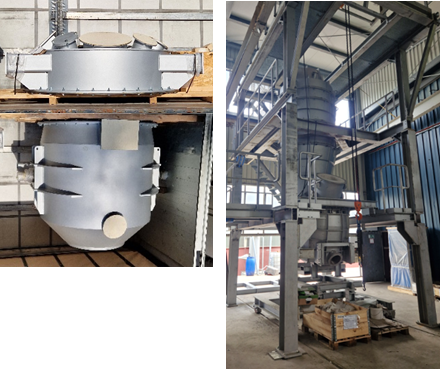 The EU funded FlashPhos project (ESPP member) will soon start pilot tests for thermochemical recovery of elemental phosphorus (P4) from dried sewage sludge (250 kg/h), see photos. The process will operate in three stages (project Conceptual Engineering Report D4.1 29/10/2021, page 13): production of dry sludge dust in a dryer-grinder ; flash conversion of dried, ground sewage sludge to produce heat and an intermediate slag ; then reduction of this slag in a refiner with a reducing agent (e.g. coke) to generate P4 and a final slag. The aim is to valorise this final slag to cement production. Energy to heat the refiner will be provided by electricity. The aim of the project is to demonstrate the process in three pilot units, one for each stage. To date, the dryer-grinder pilot has been built and is operating at a sewage treatment plant. Gasification pre-tests have been performed using a lab tube furnace, 20 cm diameter, 2.5 m high to try out different reaction conditions and evaluate the effect of various additives. Also, synthesised slags intended to be similar to the final process slag have been tested for reactive properties relevant to use to cements. The Flash reactor and Refiner pilots have been constructed and are now nearing completion at ARP GmbH, Leoben, Austria (see photos and drawings), with a capacity of 250 kg/h of dried sewage sludge input. The FlashPhos project includes market and sustainability studies, so the usability of other side products (metal-containing ashes and ferrophos alloy) will be tested. FlashPhos can be seen as follow-up of the EU funded project RecoPhos (2012-2015, see SCOPE Newsletter n°136), in which a small pilot (10 kg/h) inductively heated coke bed reactor was developed and tested at the University of Leoben, Austria, to recover P4 from sludge ash.
Flashphos (EU Horizon 2020 R&D project, 2021-2026), led by University of Stuttgart, with partners including ESPP member Italmatch: https://flashphos-project.eu
Research
Eutrophication – climate change link
Lakes and reservoirs are estimated to emit greenhouse gases equivalent to around one fifth of fossil fuel emissions. One-page summary of links between eutrophication (caused by nutrient losses) and climate change-driving methane emissions. Methane emissions from all inland waters (also including rivers) are estimated at around one fifth of total global methane emissions and increasing eutrophication is expected to cause these emissions to increase worldwide, maybe to double. At the same time, climate change is expected to accentuate eutrophication. The authors indicate that it is therefore important to reduce nutrient losses from sewage works and from agricultural land, including by nutrient management plans, improved irrigation and cropping, addressing soil erosion and dietary changes (lower meat and dairy consumption would mean less phosphorus losses from land producing animal feeds). Remediation of eutrophied lakes and rivers would also contribute to reducing methane emissions. Further research is needed to better understand how eutrophication contributes to aquatic methane emissions in different local conditions, and to identify effective mitigation measures.
“A critical eutrophication–climate change link”, M. Scholz et al., Nature Sustainability 2025 DOI.
Smart phone fluorescence quantification of inorganic phosphates
Lab tests demonstrate use of a fluorescence-emitting compound with a smartphone camera fluorescence analysis app to measure levels of inorganic phosphates in foods. A specifically designed Samarium (Sm, a lanthanide rare earth element) metal-organic framework compound (MOF) was synthetized, based on H4DBB (1,3-di(3′,5′-dicarboxylphenyl)benzene). This gave fluorescence of somewhat different colours with soluble inorganic phosphate ions (PO43-, H2PO4- and (PO3)66 and showed to be structurally stable, pH stable and water resistant. Synthetic ion solution tests showed that the Sm-DBB enabled rapid measurement of concentrations of these different inorganic phosphate ions and that results were not perturbed by presence of 35 different other ions, including halides, metals, organic ions, different nitrogen ions … Tests with food materials involved crushing three different foods (shrimps, marine fish, bacon), stirring with water, then centrifuging and membrane filtration. The Sm-DBB was mixed into the supernatant for initial tests. In a second stage, Sm-DBB test papers were prepared onto which the supernatant could be dripped and then fluorescence measured using a smartphone app (ColorCollect) under UV light.
“Smartphone-Assisted Fluorescence Determination of Inorganic Phosphorus Using a Samarium Metal−Organic Framework”, X. Zhou et al., Inorg. Chem 2025 DOI.
Stay informed
SCOPE Newsletter: www.phosphorusplatform.eu/SCOPEnewsletter eNews newsletter: www.phosphorusplatform.eu/eNewshome
If you do not already receive ESPP’s SCOPE Newsletter and eNews (same emailing list), subscribe at www.phosphorusplatform.eu/subscribe
LinkedIn: https://www.linkedin.com/company/phosphorusplatform
Slideshare presentations: https://www.slideshare.net/phosphorusplatform - Twitter: @phosphorusESPP
YouTube https://www.youtube.com/user/phosphorusplatform
ESPP members
Newsletter about nutrient stewardship - European Sustainable Phosphorus Platform (ESPP)
Please subscribe www.phosphorusplatform.eu/Subscribe
Link to www.phosphorusplatform.eu/eNews093
Download as PDF
Events, surveys
Workshops 21-22 January 2025: proposals for the EU Circular Economy Act and CAP
Phosphorus use and recycling in intensive livestock: 5-7 March 2025
13th March 2025: EU phosphorus “reuse & recycling” targets
June 2025, Bergen, nutrients in aquaculture and fisheries
Perspective from IPW10, August 2024
Survey
Circular Economy policy
Proposals for nutrients in the EU Circular Economy Act
Suez calls for market, policy and enforcement actions to support EU Circular Economy
ECOS: Circular Economy is part of wider resource, climate and pollution objectives
Ragn-Sells: rethink the Waste Hierarchy to enable the circular economy
50% reduction in animal protein needed for EU food system circularity
Stakeholders call for ambitious and holistic Circular Economy vision
Research project proposals for nutrient Circular Economy policies
ESPP new member
BETA Technological Center
EU continues fertilisers imports from Russia
1 billion € EU fertiliser imports indirectly subsidise Russia’s war against Ukraine
Regulatory
Revised EU Urban Waste Water Treatment Directive published
EGTOP proposes definition of “factory farming” for manure
Phosphorus and the EU Battery Recycling Regulation
Nutrient recovery
UK water industry prioritisation of resource recovery opportunities
Stay informed
ESPP members
Events, surveys
Workshops 21-22 January 2025: proposals for the EU Circular Economy Act and CAP
Register now for ESPP’s 2x one-day stakeholder workshops to define policy proposals for
- nutrient recycling in the announced EU Circular Economy Act, and resource recovery from water treatment, agri-food streams and animal by-products. With the European Commission, ACR+, Suez, Eureau …
- nutrient management and recycled nutrients in the EU Common Agriculture Policy (CAP) revision.
Two one-day meetings to develop proposals to input to the European Commission: Tuesday 21st January (Circular Economy) and Wednesday 22nd January (Common Agricultural Policy) January 2025, Brussels and online. Programme, registration: https://www.phosphorusplatform.eu/policy2025
Consult ESPP’s updated draft proposals for the EU Circular Economy Act: https://www.phosphorusplatform.eu/policy2025
To present your proposals at these workshops in Brussels, a very few slots are still available, contact outlining the input you wish to make.
Phosphorus use and recycling in intensive livestock: 5-7 March 2025
5-7 March 2024, Saint Malo, France and online. To participate: pre-register here https://forms.office.com/e/D2RbpJZY57
13th March 2025: EU phosphorus “reuse & recycling” targets
13th March 2025. In Aquatech, Amsterdam RAI and online. Programme and registration https://phosphorusplatform.eu/AquatechWorkshop
Access to Aquatech is free by prior registration https://www.aquatechtrade.com/amsterdam
June 2025, Bergen, nutrients in aquaculture and fisheries
ESPP workshop, with partners in Norway and UNEP uPcycle, on nutrient management in aquaculture feed, seafood processing and fish sludge valorisation, Norway & online, June 2025 (dates tbc), covering nutrient flows, environmental best practice, phosphorus recycling, regulatory challenges. The workshop will contribute to the United Nations (UNEP) project uPcycle, leading to a UNEP white paper on phosphorus sustainability in aquaculture.
If you wish to contribute, please email indications of your organisation’s areas of interest, competence, possible content of presentation, to
Perspective from IPW10, August 2024
Some outcomes of the 10th International Phosphorus Workshop in Dundee Scotland (IPW10), “phosphorus processes in catchments”, by Phil Haygarth, Lancaster University, UK. IPW10 was the 10th in a series of meetings that started in Wexford Ireland in 1995. The IPW meetings are focused on the interactions of phosphorus between land (particularly agricultural land) and water and the dynamics between the two interfaces, as well as phosphorus sustainability and bio geochemical issues. IPW10 was organised by a team from the James Hutton Institute led by Marc Stutter and Sara Trojan, with 72 talks 29 posters, 3 plenary blocks, 12 topic sessions, 4 excursions, 3 workshops, 2 special sessions and a poster session. There were 115 attendees from 19 countries and it was pleasing to see a good gender balance, with. female and early career researchers prominent on the agenda and in positions of leadership. Key topics were:
- phosphorus interactions with carbon and nitrogen cycles,
- ‘legacy’ phosphorus,
- detecting and measuring change in catchments,
- nature based solutions for phosphorus management,
- challenges of alternative fertilisers
- climate change effects on phosphorus processes.
I particularly wish to highlight the topic on climate change, which offered much lively debate and discussion. This is a contemporary, fascinating and meaningful topic, with high future relevance, for both the effects of phosphorus on climate and reciprocal effects of change and phosphorus.
Having had the privilege to attend all IPWs since inception, the IPW focus group and topic are a vibrant meeting space for the phosphorus community, particularly for Europe, but also attracting contributions worldwide.
The next and 11th edition of IPW will take place in Denmark in 2027.
IPW10, the 26th - 30th August 2024 https://congresshub.uk/event/10th-international-phosphorus-workshop-ipw10/
IPW10 plans to lead to a special phosphorus science issue in the Journal of Environmental Quality
Survey
Survey on Product Environmental Footprint Category Rules (PEFCR) for bio-based fertilisers. The EU-funded R&D project Novafert would like to hear your opinion, in order to help shape the project’s proposals on PEFCR options.
Novafert survey, takes less than five minutes https://www.novafert.eu/survey-towards-product-category-rules-for-bio-based-fertilisers/
Circular Economy policy
Proposals for nutrients in the EU Circular Economy Act
The European Commission has announced a “Circular Economy Act”. Contribute to our joint stakeholder input. Draft proposals here for comment. Join the workshop to develop these proposals, Brussels & online, 21st January 2025. ESPP’s draft proposals, for discussion, cover: overall policy objectives and coordination, market uptake of recycled nutrients, nutrients in the CAP (back-to-back CAP workshop, 22nd January), waste regulations, pilot plants, animal by-products, animal feed, taxonomy, standards, the Critical Raw Materials Act, nutrient data.
Draft proposals and 21st January workshop registration: https://www.phosphorusplatform.eu/policy2025
Suez calls for market, policy and enforcement actions to support EU Circular Economy
ESPP member, Suez, says the new EU Circular Economy Act should address market conditions for secondary raw materials because investments made in recycling facilities are today not able to turn at full speed. Key barriers identified are “dumping” imports of recycled materials, market prices of virgin materials lower than that of recycling, lack of financial incentives and insufficient control and implementation of regulatory obligations with absence of penalties when these are not met.
Specific actions proposed relevant to nutrient and organic recycling include:
- Minimum recycled content requirement on final products
- Investment support for recycling facilities
- Harmonised European End-of-Waste criteria (exists today for fertilising products, but not for industrial uses of phosphorus or other elements)
- Reduce micro-pollutants and apply the polluter payer principle to fund treatment
- Improve monitoring of PFAS
- Encourage water reuse alongside water use efficiency
- Develop nutrient recycling from sewage sludge and sludge reuse in agriculture
- Incentivise biomethane, using feed-in tariffs, by including biomethane and digestate in carbon credits and with use of digestates as fertilisers
“Circular Economy Act 2024. SUEZ’s comments and recommendations”, December 2024.
ECOS: Circular Economy is part of wider resource, climate and pollution objectives
Environmental NGO, ECOS (Environmental Coalition on Standards) position on Circular Economy emphasises a systems approach (narrow, slow, close, cycle, regenerate*) integrating waste prevention and resource management.
This requires EU policies to integrate a systems perspective and comprehensive transition, addressing both enablers and barriers to circularity, including new business models, lifestyle changes and cultural norms. ECOS calls for an EU target to reduce absolute consumption of resources, to keep the EU material footprint within the planetary boundaries of 5 t/capita/year (compared to nearly 15 t in 2022**) and an EU policy Sustainable Resource Management Framework. Waste prevention targets should be specified for different sectors and waste streams. The importance of avoiding toxic substances which can hinder recycling is underlined: ESPP notes that this is relevant for recycling of organics such as sewage biosolids or manure. ECOS makes proposals for the Ecodesign Regulation, including impacts of intermediates such as steel and chemicals used in manufacture, repairability and resale of products, market surveillance and enforcement in particular for online and import. ECOS makes specific proposals for plastics, textiles, vehicles, buildings and construction. For the bioeconomy, ECOS underlines the importance of cascading use, in particular avoiding combustion for energy of organic materials which can be valorised in other applications (material or agronomic value). ECOS recommends to better regulate green claims regarding recycling, to ensure that such claims take into account resource consumption and product lifetime, and calls for a "mandatory and unified”" EU approach to GPP (Green Public Procurement) to promote circularity and environmental performance.
* See e.g. “Circular ecosystem innovation: an initial set of principles”, Konietzko et al. 2020 DOI: Narrow = use less, Slow = use longer (durability, repair), Close = use again, Regenerate = make clean.
** Eurostat https://www.eea.europa.eu/en/analysis/indicators/europes-material-footprint .
“Recommendations for a Circular Economy Act”, ECOS, 12th September 2024 HERE.
Ragn-Sells: rethink the Waste Hierarchy to enable the circular economy
Leading waste and recycling company makes proposals to revise the EU definition of waste and the Waste Hierarchy to ensure a fair market for recycled resources. Ragn-Sells (ESPP member) is the leading waste management company in Scandinavia, actively developing a range of material recovery and recycling value chains. The company calls for a paradigm shift – from waste to resources - a new society approach, considering waste as a sustainable resource, requires extensive reforms of legislation and taxes. The overall objective of policy should not be the reduction of waste but the reduction of natural resource extraction and this should be the first principle of a revised Waste Hierarchy. To support this, mining and extraction wastes should be subject to the same landfill taxes as ‘waste’, with some form of Border Adjustment Mechanism for imported products containing virgin resources. To ensure a fair market, secondary raw materials should be subject to the same regulations as virgin raw materials. In particular, standards and authorisations should be based on material quality, not origin. A further key principle, currently missing from the Waste Hierarchy, is the avoidance of toxic contaminants which are an obstacle to reuse and recycling and the Polluter Pays Principle to ensure that those introducing contaminants into material cycles cover full costs of their removal and treatment.
Ragn-Sells suggests to replace the current EU definition of waste (something which the holder discards, intends or is obliged to discard) by:
- no economic value
- no information on content, so preventing recycling
- containing contaminants preventing recycling
- illegal or unsuitable for recycling
Ragn-Sells calls to replace the Waste Hierarchy with a policy which aims to reduce the need to extract virgin resources. Current ‘recycling targets’ often fail to do this because they do not include the requirement to replace consumption of virgin materials, so that use as ‘bulking’ in construction materials or landscaping can ‘count’ as recycling. Targets should instead be defined as % of recycled content in used materials. Recycling targets should ensure that recovered materials have a market to replace virgin materials, and that contaminants are removed from the cycle. Also, production of waste should not be penalised when resulting from depollution activities (water treatment, offgas treatment). Regulations banning uses of recycled materials, because of their origin, should be not applicable when safety and quality comparable to virgin materials is demonstrated (examples: current exclusion of cat.1 animal by-product ashes, potassium from waste incineration ashes, nutrients from aquaculture fish sludges, from EU fertilisers; EU exclusion of purified minerals from sewage or manure ashes in animal feed).
The correct action should not be fixed by today’s rigid Waste Hierarchy, instead the condition of the resource should decide what is the best treatment method. This approach can for example consider waste incineration plants with energy recovery as detoxification and resource hubs when valuable resources that are contaminated need to be extracted, whereas at present they are the always the second-to-last option in the Waste Hierarchy. Incineration eliminates organic contaminants, concentrates mineral resources and enables removal of heavy metal contaminants. CO2 should also be treated as a potential resource, with CCU (carbon capture and use) policies that enable production of raw materials from urban flows where captured CO2 is a needed component.
“From waste to resource plants: The need for a paradigm shift in principles and policies”, Ragn-Sells 17th June 2024.
“Ragn-Sells’ view on Circular Economy”, 2023 (12 pages) https://www.ragnsells.com/globalassets/ragnsells.com/documents/ragn-sells-view-on-circular-economy2023.pdf
50% reduction in animal protein needed for EU food system circularity
Researchers suggest a circular EU food system could reduce farmed land surface by over 70% (or increase food exports) and per capita greenhouse emissions by 30%. A “radical redesign” of the livestock sector is needed. Total livestock production would be reduced with diets shifting from 60:40 animal:plant protein currently to 35:65, and total diet protein intake would decrease from c. 100 to 60- 80 g/person/day (ETA-Lancet guideline is 64g: see ESPP eNews n°48), that is a -50% reduction in per capita animal protein in diet. Animals are however needed for circularity, in particular dairy and aquaculture fish. The necessity of crop rotations, to ensure soil fertility, would require significant changes in agricultural practice, and also drives production of nitrogen-fixing fodder crops. Because lower animal numbers would reduce manure available for fertilisation, nutrient recycling from waste streams would be essential, in particular phosphorus from sewage. This would be inadequate for crop production and mineral fertilisers would continue to be needed. Mineral P fertiliser use is estimated at around half current use in the scenario where agricultural land use is reduced, up to around +50% more than current use in the scenario where land is used to produce food for export. Circularity of the food system is thus coherent with considerably reducing land use (enabling biodiversity restoration) and per capita greenhouse emissions reductions, as well as healthier diets, but requires changes across all components of the agriculture, food and recycling system.
“Circularity in Europe strengthens the sustainability of the global food system”, H. Van Zanten et al., Nature Food, 2023 DOI.
“Circularity in animal production requires a change in the EAT-Lancet diet in Europe”, B. van Selm et al., Nature Food, 2022 DOI.
“The role of farm animals in a circular food system”, H. van Zanten et al., Global Food Security, 2019 DOI.
See also Hannah van Zanten in ESPP eNews n°62 and ongoing updates to this work at https://www.researchgate.net/profile/Wolfram-Simon
Stakeholders call for ambitious and holistic Circular Economy vision
Joint open letter signed by 14 organisations calls to move focus from waste management to resource use reduction and for policies including tax shifts and trade tariffs (CBAM), extension of EPR, public procurement, safe chemicals. The signature NGOs and business organisations * underline that despite the European Commission’s first and second Circular Economy Action Plans, EU overall circular material use rate has stagnated (10.7% in 2010, 11.5% in 2022**) and call for policy to address materials and resources, rather than focussing only on waste management, with binding EU resource use reduction targets on material and consumption footprints. They call for high-level policy coordination, suggesting having a dedicated European Commissioner for Circular Economy. Specific policy proposals include:
- Shifting tax burden from jobs to raw materials (see also Ex’Tax proposals in ESPP eNews n°6),
- Include Circular Economy criteria in trade policy, for example by extending the CBAM (Carbon Border Adjustment Mechanism) to cover raw materials resource intensity in imported products,
- Improve Extended Producer Responsibility (EPR), to focus on prevention, recyclability, recycled content and high quality recycling,
- Binding and qualitative targets for product lifetime, reuse and repair,
- Policies for a circular single market, referring to Enrico Letta’s report for Council, April 2024, which proposes
- ensure a level playing field for circular materials, products and services, e.g. by digital product passports, Ecodesign,
- stimulate demand for circular material, e.g. by recycled content requirements
- EU End-of-Waste criteria and harmonisation of waste classifications across Member States
- standards for circular products and materials (European standards organisations)
- use of biomass for high value applications such as materials and chemicals
- challenges and opportunities in the water sector
- financial support, e.g. EU Innovation Fund, European Investment Bank
- more European, more competitive public procurement with clear social value goals (not only ‘lowest price’) - Public Procurement: update the EU Public Procurement Directive 2014/24 to include circular economy incentives and penalties
- Support the actions of local and regional authorities. See proposals of the Circular Cities Frontrunner Group:
- support city and region actions, particularly with funding for scale-up (beyond pilots) and support for capacity building
- binding EU material footprint and material circularity targets
- fiscal shift away from linear tax systems
- public procurement support of circular businesses
- de-risk private investment in circularity - EU financial investment support for prevention, re-use and recycling
- Safety: implement the EU Chemicals Strategy for Sustainability measures to phase out chemicals susceptible to hinder recycling
- Implementation of policies and actions against non-compliance
* Signatory stakeholders: Business for a Better Tomorrow, rreuse, Institut cirkulární ekonomiky, Changing Markets Foundation, ECOS (Environmental Coalition on Standards), CSCP (Collaborating Centre on Sustainable Consumption and Production), New ERA (European Reuse Alliance), ACR+ (Association of Cities and Regions for Sustainable Resource Management), EEB (European Environmental Bureau), Zero Waste Europe, Reloop, Circle Economy Foundation, Fair Resource Foundation,
** European Environment Agency https://www.eea.europa.eu/en/analysis/indicators/circular-material-use-rate-in-europe
Joint open letter to the new European Commission, 4th November 2024: https://zerowasteeurope.eu/wp-content/uploads/2024/11/Circular-economy-open-letter-to-MEPs-04.11.2024.docx.pdf
“Much more than a market: speed, security, solidarity. Empowering the Single Market to deliver a sustainable future and prosperity for all EU Citizens”, Enrico Letta for European Council April 2024, 147 pages https://www.consilium.europa.eu/media/ny3j24sm/much-more-than-a-market-report-by-enrico-letta.pdf
“Open Letter from the Circular Cities Frontrunner Group. Accelerate the circular economy for a prosperous and competitive Europe”, Amsterdam, Vittoria-Gasteiz, Milano, Turku, Copenhagen, Leuven, Malmö, Porto, 1st October 2024 https://openresearch.amsterdam/image/2024/9/30/circular_cities_advocacy_group_letter_and_attachment_final.pdf
Research project proposals for nutrient Circular Economy policies
Analysis for ESPP identifies over 40 policy proposals made by R&D projects, covering a range of EU regulations, markets for recycled nutrients, stakeholder engagement and research. Over 600 R&D projects were contacted and 26 relevant policy proposal documents were identified from more than 20 R&D projects then grouped by theme or object. Most identified proposals concern EU policies and regulations including the Common Agricultural Policy and Organic Farming, EU Fertilising Products Regulation, water and waste regulations and overall policy (INMAP, Circular Economy). Proposals supported by a significant number of projects include: simplifying acceptance of recycled nutrients under EU and national fertilisers regulations ; developing an official definition of “bio-based fertilisers” ; providing policy, regulatory and/or financial market support for recycled nutrients. Beyond these shared trends, the analysis shows a rich variety of proposals across various themes from the different R&D projects.
Further comments and input to this document are welcome if there are R&D project policy proposal documents have been missed, or policy recommendations which are not included.
“Summary of R&D project policy proposals on nutrient circular economy”, Daniel Frank www.danielfrank-communications.com for ESPP, 2 January 2024. Document online here: https://www.phosphorusplatform.eu/policy2025
This analysis will be presented at ESPP’s stakeholder workshop on proposals for the EU Circular Economy Act, 21st January, Brussels and online: https://www.phosphorusplatform.eu/policy2025
ESPP new member
BETA Technological Center 
The mission of BETA Technological Center is to improve the competitiveness and the quality of life of rural societies. Sustainable nutrient management is an important topic for BETA TC’s actions. BETA TC participates in and leads national and International research projects and cooperation with companies, public administrations and social entities. BETA TC offers a wide range of innovative solutions and services, through applied research and development in seven complementary fields of expertise:
- Environmental Technologies and Circular Bioeconomy,
- Applied Ecology and Global Change,
- Sustainable Food & Farming Systems,
- Sustainability Accounting and Optimization,
- Green Digital Transition,
- Governance for Sustainability,
- Knowledge Transfer and territorial-sectorial projects.
One of the main topics targeted by BETA is the sustainable nutrient management. In this regard, we are working with the valorisation of nutrient-rich by-products to produce bio-based fertilisers that can substitute synthetic fertilisers, promoting a sustainable and low-emission agri-food system. Through advanced technologies, we monitor and optimise the use of nutrients to ensure environmental, economic and social balance in agricultural systems.
BETA TC is excited to become a member of ESPP because this offers unique opportunities for networking with different stakeholders working on sustainable phosphorus management. ESPP is organises and promotes relevant events and initiatives, enabling meaningful discussions and collaborations, and its joint document discussions foster collective progress on critical issues. Being part of ESPP allows us to access valuable knowledge and insights from leading experts, to enhance our efforts in phosphorus sustainability and align with best practices in the field.
EU continues fertilisers imports from Russia
1 billion € EU fertiliser imports indirectly subsidise Russia’s war against Ukraine
Fertilizers Europe (ESPP member) says EU policies have led to increased fertiliser imports from Russia since 2021. Hundreds of millions of € of European taxpayers’ money, via CAP payments, are indirectly funding Putin’s war. The biggest EU importers of Russian fertilisers are Poland, France and Germany. The EU has exempted fertilisers from sanctions or tariffs on Russian imports, whereas European fertiliser production is heavily penalised by high natural gas and phosphate rock prices. The EU fertilisers industry is being driven to closure, and European farmers are increasingly dependent on Russia. The European Commission confirms that Russian fertiliser imports are today significantly higher than before Russia attacked Ukraine (see ESPP eNews n°92). Fertilizers Europe states that EU imports of urea from Russia have more than doubled since 2021 whereas much of the EU’s ammonia production is still today shut down (over 2/3 of European production was shut down in 2021). This situation makes the EU dependent on Russia for fertilisers, and if it continues and leads to permanent fertiliser industry closures in Europe, will make the EU dependent on Russia for food supply.
In 2023, Russia introduced a 10% export duty on fertilisers, and in 2024 a special tax on profits. The Moscow Times says that EU imports of Russian fertilisers were 1.1 bn € in 2024, so export duty collected by the Russian government would be 110 M€. Fertilizers Europe estimates that Russia’s fertilisers industry contributes 600 M€ to the Putin administration’s special tax on profits. ESPP notes that a significant part of EU farmers’ income comes from EU CAP subsidies* so that part of these tariffs and taxes collected by the Russian government is coming from the EU public finances. The 1.1 bn€ Europe is paying for Russian fertilisers is around 2% of the EU’s annual CAP budget of 54 bn€ and around 1% of the total EU budget. EU dependency on Russian fertilisers is also increasing greenhouse emissions, because European fertiliser producers have significantly lower emissions per tonne production than imports, and because Russian urea is replacing fertilisers with lower nitrogen losses in use.
Fertilizers Europe calls on the EU to change its policies to support EU fertiliser production, in order to enable fertiliser supply to EU farmers at accessible prices, without dependency on Russian imports and without funding Russia’s war against Ukraine, and to support EU fertilisers producers in moving away from natural gas production of ammonia (Haber Bosch) to green ammonia (from renewable electricity). ESPP underlines that supporting recycled fertilisers (N and P) and nutrient recycling would also contribute to these objectives.
“Beyond gas. The risks of fertilizer dependence for the EU” and “EU imports of Russian fertilizer financing the war”, Fertilizers Europe website, December 2024 https://www.fertilizerseurope.com/beyond-gas-the-risks-of-fertilizer-dependence-for-eu/
“Russian Fertilizer Exports to EU Jump 43% Year-on-Year”, Moscow Times, 9th October 2024 https://www.themoscowtimes.com/2024/10/09/russian-fertilizer-exports-to-eu-jump-43-year-on-year-a86633
“Supporting European farmers’ incomes through Common Agricultural Policy direct aids: facts and questions”, V. Chatellier, H. Guyomard, Rev Agric Food Environ Stud 104, 87–99 (2023). https://doi.org/10.1007/s41130-023-00192-8 or https://hal.inrae.fr/hal-04044282/document
Regulatory
Revised EU Urban Waste Water Treatment Directive published
Recast Directive requires sewage phosphorus “reuse and recycling rates” to be defined by January 2028, evaluation of nitrogen recovery by 2033, fixes more stringent P and N discharge limits, addresses contaminants in sewage. The new Urban Wastewater Treatment Directive 2024/3019 effectively replaces the 1991/271 UWWT Directive. The Commission estimated that the Directive proposal would add c. 2.3% to water tariffs (see ESPP eNews n°71).
The recast Directive requires that sewage phosphorus reuse and recovery rates be fixed as follows (art. 20):
- “The Commission shall adopt … by 2 January 2028 … delegated act … (to specify) a combined minimum reuse and recycling rate for phosphorus from sludge and from urban wastewater not reused … taking into account available technologies, resources and the economic viability of phosphorus recovery as well as the phosphorus content of the sludge and the level of saturation of the national market with organic phosphorus from other sources while ensuring that there is safe sludge management and no adverse impact on the environment or human health.”
Concerning N-recovery, art. 30 specifies, as one of ten questions to be addressed in the evaluation of the Directive by the Commission by 31st December 2033: “the feasibility and appropriateness of setting Union minimum reuse and recycling rates for nitrogen from sludge or from urban wastewater, or both”
Other important changes from the existing 1991/271 UWWT Directive, relevant to nutrients, include:
- More stringent discharge limits for phosphorus and nitrogen (art. 7 and Annex I):
- 0.5 / 0.7 mgPtotal/l or 90% / 87.5% P removal, for wwtps > 10 000 / 150 000 p.e. (was 1-2 mgl/ or 80%),
- 8 / 10 mgN/l or 80% N removal (was 10-15 mg/l or 70-80%),
- these limits would be applicable (as before) to all wwtps > 10 000 p.e. in eutrophication Sensitive Areas (art. 7.3),
but additionally would be applicable to all wwtps > 150 000 p.e. even if not in Sensitive Areas (art. 7.1),
- the concept of Less Sensitive Areas is abolished (previously required less treatment). - “Energy neutral” by 2040 (art. 11). Energy neutrality is defined as “total renewable energy produced at wwtps” versus total energy used by the plants. Calculation is as a national total, not per wwtp, and covers all wwtp > 10 000 p.e. The possibility of waste water treatment reaching climate neutrality will be evaluated by 2033 (art. 30).
- Collection and secondary treatment of wastewater for all agglomerations > 1 000 p.e. (was 2 000 p.e.) (art. 3.2, 6.3).
- A new concept of “Quaternary treatment” is introduced. (art. 8 and Annex I). This requires at least 80% removal of indicator organic pollutants. It would be obligatory for all wwtps > 150 000 p.e. and for all wwtps > 10 000 p.e where a pollution risk is identified, or discharging into bathing waters, etc.
- “Extended producer responsibility” (EPR, art. 9 & 10 and Annex III) will be implemented for pharmaceuticals and cosmetics only, such that companies placing these on the market must cover the full costs of monitoring and quaternary treatment. Possible extension of EPR to other products (micropollutants in urban wastewater) will be evaluated by 2033 (art. 30).
- The Commission will develop and adopt by 2027 methodologies for measuring microplastics in wastewater and in sludge, and PFAS in wastewater, and then these must to be monitored in wwtps > 10 000 p.e. (art. 21).
- Promote water reuse, taking appropriately into account nutrient management (art. 15).
- A new concept of “Integrated urban wastewater management plans” is obligatory for all agglomerations > 100 000 p.e. and all > 10 000 p.e. where stormwater or urban runoff meet certain conditions (art. 5, Annex V).
- New definitions of “sludge”, “micro-pollutant”, “antimicrobial resistance”, “tertiary treatment”, “quaternary treatment” … and modified definitions of “urban wastewater”, “domestic wastewater”, “non-domestic wastewater’ (replaces and widens the definition of “industrial wastewater”). The definition of “appropriate treatment” disappears (was previously required for smaller wwtp) (art. 2).
NOTE: the above obligations are the final requirement in the future, at specified date deadlines, with in some cases intermediate levels fixed for certain date horizons and/or certain exemptions. The articles/annexes cited refer to the new Directive 2024/3019 (not to the numbering in the 1991/271 Directive). The above is in many cases a simplification, please refer to the published Directive legal text for precise detail.
ESPP welcomes this new Directive as ambitious and pragmatic to continue to improve Europe’s water quality, to further limit phosphorus and nitrogen losses, to move towards the nutrient Circular Economy and to address emerging pollutants, in particular PFAS, pharmaceuticals and micro-plastics.
EU Directive “concerning urban wastewater treatment” 2024/3019 of 27th November 2024. European Commission website: https://environment.ec.europa.eu/topics/water/urban-wastewater_en Full Directive legal text: https://eur-lex.europa.eu/legal-content/EN/TXT/?uri=OJ:L_202403019https://eur-lex.europa.eu/legal-content/EN/TXT/?uri=OJ:L_202403019
EGTOP proposes definition of “factory farming” for manure
The EU expert committee has proposed criteria for the acceptance of manure and other animal by-product (ABP) derived fertilisers in certified Organic Farming. The Expert Group for Technical Advice on Organic Production (EGTOP) was requested by Member States and the European Commission to advise of the current wording “factory farming origin forbidden” in Regulation 2012/1165 (list of products and substances for use in Organic Farming) which limits use of recycled nutrients from manures and other ABPs from conventional farming. EGTOP notes “the need and demand to compensate for “exporting” and loosing nutrients from the farm and to compensate by “importing” external organic fertilisers from animal husbandry and/or recycled by-products and waste seems necessary to close the nutrient cycle and to maintain plant yields in organic farms”. EGTOP reviewed a range of criteria for livestock production methods, such as farm size (livestock numbers), slatted floors, air quality, feedstuff origin, animal pharmaceuticals, animal ‘longevity’, energy use, but concluded for simple set of criteria for the present, whilst recommending possible future criteria separating between stable / space / fresh air barn / outdoor run / Organic.
For the present, EGTOP recommends to replace the “factory farming” wording by criteria based on the origin of the material (that is, criteria concerning the livestock farms producing the manure or ABP), the processing the material has undergone and the application rate (on the use Organic farm). That is, materials from
- farms using lifelong caging: not allowed
- non-Organic farms, animal husbandry method unknown: unprocessed material = not allowed, material composted or digested according to requirements of the EU Fertilising Products Regulation CMC 3 or 5: 100 kgN/ha/y
- non-Organic farms, known to not use lifelong caging: unprocessed = 125 kgN/ha/y, composted or processed as above = 170 kgN/y
- from Organic farms, processed or not: 170 kgN/ha/y
The Opinion suggests that these criteria should apply to all ABP materials currently listed in 2012/1165 as authorised for use as fertilisers in certified Organic Farming: manures, egg shells, recovered struvite and precipitated phosphates, specified animal by-products. ESPP notes that “Composted or fermented household waste” (i.e. from food waste or biowaste), which is authorised in the Organic Farming regulations 2012/1165 without the specification “Factory farming origin forbidden”, is presumably not concerned by this EGTOP Opinion despite probably containing non-Organic origin animal by-products.
ESPP welcomes this proposal which is clear, pragmatic and feasible to implement and verify, and which will open opportunities of appropriate recycling of manure and ABP nutrients in Organic Farming, resolving the current exclusion of such nutrient recycling by unclear and variable interpretation of the current “factory farming” wording. ESPP hopes that this EGTOP proposal can be rapidly integrated by the European Commission into the EU Organic Farming regulations.
EGTOP Opinion “Criteria for the use of animal-derived fertilisers form conventional farming replacing the term ‘factory farming’”, adopted 10th June 2025, HERE.
Phosphorus and the EU Battery Recycling Regulation
ESPP has written to the European Commission requesting that phosphorus should be included in battery recycling obligations because it is a Critical Raw Material and use in batteries is becoming significant with roll-out of Lithium Iron Phosphate batteries = LFP (see ESPP’s SCOPE Newsletter n°151).
The EU Battery Recycling Regulation 2023/1542 does not refer specifically to phosphorus, but includes in Annex VI the obligation for EU Critical Raw Materials (CRMs), that labelling must indicate CRMs present at > 0.1% by weight. This concerns both phosphorus (the element in any form = the EU CRM “Phosphate Rock”) and P4 derivates (the EU CRM “Phosphorus”). The Battery Recycling Directive specifies in Annex XII overall recycling targets by % total weight of the battery (“rate of recycling efficiency”, Annex XII part B) and specific material recovery targets for five elements (Annex XII part C): cobalt**, copper**, lithium**, nickel** and lead. The first four of these are on the EU Critical and Strategic Raw Materials List, lead is not.
A draft ‘daughter’ Delegated Regulation defining calculation methods for the battery recycling required and defined (in point 3) calculation for the five specific materials (Annex XII part C of 2023/1542) and (in point 2) calculation for the % of total weight recycling (Annex XII part B of 2023/1542). For this calculation of the “rate of recycling efficiency”, the draft text (point 2-5) indicates that “Oxygen, carbon from carbon sources at cell level, iron from iron sources at cell level, phosphorus, chlorine, and sulphur may be taken into account …”. However, the tables specifying what must be documented for the rate of recycling efficiency and recovery of materials (points 7 and 9 of the draft) specifies: cobalt**, copper**, lithium**, nickel**, manganese**, aluminium, phosphorus*, chlorine, sulphur, iron (steel) and oxygen.
ESPP suggests that Annex XII of 2023 Battery Recycling Regulation should be modified to add phosphorus to the list of five elements with specific recycling targets, because ‘Phosphate Rock’ is an EU Critical Raw Material and because Lithium Iron Phosphate batteries is today the dominant battery technology (electric vehicles and grid storage). ESPP also suggests that, in the proposed ‘daughter’ Regulation (defining calculation methods), the currently proposed wording of point 2: “may be taken into account” (optional ?) is very unclear and does not correspond to the wording of the tables in points 7 and 9 which seem to specify certain elements as obligatory, and that the lists of elements in point 2 and points 7 and 9 are not coherent. ESPP suggests that phosphorus should necessarily be taken into account in calculating the “rate of recycling efficiency” if present at >0.1% of total weight (in coherence with the labelling requirement of 2023/1542 Annex VII). This is important because both via purified phosphoric acid and P4 derivatives are essential for different battery components: fire safety of plastics and composites (battery casings, structures, electrical insulation, cables and connectors, cell separator membranes), cathode materials (LFP batteries), organic electrolytes of lithium ion batteries (lithium fluoro phosphate).
Draft Delegated Regulation “supplementing Regulation (EU) 2023/1542 … by establishing the methodology for calculation and verification of rates for recycling efficiency and recovery of materials from waste batteries, and the format for the documentation”, public consultation October 2024 (closed) here.
** = on EU lists of Critical and Strategic Raw Materials; * = on EU list of Critical Raw Materials, as specified in the EU Critical Raw Materials Act 2024/1252, Annexes I and II.
Nutrient recovery
UK water industry prioritisation of resource recovery opportunities
UKWIR identifies existing flows (grit, fats-greases, heat) as first option; phosphorus and nitrogen as aligned to core business and with technology available; and possible opportunities for CO2, cellulose, biochar/HTC and hydrogen. This 150 page report by UK Water Industry Research (the UK water industry’s joint research organisation) is developed to provide input to the UK government’s national bioresources strategy and to prioritise resource recovery opportunities from wastewaters. It is based on input from all the UK water companies, a workshop with over 40 stakeholders and interview with a dozen organisations. This concluded that priority objectives are environmental and net zero climate impacts of processes, circularity and nutrient management/soil health. 79 possible materials potentially recoverable from wastewater were screened: sludge, liquors or gases was considered, including various nutrients (P, N, S, metals), biogas, hydrogen, carbon dioxide, iron phosphate, various forms of organics (biochars, algae, biodiesel, cellulose, chitosan, VFAs*, PLA*, vanillin, and others) … The report assesses: technological readiness level for recovery processes, purity of recovered resource, potential markets (applications, market access, prices) and compatibility with existing assets (current wastewater treatment plants). Conclusions are that the first priority is to optimise valorisation of flows already separated: grit, screenings (separated by large-grid wastewater inflow screens, use: composting or pyrolysis), ashes (use in construction or road foundations), FOG (fats, oils and greases, uses: refining to lubricants, anaerobic digestion, combustion to energy) as well as heat. Phosphorus and ammonia recovery “should be undertaken”, because considered as aligned to the core business function of wastewater treatment and because viable technologies are available. Potential uses for phosphorus are identified only as fertiliser, or phosphoric acid for fertiliser production. Potential uses for ammonia are identified as fertilisers, chemical manufacture or compressed ammonia as a fuel. Other potentially interesting resources cited are carbon dioxide (by membrane separation from biogas from sludge anaerobic digesters, where this is upgraded to biomethane), cellulose and possible pyrolysis/HTC materials (biochars, hydrochars). Hydrogen production may in the future be preferable to biogas production. Key noted questions for future implementation include possible pressures on current valorisation of sewage biosolids to agriculture, regulatory challenges (e.g. end-of-waste status), markets for recovered resources and government policies.
“Response to national bioresources strategy – prioritisation of resource recovery opportunities”, UKWIR (UK Water Industry Research”, Report Ref. No. 24/SL/12/06, ISBN 978-1-83872-004-9, 2024 https://ukwir.org/water-industry-research-reports
VFA = volatile fatty acid. PLA = polylactic acid
Stay informed
SCOPE Newsletter: www.phosphorusplatform.eu/SCOPEnewsletter eNews newsletter: www.phosphorusplatform.eu/eNewshome
If you do not already receive ESPP’s SCOPE Newsletter and eNews (same emailing list), subscribe at www.phosphorusplatform.eu/subscribe
LinkedIn: https://www.linkedin.com/company/phosphorusplatform
Slideshare presentations: https://www.slideshare.net/phosphorusplatform - Twitter: @phosphorusESPP
YouTube https://www.youtube.com/user/phosphorusplatform
ESPP members
Newsletter about nutrient stewardship - European Sustainable Phosphorus Platform (ESPP)
Please subscribe www.phosphorusplatform.eu/Subscribe
Link to www.phosphorusplatform.eu/eNews092
Download as PDF
Events
19 December 14h: ESPP General Assembly
21-22 January 2025: proposals for the new EU Circular Economy Act and CAP
Phosphorus use and recycling in intensive livestock: 5-7 March 2025
13th March 2025: EU phosphorus “reuse & recycling” targets
June 2025, Bergen, nutrients in aquaculture and fisheries
Call for abstracts: Ramiran
Call for experts
Policy
Proposals for EU Circular Economy Act
Revised Urban Waste Water Treatment Directive validated
Norway assessing safety of sewage sludge use in agriculture
ESPP asks for EU safety assessment of phosphates from ash for animal feed
Phosphorus in COP29 Ragn-Sells workshops
ESPP calls for Critical Raw Material Act action for phosphorus
Fertilisers
EU Fertilisers Expert Group meeting 26-27 November 2024
Call for data and examples on certain recycled nutrient streams
CEN call for experts and for laboratories
EU rules for national nutrient statistics
Cheap fertilizers from Russia - a threat to the EU economy
ESPP new Members
CleanMatter - phosphorus recovery by electrolysis
SYNECO
Politecnico di Milano
Wien Energie
Stay informed
ESPP members
Events
19 December 14h: ESPP General Assembly
ESPP General Assembly (members only). ESPP actions 2025, budget 2025, ESPP positions on Circular Economy Act, Urban Waste Water Treatment Directive phosphorus reuse and recycling targets.
Online. Contact
21-22 January 2025: proposals for the new EU Circular Economy Act and CAP
Registration is open for ESPP’s back-to-back one-day stakeholder workshops to define joint policy proposals for
- nutrient recycling under the announced EU Circular Economy Act, and resource recovery from water treatment, agri-food streams and animal by-products
- nutrient management and recycled nutrients in the EU Common Agriculture Policy (CAP) upcoming revision.
The new EU Circular Economy Act is under preparation. This will follow the second Circular Economy Action Plan (March 2020), but is expected to be a Regulation and not simply a Commission plan (see mission letter for the new Commissioner for Environment, Water Resilience and a Competitive Circular Economy). This means that it could include changes to existing Regulations (e.g. waste, chemicals, industry site permitting, animal by-products) and that it will be discussed by and possibly amended by Council (Member States) and European Parliament. ESPP aims to develop ambitious policy proposals.
The Common Agricultural Policy represents over 40% of the EU budget. The current CAP runs from 2023 to 2027. An interim evaluation report is expected in 2025. ESPP will develop proposals for integrating nutrient management (including the Green Deal and UNEP Biodiversity Convention 50% nutrient loss reduction objective) and nutrient recycling into the future CAP revision.
Two one-day meetings to develop proposals to input to the European Commission: Tuesday 21st January (Circular Economy) and Wednesday 22nd January (Common Agricultural Policy) January 2025, Brussels and online. Programme, registration: https://www.phosphorusplatform.eu/policy2025
Consult and input to draft proposal for the EU Circular Economy Act: https://www.phosphorusplatform.eu/policy2025
Phosphorus use and recycling in intensive livestock: 5-7 March 2025
Can intensive livestock be more phosphorus efficient than extensive or organic farming ? Looking at P flows, P efficiency in feed, P-recycling, best nutrient management practices. UNEP uPcycle workshop, organised by BETA Technology Centre (University of Vic), with ESPP, hosted by Cooperl (the Brittany pig farm cooperative) and Roullier (feed and fertilisers). With site visits to the Minerallium (chemistry of minerals and phosphates), Roullier fertiliser and feed production and research, Cooperl experimental livestock technology research farm and Cooperl’s manure and animal by-product reprocessing to energy and organic fertilisers. This workshop will be limited to 60 participants, with representatives of livestock farmers organisations, meat and dairy processers and distribution, animal feed industries, with selected experts from science and from P recycling.
5-7 March 2024, Saint Malo, France and online. To participate: pre-register here https://forms.office.com/e/D2RbpJZY57
13th March 2025: EU phosphorus “reuse & recycling” targets
Workshop In Aquatech, Amsterdam RAI, on the revised EU Urban Waste Water Treatment Directive, coagulants (iron/aluminium salts), phosphorus removal and P “reuse and recycling” targets. How can coagulants contribute to achieving the revised Urban Waste Water Treatment Directive P-removal requirements? Impacts of coagulant use on Fe/Al concentrations in sewage sludge, on sludge digestion and methane production. Fe/Al and crop P availability in sewage sludge (phosphorus “reuse”) and in sewage sludge biochars/hydrochars. Impacts of Fe/Al in sludge on P-recovery processes: in sewage works, from sewage sludge ash. Routes to increase P-recovery rates in P-recovery upstream of sludge valorisation in cement production.
13th March 2025. In Aquatech, Amsterdam RAI and online. Programme and registration https://phosphorusplatform.eu/AquatechWorkshop
Access to Aquatech is free by prior registration https://www.aquatechtrade.com/amsterdam
See ESPP first workshop on iron-phosphate interactions (2020) www.phosphorusplatform.eu/scope138
June 2025, Bergen, nutrients in aquaculture and fisheries
ESPP workshop, with partners in Norway and UNEP uPcycle, on nutrient management in aquaculture feed, seafood processing and fish sludge valorisation, Norway & online, June 2025 (dates tbc), covering nutrient flows, environmental best practice, phosphorus recycling, regulatory challenges. The workshop will contribute to the United Nations (UNEP) project uPcycle, leading to a UNEP white paper on phosphorus sustainability in aquaculture. Possible online connected meetings in Brussels, Chile. Site visits: state-of-the-art aquaculture, fish sludge processing installations.
If you wish to contribute, please email indications of your organisation’s areas of interest, competence, possible content of presentation, to
Call for abstracts: Ramiran
Europe’s leading manure conference, Ramiran, (since 1978) will take place 15-17 October 2025, Wageningen, The Netherlands. Call for abstracts is open to 15th February 2025. Ramiran 2025 will cover the following aspects of manure management: agronomic value, greenhouse emissions, air quality, water quality, soil quality, integral analysis, policy and regulation. Field visits: research farm, dairy farm.
Ramiran 2025: www.ramiran2025.nl
Summary of Ramiran 2023 in ESPP’s SCOPE Newsletter n°149.
Call for experts
WaterEurope, the organisation for the promotion of water innovation, research and technology, is looking for participants for its Expert Groups, including “Resource Recovery”. Deadline 16th December 2024.
“Water Europe launches its new Collaboration Matrix”, Water Europe, 25th November 2024.
Policy
Proposals for EU Circular Economy Act
Contribute to ESPP’s draft joint stakeholder proposals for the announced EU Circular Economy Act. Download the current draft proposals and submit your comments to ESPP by email or at the workshop 21st January 2025 (Brussels & online).
https://www.phosphorusplatform.eu/policy2025
Revised Urban Waste Water Treatment Directive validated
The revised Urban Waste Water Treatment Directive has been finally validated by Council and Parliament, including the introduction of “Phosphorus reuse and recycling targets”, and is pending publication in the EU Official Journal. The revised Directive was voted and approved in European Council 5th November and was validated by European Parliament in October (formal consultation, no comments so no vote). The revised Directive includes: phosphorus reuse & recycling targets, to be defined within 3 years from Directive publication, feasibility study on N reuse and recovery (by 2033, tighter P and N discharge limits, urban wastewater systems to achieve “energy neutrality”, quaternary treatment (removal of organic contaminants) with Extended Producer Responsibility (initially for pharmaceuticals and cosmetics only), water use, microplastics measurement …
Revised Urban Waste Water Treatment Directive: European Council Press release and votes - final agreed text https://data.consilium.europa.eu/doc/document/PE-85-2024-INIT/en/pdf
ESPP is workshop on the requirements of the revised Urban Waste Water Treatment Directive for phosphorus removal and recycling, 13th March 2025 within Aquatech, Amsterdam RAI + online (Aquatech is the world’s largest professional event on water, with 20 000 participants)
Norway assessing safety of sewage sludge use in agriculture
Norway Food Safety Agency (NFSA) has commissioned a study into health and environment safety of use of sewage sludge as a fertilising product, to conclude by end 2025. Currently 50 – 60% of Norway’s sewage sludge is applied to land, with wide variations between regions. The study is carried out by VKM (Norwegian Scientific Committee for Food and the Environment) and will update a previous study by VKM (2009) and will not address copper & zinc, cadmium and heavy metals (covered in other studies, 2014, 2009, 2022). It will cover sewage sludge, digested, solid/liquid separated, dried, pelletised, thermal hydrolysis, pyrolysis (biochars), ashes and struvites, and specifically what conditions (e.g. temperature, time) are needed for pyrolysis and combustion to eliminate contaminants. The study will examine which contaminants are susceptible to be present in sewage sludge and in these different sludge processing materials, including with implementation of stricter waste water treatment works discharge consents, and at their risks, including possible ‘cocktail’ effects. It will address use in agriculture, including on crops, grassland grazed by livestock, vegetable, fruit and berries, in particular looking at the safe time between application and grazing/harvesting.
“Sewage sludge as a fertilizer and soil conditioner”, VKM HERE and “Risk assessment of contaminants in sewage sludge used as fertilising product - fate and effects in the food chain and the environment in Norway” HERE. Study delivery: end 2025.
ESPP asks for EU safety assessment of phosphates from ash for animal feed
ESPP has requested the European Commission to engage an official safety assessment of use in animal feed of purified calcium phosphates from sewage sludge incineration ash. More widely, ESPP asks that EU Animal By-Products (ABP) and Animal Feed regulations be updated to better enable nutrient recycling whilst guaranteeing safety. This is coherent with joint positions taken by a number of industry federations from the animal feed, fertilisers and rendering sectors (links below). Appropriate regulatory changes, subject to safety assessment, could be included in the announced EU Circular Economy Act. Specifically concerning the exclusions of sewage and manures irrespectively of further processing in the Animal Feed Regulation (Annex III of 767/2009), ESPP requests “reconsidering these exclusions for recovered purified mineral nutrient products, on condition that the heat and/or chemical processing ensures removal of organics and contaminants and so guarantees safety”, for example recovery from incineration ashes or from offgases. For the case of EasyMining purified calcium phosphates recovered from sewage sludge incineration ash, a safety assessment has been carried out by the Swedish National Veterinary Authority (SVA) and concludes that pathogen risk is negligible (see ESPP eNews n°84). ESPP proposes that the European Commission consider requesting a safety assessment from EFSA (European Food Safety Agency) to follow the currently ongoing EFSA assessment of prion (BSE) risk of Cat.1 ABP ash use as fertiliser (link below).
“ABPs and nutrient circularity”, ESPP letter to European Commission, DG SANTE, 30th November 2024.
Joint letter to DG SANTE “The EU needs an approach to materials from animal origin in the food chain that is fit for the Circular Economy” (2 April 2024, 16 organisations including ESPP)
Joint industry letter regarding measures to improve animal feed circularity (7 organisations including ESPP), 18_9_24
The above online at www.phosphorusplatform.eu/regulatory
EFSA-Q-2024-00278, Mandate number M-2023-00166 https://open.efsa.europa.eu/question/EFSA-Q-2024-00278
Phosphorus in COP29 Ragn-Sells workshops
Three COP29 sessions, organised by Ragn-Sells in collaboration with UNEP and Alfa Laval Technologies, emphasised the need to transform waste into resources and showcased innovative technologies. A key focus was the role of wastewater treatment plants (wwtps) in water reuse (as potable water or for agriculture), as well as energy and nutrient recovery. However, UNEP noted that only 16% of Nationally Determined Contributions (NDCs) explicitly address wwtps and resource recovery as GHG emission mitigation strategies. While 70 countries recognise wwtps for emissions reduction, most omit energy or nutrient recovery, and many exclude wastewater treatment altogether. With NDC 3.0 submissions due next year, incorporating wastewater resource recovery into climate strategies could significantly reduce GHG emissions while delivering financial, environmental, and health benefits. Technologies like EasyMining’s Aqua2N (see ESPP eNews n°74) and Ash2Phos (see ESPP eNews n°62) enable recovery of valuable nutrients such as nitrogen (as ammonium salts) from wastewater and pure calcium phosphate (Revocap) from sewage sludge (see ESPP eNews n°82). While a plant in Germany is set to operationalise Ash2Phos by 2027, EU legislation currently prohibits using the Revocap product in animal feed, probably leading to export to Canada, where approval processes are underway. Other innovations include Chromafora’s SELPAXT technology, which removes over 90% of PFAS from liquid matrices, and Alfa Laval’s decanter centrifuges for separating salts in the Aqua2N process. Sustainable aquaculture was also discussed, focusing on aquaculture fish sludge collection for energy and nutrient recovery, including the Ragn-Sells Havbruk’s project in Norway, utilising Framo’s sludge collection technology, and the recently EU-funded Aquaphoenix project (see ESPP eNews n°90) led by NORCE.
Ragn-Sells COP29 insights.
“The world needs a circular transformation, in order to succeed we need to adopt new processes in society and use innovative technology – these solutions already exist”, Sweden at COP29 - video
“From Wastewater Treatment Plants to Resource Recovery plants – raising the ambition for NDCs 3.0”, Sweden at COP29 - video
“Closing the phosphorus cycle, will reduce eutrophication and methane emissions”, Sweden at COP29 - video
ESPP calls for Critical Raw Material Act action for phosphorus
ESPP has written to the European Commission asking how the Critical Raw Material (CRM) Act 2024/1252 will be implemented for ‘Phosphate rock’ and ‘Phosphorus’ and proposing cooperation. The CRM Act includes specific actions for “Strategic” Raw Materials (phosphorus is not on this list) and also dispositions applicable to all “Critical” Raw Materials (including ‘Phosphate rock’ and ‘Phosphorus’, the latter meaning P4) including:
- Member States single contact point for project permitting (Art. 9 & Art. 18)
- Member States to include CRM projects in national and regional planning (Art. 13).
- Commission monitoring of supply risks (Art. 20)
- Member States to identify and monitor key value chain operators (Art. 21)
- Member States programmes to incentivise resource efficiency and increase the use of secondary CRMs (Art. 26(1))
- Commission to specify products and waste streams with CRM recovery potential (Art. 26(7))
- Environmental footprinting for prioritised CRMs and certification template (Art. 30 & Art. 31)
- Commission to update every three years the lists of Critical and Strategic Raw Materials
ESPP suggests that recycling of phosphorus (meaning CRM = ‘Phosphate rock’) from sewage and use of phosphorus in fertilisers are addressed by the revised EU Urban Waste Water Treatment Directive and the EU Fertilising Products Directive, but that other actions need to be defined:
- Recycling from other sources (manure, agri-food waste, industrial streams …)
- Use other than in fertilisers (animal feed, industry …)
- Improving fertiliser use efficiency
- Supply risks of ‘Phosphate rock’, so including phosphoric acid, mineral phosphate chemicals
- Uses and supply risks of ‘Phosphorus’ = P4 and organic phosphorus chemicals derived from P4) including production of P4 from wastes
- Consideration of Purified Phosphoric Acid as a possible Strategic Raw Material.
Letter from ESPP to the European Commission on implementation of Critical Raw Materials Act concerning ‘Phosphate Rock’ and ‘Phosphorus’, 26th November 2024 www.phosphorusplatform.eu/regulatory
Fertilisers
EU Fertilisers Expert Group meeting 26-27 November 2024
ESPP participated at this Fertilisers Expert Group which brings together the European Commission, Member States, different sectors of the fertilisers industry, NGOs and experts. Points discussed:
- need for experts, from research and industry, to participate in CEN (European Standards Organisation) to develop European Standards for recycled fertilisers. See below.
- further organisations are obtaining Notified Body (NoBo) status (now 16 across Europe), enabling them to deliver Certification of CE-mark EU fertilising products, and also NoBos are widening the range of products and materials they cover.
- fertilisers statistics: EU imports of nitrogen fertilisers from Russia are today significantly higher than before Russia attacked Ukraine (around 30% of EU fertiliser imports). EU phosphate fertiliser consumption has fallen to around 75% of mid-term average since the price peak which resulted from Russia’s attack on Ukraine (European Commission slides).
- progress was presented on defining criteria for use of certain Animal By-Products in EU fertilising products (QLab study, see ESPP eNews n°89, draft final report here), nitrification efficiency inhibitors, micro-organism biostimulants (CMC7)
- evaluation of the EU Fertilising Products Regulation: a public call for evidence is announced for early 2025 (EU consultation strategy here)
- Eurostat explained the new SAIO (Statistics on Agricultural Inputs and Outputs) Regulation, which should provide in the future data needed to assess EU policies on nutrients and fertilisers, including the Green Deal Farm-to Fork nutrient loss reduction target and the Common Agricultural Policy. See below.
- DG ENVI presented the ongoing Nitrates Directive Evaluation. The evaluation aims to assess if the Nitrates Directive remains fit for purpose and is in line with EU environmental and climate ambitions and contributes to sustainable, resilient agriculture and food security, including the Green Deal target to reduce nutrient losses. A public consultation (end 2023) received nearly 250 inputs (see ESPP eNews n°84). A further study is now underway looking at costs and benefits of the Directive, implementation, historic N and P flows, administrative burdens. The aim is to conclude the evaluation before end 2025.
- Definition of “biowastes”. The waste regulation definition of “biowaste” (separately collected household organic waste and similar) excludes various agri-food industry by-products and wastes, thus resulting in them not being allowed as inputs to anaerobic digestates and composts under the EU Fertilising Products Regulation. ESPP and other stakeholders underlined that this is a significant problem, as such streams offer organic and nutrient content and are widely taken as inputs to digestion/composting, where use higher up the waste hierarchy is not possible (quality, logistics). ESPP suggests however that the solution is to modify the wording of CMCs 3, 5, 12, 14 (compost, digestate, precipitated phosphates, biochars) to ensure that such streams are allowed as inputs, with safety criteria, and with coherent wordings – not to try to distort the definition of “biowaste” (see below streams from biorefineries).
- NMI updated on the study ongoing for the European Commission on possible new secondary materials and processes for inclusion into the EU Fertilising Products Regulation (CMCs). A draft report will be published in coming months and will be followed by a stakeholder workshop in 2025. Materials under consideration include vivianite, human urine/excreta, secondary limes, ammonium salts from fire extinguishers, micronutrients from battery recycling, recovered nitrogen and potassium salts, algae and plants grown in wastewaters, industry sludges, cyanobacteria, various agri-food industry streams, several additional processes. ESPP suggests that several materials/streams are not yet being considered appropriately, despite having been submitted in the 2022 ‘survey’ (see detail in ESPP eNews n°85) in particular: use of waste/by-product acids for P extraction from ashes (CMC13 “derivates”), additional nutrients/micronutrients from battery recycling, streams from biorefineries (see below), phosphates recovered by leaching from sewage sludge and other biochars (see call for data below). Overall ESPP hopes that proposals for new CMCs / new processes will take a wide approach, to not exclude future innovation, subject to ensuring safety: for example authorise not only recovered Mn and Zn from battery recycling, but also other micronutrients and nutrients (Cu, Zn, P, K …).
EU Fertilisers Expert Group documents here (under Library -> Meetings)
Call for data and examples on certain recycled nutrient streams
To support proposals to consider such materials as inputs for EU fertilisers (EU Fertilising Products Regulation CMCs), ESPP urgently needs examples of recovery processes and data on quality and safety of recovered products for the following. Without such supporting information, these are unlikely to be taken into consideration in the currently ongoing NMI study for the European Commission (see above):
- Waste streams and by-products from biorefineries. It is not feasible to authorise these “one by one” as every biorefinery has different processes, and often variable inputs over time. ESPP would suggest criteria such as any biorefinery or agri-food processing site using only plant material inputs (animal by-products are covered differently), with no contact between the stream considered and biocidal products or chemicals Classified for chronic health or environment impacts. We need examples of such streams, including indications on potential quantities, agronomic value, safety.
- Micronutrients and nutrients from battery recycling
- Phosphates recovered from leaching of biochars or hydrochars, including from sewage sludge or manure.
CEN call for experts and for laboratories
CEN (European Standards Organisation) and the European Commission (DG GROW) are calling for experts from research and industry to participate in development of European Standards for recycled fertilisers. Experts are needed for CEN Technical Working Groups to develop European Standards for testing methods for Fertilising Products Regulation specifications for STRUBIAS materials (precipitated phosphates, ash materials, biochars / pyrolysis materials), for Animal By-Products and for recovered ammonia salts (and CMC15 materials).
CEN is also looking for further laboratories to participate in inter-laboratory studies for the validation of testing methods. This concerns mainly testing of: various elements, nutrients and parameters in inorganic fertilisers, liming materials, organic and organo-mineral fertilisers, nutrient polymers when used in fertilisers, nitrification inhibiting compounds (determination, efficacy)..
Experts for CEN recycled fertiliser standards development. See CEN mandate M564. If interested: contact:
Laboratories. Start of studies foreseen early 2025. See list of projects here. Contact (as soon as possible) CEN/TC 260
EU rules for national nutrient statistics
Implementing Regulation of SAIO (Statistics on Agricultural Input and Output Regulation) requires collection by Member States of data on inorganic fertiliser nutrients, certain organic fertiliser types, nutrient balances. The updated SAIO Regulation (2022/2379 see ESPP eNews n°75) fixed the principle that Member States should collect and submit data on inorganic and organic fertilisers and nutrient balances. This Implementing Regulation 2024/2212 confirms that data will be required as national total (NUTS0 not regional NUTS2), defines reporting periodicity and specifies the details of what data must be provided. Some of this data is currently collected by some Member States on a voluntary basis but coverage of all Member States will now be obligatory from 2026. Data requirements include: nitrogen (and also specifically urea), phosphorus and potassium used in agriculture in inorganic fertilisers; organic fertilisers (quantities and total content of phosphorus and of nitrogen); data needed to calculate total national phosphorus and nitrogen nutrient balances (crop and forage quantities and nutrient content coefficients per different crops); data on P and N in manure (quantities, nutrient content coefficients, livestock excretion factors, per different animals and ages); data on P and N in crop residues and in crop seeds; data on nitrogen fixation and atmospheric nitrogen deposition. The aim is to ensure full nutrient data coverage across Europe, compatibility and availability to users. The implementing Regulation specifies only that data for “Organic fertilisers” “used in agriculture” must be separated into three categories: “sewage sludge”, “other organic fertilisers” and “organo-mineral fertilisers”. Raw manure is excluded. The aggregated data for “other organic fertilisers” will presumably thus cover a very wide range of materials: composts and digestates (including of manure), processed organic fertilisers, biowaste / food waste, paper or food industry sludges. It is unclear to ESPP whether sewage sludge composts, digestates or biochars/hydrochars would be classified as “sewage sludge” or “other organic fertiliser”. The SAIO does not cover nutrients traded in animal feed, food crops and other products.
“Commission Implementing Regulation (EU) 2024/2212 of 3 September 2024 laying down rules for the application of Regulation (EU) 2022/2379 … as regards statistics on nutrients” https://eur-lex.europa.eu/eli/reg_impl/2024/2212/oj
Cheap fertilizers from Russia - a threat to the EU economy
The conference, hosted by MEP Krzysztof Hetman, focused on the challenges that the EU agriculture sector is facing due to the surge in low-cost fertiliser imports from Russia and Belarus.
Krzysztof Hetman, MEP, highlighted the economic challenges arising from the EU's decision to halt gas imports from Russia following its attack on Ukraine. This shift has led to a significant reduction in nitrogen fertiliser production across Europe, threatening jobs and food security. Meanwhile, Russia has redirected its gas supply toward producing fertilisers, which are now being exported to Europe from Russia at a low price and are “flooding” the EU market.
Adam Novak, Polish Ministry of Agriculture, emphasised that the issue extends beyond fertilisers to encompass Europe's food security, economic stability and profitability for farmers, energy security, and environmental protection. He stressed that each of these sectors must be safeguarded and that trade regulations with Russia should ensure fairness, including appropriate tariffs and customs duties for imports. Between January and September 2024, over 3.75 million tonnes of fertilisers were imported from Russia, with projections exceeding 5 million tonnes by year-end. Krzysztof Hetman, MEP, added that while fertilisers are currently cheap, this apparent benefit is temporary; as Europe becomes increasingly dependent on Russian fertilisers, prices will rise.
Theodora Nikolakopoulou, European Commission (DG GROW), highlighted the 2022 Commission communication on ensuring availability and affordability of fertilisers, as well as the establishment of the EU Fertilisers Market Observatory, aimed at improving market transparency and data access. The Observatory has convened six times since 2023. She provided an overview of recent market trends for nitrogen fertilisers, emphasising that ammonia production is heavily reliant on natural gas, which accounts for 70-90% of its variable production costs. In 2022, record-high natural gas prices in the EU caused a significant drop in ammonia production, resulting in a surge in imports. She noted that EU nitrogen fertiliser imports have historically fluctuated but have reached a consistently higher level since 2021, reflecting a structural decline in EU competitiveness due to local gas price trends. Most imports come from Russia and Egypt, with urea imports from Russia increasing by 10% between 2023 and 2024. She also underscored the EU's commitment to promoting sustainable and more efficient fertilisers through the Fertilising Products Regulation (FPR) and supporting farmers via the Common Agricultural Policy (CAP), the Farm Sustainability Tool for nutrients (FaST), and research and innovation initiatives such as EIP-AGRI and the Soil Deal for Europe.
Tiffanie Stephani, Yara, noted that Russia now accounts for one-third of all urea imports to the EU, with particularly high volumes going to Poland, Germany, and France. In Poland, 65% of urea imports during the first three quarters of 2024 originated from Russia. She explained that Russian fertilisers are priced artificially low due to state-regulated gas costs, creating an uneven playing field for EU producers and threatening their survival. Moreover, importing Russian fertilisers indirectly supports Russian gas production, undermining the EU's goals to reduce reliance on Russian energy and inadvertently contributing to the war. She emphasized the serious risks posed by this situation: fertilisers are critical for sustaining EU food production, and any future supply shortages could jeopardise food security across the continent. While EU producers are committed to advancing circularity and decarbonisation, the unfair competition from Russian imports undermines their ability to compete effectively and sustain vital investments. Unlike EU producers, Russian fertilisers are not subject to Europe’s stringent environmental standards, directly threatening the EU’s environmental ambitions. The fertiliser industry in Europe supports 76,000 jobs, which are now at risk as temporary shutdowns of production facilities could become permanent without immediate action. To address these challenges, she proposed that the EU reduce its dependency on Russian imports by fully utilising its domestic capacity to meet fertiliser needs and safeguard the European fertiliser industry. She also called for the introduction of a 30% duty on Russian fertilisers to effectively curb imports and restore fair competition.
Hubert Kamola and Justyna Dziewisz, Grupa Azoty, Poland, explained that over the past two decades, Russian agriculture has undergone significant modernisation, prioritising its domestic market by selling fertilisers at lower prices to Russian farmers. This shift has been accompanied by a steady increase in agricultural exports, with grain exports becoming a key instrument of Russian geopolitical influence. This strategy has gradually reduced the market share of EU farmers both globally and locally. Over the past seven years, Russia's fertiliser production has grown by 33%, and forecasts suggest a further 47% increase in the next six years. Meanwhile, imports of Russian fertilisers into the EU27 rose by 30% in the first three quarters of 2024. Since the war began, the EU has indirectly supported Russia by purchasing fertilisers worth 5.5 billion €. From Poland's perspective, the increase in imports from Russia has pushed out other suppliers and EU producers. The EU could be self-sufficient in fertiliser production, as consumption is well below the production capacity of domestic producers. The rise in imports from Russia and Belarus poses severe risks, including the economic decline of EU producers, the displacement of local suppliers from the market, the elimination of third-country exporters supplying Europe, and a growing dependency on Russia and Belarus, who will increasingly dictate prices in the European market.
Marek Maraszek, Trade Union of Employees and Renata Wyskwar, Trade Union of Engineers and Tecnicians, Grupa Azoty, emphasised that the fertiliser sector currently provides significant employment in Poland. They called for the implementation of tariffs and customs duties on fertilisers imported from Russia.
“Cheap fertilizers from Russia - another threat to the EU economy”, 20th of November, European Parliament, link.
ESPP new Members
CleanMatter phosphorus recovery by electrolysis – text pending validation/ correction
 CleanMatter has developed a patented electrolysis process to recover phosphoric acid from sewage sludge incineration ash by electrolysis without chemical addition. The process can be powered by renewable electricity and is based on the cation-exchange membrane (CEM) electrolysis cell presented by Lisbeth Ottosen in ESPP SCOPE Newsletter n°138, now improved and patented. Electrical current applied causes acidification at the anode, which can release over 85% of phosphorus from a suspension of sewage sludge incineration ash (grinding is not necessary), or potentially from other inorganic substrates. Most heavy metals stay undissolved in the ash, with copper and zinc accumulating in the cathode compartment in a solution stream which may be valorisable to industry, so resulting in a phosphoric acid low in heavy metals. The dry weight of the treated ash is reduced by around one half. The process has to date been successfully demonstrated in several test installations, up to 1 t-ash/day. A 5t-ash/day pilot plant is planned, aiming for market launch of the process in 2026. CleanMatter is joining ESPP to focus on sharing information and learning about the phosphorus recovery market by meeting and exchanging with colleagues from all over the world.
CleanMatter is a spin-off from Denmark Technical University, established in 2021 to develop the “Power-to-P” electrolysis P-recovery process https://clean-matter.com/
SYNECO 
SYNECO is an EU rural development fund project to support farmers in reducing impacts on air and water, improving soil quality and reducing greenhouse gas emissions. The project brings Malta’s largest fruit and vegetable farmers’ cooperative (FCCS), with around one thousand farmers, alongside cattle (Koperattiva Produtturi tal-Halib) and pig (Koperattiva ta’ min Irabbi l-Majjal) cooperatives. SYNECO will employ innovative manure processing technologies to transform livestock slurry into fertiliser products, rather than continuing to treat it at urban wastewater treatment facilities, which is costly and in appropriate. The project will also teach (?) farmers to use a smart app for managing their fertilisation and crop production, including information on the soils of fields using AI-interpreted satellite data. The project prioritises gender equality and employment of young people, whenever possible. Joining ESPP gives SYNECO the possibility to follow and participate more closely in the ongoing dialogue on technological innovations and policies for maximising nutrient recycling in line with EU policies. We consider important, for the sustainability of our project results, that SYNECO’s concept for manure processing takes advantage of results and conclusions of other European initiatives. We see ESPP as a forum which offers opportunities for dissemination of our project results.
Politecnico di Milano 
Politecnico di Milano (POLIMI) sees ESPP as a strategic choice for complementing its research activities and its engagement in EU-funded projects on circularity of municipal and industrial secondary resource streams. In particular, POLIMI is actively participating in ESPP stakeholder networking, outcomes dissemination and interaction with European policymakers. POLIMI’s research activities develop innovative technological solutions for the treatment of municipal and industrial streams, to valorise waste and by-product streams into sustainable products and to create circular value chains. POLIMI is currently coordinating two new relevant European projects: PHOSTER = Phosphorus and magnesium recovery from waste streams for production of high-value renewable fertilizers (ERA-NET Cofund on Raw Materials - ERA-MIN 3) and UPCYCLE = UPscaling deep conversion routes for hard-to-reCYCLE biogenic waste (MSCA Doctoral Network). POLIMI is also engaged at the national scale as leader in Task 8.3.1 of AGRITECH, working on nutrient recovery from wastes to produce mineral fertilizers and promoting water recovery for the agri-food sector (National Research Centre for Agricultural Technologies, founded within the Piano Nazionale di Ripresa e Resilenza (PNRR, National Recovery and Resilience Plan - NextGenerationEU).
Wien Energie 
Wien Energie is the largest regional energy utilities provider in Austria. Wien Energie has strong sustainability, greenhouse and circular economy objectives, including recovery of phosphorus from sewage sludge incineration ash. Wien Energie ensures that the city's residents enjoy reliable, uninterrupted access to electricity, power, heating, cooling, electromobility and telecommunications. To promote climate protection, Wien Energie is investing to decarbonise its portfolio and to extend renewable energy production, with the objective of a climate neutral Vienna by 2040. Wien Energie’s circular economy objectives include phosphorus recovery from ash from our incineration plant processing sewage sludge from Vienna’s water treatment facility, one of the largest in Europe. After pioneer testing, we are now planning and evaluating for full scale implementation, to respect the 2024 Austria Waste Incineration Ordinance (Abfallverbrennungsverordnung AVV 2024, see ESPP eNews n°87) which requires the recycling of 80% of phosphorus from sewage sludge incineration ash by 2033. This will reduce import of phosphates to Austria, contribute to the circular economy and reduce environmental impact. Wien Energie is actively seeking collaborations and partnerships in the field of phosphorus recovery. “Becoming a member of the European Sustainable Phosphorus Platform (ESPP) is our first step towards fostering collaborations, securing funding, and developing a market for recycled phosphorus. Additionally, we are interested in exploring further circular products derived from sewage sludge treatment.”
https://positionen.wienenergie.at/blog/gastbeitrag-phosphorrueckgewinnung/
Stay informed
SCOPE Newsletter: www.phosphorusplatform.eu/SCOPEnewsletter eNews newsletter: www.phosphorusplatform.eu/eNewshome
If you do not already receive ESPP’s SCOPE Newsletter and eNews (same emailing list), subscribe at www.phosphorusplatform.eu/subscribe
LinkedIn: https://www.linkedin.com/company/phosphorusplatform
Slideshare presentations: https://www.slideshare.net/phosphorusplatform - Twitter: @phosphorusESPP
YouTube https://www.youtube.com/user/phosphorusplatform
ESPP members
Newsletter about nutrient stewardship - European Sustainable Phosphorus Platform (ESPP)
Please subscribe www.phosphorusplatform.eu/Subscribe
Link to www.phosphorusplatform.eu/eNews091
Download as PDF
Events
13 November 2024: Regulatory status of algae grown using wastewater, wastes or ABPs
21-22 January 2025: nutrient proposals for the new EU Circular Economy Act and the CAP
Phosphorus use and recycling in intensive livestock: March 2025
ESPP actions
Preparing for the new EU Circular Economy Act
Join the ESPP-EBA Consultants List
Call for Policy Recommendations from R&D Projects
Animal By-Product webinar summary & conclusions
Bringing Animal By-Products into the EU Fertilising Products Regulation (FPR)
Nutrient recycling value of ABPs
EBIC & ECOFI proposals for ABP regulation compatible with Circular Economy
Current regulatory status
Examples of ABPs but not today authorised under the EU FPR
Discussions and questions from the ‘Chat’
ESPP – EBIC – ECOFI - Eurofema conclusions from the meeting
Livestock and nutrients
EU livestock environmental innovation platform launched
Manure management technologies for sustainable dairy farming
EU Fertilising Products Regulation (FPR)
European Court upholds FPR chromium limits (ferrous slags)
Fertiliser and mulch film polymer biodegradability
Regulation on digital labelling of fertilisers published
One fifth of soil P deficits caused by global trade
Research
JRC – Towards Sustainable Food Systems
Soil phosphorus: research and policy needs
Stay informed
ESPP members
Events
13 November 2024: Regulatory status of algae grown using wastewater, wastes or ABPs
Brussels and online, Wed. 13th November 13h – 18h, legal status of biomass produced in wastewater treatment or with waste gas, manure or food waste inputs, and valorisation in fertilisers, feeds and industry. Presentation and discussion of legal analysis prepared for ESPP by Barry Love, Environmental Law Chambers, with user industries, algae production and processing experts, EU and national regulators.
Brussels and online, Wed. 13th November 13h – 18h, information and registration www.phosphorusplatform.eu/legalworkshop
21-22 January 2025: nutrient proposals for the new EU Circular Economy Act and the CAP
The President of the European Commission, Ursula von der Leyen, plans an ambitious EU Circular Economy Act, to follow the second Circular Economy Action Plan (March 2020), replacing this Commission document by a regulatory act. Ms von der Leyen’s mission letter for the new Commissioner for Environment, Water Resilience and a Competitive Circular Economy, Jessika Roswall, specifies that the new Circular Economy Act should include measures to create market demand for secondary materials and a single market for waste, especially for critical raw materials (phosphate rock is on the EU Critical Raw Material List since 2014, confirmed in the EU Critical Raw Materials Act 2024). ESPP will develop proposals for nutrients in this expected new Act
The Common Agricultural Policy represents over 40% of the EU budget. The current CAP runs from 2023 to 2027. An interim evaluation report is expected in 2025. ESPP will develop proposals for integrating nutrient management (including the Green Deal and UNEP Biodiversity Convention 50% nutrient loss reduction objective) and nutrient recycling into the future CAP revision.
Two day meeting to discuss these two important policies and to develop proposals to input to the European Commission. 21 -22 January 2025, Brussels and online, information and registration soon available on https://www.phosphorusplatform.eu/policy2025
Phosphorus use and recycling in intensive livestock: March 2025
Can intensive livestock be more phosphorus efficient than extensive or organic farming ? Looking at P flows, P efficiency in feed, P-recycling, best nutrient management practices. UNEP uPcycle workshop, organised by BETA Technology Centre (University of Vic), with ESPP, hosted by Cooperl (the Brittany pig farm cooperative) and Roullier (feed and fertilisers). In Saint Malo and Lamballe, near Rennes, Brittany, France, 4-7 March 2025 (tbc). With site visits to the Saint Malo Minerallium (chemistry of minerals and phosphates), Roullier fertiliser and feed production and research, Cooperl experimental livestock technology research farm and Cooperl’s manure and animal by-product reprocessing to energy and organic fertilisers. This workshop will be limited to 60 participants, with representatives of livestock farmers organisations, meat and dairy processers and distribution, animal feed industries, with selected experts from science and from P recycling.
If you would be interested to participate or present, please contact
ESPP actions
Preparing for the new EU Circular Economy Act
ESPP has prepared or is developing several policy proposal documents. Your comments and input are welcome.
- Perspectives for EU water policy and for the Sewage Sludge Directive, in the context of the planned new EU Circular Economy Act (see above under ‘Events’) (14/10/24)
- ESPP input to Nenuphar questionnaire on EU policies on nutrient management Targets for Phosphorus “Reuse & Recycling” under the revised Urban Waste Water Treatment Directive (Jan. 2024, v4/10/24)
- Market pull policies to support nutrient recycling (Jan. 2024, v4/10/24)
ESPP policy documents are here : www.phosphorusplatform.eu/regulator
Join the ESPP-EBA Consultants List
Have you worked with consultants on regulatory aspects of recycling, digestate and compost, waste status, fertilisers regulations, animal by-products? ESPP and the EBA are developing a list of consultants in such areas The list includes consultants and advisors in regulatory, and market topic, dossier preparation and registrations such as the EU Fertilising Products Regulation (FPR), national fertiliser legislation, Animal By-Product Regulation, REACH, organic farming, End-of-Waste criteria, and more. The goal of this list is to provide companies and organisations with contacts, along with details on each consultant’s area of expertise and geographical coverage. Please note that this list is for informational purposes only and does not constitute a recommendation or endorsement of the listed consultancies.
If you can suggest a consultancy for inclusion, or if you wish to add your own consultancy to the list, please send details to and
Call for Policy Recommendations from R&D Projects
ESPP invites R&D projects to share their policy recommendations, contributing to the upcoming policy framework being developed by the European Commission. Current legislative efforts will have a significant impact on phosphorus recycling, nutrient stewardship, and include key measures such as the Circular Economy Act (see above), targets for sewage phosphorus reuse and recovery, and revisions to the Common Agricultural Policy.
ESPP is preparing a comprehensive overview of policy recommendations from EU-funded and other R&D projects. This effort will help highlight aligned proposals across projects and ensure relevant recommendations reach policymakers. All contributing projects will be credited in our summary, presented during our upcoming workshop in Brussels (with online access) on 21-22 January 2025 and submitted to EU policy makers.
If your project has developed any policy recommendations—whether as published proposals, conclusions from policy work packages, policy presentations, or draft documents—please share them with us: and For inquiries or further information, feel free to contact us.
Animal By-Product webinar summary & conclusions
Bringing Animal By-Products into the EU Fertilising Products Regulation (FPR)
Over 400 participants joined the 2-hour webinar organised by ECOFI, Eurofema, EBIC and ESPP on recycling animal by-products (ABPs) to fertilisers on 17th September, with participation of the European Commission (DG SANTE, DG GROW Fertilisers).
The webinar was opened by Ludwig Hermann, ESPP Board. Regulatory challenges and circular economy value of animal by-product recycling were outlined by Kristen Sukalac (EBIC and ECOFI) and Leon Fock (Eurofema), the European federations representing the biostimulant and organic fertiliser industries.
Nutrient recycling value of ABPs
Leon Fock, Eurofema, underlined the importance of fertiliser recycling of animal by-products for both farmers and the food industry. Various animal by-products cannot be used in human food, animal feed, pet food or industry for regulatory – safety reasons or because of logistics, and so are used in fertilisers, so valorising nutrients and organic material. ABPs are often combined in organic fertilisers with other secondary materials, such as crop residues or plant-based food industry by-products, so that regulatory obstacles to the use of ABPs have impact many different organic fertilisers. A challenge is that there is little coherent data on the organic fertiliser industry so it is difficult to quantify ABP recycling to fertilisers today. Data is available in some countries or some sectors, but no aggregated nor European data. However, ABPs are probably the main source of phosphorus and of protein (nitrogen) to organic fertilisers.
Life Cycle Analysis (LCA) shows that ABP-based organic fertilisers offer low carbon footprint per nutrient content compared to both mineral fertilisers and to other recycling routes (see SOFIE2).
Kristen Sukalac, EBIC and ECOFI, underlined the current discrepancies between EU regulations on health (animal by-products) and policies for Circular Economy. Recycling of animal by-products to fertilisers and biostimulants is important to avoid waste of resources and to offer solutions to farmers, so contribute to the competitivity, resource efficiency and resilience of the EU agri-food sector. Guaranteeing safety remains essential, but the overall approach of animal by-product regulation needs to evolve to put more emphasis on upscaling revalorisation. The current regulations reflect the preoccupations of the mad cow crisis of the 1980’s. A recent joint letter signed by 16 organisations (including ESPP) calls for a review of the Animal By-Product Regulation architecture to enable more flexibility in authorisation of recycling processes and products derived from ABPs, whilst continuing to ensure safety and environmental protection, improving institutional efficiency and protecting company confidential information.
EBIC & ECOFI proposals for ABP regulation compatible with Circular Economy
The current ABP Regulations do not deliver circularity for livestock production according to the waste hierarchy: use as food, feed, fertiliser / materials recycling, with combustion for energy as a last resort.
EBIC and ECOFI’s proposals include:
- Harmonise ‘core’ dossier content and processes for ABPs for different end-uses (cosmetics, food, fertilisers …) with differences or additional requirements only where necessary for specific value chains,
- Validate safety by recognised overall criteria, with independent testing, rather than by defining “one-by-one” processes (ABP “standard methods”),
- Differentiate ‘processing’ (modification of an ABP) from ‘transformation’ (resulting in a completely different substance, e.g. incineration, hydrolysation),
- Restructure and consolidate the different existing Regulation and daughter regulations to facilitate understanding and implementation by users,
- Ensure coherent implementation.
Current regulatory status
Theodora Nikolakopoulou, European Commission DG GROW, explained that ‘Derived Products’ from ABPs can today be used in fertilising products in Europe under two different routes (in addition to on-farm use of e.g. manure):
- EU Fertilising Products Regulation (FPR), with End-of-Waste status. This requires that an ABP ‘End-Point’ has been defined under the ABP Regulations and is specified in the FPR,
- Under national fertilisers regulations, in which case veterinary controls and traceability apply.
Under the FPR, products derived from ABPs can be used either as such (under CMC10) or as inputs to further processing (under CMCs 3 = compost, 5 = digestate, 12 = precipitated phosphates, 13 = ashes/ash derivates, 14 = pyrolysis materials/biochars). However, in all cases, these materials need to have an ‘End-Point’ determined according to the ABP Regulation.
At present, processed manure is already covered by CMC 10 (under specified conditions, see the consolidated version of the FPR) and COM services are working on the inclusion of certain other derived products from ABPs (QLab study, assessment of derived products from ABP which have an ‘End-Point’ determined, according to Regulation 2023/1605):glycerine of Category 2 and 3 materials, and other Category 2 material resulting from biodiesel process and the production of renewable fuels
- Category 3 materials other than glycerine
- processed animal protein of Category 3 materials
- meat-and-bone meal of Category 2 materials
- blood products of Category 3 materials
- hydrolysed protein, including hydrolysed protein derived from residues coming from the leather or textile industry
- dicalcium phosphate and tricalcium phosphate
- horns, horn products, hooves and hoof products
Matjaz Klemencic, European Commission DG SANTE, explained the process for authorisation of an ABP or derived product under the EU Fertilising Products Regulation. The regulatory architecture is:
- The ABP Regulation (EC) 1069/200 provides for the legal bases, categorization and authorised uses of animal by-products;
- Implementing Regulation (EU) 142/2011 provides for safe processing methods of animal by-products in derived products;
- Commission Delegated Regulation (EU) 2023/1605 determines ABP ‘End-Points’ for certain organic fertilizers and soil improvers.
The ‘End-point’ is the point in the manufacturing chain at which the ABP derived product is considered to no longer pose any significant risk to public or animal health. Beyond this ‘End-Point’, it is no longer subject to the veterinary controls of Regulation (EC) 1069/2009. The ‘End-point’ defines to which input materials it applies, the processing conditions, and the final use (petfood; pharmaceuticals; biofuels; cosmetics; medical devices; fertilisers; … ). End-Points are for a specific end-use (e.g. in fertilising products) and the ABP derived product is then subject to other relevant applicable legislation (e.g. national or EU fertilisers regulations, REACH …).
An ’End-Point’ can only be defined by reference to a processing method specified in Regulation (EU) 142/2011 (“standard” or “alternative”). Additional processing methods can only be added to (EU) 142/2011 after an assessment by EFSA (European Food Safety Agency) of risks for health and the environment, following submission by a Member State (whose competent authority has assessed the proposed processing method). Use in EU fertilisers (with EU End-of-Waste status and without veterinary controls and traceability) in only possible modification of (EU) 142/2011 to add the additional processing method, after publication of a Commission Delegated Regulation defining the End-Point for use in fertilising products (DG SANTE) and after a Commission Delegated Regulation including the specified material into the FPR (DG GROW).
It is not possible for an ABP or “Derived Product” to be included in the EU FPR whilst retaining its ABP status. A material with an EU ABP End-Point can, on the other hand, be authorised for use under national fertilisers regulations, as well as under the EU FPR.
However, ABP derived materials can be used under national fertiliser regulations, without the processing method being included in (EU) 142/2011 and without an EU-defined ABP End-Point. In this case, the ABP derived product (used as fertiliser) remains subject to ABP veterinary controls and traceability.
An ABP End-Point for use in fertilising products does not provide “end of animal by product status” for any other use, so specifically does not modify exclusions under the Animal Feed Regulation 767/2009 (Annex II $1 and $5). It also does not modify the status of processed manure under the Nitrates Directive.
Examples of ABPs but not today authorised under the EU FPR
ESPP presented several examples of ABP materials that have been and/or are currently used in national fertilizers in EU Member States, with national authorization. To the industry’s understanding, these uses have not shown any identified safety concerns and deliver satisfactory products to farmers and users:
- Category 1 Animal By-Product ash
- Alternative composting and anaerobic digestion processes
- Fish and aquaculture sludge
- Certain hydrolysed proteins
Martin Alm, EFPRA (European Fat Processors and Renderers Association), indicated that estimates suggest Europe generates around 1 million t/y of Cat1 ABP meat and bone meal (MBM). The ABP Regulation requires that this material is “disposed of” by incineration and this generates some 100 – 310 kt/y Cat1 MBM ash (some Cat1 material is disposed of by combustion in cement kilns, not generating ash). This ash contains maybe 10-30 kt P/y (which corresponds to 1-3% of annual P use in mineral fertilisers). Cat1 ash has been widely used as fertiliser in the UK for over a decade, and is also used as a fertiliser for forestry in Portugal. DG SANTE has mandated an Opinion from EFSA on the prion (BSE/TSE) risk of Cat1 ash, expected by May 2025 (possibly with then a second phase on contaminant risks). EFPRA has provided detailed answers to EFSA questions. ESPP has submitted a “Risk appraisal” report commissioned from SAFOSO (September 2024, see ESPP eNews n°90 and www.phosphorusplatform.eu/regulatory).
The objective is to obtain authorisation of Cat1 ash, and of phosphate fertilisers produced from processing of Cat1 ash, under FPR CMC13 and also clarity for Member State authorisation of Cat1 ash under national fertilisers regulations.
Stefanie Siebert, European Compost Network (ECN) and Lucile Sever, European Biogas Association (EBA), summarised the problems currently encountered with alternative composting and anaerobic digestion processes.
The potential for nutrient recycling of digestates and composts is considerable. The EU Waste Framework Directive 2008/98/EC obliges separative collection of municipal organic wastes (by 31/12/2023). This will result in some 40 million t/y going to composting or anaerobic digestion. Separately collected municipal organic wastes (“biowaste”), which includes household kitchen wastes, can contain animal by-products and is classed a ABP category 3. Already in 2022, the development of renewable biogas production resulted in the production of some 28 million tonnes (dry matter) per year of agriculture-based digestate, much of which was from manure (a Cat2 ABP) with high nutrient value. This is expected to increase considerably with EU renewable energy objectives.
However, most compost and digestate is today produced, and used as organic fertiliser or soil improver under national regulations, with compost or AD processes which do not respect the ABP Regulation (EU) 142/2011 method specifications (which require 70°C for one hour residence time, particle size < 12 mm). The sanitisation requirements are either laid down in national rules or validated processes are authorised by national authorities and these vary significantly from one Member State to another.
ECN and EBA consider that the standard process requirements under ABPR (70 °C 1h 12mm) are not realistic and are not used in practice, and in particular are unsuitable for composting and anaerobic digestion of separately collected kitchen waste from households:
- The maximum 12 mm particle size is not suitable for composting (structured material is needed for air flow), biowastes and green wastes have larger particles, larger particles are used in both wet and dry anaerobic digestion processes
- The specified temperature > 70 °C is too high for microbiological decomposition
After extensive preparatory work, ECN submitted in July 2023 a proposal to include one alternative compost processing method into the ABP Regulations: tunnel composting 60°C, 48 h <200 mm and 55 C, 72 h <200 mm. EFSA delivered a positive Opinion in May 2024 (ESPP eNews n°87). ECN is now waiting for corresponding modifications to the EU Animal By-Products regulations 1069/2009 142/2011, which would enable use of these methods for EU fertilising products (FPR CMC3).
ECN and EBA consider that further alternative time-temperatures are needed and methods which have been validated by national authorities should be taken into account (by inclusion into EU ABP regulation End-Points). The current one-process-by-one-process approach to evidence collection, dossier preparation, EFSA assessment and finally possible modification of EU regulation annexes, is not feasible for industry (composting and digestion involve many SMEs and public organisations, using different methods in different countries) and is inefficiently time consuming for EFSA and for the European Commission. Without alternative time-temperature profiles, there can be expected to be no CE marked composts or digestates from ABP-derived materials, including from manure.
ESPP notes certain ABPs derived products, in particular “processed manure”, can be used as inputs to FPR composts and digestates (CMCs 3 and 5) if they have reached the ABP End-Point before composting/digestion, even if the compost/AD process does not achieve the above ABPR standard processing criteria. This is unclear in 2023/1605 which refers only to use “in” fertilising products (not to use “in production of …”), but has been clarified by the European Commission in the EU FPR FAQ (Q8.31). Various processing methods are specified for manure and other ABPs in 142/2011, in addition to sterilisation. However, it is generally not economic for operators to carry out such “double processing” (hygienisation and then composting/anaerobic digestion – composting/digestion then hygienisation). For this reason, recognition is needed of other composting/anaerobic digestion processing methods in the ABP Regulation, and then into the FPR in CMCs 3/5.
Torhild Tveito, Norway Food Safety Agency, indicated that aquaculture in Norway alone produces already today more than 2 Mt/y of fish sludge (10% DM) and aquaculture is expected to double in the coming decade. Resulting phosphorus losses to the sea were estimated in 2019 at 14 ktP/y (Broch & Ellingson 2020), that is more than 1 ½ times Norway’s mineral phosphate fertiliser use. Fish sludge is already generally collected and treated from inland (freshwater) aquaculture, and some operators are today implementing systems to collect fish sludge in coastal aquaculture (fish pens in the sea), to avoid discharge into coastal waters. Fertilisers produced from fish sludge are already exported to countries outside the EU and EU recycling and fertiliser companies are interested.
Questions need to be addressed concerning fertilising products processed from fish sludge: hygiene and pathogen safety, heavy metals, contaminants, salinity, agronomic value. However, the Norway Food Safety Agency believes that resolving the regulatory obstacles should not wait until these are answered, whereas at present fish sludge is excluded from current studies on new FPR CMC materials
At present fish sludge is excluded from current studies on new EU FPR CMC materials (NMI study for DG GROW, see ESPP eNews n°86) because a question have been asked whether it is an animal by-product. However, the Norwegian Food Safety Agency believes it should be possible to move forward already today the study for FPR consideration. This to avoid having a lengthy process with first studies and discussion on hygiene, and then after that start studies related to the FPR. The Agency believes that these processes move at the same time..
ESPP comment: The ABP status and the definition of “fish sludge” both require clarification. Fish excreta are excluded from the definition of manure in 1069/2009 (art. 3.20 and art. 2.2-k) but not in 1774/2002 (Annex I Specific Definitions). Also, some stakeholders consider that fish sludge contains only fish excrement and uneaten fish food, whereas others suggest that it may contain some dead fish or parts thereof. Technologies are today available to separate dead fish from the residues sinking for fish pens (e.g. ESPP member Ragn-Sells).
Chiara Manoli, ILSA SpA (for EBIC and ECOFI), discussed the current exclusion of many different hydrolysed proteins from the EU Fertilising Products Regulation (FPR). “Hydrolysed proteins” as defined in the ABP regulations, covers a wide range of different amino acids, peptides and polypeptides, derived from different protein-containing ABP materials by widely varying hydrolysis processes. These processes are often company-specific and proprietary, using carefully defined and managed temperature, time, pH, pressure and other conditions to generate hydrolysates with specific and consistent performance characteristics.
Although tonnages of hydrolysed proteins used are relatively low, they are key elements in different organic fertilisers and biostimulants, so contributing to significant market value and agronomic impact. A 2022 survey of 48 companies involved in the European fertilising products industry revealed that around 350,000 metric tonnes are produced annually, half of which are sold in bulk formats.
The different hydrolysates, derived from different ABP proteins, are designed to deliver particular biostimulant properties, and/or nutrients in specific organic forms (especially nitrogen, but also phosphorus, potassium, magnesium, calcium). Hydrolysed proteins can be tailored for compatibility with plant root metabolism, soil properties and microbes or for slow release.
Different hydrolysed proteins are today widely authorised for use under national fertiliser regulations, often with a given hydrolysed protein currently authorised in several Member States. According to feedback from EBIC members in September, most hydrolysates are already placed in the market in 4-9 Members States, which could be upscaled if these products could access the Single Market.
Industry considers unclear the wording of the Delegated Regulation 2023/1605 concerning hydrolysed proteins derived from non-ruminant ABPs “must be produced using a production process involving appropriate measures to minimize contaminations” because it does not specify what criteria need to be met to achieve this requirement.
EBIC and ECOFI also requested:
- that all hydrolysed protein end points under Reg. 142/2011 be explicitly recognised and included in CMC 10 of FPR;
- guidance as to how to request EFSA Opinions and prepare proposals for possible future EU ABP End-Points for other types of hydrolysed proteins without submitting numerous dossiers for highly specific individual company materials (how to develop a group assessment and regulatory proposal process, whilst respecting company-confidential process and product data).
Jessica Fitch, ECOFI, submitted the example of guano (not presented in the webinar to save time). Guano is taken to mean aged, accumulated wild bird and bat excrements (not fish heads as the word was used in the past in Norway). Bat and seabird guano are today sustainably harvested, and provide a nature-sourced high nutrient, high micronutrient fertiliser, which delivers nutrients according to plant needs. Guano is processed in the country of origin: sun-drying, sifting, and removal of feathers and other foreign objects. At least sixteen EU Member States allow the use of guano in fertilising products and it has been safely used for many years. It is authorised in Organic Farming (authorised under Annex II of Commission Implementing Regulation (EU) 2021/1165) and is valued as a nitrogen and phosphorus fertiliser.
EU imports of seabird guano range are c. 3000 - 8000 t/y, depending on climatic conditions and policies of exporting countries. Guano contains approximately 10-12 %N, 5 %P and 2 – 3% K. The ability to trade across EU borders is essential because large shipments are imported and the sold onwards to other companies that repackage the original delivery in big bags, often combining with other components to make a more complete final fertilising product.
At the EU level, however, although “guano of bats and birds” was specifically mentioned in art. 46 of the EU Fertilising Products Regulation (FPR), art. 3 of 1605/2023 refers only to bat guano (as in 142/2011). ECOFI requests clarification of an ABP End-Point for seabird guano and of its inclusion into the EU FPR.
Chris Thornton, ESPP, indicated other ABPs which have been flagged by industry stakeholders as currently excluded from the EU FPR despite authorisation and use in some Member States:
- (some) Seafood processing wastes, fish bones ?
- (some) Dairy processing wastes ?
- Precipitated phosphates from biowaste or manure
- Pyrolysis products from biowaste or manure (depending on process)
ESPP underlines that this is a preliminary list, based on input received, and that further analysis is needed to clarify more precisely which ABPs / processing methods are concerned, nutrient recycling potential (quantity and quality) and current regulatory status or questions under the ABP and FPR.
Several participants requested that raw sheep’s wool be added to the above list for consideration.
Discussions and questions from the ‘Chat’
A difficulty is the lack of available market information, in most Member States, on quantities and values of different types of organic fertiliser and biostimulant, and on ABP materials used as inputs for these. This could be partly addressed by better including organic fertiliser products and components (and more widely, secondary materials and the bioeconomy) into EU statistics systems, in particular: Eurostat, NACE codes, SAIO, EU fertilisers market data portal (see ESPP eNews n°79)
One company online indicates using around 10 000 tonnes of protein, feather meal and bone powder out of a total of 40 000 tonnes of organic and organo-mineral products manufactured and sold.
Questions were asked concerning the legal status of algae and other biomass grown using ABPs as inputs, for example algae grown in manure treatment ponds. This will be discussed at ESPP’s workshop in Brussels & online, 13th November afternoon, with environment specialist lawyer Barry Love, the European Commission and algae innovation experts (see www.phosphorusplatform.eu/legalworkshop).
Concerns were voiced about the process for evaluating new materials and processes, as possible new CMCs or CMC modifications under the FPR. Innovation is currently rapid in organic fertilisers, biostimulants and nutrient recycling, so it is important that new proposals be taken into consideration, without waiting for conclusion of the current NMI study which only addresses materials submitted before June 2022.
ESPP – EBIC – ECOFI - Eurofema conclusions from the meeting
- ABPs have been widely used for many years under national fertiliser regulations across Europe, showing safety and farmer satisfaction. They offer significant opportunities to further the nutrient circular Economy. Industry operators do not understand why it is proving complex and slow to authorise them under the FPR.
- The objective is open and constructive dialogue between concerned industries and regulators (European Commission, Member States) with the aim of finding pragmatic and clear regulatory solutions for materials where a significant EU market potential, agronomic value and safety are demonstrated.
- Specific cases which should be addressed rapidly include:
- aquaculture and fish sludge
- alternative processing methods for composts and digestates (especially for biowastes, manure)
- hydrolysed proteins
- algae and biomass grown using ABPs (e.g. manure) as inputs
- guano
- raw wool - Need for a permanently open and reactive process, engaging both DG SANTE and DG GROW, to assess new proposals for ABP materials and processes, to respond to innovation (where justified: demonstrated safety, EU market, agronomic value).
- Proposal to reconsider the ABP Regulation architecture to reflect waste hierarchy, circular and bioeconomy objectives, whilst continuing to ensure safety and downstream confidence.
- How to take into account experience of safe use of an ABP material / process and existing authorisations in Member States, in EU Regulation and in a single EU market, whilst maintaining both subsidiarity and national competence ? The single market is important not only for fertilising product manufacturers, but also very much for recycling process technology suppliers (difficult to sell a recycling process which produces a ‘fertiliser’ in one country but a ‘waste’ in another).
- Importance of guidance to industry on ABPs in the FPR and on related aspects of the ABP regulations, as well as coherent implementation between Member States.
Watch the webinar replay https://www.youtube.com/watch?v=91qEJWil2kU – slides https://drive.google.com/drive/folders/1fLmQa1y54y4TL7YRTiK61HFQ3gAH8dqp?usp=sharing
Livestock and nutrients
EU livestock environmental innovation platform launched
JRC platform aims to gather and analyse information on innovative industrial and environmental techniques that can drive decarbonisation, depollution, resource efficiency, and a circular economy in large agro-industrial plants covered by the Industrial Emissions Directive (IED 2010/75/EU). This Directive was amended in 2024 to now cover around three quarters of EU pig and poultry farms (280-380 LSU or more = Livestock Units) – see ESPP eNews n°89. The Platform will gather information on innovative techniques which have reached at least operational demonstration stage, input by stakeholders, and on EU funding schemes, and enable searches by sector or region. JRC will analyse input submitted before publishing, including comparison with BAT (Best Available Technology). The EU BAT BREF for “Intensive rearing of poultry or pigs” however dates from 2017(here). See also the very dynamic and up-to-date catalogue of environmental techniques for livestock maintained by the US dairy farmers’ organisation NEWTRIENT https://www.newtrient.com/ for which technologies are independently assessed in operation on farms.
EU JRC INCITE Platform: https://innovation-centre-for-industrial-transformation.ec.europa.eu
Europe’s leading conference on recycling of manure and agricultural residues, RAMIRAN, will next take place in Wageningen, Netherlands, 15-17 October 2025 www.ramiran2025.nl
Manure management technologies for sustainable dairy farming
Newtrient, in partnership with Dairy Management Inc. (DMI), has released a series of videos highlighting innovative manure management technologies implemented by dairy farms. These videos, part of Newtrient's 2020 Natural Resources Conservation Service (NRCS) Conservation Innovation Grant (CIG) project, showcase how advanced dairy systems are improving water quality and farm sustainability.
Fessenden Dairy in King Ferry, NY, manages manure from its 850-cow herd through a Bedding Recovery Unit and a composting system. The Unit produces dry manure solids for use as bedding, while liquids are stored for later application. Composting, an aerobic process requiring oxygen, moisture (60-65%), and proper carbon-nitrogen ratios, is completed in a rotary drum within 24 hours using high enough temperatures (50-65°C) for bacteria to work. This process creates pathogen-free compost, reducing environmental impact and nutrient runoff into local water systems. Fessenden's system supports cow health and farm sustainability, although it's not a simple plug-and-play solution and requires careful management.
Dairy Dreams, part of the Pagel Family Businesses, milks nearly 3 000 cows and uses a digester to produce methane and a nutrient recovery system to process manure. After methane extraction, solids are separated for cow bedding, and the remaining effluent undergoes ultrafiltration and reverse osmosis. This process yields a phosphorus-rich ultrafiltration concentrate, a nitrogen-rich reverse osmosis concentrate, and clean water. The system reduces environmental impact by decreasing the need for commercial fertilisers and cutting methane emissions, while also creating sustainable fertiliser products for the farm.
Royal Dairy in central Washington milks around 6 000 cows and uses a vermifiltration system to filter wastewater. This system, covering 3 hectares, relies on over 50 million earthworms and microbes to process roughly 1.5 million litres of water daily. The water, cleaned by the worms' digestive processes, is reused for irrigation and flushing, while the filtered solids go to composting. This method has significantly reduced contaminants, improved water quality, and enhanced soil health, with microbial populations increasing four to five times. The vermifiltration system also supports carbon capture, emission reduction, and creates valuable by-products like worm castings.
In-Vessel Composting https://www.youtube.com/watch?v=At5mwoIPSHI&t=1s
Ultrafiltration with Reverse Osmosis https://www.youtube.com/watch?v=WUGn6YlPNv4&t=3s
Vermifiltration https://www.youtube.com/watch?v=7muCXGorKhY
Newtrient is a company representing United States dairy producers. Newtrient online suppliers catalogue provides independent expert evaluations of technologies and suppliers, covering technical and economic aspects, after-sales service and farmers’ operating experience (see SCOPE Newsletter n°125)
EU Fertilising Products Regulation (FPR)
European Court upholds FPR chromium limits (ferrous slags)
Ruling says European Commission was justified to set chromium (Crtotal) and vanadium and thallium limits on metal slags used under the EU Fertilising Products Regulation (FPR), to protect human health and the environment. Such slags can be used as liming products. All the arguments put forward by the German Iron slag Industry Federation, who brought the case, were rejected, and they are condemned to pay costs. The European General Court ruling underlines that this specification in the Commission’s Delegated Regulation 2022/973 (By-Products, CMC11) was based on the scientific analysis of the JRC which concluded that long term repeated use of iron slags would lead to accumulation of chrome and vanadium in soils, susceptible to exceed soil quality standards and with possible toxicity impacts. The Court firmly concludes that environment and health protection are required for FPR criteria, rejecting the slag industry’s claims that these should not be considered. The Court analyses in detail the question of chromium and vanadium, concluding that their potential toxicity justifies setting limits, that for chromium it is justified that these limits address total chromium (not only chromium VI), that criticisms of the PNEC limits for chromium and vanadium are not justified and that “given the important quantities of chromium and vanadium in ferrous slags” the Commission was right to take into account the possibility that these PNEC levels might be exceeded.
PNEC = Predicted No Effect Concentration
General Court judgment in Case T-560/22, total chromium in ferrous slags, Fachverband Eisenhüttenschlacken eV versus European Commission, 11th September 2024, available in German and in French HERE.
Fertiliser and mulch film polymer biodegradability
European Commission publishes study on assessment of biodegradability of polymers used in fertilisers and in mulch films. This accompanies the Delegated Regulations defining these criteria, which are pending publication. The biodegradation criteria proposed for polymers are based on 90% ultimate degradation / mineralisation measures as evolved CO2, in soil and in water, after 2 years for mulch films and after four years for polymers used as fertiliser coatings or for water retention. The study underlines the lack of available data, because polymers used today are mainly not biodegradable, variability of biodegradation depending on soil and climate conditions and the absence of available test methods for biodegradability in water over prolonged time. A number of studies suggest that much the biggest source of microplastics in agricultural soils is probably mulch films, and that these can reduce availability of phosphorus to crops: see ESPP eNews n°88.
Finalised Delegated Regulations (adopted by the European Commission 15th July 2024, following public consultation in March-April 2024 (see ESPP eNews n°85), pending publication https://ec.europa.eu/info/law/better-regulation/have-your-say/initiatives/13898-EU-fertilising-products-biodegradability-criteria-for-polymers-and-other-technical-amendments_en
“Study to assess biodegradability criteria for polymers used in EU fertilising products as coating agents or to increase the water retention capacity or wettability and of mulch films”, Aimplas, published by the European Commission 2024, 254 pages https://dx.doi.org/10.2873/179169
Regulation on digital labelling of fertilisers published
Specifies additional information which can be provided by digital link on EU fertilising products, in addition to legally obligatory information physically on the label, and authorises digital-only labelling for bulk products. Additional information provided digitally can cover project composition and use. Different types of information can be accessible to different users (blenders, distributors, farmers, general public).
EU Regulation 2024/2516, amending the EU Fertilising Products Regulation 2019/1009, as regards the digital labelling of EU fertilising products, 18th September 2024 https://eur-lex.europa.eu/eli/reg/2024/2516/oj
One fifth of soil P deficits caused by global trade
Study shows that global trade is draining soil P from some world regions (in particular Africa, Russia, Oceania) to others. One fifth of global P consumption is estimated to be driven by non-food products (mainly fibre crops). General global trade expended 60x from 1970 to 2017, rising from 12% to 28% of GDP. Worldwide soil deficit increases grew from 2.7 to 6.9 MtP/y over this period, whereas soil P accumulation increased little (8.1 to 9.6 MtP/y). Thus, although soil P accumulation continues to annually exceed soil P depletion, regions losing soil P have seen this depletion accelerate (note: soil P accumulation or depletion does not relate directly to losses to water). 90% of soil P deficits are in developing or least developed regions. In 1970, trade only accounted for 0.2 MtP/y of P-deficits, but this increased to 1.3 MtP/y by 2017, that is nearly one fifth of global P deficits. Non-food products (mainly fibre crops, but also wood, leather …) accounted for around one fifth of global soil P-depletion, but over half of traded P-deficits (this compares to Hamilton et al. 2018 who concluded that non-food products accounted for over one third of P-losses and around half of traded P impacts).
“Impacts of global trade on cropland soil-phosphorus depletion and food security”, K. Niu et al., Nature Sustainability,2024 DOI.
Research
JRC – Towards Sustainable Food Systems
Analysis of EU agri-food system impacts, trends and relevant policies concludes current impacts will not improve without policy changes, will be exacerbated by climate change. Systemic, less fragmented policies are needed: “The current legislative context thus might not be suitable to counteract the global environmental crises. With no further actions, the EU food system will remain highly resource intensive, with the related consequences on the environment”. Inadequate monitoring of impacts and of policy effects, and incoherent uptake of initiatives across Europe are underlined. The absence of mandatory measures to reduce food waste is noted. The report recognises that phosphorus and nitrogen flows surpass planetary boundaries, and that supply is import dependent, compromising the environmental viability and resilience of the EU food system. The example of Denmark is given, where combined policies on N and P discharges successfully reduced N and P balances by over 50%, with actions including fertilisation accounting and quota systems, improved manure management, taxes on non-agricultural fertilisers and phosphorus in animal feed, agri-environment schemes and farm advisory services.
“Towards sustainable food systems: an analysis of EU policy measures setting environmental sustainability requirements. Current status and assessment of impacts”, S. Mengual et al. European Commission Joint Research Centre 2024, 87 pages, DOI.
Soil phosphorus: research and policy needs
Review paper summarises data on phosphorus flows and stocks, both for fertilisation management and to support sustainability policies. Over 150 publications are cited. To sustainably manage P in soils, we need information on two critical aspects: the quantity of phosphorus in the soil and its availability to plants. In this article, authors summarize recent scientific studies with conceptual diagrams, reviewing both studies on the spatial distribution of phosphorus and its availability. They find that phosphorus fertiliser recommendations are often based on outdated concepts and could be improved with new measurement techniques. Additionally, current soil phosphorus maps underestimate the high local variability in phosphorus concentrations and should be improved by accounting for this uncertainty. Translating these findings into practice will require close collaboration between science, policy, and industry. Cheaper and more accurate measurement methods for soil P pools and fluxes need to be developed, and science and policymakers should work together on P-footprints for food products. Policies should incentivise P-efficient agricultural practices, including P-efficient crop breeds, and improve spatial planning of livestock production to reduce regional P misbalances.
“Understanding soil phosphorus cycling for sustainable development: A review”, J. Helfenstein et al., One Earth, 2024 DOI.
Stay informed
SCOPE Newsletter: www.phosphorusplatform.eu/SCOPEnewsletter eNews newsletter: www.phosphorusplatform.eu/eNewshome
If you do not already receive ESPP’s SCOPE Newsletter and eNews (same emailing list), subscribe at www.phosphorusplatform.eu/subscribe
LinkedIn: https://www.linkedin.com/company/phosphorusplatform
Slideshare presentations: https://www.slideshare.net/phosphorusplatform - Twitter: @phosphorusESPP
YouTube https://www.youtube.com/user/phosphorusplatform
ESPP members
Newsletter about nutrient stewardship - European Sustainable Phosphorus Platform (ESPP)
Please subscribe www.phosphorusplatform.eu/Subscribe
Link to www.phosphorusplatform.eu/eNews090
Download as PDF
Events
ESPC5 – register now online or for Lleida: 8-10 October
Regulatory status of algae grown using wastewater, wastes or ABPs, 13th November 2024
Phosphorus use and recycling in intensive livestock: March 2025
ASLO P-sustainability session
Nutrients in aquaculture and fisheries – June 2025
EU policies
CSRD reporting requirements include circularity and Critical Raw Materials
EU Future of Agriculture report
ESPP input to Ecodesign preparatory study
EU Fertilising Products Regulation (FPR)
Microorganisms for “biostimulants” to improve crop nutrient processes
Two EU harmonised standards for fertilising products
Nutrient recycling technology catalogue
Update and new entries for Catalogue of Nutrient Recovery Technologies
Nutrient circularity in livestock and aquaculture
ESPP – UNEP uPcycle workshops: aquaculture, intensive livestock
Animal feed industry calls for circularity
SAFOSO final report on Cat1 animal by-product ash
EU funding for aquaculture sludge nutrient recycling
Sewage-recovered phosphate from Germany to animal feed in Canada
Consultation: UN FAO draft document on livestock in the circular bioeconomy
Marine advisory councils call on fishery and aquaculture circularity
Research and innovation
Lab testing of P4 synthesis from phosphoric acid
Groundwater is a significant source of phosphorus to Oneida Lake, USA
Stay informed & ESPP members
Events
ESPC5 – register now online or for Lleida: 8-10 October 
The 5th European Sustainable Phosphorus Conference, 8-10 October 2024, online and Lleida Spain, has already over 200 registrants. Online registration enables participation in all plenary sessions and selected parallel sessions with access to live streaming and to the session questions and discussions (‘chat’), as well as speaker and registrant profiles and contact via the conference networking app (Swapcard, as for other ESPP events). Lleida participants can also participate in site visits to industrial nutrient recycling and digestate processing (Fertilizantes del Ebro and Bioenergia d'Almenar). Join us for this unique networking, industry, policy and science event worldwide.
Deadline for on-site (Lleida) registration is 29th September. Online registration remains open.
Updated programme, online and Lleida registration, site visit details: https://www.phosphorusplatform.eu/espc5
Regulatory status of algae grown using wastewater, wastes or ABPs, 13th November 2024 
Brussels and online, Wed. 13th November 14h00 – 18h30, legal status of boimass produced in wastewater treatment or with waste gas, manure or food waste inputs, and valorisation in fertilisers, feeds and industry. Presentation and discussion of legal analysis prepared for ESPP by Barry Love, Environmental Law Chambers, with the European Commission, user industries, algae production and processing experts, EU and national policy makers.
Brussels and online, Wed. 13th November 14h – 18h, information and registration www.phosphorusplatform.eu/legalworkshop
Phosphorus use and recycling in intensive livestock: March 2025 
Can intensive livestock be more phosphorus efficient than extensive or organic farming ? Looking at P flows, P efficiency in feed, P-recycling, best nutrient management practices. UNEP uPcycle workshop, organised by BETA Technology Centre (University of Vic), with ESPP, hosted by Cooperl (the Brittany pig farm cooperative) and Roullier (feed and fertilisers). In Saint Malo and Lamballe, near Rennes, Brittany, France, 4-7 March 2025 (tbc). With site visits to the Saint Malo Minerallium (chemistry of minerals and phosphates), Roullier fertiliser and feed production and research, Cooperl experimental livestock technology research farm and Cooperl’s manure and animal by-product reprocessing to energy and organic fertilisers. This workshop will be limited to 60 participants, with representatives of livestock farmers organisations, meat and dairy processers and distribution, animal feed industries, with selected experts from science and from P recycling.
If you would be interested to participate or present, please contact
ASLO P-sustainability session
Deadline for submission: 21st October 2024. As part of the major ASLO Aquatic Sciences Meeting, 26-31 March 2025, session on phosphorus in marine and freshwaters. Presentations can cover phosphorus aquatic biology, eutrophication, impacts of climate change on phosphorus loading, phosphorus management in agriculture, food systems and diet, phosphorus policies and regulation.
ASLO 2025 Aquatic Sciences Meeting, 26-31 March 2025, Charlotte, North Carolina, USA, session 5539 “Taking the pulse of phosphorus sustainability: challenges and solutions across the freshwater to marine continuum”, led by James Elser & Eric McLamore https://www.aslo.org/charlotte-2025/
Nutrients in aquaculture and fisheries – June 2025 
ESPP workshop, with partners in Norway and UNEP uPcycle, on nutrient management in aquaculture feed, seafood processing and fish sludge valorisation, Norway & online, 17-19 June 2025 (tbc), covering nutrient flows, environmental best practice, phosphorus recycling, regulatory challenges. The workshop will contribute to the United Nations (UNEP) project uPcycle, leading to a UNEP white paper on phosphorus sustainability in aquaculture. Workshop in Norway with possible online connected meetings in Brussels, Chile. Site visits: state-of-the-art aquaculture, fish sludge processing installations.
If you would potentially contribute, please email indications of your organisation’s areas of interest, competence, possible content of presentation, to
Photo: trout in Montenegro fish farm, BuhaM WikiCommons https://commons.wikimedia.org/wiki/User:BuhaM
EU policies
CSRD reporting requirements include circularity and Critical Raw Materials
Large companies and listed SMEs must now publish reports on environmental and social risks, impacts and actions. Information must cover resource use and circular economy, waste and Critical Raw Materials. The EU Corporate Sustainability Reporting Directive (CSRD) 2022/2464, which entered into force on 5th January 2024, concerns all companies > 250 employees or turnover > 50 M€, listed SMEs (except micro-companies) and non-EU companies with an EU branch with turnover > 150 M€. The CSRD extends obligatory company non-financial reporting to “double materiality”: that is both the company’s impacts on the environment and on sustainability issues and repercussions of these issues on the company itself (social and environmental risks). The Directive is implemented through ESRS (European Sustainability Reporting Standards): twelve standards covering (2) general requirements and disclosures, (5) environment (climate, pollution, water, biodiversity – ecosystems, resources – circularity) and (4) social. These are now detailed in the Commission implementing regulation 2023/2772 (July 2023). Under ESRS E5 “Resource use and circular economy”, companies must describe their resource inflows in particular Critical Raw Materials (E5-5 §30) and waste in particular food waste, biomass, non-metallic minerals and Critical Raw Materials (E5-4 §38), as well as how company actions impact resource efficiency, in particular Critical Raw Materials (E5-2 §20a). The implementing regulation specifically refers to “nutrient recycling” in the definition of Circular Economy (ESR E5 – ‘Objective’ §3).
Commission Delegated Regulation (EU) 2023/2772 of 31 July 2023 … as regards sustainability reporting standards https://eur-lex.europa.eu/eli/reg_del/2023/2772/oj
EU Corporate Sustainability Reporting Directive (CSRD) 2022/2464: https://eur-lex.europa.eu/legal-content/EN/TXT/?uri=CELEX%3A32022L2464
EU Future of Agriculture report
“Strategic Dialogue” report, which will shape the new European Commission’s “Vision for Agriculture and Food”, recommends improving nutrient management, reduction and decarbonisation of mineral fertilisers, organic farming. The 110-page final report of the President of the European Commission Ursula von der Leyen received today the final report of the Strategic Dialogue on the Future of EU Agriculture, launched in January 2024, includes 10 pages of political principles and 50 pages of recommendations. The more digestible Executive Summary (6 pages) specifies ten “guiding political principles” and 14 recommendations. The guiding principles refer to 10 = food security and 4 = geopolitical security, to sustainability (linked to 6 = economics, 7 = markets, 8 = innovation and technology) and to 9 = “balanced diets that are healthier and more sustainable”). Recommendations include promoting sustainability and reduced GHG emissions (2, 3, 5, 6, 7, 8, and in particular sustainable livestock 9) and changing diets (6). Recommendation 7 includes “to reduce external inputs as mineral fertilisers and pesticides, improve nutrient management, advance in the decarbonization of mineral fertilizers … to support organic production as well as agroecological farming practices”. In the detailed recommendations text, a section on nutrient management (in §2.2.2 pages 61-62 calls for the (announced but not yet published) EU Integrated Nutrient Management Plan (INMAP) to be centred on improving nutrient efficiency and circularity, safe recycling of nutrients, decarbonisation of fertilisers and EU strategic autonomy. The report underlines the need for collaboration and partnership between governments, research and industry in the circular economy (page 20: “the circular economy extends far beyond nutrient cycles and geographical collaborations and involves all partners as equals”). Nutrient management is also recognised as important in recommendations 3.1.1 “Nonet land” (soil health and land take), 3.2.1 water resilience and 3.2.2 crop breeding.
European Commission press release IP/24/4528 , 4th September 2024 https://ec.europa.eu/commission/presscorner/detail/en/ip_24_4528
Final report “Strategic Dialogue on the Future of EU Agriculture A shared prospect for farming and food in Europe”, September 2024 https://ec.europa.eu/commission/presscorner/api/files/document/print/en/ip_24_4528/IP_24_4528_EN.pdf
ESPP input to Ecodesign preparatory study
ESPP has submitted comments to the European Commission (DG GROW) regarding the "Ecodesign preparatory study for product specific measures on scarce, environmentally relevant and critical raw materials and on recycled content”. Phosphorus (as P4), which is on the EU Critical Raw Materials list (CRM), was only briefly mentioned in the preparatory study (draft 11/6/2024), despite its importance for the five product categories identified for further study: fridges, imaging equipment, personal computers, washing machines and electrical motors. The CRM “Phosphorus” (in the specific P4 form) is in fact critical for fire safety through flame retardants, electronic chip production, and potentially semiconductor doping. ESPP urged for a thorough investigation of phosphorus's relevance in the next phase of the study and offered to assist in gathering additional information. The Ecodesign for Sustainable Products Regulation (ESPR) entered into force on 18 July 2024 and replaced the Ecodesign Directive (2009/125/EC), enabling introduction of Ecodesign criteria for a broader range of products and defining obligatory requirements for the most energy and greenhouse-gas-intensive products.
“Ecodesign preparatory study for product specific measures on scarce, environmentally relevant and critical raw materials and on recycled content” Interim Study Report, Ecodesign for Sustainable Products Regulation: https://eur-lex.europa.eu/legal-content/EN/TXT/?uri=CELEX%3A32024R1781&qid=1719580391746
EU Fertilising Products Regulation (FPR)
Microorganisms for “biostimulants” to improve crop nutrient processes
Study launched for the European Commission (DG GROW) on microorganisms for possible authorisation under the EU FPR (CMC7) to propose an assessment methodology, screen proposals and assess microorganisms/processes. Proposals assessed will be those submitted to the EU survey of 2022 (see ESPP eNews n°69). The study has been contracted to AIT (Austrian Institute of Technology). The published ‘inception report’ (30 pages) presents the study approach, work plan and timeline. It further includes a first draft methodology indicating data requirements and decision criteria for microorganism taxonomic description, health and safety risks and for agronomic efficiency. The latter will be assessed against the four functions specified in PFC6 of the EU FPR, that is improving nutrient use efficiency, abiotic stress tolerance, crop quality or availability of nutrients in soil or rhizosphere. This will rely on the guidance and standards published or being developed by other organisations to substantiate efficacy claims of biostimulants, in particular the 2023 CEN standards: CEN/TS 17700-1:2022 Plant biostimulants - Claims - Part 1: General principles; CEN/TS 17700-2:2022 Plant biostimulants – Claims - Part 2: Nutrient use efficiency resulting from the use of a plant biostimulant; CEN/TS 17700-3:2022 Plant biostimulants – Claims - Part 3: Tolerance to abiotic stress resulting from the use of a plant biostimulant; CEN/TS 17700-4:2022 Plant biostimulants - Claims - Part 4: Determination of quality traits resulting from the use of a plant biostimulant; CEN/TS 17700-5:2022 Plant biostimulants - Claims - Part 5: Determination of availability of confined nutrients in the soil or rhizosphere.
“Technical studies to support the inclusion of new materials and microorganisms under the Fertilising Products Regulation, Lot 1 microorganisms & processes”, Inception report, 21st march 2024, AIT, LINK.
Two EU harmonised standards for fertilising products
The European Commission has published in the Official Journal the first two references of harmonised standards, developed by CEN, to implement the EU Fertilising Products Regulation (FPR): EN 17816:2023 Liming materials – Determination of physical and chemical properties and specific contaminants and EN 17817:2023 Fertilizers, liming materials and inhibitors - Determination of the quantity (declared by mass or volume).
Commission Implementing Decision (EU) 2024/2387 referencing two harmonised standards for EU fertilising products, Official Journal 10th September 2024 https://eur-lex.europa.eu/legal-content/EN/TXT/?uri=OJ%3AL_202402387
European Commission mandate to CEN (n° M564) listing harmonised standards to be developed to support the EU FPR C(2020) 612, amended by C(2022) 47 and C(2023) 8288 https://ec.europa.eu/growth/tools-databases/enorm/mandate/564_en
Nutrient recycling technology catalogue
Update and new entries for Catalogue of Nutrient Recovery Technologies
ESPP has updated the Catalogue of Nutrient Recovery Technologies summarising processes for recovery of nutrients from sewage, manure or other sources. Recently added processes include Charlene (RE-CORD), Sinfert, SusPhos, Pyreg, and Stiesdahl Skyclean. Additionally, the catalogue has transitioned from a PDF file to an interactive web-based system, enabling users to directly access detailed information about each technology. The catalogue has also expanded its scope to include nitrogen (N) and potassium (K) recovery, with new filtering options available to search by type of recovery, operation, or input material.
The catalogue is open for the addition of new technologies. To be included, technologies should be operational or demonstrated at full-scale or pilot scale and should recover any of the nutrients: phosphorus, nitrogen, potassium, and/or micro-nutrients. Required information includes details about the technology supplier (website, contact information), input materials (e.g., sewage sludge, ash, manure), output products (nutrient content, organic carbon content, and other characteristics), process description (including the management of contaminants), current operating status (including the number and capacity of operational plants, pilot capacities, and duration of continuous operation), and photos of operational installations.
To include further technologies in the Catalogue: send information to
ESPP Catalogue of Nutrient Recovery Technologies http://www.phosphorusplatform.eu/p-recovery-technology-inventory
Nutrient circularity in livestock and aquaculture
ESPP – UNEP uPcycle workshops: aquaculture, intensive livestock
ESPP with UNEP uPcycle and other partners, will organise workshops on nutrient management and phosphorus recycling in intensive livestock (4-7 March 2025 tbc) and aquaculture and fisheries (17-19 June 2025 tbc). See above.
To present or participate, contact
Animal feed industry calls for circularity
Livestock feed industry federations have called for a “Feed Circularity Roadmap” and for discussions with regulators to identify possibilities to improve use of secondary materials in animal feeds whilst ensuring safety and quality. A joint letter signed by seven organisations and sent to the European Commission and to national food safety agencies, calls for dialogue to address regulatory restrictions to use of certain recycled materials in animal feed, in order to improve livestock circularity and reduce dependency on natural resources, soya import, deforestation pressures. The letter responds to a report by the EU Heads of national Food Safety Agencies (HoA) “Towards sustainable food systems - Reflections by Heads of Food Safety Agencies" (Sept. 2023, not online). The industry federations joint letter calls for public publication and discussion of this HoA report and dialogue to develop ‘Feed Circularity Roadmap’ identifying regulatory blockages to circularity in animal feed systems based on the examples indicated in the HoA report and other cases proposed by feed industry sectors.
Joint letter from industry federations to the European Commission (DG SANTE) and to the HoA (EU Heads of national Food Safety Agencies), 18th September 2024. Signed by European Fishmeal and Fish Oil Producers, European Former Foodstuff Processors Association, European Fat Processors and Renderers Association ESPP, EuropeanPetFood, FEFAC, European Feed Manufacturers Federation, International Platform of Insects for Food and Feed www.phosphorusplatform.eu/regulatory
SAFOSO final report on Cat1 animal by-product ash
Risk appraisal of Cat1 ABP ash (incinerated to EU standards) finds no evidence of BSE risk. The EU had only 4 (total) cases of classical BSE 2014-2019 and none 2019-2023. Use of the ash as fertiliser in the UK has not shown BSE cases. The UK Government (when the UK was still in the EU), authorised use of Cat1 ash as fertiliser subject to End-of-Waste requirements (Environment Agency 2012) and some 70 000 t/y of ash has been used as fertiliser since then. Portugal has also authorised use of Cat1 ash (2 000 + t/y) as fertiliser, but in forestry only. In neither case has an increase in BSE incidence resulted, despite use starting in the UK when BSE levels were higher than in the EU today. Considering different EU-authorised rendering processes upstream of disposal by incineration or power-station combustion, under the conditions required by the EU Animal By-Product and Industrial Emissions Directives, the report estimates that risk reduction to ash is between 30 000 – 100 000 and 10 million - 30 million depending on the rendering method. Taking a “worst case” scenario of five BSE cows in a single batch, this concludes that residual batch BSE infectivity [(Bo)ID50/kg-ash] is estimated to be 5.5 - 16.4 x 10⁻⁸ (rendering ABP Method 1) or x 10-5 (no risk reduction considered for other rendering methods). The risk appraisal was carried out for ESPP by animal health consultancy experts SAFOSO Switzerland. ESPP has transmitted the SAFOSO report, and the 50+ studies and documents referenced in it, to EFSA (European Food Safety Agency) to input to their current assessment of prion risk European Commission (DG SANTE) has requested from EFSA (European Food Safety Agency) requested by the European Commission in April 2024 (conclusions expected by April 2025). EFPRA (European Fat Processors and Renderers Association) estimates that Cat1 ABP ash in Europe contains maybe 1 – 3 % of phosphorus used in mineral fertilisers (this does not include P in Cat1 material currently going to cement kilns).
European Commission DG SANTE “Request for a scientific opinion on the presence of biological and chemical hazards in ash from Category 1 material after incineration, co-incineration, and combustion”, Ares(2024)2805627 - 17/04/2024, EFSA reference EFSA-Q-2024-00278, Mandate number M-2023-00166 https://open.efsa.europa.eu/question/EFSA-Q-2024-00278
The above is ESPP’s simplified summary of the SAFOSO report. Please refer to the full report for conclusions and details.
“Risk appraisal of use of Category 1 animal by-products ash as fertiliser”, SAFOSO for ESPP, September 2024 www.phosphorusplatform.eu/regulatory
EU funding for aquaculture sludge nutrient recycling
AquaPhoenix EU Horizon project will receive 10 million € to develop and implement technology to transform and recycle “fish sludge” from aquaculture in Hardangerfjord Norway, in particular with phosphorus recycling. Fish sludge is a mixture of uneaten fish feed and fish faeces and can damage freshwater or marine environments. The project is led by NORCE with 30 partners including ESPP member EasyMining (Ragn-Sells), Framo and five fish farming companies are taking part in the four-year project: Eide Fjordbruk, Erko Seafood, Lingalaks, Tombre Fish Farms, and Bremnes Seashore, all located near Rosendal, Norway. The Åland Fish Farmers’ Association, Finland, is also a partner, interested in experience transfer to the eutrophication sensitive Baltic. The Hadangerfjord, Norway, produces some 100 000 tonnes of farmed salmon annually. Other trials by Lerøy Seafood suggest that around 60% of fish sludge can be collected below net cage aquaculture in fjords.
“Fish farming project in Hardangerfjord awarded over 10 million euro in grants”, Ragn-Sells, 14th August 2024 https://www.ragnsells.com/about-us/press-media/articles/hardangerfjord/
“120 million NOK for unique EU project on sludge collection in Hardangerfjorden"”, NORCE 12th August 2024 https://www.norceresearch.no/en/news/120-millioner-kroner-til-unikt-eu-prosjekt-for-slamoppsamling-i-hardangerfjorden
“Net pen collection system trapped 60% of sludge”, Fishfarmingexpert, 22nd April 2022 https://www.fishfarmingexpert.com/leroy-seafood-lift-up-morenot-aquaculture/net-pen-collection-system-trapped-60-of-sludge/1288746
Sewage-recovered phosphate from Germany to animal feed in Canada
Gelsenwasser Germany, Friesen Group Canada and EasyMining will recover calcium phosphates from sewage sludge incineration ash in Germany use in livestock nutrition in North America. The EU animal feed regulations pose regulatory obstacles to use of sewage-recovered phosphates in animal nutrition, irrespective of the quality and safety of such secondary phosphates. Canada and the USA do not have such regulatory barriers. High-quality calcium phosphates will be recovered from sewage sludge incineration ash in Schkopau, near Leipzig, Germany, from Gelsenwasser’s wastewater treatment plants. Gelsenwasser is a German utilities company, established in 1887 in the Ruhr region, and with today 6 billion € turnover in water and energy activities. Friesen Group is family-owned medium sized Canada and US supplier of animal feed, breeding and other livestock services. EasyMining, part of the Ragn-Sells group (ESPP member) has developed the Ash2Phos process to recover high-quality calcium phosphorus from biosolids or other organic waste ashes, recovering over 90% of the phosphorus from the ash.
“European recycled phosphorus can be exported to Canada”, 21st November 2023 https://newsroom.easymining.com/posts/pressreleases/european-recycled-phosphorus-can-be-exported
“Green Light for a new phosphorus recovery Plant to address global resource needs”, 10th September 2024 https://newsroom.easymining.com/posts/pressreleases/green-light-for-a-new-phosphorus-recovery-pla
Consultation: UN FAO draft document on livestock in the circular bioeconomy
Consultation open to 27th September on 230 page draft from the United Nations FAO (LEAP TAG ‘Circular Bioeconomy Approaches’). ESPP notes that the document provides extensive literature references but no “guidelines” or practice recommendations, and no useful numbers on circularity potential. The draft document covers indicators of Nutrient Use Efficiency circularity, LCA and food systems modelling; plant by-product and animal by-product based animal feed potentials; manure and food waste management; public policies; food safety; planetary boundaries, one-health and other analysis frameworks. The document provides a high-level view, with many academic references and some industry information, and many examples, but not actionable technical or policy recommendations. Many numbers are given on different current recycling routes in the livestock sector, suggesting that there is already today a high level of circularity (in particular of use of animal and plant by-products), but there are scarcely any numbers for estimates of possible improvements in circularity through proposed practices (compared to current practice). The FAO document notes that “livestock can play a crucial role in the circular bioeconomy by recycling resources that are not part of the primary food basket, through diverse contributions in areas such as food production, utilization of plant-based products, residual management, nutrient cycling, soil health and renewable energy generation …. vital role in nutrient cycling and soil health”, referring to Van Zanten et al. 2019 (biophysical concept of circularity). The report notes that livestock circularity can be measured using different indicators (e.g. Partial Nutrient Balance, Nutrient Use Efficiency, Gross Nutrient Surplus, Nutrient Recycling Index …) where each one emphasises a different metric. Circularity of feed can, for example, be assessed as regards energy value, protein content or phosphorus cycling. Manure management is discussed: collection, storage, treatment and processing, including recovery of energy and processing to fertilisers. Quantities of manure generated worldwide and per continent are indicated.
Public consultation is open to 27th September. ESPP made input to the public consultation on the document welcoming the collection of information as a reference documents, regretting the absence of clear “Guidance” in the document (despite its title) and suggesting that it should be reformulated to separate clear and actionable recommendations for practice, and noting the need for numbers to estimate the potential for improvement of circularity compared to current existing recycling and valorisation practices.
“Guidelines on the role of livestock in circular bioeconomy systems”, draft, UN FAO (United Nations, Food and Agriculture Organisation, LEAP Livestock Environmental Assessment and Performance, TAG Technical Advisory Group), https://www.fao.org/partnerships/leap/news-and-events/news/detail/en/c/1708905/
Open for public input to 27th September 2024: https://www.fao.org/partnerships/leap/resources/public-review/en/
ESPP input submitted 13/9/2024: www.phosphorusplatform.eu/regulatory
Marine advisory councils call on fishery and aquaculture circularity
Identified obstacles to blue economy recycling include the exclusion of aquaculture sludge from the EU fertilisers and the Animal By-Products regulations . The seven-page policy paper from NSAC (North Sea Advisory Council), MAC (Marine Advisory Council), AAC (Aquaculture Advisory Council) and CCRUP (Consultative Council for Ultraperipheric Regions) follows the Circular Blue Economy event (January 2024, see ESPP eNews n°84). It identifies sustainability concerns (health, ecosystems, fisheries) for fishery and aquaculture waste and by-product recycling, opportunities and economic benefits, consumer attitudes and current regulatory and policy objectives. It is noted that today, 40% of fish meal used in aquaculture feed originates from marine fishery leftovers and that there is a need to reduce this reliance by increasing use of other vegetable or animal by-products. The advisory councils specifically identify as regulatory obstacles the current exclusion of fish sludge (aquaculture wastewaters) from the EU Fertilising Products Regulation and the status of fishery and aquaculture derived materials under the Animal By-Products Regulation. The councils consider that “There is a need to revisit the 2009 Animal By-Product Regulation to align with the principles of the circular economy and food sustainability, without compromising safety standards in the current landscape. The new version should categorise fish excreta as manure and make them suitable for use as fertiliser.” The AAC already called for farmed fish effluent to be classified as an Animal By-Product in 2022. They also note the obstacles posed by “the necessary co-existence of animal by-product materials processed within the same establishment. Such integration is pivotal for enhancing industry efficiency and making the best value of raw materials. Certain fishery products, and in particular cut offs from the processing industry, could be classified as animal by-products, and once declared animal by-product, such raw materials cannot be upgraded and processed for food markets. Mixing different raw materials, approved for food or for feed, is not permitted either.” More flexibility in regulation is needed, whilst continuing to ensure health and safety. The councils underline the need to enable use of aquaculture and fishery wastes in Organic Farming.
“Joint-AC Advice on valorisation of fisheries and aquaculture by-products”, 3 September 2024, https://www.nsrac.org/wp-content/uploads/2024/09/12-2324-Joint-AC-Advice-on-Valorisation-of-fisheries-and-aquaculture-byproducts.pdf
Research and innovation
Lab testing of P4 synthesis from phosphoric acid
A lab-scale reactor (32 mm diameter, 1.2m high, acid input 0.01 ml/minute, 1 hour runs) was tested for production of white phosphorus (P4) from phosphoric acid using carbon reducing agent electrically heated to 900 - 1000 °C. No data is provided as to whether this would be more energy efficient than current P4 furnaces using coke and electric heating and operating at >1500°C. ESPP notes that energy is economised in that calcium is separated from phosphate upstream of the process (production of the phosphoric acid, by the ‘wet acid’ route, using sulphuric acid which has zero energy footprint because it is a by-product of oil refineries) but on the other hand very considerable energy will be consumed to evaporate water (85% phosphoric acid is 85% H3PO4 so in effect 38% water: 15% as water and 13% in the H3PO4). The phosphoric acid (85% concentration) was dripped from the top of the reactor tube onto a 20 – 50 cm bed of coke or activated carbon bed. The phosphoric acid is thermally decomposed into P2O5 and H2O gases at the top of the bed held at 1000℃. The generated gases are reduced in the carbon bed into CO, H2, and P4 gases. Some of the P4 was condensed in the lower, cooler layers of the bed and trickled down through the silica filter reactor base into a water bath, some came off as gas which was reacted in water bath. A difficulty identified is that because there is no silica input (from phosphate rock or ash), no slag is produced (an energy consumption benefit), whereas the molten slag in conventional furnaces removes impurities from the system. Some impurities are however retained in the carbon reactor bed. No data is given concerning carryover of phosphoric acid with the offgas. Other challenges to address are removal from the reactor of the ash from reacted coke, and collection of solid white phosphorus (rather than reaction to phosphoric acid in a water bath). ESPP notes that it is likely that phosphine PH3 will be released: this could pose operational challenges, or could be a commercial opportunity (phosphine is a precursor for organophosphorus chemistry). ESPP considers that these lab tests show that P4 production from phosphoric acid is technically possible, but that energy analysis is needed to assess whether this offers significant benefits compared to a conventional P4 furnace (using phosphate rock or secondary ash as input), solutions must to be found to remove contaminants and inerts from the reactor (calcium, silica) given that there is no slag outflow, more work is needed on carryover of phosphoric acid and phosphine, and that scale-up will require addressing corrosion throughout the system (hot acid, corrosive offgases …). Based on these first tests, Tohoku University is now conducting experiments with acid input 0.6 litres/hour.
“White phosphorus production by a carbothermic reduction of upcycled crude phosphoric acid”, H. Yu et al., Resources Conservation & Recycling 211, 2024, 107868, DOI.
Groundwater is a significant source of phosphorus to Oneida Lake, USA
Total groundwater P concentrations reached high values (up to 100 mg/l), with inorganic P representing c. 10% of total P, elevating lake P concentrations at the shore sediment–water interface and in the overlying water column. The role of groundwater leakage in P loading dynamics was evaluated along the shoreline of Oneida Lake (New York, USA), a shallow mesotrophic 207 km2 lake. Two studies were conducted focusing on different scales along the lake: the first during summer 2017 and 2018, with sampling stations installed along 800 m of the southern basin shoreline; the second during summer 2020, sampling 10 representative sites around the entire shoreline. Groundwater leakage volume was measured and used with total P (TP, unfiltered samples) and Soluble Reactive Phosphorus (SRP, filtered sample) data of pore and lake water samples to estimate P loads. Groundwater SRP concentrations and loads, although low, were constant throughout each summer season (c. 0.2 mg/L in 2017-18, 0.1 mg/L in 2020), indicating a consistent input of readily available P to the littoral environment, while TP concentrations were significantly higher than SRP (c. 2.0 mg/L in 2017-18, 25.0 mg/L in 2020), and widely variable across time and space (up to c.100 mg/L in 2020). Local and regional precipitation were positively correlated with flow rates and P fluxes. Sampling sites adjacent to residential areas exhibited higher P concentrations, possibly due to septic systems or garden fertiliser use. High TP loads also occurred adjacent to forested landscapes, possibly because of dissolved organic compounds leaching from the forest soils. In the study, SRP concentrations averaged less than 10% of TP, indicating that dissolved organic P, likely available for biological consumption, was the predominant fraction entering the lake via groundwater seepage (TP samples showed little to no particulate fraction). Therefore, even though the P entering the lake through groundwater seepage (3% of annual water inflow into the lake) is a small fraction of the total P loading to the lake, it may have an important impact due to its high bioavailability.
“Groundwater inputs could be a significant but often overlooked source of phosphorus in lake ecosystems”, M. Sol Lisboa et al., Scientific reports 14, 2024, 16269, DOI
Stay informed & ESPP members
SCOPE Newsletter: www.phosphorusplatform.eu/SCOPEnewsletter eNews newsletter: www.phosphorusplatform.eu/eNewshome
If you do not already receive ESPP’s SCOPE Newsletter and eNews (same emailing list), subscribe at www.phosphorusplatform.eu/subscribe
LinkedIn:https://www.linkedin.com/company/phosphorusplatform
Slideshare presentations: https://www.slideshare.net/phosphorusplatform - Twitter: @phosphorusESPP
YouTube https://www.youtube.com/user/phosphorusplatform
Newsletter about nutrient stewardship - European Sustainable Phosphorus Platform (ESPP)
Please subscribe www.phosphorusplatform.eu/Subscribe
Link to www.phosphorusplatform.eu/eNews089
Download as PDF
Events, calls, job offers
5th European Sustainable Phosphorus Conference 8-10 October 2024, Lleida, Spain
Upcoming call for projects on water circular economy
Phosphates 2025 conference to include potash
Job offer – BETA Technological Center
DPP P-recycling German thesis prize
ESPP new member
ReLEAF
Animal By-Products nutrient recycling in fertilisers
Webinar: including Animal By-Products into the EU Fertilising Products Regulation (FPR)
Safety and agronomic value of Animal By-Products as fertilisers
Watch the replay: webinar on use of ‘Processed Manure’ in EU fertilising products
“Processed Manure” in consolidated EU Fertilising Products Regulation (FPR)
Policy and regulations
European Commission further actions for failure to implement water policies
‘Polluter Pays’ lacks implementation in EU farming and industry policies
Increasing EU biomethane and digestate production
EU Industrial Emissions Directive (IED) – revision published
Research
Phosphorus-based superconductor material
Waterlogging of soil can increase plant availability of iron phosphates
Nutrient flows studies
Landfilled P in Rimini province (Italy) could meet 96% of crop demand
Low nutrient use efficiency in Flanders (Belgium)
Potential to recycle P will increase in Montreal (Canada) by 2050
Phosphorus management in Spain could increase efficiency and reduce losses
High P inflow and storage in Gippsland's agricultural system (Australia)
Phosphorus use efficiency trends across thirteen countries
Phosphorus flow studies previously summarised by ESPP
Stay informed & ESPP members
Events, calls, job offers
5th European Sustainable Phosphorus Conference 8-10 October 2024, Lleida, Spain
120 abstracts received. With three European Commission services, United Nations, industry & experts from Europe and worldwide. Site visits to industrial nutrient recycling, digestate processing (Fertilizantes del Ebro, biogas installations). ESPC5 follows on from ESPC4 Vienna, 2022 which, with 320 participants onsite and 80 online, was the biggest conference on phosphorus ever worldwide. Join us for this unique networking, industry, policy and science event.
Updated programme, registration, site visit details: https://www.phosphorusplatform.eu/espc5
Birdwatching in Spain after ESPC5. Some of us will be taking a long weekend birding on the Spanish steppes around Lleida after ESPC5. Anyone interested in joining, contact
Upcoming call for projects on water circular economy
The European Water4All partnership has announced a Joint Transnational Call (c. 36 M€) for research and innovation projects to improve long-term water security, including resource recovery and valorisation.
The “Water for Circular Economy” call, backed by 36 funding agencies from Europe and outside, will be announced on September 12, 2024, with a total budget of c. 36 M€. The deadline for submitting pre-proposals is November 2024, and the projects will have a duration of 36 months. Research proposals must address at least one of the following themes: enhancement of water circularity in industries; urban water circularity; resource recovery and valorisation; economic, environmental and social implications of water reuse and recovered products. Project outcomes should contribute to the development of evidence-based water management policies and strategies at global, EU, and national levels, within the frameworks of the Green Deal, Water Framework Directive, Just Transition and UN Sustainable Development Goals.
Water4All 2024 Joint Transnational Call Pre-announcement.
Phosphates 2025 conference to include potash
CRU have announced that Phosphates 2025 (31/3/25 – 2/4/25, Orlando) will also cover potash. A call for abstracts is opened to 27th September 2024. Themes will cover all aspects of the potash industry (as is the case for phosphates, for which CRU Phosphates is “the” annual industry & technology meeting place): mining and resources, beneficiation, fertilisers, environmental aspects of production management, sustainability.
Abstracts of 200-400 words should be sent to
Phosphates 2025 website: https://events.crugroup.com/phosphates/home
Job offer – BETA Technological Center
BETA Technological Center, Vic (Barcelona), Spain, is recruiting: "Senior Technician for the management of competitive projects in the field of governance". Application deadline 1st September. The selected person will be responsible for the implementation and technical management of the Horizon Europe CSSBOOST project.
Information: https://utalent.uvic.cat/index.php/Sollicituds/Vista/index/AD/11328
DPP P-recycling German thesis prize
DPP, the German Phosphorus Platform, is for the second year offering a 1000 € prize for a German bachelors or masters thesis on phosphorus recycling. The degree must have been obtained in Germany. The prize will be attributed at DPP’s annual meeting (DPP Forum), Frankfurt-am-Main, 23rd October 2024. The first (2023) DPP thesis prize was awarded to Jannik Mühlbauer (TU Dresden) for his thesis “Laboratory studies on thermochemical sewage sludge treatment”.
Application (letter of motivation, CV, diploma, supervisor’s report, in one pdf file) plus the final thesis, must be sent by 1st September to
DPP Forum, 23rd October 2024 https://www.deutsche-phosphor-plattform.de/aktuelles-forum/
ESPP new member
ReLEAF
 The four year 2024-2028 ReLEAF project is funded by the Circular Bio-Based Europe Joint Undertaking (CBE JU) to test efficient, safe, and sustainable bio-based controlled release fertilisers. The project has 17 partners from 9 countries, 6.5 M€ allocated EU funding, and is coordinated by Leitat technological centre, Spain. The project aims to valorise several bio-wastes widely available in Europe (sewage sludge, fish processing wastewaters and sludge, mixed food wastes, and agri-food wastes) to obtain fertilising ingredients, biostimulants, and bioplastics that will allow to obtain 100% bio-based controlled release fertilisers and fertiliser-functionalised horticulture elements (mulching films and planting pots). The ReLEAF products will be tested on different soil and climate conditions to demonstrate their efficiency and safety. ReLEAF aims to close the nutrient cycle, while promoting a sustainable agriculture in Europe, fully aligning with the ESPP’s objectives. ESPP membership will facilitate knowledge sharing, clustering and networking, to accelerate uptake of ReLEAF solutions and widen the project impact.
More information: https://www.linkedin.com/company/releaf-project-eu/
http://releafproject.eu/ (under construction)
Circular Bio-Based Europe Joint Undertakinghttps://www.cbe.europa.eu/cbe-ju-2023-call-projects
Animal By-Products nutrient recycling in fertilisers
Webinar: including Animal By-Products into the EU Fertilising Products Regulation (FPR)
17th September, 14h – 16h (CEST, Brussels time). Recycling animal by-products to fertilisers: nutrient circularity, food chain safety and consumer confidence. Jointly organised by ECOFI, Eurofema, EBIC and ESPP. With participation of the European Commission (DG SANTE, DG GROW Fertilisers). This webinar will address several key questions: Which Animal By-Product (ABP) materials can currently be used in EU fertilising products? Under what processing conditions? How do the EU ABP Regulations and the Fertilising Products Regulation (FPR) fit together? What other materials could be considered? What logic and procedures should be followed to consider additional materials?
Secondary materials and fertiliser industry operators are invited to submit examples of ABPs with significant recycling potential as fertilisers. These should be safe, higher uses in the waste hierarchy (food, animal feed) should not be feasible, and they should currently not be authorised under the EU FPR.
This first webinar will present the current regulatory context, discuss several examples of potentially valuable ABPs that are currently excluded from the FPR, and propose ways to advance the inclusion of different types of ABP materials.
Registration open (free) https://us02web.zoom.us/meeting/register/tZUrce6sqz0qGdD1o9cwY3u7GaJ4oo1gn5cA#/registration
Please send industry examples of ABP materials for consideration: short text indicating origin of material (from which industries, type of by-product), processing, agronomic value, potential (tonnes/year EU), health and environmental safety, industry contacts (emails) – to
Safety and agronomic value of Animal By-Products as fertilisers
QLab webinar presents conclusions proposed as input for pathogen safety, contaminants and agronomy for studied Cat.2 and Cat.3 ABPs for the Fertilising Products Regulation CMC10. Further input is still possible. The webinar included participation of the European Commission (DG GROW) and industry stakeholders. The study covers: processed insect frass, glycerine, by-products from production of fuels from ABPs, other Cat.3 materials, Processed Animal Protein (PAP), hydrolysed proteins, Meat and Bone Meal (MBM), Di- and Tri-Calcium Phosphate from bones, blood products, horn and hoof products, feathers and down, wet blue leather. Proposed conclusions are that in all cases, the processing required under the Animal By-Product Regulation are sufficient to ensure pathogen safety, when correctly applied (this includes BSE/TSE prion safety, given that Cat.1 materials are excluded). Pharmaceutical contaminants, including antibiotics or antibiotic resistance, could be an issue in some materials, and for these should be monitored and if possible reduced at source. In some materials, some contaminants could require specific limits on a case-by-case basis: methanol in glycerine; heavy metals in glycerine, horns & hoofs, hides & skins; arsenic in feathers & down; heavy metals and chromium in wet blue leather (chemicals used in tanning); possibly dioxins in feathers or horns where they may biologically accumulate. For processed insect frass, there are questions about protein allergens (in handling). Another question raised is possible deterioration of materials during storage, potentially resulting in mycotoxins.
The materials considered, based on available publications, show positive fertilising value, bringing organic material and/or nutrients (nitrogen, phosphorus, potassium, micronutrients) and can stimulate soil biology.
After any further input, the QLab report to the European Commission will be finalised, including proposed regulatory wording for inclusion of these materials into the FPR CMC10 (processing, contaminant and other criteria).
Webinar participants suggested that heavy metal levels are already fixed by FPR PFCs and need not be otherwise limited. ESPP commented that heavy metal limits in PFCs are adequate if these come only from heavy metals already present in the animal. However, for wet blue leather or skins/hides from tanning and leather processing, where chemicals including chromium, and arsenic are used, then specific limits in the CMC will ensure consumer and farmer confidence and environmental safety, and avoid “dilution” of such industrial pollutants into fertilisers and so onto fields.
Participants underlined that testing of e.g. allergens, pharmaceuticals, would be prohibitively expensive for organic fertiliser producers, and that these costs should be born by the livestock production and ABP processing sectors, so inciting to reduce at source.
Input and comments on the questions and conclusions proposed in these slides are invited to
Watch the replay: webinar on use of ‘Processed Manure’ in EU fertilising products
Organised by CERTrust, with Theodora Nikolakopoulou of DG GROW. ‘Processed Manure’ is now authorised under CMC10 of the FPR under specific conditions (see ESPP eNews n°88) and manure can also be used as input to CMC3 (composts), CMC5 (digestates), CMC14 (pyrolysis materials) under conditions. This webinar discusses the regulatory mechanism of these authorisations, ABP ‘End Points’, interactions with national fertiliser regulations and other regulations, sterilisation and hygienisation conditions, temperature-time conditions, use conditions, post-processing, packaging and storage obligations, certification documentation, how manure-derived recovered nutrients are in some cases authorised under other CMCs (e.g. recovered ammonia salts from offgases under CMC15).
Webinar 1st July 2024 - watch replay and read transcript https://www.youtube.com/watch?v=HsUrwXJB_4w
“Processed Manure” in consolidated EU Fertilising Products Regulation (FPR)
The online consolidated version of the FPR has been updated to include “Processed Manure” in CMC10, as specified in the Delegated Regulation 2024/1682 (4 March 2024), see ESPP eNews n°88. The first batch of other materials which will hopefully be soon added to CMC10 are still under assessment (see QLab webinar above). ESPP recommends to users to always refer to the “consolidated” version of the FPR, in order to avoid working with outdated texts which do not take into account recent amendments (despite the consolidated version is only for guidance and does not include the recitals of the amending regulations). Note that CMC11 (By-Products) Regulation 2022/973 is NOT (and will not be) integrated into the consolidated FPR (for legal reasons) so should be consulted separately for CMC11. Also note that the link below to the consolidated FPR is to the CURRENT version: on opening this link, you should verify if there is not a more recent version (under “Hide all versions” on left hand side of page).
Consolidated EU Fertilising Products Regulation, consolidation of 3/7/2024 HERE.
Policy and regulations
European Commission further actions for failure to implement water policies
The EU continues to engage new infringement procedures against Member States for not fully implementing EU water policies, allowing pollution and deterioration of water bodies, including by phosphorus and nitrogen.
Failures to adequately collect and treat sewage or reduce agricultural nitrogen pollution are progressively being resolved, although this has in some cases only been after the European Commission engaged legal action at the European Court of Justice (ECJ): e.g. Belgium - ECJ C-395/13, France, Hungary - ESPP eNews n°56, Spain, Italy, Poland - ESPP eNews n°25, Germany – Euractiv 1/6/2023.
Implementation of the 1991 Urban Waste Water Treatment Directive (that is before the recently decided revision) and the 1991 Nitrates Directive both still remain incomplete. Over the last year, the Commission has engaged actions against:
- Slovakia: insufficient sewage collection for six agglomerations – INFR(2021)2147
- Belgium (referral to ECJ): nitrate pollution in the Flanders region “successive Flemish nitrate action programmes [Nitrates Directive] have failed to deliver results and, to date, pollution levels remain excessively high, posing a risk to humans and the environment”.- INFR(2022)2051
- Greece (referral to ECJ): inadequate sewage collection in 153 agglomerations, inadequate secondary treatment in 143 of these, failure to remove phosphorus before discharge into a Sensitive Area in one agglomeration – INF(2020)2021
- France (referral to ECJ): drinking water exceeding legal nitrate concentration in 107 water supply zones in seven regions (Drinking Water Directive) - INFR(2020)2273
- Cyprus: insufficient sewage collection and/or treatment for 31 agglomerations – INFR(2017)2046
- Estonia: inadequate regulation of industrial wastewater – INFR(2023)2180
- Ireland: failure to adequately treat wastewater from 8 agglomerations, failure to remove phosphorus before discharge into a Sensitive Area in a further three agglomerations – INFR(2023)2180
- Spain (referral to ECJ): continuation of infringement procedures for inadequate collection of wastewater from 29 agglomerations and inadequate treatment of wastewater from 225 agglomerations – INFR(2012)2100 updated 21/12/2023
- Portugal: inadequate secondary treatment in 15 agglomerations, failure to remove phosphorus before discharge into a Sensitive Area in three agglomerations INFR(2022)2028
The Commission has also engaged actions towards a number of Member States for inadequate implementation of the EU Water Framework Directive (2000/60) and/or the Marine Strategy Framework Directive (2008/56), concerning reporting and definition of water basin management plans, river basin action programmes and flood risk maps.
Although there remain significant failure in EU water policy implementation by Member States, the situation is worse for EU waste policy: the Commission announced in July 2024 initial opening of infringement procedures against 27 Member States for failure to meet the 2020 target to prepare 50% of municipal waste for reuse and recycling (EU Waste Framework Directive 94/62 amended by 2018/852).
‘Polluter Pays’ lacks implementation in EU farming and industry policies
OECD paper indicates the need to improve coherence between EU agriculture and industry policies and the ‘Polluter Pays’ principle set by the Water Framework Directive. The ‘Polluter Pays’ principle was established by the OECD in 1972 and then as one of the 27 guiding principles of the UN ‘Rio Declaration’ 1992. The EU Water Framework Directive (WFD 2000/60) art. 9 fixes the “principle of recovery of the costs of water services, including environmental and resource costs, … in accordance in particular with the polluter pays principle”. The OECD’s 50-page analysis discusses challenges to implementation, including the distinction between water service users (paying water fees) and polluters. In particular, farmers using fertilisers or phytochemicals (diffuse pollution) will not pay environmental or depollution costs via water use fees. The OECD paper identifies pesticide taxes in place in Sweden and Denmark, a nitrate fertiliser tax in France only and a tradable phosphates quota system in The Netherlands. However, diffuse pollution is causing WFD quality status failure in nearly 40% of EU surface waters. In France, removal of nitrates and phytochemicals from drinking water costs 0.5 – 1 billion €/year (not considering environmental costs of water body quality degradation) whereas the nitrates tax revenue is <0.2 billion €/y. A study in Denmark estimated that a 150% tax on nitrates fertilisers would be needed to reduce losses by -30% (water quality target). The paper notes that cross-compliance introduced into the EU Common Agricultural Policy (that is, farmers must respect environmental legislation such as the Nitrates Directive or Water Framework Directive) to receive farm subsidies face difficulties of implementation, in particular identification of individual farmer responsibility in diffuse pollution. Also, CAP penalties are considered inadequate to ensure compliance. Measures such as obligatory balanced farm fertiliser plans and soil monitoring can contribute to ensuring application of ‘Polluter Pays’ to diffuse agricultural pollution. Nutrient credit trading programmes are noted, e.g. Great Miami River Watershed, Ohio. Identified challenges include Extended Producer Responsibility to implement ‘Polluter Pays’ for industrial chemicals (e.g. pharmaceuticals under the revised EU Urban Waste Water Treatment Directive, see ESPP eNews n°83) costs of ‘legacy’ pollution, the absence of an EU legal framework to apply ‘Polluter Pays’ to soil pollution.
“The implementation of the Polluter Pays principle in the context of the Wate Framework Directive”, D. Sanchez Trancon, X. Leflaive, an output of the OECD Environment Policy Committee (EPOC) Working Party on Biodiversity, Water and Ecosystems (WPBWE), OECD Environment Working Papers No. 238, 23 May 2024, https://dx.doi.org/10.1787/699601fc-en
Increasing EU biomethane and digestate production
2024 “Biomethane Map” from European Biogas Association shows nearly 40% increase in EU biomethane production capacity since 2022-2023 producing nearly a million tonnes of digestate. EBA’s updated map identifies over 1 500 biomethane plants across Europe, of which 80% are connected to methane compression, either for injection into the natural gas distribution network or for transport fuel. 25 billion € of private investment is already identified as secured for further plant investment, and will result in nearly 1 000 new plants by 2030. The EU objective to increase biomethane production by x10 by 2030 will be fed mainly by manure, as well as agricultural by-products and sequential crops. This will result in high-nutrient digestates. EBA estimates that by 2030 digestates in Europe will contain 4.1 Mt of nitrogen, 0.7 Mt of phosphorus and 0.4 Mt of potassium, that is around 60% of phosphorus currently used in mineral fertilisers. Today around 2/3 of digestate is used locally on fields and only around 16% is processed to fertiliser products. (See Giulia Cancian, EBA, in SCOPE Newsletter n°146 and EBA digestate report in ESPP eNews n°86).
“New edition of the Biomethane Map shows 37% increase in biomethane capacity in the EU compared to the previous map”, European Biogas Association (EBA), 5th July 2024.
EU Industrial Emissions Directive (IED) – revision published
The revised IED was published on 24th April 2024, setting mandatory emissions and environmental criteria across industry, increasing emphasis on material efficiency and covering around three quarters of pig and poultry farms. The Directive is implemented by BAT (Best Available Technology BREFs, established under a JRC process, and formally adopted by the European Commission. Emission limits, environmental technologies and other standards defined in these BAT BREFs then become mandatory for all installations of the relevant industry sector across Europe (above specified size). Under the new title “Industrial and Livestock Rearing Emissions Directive”, intensive pig and poultry farms (as defined in Annex Ia) will be covered from 280 – 380 LSU( livestock units). This is expected to increase the number of pig and poultry farms covered from around 35% under the current IED to 75 – 80% by 2030. Intensive cattle farms are not yet covered, but the Commission must assess this possibility by 2026. The revised Directive also increases the emphasis on materials and resource efficiency.
JRC BAT BREFs https://eippcb.jrc.ec.europa.eu/reference
Industrial and Livestock Rearing Emissions Directive (IED 2.0) 2024/1785 https://eur-lex.europa.eu/legal-content/EN/TXT/?uri=OJ%3AL_202401785
European Commission IED2.0 page: https://environment.ec.europa.eu/topics/industrial-emissions-and-safety/industrial-and-livestock-rearing-emissions-directive-ied-20_en
Research
Phosphorus-based superconductor material
Research shows that lead – phosphorus based material can be superconductor (zero electrical resistance) at room temperature and pressure. The “LK-99” material was synthesised from copper phosphide (CuP, a derivate of elemental phosphorus P4) and lanarkite (a lead sulphate – lead oxide mineral). The superconductivity is considered to result from structural distortion as copper ions substitute lead ions in the phosphate lattice, enabling electron movement. This research paper provides another example of possible applications of P4- derived chemicals in electronics developments.
“The First Room-Temperature Ambient-Pressure Superconductor”, S. Lee et al., 2023. arXiv:2307.12008, DOI
Waterlogging of soil can increase plant availability of iron phosphates
In pot trials, iron II and III phosphates were not effective P-fertilisers for rice, but the P-availability was increased by 60-day waterlogging of the soil and addition of organic matter (glutamate). Three iron II (vivianite) and three iron III phosphates were pot-trialled with rice in three P-deficient soils (pH: 4.5 limed to 6.1, 6.0, 7.9, iron 0.9, 2.6, 2.9 gFe/kg). The vivianites were provided by Wetsus (recovered from wastewater), Fertiberia and laboratory synthesis. The iron III phosphates were phosphorus-loaded iron materials from drinking water treatment (two Aquaminerals, one from NeReDrain agricultural drainage P-trap). In the pot trials, the iron phosphates were compared to triple super phosphate (TSP) at the same P application rate plus a control (no added P). N, K and micronutrients were added in all cases. The rice pot trials (21 days) showed in all cases plant P uptake considerably lower than with TSP and generally not higher than for the control (no added P), in all three soils for all the iron phosphate materials tested, both in pot trials with waterlogged and non-waterlogged soil. In longer soil incubation tests (60 days), with waterlogged soil, the different iron phosphates did show P-release (increased soil CaCl2 extractable P) compared to the control, in two of the three soils (not in the limed acidic soil), in particular when organic matter was also added (glutamate).
“Increasing phosphorus fertilizer value of recycled iron phosphates by prolonged flooding and organic matter addition”, R. Saracanlao et al., Pedosphere 34(3), 2022, pp 631-640. DOI
Nutrient flows studies
Landfilled P in Rimini province (Italy) could meet 96% of crop demand
Of nearly 240 tP/y entering the system, c. 80 tP/y accumulate in soils or are lost to water bodies. Recovery of P from digested sewage sludge would meet up to 96% of the annual P demand for crops, but this flow is currently landfilled.
Material flow analysis has been applied to characterise the 2020 phosphorous cycle in the seven municipalities of the Rimini province (Italy) and the State of San Marino. The area is served by the Santa Giustina wastewater treatment plant (560 000 p.e.), where sewage sludge undergoes anaerobic digestion. Two phosphorus flow analysis studies from the literature were used as archetypes for the modelling of the system (van Dijk et al., 2016 and Koppelaar and Weikard, 2013), and data were gathered from databases, inventories and statistics (from EEA, ISPRA, ARPA, USDA, …), and complemented with literature searches including ESPP Fact Sheet. The model showed that 236 ± 23 t P enter the system annually, of which 122 ± 12 t P/y from fertilisers applied to agricultural soils (producing wheat, lettuce, alfalfa, and grapes), and the remainder from imported food products, animal feed supplements for livestock, and household chemicals. The greatest P flow within the system (158 ± 31 t P/y) is from the agricultural soils to the harvested crops, even though a net accumulation in soils of 15 ± 23 t P/y was estimated by the model. The P consumed by the population is excreted into the sewage system, along with P from household chemicals, for a total of 142 ± 3 t P annually, corresponding to the recovery P potential at theoretical 100% efficiency rate. In 2021, current treatment technologies at the WWTP allowed the removal of about 117 ± 2 t P/year from wastewater (removal efficiency rate of 82%). This amount of P could theoretically meet up to 96% of the annual demand of mineral fertilisers in the system, but currently goes to landfill. The P discharge after water treatment is 25 ± 3 t P/y and adds to P leached flow from crop production (45 ± 8 t P/y). The resulting net P input to water bodies of 66 ± 8 t P/y and runs off to natural water bodies.
“Phosphorous flow analysis and resource circularity at the province level in north Italy”, C.M. Duque Torres et al., Sustain. Chem. Pharm. 33 (2023) 101133 DOI
Low nutrient use efficiency in Flanders (Belgium)
Detailed N and P flow analysis for the livestock-intensive region of Flanders shows low nutrient use efficiency (11% N, 18% P). Recycling/reuse could be increased from 35% N and 37% P of system inputs to 45% N and 48% P.
A recent study (Vingerhoets et al., 2023) modelled 40 sectors and processes, examining over 1 800 nutrient flows within the Flanders region. This included the fate of nutrients post-consumption, using data from various sources like government agencies, farming industries, treatment facilities, and households. The study builds on Coppens et al. (2016), which analysed nutrient flows in the same region for 2009, quantifying 160 N and P flows across 21 compartments. The 2016 study found 20 kgN/cap/y and 0.53 kgP/cap/y were emitted to the environment, lower than the EU averages. Crop and livestock production were the main contributors to emissions. In crop production, animal manure supplied 55% of the N and 87% of the P demand for fertilisers, contributing significantly to environmental nutrient losses. Inorganic fertilizers accounted for 32% of N and 6% of P. Despite advancements in waste management, only a small fraction of nutrients in waste streams were recycled (17% N and 12% P).
Vingerhoets et al. (2023) estimated a total system input of 87.9 ± 2.4 kgN/cap/y and 13.9 ± 0.4 kgP/cap/y, mainly from imports of plant and animal products (50% and 53% of N and P inputs), mineral fertilizers (21% N, 4% P), and animal feeds (18% N, 20% P). Compared to 2009, N and P inputs decreased (87.9 vs. 130 kgN/cap/y and 13.9 vs. 19 kgP/cap/y). Nutrient inputs were exported in food products (19% N, 20% P), feed (8% N, 11% P), side streams (including manure, 27% N, 61% P), lost to the environment (39% N, 4% P), or accumulated in soils (7% N, 4% P). Feed flows were dominant due to intensive livestock production. About one-third of consumed nutrients were assimilated into animal products, with the remainder in animal manure, reused for crop production, processed, or exported. The model showed a low nutrient use efficiency of 11% for N and 18% for P. Currently, 55% of 59.6 kgN/cap/y and 56% of 10.0 kgP/cap/y in recoverable streams are recycled or reused, providing 35% and 37% of total N and P input, respectively. Implementing recovery technologies for untapped recoverable streams (e.g., treated municipal wastewater, dried and exported poultry manure, activated-sludge treated pig and cattle manure, and point source NH3 emissions) could increase recovery efficiency by 22.7% for N and 17.6% for P, enhance reuse efficiency by 14.6% for N and 24.4% for P, and replace 45% of external N input and 48% of external P input.
“Detailed nitrogen and phosphorus flow analysis, nutrient use efficiency and circularity in the agri-food system of a livestock-intensive region”, R. Vingerhoets et al., J. Clean. Prod. 410 (2023) 137278 DOI
“Follow the N and P road: High-resolution nutrient flow analysis of the Flanders region as precursor for sustainable resource management”, J. Coppens et al., Resour. Consev. Recycl. 115 (2016) 9-21 DOI
Potential to recycle P will increase in Montreal (Canada) by 2050
Over 80% of imported P is landfilled, 17% flows to the Saint Lawrence River, and less than 3% is available for recycling. There is potential to recover P from wastewater and solid organic waste and to reduce P flows to landfill by up to 95%.
The study presented a P flow analysis in the island of Montreal (Canada) in the year 2014, and explored possible flow modifications in the 2008-2050 period following potential policy changes and shifts in social behaviour. The study focussed on the food, wastewater, and waste management sectors, not calculating inputs and flows related to pet food and pet waste, household products containing P, and other flows. The geographical system boundary for the analysis was the island of Montreal, therefore flows associated with food systems operating exclusively off-island were not considered. P concentrations, quantities, and flow rates were based on peer-reviewed literature and published government reports. Site-specific data were used when possible, supplemented by provincial or national values. Results showed that approximately 3% of imported P (from food, feed and fertilisers) is being recovered in compost, with only 0.2% being recycled to urban food production. The majority of P is accumulating in landfills (c. 85%, mostly as sewage sludge), while 17% is exported to the river. At present, there is c. 1.7 ktP/y in organic waste streams, of which c. 2/3 is in sewage and c. 1/3 is in organic wastes. The amount of organic solid waste (food, leaves, and yard waste) being collected is expected to increase. The amount of compost produced from these solid wastes is predicted to eventually exceed the needs of on-island agriculture, resulting in available P for off-island markets.
“Dynamic simulation of phosphorus flows through Montreal’s food and waste systems”, Treadwell et al., Resour. Conserv. Recy.131 (2018) 122–133, DOI
Phosphorus management in Spain could increase efficiency and reduce losses
P flow analysis (PFA) suggests that Spain’s current P cycle is not efficient with significant losses and soil accumulation. However, data incoherences mean that precise conclusions cannot be drawn.
A phosphorus flow analysis conducted for Spain (19 autonomous regions plus Baleares and Canarias islands) for the year 2012 suggests that a net total of 215 kP/y was imported by Spain (imports – exported products). The numbers given suggest that one third of this is accumulating in stockpiled food and animal feed products. This would mean* that around a quarter of Spain’s food and animal feed production was being stockpiled, which seems unlikely. The PFA also suggests that over half of compost production was stockpiled (13 ktP/y accumulation in compost), also unlikely, as well as accumulations in industrial chemicals and fertiliser stocks. As indicated by the authors, these apparent accumulations are probably due to “partial information” rather than reflecting reality. This suggests that the PFA estimates for losses of phosphorus to water (45 ktP/y, of which 32 ktP/y from sewage works and 13 ktP/y from agricultural land) and for accumulation in soils (42 ktP/y) are probably too low.
These incoherences mean that the authors’ conclusions concerning efficiency of crop and animal production P use, and comparisons with efficiency in other countries, are not meaningful: it seems likely that much of the apparent “accumulation” of P is in reality P being lost to water or accumulated in soils.
The PFA numbers indicate that input to agricultural land (340 ktP/y) consisted of mineral fertilisers (48%), animal manure (39%), urban sewage sludge (10%), compost and others (3%). Fertiliser use data (kgP/ha applied) indicated an overdosing trend in Spain, up to 4 times the average for EU-27, with a ratio of applied mineral fertilisers to total fertiliser application close to the EU-27 average. 60% of the P received by wastewater treatment plants is removed in sewage sludge and around 69% of the sewage sludge was recycled to agriculture.
* comparing P shown as stockpiled to P shown as input to “Food and feed” in fig. 1.
“A Phosphorous Flow Analysis in Spain”, J. Álvarez et al., Sci. Tot. Env. 612 (2018) 995-1006 DOI
High P inflow and storage in Gippsland's agricultural system (Australia)
A six-year (2008–2013) P flow analysis in Gippsland, Australia, found that c. 70% of annual P inflow was stored within the region, and that the per capita P inflow (60 kg P/y) was remarkably higher than other regions (1.6-20.7 kg P/y).
In Gippsland, an intensive agricultural food-producing region of Australia, most of the annual inflow, outflow, and storage of P in the region is associated with the livestock farming system. The annual inflow of P primarily comes from commercial fertilisers for pastures (66% of the 15 ktP/y total input) and livestock feed (29%), while livestock products account for 94% of the mean annual total outflow (c. 4 ktP/year). The majority of P storage (66%, c. 7 ktP/year) is in livestock farm soils, where cattle excreta accumulate. These findings are consistent with previous flow studies (summarised in SCOPE Newsletter n° 77 and 95), indicating that Australia is a significant P importer, with livestock production accounting for a large share of the country's P consumption, including fertilised pastures and animal feeds, and that P in animal manures mostly accumulates in the soils of pastures. Over the study period, over 65 ktP accumulated in the region, and c. 3 ktP were lost through soil erosion and runoff. Both the annual inflow and storage of P in the Gippsland region and the livestock farming system showed a decreasing trend over the study period, while the annual outflow remained nearly the same. This suggests improved P management, coinciding with several initiatives for sustainable nutrient management in the region’s dairy farms. Despite these improvements, c. 0.5 ktP annually entered water bodies from different subsystems, negatively impacting the aquatic environment. Additionally, nearly half of the annual total P inflow in the waste management system remains unrecovered or unutilised, ending up in landfill or the environment as disposal of garbage (from solid waste streams), wastewater, and sewage sludge.
“A multi-year phosphorus flow analysis of a key agricultural region in Australia to identify options for sustainable management”, R. B. Chowdhury et al., Agric. Sys. 161 (2018) 42-60 DOI
Phosphorus use efficiency trends across thirteen countries
Agricultural phosphorus use efficiency in thirteen countries averages c. 45%. It is higher in crops & pastures (c. 70%) and lower in the livestock sector (c. 20%).
The study reviewed national scale P flow analyses to compare the major key P inflows, outflows, and P use efficiency (PUE*) in the crop-pasture, livestock and overall agricultural production sectors across various nations**. National flow studies were selected among peer reviewed single- or multiple- years flow studies published between 2005 and 2020, considering agricultural flows including crop, pasture and livestock production, and from which quantitative data were available.
- Crop-pasture sector: mineral fertilisers and livestock manure account for c. 90% of the annual total P inflow in all considered countries. PUE in this sector ranges from 25 to 85%, with European countries showing higher PUE (66-85%) due to significant P inflow from animal manure, and therefore higher P recovery and recycling. Countries like Japan, South Korea, Finland, Portugal and Norway exhibit high soil P storage (>50% of inflow) and lower PUE (25-50%).
- Livestock sector: P inflows mainly come from livestock feed from pasture/crop production (e.g., France, Bangladesh) and feed industry (e.g., China, Netherlands, Portugal). Total P outflow (livestock manure and products) was almost equal to the inflow, indicating almost no or low storage (ESPP note: logically the only “losses” in livestock are in bones and other non-food parts of the animal). PUE ranged from 2% (Bangladesh) to 34% (Netherlands), averaging 18%. Higher PUE is noted in Pacific and European countries, attributed to higher P outflow as livestock products for food production. However, authors excluded this flow from the calculation due to the uncertain fate of P in manure, which can be wasted or lost.
- Overall agricultural sector (including crop-pasture and livestock sector): P inflows are primarily from mineral fertilisers (China, India, Bangladesh) and imported feed (Germany, Netherlands, Switzerland and Norway), with major outflows being crop/plant and livestock products. PUE ranged from 22 to 76%, averaging 46%. Countries with higher PUE (i.e., EU countries) often recycle P from organic waste streams, and show high PUE in the crop-pasture subsystem.
Given the positive correlation between high PUE in the crop-pasture subsystem and high PUE in the overall agricultural sector, the authors conclude that applying P fertilisers for producing more plant-based food than animal feed/pasture for generating animal-based food could reduce P input and improve PUE in the overall agricultural production system. They also underline the potential for improving PUE in the agricultural system of Asian countries by reducing the use of mineral fertilisers and enhancing the use of livestock manure through recovery and recycling, following many EU-countries example.
* Definitions of P use efficiency (PUE), as reported by the authors for the sector of:
- crop production: conversion ratio of the total P input into useful plant exports (e.g., harvested crops)
- animal/livestock production: conversion ratio of the total P input into useful animal/ livestock products (e.g., milk and meat)
** Selected national P flow studies: Bangladesh, China (summarised in ESPP Scope Newsletter 128), India, Japan, South Corea, Australia (see Scope Newsletter 95), New Zealand, Austria (see Scope Newsletter 143), Finland, France (see Scope Newsletter 104) , Germany, Netherlands (see Scope Newsletter 105), Norway (see Scope Newsletter 123), Portugal, Spain (see summary above), Sweden, Switzerland (see Scope Newsletter 128), Turkey, UK (see Scope Newsletter 113) and USA. Only 13 countries were considered for PUE comparison in the overall agricultural sector.
“Phosphorus use efficiency in agricultural systems: A comprehensive assessment through the review of national scale substance flow analyses”, R. B. Chowdhury et al., Ecol. Indic. 121 (2021) 107172 DOI
Phosphorus flow studies previously summarised by ESPP
| State/Region/City | eNews | SCOPE Newsletter | State/Region/City | eNews | SCOPE Newsletter |
| Europe | 85, 92, 117 | Global | 43, 58 | 73, 76, 99, 128 | |
| Austria | 54, 113, 128, 143 | Australia | 77, 95 | ||
| Baltic | 42 | Bangkok | 122 | ||
| Brussels | 47 | China | 65, 78, 103, 128 | ||
| Finland | 78 | Egypt (Nile) | 67 | ||
| France | 93, 101, 104 | New Zealand | 116 | ||
| Germany | 65 | Ontario | 68 | ||
| Netherlands | 97, 105 | Uganda | 113 | ||
| Nordic Countries | 123 | Review | 38 | 128 | |
| Northern Ireland | 49 | ||||
| Paris region | 22 | ||||
| Slovenia | 50 | ||||
| Stockholm | 122 | ||||
| Sweden | 71, 93, 99 | ||||
| Switzerland | 80, 85, 102, 108, 126, 128, 141 | ||||
| UK | 73 | 98, 108, 113, 116 |
Stay informed & ESPP members
SCOPE Newsletter: www.phosphorusplatform.eu/SCOPEnewsletter eNews newsletter: www.phosphorusplatform.eu/eNewshome
If you do not already receive ESPP’s SCOPE Newsletter and eNews (same emailing list), subscribe at www.phosphorusplatform.eu/subscribe
LinkedIn:https://www.linkedin.com/company/phosphorusplatform
Slideshare presentations: https://www.slideshare.net/phosphorusplatform - Twitter: @phosphorusESPP
YouTube https://www.youtube.com/user/phosphorusplatform
Newsletter about nutrient stewardship - European Sustainable Phosphorus Platform (ESPP)
Please subscribe www.phosphorusplatform.eu/Subscribe
Link to www.phosphorusplatform.eu/eNews088
Download as PDF
ESPP actions
Registration is now open for the 5th European Sustainable Phosphorus Conference
Webinar: including Animal By-Products in the EU Fertilising Products Regulation (FPR)
EFSA call for input on P-recycling from Cat.1 Animal By-Product ash: deadline 5th July
“Processed Manure” now authorised in EU fertilising products
Positions and prizes
IFS 10th Brian Chambers crop nutrition research prize
PhD positions open on nutrient recycling and fertilisers
Job offer - Morocco
Nutrient recycling
ISO Circular Economy standard integrates nutrient recycling
Updated position paper on sewage sludge biochar
3rd PRO-FEM Conference, Catalunya: Bio-based Fertilisers and nutrient recovery
Microplastics
Microplastics and phosphorus in soils
Soil impacts of microplastics in sewage sludge and household organic waste composts
Stay informed & ESPP members
ESPP actions
Registration is now open for the 5th European Sustainable Phosphorus Conference
8-10 October 2024, Lleida, Spain. 120 abstracts received. With three European Commission services, United Nations, industry & experts from Europe and worldwide. Site visits to industrial nutrient recycling, digestate processing (Fertilizantes del Ebro, biogas installations). ESPC5 follows on from ESPC4 Vienna, 2022 which, with 320 participants onsite and 80 online, was the biggest conference on phosphorus ever worldwide. Join us for this unique networking, industry, policy and science event.
Updated programme, registration, site visit details: https://www.phosphorusplatform.eu/espc5
Webinar: including Animal By-Products into the EU Fertilising Products Regulation (FPR)
17th September, 14h – 16h (CEST, Brussels time). Recycling animal by-products to fertilisers: nutrient circularity, food chain safety and consumer confidence. Jointly organised by ECOFI, Eurofema, ESPP and EBIC. With participation of the European Commission (DG SANTE, DG GROW Fertilisers). This webinar will address several key questions: Which Animal By-Product (ABP) materials can currently be used in EU fertilising products? Under what processing conditions? How do the EU ABP Regulations and the Fertilising Products Regulation (FPR) fit together? What other materials could be considered? What logic and procedures should be followed to consider additional materials?
Secondary materials and fertiliser industry operators are invited to submit examples of ABPs with significant recycling potential as fertilisers. These should be safe, higher uses in the waste hierarchy (food, animal feed) should not be feasible, and they should currently not be authorised under the EU FPR.
This first webinar will present the current regulatory context, discuss several examples of potentially valuable ABPs that are currently excluded from the FPR, and propose ways to advance the inclusion of different types of ABP materials.
Registration open (free) https://us02web.zoom.us/meeting/register/tZUrce6sqz0qGdD1o9cwY3u7GaJ4oo1gn5cA#/registration
Please send industry examples of ABP materials for consideration: short text indicating origin of material (from which industries, type of by-product), processing, agronomic value, potential (tonnes/year EU), health and environmental safety, industry contacts (emails) – to
EFSA call for input on P-recycling from Cat.1 Animal By-Product ash: deadline 5th July
The European Food Safety Agency (EFSA) is calling for input by Friday 5th July on use of Cat.1 Animal By-Product ash in fertilisers, considering prion risk (TSE/BSE) and other possible biological or chemical risks (see ESPP eNews n°87, EU EFSA Mandate M-2023-00166, EFSA-Q-2024-00278). Draft SAFOSO risk appraisal report here – for comment to 4th July. If you are aware of data, publications or evidence relevant to the health or environmental safety or to agronomic value of ABP Cat. 1 ash, please submit to EFSA (with copy for information copy to ESPP) or send to ESPP and we will submit for you.
ESPP has submitted a number of reports and studies which we have collected to date, and also a specific and new analysis of prion (BSE/TSE) risk estimation for use of Cat.1 ash for fertiliser, prepared for ESPP by SAFOSO. A “final draft” of this analysis has been submitted to EFSA and can be consulted here. Your comments and additions to this document are invited to ESPP. We will submit to EFSA, in August, a finalised version taking into account additional information which you send us.
Input to EFSA MUST be made via the specific web portal Portalino, by Friday 5th July, and must refer to question number EFSA-Q-2024-00278. To do this, you must first contact EFSA by email and request opening of a Portalino account. Alternatively, send your input to ESPP and we will submit.
Draft SAFOSO risk study of Cat.1 ash, for ESPP – for comment and input by end July please here.
“Processed Manure” now authorised in EU fertilising products
Manure can now be used as an input for CE-mark fertilising products, under specific conditions, as such after ABP Regulation sterilisation under CMC10, or also as input to composts, digestates, biochars (CMCs 3, 5, 14). European Commission Delegated Regulation 2024/1682 (4th March 2024), completing DG SANTE Delegated Regulation 2023/1605 (see ESPP eNews n°86), enables, as of now and under specified conditions, the use of “Processed Manure” as a component material under the EU Fertilising Products Regulation (FPR) CMC10. This concerns ‘Processed Manure’ as defined in the EU Animal By-Products Regulation ABP 1069/2009 and Annex XI, §2, ch. I of 142/2011.
Manure can already today also be used as an input to EU FPR composts and digestates (CMC3, CMC5) if the composting / anaerobic digestion process achieves the ABP sterilisation requirements (ABP Annex XI, §2, ch. I of 142/2011) or as an input to EU FPR pyrolysis and gasification materials (CMC14) if the pyrolysis/gasification process achieves the ABP “Processed Manure” sterilisation requirements (as above).
The new Delegated Regulation 2024/1682 sets specific conditions for use of “Processed Manure” in EU FPR CMC10 including:
- processing must be as specified for “Processed Manure” in the EU Animal By-Product Regulations (temperature, time, registered installation …),
- this also means that the requirements of the ABP ‘End-Point’ for fertilisers, fixed by Delegated Regulation 2023/1605 must be respected: size or packaging, mixing with other materials, labelling,
- particle size,
- pressure granulation, pelletisation, drying,
- stability,
- PAH6
Note that this new Delegated Regulation 2024/1682 covers only ‘Processed Manure’ in FPR CMC10. The conditions for inclusion into CMC10 of other Cat.2 and Cat.3 materials (as listed in Delegated Regulation 2023/1605) are still under study. Cat.2 and Cat. 3 materials can already be used as inputs to FPR composts and digestates (CMCs 3, 5) if the composting/anaerobic digestion process achieves the ABP sterilisation requirements (ABP Annex XI, §2, ch. I of 142/2011.
European Commission Delegated Regulation (EU) 2024/1682 “amending Regulation (EU) 2019/1009 of the European Parliament and of the Council as regards adding processed manure as a component material in EU fertilising products”, 4th March 2024 https://eur-lex.europa.eu/legal-content/EN/TXT/?uri=OJ:L_202401682https://eur-lex.europa.eu/legal-content/EN/TXT/?uri=OJ:L_202401682
Positions and prizes
IFS 10th Brian Chambers crop nutrition research prize
The International Fertiliser Society prize (UK£ 1000 plus 2 x UK£ 500) rewards completed or advanced research (PhD / MSc level) susceptible to make a practical contribution to improving crop nutrition. Application form (one page) and information on previous prize winners is here
Submission deadline: 30th September. IFS Brian Chambers International Award for Early Career Researchers in Crop Nutrition. HERE.
PhD positions open on nutrient recycling and fertilisers
Timac Agro and University of Bari, Italy, have opened for candidatures five PhD positions:
- Innovative Strategies for the Application of Plasma-Activated Means for Plant Nutrition
- Exploring a circular model for natural polymers production for microencapsulation in agriculture
- Valorising olive paste on a circular model for agricultural soil health
- Enhanced Design and Evaluation of Porous Materials for Nutrient Recovery and Their Potential as Fertilisers
- Ash recovery: Development of strategies for nutrient recovery from waste streams for contributing to the fertiliser industry’s sustainability
The PhDs will be with University of Bari (Università degli Studi di Bari Aldo Moro), Department of Earth and Geoenvironmental Sciences. They are three year PhDs, with 6-12 months at another international research institute. They are funded by Italian National Recovery and Resilience Plan (NRRP) – Next Generation EU (NGEU) and TIMAC AGRO Italia S.p.A.
Applications should be submitted within 1-2 months. Deadlines and further information:https://www.dindistegeo.it/ or Daniela Pinto and Daniel El Chami .
Job offer - Morocco
The Global Phosphorus Institute (GPI), Benguérir, Morocco, is recruiting a Research and Operation Analyst. Application deadline 15th August. Role is to review information (regulatory, company, scientific) to support decision making and to plan and organise activities.
Information: https://www.tgpi.org/en/home -> “Opportunities”
Information on GPI, see ESPP eNews n°56.
Nutrient recycling
ISO Circular Economy standard integrates nutrient recycling
Newly published ISO 59004, vocabulary and principles for the circular economy, includes definitions related to nutrient cycles and cites nutrient recycling as an example of circular economy actions. This new ISO standard, defining vocabulary and principles, joins four others in the ISO 59000 family, which aim to harmonise understanding of the circular economy and support its implementation and measurement, with ISO 59010 (circular economy business models), ISO 59020 (measuring and assessing circular economy performance), ISO 59040 (product circularity data sheet) and ISO 59014 (principles of recovery of secondary materials).
ISO 59004 provides terms and definitions, sets a vision and principles for a circular economy, and offers practical guidance for actions to implement in any organisation. Key points include:
- definitions: 3.1.21 “Biological cycle” is defined as biological nutrient cycling, and refers to composting (definition 3.1.17), anaerobic digestion (3.1.18) and “extraction of bio-chemicals” (not defined).
- anaerobic digestion is noted to produce “normally, nutrient-rich digestate” and nutrient recovery from composting or anaerobic digestion is cited under value creation in “Cascading of biological resources” (6.4.3.3)
- energy recovery should if possible be coupled with resource recovery, with nutrient capture cited (6.4.7)
- nutrient cycling is cited as a critical ecosystem service (6.5)
- cited examples of actions towards value recovery include: recovery and recycling of biowaste; processes for extraction of biobased products and feedstocks from biowaste, residual biomass, wastewater and sludge; R&D to extract nutrients as fertilisers from wastewater (B.4) and safe return of nutrients and carbon to soils from biodegradable materials (C.4.5).
ISO 59004 (May 2024), 51 pages, c. 200€, “Circular Economy – Vocabulary, principles and guidance for implementation” https://www.iso.org/standard/80648.html
Updated position paper on sewage sludge biochar
European Biochar Industry (EBI) Consortium document presents evidence that pyrolysis can largely eliminate organic contaminants, discusses phosphorus plant availability, and calls for inclusion of sewage sludge biochar into the FPR (EU Fertilising Products Regulation). The document has been input to the currently ongoing NMI study (for the European Commission) into additions and extensions to the FPR Component Material Categories (Annex II CMCs). It updates a previous position paper of January 2023 (ESPP eNews n°73). It aims to present new scientific evidence published since the JRC STRUBIAS report 2019. This report concluded that sewage sludge should be excluded from authorised inputs to FPR biochars (CMC14) but noted that this “could possibly be revised once robust and extensive techno-scientific evidence underpins the safe use of (specific) pyrolysis & gasification materials derived from sewage sludge”.
Arguments and evidence are provided on contaminant elimination in pyrolysis processes. It is explained why the technology is adapted for implementation in municipal sewage works (deployable and scalable). Agronomic, environmental and carbon benefits of biochar are presented, including contribution to carbon sinks and greenhouse gas emissions reduction. It is noted that sewage sludge biochar is authorised under national regulations in the Czech Republic, Denmark, Finland and Sweden.
PFAS elimination
The 20-page paper brings together arguments and references showing that pyrolysis at 600°C or higher can eliminate nearly 100%% of PFAS (several studies) with data from one installation suggesting that PFAS are not transferred to flue gas. This is confirmed (at pyrolysis temperatures from 400°C) in the 2024 study by Husek et al. (ESPP eNews n°85), not cited in the EBIC document.
Concerning PFAS, ESPP notes that the cited study by Sørmo et al. 2023 (ref. 13 in the document) analysed PFAS in 8 different input materials (of which 4 sewage sludges, wood chips, garden waste …), in resulting biochar and in flue gas, for a Biogreen 2-10 kg/hour pyrolysis unit (ETIA Technologies, now part of VOW ASA), operated at temperatures 500 – 800°C. PFAS in the biochars ranged from non-detectable to 3.4 ppb, with removal of 99.6% or higher in all cases. Sørmo et al. found PFAS in flue gas, after combustion of the condensed pyrolysis oil, at all pyrolysis temperatures tested and for all of the feedstocks. Mean flue gas PFAS concentration was c. 70 ng/m2. This also confirms similar results in flue gas in the Thoma study. Thoma et al. 2022 report analysis of PFAS in biochar produced from bio-dried sewage sludge and in offgas from a commercial Pyreg pyrolysis system (c. 3 500 t dried sewage sludge/year). The pyrolysis operated with reactor inner wall temperatures 650°C front end and 590°C rear end (residence time c. 19 minutes). PFAS in offgas was analysed after post-combustion at 1020°C. 21 of 41 PFAS compounds were detected in the input sewage sludge, but none in the biochar (the authors note that non-analysed PFAS compound could be present). Only two of the analysed PFAS compounds were found in the post-combustion offgas (analysis in scrubber water). Kundu et al. 2021 report results from lab scale pyrolysis (250 g/h, semi-continuous, 5 h residence time) at 600 – 700 °C of anaerobically digested, solar dried sewage sludge. The authors report suggest 50% - 96% destruction of 6 of the 12 analysed PFAS compounds and net formation or low destruction of the others. For several of the PFAS compounds, most of the final PFAS output was estimated to be in the post-combustion offgas (analysed in scrubber water).
Evidence of elimination of pharmaceuticals, microplastics and other organic pollutants is provided. Heavy metals are largely not removed in pyrolysis but the paper argues that their concentration ratio to phosphorus is the same as in sewage sludge and that they are less mobile.
Phosphorus plant availability and processing conditions
The EBI paper concludes that phosphorus in sewage sludge biochar is plant available. ESPP suggests that further evidence is would be useful on this: only one relevant published study is cited, ref. 47, Fristak et al. 2018, laboratory pyrolysis at 430°C for two hours, compared to 2 seconds currently required in the EU FPR CMC14). ESPP notes that a second study cited (ref. 21, Chen et al. 2022), suggests that at 600°C or higher pyrolysis will result in mainly mineral forms of phosphorus, in particular apatite (the principal mineral of phosphate rock, which is poorly plant available) and it can be guessed probably also iron/aluminium phosphates in sewage sludge biochar (also mostly poorly plant available).
For ESPP, further evidence should be developed to show that sewage sludge pyrolysis carried out at a high enough temperature to ensure elimination of PFAS and other organic contaminants, resulting in a material with immobilised heavy metals and immobile carbon (justifying carbon credits), can achieve the phosphorus availability criteria of the EU FPR (80% NAC solubility), so justifying the claim to be phosphorus “reuse & recycling” (new Urban Waste Water Treatment Directive vocabulary).
The EBI paper proposes that specific conditions be included into the FPR CMC14 for input of sewage sludge: minimum operating temperature 550°C - 600°C for a non-specified minimum time (“duration that ensures full carbonisation”). ESPP regrets that more precise temperature and time proposals are not put forward by industry, taking into account factors such as particle size and other process parameters, or other specific analysis criteria to demonstrate full carbonisation. A wording needs to be developed which could be proposed for inclusion into the FPR CMC14 and which would be implementable by CE-mark certification organisations (Notified Bodies).
Position paper “Sewage sludge as feedstock for pyrolysis and gasification materials (CMC14) EU Fertilising Products (EU) Regulation 2019/1009”, European Biochar Industry Consortium, April 2024 HERE.
3rd PRO-FEM Conference, Catalunya: Bio-based Fertilisers and nutrient recovery
200 participants discussed nutrient recovery technologies, definitions of bio-based fertilisers, paths to market, underlining the need for a multi-actor approach covering all the value chain to find successful business cases.
The Catalan Government explained the potential for nutrient recovery in the Catalan region, in particular from animal manure, because Catalonia is a reference region in livestock production. The Catalan biogas plan includes a plan for digestate valorisation to produce bio-based fertilisers. Laura Van Schol, NMI explained the European regulatory framework for fertilisers. The Spanish National Entity of Accreditation (ENAC) talked about the procedures to be followed for certifying fertilising products in Spain. The Spanish Ministry of Agriculture, Fisheries and Food and the Spanish Ministry of Ecological Transition and Demographic Challenge emphasised alignment of Spanish regulations with Europe.
Challenges for nutrient recovery were discussed and successful case studies presented, including digestate valorisation, compost production, insect-based organic amendments, bio-stimulants from slaughterhouse subproducts. Discussions noted the biorefinery process approach to reach zero-waste and the need to balance reducing operational costs with final quality of recovered products, noting that the market price of bio-based fertilisers is limited by the price of nutrients in mineral fertilisers.
Regulatory barriers were the main concern during the whole conference, especially the End-of-Waste status of input materials, and in particular sewage and agro-industrial sludges. The EU FPR excludes sewage sludge from use as an input material, except for precipitated phosphates and after incineration (sewage sludge ash derivates) and the new Spanish waste regulations align with this, so excluding from End-of-Waste status all sewage or agro-industry sludge derived materials. This impacts a number of fertilising product manufacturers in Catalonia who are today using sewage sludge or other sludges as input materials, in combination with other materials, to produce organic and organo-mineral fertilisers or commercial composts.
| Examples of company success stories present at PRO-FEM
Fertiebro (Fertilizantes del Ebro) produces liquid fertilisers, deficiency correctors and solid fertiliser blends. The company operates one of the largest blending facilities in Spain, using raw materials of circular origin. Its R&D laboratory specialises in optimising industrial processes to manufacture from different raw materials, including secondary nutrient sources, and in analysis to offer tailor-made and a high-quality final products for customers. At PRO-FEM, Fertiebro discussed their experience and the importance of using secondary nutrient sources in their production. Almenar Bioenergy (Bioenergia de Almenar) operates anaerobic digestion to convert organic matter (manure, waste from agrifood industry, agro-industrial sludges …) into green energy, with biogas that is valorised for different energy applications. The company produces from the digestate a solid fertiliser, clean water and a liquid concentrate with high nutrient content. At PRO-FEM, Bioenergia de Almenar shared their positive business model and the future challenges that they are facing concerning regulatory barriers affecting their activities. At ESPC5, Ledia, 8-10 October 2024, site visits will enable you to meet Fertiebro and Almenar Bioenergy installations and visit their installations processing secondary nutrient streams into fertiliser products. |
Next PRO-FEM conference edition will address soil health and will take place in Lleida (Spain) in 2025.
PRO-FEM Bio-based Fertilisers and nutrient recovery, 16-17 May 2024, Vic, Spain, Office of fertilisation and valorisation of livestock manure of the Catalan Department of Agriculture (Catalan Government), with the BETA Technological Center and the and the Horizon Europe projects Fertimanure and Novafert: website.
Microplastics
Microplastics and phosphorus in soils
High microplastic levels in soil, such as from plastic mulch films, can reduce phosphorus availability, likely due to adsorption onto the microplastic surfaces and possibly by increasing phosphorus mineralisation. However, this effect can be mitigated by phosphate fertiliser. Studies indicate that microplastics have more variable impacts on soil nitrogen availability.
Impacts are complex because they result not only from physico-chemical actions, but also from modifications to soil microbial communities and so to microbial activity (e.g. phosphatase enzymes). See for example, H. Ya et al. 2022 DOI who showed the formation of specific microbial communities on microplastics surfaces.
A recent paper suggesting that microplastics can release phosphorus into the soil from phosphorus flame retardants seems to be pure speculation*. J. Zhou et al. 2024 DOI, based on meta-analysis of 73 publications, suggest that microplastics in soil are correlated to increased soil phosphorus, soil available P and P leaching. They suggest that phosphorus flame retardants in microplastics might leach into the soil. To illustrate, consider a comparison: if churches and pubs appear together on a map, it might seem that most drinkers are churchgoers. However, both are simply located in village centres, not in open fields or lakes. The authors don't evaluate whether their suggestion is realistic. For soil phosphorus to increase by 5 ppm, assuming microplastics contain 5% phosphorus and release it over ten years, a 0.1% concentration of such microplastics in soil would be needed. This is a high level, considering most microplastics come from textiles, tyres, and non-flame-retardant plastics like mulch films. Therefore, it's unlikely that phosphorus in soil comes from flame-retardant plastics unless near a site processing waste electronics without dust filters. It's more probable that Zhou et al.'s correlation between microplastics and soil phosphorus is due to both being linked to agricultural activities, especially plastic mulch films. The two studies cited by Zhou et al. to support possible phosphorus input to soil from flame retardants seem irrelevant. They focus on the effects of non-flame-retardant microplastics on soil microbe phosphatase enzymes (ref. 70, S-S. Liu et al. DOI) or phthalates, not flame retardants (ref. 29, J. Wang et al. 2016 DOI). This aligns with the conclusions of F. Corradini et al. (2021) DOI in Chile, who found no evidence of microplastic pollution in natural grasslands and rangelands, but did find it in croplands and cultivated pastures. They noted that microplastic levels were not related to proximity to roads, mining, or urban areas. They concluded that microplastics are not ubiquitous in the environment and that their presence in soil is mainly related to agricultural activities, although the exact source was not identified.
R. Wang et al. (2024) DOI tested the effects of adding microplastics to soil on phosphorus availability in the lab. They used pure polymer microplastics (polyethylene PE, PVC, bio-based biodegradable PLA) without additives, at 5% dry weight and sizes ranging from 25 to 1080 µm. This high level of microplastics could occur exceptionally in fields with repeated use of mulch films. After applying phosphate fertiliser, they found that PE and PVC microplastics reduced Olsen-P by 10-40%, while PLA reduced it by 40-75%, compared to the control (no microplastics). Smaller microplastics caused greater decreases in Olsen-P. Adding fulvic acid reduced the microplastics' effect on Olsen-P. The authors concluded that microplastics reduce phosphorus availability by adsorbing it onto the polymers.
L. Wan et al. 2023 DOI meta-analysed 114 experimental studies, comparing microplastics addition to soil to control (not microplastics added), concluding that microplastic addition reduces total soil P, soil available P and total soil N.
F. Yu et al. 2023 DOI, using 0.5 – 1 µm polyethylene microplastics at 0.5 – 1% also showed that the microplastics led to considerable decreases in soil total and available phosphorus (reductions of up to -50%).
Q.L. Zhang et al. 2024 DOI tested, in pot experiments, the effects of adding 1% LDPE (low density polyethylene) microplastics to soil, showing that adding phosphate fertiliser mitigated impacts of the microplastics on bacterial communities (including impacts on microbes with phosphatase genes) on soil nitrate and on rice growth.
X. Li et al. (2022) DOI tested the addition of 1% polyethylene and polypropylene microplastics to soil in incubation tests, using pure polymers ground to 1-5 mm diameter. They tested these in the presence of organic or mineral fertilisers. The results showed that the microplastics consistently decreased soil available phosphorus, but had varied effects on soil nitrate and ammonia. The authors suggest that the varying results on soil nitrogen might be because these effects are more related to impacts on microbial communities (and thus nitrogen mineralisation) rather than physico-chemical impacts.
X. Wang et al. 2022 DOI provide a detailed review of effects of microplastics on elements cycling in the environment, with a concise chapter summarising knowledge on impacts on the phosphorus cycle. They note that “many studies” show that microplastics addition decreases soil total and available phosphorus, suggesting that this may be because microplastics lead to increased phosphatase activity, leading to P losses, or in fields because high use of plastic mulch films leads to reduced soil organic matter, again leading to P losses.
Z. Zhuang et al. 2023 DOI incubation tested addition of microplastics (polyethylene, polypropylene, butylene adipate terephthalate, ploy lactic acid = PLA) at 0.1 – 1% to paddy field soil. The microplastics (except for in some cases the biodegradable PLA) reduced soil P availability, inhibited soil alkaline phosphatase and reduced genes involved in organic P mineralisation and inorganic P solubilisation.
M. Yi et al. 2020 DOI also showed in soil incubation tests that microplastics of different forms (film, fibre, microsphere) of polyethylene and polypropylene impacted phosphatase and urease (P and N cycling enzymes) and soil bacteria communities.
M. Yin et al. 2023 DOI showed that PVC, polypropylene and poly lactic acid (PLA) microplastics significantly impacted microbial communities and N and P cycling in incubation tests with river sediments, suggesting that they could increase release of ammonia nitrogen and soluble phosphorus from sediments.
Full references of papers cited: click on the DOI link.
* Disclosure: the author of the above for ESPP also works for the Phosphorus, Inorganic & Nitrogen Flame Retardants association (pinfa).
Soil impacts of microplastics in sewage sludge and household organic waste composts
Studies suggest that microplastics in sewage sludge used in agriculture will not negatively impact soil ecosystems. J.Liengaard Johansen et al. (2024) reviewed available data on microplastics in sewage sludge and composted organic household waste. They concluded that, when applied within legal limits, these materials result in soil microplastic levels below those considered harmful to ecosystems. This is supported by the CRUCIAL field trials in Denmark, which show no negative effects and even increased abundance of earthworms and other soil organisms after 100 years of sewage sludge application (see SCOPE Newsletters 149 and 123).
Microplastic levels have been reported at 105–108 particles per kg of dry matter, with differences likely due to varying measurement methods and particle size limits. Microplastics smaller than 500 µm could make up around 0.7% of the dry matter in sewage sludge. These microplastics mainly come from abrasion of textile fibres during laundry, washing sponges, car tyres, and paints. Microplastics in household organic waste are generally larger (rarely below 1 mm) and might be lower in content than in sewage sludge. However, when both are applied according to crop phosphorus requirements, household waste could result in a higher soil plastic content by weight.
Based on 30 studies, the maximum levels of microplastics in agricultural soils are around 0.02% of dry matter. There is little evidence to suggest that microplastics impact soil organisms or plants at these concentrations. Studies showing impacts on microbial communities and nutrient cycling are usually at much higher concentrations (often around 1%).
The authors conclude that applying sewage sludge at agronomically appropriate or legal limits poses “limited risks” to agricultural ecosystems. However, they note a significant lack of data, particularly on comparable microplastic levels in sewage sludges, composts, and soils, the long-term fate of microplastics in soils, and ecosystem impacts considering various factors like microplastic type, soil type, climate, and other pollutants.
Reference: “Extent and effects of microplastic pollution in soil with focus on recycling of sewage sludge and composted household waste and experiences from the long-term field experiment CRUCIAL,” J. Liengaard Johansen et al., Trends in Analytical Chemistry 171 (2024) 117474 DOI.
Stay informed & ESPP members
SCOPE Newsletter: www.phosphorusplatform.eu/SCOPEnewsletter eNews newsletter: www.phosphorusplatform.eu/eNewshome
If you do not already receive ESPP’s SCOPE Newsletter and eNews (same emailing list), subscribe at www.phosphorusplatform.eu/subscribe
LinkedIn:https://www.linkedin.com/company/phosphorusplatform
Slideshare presentations: https://www.slideshare.net/phosphorusplatform - Twitter: @phosphorusESPP
YouTube https://www.youtube.com/user/phosphorusplatform
Newsletter about nutrient stewardship - European Sustainable Phosphorus Platform (ESPP)
Please subscribe www.phosphorusplatform.eu/Subscribe
Link to www.phosphorusplatform.eu/eNews087
Download as PDF
ESPP actions
ESPC5 call for abstracts extended to 16th June
15th Sustainable Foods Summit, Amsterdam, 4-5 July 2024
ESPP list of consultants
SCOPE Newsletter – draft policy proposals –CRU Phosphates 2024 summary
Policy
Austria adopts Phosphorus recycling obligation
EU “greenwashing” Directive
Mandate to EFSA for Opinion on Category 1 Animal By-Product ash as fertiliser
EU Critical Raw Materials (CRM) Act published
EGTOP Opinion on calcium phosphate from sewage sludge incineration ash
DG GROW policy actions for Bio-Based Products
European Parliament study highlights EU food system dependencies
EFSA positive Opinion on alternative composting parameters
ESPP new members
SINFERT (soluble inorganic fertilisers), UCD, Ireland
EkoBalans
Nutrient recycling
Veas Norway CE-mark for recovered ammonium salt
Nordic BAT for nutrients in aquaculture
Stay informed & ESPP members
ESPP actions
ESPC5 call for abstracts extended to 16th June
ESPC5, the 5th European Sustainable Phosphorus Conference, 8-9 October, Lleida, Spain (site visits 10th October to Fertilizantes del Ebro, biogas plant with digestate valorisation. ESPC5 follows on from ESPC4 Vienna, 2022 which, with 320 participants onsite and 80 online, was the biggest conference on phosphorus ever worldwide.
Abstracts are invited on:
- Phosphorus management in agriculture: P losses in agriculture, P use efficiency.
- Climate change impacts on P in the environment and on P management
- Phosphorus sustainability in the Mediterranean region
- Nutrient recovery technologies, recycled nutrient markets
- Digestate processing and valorisation
- Regional P sustainability policies
- Other aspects of phosphorus management and nutrient recycling
Abstracts for oral and posters: free format, must include: short title, names and emails of all authors, summary of maximum 500 words. ESPP members can take a short pitch, presenting company technologies or R&D perspectives. Send to by 16th June 2024. https://www.phosphorusplatform.eu/espc5.
15th Sustainable Foods Summit, Amsterdam, 4-5 July 2024
ESPP (represented by Pär Larshans, EasyMining/RagnSells) will participate in a panel on Closing Material Loops. https://sustainablefoodssummit.com/europe/
ESPP list of consultants
We have published on our website (www.phosphorusplatform.eu/regulatory) a list of consultants active in areas relevant to nutrient recycling and fertilisers, including technical, regulatory and market questions. The table provide contacts, indications of areas of competence and geographical coverage. This list is developed for information of companies and organisations looking for professional support, and is not in any way a recommendation or endorsement of the cited consultancies. This list is open: if other consultants send relevant information (see existing table) we will be happy to include.
“ESPP list of consultants active in areas relevant to phosphorus recovery and recycling, including technical, regulatory and market questions” www.phosphorusplatform.eu/regulatory
SCOPE Newsletter – draft policy proposals –CRU Phosphates 2024 summary
ESPP’s 151st SCOPE Newsletter is published. This Newsletter includes draft policy proposals (one page each), based on discussions at ESPP’s two one-day workshops in March 2024, on
- proposing policies to support market uptake of recycled nutrients (market pull policies)
- possible phosphorus "reuse and recycling" rates for the revised EU Urban Waste Water Treatment Directive (UWWTD)
For each of these, ESPP will submit proposals to the European Commission based on the relevant “ESPP outline for proposals” sections in this Newsletter.
Comments and input on these outline proposals are welcome to ESPP.
This Newsletter also summarises the 16th edition of the CRU "Phosphates" Conference, the annual industry meeting place which is also the world's biggest conference on phosphorus, at which ESPP organised a panel on sustainable fertilisers.
www.phosphorusplatform.eu/Scope151
Policy
Austria adopts Phosphorus recycling obligation
Austria is now the third European country, after Switzerland and Germany, to make P-recycling from sewage sludge legally obligatory (from sewage works ≥ 20 000 p.e., by 2033). Published as part of the Waste Incineration Ordinance (Abfallverbrennungsverordnung 2024 – AVV 2024), the new regulation requires that, from 1st January 2033, all sewage works with design capacity works ≥ 20 000 p.e., must either incinerate their sewage sludge and recover phosphorus from the ash, or must otherwise recover 60% of the sewage works inflow phosphorus. Where phosphorus is recycled from sewage sludge after incineration either 80% of the P must be recovered from the ash, or the totality of the ash must be used to produce a fertiliser compliant with Austrian fertilisers regulations. Sewage sludge and/or sludge incinerator plant operators will have to report annually the P-content of ashes or P inflow to the sewage works, type of P-recovery, tonnage of P recovered annually, tonnage of sewage sludge (DM) annually.
Austria Abfallverbrennungsverordnung 2024 – AVV 2024, CELEX 32010L0075, published in the Austrian Official Journal, 13th May 2024 (see section 4) https://www.bmk.gv.at/themen/klima_umwelt/abfall/recht/vo/abfallverbrennung.html
EU “greenwashing” Directive
Proposed EU Green Claims Directive is in the Parliament – Council decision process. It will require that all environmental claims be factually substantiated and verified, with potential penalties for unsubstantiated claims. The European Parliament position and amendments were voted on 12th March and the draft Directive is now under discussion in Councill and the Directive will only be adopted under the new Parliament and Commission after the June European elections. The proposal concerns all “environmental claims” which were defined in Directive 2024/825 (February 2024), modifying 2005/29/EC, and covers “any message or representation which is not mandatory … in any form, including text, pictorial, graphic or symbolic representation, … which states or implies that a product, product category, brand or trader has a positive or zero impact on the environment or is less damaging to the environment … or has improved its impact over time”. The proposed Green Claims directive would require any such claim to be factually substantiated, subject to verification by Member States. Substantiation would have to be based on recognised scientific evidence, with a life-cycle perspective covering all significant environmental impacts, environmental performance would have to be shown to be better than legal requirements. The Directive does not define one single evaluation method and does not apply to labelling under EU regulations (EU Ecolabel, Organic Farming Regulation, EMAS, future EU carbon certification). Very small companies may be exempted.
European Parliamentary Research Service briefing document “'Green claims' directive. Protecting consumers from greenwashing” HERE
European Consultation proposal for a Directive “on substantiation and communication of explicit environmental claims (Green Claims Directive)”, 23rd March 2023, COM(2023) 166 final.
Mandate to EFSA for Opinion on Category 1 Animal By-Product ash as fertiliser
The European Commission (DG SANTE) has requested from EFSA (European Food Safety Agency) an opinion on use of Cat. 1 ash in fertilisers, considering both prion risk (TSE/BSE) and other possible biological or chemical risks. The mandate concerns ash from “incineration, co-incineration and combustion” of Category 1 Animal By-Products (without specifying incineration conditions. It reminds that Cat. 1 material must currently be “disposed by waste as incineration”, suggesting that use of Cat. 1 ash as fertiliser has been banned by EU regulations since 2009 (a lawyer’s opinion commissioned by ESPP in 2022 concluded that this is not the case, see www.phosphorusplatform.eu/regulatory, as demonstrated by authorisation of use of Cat. 1 ash as fertiliser by the UK for decades). The letter of mandate states that “the Commission is currently not aware of any new scientific data, evidence, publication, assessment or technological solution” that would justify revision of existing legislation but that following several requests “in particular from the European Sustainable Phosphorus Platform … the Commission seeks for a review of the existing scientific literature in order to explore the possible presence of biological and chemical hazards in ash from Category 1 materials after incineration, co-incineration and combustion.” EFSA have accepted this mandate committing to deadlines to deliver opinions on the BSE/TSE risk by 30th April 2025 and (if this first opinion is not negative) on other biological and chemical risks by April 2026. ESPP welcomes this DG SANTE mandate. We have already requested a risk analysis from SAFOSO to input to EFSA and will submit all other relevant information known to us.
If you are aware of data, publications or evidence of health or environmental safety of Cat. 1 ash, please indicate to ESPP so that we can forward to EFSA.
European Commission DG SANTE “Request for a scientific opinion on the presence of biological and chemical hazards in ash from Category 1 material after incineration, co-incineration, and combustion”, Ares(2024)2805627 - 17/04/2024, EFSA reference EFSA-Q-2024-00278, Mandate number M-2023-00166 https://open.efsa.europa.eu/question/EFSA-Q-2024-00278
EU Critical Raw Materials (CRM) Act published
The EU CRM act has now been published. “Phosphate rock” and “Phosphorus” (meaning P4 ) are in the Critical Raw Materials List so are concerned by the policy measures below. They are not however in the “strategic raw materials” sub-list, so are not eligible for Strategic Projects, Joint Purchasing, recycling and supply targets.
ESPP considers that this Act should support phosphorus stewardship and recycling by requiring monitoring, inciting national circularity measures and facilitating permitting of recycling projects.
ESPP regrets that P4 is not included in the “Strategic” sub-list despite being essential for the specified “strategic” industry sectors (renewable energy, e.g. solar panels; batteries; data and electronics fire safety) and despite the EU’s 100% dependency on supply from three countries (China, Vietnam, Kazakhstan) – see joint industry declaration.
ESPP notes Art. 4.1) which specifies that CRMs covers “raw materials, including in unprocessed form, at any stage of processing and when occurring as a by-product of other extraction, processing or recycling processes, … shall be considered critical raw materials”. The interpretation of this for “Phosphate rock” could be interesting (!).
The following articles of the Act concern all CRMs (not only Strategic Raw Materials), so concern “Phosphate Rock” and “Phosphorus” (P4) :
- 5.2: “incentivise technological progress and resource efficiency” of CRMs,
- 9 and art. 2.14 (definitions): Member States must establish “Points of Single Contact” (can be more than one!) to facilitate and coordinate permitting of installations for “extraction, processing or recycling” of CRMs,
- 13, art. 18: certain CRM project planning simplifications,
- 19: national exploration programmes for CRM resources,
- 20: EU monitoring of CRM trade flows and obstacles to trade, demand, supply and supply concentration, production, bottlenecks, price volatility. This monitoring information (aggregated) will be made publicly available,
- 21: identification and monitoring of key CRM value chain operators,
- 26.1: (within 2 years) national programmes for circularity of CRMs, including incentivising resource and materials efficiency, “collection, sorting and processing of waste with high critical raw materials recovery potential …” and “increase the use of secondary critical raw materials including through measures such as taking recycled content into account in award criteria related to public procurement or financial incentives for the use of secondary critical raw materials”, “increase the technological maturity of recycling technologies”, “support the use of Union quality standards for recycling processes of waste streams containing critical raw materials”, workforce upskilling …
- 2.7: analysis of operating and closed sites to define CRM recovery potential from extractive waste (ESPP note: could concern phosphogypsum deposits),
- 26.7: The Commission will adopt (by May 2025) implementing acts defining a “list of products … and waste streams … considered as having a relevant critical raw materials recovery potential”,
- 30 and art. 31: possible sustainability certification and environmental footprint schemes for CRMs.
EU Regulation 2024/1252 (11th April 2024) “establishing a framework for ensuring a secure and sustainable supply of critical raw materials” https://eur-lex.europa.eu/eli/reg/2024/1252/oj
EGTOP Opinion on calcium phosphate from sewage sludge incineration ash
The EU’s Expert Group on Organic Farming has published a positive Opinion recommending the authorisation of calcium phosphate from sewage sludge ash in EU Organic Farming, subject to respecting EU Fertilising Products criteria. This positive Opinion comes just 18 months after submission of this dossier. It is now up to the European Commission to prepare an amending regulation to include such recovered calcium phosphate into the list of authorised fertilisers in Annex II of the EU Organic Farming Regulatiion. The Opinion refers to the EGTOP positive Opinion on “calcined phosphates” from municipal sewage, 2016, stating that these are a “similar material” (this is questionable), but that this Opinion was subject to their inclusion into the EU fertilisers regulation (which is now done). “Struvite and other precipitated phosphates”, as defined in the EU Fertilising Products Regulation (FPR) CMC12, were authorised in EU Organic Farming in January 2023 (see ESPP eNews n°73), but this does not cover phosphates from ashes (CMC13). This new Opinion is based on the EasyMining Ash2Phos process and mentions other processes, focussing only on calcium phosphate from sewage sludge incineration ash, noting its low water solubility as important. The Opinion indicates that recovery from other ashes (meat and bone meal, manure, plant residues, agricultural digestates) is considered not appropriate, because it is preferrable for Organic Farming to use these directly as fertilisers. The recommendation is to authorise, for Organic Farming: “Calcium phosphate recovered from ash – Only from sewage sludge ash origin – The relevant limits for contamination and organic pollutants set [in the EU FPR] apply”. This is different from the requirements for struvite and precipitated phosphates (as inscribed in the Organic Farming Regulation) which require to “meet the requirements laid down” in the EU FPR (interpreted by the European Commission to mean: must be CE-Mark Certified under the FPR). It remains to be seen which wording the Commission will use if and when they amend the Organic Farming Regulation.
ESPP regrets that this Opinion leaves “calcined phosphates” with a positive EGTOP Opinion from 2016 but not yet implemented into the Organic Farming Regulation. ESPP welcomes this new EGTOP positive Opinion but we regret that this is limited to “calcium phosphates”. If EGTOP considers each recycled material one-by-one, they will consume much energy and progress very slowly. ESPP suggests that EGTOP consider all ash-based phosphate and potassium fertilisers recovered from ash which meet the requirements of the EU Fertilising Products Regulation (PFC1 = Fertilisers and CMC13 = Thermal Oxidation Materials and Derivates), subject to defining a limitation on solubility, as discussed in this Opinion. ESPP also regrets the limitation to sewage sludge ash. Some animal by-products cannot be spread directly on fields and must be incinerated, so that recycling of nutrients from ash is the best option, and incinerators may intake several different materials in order to optimise nutrient recycling and minimise environmental footprint.
EGTOP (EU Expert Group for Technical Advice on Organic Production), Final report on Plant Protection (X) and Fertilisers (VII), adopted 6 - 8 March 2024 here.
DG GROW policy actions for Bio-Based Products
Nearly 200 people joined the third European Commission (DG GROW) workshop on developing the bio-based economy, 21st May. The Commission summarised actions underway and planned to support policy development.
This follows the European Commission Communication on “Boosting biotechnology and biomanufacturing” (COM(2024)137, 20th March 2024). This Communication outlines policy actions, including research and innovation support, stimulating market demand by improving carbon impact comparisons of fossil-based and bio-based materials and by including “bio-based content requirement” in public procurement for certain categories (it is not indicated which product categories are envisaged), streamlining regulation (accelerating market approval for “bio-based fertilisers” is cited), supporting investments especially in scale-up of innovation, developing standards for bio-based industries, strengthening skills, improving cooperation and use of AI. Examples cited in the Communication include fertilisers from marine biotech and from algae grown in wastewater.
At the May workshop, DG GROW indicated that a study will analyse how legislation for biotechnologies and bio-based production could be simplified (by Autumn 2025). A mapping of current industrial bio-based value chains aims, by end 2025, to identify challenges and opportunities and to identify relevant raw materials which are currently imported into the EU and which could be replaced by EU-origin bio-resources. A third study will assess feasibility of introducing bio-based content requirements for public procurement of certain products and a fourth study (tbd) will look at voluntary sustainability labelling of bio-based products. Also, DG ENVI has launched work on assessment of fossil versus bio-based products for Product Environment Footprints. Regarding standards, DG GROW reminded that the 2024 work programme for European Standardisation includes developing new and revising existing standards for bio-materials and bio-based products, including defining terminology, harmonising testing methods and setting performance criteria. This is taken forward with a request call to the European Standardisation Organisation for a mapping and feasibility study for standards on (inter alia) bio-based products. DG GROW also presented the Biotech Hub under development which aims to identify and support relevant cluster organisations (1500 identified worldwide) and technology centres (50 identified in Europe).
“‘Next steps in advancing bio-based products and materials”, DG GROW workshop, Brussels and online, 21st May 2024
European Commission Communication “Building the future with nature: Boosting Biotechnology and Biomanufacturing in the EU”, COM(2024)137, 20th March 2024
European Parliament study highlights EU food system dependencies
Phosphates and potash are two of three agricultural inputs flagged as having very high geographical import dependency (along with soya, which is also a major import route for nutrients). Cereal production is identified as particularly dependent on fertiliser imports. The EU is estimated to be 68% dependent on imports of phosphates (for fertilisers) and 31% for potash (page 21, European Commission data), or 46%, 58% and 45% for P, K and N (page 26, based on Fertilizers Europe data). ESPP suggests that these differences in numbers show an increasing need to update EU phosphorus flow studies (from Kimo Van Dijk’s 2013 study, see SCOPE Newsletter n°106). The overall value ratio (imported inputs)/(total output) is <10% for EU agriculture, fisheries & aquaculture, food & beverages. Policy tools identified as addressing agricultural input security include trade relations, the Green Deal sustainability objectives and the Farm-to-Fork nutrient loss reduction targets, the CAP (Common Agricultural Policy, inc. support for nutrient management) and Organic Farming. Proposed actions include reducing consumption of animal products.
“The dependency of the EU’s food system on inputs and their sources”, study for the European Parliament Agriculture and Rural Development PE 747.272 - March 2024 HERE.
“Fertilizer Industry Facts & Figures 2023”, Fertilizers Europe 2023, June HERE.
EFSA positive Opinion on alternative composting parameters
The Opinion concerns only catering waste and similar (Animal By-Products Cat.3). For such compost to be authorised in EU fertilisers, DG SANTE must now modify the ABP Regulation annexes to include the considered parameters. This would then automatically lead to authorisation in the EU Fertilising Products Regulation CMC4 This dossier, submitted by the European Compost Network (ECN) via Belgium national authorities, was first considered by EFSA in 2020, when EFSA requested further evidence on neutralisation of thermoresistant viruses. The dossier was resubmitted with additional data in mid-2023 and EFSA’s positive Opinion was adopted on 14th March 2024. EFSA considers that the two proposed alternative composting parameter specifications both achieve reduction in pathogens and viruses equivalent to the composting parameters currently specified in the ABP Regulations. The current ABP Regulation parameters are: ≥70°C for ≥1 hour with particle size ≤12 mm. The new parameters, based on tunnel composting processes, are: ≥55°C for ≥72 hours with particle size ≤200 mm and ≥60°C for ≥48 hours with particle size ≤200 mm. The EFSA positive Opinion concerns only Cat.3 ABPs as specified (catering and cooking wastes from restaurants, canteens and households and similar discarded food processing wastes = in effect “biowaste”), including when mixed with non-ABP materials.
“Two alternative methods for treating animal by-product-derived materials in composting”, ECN, 27th May 2024
“Evaluation of alternative methods of tunnel composting (submitted by the European Composting Network) II”, adopted 14th March 2024, EFSA Journal 2024;22:e8745, DOI.
ESPP new members
SINFERT (soluble inorganic fertilisers), UCD, Ireland 
Innovative new DOC (deoxychlorination) process extracts volatile phosphorus compounds from a variety of sources including bone meal ash or phosphate rock. This material can be directly converted into phosphoric acid for production of plant-available inorganic fertilisers or inorganic phosphate chemicals. The process uses as inputs a chlorine source (chlorine is cycled in the system) and water or alcohols (for esterification). In the latter case, the DOC process could potentially produce some industrial organophosphorus esters directly, bypassing P4, but not all chemicals which currently depend on P4. Applications of these organophosphorus esters include surfactants (e.g. PA100, PAE800), plasticisers (e.g. TPHP, IPP), fire resistant fluids (triaryl phosphate esters) and flame retardants (TEP, TNBP). Work is underway to extend the range of chemicals which currently depend on P4 to be manufactured via DOC process. The key process runs at medium temperature (60-100°C) with possibility for heat recycling. The UCD (University College Dublin) research Team led by Dr K. Nikitin and Dr S. Hodge works in close collaboration with fertiliser and food industry experts.
The process has been successfully demonstrated to date on a small lab scale of input materials processed including manure ash, sewage sludge ash, struvite and vivianite. The project aims to further widen the range of materials, including low-grade phosphate rock, improve the extraction yield (objective 90-95%) and achieve pilot scale (batch mode 100-1000 g) and develop a continuous flow version. The plant availability of fertiliser produced via DOC has been fully confirmed by in-vivo plant trials.
Dr Kirill Nikitin Team leader at UCD says “Our process is entirely different from existing thermal and wet extraction technologies. We hope that ESPP membership will enable SINFERT innovation to dialogue with significant industry players to look for partners to develop to further stages of industrial uptake. We are looking to actively engage with interested stakeholders to blueprint this new process. We are looking to work with chemical manufacturing experts to quickly improve the DOC process in terms of efficiency, economic viability and commercialisation potential”.
The SINFERT project has been selected by Science Foundation Ireland (SFI) ‘Future Food Systems Challenge” programme for a duration of up to 4-5 years subject to outputs https://www.sfi.ie/challenges/future-food-systems/SINFERT. For more information: presentation at ESPP’s NERM Conference April 2024 here. Contact
EkoBalans
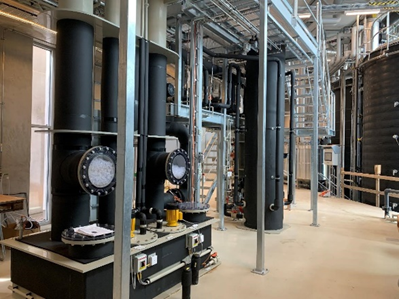
EkoBalans develops integrated solutions for processing residual streams from biogas production, the food industry, and agriculture, into circular fertiliser products, including struvite and ammonium sulphate recovery. Today, EkoBalans delivers and operates such facilities and offers complete concepts from feasibility studies and pilot-scale facilities to refinement and product marketing. The aim is to combine technologies and other technical solutions in practical operation, to transform waste water treatment plants into recycling facilities, contributing to the circular economy and to addressing climate and environment challenges. EkoBalans’ nitrogen recovery technology, eco:N, combines ammonium stripping and absorption/crystallization to produce solid ammonium sulphate, using EkoBalans’ own specific system configuration, pre-treatment and ammonium sulphate harvesting process. Up to 95% of ammonium-N can be removed with eco:N. The eco:N process can be preceded by phosphorus extraction as fine particle struvite with EkoBalans' technology eco:P. The preferred business model is buy-back of the recovered ammonium sulphate and/or struvite for use with other secondary raw materials in the production of Ekobalans' organo-mineral fertilisers. EkoBalans is interested in cooperation for sales of the fertiliser product on local markets. We have a high interest in ESPP since we find the network vital to spread and share information about this important topic to many international stakeholders.
https://ekobalans.se/en/
Nutrient recycling
Veas Norway CE-mark for recovered ammonium salt
Veas, Norway’s largest municipal wastewater treatment plant, has obtained the CE-mark for its recovered ammonium sulphate solution, according to the EU Fertilising Products Regulation 2019/1009 EU Part, in PFC 1 and CMC 15. Veas treats around 800 000 p.e. wastewater from Oslo. Ammonia is recovered from the digestate dewatering liquor, after anaerobic digestion of the sewage sludge. The digestate solids are used as an organic fertiliser in local agriculture. A substantial fraction of the total nitrogen load entering the Veas plant is recovered, resulting in a 37 - 40 % (c. 8% N) ammonium sulphate solution. In 2023, around 4 000 tonnes of solution were recovered (over 300 tN). The ammonium sulphate product is CE certified (FPR PFC 1 and CMC 15) by CerTrust (Notified Body). The company Acinor AS is distributing the product which has been sold to Denmark, Sweden and United Kingdom as well as domestically.
“VEAS in brief” HERE.
Nordic BAT for nutrients in aquaculture
Nordic Council of Ministers document describes BAT (Best Available Technologies for nutrient reduction and reuse in land-based aquaculture, underling the importance of fish sludge nutrient recycling for the circular economy. The report notes that the EU has no specific regulatory framework for aquaculture. It remains not covered by the updated Industrial Emissions Directive. Fish sludge, consisting of faeces and uneaten feed, contains significant phosphorus and nitrogen: 2-3% P/TS, 4-11% N/TS, Estevez et al. 2022). Fish sludge can be used as a fertiliser and/or for energy production, generally after processing, for example by thickening (sedimentation, filtration), drying, anaerobic digestion, pyrolysis, bio-oil or syngas, incineration. Use as fertiliser may be limited by transport/processing costs, zinc or possibly other heavy metal levels and salinity for marine fish. EU regulations are considered to pose important obstacles to fish sludge nutrient reuse and recycling, in particular the exclusion from EU fertilisers and animal by-products regulations. These effectively limit fertiliser use to within the country of production (if allowed there) and exclude trade of fertilisers produced from fish sludge.
“Best Available Techniques for Reduction and Reuse of Emissions in Nordic Land-based Aquaculture”, Nordic Council of Ministers, 2023, 154 pages HERE.
Stay informed & ESPP members
SCOPE Newsletter: www.phosphorusplatform.eu/SCOPEnewsletter eNews newsletter: www.phosphorusplatform.eu/eNewshome
If you do not already receive ESPP’s SCOPE Newsletter and eNews (same emailing list), subscribe at www.phosphorusplatform.eu/subscribe
LinkedIn: https://www.linkedin.com/company/phosphorusplatform
Slideshare presentations: https://www.slideshare.net/phosphorusplatform - Twitter: @phosphorusESPP
YouTube https://www.youtube.com/user/phosphorusplatform
Newsletter about nutrient stewardship - European Sustainable Phosphorus Platform (ESPP)
Please subscribe www.phosphorusplatform.eu/Subscribe
Link to www.phosphorusplatform.eu/eNews086
Download as PDF
ESPP events
ESPC5 call for abstracts open to 30th May
NERM Nutrients in Europe Research Meeting, 16-17 April
EU consultations
EU public consultation on recycled nitrogen products under the Nitrates Directive
EU survey on Horizon Europe R&D Work Programme
Policy
CEN seeking expert on fertilisers testing
Summary of EU Fertilisers Expert Group 15-16 April 2024
Use of Category 1 Animal By-Product ash as fertiliser
European Commission update on Cat.1 ABP ash, algae grown in manure
EU regulation on animal by-products (ABPs) should be fundamentally reviewed
Differences between Netherlands and EU fertilisers regulations
ESPP is looking for advice / support on AI
Nutrient recycling
Benefits, perspectives and challenges of digestates
Ostara struvite approved for EU Certified Organic Farming
N2 Applied and Felleskjøpet Agri cooperative to implement N-recycling
Research and innovation
Struvite can be used in powder fire extinguishers
PFAS removal in pyrolysis
Stay informed & ESPP members
ESPP events
ESPC5 call for abstracts open to 30th May.
ESPC5, the 5th European Sustainable Phosphorus Conference, 8-9 October, Lleida, Spain (site visits 10th October) will focus on the climate and eutrophication challenges of phosphorus management in the Mediterranean and on synergies with anaerobic digestion of manure (Catalunya is a major livestock production region with proactive biogas development policies). Field visits: Fertilizantes del Ebro, biogas plant with digestate valorisation. ESPC5 will also celebrate the 10th Birthday of ESPP, and look at progress and perspectives ten years on from the first ESPC Conference in 2013.
ESPC5 follows on from ESPC4 Vienna, 2022 which, with 320 participants onsite and 80 online, was the biggest conference on phosphorus ever worldwide.
- ESPC4 Vienna 2022: SCOPE Newsletter n°143
- ESPC3, Helsinki 2018: SCOPE Newsletter n°127
- ESPC2, Berlin 2015: SCOPE Newsletter n°111
- ESPC1, Brussels 2013: SCOPE Newsletter n°092
Abstracts for ESPC5 are invited by 30th May 2024 on:
- Phosphorus management in agriculture: P losses in agriculture, P use efficiency.
- Climate change impacts on P in the environment and on P management
- Phosphorus sustainability in the Mediterranean region
- Nutrient recovery technologies, recycled nutrient markets
- Digestate processing and valorisation
- Regional P sustainability policies
- Other aspects of phosphorus management and nutrient recycling
Abstracts for oral and posters: free format, must include: short title, names and emails of all authors, summary of maximum 500 words. ESPP members can take a short pitch, presenting company technologies or R&D perspectives. Send to by 30th May 2024.
ESPC5 is organised by BETA technological Center (University of Vic), with support of ESPP and of the Catalunya Region. Lleida is one hour train from Barcelona. Full programme, conference fees, registration link (will open soon), travel information: https://www.phosphorusplatform.eu/espc5.
NERM Nutrients in Europe Research Meeting, 16-17 April
ESPP’s NERM Nutrients in Europe Research Meeting brought together nearly 200 participants in Brussels, online, for research PhD students’ pre-meetings, posters, parallel sessions and for a policy meeting with the European Commission. The conference was organised with the five Horizon2020 projects Fertimanure, Lex4Bio, Walnut, Sea2Land, Rustica. The conference showed that a wide range of research continues around nutrient recycling, in particular looking at new or improving known nutrient recovery technologies, further demonstration of agronomic performance of recycled nutrient products (noting the need for long-term field trials), environmental and LCA aspects. Conclusions noted the need for better information about nutrient recycling and organic fertiliser processing, products, markets; information of farmers; regulatory complexity and policies. The conference included a site visit to the BioSterco farm, treating over 5 000 t/y of manure (its own pig manure and from nearby farms) by nitrification/denitrification with Detricon nitrogen recovery from the manure (recovering ammonium salt solution) with production of a solid organic fertiliser and of purified water (reverse osmosis).
NERM, Brussels & online, 16-17 April, including site visits.
A full summary of the conference will be published as an ESPP SCOPE Newsletter soon.
EU consultations
EU public consultation on recycled nitrogen products under the Nitrates Directive
Public consultation to 17th May on amendment of Annex III of the Nitrates Directive to allow certain recovered nutrient products to be exempted from the 170 kgN/ha spreading limit. This limit is applicable for “manure … even in a processed form” in Nitrate Vulnerable Zones, whereas synthetic fertilisers generally have a higher spreading limit. The Commission’s proposed amendment partly takes the JRC “Renure” proposals, but allows only three eligible recovered products: ammonium salts from gas scrubbing, “mineral concentrates” from reverse osmosis, precipitated struvite. The proposed criteria also specify that the manure processing must have increased the mineral-N and that the resulting products must be of “consistent quality”.
This is presented as an “interim solution”. By limiting to these three specific recycled nutrient products, the proposal avoids the fact that the JRC Renure criteria (total N must be ≥ 90% mineral, or ratio organic carbon / total N < 3), without other criteria, would be difficult for Member States regulatory authorities to verify (would be passed by raw manure spiked with urea) and would allow scarcely processed manure and some raw manure fractions.
The proposal includes additional requirements: copper and zinc limits, pathogen limits, quality control, labelling requirements, and also requirements which would appear to require specific modifications of NVZ Action Plans wherever these recovered products are to be authorised > 170 kgN/ha: tightening land application limits for all fertilisers, prevention of air emissions, specific consideration of the authorised products in Action Plans, especially as regards Natura 2000 and drinking water abstraction. Also, authorisation of the recovered products requires that “Member States ensure that livestock numbers and manure production do not increase as a result”.
Commission Directive amending Annex III of the Nitrates Directive consultation to 17th May. Input: 4000 characters plus optional document.
EU survey on Horizon Europe R&D Work Programme
European Commission DG Research is asking for feedback on expected impacts and outcomes for each of nearly 50 thematic and functional clusters etc. of the Horizon Europe 2025 Work Programme. Deadline for input: 6th May. The themes (called “Destinations”) relevant to nutrient management, in Cluster 6 (Food, bioeconomy, natural resources, agriculture, environment): Destination 2 Fair, healthy and environment-friendly food systems from primary production to consumption, Destination 3 Circular economy and bioeconomy sectors, Destination 4 Clean environment and zero pollution. The Commission’s proposals include for Destination 2 “Farmers are enabled with tools, innovations and practices to sustainably manage natural resources (in soil, water, nutrients, biodiversity)” and for Destination 4 “Farmers are empowered to make informed management decisions on water, carbon, nutrients and greenhouse gas balances for environmental and economic sustainability, preventing and reducing pollution from agriculture” and “Advanced water-nutrient-soil management tools that integrate multidimensional data from sampling, remote sensing and other data sources to enable context-specific decision making at farm level”. For each Destination, there is a specific survey (you are invited to respond to more than one survey) with one or two tables to select priorities between proposed impacts and outcomes, plus possibility to submit short comments (300 – 1500 characters).
European Commission, Research and innovation, “Feedback opportunity for Horizon Europe work programme 2025”, surveys online HERE. Open to 6th May 2024.
Policy
CEN seeking expert on fertilisers testing
CEN is looking for experts on analytical methods for fertilising products, for working groups developing standards to support the EU Fertilising Products Regulation (FPR), in particular an expert on analysis of organic carbon content. The European Commission has mandated CEN (Comité Européen de Normalisation, the European Committee for Standardization) to develop a significant number of new EU analytical method standards for the testing of different parameters in CMCs and PFCs of the FPR. Industry and expert participants are welcome for the relevant working groups. CEN is specifically also looking for a project leader to develop the method and organise inter-laboratory study for the standard “Inorganic fertilizers - Determination of the organic carbon content organic carbon". The expert will be supported by the relevant Working Group in TC 260, and budget is available for the compensation of costs.
Contact CEN
Summary of EU Fertilisers Expert Group 15-16 April 2024
Animal by-products (ABPs) in EU fertilising products:
Discussion of a draft Commission “Frequently Asked Questions” answer on the status of inclusion of ABPS in CE-mark fertilisers (under the FPR) concluded that at present, to ESPP’s understanding:
- Certain animal by-products can already be included today in EU fertilising products, but only as follows (as specified in 2023/1605):
- Most Cat2 and 3 ABPs (including raw manure, slurries, treated manures), can be used as inputs to composts or digestates (CMCs 3 and 5), as specified in these CMCs, but only if the composting / anaerobic digestion process achieves the ABP Regulation conditions (this does NOT include national ‘alternative’ temperature/time profiles). In effect, this is Cat2-3 materials, inc. manure, where the compost/digestion process achieves ‘sterilisation’ as required by the ABP Regulations.
- Raw manure/insect frass (but not other Cat2-3 materials) can be used as an input material for biochars/pyrolysis/gasification materials (CMC14) but only if the processing conditions for “processed manure” specified in the ABP Regulation 142/2011 (temperature/time, installation inspection …) are achieved in the pyrolysis/gasification process.
- “Processed manure” (as defined in the ABP Regulations), or ABP-criteria compost or digestate of other Cat2-3 materials, can be used as inputs to CMC3 compost, CMC5 digestate or CMC14 pyrolysis, even if the compost/digestate process does not achieve the ABP Regulation conditions. In effect, this is CMC3/5 compost/digestate where the input material has been ‘sterilised” (to ABP requirements) before sending to the composter/digester..
- Note: if ABPs (e.g. raw manure) are used as inputs for a compost/digestate process which achieves CMC3/5 criteria but does NOT achieve the ABP ‘sterilisation’ criteria (as specified in 2023/1605) then the output product (i.e. compost/digestate) cannot be ‘post-sterilised’ and then used in an EU fertilising product. This is because sterilisation is not a listed post-processing for compost/digestate under the FPR CMC3/5 (see consolidated version of the FPR)
- Most Cat 2 and 3 ABPs (inc manure etc. as above) can be used as input to combustion processes as specified in CMC13 (ashes and derivates thereof)
- Will hopefully be included soon,
- “processed manure” in CMC10 (draft regulation here and annex here, adoption underway)
- a limited list of other Cat2/3 materials in CMC10 (list in 2023/1605, study underway with QLab, see below, before hopefully preparation of an amendment to include these into CMC10).
All stakeholders with information concerning the ABPs listed in 2023/1605 (current use as fertiliser, e.g. under national regulations, processing, markets and potential, nutrient content and agronomic benefits, contaminants and safety) are invited to submit these to the QLab study via the questionnaire here (if possible before end April).
ABPs are excluded from the NMI study underway into possible new materials/processes for FPR CMCs (see below) and DG GROW indicated that other ABPs could not be discussed in the EU Fertilisers Expert Group until DG SANTE has validated an ‘ABP End Point’ (DG SANTE delegated regulation amending the ABP Regulations). ESPP therefore proposed, with other organisations, to take this forward outside the official EU Expert Group.
Stakeholders with knowledge of other ABPs, or of other ABP processing methods, relevant to use in fertiliser and which are not in 2023/1605 are invited to send information to (nature of the material / process, uses in fertilising products).
NMI study on possible new input materials for EU fertilising products (possible new CMCs / new CMC processes).
This study (see ESPP eNews n°85) will take 1-2 years and could in some cases, lead to draft amendments to include new materials or CMC-processes into the FPR. However, the list of materials / processes to be studied will be defined in coming weeks. Input is invited from companies and stakeholders on secondary nutrient materials and processing methods not currently included in the EU FPR, as specified in the ‘questionnaire’ on page 28 of the NMI study inception report:
- Detailed description and specifications for the secondary material and for its processing to a fertilising product
- Legal status: is the material/process already applied for fertilisers in EU Member States or other countries ?
- Market situation: current market size and key actors, EU market potential ?
- Is the material or resulting fertilising product susceptible to cross-border trade (rather than domestic use) ?
- Agronomic benefits
- Health or safety data or studies.
Input can concern any material / process listed in the NMI study inception report chapters 3-4-5-6 (pages 8-11)
Animal by-products and “derived products” (ABPs) are not included in the NMI study, but ESPP is collecting information on ABPs and ABP processing methods (not currently covered in 2023/1605) to prepare a concerted request to the European Commission to address currently “missing” ABPs – so information to ESPP is welcome.
ESPP is inputting to the NMI study with a table of possible new CMC input materials / processing methods. Draft is on www.phosphorusplatform.eu/regulatory (under EU Fertilising Products Regulation -> “ESPP list of possible new CMC materials & processes 21_4_24”). Any comments or additions to this table are welcome.
Please send comments and input to the NMI report and/or the ESPP table, by 13th May 2024, to
CE certification process and conformity assessment
Giel Tettelaar, EFCI Register, presented proposals from the Notified Bodies Coordination Body, in particular to clarify and make more feasible certain requirements of the certification procedures, including distinguishing between periodicities for sampling and for audits, and not requiring certification visits to every site providing similar input materials (e.g. a number of sewage works providing recovered struvites from the same process). For reasons unclear, one Member State objected to the “assumption of conformity” currently applied by NOBOs, that is if there is no reason why a specific contaminant should be present in a material (not in inputs, not generated in processing), then it should not be necessary to test for it, as currently specified in the Commission’s FPR Frequently Asked Questions document (Q 10.6). ESPP considers this as important to avoid unnecessary testing costs and as justified and pragmatic.
Clarifications via the Commission FAQ document
A number of new Q&As were validated for inclusion into the Commission’s “Frequently Asked Questions” document, which effectively provides guidance on interpretation of the FPR. It is clarified that plant materials under CMC2 can be “waste” or “by-product”. Clarification of the definition of “biowaste” (in CMCs 3 and 5) was agreed, noting the “comparable” waste streams are also included, such as food waste flows from factories for example producing sandwiches or ready-to-cook meals (e.g. offcuts, discarded food materials because of deterioration) but not sludges or specific processing flows from factories processing e.g. vegetables, dairy products, pet foods, biofuels …
“Evaluation” of the EU Fertilising Products Regulation
The evaluation of the FPR will be launched by the European Commission in coming months, as required in art. 49 of the Regulation, with the aim of identifying if certain aspects of the Regulatory text should be modified (see ESPP eNews n°84). Art. 49 already indicates certain points which must be evaluated (contaminants including cadmium and uranium, functioning of the internal market, conformity assessment, market surveillance, optional harmonisation). The Commission is currently defining the terms of reference to commission a study to support this evaluation.
EU Fertilisers Expert Group documents (CIRCABC public) HERE.
Use of Category 1 Animal By-Product ash as fertiliser
ESPP has commissioned a risk analysis of use as fertiliser of combustion ash from “disposal” of Cat.1 ABPs. The European Commission DG SANTE has requested an Opinion on safety of such ash from EFSA (European Food Safety Agency). The analysis has been commissioned by ESPP to SAFOSO Switzerland, animal health expert consultants. Because there is to our understanding no proof that incineration eliminates prion infectivity (TSE / BSE “mad cow disease”), see ESPP eNews n°73, the SAFOSO risk analysis will be based on: number of BSE cows in Europe (very low), dilution of material in processing, risk reduction in processing, risk reduction in ash use as fertiliser. This will be supported by evidence that Cat.1 ash has been for decades and continues to be widely used as fertiliser in the UK (and elsewhere?) with no identified infection of animals or humans, and similarly for Cat.1 ash handling in landfills etc... We thank EFPRA for providing helpful input to this study.
If you have any information which could support this study (scientific report references, examples or data of Cat.1 ash use as fertiliser in other countries in the world, information on Cat.1 ash handling and storage in landfills, please contact )
European Commission update on Cat.1 ABP ash, algae grown in manure
In reply to a letter from ESPP, DG SANTE confirms that an Opinion on Cat.1 ABP ash is requested from EFSA (to be completed by 2025) and indicates position on nutrients from ABP ash to animal feed, algae grown in manure. ESPP has launched a study to input to the EFSA Opinion on Cat.1 ash (see above). On possible use of nutrients recovered from ash in animal feed, DG SANTE considers that this should be considered after the EFSA opinion on Cat.1 ash use as fertiliser. On algae grown in manure, DG SANTE considers that there is no possibility for use of the algae nor of materials extracted from them in animal feed nor in fertilisers, but that algae grown in “processed manure” can be used in fertilisers (grown in manure which has been ‘sterilised’ as defined in the ABP regulations).
Letter from ESPP to DG SANTE 29th January 2024 and reply of 3rd April 2024 HERE.
EU regulation on animal by-products (ABPs) should be fundamentally reviewed
Sixteen organisations, including ESPP, have sent an open letter to the European Commission calling for a comprehensive review of EU regulation of ABPs to enable circularity whilst continuing to ensure safety. We underline our complete commitment to ensuring safety, and perception of safety by consumers and stakeholders, but suggest that current ABP regulation is fragmented and incoherent, with different value chains treated differently and incoherent vocabulary, leading to regulatory obstacles, excessive demands on administrative resources and consequent failure to address these. The letter calls on the Commission to include a review of ABP regulations in the next 2024-2029 work programme. A number of examples provided by stakeholders are presented in annex, including difficulty to use in animal feed amino acids which are recognised human food ingredients, failure to recognise in the EU Fertilising Products Regulation ‘alternative’ temperature-time profiles for composting and anaerobic digestion despite these being safely used in Member States, failure to recognise complete transformation of ABPs which eliminate risks (e.g. recovery of nutrients from ashes), absence of pathways to coherently assess new processing pathways or materials (e.g. algae grown in manure).
Open letter to the European Commission, 3rd April 2024.
Differences between Netherlands and EU fertilisers regulations
Report by Wageningen UR identifies over 60 secondary nutrient materials which are authorised for use in fertilisers in The Netherlands but not in the EU Fertilising Products Regulation (FPR). This includes:
- 11 wastes and by-products, such as food industry by-products not listed in FPR CMC6, by-products from biofuels production, paper industry by-products, pharmaceuticals by-products, demolition gypsum waste, ammonium phosphate from fire extinguisher refurbishment,
- 31 vegetable residues not included in FPR anaerobic digestion inputs, including vegetable oil and fat residues, food industry sludges and various food industry by-products which are not “bio-waste”, biofuel and glycerine production residues,
- 24 animal by-products not included in FPR anaerobic digestion inputs.
The WUR report recommends to :
- Better define “bio-waste” and to define additional groups of food-industry, biofuel, dairy and animal feed industry by-products for inclusion as inputs to FPR digestates (CMC5),
- Define additional groups of food industry by-products for inclusion in CMC6 (use as such in fertilising products),
- Consider other temperature-time profiles for sanitisation of animal by-products in anaerobic digesters (CMC5)
‘Kunnen de afval- en reststoffen uit de Uitvoeringsregeling Meststoffenwet beantwoorden aan de Europese Meststoffenverordening?” (Can the waste and residues from the Netherlands Fertilisers Act Implementation Regulations comply with the European Fertilizers Regulation?), in Dutch, 58 pages, 2-page summary in English, I. Regelink et al., Wageningen Environmental Research, report n°3317, ISSN 1566-7197, Jan. 2024 DOI.
ESPP is looking for advice / support on AI
ESPP is seeking help to use Artificial Intelligence (AI). We wish to contract advice and support to set up AI that can help us find new and important updates about phosphorus sustainability and nutrient recycling. Our goal is to use AI to better share information with our network. We might need help setting this up, training AI, or guiding a programmer to create an AI tool. Right now, we are overwhelmed with many alerts from the internet and scientific sources every week, even though we try to target our alert filters. We hope AI could read these alerts and other documents and pick out those which are most likely to be important to us, such as new ideas, big changes in technology or markets, new full-scale nutrient recycling plants or updates in regulations. We also want it to work in different languages, not just English. The main problem is to figure out what news is truly new and exciting, rather than just getting summaries of many research papers on topics we already know about. It’s not certain if AI can really do this, but we might find out by trying.
If you would be interested in taking forward an initial feasibility analysis of AI for ESPP, contact
Nutrient recycling
Benefits, perspectives and challenges of digestates
Comprehensive report by European Biogas Association (EBA) explains digestate production, properties and processing, benefits for climate and for soil health and details the regulatory framework at the EU and Member State levels. EBA estimates that by 2050 digestates in Europe will contain 9.7 Mt of nitrogen, 1.7 Mt of phosphorus and 0.8 Mt of potassium, that is around 90%, 60% and 25% respectively of nutrients currently in mineral fertilisers. Nutrient content and availability in digestates are explained, both rapidly available and long-term nutrients, depending on different input materials and digestate processing. Benefits for climate and soil health are discussed, including reductions in emissions from raw organic wastes, soil carbon sequestration, impacts on soil microbial activity, soil structure, water retention, nutrient retention, pH buffering. The EU regulatory framework is outlined, including waste, fertiliser, animal by-product regulations and the Nitrates Directive. National regulatory frameworks are specified for Member States, including waste status, fertiliser regulations, quality schemes and specific national regulations. The report concludes that the complexity of regulatory frameworks is an obstacle to digestate valorisation, in particular where digestate does not have fertiliser status under national fertiliser regulations. The Nitrates Directive restriction on application of digestates from manure is considered a key obstacle. Better information on the value of digestates as an organic fertiliser and soil improver is needed.
“Exploring digestate’s contribution to healthy soils”, European Biogas Association, March 2024, 40 pages LINK
Ostara struvite approved for EU Certified Organic Farming
Ostara’s recovered struvite, from municipal wastewater, has been validated for EU Certified Organic Agriculture under the EU regulation 2021/1165 (ESPP eNews n°73). This follows the successful EU Fertilising Products Regulation of Ostara’s Crystal Green Pearl® recovered struvite (CE-mark, see ESPP eNews n°82), which is a prerequisite requirement for EU Organic Farming certification. The FiBL / SKAL validation obtained by Ostara also confirms that the Ostara recovered struvite complies with the criteria of The Netherlands Organic Farming input list. Ostara states: “Crystal Green Pearl is a granular fertilizer with an analysis of 5% Nitrogen (N), 28% Phosphorus Pentoxide (P2O5), and 16% Magnesium Oxide (MgO). This one-of-a-kind fertilizer source is produced with Ostara’s nutrient recovery solutions that recover nutrients from wastewater and prevent excess, water soluble nutrients from entering global water systems. Crystal Green Pearl is minimally water-soluble, although it’s 100% soluble in weak organic acids naturally exuded from plants. This maximizes nutrient availability … highly efficient phosphate fertilizers to release nutrients in response to crop demand. Crystal Green fertilizers are proven to maximize yield, enhance soil health and significantly reduce phosphate tie-up, runoff and leaching, thereby improving food security while protecting the environment.”
“Ostara Secures Certified Organic Registration of Recovered Nutrients for Crop Production”, Ostara, 17th April 2024, HERE.
FiBL organic validation for Ostara recovered struvite Crystal Green HERE.
N2 Applied and Felleskjøpet Agri cooperative to implement N-recycling
Plasma N-enrichment and N-recycling technology of N2 Applied (ESPP member) will be rolled out by one of Norway’s main agricultural cooperatives, Felleskjøpet Agri. N2 Applied is also talking to the Bill & Melinda Gates Foundation. N2 Applied’s plasma technology both fixes nitrogen from the atmosphere and stabilises nitrogen already present in manures or digestates, so enabling storage and efficient recycling to crops, whilst also reducing ammonia and methane emissions (see ESPP eNews n°84). Felleskjøpet Agri has over 50 000 cooperative members and an annual turnover of c. 15 billion €. A two-year letter of intent will roll out the plasma N2 Applied’s technology to farmers as part of the cooperative’s advice and services to farmers towards sustainability and balanced fertilisation and cost benefits, enabling them to better use their own manure as crop fertiliser with reduced environmental impacts.
“Felleskjøpet Agri and N2 Applied enters agreement”, 19th March 2024, HERE.
Bill & Melinda Gates Foundation and International Fertilizer Association (IFA), Marrakech, Morocco, March 2024 HERE
Bill Gates video “Why I love fertilizer”, 2018, HERE.
Research and innovation
Struvite can be used in powder fire extinguishers
Powder fire extinguishers widely use mono ammonium phosphate (MAP). Lab tests showed that milled struvite, coated with DOPO-VTS, performs better to extinguish fires than MAP or neat struvite and can be stored at up to 100°C. It is not specified whether the struvite used was recovered or synthetic. The struvite was ball-milled first with ethanol, then with hydrophobic fumed silica, to fine particle size (90% < 20 µm diameter). It was then coated with 3% w/w DOPO-VTS, a derivative of the commercial phosphorus flame retardant DOPO (9,10-dihydro-9-oxa-10-phosphaphenanthrene-10-oxide) reacted 1:1 with vinyltrimethoxysilane. Fire extinguishing performance was tested using burning heptane basin tests. Heat absorption and fire temperature decrease were better with the coated ultrafine struvite, fire extinguishing time was shorter and powder consumption was lower, compared to than with MAP (similarly ground), and also compared to uncoated struvite. Also, the coated struvite maintained its fire extinguishing properties when heated to 100°C, so could be stored in varying temperatures.
“Preparation and fire extinguishing mechanism of novel fire extinguishing powder based on recyclable struvite”, Z. Liang et al., Materials Today Communications 34 (2023) 105410, DOI.
PFAS removal in pyrolysis
Lab tests using PFAS-loaded sand show 97% removal from the sand at 400°C or higher but significant transfer of organofluoride compounds to the offgas. The tests used purified sea sand mixed with 24 different PFAS (per- and polyfluoroalkyl substances) at total 2000 ng PFAS/g sand (0.0002% DM), in a 25mm diameter 40 cm high lab pyrolyser with residence time 2 hours (significantly higher than industrial pyrolysis units). Because PFAS may be broken down to non-analysed shorter-chain PFAS, both PFAS (27 PFAS chemicals) and total organofluorides were analysed in both the pyrolysed material and in the laboratory pyrolyser offgas (using an acetone trap). In the PFAS-sand, organic fluorine removal was only c. 40% at 300°C, rising to 97% at 400°C or higher. Removal of PFAS from the sand was 99% at 400°C and the 27 analysed PFAS were non-detectable at 500°C or higher. The analysed PFAS were detected in the offgas up to 500°C pyrolysis temperature (not at 600°C). However, around 50% of the total initial PFAS fluorine was found as organofluorides in the offgas at 400°, 500°C, 600°C and 700°C. Similar tests were carried out using dried granulated sewage sludge from Bohuslavice‑Trutnov municipal sewage works, Czech Republic, again showing >96% removal of organofluorides at 400°C with significant detection in the offgas. Sludge biochar from a commercial sludge pyrolysis unit operating at this sewage works was tested and the analysed PFAS chemicals were not detectable. This unit operates at 600°C with a residence time of 10 minutes.
“Removal of per‑ and polyfluoroalkyl substances and organic fluorine from sewage sludge and sea sand by pyrolysis”, M. Husek et al., Biochar (2024) 6:31 DOI.
Stay informed & ESPP members
SCOPE Newsletter: www.phosphorusplatform.eu/SCOPEnewsletter eNews newsletter: www.phosphorusplatform.eu/eNewshome
If you do not already receive ESPP’s SCOPE Newsletter and eNews (same emailing list), subscribe at www.phosphorusplatform.eu/subscribe
LinkedIn: https://www.linkedin.com/company/phosphorusplatform
Slideshare presentations: https://www.slideshare.net/phosphorusplatform - Twitter: @phosphorusESPP
YouTube https://www.youtube.com/user/phosphorusplatform
Newsletter about nutrient stewardship - European Sustainable Phosphorus Platform (ESPP)
Please subscribe www.phosphorusplatform.eu/Subscribe
Link to www.phosphorusplatform.eu/eNews085
Download as PDF
Events
NERM Nutrients in Europe Research Meeting, 16-17 April
5th European Sustainable Phosphorus Conference ESPC5, 8-10 October, Lleida, Spain
ESPP looking for service
To develop a listing of organic & organo-mineral fertiliser producers
Policy
European greenhouse gas import taxes enter inter force
EU Chemical Agency (ECHA) announces next steps towards PFAS restrictions
European water industry calls for universal PFAS restriction
Industrial Emissions Directive (IED) revision
ESPP and EU policy consultations (NERC, Nitrates)
Fertilisers & EU Fertilising Products Regulation (FPR)
Survey on animal by-products (ABPs) in EU fertilising products
Tenders for laboratories and coordination for Organic and Organo-Mineral Fertilisers
EU consultation on fertiliser polymer biodegradability, microplastics, and other
Preliminary draft on possible new materials/processes as CE-fertiliser inputs (CMCs)
SOFIE summary in Fertilizer Focus
Mediterranean
Mediterranean coastal lagoon eutrophication correlated to business failure
Harmful Algal Blooms in the Mediterranean
UNEP event summaries
Management of phosphate fertilisers for sustainable food systems
Launch of UNEP global phosphorus project “uPcycle”
Research and innovation
Brabantse Delta Water Board launches ViviMag® LIFE project
P-fertilised grassland, Ireland, may release higher CO2 but lower N2O
PFAS could be cause of 0.5 – 4.5% of wastewater treatment GHG emissions
Stay informed & ESPP members
Events
NERM Nutrients in Europe Research Meeting, 16-17 April
NERM Nutrients in Europe Research Meeting (6th Phosphorus in Europe Research Meeting). Nearly 200 registrants to date for the conference and its pre-meetings. Speakers include the European Commission (DG AGRI, DG TRD), EIP-AGRI Support Facility/EU Cap Network, EU-FarmBook, NUTRI-KNOW Thematic Network. Parallel sessions on nutrient recovery technologies, bio-based fertilisers. Organised with Fertimanure, Lex4Bio, Walnut, Sea2Land, Rustica.
NERM, Brussels & online, 16-17 April, including site visits: programme & registration
5th European Sustainable Phosphorus Conference ESPC5, 8-10 October, Lleida, Spain
ESPP looking for service
To develop a listing of organic and organo-mineral fertiliser producers
We are looking for someone to put together a listing of emails of companies selling, producing or processing, in Europe, organic or organo-mineral fertilisers. This will enable ESPP to communicate on SOFIE2025 and nutrient recycling. Listing could also cover companies providing processing technologies: such as granulation, drying, packaging … Candidates can be individuals, companies or research institutes, subject to being able to emit an invoice or payable note for fees. Work to be done before end summer 2024. Objective: collate list of companies, contact email(s), general types of organic fertiliser sold/processed, website, covering all EU countries plus UK, Switzerland, Norway, Turkey, Ukraine, North Africa.
Send short description of experience and competence, plus estimated price to by 15th May 2024
Policy
European greenhouse gas import taxes enter inter force
The EU CBAM (Carbon Border Adjustment Mechanism) has entered into force taxing imports of five industrial products, including nitrogen fertilisers, as a function of greenhouse emissions. The CBAM Regulation 2023/956 and Implementing Regulation 2023/1773, which entered into force on 1st October 2023, covers imports of “nitrogen-containing fertilisers”*, iron and steel, cement, aluminium, and electricity. CBAM aims to tax the greenhouse emissions embedded in imported fertilisers (scope 1 and 2: direct emissions in production, emissions related to electricity use in production) and covers CO2 and NOx emissions. The objective is to compensate costs for EU manufacturers who have to pay ETS (Emissions Trading Scheme) tariffs for their climate emissions. The EU CBAM Regulations define the methodology for calculating the embedded emissions for the concerned products, based either on real emissions, or in the absence of data, on values for the relevant industry sector in the specific exporting country, or if this is also not available, then based on the average emission intensity of the worst performing EU installations. Fertilizers Europe has welcomed the EU CBAM, subject to appropriate conditions as ensuring fair competition for EU producers against fertiliser imports. However, Fertilizers Europe expresses concern that CBAM cannot provide a mechanism to address exports of fertilisers from Europe, which risk being replaced by fertilisers with a higher carbon footprint in user countries outside Europe.
EU CBAM Regulation 2023/956 “establishing a carbon border adjustment mechanism” and Implementing Regulation 2023/1773,
* Regulation 2023/956 – Annex I , Ch. 3105 and Ch. 3102, Implementing Regulation 2023/1773, Annex II – 3.10. Mixed fertilisers – in effect covers all N, NP, NK and NPK fertilisers.
EU Chemical Agency (ECHA) announces next steps towards PFAS restrictions
After over 5 000 comments were received to the public consultation on PFAS restriction in 2023, ECHA has announced that the EU’s scientific committees will evaluate restriction for uses in different sectors over the coming six months. Uses which will be considered are: consumer products, cosmetics, ski wax, metal plating and processing, upholstery - leather – carpets – clothing, food contact materials and packaging, oil and mining industries. Other sectors, such as machinery and medical, are not yet on the calendar. Following the opinions of the two scientific committees (Risk Assessment RAC and Socio-Economic Analysis SEAC), ECHA will finalise restriction proposal reports, and then the European Commission with the Member States will take decisions.
In the US, legal actions against companies is accelerating, based often on accusations of PFAS contamination of groundwater and drinking water. Litigation is targeting the chemical companies manufacturing PFAS, but also companies using it. Litigation in some cases is being brought by cities operating water systems. Litigation also concerns PFAS in sludges, both from industry (e.g. paper industry). In a case reported recently in Europe by The Guardian, UK, farmers in Texas and an environmental NGO are suing the US Environmental Protection Agency for not adequately regulating PFAS and a company which processes sewage sludge to organic fertilisers. Following litigation, the US courts approved in February a settlement requiring DuPont to pay nearly 1.2 billion US§ to public water systems across the US covering payments to water authorities who have already detected PFAS and costs of testing and then compensation to those which have not yet tested.
European Chemical Agency (ECHA) “Next steps for PFAS restriction proposal” 13th March 2024.
The Guardian “Legal action could end use of toxic sewage sludge on US crops as fertilizer” 12th March 2024.
European water industry calls for universal PFAS restriction
The water industry (EurEau) is calling that “all uses of PFAS should be phased out rapidly” because PFAS cannot be effectively removed in sewage treatment, so accumulate in water, soil and foods. EurEau represents European drinking water and wastewater operators serving 500 million Europeans. The federation has sent an open letter to the President of the European Commission, Ursula von der Leyen, calling for universal restriction of PFAS. The federation underlines that PFAS (Perfluoroalkyl and Polyfluoroalkyl Substances) are today found in water, food, air, household products, are remanent and pose health risks. Removal of PFAS from drinking water is technically challenging, expensive, energy and resource consuming, and relies on activated carbon imported from China. PFAS in sewage hinders recovery and recycling of nutrients. EurEau consequently calls for a universal PFAS restriction, in line with the EU Chemicals Strategy for Sustainability and the Green Deal.
The European Environment Agency has published a communication stating that nearly 15% of teenagers in Europe show exposure to PFAS above EFSA Health-Based Guidance Values (HBGV).
EurEau position on PFAS: https://www.eureau.org/priorites/pfas
EurEau briefing paper “Sludge and the circular economy - the impact of PFAS”, July 2022
EurEau input to EU consultation on PFAS restriction, 18th September 2023 “Universal PFAS restriction - Consultation on Annex XV report”
EurEau open letter to the European Commission “No Green Deal with PFAS: Call to support the Universal PFAS Restriction proposal”, 4th March 2024.
European Environment Agency “Risks of PFAS for human health in Europe (Signal)”, 15th March 2024.
Industrial Emissions Directive (IED) revision
The IED revision, agreed by Parliament & Council, making strictest achievable pollution emissions limits mandatory, will improve industry material efficiency requirements, will cover more intensive pig & poultry farms, but not cattle farms. The Directive revision amendments have been provisionally agreed by Parliament, Council and the Commission (trilogue 29/11/2023), validated by Parliament (12/3/2024) and are pending Council final validation, before legal publication. The IED fixes mandatory pollution emission limits applicable to all covered factories and installations, currently around 50 000 across Europe. The revision extends coverage to include more intensive pig and poultry farms, down to 280 – 380 LSU “livestock units” (implemented progressively starting in 2030). The Commission estimates that this will increase the % of total EU pigs and poultry in covered farms from around 35% under the current IED, to around 70 – 80%. Cattle farms are however still not covered by the IED Directive: this will be reviewed by end 2026. Will also be reviewed the possibility to ensure that overseas producers of meat imported into the EU respect the same criteria. The revised Directive will require waste, resource efficiency, energy efficiency and raw material use targets for covered industries. The Directive is also extended to include certain metal mining / extraction activities (phosphate rock not included) and battery manufacture.
European Commission IED Review – Livestock farm data update 2016-2020 HERE.
Trilogue agreed Directive revision text: HERE.
European Parliament press release 12th March 2024.
ESPP and EU policy consultations (NERC, Nitrates)
EU input on revision of the NERC Directive asking that this integrate nutrient recycling and not only emissions limitation.
ESPP did not input to the EU consultation on evaluation of the Nitrates Directive, as members had differing positions.
ESPP input to the EU consultation on the NERC Directive (National Emissions Reduction Commitments), 14th March 2024, supporting the value of this Directive in limiting transboundary emissions of air pollutants across Europe (the Directive currently limits emissions of sulphur dioxide, nitrogen oxides (NOx but not N2O), ammonia, non-methane volatile organics, fine particles PM2.5), noting that limiting these N emissions is coherent with the EU Farm-to-Fork Strategy, EU Biodiversity Strategy and COP15 Convention on Biological Biodiversity objective to reduce nutrient losses by 50% by 2030 and suggesting that it should integrate recovery and recycling of nitrogen and sulphur from these emissions.
Concerning the Nitrates Directive, ESPP members did not agree on whether the Directive has been effective (since is adoption in 1991), whether to oppose re-opening of this Directive (which could lead to regression in protection of surface and groundwaters from nitrates) or to consider this necessary to address the obstacle posed to manure nutrient recycling (by the 170 kgN/ha limit for manure and “processed” manure), what forms of manure-recycled nutrient might be exempted from this limit (Renure criteria too lax and non-verifiable, but < 1% organic carbon not practically relevant …). Members also disagreed on whether or not to propose that the Directive should be widened to specifically address phosphorus as well as nitrogen.
ESPP input to NERC Directive (National Emissions Reduction Commitments) www.phosphorusplatform.eu/regulatory
Summary of discussions on Nitrates Directive at ESPP webinar 22nd February 2024 in ESPP eNews n°84.
EU public consultations on the Nitrates Directive (both closed 8th March 2024). Call for evidence: 248 contributions received (and published) and public consultation (1071 contributions received and validated, not yet published, pending analysis by the European Commission).
Feedback to the call for evidence from ESPP members: EurEau, N2-Applied, Ragn-Sells, SUEZ, TIMAC AGRO, Other ESPP members submitted to the public consultation, including to our knowledge: Fertilizers Europe, Nutribudget, submitted by Proman.
Fertilisers & EU Fertilising Products Regulation (FPR)
Survey on animal by-products (ABPs) in EU fertilising products
Request for information, for specific ABPs, on applicable national fertiliser legislation, agronomic effects, nutrient content, processing, heavy metals or other residues, health or environmental risks. The Cat2 and Cat3 ABPs concerned are insect frass, biofuel glycerine, meat and bone meal and derived DCP/TCP, blood products, hydrolysed protein, horn- skin and feather materials (as specified). The survey, open to all companies and stakeholders, is carried out by QLab, under contract from the European Commission, to support preparation of possible criteria or conditions for proposed inclusion of these materials as inputs to CE-Mark fertilising products (FPR CMC 10). This is because art. 42 of the FPR indicates that the Commission can modify the FPR CMCs only if proposed additional materials have the potential to be significantly traded within Europe and if there is evidence of their agronomic efficiency and of safety for health and for the environment.
“Survey to include new materials in CMC 10 to the Fertilising Products Regulation”, QLab for the European Commission SURVEY HERE.
Tenders for laboratories and coordination for Organic and Organo-Mineral Fertilisers
Two CEN tenders open to 15th April to (1) prepare – coordinate, and (2) participate in laboratory ring tests for proposed new European Standards relating to organic and organo-mineral fertilisers for the Fertilising Products Regulation. The testing will concern the various different standards currently being developed by CEN (European Committee for Standardization) CEN/TC260/WG8 to support implementation of the EU Fertilising Products Regulation, that is verification of the different criteria and limits specified for Organic and for Organo-Mineral Fertilisers in this regulation (as per the mandate from the European Commission, a list of around 20 proposed test standards is included in the tender documents and draft EU standards (prEN) can be downloaded on the CEN tender web pages)
“Open calls for tender related to the Interlaboratory studies on Organic and organo-mineral fertilizers”, CEN, published 12/3/2024, submission deadline = 15/4/2024 HERE.
EU consultation on fertiliser polymer biodegradability, microplastics, and other
Open to 5th April: consultation on five draft Delegated Acts amending the Fertilising Products Regulation concerning biodegradability of fertiliser and mulch film polymers, microplastic polymers (in CMCs 1 and 11), Enterococcus testing. The five draft amending regulations are included in one single public consultation, open to 5th April 2024. The biodegradation criteria proposed for polymers are based on 90% ultimate degradation / mineralisation measures as evolved CO2, in soil and in water, after 2 years for mulch films and after four years for polymers used as fertiliser coatings or for water retention.
“EU fertilising products – Aligning biodegradability criteria for polymers to the REACH restriction on microplastics”. NOTE: the consultation web page title is unclear, this page in fact covers all five proposed Delegated Acts. Public consultation open to the public and all stakeholders. Deadline for response 5th April 2024. Response is free text of up to 4000 characters plus possibility to submit a pdf document. HERE.
Preliminary draft on possible new materials/processes as CE-fertiliser inputs (CMCs)
The draft proposed list of new CMC materials and processes to be studied for possible inclusion into the EU Fertilising Products Regulation (Annex II) is circulated for comment and will be discussed at the Fertilisers Expert Group 15th April (input via members of this Group, inc. ESPP). The study, commissioned by the European Commission (DG GROW) to NMI Netherlands, will run for two years, and will assess which materials/process modifications could be justified to add into the EU Fertilising Products Regulation (based on the art. 42.1 criteria: significant potential for trade on the EU market, agronomic value, environmental and health safety). The study will consider all proposals submitted under the European Commission’s June 2022 stakeholder survey (ESPP eNews n°69). 207 stakeholders submitted to this survey, with 26 proposals considered out of scope (concerning other FPR annexes not CMCs) but some submissions including more than one relevant proposal. In this first draft report, NMI have regrouped the into proposals for:
- 14 for new CMCs, including separated human urine/faeces, N and K recovered from wastewater liquors, Mn and Zn recovered from battery recycling, ammonium salts recovered from end-of-life fire extinguisher powder, pulp & paper sludge, vivianite, algae grown on wastewaters, industry limes
- 14 for admitting new input materials to existing CMCs, including potassium from municipal waste incineration ash, sewage sludge as input to biochars / pyrolysis / gasification, food & feed industry sludges as input to composts & digestates
- 11 for new materials within existing CMCs
- 6 for new CMC processing methods, including plasma treatment of digestate, tree bark humous
(examples cited were included in ESPP proposals).
ESPP proposals which seem to be not included in this draft report (to be clarified) include: fish sludge (stated to be an animal by-product, whereas fish excreta seem to be excluded from the ABP Regulation 1069/2009 art. 2.2(k)), natural biomass collected as waste, digestate from biorefineries wastes, P leached from biochars, pre-processing of inputs to CMCs 13 and 14.
Following input at the 15th – 16th April EU Fertilisers Expert Group (input via FEG members only, e.g. ESPP), NMI indicate that they will launch a stakeholder consultation on the different regrouped materials / proposals to collect information on current legal status, current use as fertiliser (under national fertiliser regulations or otherwise), producers, potential market. This will enable assessment of the Fertilising Products Regulation (FPR) art. 42.1 criteria that the FPR can be amended if there is “potential to be the subject of significant trade on the internal market”.
For materials/processes where such potential is identified, NMI will further search literature and consult stakeholders on environmental and health safety and risks, and on agronomic effectiveness (an indicator for this being current use today), as also required in FPR art. 42.1
A final selection of relevant materials/processes, respecting art. 42.1, will then be made, and for these NMI will propose to the European Commission draft amendment texts to the FPR Annex II (CMCs) – planned timeline = before end 2025.
“Technical study to support the inclusion of new materials and processes under the Fertilising Products Regulation (FPR); Lot 2: Material and processes under the FPR. Inception report; Screening of proposals, workplan”, L. van Schöll, W.H. Riechelman, NMI (study performed for the Commission DG GROW F2 under GROW/2022/OP/0046), version March 2024 HERE.
Comments via members of the EU Fertilisers Expert Group (includes ESPP) – send comments ASAP to
SOFIE summary in Fertilizer Focus
A 2-page summary of ESPP’s SOFIE3 conference (3rd Summit of Organic & Organo-Mineral Fertiliser Industries in Europe) is published in Argus Media’s March/April 2024 Fertilizer Focus (11 000 readership). A full summary will be published soon in ESPP’s SCOPE Newsletter. Questions addressed include distribution costs, industry trend towards combining organic (recycled) nutrients with mineral fertilisers, potential for development of nutrient recycling from digestate and the corresponding need for roll-out of digestate processing (digestate production will increase with EU bio-methane policies), contribution of organic fertilisers to reducing nutrient losses and to soil health, potential for market growth or organic and organo-mineral fertilisers.
Fertilizer Focus, March/April 2024 (Argus Media) HERE.
Mediterranean
Mediterranean coastal lagoon eutrophication correlated to business failure
A statistical study of business failures around Mar Menor, Murcia, South-East Spain, shows correlation of lagoon eutrophication to business failure of companies in some economic sectors. Mar Menor is a shallow saltwater lagoon of 135 km2, separated from the Mediterranean Sea by a narrow strip of land. It is a Red Natura and a Ramsar site, with strong tourism and agriculture activities. The lagoon suffered a major algal bloom and anoxia event in 2019. This study compared distance to eutrophied lagoon water (maximum water chlorophyll concentration within a certain radius of the company), distance to coast (of lagoon or of Mediterranean Sea) and rate of business failure (failure at some time in the four year period 2017-2020) for over 3200 businesses in ??? how many ??? municipalities < ??? km from the Mar Menor lagoon (how were these companies and municipalities chosen and why ?). All businesses were < 30 km ??? from the sea or from the lagoon. Overall business failure in this sample of companies was 11.6% (over the four years) compared to 10.6% average across Spain. Business failure was lower for companies situated near the sea or near the lagoon, but higher for companies near lagoon waters with high chlorophyll (algae). Despite the seeming probabilistic benefit of proximity to the coast/lagoon, a 1 gm higher Chl-a concentration within 600m of a company was correlated to +8.4% increase in probability of business failure for accommodation services, +11% for financial and real estate services, +14.4% for industrial and building activities and +9.5% for minor trade. Probability of business failure did not increase with eutrophication for agriculture and transport services. The author concludes that the results show that effective environmental protection to reduce eutrophication would bring benefits for businesses. They also note that agricultural businesses, being not apparently negatively impacted by eutrophication, have no incentive to reduce phosphorus and nitrogen losses.
“The impact of marine pollution on the probability of business failure: A case study of the Mar Menor lagoon”, M. Maté-Sanchez-Val & G. Aparicio-Serrano, J. Env. Management 332 (2023) 117381, DOI.
Harmful Algal Blooms in the Mediterranean
Review of data suggests that toxic algae events are not frequent in the Mediterranean Sea whereas algal blooms risk impacting tourism, including with mucilage, water discoloration and anoxia events. Of 140 potentially toxic algae species identified worldwide (UNESCO Moestrup 2009), 84 have been found in the Mediterranean (2 400 records since 1860). Increasing reports of toxic species and harmful algal blooms (HAB) over time are likely related to increasing awareness and monitoring. No trends are shown for increases in toxic algae. Impacts on human health are extremely rare, and on shellfish (toxin accumulation can lead to bans on harvesting) are uncommon except in some local coastal regions of Spain and France. Non-toxic problematic algae blooms, causing mucilage, water discoloration, anoxia (loss of water oxygen, killing fish and other organisms) or other aesthetic deteriorations detrimental to tourism also show no temporal trends for frequency or for bloom algal abundance. Blooms show unpredictable annual changes.
A summary of harmful algal blooms (HABs) in the Adriatic and Ionian regions of the Italian Mediterranean coast, 2012-2019, showed an increasing number of blooms over this period, but with variations. Blooms particularly occurred in coastal zones with multiple human pressures (physical modification of the coast, urban runoff, agricultural runoff)with the strongest link showing to coast modification. No toxic algae events were recorded in this study. See also studies on Adriatic eutrophication in ESPP eNews n°84.
“Toxic marine microalgae and noxious blooms in the Mediterranean Sea: A contribution to the Global HAB Status Report”, A. Zingone et al., Harmful Algae 102 (2021) 101843, DOI.
“Harmful algae and pressure-impact relationship: Noxious blooms and toxic microalgae occurrence from coastal waters of the Apulia region (Adriatic and Ionian Seas, Mediterranean)”, L. Roselli et al., Marine Environmental Research 183 (2023) 105791, DOI.
UNEP event summaries
Management of phosphate fertilisers for sustainable food systems
Webinar jointly organised by United Nations Environment Programme (UNEP), Food and Agriculture Organization (FAO) and International Fertilizer Association (IFA), February 2024, with over 260 people attending.
James Lomax, UNEP, opened the webinar underlining the pivotal role of soil heath as an ecological foundation of sustainable food systems. Soils are today facing an unprecedent crisis, with over 40% of Earth’s surface degraded, and topsoil being lost at a very fast annual rate. Healthy soils can reduce the need for fertiliser, regulate water and nutrient cycles, support plants and soil organisms, and filter, break down and immobilise potential pollutants. Prioritising soil health politically can help bridge ideological divides and galvanise joined up actions to achieve environmental agreements and SDGs. On this, UNEP is committed to create changes at the Country level, to interact with decisionmakers in the field of fertilisers to support the transformation of agribusiness, and to encourage farmer led innovations to tailor practices and incentives to meet needs and to scale and accelerate impact on the ground.
Achim Dobermann, IFA, presented global trends in phosphorus use efficiency, based on FAOSTAT Global Reference Database for cropland nutrient balances, a database of country-level budget estimates for nitrogen, phosphorus and potassium on cropland, covering 205 countries and territories, for the period from 1961 to 2020. Nutrient use efficiency is calculated as the ratio of outputs (nutrient removed by crops) divided by inputs (phosphorus in seed, fertilisers and manure). On a global perspective, both P inputs to cropland and P r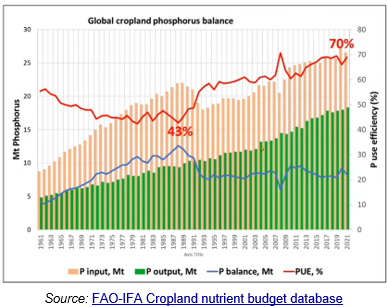 emoval by crop have increased over the last 60 years (see picture). The average PUE is about 70%, (will probably reach 80% by 2040), and there is still a surplus of about 8 Mt P/y (of which 6 Mt P/y in Asia) ending up in soil, fresh water and marine ecosystems. On the regional level, P balances vary widely. China has made great progress in reducing its P surplus (ca 20 kg/ha in 2020, over 35 kg/ha in 2010) and increasing its PUE (around 60%) thanks to changes in policy, but Brazil and India are not. In Brazil, a period of intensification of agriculture resulted in a large and rising P surplus (ca 20 kg/ha in 2020), with a moderate/low PUE (ca 50%), and similarly in India the PUE has not changed over the last 20 years and has remained low (ca 50%), and the surplus is rising (ca 10 kg/ha in 2020). Soil P mining continues in much of sub-Saharan Africa, where P balance has been negative due to soil mining and soil health degenerating for most part of its modern history, requiring large increases in P inputs (fertilisers and recycled P) for greater food security and improving soil health. In the European Union (EU-27), P surpluses declined over the last 40 years benefitting from soil legacy-P and PUE has increased to an average 70%, with room to improve, although the situation is very different among countries and cropping systems. Finally, in the United States, P surpluses have declined over the last 40 years, reaching today a neutral-negative P range (although some local hotspots are present), and P use efficiency is now hovering about 100%.
Veronica Santoro, ESPP, and Ludwig Herman, ESPP and Proman, presented successful cases of P recycling technologies in Europe, including biosolids (treated sewage sludge) reuse in agriculture, use of P in wastewater to grow biomass (algae, duckweed), P-recovery from liquor streams (struvite precipitation), pyrolysis and hydrothermal carbonisation, P recovery from incineration ashes (to produce calcium phosphates, phosphoric acid, ...), and other technologies under development (vivianite precipitation, ion exchange, adsorption, ...). Theoretical P recycling potential is however very different from the actual recycling capacity. A study by the Joint Research Center of the European Commission identified a potential recovery of about 0.3 Mt P/y to mineral fertilisers, and about 0.3 Mt P/y to organic fertilising products, out of the 1.1 billion t of P consumed in Europe. The currently operating struvite plants in Europe are recovering about 3000 t of P, while the global capacity is about 5000 tons of P. The recovery potential from ash is instead about 50000 t of P with the projects that are currently underway in Europe, while the current recovery is of about 16000 t P. These technologies are still in the beginning of their development, making P recycling only regionally competitive and – apart from ash-derived products - hampered by the current low recovery rates and the fluctuating quality of products, but further development will lead to higher efficiencies and lower costs for implementation.
Vinisa Saynes Santillán, FAO, highlighted that nutrient imbalance is one of the major threats to soil health according to the “Status of the World’s Soil Resources” report by FAO (2015). More than 50% of the global P loss in agriculture is attributable to soil erosion, and the P exported in harvest is not replenished by organic or inorganic fertilisers leading to soil fertility loss. General recommendations to ameliorate nutrient deficiencies in soils and in crops include increasing soil organic matter, promoting crop diversification, use fertilisers in a balanced way, choose sustainable soil management practices according to the national and cultural reality. On the other hand, nutrient overuse and misuse also lead to negative effects, including greenhouse gas emissions, nutrient leaching, toxicity for plants and animals and impacts on soil biodiversity. Planetary boundaries research has shown that both global and regional boundaries for safe operating space of P are exceeded: a paradigm shift is therefore needed to move from current to sustainable agrifood systems, aiming at long-term productivity and minimal environment impact.
A final panel, moderated by Kim Haekoo, FAO, underlined the need of getting the political focus onto the importance of maintaining soil health and incentivise good practices, taking into account local differences and conditions. Many initiatives are now converging to this goal, but more needs to be done to implement the measures and develop capacity at local farm scale to increase nutrient use efficiency and soil health. Regarding the economic feasibility of P recycling, in the case of municipal wastes, implementing P recovery in a wastewater treatment plant has a cost but this is minimum in comparison to the whole wastewater treatment cost. In the case of agricultural residues, the integration of P recycling may result in more expensive food prices, and only technical advancements will allow to recycle nutrients at a lower cost.
The meeting was concluded by Ramesh Ramachandran, GPNM, who stressed the critical role of P management in enhancing soil health, optimising food production and mitigating nutrient losses, and by Patrick Heffer, IFA, who referred to the updated assessment of world phosphate rock reserves and resources, published by IFA in 2023. The study estimated global phosphate rock resources at over 300 billion t (expected to last at least 300 more years), but geologic depletion should not be the only focus: more work must be done on reducing losses during mining and processing of phosphate rock, but increasing recovery and recycling from waste streams and improving P use efficiency at the farm level are pivotal to increase the lifespan and our reliance on these reserves and resources.
“Management of phosphate fertilisers for feeding the world sustainably”, joint UNEP/FAO/IFA webinar 14th February 2024. Recording and materials are available here.
Launch of UNEP global phosphorus project “uPcycle”
2 million US$ UNEP/GEF* funding for project to bring together global data on phosphorus losses to water and share knowledge on phosphorus (P) management and recycling, with a demonstration study focussed on Lake Villarrica (Mallalafquén), Araucanía Region, Chile. The project is implemented by the United Nations Environment Programmes and executed by the UK Centre for Ecology & Hydrology and the Chilean Ministry of the Environment.
The uPcycle launch webinar, 27th March 2024, introduced by Will Brownlie and Issy Lewis, UK CEH, and by Natalie Alem Zabalaga, UNEP, with over 60 participants, aimed to present the 2-year project to the global community of phosphorus scientists and stakeholders and to invite them to participate in bringing together databases and information sources on phosphorus and to establish a network for cooperation and exchange. This follows on from the “Our Phosphorus Future” report (coordinated by UK CEH, funded by the UK Research Council NERC and UNEP) and the Helsinki Declaration calling worldwide policymakers for more sustainable phosphorus management (launched at the 3rd European Sustainable Phosphorus Conference, 500 signatures).
- The webinar was opened by Maisa Rojas, Chile’s Minister for the Environment, who announced the aim to go beyond the Biodiversity COP15 global objective to reduce nutrient losses by 50% by 2030 (ESPP eNews n°74) and work towards “net zero phosphorus” **,
- Isabelle Vanderbeck and Ning Liu, UNEP (United Nations Environment Programme) and Mark Sutton, UK CEH, collectively highlighted the need for action on global sustainable nutrient management. They presented the UNEP’s Global Partnership on Nutrient Management (GPNM) and its Global Wastewater Initiative (GWWI). GPNM provides technical support to the UNEP Working Group on Nitrogen, and promotes knowledge sharing and capacity building on phosphorus and other nutrients. She noted that GPNM is considering re-launching a Phosphorus Work Group (previously launched in 2015, see ESPP SCOPE Newsletter n°115, but disappeared).
- Sergio Sairafi Bazán, Chile Ministry for the Environment, summarised eutrophication challenges in Lake Villarica (these are widely documented, see e.g. NASA 2023). The lake is one of the largest in Chile (over 70 km2) and is nearly 170m deep. Its hydrographic basin covers nearly 3 000 km2. The lake has important tourism and fishing activities, which are impacted by algal blooms and risk of toxic algae. Water quality standards were fixed in 2013: P-total 10 µg/l, N-total 200 µg/l, chlorophyll-a 3 µg/l, but phosphorus levels can be 10 – 50x higher than this (Rodríguez-López et al. 2023, DOI). Nearly half of P reaching the lake is considered today to be from natural runoff, c. 10% from agriculture, c. 5% from sewage, and 40% from aquaculture. The aim of reducing P inputs to the lake by 1/3, considered necessary to achieve water quality standards, will only be possible by reducing and capturing aquaculture P losses.
- Stuart Warner, UNEP, summarised the results of the SDG indicator 6.3.2 2023 data drive. This indicator is calculated by national agencies and includes basic physico-chemical quality data (phosphorus, nitrogen, electrical conductivity, dissolved oxygen, pH). Information on over 90,000 water bodies was reported in 2023 (including 14 000 lakes). The indicator shows a lack of monitoring in low-income countries. See UNEP’s SDG Water Quality Hub.
- Ken Irvine, IHE Delft (Institute for Water Education, UNSECO), presented the UNEP World Water Quality Alliance White Paper Embedding Lakes into the Global Sustainability Agenda (2023 https://wwqa.info/ -> Ecosystems workstream) and the proposal to develop a global coalition for lakes. He noted that a survey shows that stakeholders consider nutrients/eutrophication the first priority for lake ecosystems restoration. Lakes provide worldwide an estimated 3 trillion US$/year ecosystem services, and 20% of this is expected to be lost under a Business As Usual nutrient and pollution scenario.
- Dana Cordell, University of Technology Sydney: underlined the inefficiency of the current global phosphorus use chain: P in the food we eat represents only around one fifth of the P in phosphate rock mined (see papers cited ESPP SCOPE Newsletter n°128, 2018)
- Genevieve Metson, Western University, Ontario, talked about “towards net zero phosphorus” for cities, with aims to reduce P use (in particular by dietary change), reduce P losses, increase P recycling (back to agricultural lands) and to ensure synergy with climate net zero policies (see Metson et al. 2022, DOI)
- Linda May, Issy Lewis, Anna Doeser, Philip Taylor, Helen Coskeran and Bryan Spears, CEH, presented the four components of the uPcycle project: assembling global data on phosphorus losses and impacts on surface water, bringing together existing data sources into a permanent dashboard demonstrating sustainable phosphorus management for Lake Villarrica and Chile, establishing a global community on lake phosphorus management and raising global awareness.
* ENEP/GEF United Nations Environment Programme / Global Environment Facility https://www.unep.org/gef/
** ESPP questioned whether “net zero phosphorus” is meaningful: net zero climate emissions is (theoretically achievable) by compensating inevitable emissions by carbon sinks (CO2 reaction into minerals or burial, trees, soil carbon storage …). But how can inevitable phosphorus losses be compensated ?
uPcycle project website: https://www.upcyclelakes.org/
“Our Phosphorus Future” report 2022 https://www.opfglobal.com/
Research and innovation
Brabantse Delta Water Board launches ViviMag® LIFE project
Phos4EU LIFE project will test vivianite separation using Kemira’s proprietary technology ViviMag® from sewage sludge at demonstration scale (9 m3/h, treating 50% of the wwtp's 400 000 p.e. capacity) at Nieuwveer wwtp, The Netherlands, In addition, replication projects will take place in Hoensbroek, The Netherlands and Burgos, Spain wwtps operated by Limburg Water Board, and Acciona respectively.. This follows trials with 1 m3/h pilots at Nieuwveer, at Schönebeck Germany (Veolia) and VCS Søndersø Denmark), see ESPP eNews n°82. The LIFE Phos4EU project (4.1 million € EU funding, 6/2023-5/2028), will further test the magnetic vivianite separation technology at near full scale in Nieuwveer and aims to recover up to 60% of total phosphorus in sewage sludge (with enhanced iron dosing). Aquaminerals and STOWA are also partners of the LIFE project and will look at possibilities to valorise the vivianite. The project is supported by Kemira, the owner of the ViviMag® technology as well as Royal HaskoningDHV, the development partner of ViviMag® in The Netherlands.
Brabantse Dela Water Board announcement on LinkedIn 12th March 2024.
LIFE Phos4EU link.
P-fertilised grassland, Ireland, may release higher CO2 but lower N2O
Atmospheric emissions were measured following two applications of N and organic carbon in two temperate grassland long-term field trial areas, after 23 years of zero / low / high phosphate fertilisation. The experiment was conducted on a long term phosphorus field trial site, at Johnstown Castle, Wexford, Ireland, on two contrasting soils both managed as permanent cut grassland. The site plots had received phosphorus rates of 0, 15, 45 kgP/ha/y since 1995. Grass was harvested monthly seven times per year. In Spring 2019, an experiment was conducted to look at the effect of varying phosphorus rates on N2O emissions under contrasting soil conditions. Plots were fertilised with nitrogen fertiliser (CAN = calcium ammonium nitrate) 40 kgN/ha/application and organic carbon at a rate of 6.3 kg C/day. The organic carbon (glucose, sodium acetate and methanol) was applied to simulate labile carbon in animal excreta. Cumulative carbon dioxide and nitrous oxide emission, soil properties, soil microbial biomass and glomalin related soil protein (GRSP) and plant biomass were measured over three months following the first N and C-org application. Cumulative soil N2O emissions were significantly higher in the zero-P plot (P application of previous two decades) compared to low or high-P in both soils (zero-P = 1.1 vs high P = 0.6 gN2O/m2) and were higher in the less well drained soil. CO2 emissions were in some cases higher with higher P-fertilisation, but not systematically. Based on GRSP, the authors suggest that the higher N2O emissions could result from increased AMF (arbuscular mycorrhizal fungi) development on roots in soils with low P, as these fungi help plants acquire carbon in P-limited soils (GRSP are related to AMF). This research is being expanded in the EJP Soil Iconica project to investigate the effect of phosphorus on carbon and nitrogen cycling in a number of long term trials across the world.
“Effect of contrasting phosphorus levels on nitrous oxide and carbon dioxide emissions from temperate grassland soils”, A. Gebremichael et al., Nature Scientific Reports, 2022, 12:2602, DOI.
See also: “The effect of carbon availability on N2O emissions is moderated by soil phosphorus”, R. O’Neill et al., Soil Biology and Biochemistry 142 (2020) 107726 DOI, summarised in ESPP SCOPE Newsletter n°137 special issue: Climate Change, Nutrients and Catchment Management.
PFAS could be cause of 0.5 – 4.5% of wastewater treatment GHG emissions
Study of two sewage sludge incinerators reported no targeted PFAS in chimney gas discharged from a fluidised bed furnace, as widely used in Europe, but detectable short-chain fluorine compounds which are greenhouse gases (e.g. CF4, C2F6, C3F8). It is assumed that these carbon-fluoride compounds come from decomposition of PFAS* in combustion and not from combination of organic carbon with fluorine present in mineral forms in sewage sludge. The other sludge incinerator, a multiple hearth furnace, showed some chimney gas PFAS emissions (12 µmol). Both incinerators were equipped with wet gas scrubbing, and significant PFAS went to the scrubber water (320 – 340 µmol). No PFAS was reported in bottom ash in the fluidised bed incinerator (the ash in the other incinerator went to the scrubber water). Levels of targeted PFAS in input dewatered sewage sludge were 250 – 1 300 µmol (around 10 -50 ng/gDM), mostly PFOS*, with around half of the 20+ PFAS substances analysed being quantifiably detected. The authors noted that more recent incinerators should have additional flue gas treatment, including activated carbon (to abate mercury emissions), which could reduce PFAS and fluorinated substances in chimney offgas. The authors estimated greenhouse gas emissions (CO2 equivalent) of the carbon-fluorine compounds in the incinerators’ chimney gases at 0.5 – 2.8 % (fluidised bed furnace) or 0.5% - 4.5% (multiple hearth furnace), expressed as a total of GHG emissions from wastewater treatment for the population generating the input sewage sludge (based on the US EPA greenhouse gas inventory 2023).
* PFAS = perfluoroalkyl and polyfluoroalkyl substances, a wide family of several thousand different chemical substances. PFOS = perfluorooctane sulfonate is one chemical from this family (eight carbon chain = C8HF15O2).
“Fate of perfluoroalkyl and polyfluoroalkyl substances (PFAS) through two full-scale wastewater sludge incinerators”, L. Winchell et al., Water Environ Res. 2024;96:e11009 DOI.
Stay informed & ESPP members
SCOPE Newsletter: www.phosphorusplatform.eu/SCOPEnewsletter eNews newsletter: www.phosphorusplatform.eu/eNewshome
If you do not already receive ESPP’s SCOPE Newsletter and eNews (same emailing list), subscribe at www.phosphorusplatform.eu/subscribe
LinkedIn: https://www.linkedin.com/company/phosphorusplatform
Slideshare presentations: https://www.slideshare.net/phosphorusplatform - Twitter: @phosphorusESPP
YouTube https://www.youtube.com/user/phosphorusplatform 
Newsletter about nutrient stewardship - European Sustainable Phosphorus Platform (ESPP)
Please subscribe www.phosphorusplatform.eu/Subscribe
Link to www.phosphorusplatform.eu/eNews084
Download as PDF
ESPP dates 2024
ESPP workshops
Join us: Market policy tools to support pull for recycled nutrients – 13th March
Join us: Defining targets for nutrient reuse and recycling from waste water – 14th March
Summary of ESPP workshop on Nitrates Directive and Safemanure / Renure
ESPP members
ESPP new member: TTBS Belgium
SNB announces P-recovery from ash project with SusPhos
ICL commercialises first CE-mark recycled sewage sludge ash fertiliser
Study concludes negligible pathogen risk in ash-recycled calcium phosphate
N2-Applied plasma N-enrichment prevent methane formation in manure
EU consultations and calls
EU public consultation on National Emission Reduction Commitments Directive (NERCD)
EU public consultation on the Nitrates Directive
DG Agriculture call to sign “Soil Manifesto”
Policy
EU Fertilising Products Regulation (FPR) evaluation and interpretation
Urban Waste Water Treatment Directive revision final text published
Critical Raw Materials (CRM) Act adopted by European Parliament
UK water industry Resource Recovery Working Group
German Phosphorus Platform (DPP) regulatory proposals
Federal Environment Agency joins German “Clean Phosphorus 2029” initiative
ESPP founding participant of circular feed platform
BlueBio Policy Brief: waste to resource
Event summaries
Regulatory barriers to aquaculture and marine Circular Economy
Fertilizers Europe Forum on Plant Nutrition
Research and innovation
Phosphorus and nitrogen losses, climate change, impacts on Adriatic eutrophication
Climate change will deteriorate eutrophication of Mediterranean river Júcar, Spain
P fertilisation improves water use efficiency (WUE) in Mediterranean tree-grass system
Stay informed
ESPP members
ESPP dates 2024
- 13-14 March 2024: Brussels & online ESPP workshops on Nutrient recycling policy
- 13th March: market policy tools to support pull for recycled nutrients (optional networking dinner)
- 14th March: targets for nutrient recovery under the Urban Waste Water Treatment Directive revision - 16-17 April 2024: Brussels & online NERM Nutrients in Europe Research Meeting
(with Fertimanure, Lex4Bio, Walnut, Sea2Land, Rustica) - 8-10 October 2024: Lleida, Spain ESPC5 (5th European Sustainable Phosphorus Conference)
ESPP workshops
Join us: Market policy tools to support pull for recycled nutrients – 13th March
Identifying policy tools to support market pull for recycled nutrients, which could achieve consensus across industry and users. Speakers from waste and water industries, fertiliser industries, circular economy policy experts. Proposals to be discussed will include targets, quotas, border tariffs, recycling credits, fiscal incentives, public purchasing, labelling … Industry and user positions can differ: The meeting aims to identify policies which could achieve consensus across recycled product producers (waste companies, recycling technology suppliers), industry and users (fertilisers industries, distributers, farmers), and to discuss ESPP proposals to submit to policy makers.
13th March Brussels & online. Registration is open www.phosphorusplatform.eu/nutrientevents2024
Join us: Defining targets for nutrient reuse and recycling from waste water – 14th March
The proposed UWWTD revision text (art. 20) states: “The Commission is empowered to adopt delegated acts … setting out the minimum reuse and recycling rates for phosphorus and nitrogen”, see eNews n°80. This workshop will define ESPP proposals for these targets: How to define “reuse” and “recycling” ? What % rate? What criteria for products ? What rates for different sizes waste water treatment works or type of sewage treatment ? …
14th March: Brussels & online. Registration is open www.phosphorusplatform.eu/nutrientevents2024
To present your ideas in Brussels, 14th March, contact .
Summary of ESPP workshop on Nitrates Directive and Safemanure / Renure
Over 100 online participants discussed evaluation of the Nitrates Directive and proposals for facilitating recycling of manure nutrients in Nitrate Vulnerable Zones. The aim was to develop ESPP input to the currently open EU public consultation to 8th March on the evaluation of the Nitrates Directive. The discussion showed a range of differing opinions of participants concerning the objectives of the Nitrates Directive, its implementation, changes needed, and concerning limits to use of manure-recovered nutrients:
- What is the objective of the Nitrates Directive? To reduce eutrophication of surface water ? To limit nitrates in groundwater for health reasons ? To limit concentration of livestock production and regional nutrient excesses ?
- Should the Nitrates Directive also address phosphorus ? This would add complexity and duplicate the obligation to engage actions to achieve water Quality Status under the Water Framework Directive. On the other hand, it would be coherent with addressing eutrophication, with the Green Deal / COP15 target to reduce nutrient losses by 50%, and phosphorus is already included in some Nitrates Directive national/regional Action Plans for Nitrate Vulnerable Zones (NVZs).
- How to better take into account nitrogen use efficiency in limiting manure and fertiliser application under the Directive, whilst ensuring clear and enforceable requirements ? The Directive already includes mandatory implementation of a Code of Good Agricultural Practice including farm fertiliser plans (art. 5.4, art. 4 and Annex II, in NVZs).
- Is the limit to 170 kgN/ha/year for use of manure in NVZs justified - including manure in a “processed form” ? This limit represents a significant obstacle to nutrient circularity, creating an unlevel playing field compared to synthetic fertilisers, and market obstacles. There is no agronomic justification for treating digestate / compost from manure differently than from that from e.g. food-waste. How to take into account the importance of returning organic carbon to soil ? Is this limit needed given that Annex III (3) of the Directive also specifies that NVZ Action Plans must limit application of all fertilisers, based on balancing crop needs and nitrogen supply ? Or is this limit somehow an ‘indirect’ way of limiting livestock density ?
- Under what conditions should manure-recovered nitrogen (recycled nutrient products) be exempted from this 170 kgN/ha/y limit ? The JRC Renure report 2020, based on an agronomic science assessment, has not received unanimous support, and has not progressed towards implementation to date. This JRC report suggests as criteria: TOC:TN ratio ≤ 3 or a mineral N:TN ratio ≥ 90%, with such materials remaining subject to specific management and use constraints to be fixed for each NVZ. ESPP notes that these criteria penalise organic carbon input to soil, do not take account of the stability in soil of the TOC (total organic carbon), and would cover materials such as 90% raw manure spiked with 10% urea (impossible to detect by administrative control testing), some raw manures and also most liquid fractions of manures.
Given the widely ranging opinions expressed, ESPP will:
- In the EU public consultation, underline that this is a consultation on the questions to be considered in an evaluation of the Nitrates Directive, not on how to modify the Directive. ESPP will suggest that evaluation questions include:
- Should phosphorus be included into the Directive, given the impacts of agricultural phosphorus losses on eutrophication, and if so how ? Or is this unnecessary given limits to phosphorus losses implied by Water Framework Directive quality status obligations ?
- Should the Directive be widened to cover atmospheric emissions of N pollutants N2O, NOx, ammonia (currently art. 1 limits to water pollution) ?
- How should soil organic carbon be taken into account ?
- Should the Directive specifically address livestock concentration and resulting regional nutrient misbalances ?
- Need to update knowledge on eutrophication and health impacts of nitrates ?
- How to better take into account Nitrogen Use Efficiency and organic nitrogen storage in soil ?
- How to prevent the 170 kgN/ha/y limit from inhibiting nutrient recycling, but ensure environmental protection ?
- The JRC Renure report proposals are scientifically justified, but are they consistent with the Nitrates Directive objectives, the need to reduce regional nutrient misbalances, the Green Deal / COP15 target to reduce nutrient loses by 50% ?
- How to better harmonise implementation, monitoring, definitions across Member States, in order to facilitate European transfer of knowledge and technologies ?
- Propose that manure-recovered nutrient products which are “Mineral Fertilisers” should be not considered manure “in a processed form” : Mineral Fertiliser: as defined in the EU Fertilising Products Regulation Annex III part II, that is < 1% organic carbon. ESPP will request a lawyer’s opinion on whether the current Nitrates Directive text could be interpreted to enable this without modification of the Directive text.
Public consultation on evaluation of the EU Nitrates Directive (91/676/EEC). Open to 8th March 2024. HERE
ESPP proposed consultation input, proposals on manure-recycled nutrient: www.phosphorusplatform.eu/regulatory
ESPP members
ESPP new member: TTBS Belgium
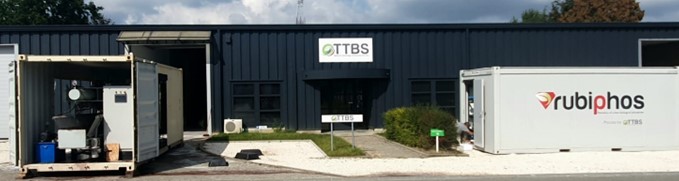
TTBS is a Belgian company focused on phosphate technology and located in Wavre (Belgium), founded by Mohamed Takhim who has over 25 years’ experience as a phosphate industry process developer and industrial project manager. The objective of TTBS is to supply the phosphate market with efficient technical and business solutions. TTBS has developed a new patented process RubiPhos® for phosphate recovery, currently being pilot tested (12.5 kg/h input) with sewage sludge incineration ash, using digestion by hydrochloric or sulfuric acid. The company indicates that the technology can also be applied to other P-sources (vivianite, struvite, meal bones ashes, …). Together with its partners, TTBS can supply a complete plug-and-play production unit for phosphoric acid and/or its salt derivatives. TTBS can install its mobile P-recovery pilot onsite, to generate data for the design and supply of an industrial full-scale P-recovery unit.
TTBS - Takhim for Technology and Business Services - https://ttbs.be - Photo TTBS 2-container mobile pilot P-recovery unit.
SNB announces P-recovery from ash project with SusPhos
Slibverwerking Noord-Brabant (SNB, an ESPP member) has announced a contract with startup SusPhos to design and plan phosphorus recovery from sewage sludge incineration ash at Moerdijk, The Netherlands. SNB is Europe’s largest sewage sludge mono-incinerator, burning 410 000 - 430 000 t/y of dewatered sewage sludge (> 90 000 t/y DM).The contract with SusPhos, following a European tender, aims to design a full-scale P-recovery from ash plant, establish the business plan and define cooperation with SusPhos within one year, allowing a decision on investment in a full-scale plant to then be taken. The objective is for the full-scale plant to be operational by 2027. SusPhos is presented as a robust process: sulphuric acid is reacted with the ash (similar to existing industry Single Super Phosphate type processes) then a proprietary solvent is used to extract ESPP eNews n°84 March 2024 Published by the European Sustainable Phosphorus Platform (ESPP) www.phosphorusplatform.eu Page 4 phosphoric acid. Purified phosphoric acid can then be stripped out of the solvent, or reacted to phosphate chemicals which can be separated from the solvent. The solvent is then recycled back to the process. The SusPhos solvent extraction leaves a residual mineral stream, containing gypsum (calcium sulphate from the sulphuric acid reaction), sand from silicates in ash, aluminium and iron. Heavy metals in the sewage sludge (copper, lead …) are 95% removed from the phosphoric acid and immobilised in the residual mineral stream. Susphos intends that this mineral stream can be valorised in e.g. building materials. This SusPhos technology has to date been tested at pilot scale: a 25 kg/day pilot plant has been operated for over 2 years using various ashes and other phosphate rich waste streams. SNB Managing Director, Silvester Bombeeck, says “'This all fits with our circular vision and mission to recover raw materials from sewage sludge”.
“SNB and SusPhos join forces to recover phosphate in a circular way”, 27th February 2024, HERE.
ICL commercialises first CE-mark recycled sewage sludge ash fertiliser
ICL Fertilizers (ESPP member), has launched the first fertiliser recovered from sewage sludge incineration ash to have obtained the CE-mark (EU Fertilising Products Regulation FPR certified). REACH declaration (EU chemicals regulation) and FPR Conformity Assessment (Module D1) were successfully completed in 2023. A first batch of over a thousand tonnes has been produced and commercialised at ICL’s existing phosphate rock processing plant in Amsterdam, using ash supplied by Netherlands sewage sludge incinerators, with further production planned. The product is based on acidulation then granulation of ash, with or without other nutrients.. ICL’s German production site in Ludwigshafen will also start this new process in coming months. ICL notes that the recycled fertiliser has specific characteristics different from synthetic mineral fertilisers, achieves EU FPR phosphorus crop availability criteria (>80% NAC solubility of P) and has shown good results in agronomic trials. The sewage sludge ash offers advantages over phosphate rock (no cadmium, no fluorine, no odour) but requires specific adaptations to the industrial chemistry, processes and handling, necessitating significant R&D and specific installations. Recycling is a strategic objective for ICL Fertilizers and the company now aims to progressively increase production.
https://www.icl-group.com/
Study concludes negligible pathogen risk in ash-recycled calcium phosphate
Assessment by the Swedish National Veterinary Authority (SVA) concludes that pathogen risk is negligible in calcium phosphates recovered from sewage sludge incineration ash by the EasyMining Ash2Phos process (ESPP member). The study assessed the risk of pathogens (probability of presence of infectious pathogens) in the recycled phosphate product, based on risk in sewage sludge and reduction of pathogen infectivity in the different processing stages: sewage treatment, sludge incineration, Ash2Phos processing (which uses sequential precipitation: acid, alkali, filtration, lime). The SVA study concludes “There is a clear scientific basis to support that no bacteria, viruses or parasites can survive the incineration step, making sewage sludge ash a safe substrate in terms of these pathogens”. The study further concludes “The overall probability that phosphorus recovered from sewage sludge using the Ash2Phos process contains infectious prions was also assessed to be negligible”. This results from the negligible/very low prevalence of TSE (transmissible spongiform encephalitis) in Europe and evidence that both incineration and the Ash2Phos process steps can significantly reduce prion infectivity. Knowledge gaps are noted concerning prions in sewage/sludge, inactivation of prions in incineration and effects on prions of sequential acid/alkali. The study concludes overall that, assuming operating procedures are appropriately respected, that “the probability that phosphorus recovered from sewage sludge ashes using the Ash2Phos process contains infectious animal pathogens is assessed to be negligible”. Trials with chickens and pigs have shown that the Ash2Phos recovered phosphate is digestible, safe and performs as well as commercial animal feed phosphates (see ESPP eNews n°82).
“Negligible risk of pathogens in our recycled phosphate”, EasyMining 10th January 2024 here and SVA Risk Assessment Report “Assessment of the risk for pathogens in phosphorus recovered from sewage sludge ash”, Sweden National Veterinary Institute, SVA report 92:2023, ISSN 1654-7098 here.
N2-Applied plasma N-enrichment prevent methane formation in manure
A three-year trial at Norwegian University of Life Sciences (NMBU) shows that the N2-Applied process prevents methane formation without accentuating NOx or ammonia emissions. The study compared methane production in four closed 2 m3 tanks of manure over 70-80 days in three summers. Two tanks contained raw cattle manure (after screw press filtration) and two contained N2-Applied plasma treated manure (nitrogen enriched, NEO). The untreated manure generated 60 – 1500 gCH4/m3 (cumulative after 70 days), whereas the NEO treated manure showed slight net methane uptake (0 – 0.3 gCH4/m3). Laboratory studies of methane production from manure showed that neither the pH decrease, nor the increase in nitrate or nitrite, nor combination of these, could explain the complete inhibition of methane production achieved by the N2-Applied process, suggesting that it is the elimination of methanogenic bacteria by the plasma treatment which is the key factor.
“Complete elimination of methane formation in stored livestock manure using plasma technology”, M. Nyvold, P. Dörsch, 2023, DOI.
EU consultations and calls
EU public consultation on National Emission Reduction Commitments Directive (NERCD)
Consultation on EU Directive limiting emissions of ammonia, nitrogen oxides, sulphur dioxide, particulates and (non methane) volatile organic carbons (VOC). Open to 14th March. Organisations and individuals are invited to submit evidence and comments.
ESPP will underline that announced evaluation of this Directive should address recovery/recycling of nitrogen and sulphur (coherence with EU Circular Economy policy). ESPP suggests that this Directive is important in limiting emissions of the five targeted pollutant gases across Europe, and is necessary to achieve EU reduction targets, to avoid transboundary pollution and to ensure a level playing field across Europe for concerned activities. ESPP suggests that NERCD should, for coherence, also cover the climate gases N2O and methane, for which emissions can be related to NOx and NH3 emissions (e.g. livestock, digestates). Coherence should be ensured with revision of the Industrial Emissions Directive, which increases emphasis on material efficiency and reuse. NERCD emissions limits should ensure protection from eutrophication of sensitive terrestrial and aquatic ecosystems (Habitats Directive, Water Framework Directive, Nitrates Directive) and also impacts on soil (proposed Directive on Soil Monitoring and Resilience) and should be supported by EU agriculture policy (CAP farm funding and CAP National Action Plans) and Nitrates Directive NVZ Action Programmes.
EU public consultation “National Emission Reduction Commitments Directive – evaluation”, open to 14th March 2024, input 4000 characters plain text plus possibility to submit pdf documents here.
EU public consultation on the Nitrates Directive
Consultation for evaluation of the Nitrates Directive. Open to 8th March. See ESPP eNews n°81 and also above.
“The protection of waters against pollution caused by nitrates from agricultural sources – Evaluation”, public consultation preparatory to evaluation of the EU Nitrates Directive (91/676/EEC) and Call for Evidence. Input requested from the public, farmers, stakeholders. Open to 8th March 2024. In all EU languages. HERE
DG Agriculture call to sign “Soil Manifesto”
European Commission call for signatures for a “Soil Manifesto”, recognising the need to protect and restore soils, current soil degradation, support the Soil R&D Mission objectives and commit to soil protection and awareness actions. The Soil Manifesto was launched by the European Commission and the European Regions Research and Innovation Network (ERRIN) in April 2023, has today over 2 600 signatures, and remains open for signatures. Signatories recognise the importance of soil for food and for environmental and social functions as “the basis of our well-being”, recognise that more than 60% of EU soils are in an unhealthy state and that pressure will increase with climate change, call to embed soil protection and restoration in all human activities, support the Soil R&D Mission goal to establish 100 test-demonstration sites (“living labs”, “lighthouses”) and commit to contribute to the protection and restoration of soil, to raise awareness and to enlarge the active community.
“The EU Mission Soil launches its Manifesto”, April 2023, link. “Update on the Mission Soil Manifesto” European Commission, 28 February 2024, here. Sign the Manifesto here.
Policy
EU Fertilising Products Regulation (FPR) evaluation and interpretation
The next EU Fertilisers Expert Group is fixed 15-16 April. ESPP will participate. So if you have points you consider should be taken into account in the FAQ regulation guidance or aspects to consider in the upcoming regulation evaluation: please email us ASAP (before end March latest). The existing FAQ is HERE (Frequently Asked Questions = in effect, FPR guidance). Please indicate interpretation or implementation questions which are NOT already addressed or are not resolved in this existing FAQ, if possible with real case examples. The evaluation of the FPR will be launched by the European Commission in coming months, as required in art. 49 of the Regulation, with the aim of identifying if certain aspects of the Regulatory text should be modified. Please indicate aspects of the Regulation which you suggest should be evaluated, other than points already specified in art. 49 (contaminants including cadmium and uranium, functioning of the internal market, conformity assessment, market surveillance, optional harmonisation) and other than specifications and materials in CMCs and biostimulants (studies already underway, see ESPP eNews n°81).
EU Fertilisers Expert Group documents (CIRCABC public) HERE.
Urban Waste Water Treatment Directive revision final text published
Final text validated by Council specifies that EU “combined reuse and recycling rates” for P from sewage and sludge will be fixed within 3 years, and a feasibility study on N reuse and recovery will be engaged. The P reuse & recycling rates requirements are detailed in art. 20: these rates should take into account technical and economic viability, P content of sludge, other organic P sources on national markets, impacts on health and the environment. The N reuse & recycling study is specified in art. 30.This final text now goes to the European Parliament for endorsement and then legal verification before publication. The revised Directive also tightens sewage works discharge limits for P and N, requires that urban wastewater systems achieve “energy neutrality” (without increasing methane or nitrous oxide emissions, preamble 16), quaternary treatment (end-of-pipe removal of organic contaminants), extended producer responsibility to cover costs of this 4ry treatment (for pharmaceuticals and cosmetics only, extension to industrial chemicals to be studied), promotes water use, microplastic measurement methodology, “integrated urban wastewater management plans”, and specifies new definitions (e.g. of “sludge”). For details, see summary of the Commission’s initial proposal in ESPP eNews n°74. ESPP will provide a full summary of the final text when it is promulgated in the EU Official Journal.
ESPP will start work defining consensus proposals for defining these new “combined reuse and recycling rates” for phosphorus (from sewage and sewage sludge) at our meeting of 14th March (Brussels & online – register now): what % rates from different sewage works (size, configuration), definitions of “reuse” and “recycling”, requirements for recovered materials (quality, safety, plant P availability …).
Final validated compromise text for revised Urban Waste Water Treatment Directive 1st March 2024 HERE.
Working meeting, defining “combined reuse and recycling rates” for phosphorus from municipal waste water, 14th March (Brussels & online) http://www.phosphorusplatform.eu/nutrientevents2024
Critical Raw Materials (CRM) Act adopted by European Parliament
European Parliament plenary has validated the CRM final text, following ‘trilogue’ finalisation, and pending final formal validation by Council. “Phosphate rock” and “Phosphorus” (meaning P4 ) are in the Critical Raw Materials List, but not in the “Strategic” sub-list.
ESPP considers that this Act should support phosphorus stewardship and recycling by requiring monitoring, inciting national circularity measures and facilitating permitting of recycling projects. ESPP regrets that P4 is not included in the “Strategic” sub-list despite being essential for the specified “strategic” industry sectors (renewable energy, e.g. solar panels; batteries; data and electronics fire safety) and despite the EU’s 100% dependency on supply from three countries (China, Vietnam, Kazakhstan) – see joint industry declaration.
The finalised text adjusts the initial Commission proposal (see ESPP eNews n°74) by underlining materials efficiency and recycling of CRMs in art.1. The original text is also modified (art. 4.1) to specify that a CRM “at any stage of processing and when occurring as a by-product of other extraction, processing or recycling processes, be considered critical raw materials”. The interpretation of this for “Phosphate rock” could be interesting (!).
Many points of the Act address “Strategic” raw materials only (not all CRMs) – in particular definition of recycling objectives, possibilities for “Strategic Projects”. However, the following concern all CRMs:
- Art. 5.2: “incentivise technological progress and resource efficiency” of CRMs,
- Art. 9 and art. 2.16, 2.20 (definitions): Member States must establish “Points of Single Contact” (can be more than one!) to facilitate and coordinate permitting of installations for extraction, processing or recycling of CRMs,
- Art. 13, art. 18: certain CRM project planning simplifications,
- Art. 19: national exploration programmes for CRM resources,
- Art. 20: EU monitoring of CRM supply risks and stress testing,
- Art. 21: identification and monitoring of key CRM value chain operators,
- Art. 26.1: national programmes for circularity of CRMs, including incentivising resource and materials efficiency, “collection, sorting and processing of waste with high critical raw materials recovery potential …” and “increase the use of secondary critical raw materials including through measures such as taking recycled content into account in award criteria related to public procurement or financial incentives for the use of secondary critical raw materials”, “increase the technological maturity of recycling technologies”, “support the use of Union quality standards for recycling processes of waste streams containing critical raw materials”, workforce upskilling …
- Art. 26.7: The Commission will define a “list of products … and waste streams … considered as having a relevant critical raw materials recovery potential”,
- Art. 30 and art. 31: possible sustainability certification and environmental footprint schemes for CRMs.
The above are ESPP’s understanding of the amended text published by the European Parliament and remain to be confirmed when the final Act is published.
European Parliament “Consolidated legislative document” EP-PE_TC1-COD(2023)0079 12th December 2023
UK water industry Resource Recovery Working Group
The third meeting (12th January 2024) of this informal UK group, led by Thames Water, discussed actions needed to develop markets for resources recovered from wastewater, with six UK water companies, waste/water engineering companies, the fertilisers industry, researchers and regulators.
User drivers for resource recovery were discussed. Leading food companies and fertiliser producers are looking to reduce carbon footprint, and recycling nutrients may contribute to this. Industry will drive interest in recovered resources as companies seek sustainable feedstocks to reduce supply chain greenhouse gas emissions, rather than agriculture itself. Discussions suggested that market forces alone are unlikely to deliver sufficiently rapid change: intervention and collaboration across the value chain are needed.
Joe Gilbertson, UK Agricultural Industries Confederation, explained that the UK is updating its (1991) fertilisers regulations, probably towards a matrix aligned with the EU Fertilising Products Regulation. Fertiliser blenders and companies manufacturing compound and liquid fertilisers in the UK can integrate recycled nutrient materials into their products. Recycled phosphates with low cadmium would be welcome. Sulphur is today needed in fertilisers, because no longer provided by atmospheric sulphur dioxide pollution (‘acid rain’). A challenge to uptake of recycled nutrient materials is perception of possible risks in wastes, with possible unknown contaminants and fear of contamination the food chain. Price is also important. She underlined that food processors, retailers and the public will determine demand for recycled nutrients, irrespective of fertiliser industry or government wishes.
Discussion underlined the need for dialogue between the fertiliser industry - distributors and waste - wastewater companies, on how to deliver nutrients in a form useful to industry, and on quality and safety. A key challenge is scale and logistics. Recycled nutrients are available in small, diffuse quantities. In the short term, an answer is to target recycled products to niche markets, but the longer aim should be to generalise nutrient recycling to deliver a significant proportion of fertiliser nutrient needs.
Nutrient platforms can enable dialogue, between waste and user industries, and with researchers. An important role of platforms is on policy and regulation. Other tools are needed to directly develop markets, ranging from industry joint ventures to take recycled materials to market (e.g. AquaMinerals Netherlands) to market matchmaking apps and websites.
The UK water industry Resource Recovery
Working Group is open to participation of all concerned companies and competent persons. Contact: Robert Naylor
German Phosphorus Platform (DPP) regulatory proposals
DPP’s January 2024 ‘Political Memorandum’ calls for changes to German national fertiliser regulations, to ensure coherence and facilitate phosphorus recycling from sewage. This 2024 DPP Memorandum follows from, and updates, the DPP’s 2020 Memorandum (see ESPP eNews n°49). DPP reminds that Europe is largely dependent on imports for phosphorus, which is essential for food production, and increasingly for batteries and electromobility and calls for a national phosphorus circular economy strategy. German legislation (Sewage Sludge Ordinance 2017 AbfKlärV, see ESPP SCOPE Newsletter n°129) requires phosphorus recovery from sewage sludge from 2029 (except for small sewage works < 50 000 p.e. where sludge may be used in agriculture, and with a transitional delay to 2032 for sewage works < 100 000 p.e.). DPP requests adjustments of German regulations to enable implementation of this:
- The current German fertiliser regulation (DüMV) currently specifies that only sewage sludge compatible with national criteria for agricultural valorisation (AbfKlärV) can be used as an input material for production of recovered phosphate fertilisers. This should not apply, for organic contaminants, in P-recycling processes which ensure elimination of these (e.g. incineration) subject to respecting fertiliser regulation heavy contaminant limits in the final product. The DüMV fertiliser regulation also specifies that only sewage sludge / ash respecting the DüMV fertiliser contaminant limits can be used as input material: this excludes P-recycling routes which simply dilute contaminants by combining with other materials, but it also excludes processes which remove or eliminate contaminants in order to achieve fertiliser contaminant limits.
- AbfKlärV (see ESPP SCOPE Newsletter n°129) currently requires phosphorus recovery ensuring reduction of sludge P-content by at least 50%, or reduction of sludge P content to < 2 %P/DM, or recovery of at least 80% of P from sewage sludge incineration ash. DPP requests clarification of how these requirements should be verified (e.g. P-flow balances: P-input, P-output, P in recovered product).
- Phosphate solubility requirements in recovered fertilisers: DüMV requires at least 2.5% solubility in water of Ptotal, 5% in NAC (neutral ammonium citrate-soluble) and 2% in mineral acid-soluble phosphate (it is unclear how these three different criteria fit together). DPP propose to modify this to 60% solubility (of Ptotal) in NAC or 60% solubility in 2% citric acid. This differs from the EU Fertilising Product Regulation (FPR) which requires 40% solubility in water or 75% in NAC.
- End-of-waste status. Unlike under the EU FPR, the German national fertiliser regulation DüMV does not automatically confer end-of-waste status to fertilisers recovered from sewage. DPP requests clarification of this.
- DPP underlines the need for stable and appropriate support for phosphorus recovery, without which the German regulatory AbfKlärV 2029 deadline will not be met. Current municipal sewage management tenders often cover periods too short for investment in recovery installations. Currently not all federal states have the option of including P recovery in the wastewater fee before 2029. DPP requests application, as of today, of the “polluter pays” principle to ensure adequate funding of phosphorus recovery, with a national cost approach (most sewage phosphorus comes from human excreta).
- DPP proposes a review of policies to pull market uptake of recycled phosphates:
- a quota for recycled phosphates in fertilisers (related to distributor sales),
- pricing of environmental costs (externalities),
- taxation, e.g. of resource consumption,
- support for early starter municipalities, for example through an incentive system,
- financial benefit / penalty for municipalities implementing / not implementing phosphorus recovery.
“Politikmemorandum zur Phosphorrückgewinnung 2023/2024 der Deutschen phosphor-Plattform DPP”, 31st January 2024 HERE.
Federal Environment Agency joins German “Clean Phosphorus 2029” initiative
This initiative, launched June 2022, aims to achieve the German regulatory P-recovery obligations with processes which explicitly remove contaminants and produce clean, marketable phosphorus products. The initiative currently brings together Gelsenwasser (waste and water utility employing 6 400 people - group), Ragn-Sells EasyMining (ESPP member), Remondis, MSE Mobile, Parforce, and several other sewage services, recycling and lime companies. The initiative promotes seven points for phosphorus recovery processes: achieve the P-recovery requirements of the German Sewage Sludge Ordinance AbfKlärV (see ESPP SCOPE Newsletter n°129), not accumulate pollutants to agriculture, remove pollutants present in input materials, produce clean and marketable phosphorus products of quality irrespective of composition and pollutant load of input material, separate and recover other materials where possible and not only phosphorus. The Federal Environment Agency (UBA) is also a member of the German Phosphorus Platform (DPP), as is the Swiss Federal Office for the Environment (BAFU) and several German Land (regional) authorities.
“Umweltbundesamt schließt sich der Initiative Sauberer Phosphor 2029 an” (the Federal Environment Agency joins the Clean Phosphorus 2029 Initiative)., Gelsenwasser, 1st March 2024, HERE and “Sauberer Phosphor”, seven point outline for P-recovery processes, EasyMining, 2 June 2022 HERE.
ESPP founding participant of circular feed platform
New initiative, led by FEFAC (animal feed industry federation), will bring industry organisations together to develop circularity in animal feed. Discussions are underway with industry federations in chemicals, animal by products and several food and bio-based materials processing sectors. Aims could include a mapping to identify and quantify secondary materials with potential as animal feed inputs (which are not currently being used), analysis of these resources (safety questions, nutrient digestibility, transport distances and logistics, food versus feed status, waste hierarchy, land use), supporting different sectoral organisations’ proposals for feed circularity within an overall strategy, possible definition of principles for feed circularity, analysis of regulatory and other obstacles, proposals to EU decision makers.
Industry federations and sectoral organisations wishing to engage with the proposed feed circularity platform should contact ESPP .
BlueBio Policy Brief: waste to resource
Policy Brief identifies three areas of regulatory barriers to circularity in the blue economy, including barriers to nutrient recycling from aquaculture sludge and by use of algae to treat wastewaters. The Policy Brief, from the Blue Bio Cofund (an initiative of the R&D platform JPI Oceans and the EU-funded R&D network Horizon2020 ERA-NET Cofund) accompanying the European Parliament event summarised below identifies:
- Regulatory complexity for use of algae in human food, animal feed and health products:
- Cost and time needed for authorisations under the Novel Food 2015/2283, Animal Nutrition 1831/2003 and Animal Feed Hygiene 183/2005 Regulations
- Varying heavy metal limits between different EU Member States for food / food ingredient uses
- Process for validating nutrition and health claims under 1924/2006, 432/201
- Lack of European legislation concerning algae cultivation, leading to delays and uncertainties in production site licensing.
- Moving from “waste to resource” for fisheries and aquaculture:
- Need to revisit the outdated Animal By-Product Regulations, in particular to resolve the current exclusion of fish excrement (and so fish aquaculture slurry) from the definition of manure
- Clarify the exclusions of wastewaters and manures from animal feeds (767/2009), irrespective of processing, subject to fully ensuring food chain safety
- Assess food chain safety risks for the use of aquaculture sludge as input for production of insects or aquatic invertebrates for use as animal feed (request an EFSA Opinion)
BlueBio “Policy Brief On identified regulatory barriers to more circularity in the blue bioeconomy”, 5 pages, January 2024, https://bluebioeconomy.eu/wp-content/uploads/2024/01/BlueBio-policy-brief-Jan-2024.pdf
Event summaries
Regulatory barriers to aquaculture and marine Circular Economy
European Parliament meeting underlines the need to better identify and address obstacles to nutrient recycling from fish slurry, aquaculture and in algae production. The meeting had 43 participants in Brussels and 75 online and was organised by BlueBio Era-Net, with Clara Aguilera and Catherine Chabaud, MEPs.
Alex Obach, European Aquaculture Technology and Innovation Platform and FEFAC (animal feed industry federation), underlined that EU aquaculture is one of the most sustainable in the world. 40% of today’s fish meal used in aquaculture feed comes from marine food production co-products and over half of the ingredients used are co-products of marine, vegetable and animal origin (e.g. from maize or soja processing). However, 70% of aquaculture food products consumed in the EU are imported, resulting in a 25 billion € trade deficit. Regulation needs to ensure both safety and flexibility to allow innovation in the EU to support a sustainable and ambitious growth of the industry. Market policies and promotions campaigns of aquatic products are also essential. Furthermore, it should be stressed that the EU leads globally in terms of the development of aquaculture technology and innovation across the value chain, putting the EU at a competitive advantage in terms of RTDI transfer.
Anne Mette Baek, EFFOP (European Fishmeal and Oil Producers Federation), noted regulatory obstacles to producing food-grade products and processing animal by-products on the same site, which is however important for industry efficiency and integration. The 2009 Animal By-Product Regulation needs to be revisited to address the circular economy and food sustainability, whilst continuing to ensure safety, in today’s context.
Ingeborg Korme, BlueBio Era-Net, underlined that EU-funded R&D projects on aquaculture conclude that regulatory obstacles are important and are limiting innovation, investment and development of aquaculture in Europe, both concerning input of aquaculture products into applications such as animal feed, and concerning recycling of nutrients.
Ann-Cecilie Hansen, Norwegian Food Safety Authority. Norway uses around 2 million tonnes/year of fish feed for salmon aquaculture. The government has launched a mission into sustainable fish feed. Fish slurry from aquaculture, which contains mainly fish excrement and unconsumed feed, is authorised for use in fertilisers in Norway under national regulations, but is currently excluded from the EU Fertilising Products Regulation – but this is currently being studied. Challenges for recycling of fish sludge to agriculture include food-chain and environmental safety: heavy metals (zinc, copper, cadmium), organic contaminants (such as plant protection chemicals and pharmaceuticals), pathogens. Processing can ensure hygienisation and drying, which is important for transport from coastal to arable regions. Another possible route for valorisation is as food for insect farming, possibly for feed production, but this poses the risk of recirculating pathogens and contaminants. This route is currently excluded by feed regulations and requires more research into safety.
Oana Parvulescu, NUST Polytechnic Bucharest, summarised work on aquaculture and marine harvesting circularity. Fish processing wastes (heads, bones …) and aquaculture sludge (fish slurry) are both rich in nutrients and offer valuable potential as inputs to agriculture, as fertilisers and biostimulants. However, their use is currently blocked by EU regulations as fish excreta are not animal by-products under the Animal By-Product Regulation (2009/1069, art. 3.20), so are not considered in the EU Fertilising Products Regulation. There are also obstacles in the EU Organic Farming regulations.
Panagiotis Kougias, Hellenic Agriculture Organisation, noted the challenges facing use of food processing wastewaters to produce (micro)algae for applications such as cosmetics or human foods. Data is needed to prove safety. Barriers include the absence of regulatory standards, leading to lack of clarity and predictability for investment.
Kerstin Kuchta, Hamburg University of Technology, also indicated the complexity of the regulatory context. For example, if mixed algal biomass is cultivated, authorisation is difficult in product regulations which are based on individual algae species.
Efthalia Arvaniti, SUBMARINER Network, showed some Seamark project results concluding that the costs of obtaining approval for health and nutrition claims are an obstacle to marketing new algae-based products, highlighting that while the commercial communication of non-authorised health claims is not possible in the EU, this is allowed in US and Japan, where qualified health claims supported by a less demanding level of scientific evidence, are allowed to be communicated to the consumers. Furthermore, Seamark concluded that the EU has more demanding harmful contaminant limits than in equivalents in US or Japan. The Seamark report “Assessment of EU regulatory landscape in a global context” will be published in April at the Seamark project website here: https://seamark.eu
Lorella De La Cruz Iglesias, European Commission DG MARE (Directorate General for Maritime Affairs and Fisheries) explained that the Commission is working with stakeholders and industry to identify regulatory obstacles and bring the Circular Economy into MARE strategies. The Strategic Guidelines for EU Aquaculture adopted in 2021 and the EU Algae Initiative adopted in 2022 look into circularity approaches and cover many of the issues presented by participants in the event. She noted the importance to keep a connection/dialogue between researchers and innovators (especially those part of EU-funded projects) and policy makers in order to ensure, to the greatest extent possible, that EU policy and regulation is adaptable to future societal and technological developments, whilst continuing to ensure high levels of safety and consumer confidence. This is the approach followed in the implementation of both the EU Aquaculture Strategic Guidelines and the EU Algae Initiative.
Paolo Caricato, European Commission DG SANTE, also underlined the importance of cooperation and communication with stakeholders. The Commission fully understands that current EU regulations may pose barriers, but at present no Member States are pressing for changes. The political input of Member States is fundamental at this regard.
Round table conclusions noted that the EU is a world leader in research and innovation, and in aquaculture sustainability. There is need to improve coordination between researchers, industry and regulators, to promote implementation. R&D projects are today asked to deliver policy recommendations. A key question is to define policies to support market pull for the circular blue economy.
Catherine Chabaud, MEP, underlined the need for a Blue Deal within the Green Deal, and that algae are a key link between the marine economy and Green Deal (circular economy).
Clara Aguilera, MEP, indicated that implementation of the Green Deal is not yet today finished, and hopes that Green Deal objectives, including for marine and algae, will be taken forward under the new European Parliament and Commission after the June 2024 European elections.
JPI Oceans – Blue Bio event at the European Parliament and online, 30th January 2024 “Connecting the dots for a Circular Blue Bioeconomy: From Science to Policy and Regulatory solutions” https://www.jpi-oceans.eu/en/connecting-dots-circular-blue-bioeconomy-science-policy-and-regulatory-solutions and meeting report.
Fertilizers Europe Forum on Plant Nutrition
The forum underscores the central roles of nutrient use efficiency, decarbonisation of the fertilisers industry, and recycling of nutrients in Europe's path towards sustainable agriculture. The Forum on Plant Nutrition "Sustainable food production: From nutrient management to decarbonization” was hosted by MEP Peter Jahr and organised by Fertilizers Europe, and brought together policy makers, professionals and stakeholders in the food production value chain to discuss challenges of the agricultural and environmental sectors, with the ambition of guaranteeing food security, moving from current practices to a sustainable and decarbonised food production system.
Professor Wim de Vries, Wageningen University, shared main results from the study “Assessment of spatially explicit actual, required and critical nitrogen inputs in EU-27 agriculture”, funded by Fertilizers Europe, the International Fertilizer Association and the European Environmental Agency. The study arose from the interest in an accurate calculation of N boundaries, accounting for the spatial variation in the sensitivity of terrestrial and aquatic ecosystems and in climate, land use and soil properties at the EU level. Downscaling of planetary boundaries to regions, as often applied, in fact neglects this variation and flat rate reductions in N losses and inputs as in the ‘From Farm to Fork’ strategy appear inappropriate, since N concentrations in air and water vary depending on application rate, climate, crop and soil type. The study quantified and compared current inputs and losses of N with required N inputs for crop production and N inputs/losses in view of adverse environmental effects, with a focus on ammonia emissions to air and nitrate leaching and runoff to groundwater and surface water. The required Nitrogen Use Efficiency (NUE) at which the current or target crop yield can be reached by improved management was also quantified. Required overall reductions in ammonia emissions and N runoff at EU level to protect terrestrial and aquatic ecosystems were calculated as 38% and 50%, respectively, the latter value being equal to the mentioned reduction in nutrient losses by the Green Deal’s Farm to Fork strategy. At current NUE, the required reduction in N inputs to protect terrestrial and aquatic ecosystems, is 31% and 43%, respectively. Critical N inputs are most strongly exceeded in regions with high livestock density, such as Ireland, the Netherlands, Belgium, Luxembourg, Brittany in France and the Po valley in Italy. At increased NUE, a given crop yield can be obtained with less N input, while the critical N input increases since a lower fraction of N is lost to the environment. The NUE increase that is required to attain actual or target crop yields at acceptable N losses varies strongly, but a mean +22% of variation was calculated. Prof. de Vries then highlighted the need to develop region-specific mitigation policies based on regional information on critical N inputs and their exceedances with related environmental and health impacts, and wrapped up by linking sustainable food production to enhanced waste and nutrient recycling, decreased food waste and the adoption of efficient practices to fertilization and farm management, notably the 4R principle: right product, rate, time, and place.
A panel discussed the link between sustainable nutrient management and food security. Mónica Andrés Enríquez, Yara International, highlighted how the fertiliser industry is committed to transform the food value chain, through increased nutrient use efficiency, decarbonisation of fertilisers production and recycling of nutrients (as a solution to food waste as well). This is possible only through a collective effort, including fertilisers producers, food companies, regulators, consumers and farmers. In fact, to shift from “grey” (obtained from fossil fuels) to “green” fertilisers (obtained with renewable energy) and to reduce the carbon footprint of fertilisers of between 80 and 90%. The whole value chain needs to be involved, as this shift will be costly, requiring huge investments. Farmers are pivotal in this change, but they must be supported with digital tools to control nutrients and convinced by business cases for green fertiliser.
Max Schulman, Central Union of Agricultural Producers and Forest Owners (MTK), highlighted the important role of advisors, including farmers’ associations, local cooperatives, fertilisers manufacturers, in helping farmers selecting the right type of fertiliser and use management according to soil type, crop variety and required quality of the product. He agreed that communication within the value chain is pivotal, as well as giving farmers the proper time to put in place the required changes but at the same time provide long term certainty that the targets will remain consistent and will not change in the short term.
Fabien Santini, European Commission, DG Agriculture, specified that the EU Fertilising Products Regulation introduced the possibility to create a single market for organic fertilisers, to increase the possibility of recycling nutrients from manure and waste streams and to facilitate the movement and reuse of organic fertilisers in excess in one region. He announced that a report on the implementation of the CAP strategic plans is soon to be published, reporting Member States’ interventions related to nutrient management. He reiterated that communication and clarity are crucial for innovation and for implementation of change.
Peter Jahr, MEP, concluded the meeting remarking that a combination of policy and technology solutions are needed to guarantee availability of fertilisers in Europe, and highlighted how farmers are the most important part of the solution, as long as they are advised in the correct way.
“Assessment of spatially explicit actual, required and critical nitrogen inputs in EU-27 agriculture” de Wries et al. (2022) DOI
“Forum on plant nutrition: from food security to carbon farming”, online, hosted by Peter Jahr, Member of the European Parliament, 9th February 2024, HERE.
Research and innovation
Phosphorus and nitrogen losses, climate change, impacts on Adriatic eutrophication
Review summarises changes in P and N discharges and concentrations in the Po river and the Adriatic coastal Mediterranean Sea, showing reduced algal blooms with lower P inputs, higher N/P ratios and impacts on fisheries. The Adriatic coastal Mediterranean is shallow with limited water exchange and high nutrient-rich river input. The Adriatic receives one third of freshwater flowing into the Mediterranean, of which over 50% from the Po river, which has a population of 16 million (including Milan, Turin) and is agriculturally intensive. These nutrient inputs make the Northern Adriatic one of the most productive fisheries of the Mediterranean, but also susceptible to eutrophication. Phosphorus inputs to the Adriatic were reduced from 1985 with the Italy ban on detergent phosphates (1988). Phosphorus inputs continued to reduce through to the 2020’s (ESPP comment: probably because of improved sewage treatment: over 70% of phosphorus and 60% of nitrogen are removed from Lombardy’s sewage SCOPE Newsletter 124) but this trend was not observed for nitrogen. Over past decades, climate change has also led to reductions in nutrient levels in the Adriatic, with lower rainfall resulting in lower land nutrient runoff, and lower river inflow to the coastal Mediterranean resulting in more mixing with low-nutrient waters from the central Adriatic. Algal growth fell, as shown by chlorophyll-a data 1978-2020. This led to lower fish populations and consequent overfishing. The authors note that questions are raised by the continuing high N levels in river input (largely from agriculture), leading to increased N/P ratios in the Adriatic, and that there is a need to further reduce nutrient losses to the Adriatic, to monitor impacts of climate change and to move towards more sustainable fisheries and aquaculture.
Cozzi et al. (2020), studying the Gulf of Trieste, Italian Mediterranean coast, showed similar results, with decreasing phosphorus inputs resulting in decreasing algal development through to around 2010, but then recurrence of algal blooms and changes in seasonal algal growth patterns as a result of climatic changes modifying water temperature, winds (water mixing).
Rubini et al. (2021), analysed occurrences of toxic microalgae in the Adriatic, releasing yessotoxins which can accumulate in shellfish, leading to stoppage of harvesting to avoid human health risks. These releases are considered to be linked to climate change (increasing water temperatures, changes in river freshwater discharge or in marine water mixing).
Soana et al. (2024) recently analysed the long-term trends (1992–2020) of N and P export from the Po river basin to the Adriatic sea, investigating annual and seasonal patterns and their relationship with water temperature and precipitation patterns. Diffuse plus point sources in the basin did not significantly decrease over this period, yet a marked decrease (-20%) in N-total export, mostly as nitrate, was recorded in the last decade compared to the 1990s. This is likely related to the water temperature warming, especially during summer (+0.13°C/year) and autumn (+0.16°C/year)), to the increased number of warm days (+70%–80%), and to the persistence of low flow periods, that may enhance the rates of microbial processes and sustain favourable conditions for the denitrification and nitrate removal. On the other hand, despite a significant reduction in both agricultural diffuse P sources in the basin (manure, synthetic fertiliser) and point P sources (sewage works, but these are c. 20x lower than agriculture), the annual export of P-total in the river displayed a high inter-annual variability, and no significant downward trend. In large turbid rivers, such as the Po, P cycling is less sensitive to temperature warming. The only negative relationship found between water temperature and soluble P loads in the river final section was observed in summer and attributed to increased P uptake by phytoplankton.
“The Role of Nitrogen and Phosphorus in Eutrophication of the Northern Adriatic Sea: History and Future Scenarios”, M. Marini & F. Grilli, Appl. Sci. 2023, 13, 9267, DOI.
“Climatic and Anthropogenic Impacts on Environmental Conditions and Phytoplankton Community in the Gulf of Trieste (Northern Adriatic Sea)”, S. Cozzi et al., Water 2020, 12, 2652, DOI.
“New Trends in the Occurrence of Yessotoxins in the Northwestern Adriatic Sea”, S. Rubini et al., Toxins 2021, 13, 634. DOI.
“Climate change impacts on eutrophication in the Po River (Italy): temperature-mediated reduction in nitrogen export but no effect on phosphorus”, E. Soana et al., J. Environ. Sci. 2024, 143, DOI.
Climate change will deteriorate eutrophication of Mediterranean river Júcar, Spain
Modelling suggests that climate change will multiply water in the Júcar basin with poor quality status by x4, requiring a 50% reduction in P losses. The Júcar basin, 43 km2, drains into the Mediterranean and includes the cities of Valencia, Albacete and Ribera Alta. Two models (PATRICAL, RREA) were applied with climate scenario RCP8.5 for period to 2100. Surface water area impacted by nitrates is estimated to increase by x1.3 as a result of climate change by 2100. Other Mediterranean studies have estimated decreases in nitrate loadings with climate change (Serpa et al., 2017; Buonocore et al., 2021). Nitrates runoff from agriculture will be reduced with lower precipitation and run off and with increased denitrification. Water area impacted by ammonia is estimated to increase by x1.9 and that by BOD (biological oxygen demand) and by phosphorus by x4. Median ammonium and phosphorus concentrations in the river and tributaries may double in low flow periods, because lower precipitation leads to reduced dilution of point sources and agricultural runoff. To maintain current water quality status, reductions of -25% for nitrates and -50% for ammonia, BOD and phosphorus will be required.
“Effect of climate change on the water quality of Mediterranean rivers and alternatives to improve its status”, D. Doradao-Guerra et al., J. Environmental Management 348 (2023) 119069 DOI.
P fertilisation improves water use efficiency (WUE) in Mediterranean tree-grass system
6-year field trial in central Spain extensive ‘dehesa’ agri-ecosystem shows that N or P+N fertilisation improves WUE and prevents carbon loss, with P+N showing the best WUE and lowest evaporation. The site studied, at Madajas de Tiétar, has 20-25 trees/ha, grass and extensive grazing (<0.3 cattle/ha). Annual rainfall was 440 – 970 mm/y (85% October – April). Three c. 20 ha plots received N fertiliser (100 kgN/ha/y) in 2015 and 2016, P+N fertiliser (50 kgP/ha/y) or no fertiliser (control), and were then monitored for further four years. Data was collected from three eddy covariance towers (one in each plot), CO2 emissions, airborne spectral measurements, meteorological and Landsat data, vegetation sampling. The two plots receiving N fertilisation showed 40% increased leaf area index (LAI) in spring, resulting in reduced evaporation. Evapotranspiration increased in the N-only fertilised plot, but was similar to the control in the P+N plot. The higher leaf water loss with N-only fertilisation may be due to increased root development or root activity required for uptake of limited P. In both fertilised plots (N, P+N), annual net ecosystem CO2 loss was reduced to net zero (from c. 75 gC/m2/y in control). The best water use efficiency was achieved in the P+N fertilised plot.
“How Nitrogen and Phosphorus Availability Change Water Use Efficiency in a Mediterranean Savanna Ecosystem”, T. El-Madany et al., J. Geophysical Research Biogeosciences, 126, 2021, e2020JG006005, DOI.
Stay informed
SCOPE Newsletter: www.phosphorusplatform.eu/SCOPEnewsletter eNews newsletter: www.phosphorusplatform.eu/eNewshome
If you do not already receive ESPP’s SCOPE Newsletter and eNews (same emailing list), subscribe at www.phosphorusplatform.eu/subscribe
LinkedIn: https://www.linkedin.com/company/phosphorusplatform
Slideshare presentations: https://www.slideshare.net/phosphorusplatform - Twitter: @phosphorusESPP
YouTube https://www.youtube.com/user/phosphorusplatform
ESPP members
Newsletter about nutrient stewardship - European Sustainable Phosphorus Platform (ESPP)
Please subscribe www.phosphorusplatform.eu/Subscribe
Link to www.phosphorusplatform.eu/eNews083
Download as PDF
ESPP dates 2024
ESPP workshops on Nutrient recycling policy
Market policy tools to support pull for recycled nutrients
Defining targets for nutrient reuse and recycling from waste water
ESPP new member
Toopi Organics
Policy
Political agreement on EU Urban Waste Water Treatment Directive (UWWTD)
Digital labelling of fertilising products is a missed opportunity according to industry
BAT for slaughterhouses published: includes struvite recovery
Research and innovation
Benefits of organo-mineral fertilisers
Testing thermal plasma treatment of dried sewage sludge
Long-term phosphate fertiliser application and heavy metals in soils
Second JRC study again suggests that UE+UK soils are accumulating phosphorus
Iron phosphate precipitation from electronics industry wastewater
To where does nitrogen in sewage go?
P-recovery potential from biofuels production
Bacterial biorecovery of ammonium sulphate from digestate
Stay informed
ESPP members
ESPP dates 2024
- 22 February, 14h-15h30: webinar on EU Nitrates Directive evaluation (consultation here)
and Renure (criteria for “processed manure” recycled nutrients) - 27-28 Feb. 2024: Warsaw CRU Phosphates 2024 ESPP panel on sustainable fertilisers
- 13-14 March 2024: Brussels & online ESPP workshops on Nutrient recycling policy
- 13th March: market policy tools to support pull for recycled nutrients (optional networking dinner)
- 14th March: targets for nutrient recovery under the Urban Waste Water Treatment Directive revision - 16-17 April 2024: Brussels & online NERM Nutrients in Europe Research Meeting
(with Fertimanure, Lex4Bio, Walnut, Sea2Land, Rustica) - 8-10 October 2024: Lleida, Spain ESPC5 (5th European Sustainable Phosphorus Conference)
ESPP workshops on Nutrient recycling policy
Market policy tools to support pull for recycled nutrients
Identifying policy tools to support market pull for recycled nutrients, which could achieve consensus across industry and users. Speakers from waste and water industries, fertiliser industries, circular economy policy experts. Proposals to be discussed will include targets, quotas, border tariffs, recycling credits, fiscal incentives, public purchasing, labelling … Industry and user positions can differ: The meeting aims to identify policies which could achieve consensus across recycled product producers (waste companies, recycling technology suppliers), industry and users (fertilisers industries, distributers, farmers), and to discuss ESPP proposals to submit to policy makers.
13th March Brussels & online. Registration is open www.phosphorusplatform.eu/nutrientevents2024
Defining targets for nutrient reuse and recycling from waste water
The proposed UWWTD revision text (art. 20) states: “The Commission is empowered to adopt delegated acts … setting out the minimum reuse and recycling rates for phosphorus and nitrogen”, see eNews n°80. This workshop will define ESPP proposals for these targets: How to define “reuse” and “recycling” ? What % rate? What criteria for products ? What rates for different sizes waste water treatment works or type of sewage treatment ? …
14th March: Brussels & online. Registration is open www.phosphorusplatform.eu/nutrientevents2024
Your input and proposals are welcome: present your ideas on these questions (and why) in Brussels, 14th March. We still have a few slots available. Please send short outlines of proposals for pitches to as soon as possible to .
ESPP new member
Toopi Organics
Toopi Organics is a french start-up, incorporated in 2019, processing separately collected human urine and valorising it in agriculture. Toopi Organics aims to save water and nutrient resources while offering green alternative solutions for farmers. Toopi collects urine at source from waterless urinals and uses it as a growing medium to perform submerged liquid fermentation, producing organic urine-based microbial biostimulants to increase nutrient use efficiency and reduce mineral fertilisers for crops. More information in ESPP eNews n°82.
Policy
Political agreement on EU Urban Waste Water Treatment Directive (UWWTD)
European Parliament and Council have announced agreement on the Urban Waste Water Treatment Directive (UWWTD) revision, probably enabling adoption before the June 2024 European elections. The agreement now must go to Parliament and Council environment committees for endorsement, then formal plenary vote by both institutions. The coregulators underline that the 1991 UWWTD has been highly effective in reducing water pollution because of the simplicity of its requirements. Announced points of the political agreement include obligations of secondary wastewater treatment for all agglomerations > 1 000 p.e. by 2039 and of tertiary (N and P removal) and quaternary treatment (organic micropollutants) for all large agglomerations and, in areas with identified risk, down to 10 000 p.e. by 2045. Energy neutrality targets for waste water treatment plants will be required by 2045. Other measures agreed in principle include monitoring of microplastics, antibacterial resistance, Covid virus tracers and PFAS, polluter pays (for quaternary treatment, applicable to pharmaceuticals and cosmetics industries), promoting treated sewage water reuse. The communications do not specify what agreement is reached on nutrient recycling. The European Commission proposal (art. 20) indicated that the Commission should be empowered to set “minimum reuse and recycling rates for phosphorus and nitrogen” see eNews n°80. Both Parliament and Council proposed amendments to conditions for this, but both retained the principle of phosphorus reuse and recycling targets, whereas Council proposed to delete nitrogen from this article. The full text of the agreement is not yet published.
29th January 2024.
European Commission communication: More thorough and cost-effective urban wastewater management (europa.eu)
Council: Urban wastewater: Council and Parliament reach a deal on new rules for more efficient treatment and monitoring
European Parliament: Deal on more efficient treatment and reuse of urban wastewater
Digital labelling of fertilising products is a missed opportunity according to industry
Council and Parliament have reached agreement, but Fertilizers Europe considers that the proposal will not significantly reduce complexity of on-package labels and of packaging wastage required every time a label needs to be modified. Digital labelling enables to include additional information on product use and characteristics, which is not possible or not legible on a physical label. It also allows different types of user (blender, distributor, farmer, public consumer …) to access different information according to their requirements. The agreed rules (not yet published) will not allow digital-only labelling for any packaging other than bulk, with key information continuing to be required on physical labelling on packaged products. Fertilizers Europe suggests that digital-only labelling should also be an option for professional and industrial end-users. The industry federation indicates that nearly 2 million fertiliser packages (only taking into account packages above 500kg) have to be discarded every year in Europe because of physical labelling modifications.
“Commission welcomes the political agreement on the voluntary digital labelling of EU fertilising products”, European Commission 23 January 2024 here.
BAT for slaughterhouses published: includes struvite recovery
The European Commission has published the updated BAT for “for slaughterhouses, animal by-products and/or edible co-products industries”, including struvite recovery as a possible BAT (Best Available Technology, under the EU Industrial Emissions Directive), replacing the previous 2015 BAT BREF. Relevant to nutrients, the adopted BAT includes measurement of wastewater phosphorus and nitrogen, including mass flows (but not calculation of mass flows in incoming animals and output food products or animal by-products), P and N removal from wastewater, and now includes struvite precipitation from waste waters with > 50 mgP/l (indicative concentration):
- BAT 2 and BAT 7: Environmental management system including measurement in waste waters of average concentration and mass flows of phosphorus, nitrogen species and organic carbon.
- BAT 14: Waste water treatment including where appropriate: N removal (down to 2 -25 mgNtotal/l) , P removal (down to 0.25 - 2 mgPtotal/l) by precipitation, enhanced biological P removal (EBPR) and/or struvite recovery.
- BAT 12: Resource efficiency: “Phosphorus recovery as struvite” (e.g. waste water with P > 50 mg/l) and/or anaerobic digestion.
European Commission decision 2023/2749 “establishing the best available techniques (BAT) conclusions, under Directive 2010/75/EU of the European Parliament and of the Council on industrial emissions, for slaughterhouses, animal by-products and/or edible co-products industries” (32 pages), 18/12/2023 https://eur-lex.europa.eu/legal-content/EN/TXT/?uri=OJ%3AL_202302749
Research and innovation
Benefits of organo-mineral fertilisers
Yara summarise the sustainability benefits and challenges of combining mineral fertilisers with organic materials for optimal agronomic and environmental benefits and developments engaged by the company. 65-year field trials at Yara’s Hanninghof research centre, Dülmen, Germany, show that combining organic fertiliser (farmyard manure) and mineral fertiliser (potato/cereal rotation) resulted in increased soil organic carbon, increased water use efficiency (3x improvement) and highest yield and profitability. Yara is developing organo-mineral fertilisers (OMFs) in order to deliver such benefits to farmers, and to enable optimal recycling of local organic nutrient resources. Yara has carried out greenhouse tests and is now doing field trials, looking both at efficiency for crops, impacts on soil and risks of nitrogen losses (possible ammonia or N2O emissions to air). OMFs are delivered as pellets to farmers, to facilitate handling and enable spreading (which is important for yield). Local transformation routes are needed as organic secondary resources are scattered locally and transport would be inefficient and expensive. Nitrogen uptake alone does not explain increased yields from OMFs, so these are considered to result from other benefits such as soil organic carbon (40 – 80 % of organic carbon applied is shown to be stored in soil in the rhizosphere) and soil microorganism activation. Application timing must however be adjusted to adapt nutrient release to crop needs and so minimise nutrient losses.
“Optimising crop production by combining organic-based and mineral fertilizer sources: Agronomic performance, soil and environmental considerations”, A. Becerra, Yara, at the IFS (International Fertiliser Society) annual conference, Cambridge, UK, 6-7 December 2023. IFS events here.
The 2024 IFS annual conference will take place 11-13 December 2024, Cambridge, UK.
“65 years-long research concludes: Mineral fertilizer supports sustainable agriculture”, Yara press release, 5th September 2023.and book chapter “Effect of Balanced and Integrated Crop Nutrition on Sustainable Crop Production in a Classical Long-Term Trial”, M. Jate, J. Lammel, in “Sustainable Crop Production - Recent Advances” 2022 here.
Testing thermal plasma treatment of dried sewage sludge
Study presents tests to convert sewage sludge and recovered carbon dioxide (CCUS) to ash and syngas, with a 2-hour test run of a 220 litre interior volume, 15 kg/h, 1200°C thermal plasma reactor. The reactor used an argon-water stabilised DC plasma torch (max 150 kWe) with rotating copper disc anode. The torch generated a plasma at around 18 000 °C at its outlet, resulting in temperature of c. 1200°C measured on the reactor walls. The feedstock for this reactor was dried anaerobically digested sludge (c. 6% water) from a Czech municipal sewage treatment plant (15 kg/h), as was CO2 (c. 1200 l/h): the objective was to capture industrial carbon dioxide and convert it to syngas by reacting with sewage sludge (CCUS = carbon capture utilisation stockage). The cold gas efficiency (energy recovered in syngas / electric energy consumed by plasma torch plus energy potential in sewage sludge) was c. 35% (the authors suggest this could be increased to nearly 50% by thermal insulation of the reactor / heat recycling). This does not take into account energy used upstream for drying of the sewage sludge. Very low char production meant that carbon conversion (carbon to syngas) was over 95%. The authors suggest that an advantage of this route for sewage sludge treatment is that phosphorus in the reactor will be volatilised to elemental phosphorus (high temperature, reducing conditions, silicates in sewage sludge). In these trials, the phosphorus was found in the offgas filter (particles) and retained in the reactor.
“Integration of thermal plasma with CCUS to valorize sewage sludge”, V. Sikarwar et al., Energy 288 (2024) 129896, DOI.
Long-term phosphate fertiliser application and heavy metals in soils
Field trials show increased soil P, but also increased soil cadmium, uranium, chromium, vanadium and arsenic, in topsoil, after 45 years of repeated fertilizer application. Results are based on soil samples from five plots with different levels of P fertiliser application from 1966 to 2022 (zero control up to 72 kgP/ha, that is up to 3 – 4 x crop requirements) at Tidewater Research Station, North Carolina, USA. P content of topsoil was strongly correlated to soil concentrations of Cd, U, Cr, V and As, all of which were present in the applied fertilisers at levels above soil background concentrations (23 mgCd/kg, 163 mgU/kg, 179 mgV/kg, 132mgCr/kg). The correlations shown include the plots with repeated high excess fertiliser application, it is unclear to what extent the results are significant for plots with fertiliser applied according to agronomic recommendations. The paper does not show data for the relation fertiliser application – soil meta(loids), but shows correlations soil P – soil metl(loids). Potassium fertiliser, which was also applied, had low levels of these metals. The metal(loid) increases were mostly found only in topsoil, not in deeper soils. The authors note that the increase in plant available P (Mehlich-III) may cause mobilisation of metals already present in soil, but conclude that the data indicate that the rate of P-fertiliser application is correlated to occurrence of the metal(loid)s in topsoil. The possible significance of the changes in heavy metal levels was not analysed and possible increased uptake of the metal(loid)s by crops was not assessed.
“Evidence for the accumulation of toxic metal(loid)s in agricultural soils impacted from long-term application of phosphate fertilizer”, J. Hu et al., Sci. Total Environment 907 (2024) 167863 DOI.
Second JRC study again suggests that UE+UK soils are accumulating phosphorus
Modelling suggests average soil P accumulation of 0.11 kgP/ha/y in arable soil (total 190 ktP/y),2010-2019, somewhat higher than 130 ktP/y in a previous JRC study (Panagos et al. 2023, see ESPP eNews n°73), with high regional variations. This represents c.8% of applied phosphorus (6.5 kgP/y from manure and 6.4 kgP/ha/y from mineral fertilisers, other organic P inputs not considered). Net P losses by soil erosion (minus deposition) are estimated as 0.25 kgP/ha/y, that is more than twice soil P accumulation. The study uses the DayCent model to estimate daily dynamics of C, N, P and S between plants, soil and air, at a 1 km2-grid level, considering six different soil P pools: POrg) and five mineral P pools: Plabile, Psorbed, Pstrongly sorbed, Pparent, and Poccluded. Model inputs included LUCAS soil and water data, CLC land-use, meteorological data, CORDEX climate project data, Eurostat (crops, irrigation, mineral fertiliser inputs), FAO livestock distribution, SAGE agronomy parameters and literature numbers for P excretion, soil P partition, etc. The authors model consequences of management scenarios to 2050, concluding that increased use of N-fixing cover crops can reduce the P-surplus by increasing crop productivity (N availability, whilst also reducing erosion losses. The authors note that results for national P budgets from this modelling study correspond for some countries to those from the empirical Panagos 2023 study or to national statistics, but diverge for other countries.
“Assessing the phosphorus cycle in European agricultural soils: Looking beyond current national phosphorus budgets”, A. Muntwyler et al., Sci. Total Environment 906 (2024) 167143 DOI.
Iron phosphate precipitation from electronics industry wastewater
Lab tests looked at use of ferrous sulphate to precipitate soluble phosphorus from mobile phone metal shell polishing wastewater, achieving over 95% P-precipitation and a precipitate with c. 25% vivianite, 75 % iron phosphate colloid. The industrial process water contains over 200 mgP/l and had pH <3. Optimal conditions for P-precipitation showed to be c. 1.5:1 molar ratio Fe:P and pH around 7. At these conditions, the iron phosphate precipitated contained <25% vivianite, and was mostly colloidal iron phosphate, that is lower vivianite content than expected from literature and modelling. Given the low proportion of vivianite in the precipitate and that no evidence is provided to suggest that the precipitated phosphate material could be recycled, the title of the paper seems to misleading.
“Efficient removal and recovery of phosphorus from industrial wastewater in the form of vivianite”, Y. Zhang et al., Environmental Research 228 (2023) 115848 DOI.
To where does nitrogen in sewage go?
Analysis of data for France suggests that only c. 10% of N from human excreta is recycled (despite 3/4 of sewage going to agriculture), half is lost to the atmosphere and 40% goes to surface and ground water. The study analyses data from all of France’s sewage treatment plants (over a decade), autonomous sewage treatment, population, diet, nitrogen in human faeces and urine. Nitrogen removal in sewage works varied from around 60 to 85%, with higher removal rates in Nitrates Directive “Nitrate Vulnerable Zones” and in larger sewage works. No data is available for nitrogen losses to air in sewage works, but nitrification – denitrification converts much of inflow N to N2 lost to air. The authors estimate around 10% N losses to water upstream of sewage works. Of the N arriving at sewage works, around 50% is lost to air in sewage works, 40% to surface waters and only around 10% recycled to land. In autonomous sewage treatment systems, losses to underground water are estimated to be around 3/4. N in urine represents c. 15% of French mineral N fertiliser consumption (0.3 vs 2 MtN/y) and the authors estimate that recycling N from human sewage, via separate collection of urine, could cover around 10% of France’s protein production with current diets, or up to around 30% if diets moved away from meat to plant-based.
“Fate of nitrogen in French human excreta: current waste and agronomic opportunities for the future, T. Starck et al., 2024, Nitrogen in agro-food systems and the environment, 912, pp.168978, DOI.
P-recovery potential from biofuels production
US Sustainable Phosphorus Alliance webinar with R. Cusick (University of Illinois) shows the significant potential and environmental benefits of for phosphorus recovery from maize processing to biofuels. The US harvests nearly 1.5 Mt/y of maize for biofuel (bioethanol) production, that is around 1/3 of US maize production. The maize contains phosphorus which is not wanted in the biofuel (in combustion it would generate corrosive phosphoric acid) and ends up in distillers’ grains which mostly go to animal feed. High P in feed is transferred to manure, and can contribute to eutrophication of water bodies. Maize processing (CBs = corn biorefineries) generate liquor streams with higher P concentrations than in wastewater or manure, they are large installations, mainly clustered in US Mid-West States, where there is high demand for fertilisers. Most of the phosphorus in the input maize is in phytate, but the processing partly breaks this down and mineralises or solubilises the phosphorus, making it available for P-recovery processes. Total P in distillers’ grains in the US is estimated to be around 230,000 t/y, that is around 13% of P mineral fertiliser consumption in the US. In bioethanol producing states such as Iowa, that percentage can be as high as 37% mineral P fertilizer consuption. Total P-recovery potential from maize biofuel production (corn biorefineries) in the US is estimated to be around twice that from municipal wastewater (as struvite), with the median recovery potential for corn biorefineries estimated to be three orders of magnitude greater than a wastewater treatment plants (1,000 vs 0.5 t/facility).
“Mapping the National Phosphorus Recovery Potential from Centralized Wastewater and Corn Ethanol Infrastructure”, K. Ruffatto et al., Environ. Sci. Technol. 2022, 56, 12, 8691–8701 DOI.
“Modeling National Embedded Phosphorus Flows of Corn Ethanol Distillers’ Grains to Elucidate Nutrient Reduction Opportunities”, K. Ruffatto et al., Environ. Sci. Technol. 2023, 57, 38, 14429–14441 DOI.
“Big Opportunity for Phosphorus Recovery from Bioethanol Processes”, Sustainable Phosphorus Alliance “Science Now” webinar, 21 minutes, date November 8, 2023, available online here.
Bacterial biorecovery of ammonium sulphate from digestate
Lab trials (100 ml, 15 days) showed production of ammonium sulphate by Acidithiobacillus thiooxidans from liquid fraction of dairy manure digestate, generating a material showed 90% ammonium sulphate content after drying @ 60°C. The manure digestate was lab centrifuged, resulting in zero measured solids, 100 mM ammonia, 0.1 mMP and 10 mM K. Acidithiobacillus thiooxidans was stepwise acclimatised to ammonia at 400 mM-N, then incubated with the digestate liquor and with elemental sulphur. The bacteria reduced the digestate pH from c. 9 to 2 over 15 days. This produced c. 6g of ammonium sulphate (after drying), so in 100 ml of digestate/inoculum that is 6% ammonium sulphate solution (1.2 %N) with 10 % impurities.
“Biorecovery of ammonium from manure digestate by Acidithiobacillus thiooxidans”, B. Jalili et al., Chem Eng J Chemical Engineering Journal 466 (2023) 143094 DOI.
Stay informed
SCOPE Newsletter: www.phosphorusplatform.eu/SCOPEnewsletter eNews newsletter: www.phosphorusplatform.eu/eNewshome
If you do not already receive ESPP’s SCOPE Newsletter and eNews (same emailing list), subscribe at www.phosphorusplatform.eu/subscribe
LinkedIn: https://www.linkedin.com/company/phosphorusplatform
Slideshare presentations: https://www.slideshare.net/phosphorusplatform - Twitter: @phosphorusESPP
YouTube https://www.youtube.com/user/phosphorusplatform
ESPP members